

P0349 on 2014-2018 Ram 3500: Intermittent Cam Sensor Causes and Fixes
P0349 indicates an intermittent signal from the Bank 2 camshaft position sensor on HEMI V8 engines. The most common causes are a faulty sensor or damaged wiring. Before replacing parts, inspect the wiring harness for damage and be aware of a TSB that suggests this can be a complex diagnosis.
- P0349 on a 2014-2018 Ram 3500 points to an intermittent signal from the Bank 2 camshaft sensor, and almost always applies to the 5.7L or 6.4L HEMI V8 engines.
- Before replacing any parts, thoroughly inspect the sensor's wiring harness for heat damage, chafing, or loose connections, as this is a very common cause.
- Check your engine oil level. Low oil can cause the VVT system on HEMI engines to act up and trigger this code.
- A manufacturer TSB exists for this code, which indicates it can be a complex issue. If a new sensor and wiring check don't fix it, professional diagnosis may be needed.
- If you replace the sensor, using a genuine Mopar part (5149054AC) is highly recommended to prevent premature failure.
What's Unique About the 2014-2018 Ram 3500
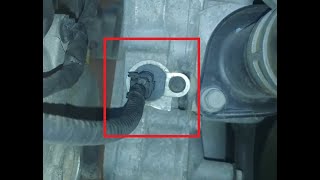
On the 2014-2018 Ram 3500 with a HEMI engine, P0349 is complicated by a specific Technical Service Bulletin (TSB). TSB #05149141A instructs technicians to contact a factory engineer before simply replacing the sensor, indicating that the root cause is often more complex than a simple part failure and could be related to wiring or software. This suggests that owners should perform a careful diagnosis of the wiring before buying parts. Critically, both the 5.7L and 6.4L HEMI V8 engines use only a single camshaft position sensor located on the front timing cover. The 'Bank 2' designation is a generic software term used by the PCM for fault reporting when it detects a signal anomaly that it correlates to a specific bank's timing event, even though there isn't a separate physical sensor for Bank 2.
Diagnostic Flowchart
Tap your situation to follow the diagnostic path that matches what you're seeing on this vehicle.
Symptoms You May Notice
- Check Engine Light is on
- Engine stalls intermittently, sometimes while driving or when coming to a stop
- Difficulty starting the engine, or extended cranking time
- Engine cranks but will not start
- Rough or uneven idle
- Hesitation or lack of power during acceleration
- Transmission may not shift into higher gears (limp mode)
- Immediately replacing the camshaft position sensor without first thoroughly inspecting the wiring harness and connector for damage.
Most Likely Causes
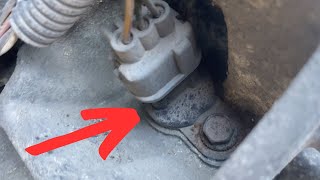
- Damaged Wiring Harness or Connector 🔴 High Probability The engine bay environment exposes wiring to extreme heat and vibration, which can cause wires to chafe, become brittle, or break internally. The harness can rub against engine components, brackets, or even itself. The connector pins can also corrode or lose tension, creating a poor connection.
How to confirm: Visually inspect the entire wiring harness leading to the camshaft position sensor for any signs of melting, chafing, or corrosion. With the engine running, carefully wiggle the connector and harness to see if it causes the engine to stumble or stall, which would indicate an intermittent connection. Use a multimeter to check for 5V reference, a good ground, and a fluctuating signal voltage at the connector.
Typical fix: Repair the damaged section of wire or replace the connector pigtail. A common Mopar pigtail connector is part number 68064983AA.
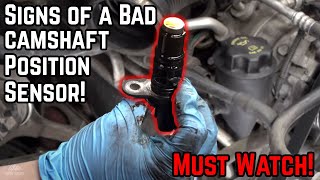
Est. part cost: $15-$50 - Faulty Camshaft Position Sensor 🔴 High Probability → Shop Engine Camshaft Position Sensor The sensor is an electronic component that operates in a high-heat environment and can fail internally over time, leading to an intermittent signal.
How to confirm: After confirming the wiring is intact, the most definitive test is to use an oscilloscope to monitor the sensor's signal for dropouts. A more straightforward but less certain method is to replace the sensor, as it's a common failure item.
Typical fix: Replace the camshaft position sensor. It is highly recommended to use an OEM Mopar part 🎬 See this step-by-step guide for replacing the sensor yourself. to avoid compatibility issues.
Est. part cost: $40-$80 - Low Engine Oil Level or Pressure (HEMI VVT) 🟡 Medium Probability The HEMI engines use a Variable Valve Timing (VVT) system that relies on oil pressure to adjust camshaft timing. If the oil is critically low, the VVT phasers may not respond as the PCM expects, causing a discrepancy in camshaft position that can trigger a cam sensor code.
How to confirm: Check the engine oil level and condition. If it is low, top it off and clear the codes to see if the issue resolves. Ensure the correct oil viscosity is being used.
Typical fix: Perform an oil and filter change, ensuring the oil is filled to the correct level.
Est. part cost: $50-$100
Rare But Worth Checking
- Failing Crankshaft Position Sensor: → Shop Engine Crankshaft Position Sensor The PCM constantly compares signals from the cam and crank sensors. An intermittent signal from the crankshaft sensor can confuse the PCM, causing it to incorrectly flag the camshaft sensor.
- Damaged Camshaft Reluctor Wheel: → Shop Engine Camshaft The sensor reads a toothed reluctor wheel (or tone ring) on the camshaft. If this wheel is damaged, cracked, or has debris on it, it can produce an erratic signal that triggers the code. This is a more involved repair requiring removal of the timing cover to inspect.
- Faulty Powertrain Control Module (PCM): → Shop Engine Control Module (ECM) In rare cases, the internal circuitry of the PCM that processes the sensor's signal can fail. This should only be considered after all other possibilities have been exhausted.
- Mechanical Timing Issue: On higher mileage engines, a stretched timing chain can cause the physical camshaft timing to be erratic, leading to signal correlation issues that trigger the code. This is a major mechanical repair.
Diagnosis Steps
- Check for other stored DTCs that could provide more context.
- Check the engine oil level and condition. If low, correct it, clear the codes, and re-test.
- Perform a thorough visual inspection of the camshaft position sensor's wiring harness and connector. Look for any signs of melting, chafing against other components, corrosion in the connector, or loose pins.
- With the engine idling, carefully wiggle the connector and sections of the harness to see if the fault can be duplicated (e.g., engine stumbles or stalls).
- Using a multimeter with the key on, engine off, backprobe the connector to verify a 5-volt reference signal and a solid ground.
- If a scan tool with live data is available, monitor the Cam/Crank Sync signal while wiggling the harness to look for dropouts.
- If the wiring appears to be in good condition, the next step is typically to replace the camshaft position sensor. Use of an OEM Mopar part is strongly recommended.
- If the code returns after replacing the sensor, the issue may be with the crankshaft position sensor, the camshaft reluctor wheel, or in rare cases, the PCM itself. Advanced diagnostics with an oscilloscope would be required to analyze sensor waveforms.
Parts You'll Likely Need
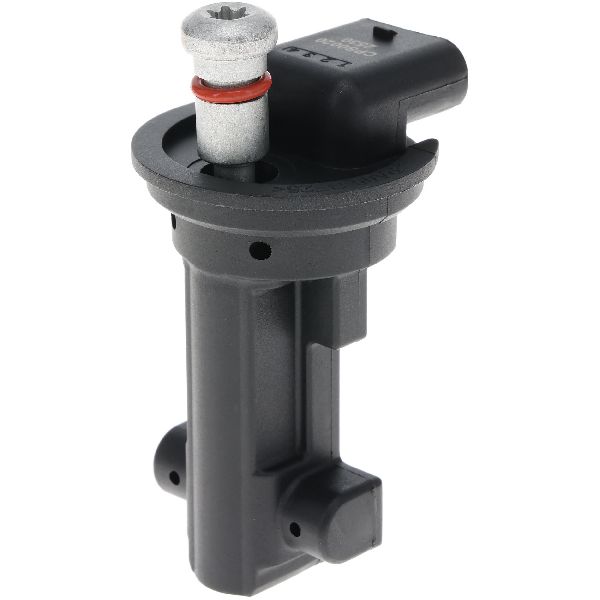
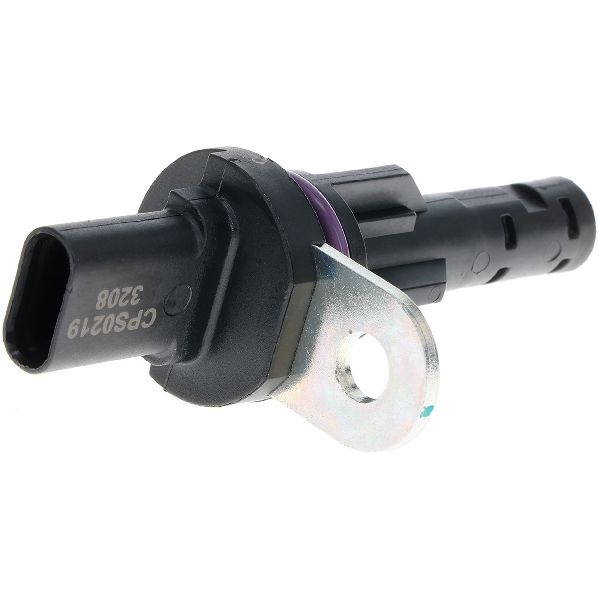
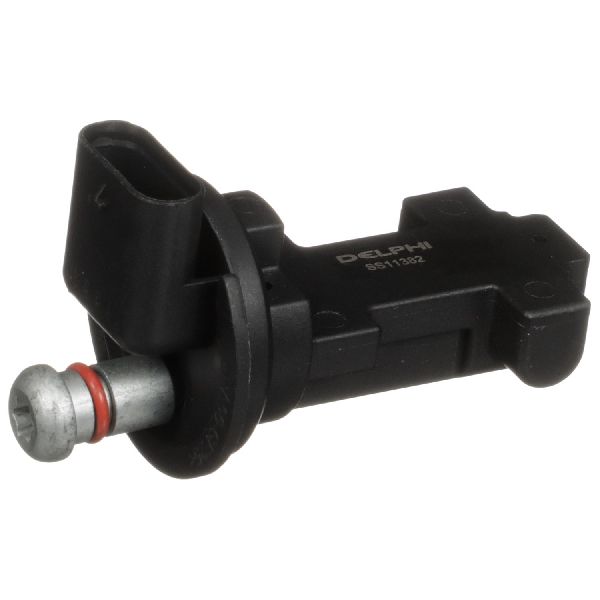
- Camshaft Position Sensor
(OEM #5149054AC)— This sensor is the most common part to fail internally, causing the intermittent signal reported by the P0349 code. Both 5.7L and 6.4L HEMI engines use this part. This part number replaces the previous version, 5149054AB.
Trusted brands: Mopar, Delphi, NTK, Standard Motor Products
OEM price range: $60-$90
Aftermarket price range: $30-$60 - Camshaft Sensor Connector Pigtail
(OEM #68064983AA)— If the wiring inspection reveals damage or corrosion at the connector itself, replacing the pigtail is the standard repair. Heat and vibration often cause the lock tab to break or terminals to lose tension.
Trusted brands: Mopar, Dorman
OEM price range: $25-$40
Aftermarket price range: $15-$25
Related Codes That Often Appear With This One
- P0344 — This is the equivalent intermittent code for Bank 1. Seeing both may indicate a shared wiring problem 🎬 Watch: Understanding intermittent circuit faults and how to fix them. or a more systemic issue.
- P0335 — This is a code for the crankshaft position sensor. The PCM compares cam and crank signals, so a fault in one can sometimes trigger a code for the other.
- P0345 — This is the general circuit fault code for Bank 2. It can appear alongside P0349 if the signal is both consistently faulty and intermittent.
Technical Service Bulletins (TSBs) & Recalls
- 05149141A: Advises technicians to contact a factory representative before replacing the camshaft position sensor for P0349, indicating a known complex issue. The TSB specifically requests Freeze Frame and Cam/Crank Sync Event Monitor data be collected and emailed for review.
- 18-049-20: While not for this specific truck, this TSB for Dodge Durango/Jeep Grand Cherokee with the same engines addresses P0349 by reprogramming the PCM to make the fault logic less sensitive. This indicates a known issue across the platform where the PCM can be too quick to set this code for minor, temporary signal glitches.
Platform-Specific Known Issues
- TSB #05149141A - Deeper Diagnosis Required: A critical Technical Service Bulletin (TSB #05149141A) was issued for this fault code. It instructs dealership technicians to gather diagnostic data, specifically Freeze Frame and Cam/Crank Sync Event Monitor data, and contact a specific factory engineer *before* replacing the camshaft position sensor. This strongly implies that the root cause is often not the sensor itself and requires deeper diagnosis, frequently related to wiring, mechanical issues (like the reluctor wheel), or software.
Mechanic-Grade Diagnostic Values
- Camshaft Position Sensor 5-Volt Supply Circuit Voltage — expected: 4.5 - 5.2 Volts. Failure: Voltage below 4.5V or above 5.2V points to a problem with the PCM or wiring, not necessarily the sensor.
- Camshaft Position Sensor Signal Circuit Voltage (Key On, Engine Off) — expected: Approximately 5.0 Volts. Failure: Voltage significantly lower than 5.0V suggests a short or sensor issue.
- Camshaft Position Sensor Signal Voltage (Dynamic Test) — expected: Voltage should drop from ~5V to near 0V when a ferrous metal object is passed in front of the sensor tip.. Failure: No change in voltage during the test indicates a failed sensor.
Scan Tool Commands That Help
- wiTECH (or equivalent professional scan tool): Cam/Crank Relearn — After replacing the camshaft position sensor, crankshaft position sensor, or performing any timing-related service. This procedure synchronizes the sensors with the PCM.
- wiTECH (or equivalent professional scan tool): Camshaft Position Sensor Test — This function can force a simulated signal into the PCM to test the module's input circuit independently of the sensor and wiring, helping to isolate a faulty PCM.
Wiring & Ground Locations
- PCM Connector C2 — The Powertrain Control Module (PCM) is located in the engine bay. C2 is one of the large multi-pin connectors.. The camshaft position sensor signal wire for the HEMI V8 runs to a specific pin on this connector. For a 3.6L engine (for comparison), the CMP signal is on Pin 34 (Circuit K44). Verifying continuity and checking for corrosion at this specific pin is a critical diagnostic step.
- Sensor Ground Circuit (K4) — This is a shared ground circuit used by multiple sensors, terminating at the PCM.. For a 3.6L engine (for comparison), the sensor ground is Pin 27 on PCM connector C2. A poor connection on this shared ground can cause erratic readings from multiple sensors, including the camshaft sensor.
- 5-Volt Supply Circuit (F856 / K7) — This circuit originates at the PCM and provides the reference voltage for the camshaft sensor and others.. The camshaft sensor requires a stable 5V supply to function. On a 3.6L (for comparison), this is Pin 29 on PCM connector C2. Testing for 4.5-5.2V at the sensor connector is a primary diagnostic step.
Real Owner Repair Stories
- RamForum.com user (2016 Ram 2500 6.4L HEMI) — Truck went into Limp Mode intermittently. Pulled codes P0349 and U0140 (Lost Communication With Body Control Module).
❌ Tried (didn't work) Initial diagnosis by the dealer was inconclusive.
✅ What actually fixed it The technician found a faulty 5-volt ground wire. The wire was not fully seated in the connector block at the PCM, causing an intermittent connection. After re-seating the pin, the problem was resolved.
OEM Part Supersession History
5149054AA, 5149054AB→5149054AC— Standard part revision and improvement by the manufacturer.
Helpful Videos

We Have This Part in Stock


The information in this article is provided for general reference and educational purposes only. Vehicle specifications, procedures, and part compatibility can vary by production date, trim level, and region. Always consult your vehicle's factory service manual and verify part numbers before purchasing or performing repairs. Safety-critical components such as airbags, seat belts, and braking systems should be installed by a qualified professional.
- Ram 3500:
- 🧭 Diagnostic Flowchart
- 🎬 Helpful Videos
- 🛍️ Shop This Part
- What's Unique About the 2014-2018 Ram 3500
- Symptoms You May Notice
- Most Likely Causes
- Rare But Worth Checking
- Diagnosis Steps
- Parts You'll Likely Need
- Related Codes That Often Appear With This One
- Technical Service Bulletins (TSBs) & Recalls
- Platform-Specific Known Issues
- Mechanic-Grade Diagnostic Values
- Scan Tool Commands That Help
- Wiring & Ground Locations
- Real Owner Repair Stories
- OEM Part Supersession History
- 🎟️ Get 5% Off