

P0349 on 2015-2018 Ram ProMaster City: Causes and Fixes for the Exhaust Cam Sensor Code
P0349 on a ProMaster City indicates an intermittent signal from the exhaust camshaft position sensor. Before replacing the sensor, inspect its wiring and connector for damage, as this is a very common cause. A manufacturer TSB suggests this code can point to complex issues, so a simple sensor swap may not be the fix. Excessive oil consumption, a known issue with the 2.4L Tigershark engine, can also lead to this code.
- P0349 on the ProMaster City refers to the EXHAUST camshaft sensor, not a non-existent 'Bank 2'.
- Always check the wiring and connector to the sensor before buying any parts; this is the most likely cause for an 'intermittent' code.
- A manufacturer TSB warns that simply replacing the sensor often does not fix the problem, suggesting a deeper issue may be present.
- Ensure your engine oil is clean and at the correct level, as oil pressure issues can affect valve and cam timing, triggering this code.
What's Unique About the 2015-2018 Ram PROMASTER CITY
What's unique about this code on the ProMaster City is the existence of a Technical Service Bulletin (TSB #05149141A). This TSB warns technicians that if they are replacing a camshaft sensor for a P0349 code (among others), they should pause and contact a specific factory engineer. This is highly unusual and strongly implies that a simple sensor failure is often not the root cause, and that misdiagnosis is common. The TSB instructs technicians to capture Freeze Frame and Cam/Crank Sync Event Monitor data before clearing codes, suggesting the issue may be complex, potentially involving wiring, software, or the mechanical timing system itself. This engine is also known for excessive oil consumption issues which can trigger various timing-related faults.
Diagnostic Flowchart
Tap your situation to follow the diagnostic path that matches what you're seeing on this vehicle.
Symptoms You May Notice
- Check Engine Light is on
- Engine stalls intermittently, sometimes when coming to a stop
- Rough idle or vibrations
- Hesitation or stumbling during acceleration
- Difficulty starting the engine (long crank time)
- Reduced fuel economy
- Engine may not start at all
- Immediately replacing the camshaft position sensor without first inspecting the wiring harness and connector. The TSB for this vehicle explicitly warns that a sensor replacement may not be the correct fix.
- Replacing the sensor with a cheap aftermarket part that is not fully compatible, leading to the code returning.
Most Likely Causes
- Damaged Wiring or Loose Connector 🔴 High Probability The 'intermittent' nature of the code points directly to a connection or wiring integrity problem. Engine vibration and heat can cause wires to chafe against the cylinder head or other components, or cause connector pins to become loose or corroded over time.
How to confirm: Visually inspect the entire wiring harness leading to the exhaust camshaft position sensor. Look for chafed, pierced, or melted sections. Wiggle the connector and harness with the engine running (if safe) while monitoring sensor data on a scan tool to see if the signal drops out.
Typical fix: Repair the damaged section of wire. Clean the connector terminals with electrical contact cleaner and apply dielectric grease to ensure a good connection and prevent future corrosion. If the connector is damaged, replace it with a new pigtail.
Est. part cost: $5-$25 - Failing Exhaust Camshaft Position Sensor 🟡 Medium Probability → Shop Engine Camshaft Position Sensor While the TSB warns against it being the only cause, the sensor itself is an electronic component that can fail with age and heat cycles. It is a common failure point after wiring issues are ruled out.
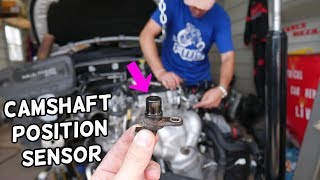
How to confirm: After confirming the wiring is good, the easiest test is to swap the intake and exhaust camshaft sensors, as they are the same part (Mopar P/N 68080819AD). 🎬 Watch: How to locate and replace the camshaft sensor If the code changes to a fault for the intake cam sensor (P0344), the sensor you moved is faulty.
Typical fix: Replace the exhaust camshaft position sensor. It is highly recommended to use an OEM Mopar part to avoid compatibility issues.
Est. part cost: $25-$90 - Low or Dirty Engine Oil 🟡 Medium Probability The 2.4L Tigershark engine uses the MultiAir system, which relies on clean, correct-spec oil (0W-20 Synthetic) and proper oil pressure to actuate the intake valves. These engines are also subject to a warranty extension for excessive oil consumption. 🎬 Watch: Learn how oil consumption issues lead to engine failure Low or dirty oil can affect the performance of the entire valvetrain and VVT system, causing the camshafts to not be in their expected positions, which can trigger timing-related codes like P0349.
How to confirm: Check the engine oil level on the dipstick and note its condition. If the oil is very low or appears sludgy, this is a likely contributor. Be aware that these engines can consume oil between changes.
Typical fix: Perform an oil and filter change using the manufacturer-specified full synthetic 0W-20 oil. Address any oil leaks or consumption issues, which may be covered under a warranty extension.
Est. part cost: $40-$80 - Worn Timing Chain or VVT Components ⚪ Low Probability A stretched timing chain or a failing VVT phaser (actuator) can cause the exhaust camshaft's timing to be erratic relative to the crankshaft, leading to an intermittent sensor code. This is a more serious mechanical issue.
How to confirm: This requires advanced diagnostics, including using a lab scope to compare the camshaft and crankshaft sensor signals or physically inspecting the timing components, which is labor-intensive.
Typical fix: Replace the timing chain, tensioners, guides, and/or the VVT phaser for the exhaust camshaft.
Est. part cost: $400-$1000+
Rare But Worth Checking
- Faulty Powertrain Control Module (PCM): → Shop Engine Control Module (ECM) This is very rare. Before condemning the PCM, all other possibilities (wiring, sensors, mechanical timing) must be exhaustively ruled out. The TSB's existence could also suggest a software logic issue that may require a dealer reflash to make the PCM less sensitive to minor signal variations.
Diagnosis Steps
- Check the engine oil level and condition. Top off or change if necessary, using only full synthetic 0W-20 oil.
- Read the fault codes with an OBD-II scanner and note any other codes present, especially correlation codes (P0017) or codes for the other cam sensor (P0344).
- Thoroughly inspect the wiring harness and connector for the exhaust camshaft position sensor (sensor 'B'). Look for chafing, melting, corrosion, or loose pins. Pay close attention to where the harness may rub against the engine.
- Using a scan tool with live data, monitor the exhaust cam sensor signal while wiggling the harness to check for dropouts.
- If wiring seems okay, swap the intake and exhaust cam sensors. They are the same part (Mopar #68080819AD). Clear the codes and drive the vehicle to see if the fault code moves to the intake sensor (P0344). If it does, the sensor is bad.
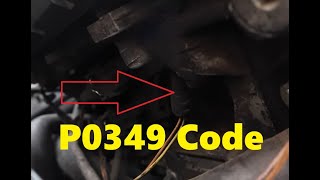
- If the code returns as P0349 after the swap, the problem lies within the circuit or the mechanical timing system. 🎬 See this breakdown of P0349 causes and circuit fixes
- Test the sensor circuit for correct voltage (typically 5V reference), ground, and signal continuity back to the PCM.
- If all wiring and sensors are confirmed good, consult a dealer about TSB #05149141A and potential PCM software updates. The issue may be mechanical (timing chain, phaser), which is best left to a professional.
Parts You'll Likely Need
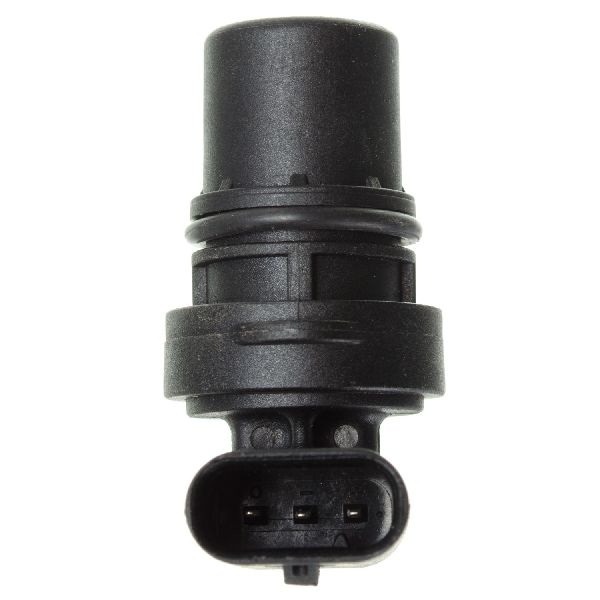
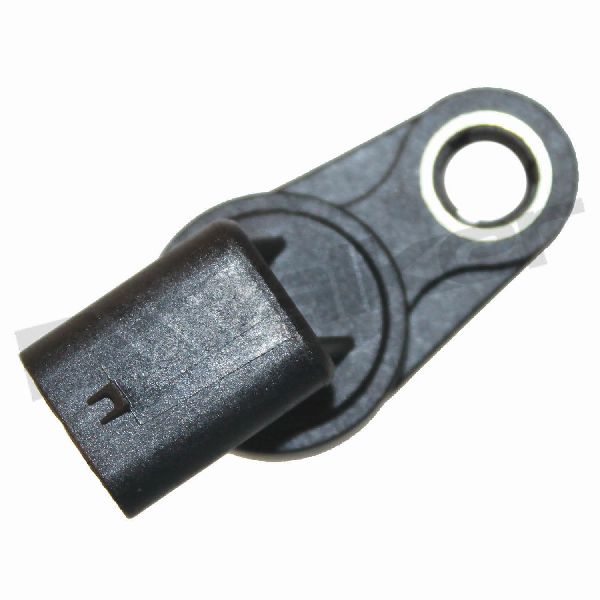
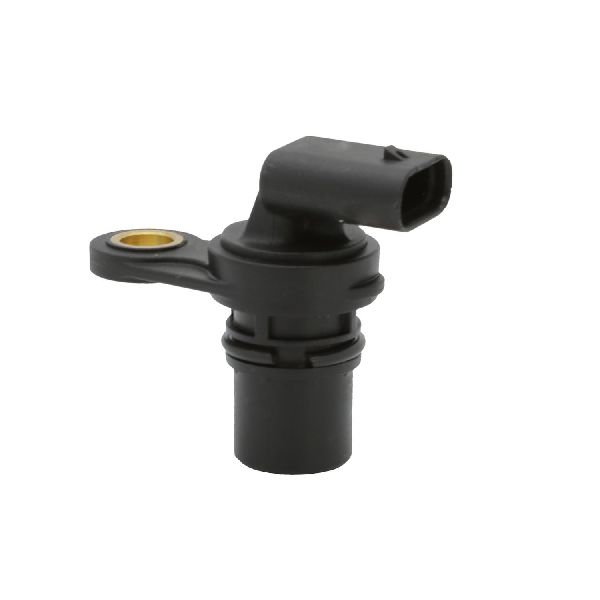
- Exhaust Camshaft Position Sensor
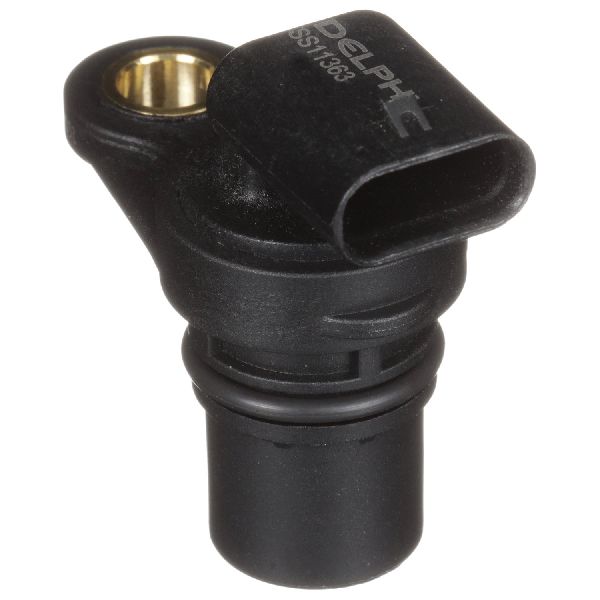
(OEM #68080819AD (supersedes 68080819AC, 68080819AB, 5033308AB))— This is the sensor that the code directly references. It's a common failure point after wiring issues have been ruled out. The intake and exhaust sensors are identical.
Trusted brands: Mopar, NTK, Delphi
OEM price range: $50-$100
Aftermarket price range: $25-$70 - Camshaft Position Sensor Connector Pigtail — If the connector itself is damaged or corroded, replacing the pigtail is the proper repair instead of trying to fix the old plastic housing.
Trusted brands: Mopar, Dorman
OEM price range: $20-$40
Aftermarket price range: $10-$25
Related Codes That Often Appear With This One
- P0344 — This is the intermittent code for the intake ('A') camshaft position sensor. Seeing both may indicate a common problem like a wiring harness issue, low oil pressure, or a systemic timing problem affecting both cams.
- P0017 — This code indicates a 'Crankshaft Position - Camshaft Position Correlation (Bank 1 Sensor B)' error. It means the PCM sees a misalignment between the crank and the exhaust cam, which could be the underlying mechanical cause for the intermittent P0349 signal.
- U1424 — Stands for 'Implausible Engine Torque Signal'. This code can be set on 2.4L Tigershark engines due to software issues or engine performance problems like misfires caused by excessive oil consumption, which is a related root cause.
Technical Service Bulletins (TSBs) & Recalls
- Bulletin #05149141A: Advises technicians to contact a specific factory engineer before replacing a camshaft position sensor for fault codes including P0349.
Platform-Specific Known Issues
- Excessive Oil Consumption: The 2.4L Tigershark engine is known for consuming oil, which can lead to low oil levels that affect the VVT and MultiAir systems, triggering timing codes like P0349. FCA issued a warranty extension (XB1) for this issue. Owners should check oil levels frequently, not just at scheduled changes.
- Unusual TSB #05149141A: This TSB is highly specific, instructing technicians to halt repairs and contact a factory engineer before replacing the cam sensor for this code. This strongly suggests a complex issue that is frequently misdiagnosed, possibly related to software logic or a non-obvious mechanical fault that mimics a sensor failure.
Mechanic-Grade Diagnostic Values
- Camshaft Position Sensor Supply Voltage — expected: 4.5V - 5.2V with key on, engine off.. Failure: Voltage below 4.5V or above 5.2V points to a wiring or PCM issue, not a faulty sensor.
- Camshaft Position Sensor Ground Circuit Resistance — expected: Less than 5.0 Ohms between the ground pin on the connector and a known good chassis ground.. Failure: Resistance above 5.0 Ohms indicates a corroded or open ground wire.
- Camshaft Position Sensor Signal Voltage (Hall Effect Test) — expected: Signal should switch rapidly between approximately 0V and 5V as the engine is cranked.. Failure: Voltage that is stuck high (5V), stuck low (0V), or does not produce a clean square wave on an oscilloscope indicates a fault in the sensor or circuit.
- Engine Oil Pressure at Idle — expected: Stable and above 14.0 psi.. Failure: Pressure below 14 psi or oscillating excessively can cause a delay in cam phaser movement, which can trigger intermittent camshaft position sensor codes.
Scan Tool Commands That Help
- wiTECH (or equivalent professional scanner): Cam Crank Synchronization Event Monitor — Per TSB #05149141A, this data must be captured and saved *before* clearing any fault codes. It provides detailed timing data for factory engineers to analyze complex or recurring P0349 faults.
- wiTECH (or equivalent professional scanner): Cam/Crank Relearn — This procedure should be performed after replacing a camshaft or crankshaft position sensor, or after performing timing chain service, to synchronize the new sensor data with the PCM.
Wiring & Ground Locations
- Powertrain Control Module (PCM) — Located in the left front of the engine compartment.. This is the termination point for all sensor wiring. Advanced circuit tests for voltage supply, ground, and signal continuity are performed at the PCM connector.
- Exhaust Camshaft Position Sensor ('B' Sensor) — Located on the top of the cylinder head, at the rear (driver's side) of the engine. It is easily accessible.. This is the sensor directly referenced by the P0349 code. Its harness is a primary inspection point for chafing or damage.
- Primary Engine Ground Strap — Typically runs from the engine block or transmission case to the chassis/frame.. A poor or corroded main engine ground can cause erratic voltage and floating ground references for multiple sensors, including the camshaft position sensor, leading to intermittent faults.
- Sensor Circuit Designators — These are identifiers for wires in the harness leading from the sensor to the PCM.. When using a factory wiring diagram, these designators confirm you are testing the correct wires: (F856) is the 5-Volt Supply, (K444) is the Signal circuit, and (K900) is the Sensor Ground circuit.
Real Owner Repair Stories
- CarComplaints.com owner reports (2018 Ram ProMaster City Tradesman SLT 2.4L) — Vehicle suddenly stopped running while driving. The engine would not restart until oil was added.
❌ Tried (didn't work) Initially assuming it was a component failure.
✅ What actually fixed it The root cause was severe oil consumption. The owner reported the vehicle had no oil in it despite being only 6,000 miles since purchase. The dealer performed an oil consumption test and claimed that losing 1 quart of oil every 1,000 miles was 'completely normal'. This highlights the excessive oil consumption as a real-world cause of engine shutdown and related codes, often dismissed by service centers.
When the Usual Fixes Don't Work
- The existence of TSB #05149141A is the strongest counter-evidence to this being a simple fix. The bulletin, which instructs technicians to stop and call a factory engineer before replacing the sensor, indicates that a high number of sensor replacements were not resolving the customer's issue. This implies the root cause is often not the sensor itself, but a more complex issue related to wiring, software logic, or underlying mechanical conditions like oil pressure problems or VVT component failure.
OEM Part Supersession History
5033308AB, 68080819AB, 68080819AC→68080819AD— Standard part revision and consolidation by the manufacturer.
Heads up: No known incompatibilities. The latest part number, 68080819AD, is the correct service replacement for all previous versions on this vehicle.
Helpful Videos

We Have This Part in Stock


The information in this article is provided for general reference and educational purposes only. Vehicle specifications, procedures, and part compatibility can vary by production date, trim level, and region. Always consult your vehicle's factory service manual and verify part numbers before purchasing or performing repairs. Safety-critical components such as airbags, seat belts, and braking systems should be installed by a qualified professional.
- Ram PROMASTER CITY:
- 🧭 Diagnostic Flowchart
- 🎬 Helpful Videos
- 🛍️ Shop This Part
- What's Unique About the 2015-2018 Ram PROMASTER CITY
- Symptoms You May Notice
- Most Likely Causes
- Rare But Worth Checking
- Diagnosis Steps
- Parts You'll Likely Need
- Related Codes That Often Appear With This One
- Technical Service Bulletins (TSBs) & Recalls
- Platform-Specific Known Issues
- Mechanic-Grade Diagnostic Values
- Scan Tool Commands That Help
- Wiring & Ground Locations
- Real Owner Repair Stories
- When the Usual Fixes Don't Work
- OEM Part Supersession History
- 🎟️ Get 5% Off