

P0351 on 2009-2016 Audi A4 2.0T: Ignition Coil 'A' Circuit Causes and Fixes
On a 2009-2016 Audi A4 2.0T, code P0351 almost always means the ignition coil on cylinder 1 has failed. This is a very common issue. Replacing the single faulty coil costs about $25-$50 for a quality aftermarket part and is a 1/5 difficulty DIY job. It is highly recommended to replace all four coils and spark plugs at the same time.
- P0351 on your A4 2.0T almost certainly points to a bad ignition coil on cylinder 1.
- The easiest way to confirm the bad coil is to swap it with one from another cylinder and see if the code follows it (e.g., changes to P0352).
- This is a very simple and inexpensive DIY repair that requires minimal tools and can be done in under 15 minutes.
- To prevent future issues, it's wise to replace all four ignition coils and spark plugs at the same time.
- Do not ignore a flashing check engine light, as it signals a severe misfire that can quickly damage your catalytic converter.
What's Unique About the 2009-2016 Audi A4
The EA888 2.0T engine used in the B8 and B8.5 generation Audi A4 is well-known for ignition coil failures. These components are considered a common wear item, with some owners reporting failures as early as 30,000 to 60,000 miles. While the code itself is generic, its frequent appearance on this specific platform is almost always linked directly to a bad coil, making diagnosis more straightforward than on many other vehicles. The coils are subjected to significant heat-soak, which degrades the internal epoxy and plastic housings over time.
Generation note: This guide covers the Audi A4 B8 (2009-2012) and B8.5 (2013-2016) generations. Both use versions of the 2.0L TFSI EA888 engine (primarily Gen 2), and the causes, symptoms, and repair procedures for code P0351 are consistent across both generations.
Symptoms You May Notice
- Check Engine Light is on (may be flashing)
- Engine misfiring, which feels like shaking, stumbling, or jerking
- Rough or unstable idle
- Noticeable loss of engine power and poor acceleration
- Reduced fuel economy
- Difficulty starting the engine
- Smell of gasoline from the exhaust due to unburned fuel
- Replacing the fuel injector when the issue is spark-related.
- Assuming a major engine problem without first performing the simple 5-minute coil swap diagnostic test.
- Replacing only the single failed coil, only to have another one fail a few weeks later.
Most Likely Causes
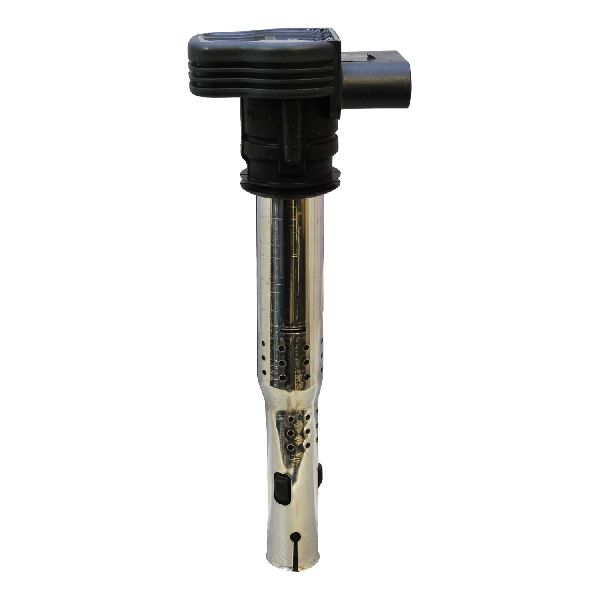
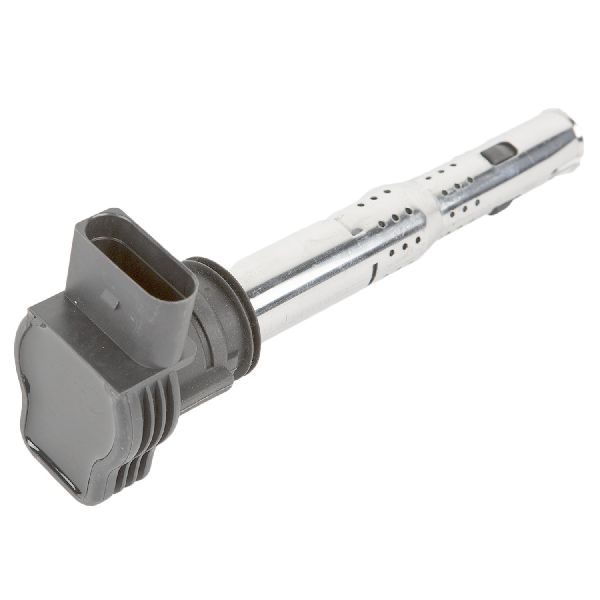
- Faulty Ignition Coil on Cylinder 1 🔴 High Probability → Shop Ignition Coil Ignition coils are a very common failure point on the 2.0T TFSI engine, often failing prematurely due to intense heat cycles and electrical stress. They are widely considered a maintenance item on this platform.
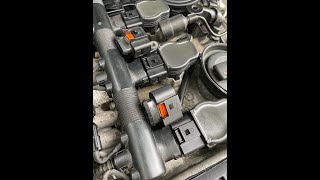
How to confirm: Swap the ignition coil from cylinder 1 with the coil from cylinder 2. Clear the codes and run the engine. If the code changes to P0352 (Ignition Coil 'B' Circuit), the coil is definitively bad. This is the most common and effective diagnostic step. 🎬 Watch: How to diagnose a bad coil pack
Typical fix: Replace the faulty ignition coil. It is strongly recommended to replace all four coils and spark plugs at the same time for reliability, as the others are likely of the same age and condition and may fail soon after the first.
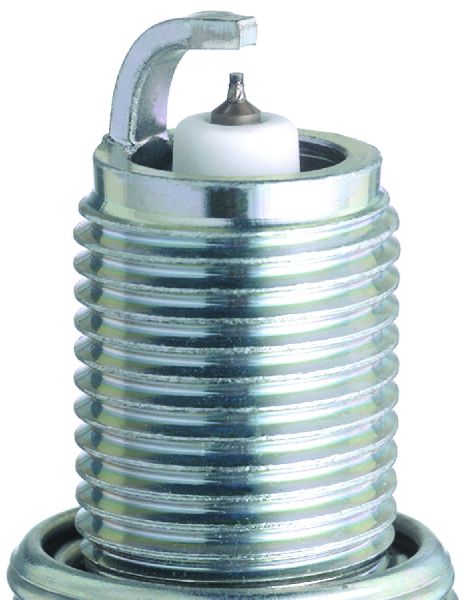
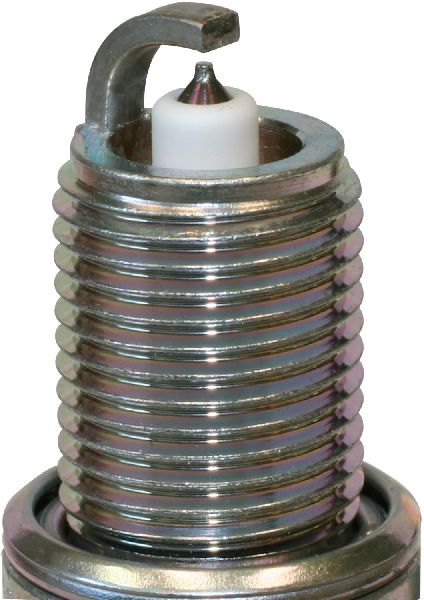
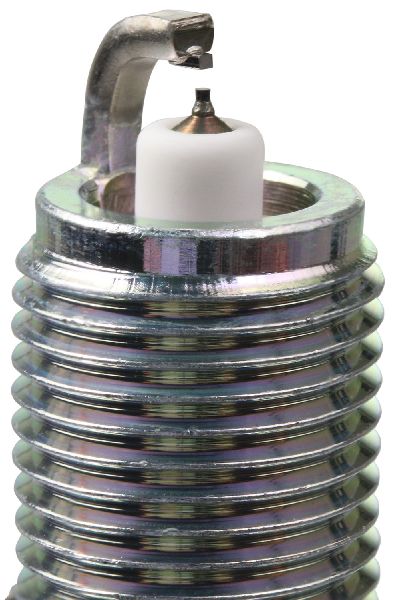
Est. part cost: $25-$65 per coil - Worn or Fouled Spark Plug in Cylinder 1 🟡 Medium Probability → Shop Spark Plug A worn spark plug with an excessive gap requires more voltage to create a spark. This puts excessive strain on the ignition coil, causing it to overheat and fail, which in turn triggers the P0351 code. The 2.0T engine is also known for oil consumption issues which can foul plugs.
How to confirm: After confirming the coil is not the issue, remove the spark plug from cylinder 1. Inspect it for wear (rounded electrode), excessive carbon buildup, oil fouling, or cracks in the porcelain insulator. This engine can be picky about spark plug gaps.
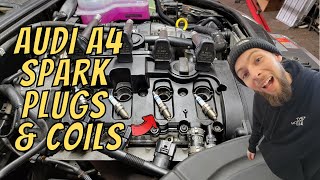
Typical fix: Replace the spark plug in cylinder 1. It is best practice to replace all four spark plugs as a set 🎬 Watch: Step-by-step spark plug and coil replacement guide to ensure consistent performance and prevent future coil failures.
Est. part cost: $15-$30 per plug - Damaged Ignition Coil Connector or Wiring ⚪ Low Probability → Shop Ignition Coil The plastic connector and wiring harness become brittle over time from constant engine heat cycles. The locking tab on the connector is notoriously fragile and often breaks, leading to a loose connection, while the wires themselves can fray.
How to confirm: Visually inspect the electrical connector and wiring going to the cylinder 1 ignition coil. Look for any signs of cracking, corrosion on the pins, or frayed wires. Wiggle the connector with the engine running to see if it affects the misfire. If the connector housing is broken, it must be replaced.
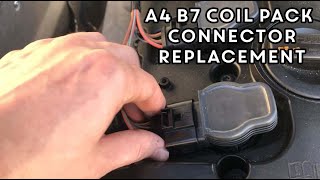
Typical fix: If the connector is damaged, replace the pigtail or, more easily, the plastic connector housing itself (part number 8K0973724 is a common replacement 🎬 See how to fix a broken coil connector). Repair any broken wires with solder and heat shrink.
Est. part cost: $10-$30 for a connector housing or pigtail
Rare But Worth Checking
- Faulty Powertrain Control Module (PCM): → Shop Engine Control Module (ECM) This is extremely rare. The internal driver circuit in the PCM that controls the ignition coil can fail. This should only be considered after definitively ruling out the coil, spark plug, and wiring with multimeter tests.
- Leaking Valve Cover Gasket: → Shop Engine Valve Cover A less common cause is oil leaking from the valve cover gasket into the spark plug tubes. This oil can saturate the boot of the ignition coil, causing it to short out or fail prematurely. When removing the coil, check for oil in the tube.
Diagnosis Steps
- Read the code with an OBD-II scanner to confirm P0351 and check for any other codes like P0301.
- Locate cylinder 1 (front-most cylinder on the engine).
- Swap the ignition coil from cylinder 1 with the ignition coil from cylinder 2. This requires no tools other than a hand to pull the coil straight up.
- Clear the fault codes using the scanner.
- Start the engine and let it idle for a minute, then re-scan for codes.
- If code P0352 appears, the ignition coil you moved to cylinder 2 is faulty and must be replaced. This is the most likely outcome. Purchase a new set of four coils.
- If code P0351 returns, the problem is not the coil. The issue lies in the wiring or PCM signal for cylinder 1. Proceed to the next step.
- Turn off the engine and remove the spark plug from cylinder 1. Inspect its condition. If it is worn, fouled with oil, or damaged, replace it. It's best to replace all four.
- If the spark plug is fine, carefully inspect the ignition coil's electrical connector and wiring for damage, corrosion, or loose pins. Pay close attention to the fragile locking tab.
- If no visible wiring issues are found, a more advanced diagnosis using a multimeter is needed. Check for 12V power, good ground, and the trigger signal (as a Hertz reading) from the ECM at the coil connector. This step may require a professional or a detailed guide.
Parts You'll Likely Need
- Ignition Coil
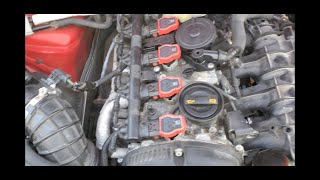
(OEM #07K905715G)— This is the most common cause of P0351 on the Audi A4 2.0T engine. The original part (06H905115B) has been superseded many times. A popular upgrade is the red-topped coil from the Audi R8, part number 06E905115G, which is said to provide a stronger spark and is a direct fit for the EA888 Gen 1/2 engines.
Trusted brands: Bosch, NGK, Eldor (OEM for Audi), APR
OEM price range: $45-$65
Aftermarket price range: $25-$50 - Spark Plug
(OEM #NGK PFR7S8EG)— Often replaced along with the ignition coils as a preventative measure, or because a worn plug was the root cause of the coil failure. Using the correct, pre-gapped plug is crucial.
Trusted brands: NGK, Bosch
OEM price range: $20-$30
Aftermarket price range: $15-$25 - Ignition Coil Connector Housing
(OEM #8K0973724)— The original connector becomes brittle from heat and the locking tab frequently breaks, leading to a poor connection and intermittent misfires. Replacing the housing is a common repair.
Trusted brands: Genuine Volkswagen/Audi
OEM price range: $15-$25
Aftermarket price range: $10
Related Codes That Often Appear With This One
- P0301 — P0301 is the code for 'Cylinder 1 Misfire Detected'. Since P0351 indicates a fault in the ignition circuit for cylinder 1, it directly causes the misfire that P0301 reports. You will almost always see these two codes together.
- P0300 — This code means 'Random/Multiple Cylinder Misfire Detected'. While P0351 is specific to cylinder 1, a severe misfire can sometimes be misinterpreted by the ECU, or other coils may be failing simultaneously, leading to a P0300 code as well.
- P0302, P0303, P0304 — If other coils are also failing, you may see misfire codes for other specific cylinders in addition to P0301.
Platform-Specific Known Issues
- Ignition coils on the 2.0T EA888 engine are a known high-failure item and are often considered a maintenance part rather than a component that lasts the life of the vehicle.
- Many owners proactively replace all four coils and plugs every 40,000-60,000 miles to prevent being stranded by a failure.
- The red ignition coils from the Audi R8 (part number starting with 06E) are a very common and popular OEM+ upgrade for this engine, believed to offer higher energy output.
Mechanic-Grade Diagnostic Values
- Ignition Coil Primary Winding Resistance — expected: 0.4 to 2.0 Ohms. Failure: A reading of infinite ohms (OL) indicates an open circuit, while 0 ohms indicates a short. Both mean the coil is bad.
- Ignition Coil Secondary Winding Resistance — expected: 6,000 to 10,000 Ohms (6kΩ - 10kΩ). Failure: A reading significantly outside this range indicates a faulty coil.
- Ignition Coil Connector - PCM Trigger Signal — expected: 5 to 20 Hz (when measured with a multimeter on the Hertz scale). Failure: No Hertz reading indicates a lack of trigger signal from the PCM, pointing to a wiring or PCM driver fault.
- Ignition Coil Connector - Power Supply Voltage — expected: 12V+ (Battery Voltage) at Pin 2 with Key On, Engine Off.. Failure: No voltage indicates a problem with the power supply wire or a blown fuse.
- Ignition Coil Connector - Ground Continuity — expected: Less than 1.0 Ohm of resistance between Pin 1 & 4 and a known good chassis ground.. Failure: High or infinite resistance (OL) indicates a bad ground connection.
- Engine-to-Chassis Ground Voltage Drop — expected: Less than 0.15 Volts. Failure: Readings higher than 0.15V, tested with the engine running, indicate a degraded main engine ground strap which can cause intermittent electrical issues.
Scan Tool Commands That Help
- VCDS (VAG-COM): Engine -> Measuring Blocks -> Groups 015 & 016 — Use this to view live misfire counters for each cylinder. After swapping coils between cylinders 1 and 2, watching these counters will show if the misfire count moves to cylinder 2, instantly confirming a bad coil without waiting for a new trouble code to be set.
- VCDS (VAG-COM): Engine -> Output Tests — This function can be used to sequentially activate various engine components. While it may not allow for firing a single coil on command, it is a useful step in a deeper diagnostic routine to verify the PCM's ability to command outputs.
Wiring & Ground Locations
- Ignition Coil Connector Pins — The 4-pin connector on top of each ignition coil.. For testing, Pin 2 should have 12V+ power with the key on. Pins 1 and 4 are grounds that should have continuity to the chassis. The remaining pin is the trigger signal from the ECM.
- G105 (Engine-to-Firewall Ground) — A ground strap connecting the engine block to the vehicle's firewall.. This is a critical ground path for the engine's electrical systems, including the ignition coils. Corrosion or fraying here can cause high resistance, leading to weak spark and intermittent ignition faults.
- G104 (Transmission-to-Chassis Ground) — A primary ground strap connecting the transmission bellhousing to the vehicle's chassis.. This is a primary ground return path for the entire powertrain. Degradation of this strap is a common failure point and can cause a wide range of electrical issues, including ignition problems that could trigger P0351.
- G106 / G107 — Primary ground points located in the left and right side of the engine bay structure.. These chassis grounds are connection points for various harnesses. Corrosion at these points due to road salt and moisture can interrupt the ground circuit for the ignition coils.
Real Owner Repair Stories
- Ross-Tech Forums user (Audi A4 2.0T (similar EA888 engine and electronics)) — Misfire with an ignition coil circuit code (P2310, equivalent to P035x).
❌ Tried (didn't work) Replaced spark plugs, Replaced ignition coils
✅ What actually fixed it The issue was not the components. The user was advised to perform a 'load light test' on the wiring harness going to the coils, which confirmed a wiring integrity problem between the ECM and the coil connector, requiring a wiring repair. - Quora user experience (Unspecified vehicle with recurring P0351) — P0351 code would reappear every few months.
❌ Tried (didn't work) Replaced ECM, Replaced wiring harness, Replaced battery, Reloaded software, Repaired ground connection
✅ What actually fixed it This is a cautionary tale with no final resolution provided by the user. It illustrates that even after replacing nearly every related component, a deeply intermittent issue in a connection or a subtle ground fault can cause the code to return, stumping even professional technicians.
OEM Part Supersession History
06H905115B (and others)→06E905115G (R8 'Red Top' Coil) and many others— Original black-top coils had a high failure rate. Later revisions and the popular red-top 'R8' coils from other VW/Audi models offer improved durability and potentially higher energy output.
Heads up: The 'long boot' style coils are widely interchangeable across EA888 Gen 1/2 and other VW group engines. A comprehensive list of compatible and superseded part numbers includes: 06D905115 (A-K), 06E905115 (A-G), 06F905115 (C-F), 06H905115/B, 07K905715 (D-G).
Model Year Variations Within This Range
- 2009-2012 (B8) vs 2013-2016 (B8.5): The B8 models typically use the EA888 Gen 1/2 engine (e.g., CAEB code), while the facelifted B8.5 models primarily use an updated EA888 Gen 2 engine that incorporates Audi Valve Lift System (AVS). However, for the purposes of diagnosing P0351, the coil-on-plug ignition system design, failure modes, and repair procedures are virtually identical across this entire year range.
Diagnostic Flowchart
Other Known Issues on This Vehicle
Issues unrelated to this code that are worth knowing about as an owner of this generation:
- Excessive Oil Consumption 🔴 High — Very common on 2009-2011 models with CAEB engine code. Caused by faulty piston ring design. Can require adding oil every 500-1000 miles. A class-action lawsuit addressed this issue. (Ref: Multiple TSBs exist for performing a two-stage oil consumption test and subsequent piston/ring replacement.)
- Timing Chain Tensioner Failure 🔴 High — Extremely common on early EA888 Gen 2 engines (pre-2012). The original tensioner design is prone to failure, causing the timing chain to jump, resulting in catastrophic engine damage (piston-to-valve contact). Failure can occur with little warning, often between 60,000-100,000 miles. (Ref: A TSB was issued detailing the problem and an updated tensioner part was released. A class-action lawsuit also addressed this, extending warranties for some owners.)
- Water Pump Failure 🟠 Medium — Common across the B8/B8.5 generation. The original water pump has a plastic housing that cracks or a gasket that fails, causing coolant leaks. Failures can occur as early as 25,000 miles but are more typical around 60,000-80,000 miles. (Ref: A recall was issued for some models due to coolant pump blockage risks. Many owners upgrade to aftermarket pumps with full metal housings.)
Used vs. New Parts: Buying Guide for This Vehicle
When a used part is the smart pick: A used ignition coil connector pigtail from a junkyard is a smart choice if only the plastic housing or locking tab is broken. A used ignition coil can be a budget-fix, but it is not recommended as coils are a known wear item on this engine.
Donor-vehicle mileage cap: roughly under 60000 miles for the part to have meaningful remaining life.
What to inspect on the donor part:
- For ignition coils, inspect the plastic housing for any cracks, melting, or signs of extreme heat stress.
- For connectors, ensure the plastic is not brittle and that the locking tab is intact and functional.
- Check wiring insulation for any signs of cracking, fraying, or previous repairs.
OEM-only on this vehicle (don't cheap out):
- Spark Plugs (always buy new)
- Powertrain Control Module (PCM/ECM) - due to complex programming and security integration, a new or professionally remanufactured unit is required.
Aftermarket brands forum-validated for this vehicle:
- Bosch
- NGK
- Eldor
- APR (known performance upgrade)
Brands owners have reported issues with on this vehicle:
- Generic, unbranded 'budget' coil sets from online marketplaces have been reported by owners to fail prematurely, sometimes within months.
Real Owner Stories
Aggregated from forums and TSBs cited above. Mileages and costs reflect what owners reported in those sources.
2011 Audi A4 2.0T — 217000 miles
Symptoms: Owner noted the engine is very picky about spark plug gaps and mentioned previous history with the oil consumption fix (new pistons and rings) performed under warranty.
What fixed it: Inspection of coils and plugs; maintenance of specific spark plug gaps.
Source hint: Reddit r/AudiA4: B8 Coils & Plugs
2009-2016 Audi A4 2.0T
Symptoms: Intermittent misfires; visual inspection revealed brittle coil pack connectors due to intense engine heat.
What fixed it: Checking for cracks or corrosion in the connectors and ensuring the fragile locking tabs are secure.
Source hint: Audizine Forum: B8 A4 Misfire Problem
2009-2016 Audi A4 2.0T
Symptoms: Broken ignition coil plug connector plastic due to heat.
What fixed it: Replacing the connector housing (Part# 8K0973724) without cutting the factory wires.
Source hint: YouTube: Audi 2.0T BROKEN Ignition coil plug connector FIXED
Related OBD-II Codes
Frequently Asked Questions
Is there a specific part number for the ignition coil connector housing if the locking tab breaks on my A4?
I heard Audi R8 coils are better for the 2.0T engine; can I use them to fix P0351?
Should I replace just the one faulty coil on Cylinder 1 or all of them?
How often should I be replacing my coils and plugs on this Audi A4 to prevent misfires?
Could my A4's known oil consumption issue be causing this P0351 code?
How can I be sure it's the coil and not a more expensive electrical issue?
Helpful Videos

We Have This Part in Stock


The information in this article is provided for general reference and educational purposes only. Vehicle specifications, procedures, and part compatibility can vary by production date, trim level, and region. Always consult your vehicle's factory service manual and verify part numbers before purchasing or performing repairs. Safety-critical components such as airbags, seat belts, and braking systems should be installed by a qualified professional.
- Audi A4:
- 🧭 Diagnostic Flowchart
- 🎬 Helpful Videos
- 🛍️ Shop This Part
- What's Unique About the 2009-2016 Audi A4
- Symptoms You May Notice
- Most Likely Causes
- Rare But Worth Checking
- Diagnosis Steps
- Parts You'll Likely Need
- Related Codes That Often Appear With This One
- Platform-Specific Known Issues
- Mechanic-Grade Diagnostic Values
- Scan Tool Commands That Help
- Wiring & Ground Locations
- Real Owner Repair Stories
- OEM Part Supersession History
- Model Year Variations Within This Range
- Other Known Issues on This Vehicle
- Used vs. New Parts: Buying Guide for This Vehicle
- Real Owner Stories
- 2011 Audi A4 2.0T — 217000 miles
- 2009-2016 Audi A4 2.0T
- 2009-2016 Audi A4 2.0T
- Related OBD-II Codes
- Frequently Asked Questions
- 🎟️ Get 5% Off