

P0351 on 2006-2011 BMW 528i (N52): Ignition Coil 'A' Circuit Causes and Fixes
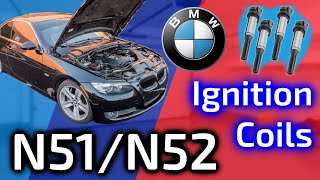
For a BMW 528i with the N52 engine, code P0351 almost always means the ignition coil on cylinder 1 has failed. This is a common issue and an easy DIY fix. Expect to pay about $30-$60 for a quality aftermarket coil (Bosch, Delphi, or Eldor) and replace it in under an hour. It is highly recommended to replace all six coils and spark plugs at the same time for long-term reliability.
- P0351 on your 528i points directly to a problem with the cylinder 1 ignition system, most likely a bad coil.
- This is a high-probability failure item on the N52 engine, but it's inexpensive and very easy to fix yourself.
- The most effective diagnostic is to swap the coil from cylinder 1 with another cylinder and see if the code follows.
- Use quality OEM brands like Bosch, Delphi, or Eldor. It's wise to replace all six coils and spark plugs at the same time for long-term reliability.
- Check for oil in the spark plug well. If you find any, your valve cover gasket is leaking and must be replaced to prevent future coil failures.
What's Unique About the 2006-2011 BMW 528i
On the N52 engine, ignition coils are a well-documented, common failure item due to heat cycles and material degradation over time. BMW even issued a technical service bulletin (SI B12 18 14) acknowledging failures in Bosch-made coils and recommending replacement with updated Delphi or Eldor parts. Because all coils have a similar service life, many owners and independent shops recommend replacing all six ignition coils at the same time as preventative maintenance. Another common issue is the valve cover gasket leaking oil into the spark plug tubes, which can saturate and destroy the ignition coils over time.
Generation note: The specified vehicle range 2006-2011 covers two generations of the 5 Series. The 2006-2010 models belong to the E60 generation. Specifically for the US market, the 528i with the N52 engine was sold from model years 2008-2010. The 2011 model year marks the beginning of the F10 generation, which used the N52 engine briefly before being replaced by the N20 turbocharged four-cylinder. This guide is most applicable to the 2008-2010 E60 528i. There was a change in ignition coil connectors for N52 engines built before April 2006, but this primarily affects 3-series models and is unlikely to apply to the 528i which started in 2008.
Symptoms You May Notice
- Check Engine Light is on (may be flashing)
- Engine misfiring, which may feel like a shake, shudder, or hesitation
- Rough or unstable idle
- Reduced engine power and poor acceleration
- Increased fuel consumption
- Difficulty starting the engine
- Smell of unburnt fuel from the exhaust
- Replacing only the spark plug without testing the ignition coil.
- Replacing only one ignition coil when others are of similar age and likely to fail soon.
- Replacing the engine computer (DME) before thoroughly checking the coil, plug, and wiring.
- Ignoring oil in the spark plug well, leading to a repeat failure of the new coil.
Most Likely Causes
- Failed Ignition Coil (Cylinder 1) 🔴 High Probability → Shop Ignition Coil Ignition coils are a frequent failure point on the N52 engine due to heat and vibration. BMW issued TSB SI B12 18 14 acknowledging issues with original Bosch coils and recommending replacement.
How to confirm: Swap the ignition coil from cylinder 1 with another cylinder (e.g., cylinder 2). Clear the codes and run the engine. If the code changes to P0352, the coil is faulty.
Typical fix: Replace the failed ignition coil. It is highly recommended to replace all six coils at the same time with parts from the same OEM brand (Delphi, Bosch, or Eldor).
Est. part cost: $30-$85 per coil - Worn or Fouled Spark Plug (Cylinder 1) 🟡 Medium Probability → Shop Spark Plug Spark plugs are a regular maintenance item with a service life of 60,000-100,000 miles. An old plug with a large gap or heavy deposits can overwork the ignition coil, leading to its premature failure.
How to confirm: After confirming the coil is good, remove the spark plug from cylinder 1. Inspect it for wear (rounded electrode), cracks in the porcelain, or contamination from oil or carbon. Compare it to a new plug.
Typical fix: Replace the spark plug. It is best practice to replace all six spark plugs at the same time, especially if their age is unknown.
Est. part cost: $10-$25 per plug - Damaged Coil Connector or Wiring ⚪ Low Probability The plastic connector can become brittle from engine heat and break during service, or the wiring can be damaged from chafing or rodent activity. The locking tab on the connector is notoriously fragile.
How to confirm: Visually inspect the electrical connector and wiring harness for cylinder 1's ignition coil. Look for cracks, corrosion on the pins, or any signs of melted or broken wires. Wiggle the connector with the engine running to see if it induces a misfire.
Typical fix: Repair the wiring or replace the connector pigtail.
Est. part cost: $15-$40 for a connector pigtail
Rare But Worth Checking
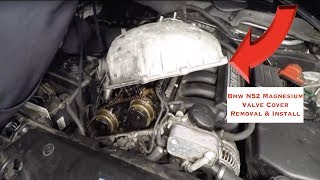
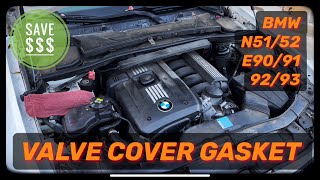
- Leaking Valve Cover Gasket: → Shop Engine Valve Cover A common oil leak on the N52 engine is the valve cover gasket. If it leaks externally, oil can run down and pool in the spark plug wells, saturating and destroying the ignition coil and boot. If you find oil when you pull the coil, you must replace the valve cover gasket to prevent repeat failures. 🎬 Watch: Step-by-step N52 valve cover gasket replacement walkthrough
- Leaking Oil Filter Housing Gasket: A severe leak from the Oil Filter Housing Gasket (OFHG) can drip oil onto the main serpentine belt. If the belt slips off, it can be ingested by the front main seal, causing catastrophic engine damage. While not a direct cause of P0351, it's a critical N52 issue to be aware of during any under-hood diagnosis.
- Faulty Engine Computer (DME): In very rare cases, the internal driver circuit (MOSFET) in the DME that controls the ignition coil can fail. This should only be considered after all other possibilities (coil, plug, wiring) have been definitively ruled out, as it is an expensive and complex repair requiring programming or cloning.
Diagnosis Steps
- Read the trouble codes with an OBD-II scanner. Confirm P0351 is present. Note any other codes, like P0301.
- Identify cylinder 1. On the N52 inline-six engine, cylinder 1 is the one closest to the front of the vehicle (near the radiator).
- Swap the ignition coil from cylinder 1 with the coil from cylinder 2. This is the most definitive and simple test. 🎬 Watch: How to diagnose a BMW N52 misfire without a scanner
- Clear the fault codes using the scanner.
- Start the engine and let it run for a minute or drive it briefly until the check engine light returns.
- Re-scan for codes. If the code has moved and is now P0352 ('Ignition Coil 'B' Circuit'), the ignition coil you moved is bad and needs to be replaced.
- If the code P0351 returns, the problem is not the coil. Proceed to inspect the spark plug and the wiring connector for cylinder 1.
- Remove the coil again and inspect the spark plug tube for any oil. Oil presence indicates a leaking valve cover gasket that must be replaced to solve the root cause.
- Remove and inspect the spark plug for cylinder 1. Replace it if it is worn, fouled, or damaged. It's best to replace all six.
- If the plug is fine, carefully inspect the ignition coil's electrical connector and wiring for any signs of damage, corrosion, or loose pins. Check that the connector clicks securely into place.
- If all of the above check out, the issue could be in the wiring harness between the coil and the DME, or in a very rare case, the DME itself.
Parts You'll Likely Need
- Ignition Coil
(OEM #12138616153)— This is the most common cause of P0351 on the N52 engine. The part number listed is the latest Delphi/Eldor revision from BMW. Superseded part numbers include: 12137594937, 12137571643, 12137594938, 12131712219.
Trusted brands: Delphi (OEM), Eldor (OEM), Bosch (OEM, but earlier versions had issues per TSBs)
OEM price range: $60-$85
Aftermarket price range: $30-$55 - Spark Plug
(OEM #12122158253)— Often replaced along with the ignition coil, either as a preventative measure or because a worn plug caused the coil to fail. It's best practice to replace all six.
Trusted brands: NGK PLZFR6A11S, Bosch FR7NPP332
OEM price range: $20-$30
Aftermarket price range: $12-$22
Related Codes That Often Appear With This One
- P0301 — P0301 means 'Cylinder 1 Misfire Detected.' Since P0351 indicates a fault in the ignition circuit for cylinder 1, the cylinder will likely misfire, causing both codes to appear together.
- 29CD — This is a BMW-specific code for 'Combustion misfires, cylinder 1'. It is the manufacturer equivalent of P0301 and frequently accompanies P0351.
Technical Service Bulletins (TSBs) & Recalls
- BMW SI B12 18 14: Titled 'Engine Misfire Due to Failed Ignition Coil', this bulletin addresses the high failure rate of original-equipment Bosch ignition coils on N51, N52, N52K, and N52T engines. It recommends replacing all Bosch coils with new Delphi coils (P/N 12138616153) during the first service visit for a coil failure.
Mechanic-Grade Diagnostic Values
- Ignition Coil Connector Pin 3 (Orange Wire) Voltage — expected: 12V+ with ignition on. Failure: No voltage indicates a power supply issue from the DME or a wiring fault.
- Ignition Coil Connector Pin 2 (Brown Wire) to Chassis Ground — expected: Continuity (near 0 ohms). Failure: High resistance or an open circuit (OL) indicates a bad ground connection.
- Ignition Coil Primary/Secondary Resistance — expected: Varies by manufacturer (e.g., Bosch, Delphi). No standard spec is published by BMW; the recommended method is to compare a suspect coil's readings to a known-good coil.. Failure: A significant deviation in resistance compared to a new or known-good coil. However, a coil can still be faulty under load even if resistance values appear normal.
Hidden / Shadow Codes Worth Checking
- 30BA / 30BB: These are BMW-specific DME codes indicating an injector circuit malfunction (e.g., short circuit). While related to injectors, they can sometimes be triggered by severe electrical issues originating from the ignition system or a failing DME that also affects ignition coil drivers. (see via BMW-specific diagnostic software like ISTA or a high-end scanner capable of reading manufacturer codes.)
- 29CD: Combustion misfires, cylinder 1. This is the direct BMW-specific counterpart to the generic P0301 misfire code and almost always appears with P0351. (see via BMW-specific diagnostic software like ISTA or a high-end scanner.)
Scan Tool Commands That Help
- ISTA (BMW Dealer Software): Read out smooth running values — To monitor the performance of each cylinder in real-time. A cylinder with a faulty ignition circuit will show high correction values, confirming a misfire even if it's intermittent.
- ISTA (BMW Dealer Software): Ablauf: Zündspule prüfen (Test plan: Check ignition coil) — This is a guided diagnostic procedure within the software. It will walk the technician through the logical steps to test the coil, wiring, and DME driver circuit, often providing expected values and wiring diagrams.
Wiring & Ground Locations
- Ignition Coil Ground Strap (Interference-suppression band) — A braided ground strap bolted to the valve cover, often near cylinders 5 and 6. It connects the ignition coil wiring harness rail to the cylinder head.. A loose, corroded, or broken ground strap for the ignition coils can cause intermittent misfires, weak spark, and trigger coil circuit fault codes like P0351 across multiple cylinders. Voltage spikes from a bad ground can potentially damage the DME.
- Ignition Coil Connector Pinout — The 3-pin connector on top of each ignition coil.. Pin 1 is the trigger signal from the DME (White wire variant), Pin 2 is ground (Brown), and Pin 3 is 12V power (Orange). Testing voltage and ground at these pins is a critical step to determine if the fault is in the wiring or the DME, after ruling out the coil itself.
Real Owner Repair Stories
- Bimmerpost user (2007 BMW 335i (N54, but DME principle is similar to N52's MSV80)) — Car ran terribly, multiple misfire codes, and eventually the BMW-specific code 30BB.
❌ Tried (didn't work) Cleaning and swapping VANOS solenoids, Replacing spark plugs
✅ What actually fixed it The #5 injector MOSFET (driver transistor) on the DME circuit board had failed. A friend with soldering skills replaced the failed MOSFET. After the DME repair, the car ran better but not perfectly; replacing all ignition coils brought the car back to running like new. This indicates the DME failure may have damaged a coil, or a failing coil may have contributed to the DME failure.
OEM Part Supersession History
12137594937 (Bosch)→12138616153 (Delphi/Eldor)— The original Bosch coils had a higher failure rate, as acknowledged in BMW TSB SI B12 18 14. The Delphi/Eldor design, which often features an external metal sleeve, is considered more robust against heat.
Heads up: It is strongly recommended not to mix different brands of ignition coils (e.g., Bosch and Delphi) on the engine. Replace all six with the same brand to ensure consistent performance.12137594936 (for pre-04/2006 N52)→12138616153 (current coil) + new connector 12527519996— The earliest N52 engines used a different style of ignition coil connector. That coil was discontinued.
Heads up: If servicing a very early production N52 (pre-04/2006, mainly E90 3-series), and it has the old-style connectors, they must be cut off and replaced with the newer style connector (p/n 12527519996) to use the currently available ignition coils.
Model Year Variations Within This Range
- 2006 (Primarily E90 3-Series): N52 engines produced before April 2006 used a unique ignition coil and connector (p/n 12137594936). This part was discontinued, and vehicles with this early design now require the connectors to be updated to the modern style to fit the current replacement coils. This is unlikely to affect the 2008-2011 528i.
Diagnostic Flowchart
Other Known Issues on This Vehicle
Issues unrelated to this code that are worth knowing about as an owner of this generation:
- Electric Water Pump & Thermostat Failure 🔴 High — Very common. Typically fails without warning between 60,000 and 90,000 miles. Failure can cause rapid overheating and lead to catastrophic engine damage if the vehicle is not stopped immediately.
- Valve Cover & Gasket Oil Leak 🟠 Medium → Shop Engine Valve Cover — Extremely common. The plastic valve cover can warp or crack, and the gasket becomes brittle with age, leading to oil leaks. Oil often drips onto the hot exhaust manifold, causing a burning smell, or into the spark plug wells, destroying ignition coils.
- Oil Filter Housing Gasket (OFHG) Leak 🔴 High — Very common leak point. While the leak itself is a medium severity issue, its location is critical. Leaking oil drips onto the serpentine belt, causing it to degrade, slip off, and potentially be ingested by the main crank seal, leading to catastrophic engine failure.
- VANOS Solenoid Failure/Clogging 🟡 Low — Common, especially on higher mileage vehicles. Solenoids get clogged with oil debris, causing rough idle, poor performance, and VANOS-related fault codes. Many owners attempt to clean them, but replacement is often the only long-term solution. (Ref: A 2023 recall addressed VANOS housing bolts that could loosen or break.)
- Hydraulic Valve Lifter (HVA) Ticking 🟡 Low — Common on N52 engines produced before 2009. Causes a distinct 'ticking' noise, especially on cold starts. It's more of an annoyance than a critical failure, but can be a sign of lubrication issues.
Used vs. New Parts: Buying Guide for This Vehicle
When a used part is the smart pick: For this specific repair, using used parts is strongly discouraged. Ignition coils and spark plugs are wear-and-tear items with a finite lifespan. A used coil from a junkyard has an unknown history and is likely to fail soon, if it isn't already faulty, leading you to do the same repair twice.
What to inspect on the donor part:
- Not applicable as used parts are not recommended.
OEM-only on this vehicle (don't cheap out):
- While not strictly 'OEM-only', it is critical to use a reputable OEM-brand for ignition system components. Cheap, unbranded ignition coils from online marketplaces are notorious for premature failure, often within months, causing repeat misfires.
Aftermarket brands forum-validated for this vehicle:
- Delphi (OEM supplier)
- Eldor (OEM supplier)
- Bosch (OEM supplier, though later Delphi/Eldor revisions are preferred per TSBs)
- NGK (for spark plugs)
Brands owners have reported issues with on this vehicle:
- Any unbranded, no-name ignition coils sold at a significant discount compared to OEM brands. Forum discussions are filled with stories of these parts failing quickly.
Real Owner Stories
Aggregated from forums and TSBs cited above. Mileages and costs reflect what owners reported in those sources.
2007 BMW 328i N52
Symptoms: Owners on Bimmerpost and E90post discussed misfire issues and the frustration of chasing misfires cylinder by cylinder when one coil fails.
What fixed it: Replacing all six coils and spark plugs at once with OEM brands like Bosch or Delphi to ensure consistency across all cylinders.
Source hint: Bimmerpost: 'N52 Spark Plugs and Ignition Coils (troubles)'
Related OBD-II Codes
Frequently Asked Questions
Does BMW TSB SI B12 18 14 apply to my 528i with the N52 engine?
Should I only replace the coil for Cylinder 1 if I have a P0351 code?
Can a leaking valve cover gasket cause the P0351 ignition coil code on my N52?
What brand of ignition coils should I use for my 2006-2011 BMW 528i?
How do I know which coil to replace for a P0351 code on my inline-six engine?
Is it true that old spark plugs can cause my N52 ignition coils to fail prematurely?
Helpful Videos
![[DIY] How To Change Spark Plugs and Coils on an BMW N52 Engine [E90, E60, E87] Misfire & Rough Idle.](https://img.youtube.com/vi/xqrXJB2OFb8/mqdefault.jpg)

We Have This Part in Stock
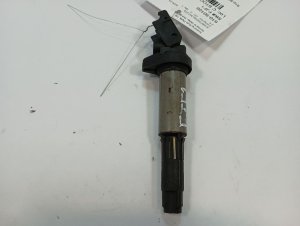

The information in this article is provided for general reference and educational purposes only. Vehicle specifications, procedures, and part compatibility can vary by production date, trim level, and region. Always consult your vehicle's factory service manual and verify part numbers before purchasing or performing repairs. Safety-critical components such as airbags, seat belts, and braking systems should be installed by a qualified professional.
- BMW 528i:
- 🧭 Diagnostic Flowchart
- 🎬 Helpful Videos
- 🛍️ Shop This Part
- What's Unique About the 2006-2011 BMW 528i
- Symptoms You May Notice
- Most Likely Causes
- Rare But Worth Checking
- Diagnosis Steps
- Parts You'll Likely Need
- Related Codes That Often Appear With This One
- Technical Service Bulletins (TSBs) & Recalls
- Mechanic-Grade Diagnostic Values
- Hidden / Shadow Codes Worth Checking
- Scan Tool Commands That Help
- Wiring & Ground Locations
- Real Owner Repair Stories
- OEM Part Supersession History
- Model Year Variations Within This Range
- Other Known Issues on This Vehicle
- Used vs. New Parts: Buying Guide for This Vehicle
- Real Owner Stories
- 2007 BMW 328i N52
- Related OBD-II Codes
- Frequently Asked Questions
- 🎟️ Get 5% Off