

P0351 on 2008-2009 Cadillac CTS: Ignition Coil 'A' Circuit Causes and Fixes
P0351 on a 2008-2009 Cadillac CTS indicates a fault in the ignition coil circuit for cylinder 1. While a bad coil is possible, a GM Technical Service Bulletin (TSB) suggests checking for wider electrical issues like bad grounds or wiring, especially if multiple coil codes (P0351-P0356) are present. The cylinder 1 coil is on the passenger side, closest to the front of the vehicle.
- P0351 points to an ignition circuit fault in cylinder 1.
- If P0351 appears alone, the most likely cause is a bad ignition coil or spark plug in cylinder 1.
- If P0351 appears with other coil codes (P0352-P0356), immediately suspect a shared electrical problem. Check the ignition coil ground connections (G130/G131) and battery terminals first.
- A flashing check engine light indicates a severe misfire that can damage your catalytic converter; limit driving until the issue is resolved.
- Always inspect the spark plug when replacing an ignition coil.
What's Unique About the 2008-2009 Cadillac CTS
For the 2008-2009 CTS with the 3.6L V6 engine, a P0351 code requires careful diagnosis. A GM Technical Service Bulletin (PIP5038B) highlights that it's common for multiple or all ignition coil circuit codes (P0351-P0356) to appear together. This scenario often points away from individual coil failures and towards a systemic electrical problem. The TSB specifically mentions that electromagnetic interference (EMI) from a poor spark event (due to a bad plug or connection) can be reflected back to the ECM, causing the driver to latch 'ON', overheat, and destroy an ignition coil. This is why checking grounds G130 (rear of right cylinder head) and G131 (left rear of engine), battery connections, and spark plug condition is critical before condemning the ECM.
Diagnostic Flowchart
Tap your situation to follow the diagnostic path that matches what you're seeing on this vehicle.
Symptoms You May Notice
- Engine misfiring (shaking, rough idle, shuddering on acceleration)
- Flashing or solid Check Engine Light
- Reduced engine power and poor acceleration
- Decreased fuel economy
- Engine may run rougher under load or at higher RPMs
- Replacing only the ignition coil for cylinder 1 when multiple P035x codes are present. This often fails to fix the root cause, which is more likely a shared power or ground circuit issue, or a failing ECM.
- Replacing the ECM without first replacing all spark plugs and coils. A bad plug or coil can send voltage spikes that damage the new ECM.
Most Likely Causes
- Faulty Ignition Coil on Cylinder 1 🔴 High Probability → Shop Ignition Coil Coil-on-plug systems are common failure points due to constant heat and vibration. TSB PIP5038B notes that heat-stressed or damaged coils are a primary cause, sometimes induced by other system faults like bad plugs or grounds.
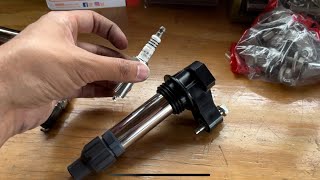
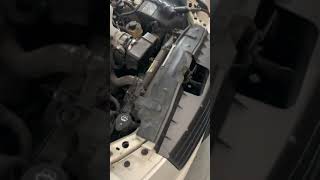
How to confirm: Swap the ignition coil from cylinder 1 with another cylinder (e.g., cylinder 3, the middle cylinder on the same 🎬 See this video for a breakdown of P0351 causes and fixes. passenger side bank). Clear the codes and drive. If the code changes to P0353, the ignition coil is faulty. Cylinder 1 is on the passenger side, front-most position.
Typical fix: Replace the faulty ignition coil. It is often recommended to replace the corresponding spark plug at the same time and apply dielectric grease to the inside of the new coil boot.
Est. part cost: $40-$100 - Damaged Wiring or Connector 🟡 Medium Probability The engine harness is exposed to heat and vibration, which can cause wires to chafe or the plastic connector lock to become brittle and fail, leading to a poor connection.
How to confirm: Visually inspect the wiring harness and connector for cylinder 1's ignition coil. Look for signs of melting, corrosion, or loose pins. Wiggle the connector with the engine running to see if it induces a misfire. Use a multimeter to check for 12V power, ground, and a pulsed signal from the ECM at the connector.
Typical fix: Repair the damaged section of wiring or replace the pigtail connector. The ACDelco pigtail is part number PT2785.
Est. part cost: $15-$40 - Poor Electrical Ground 🟡 Medium Probability TSB PIP5038B specifically calls out checking ignition coil grounds as a key step. On the CTS, these are G130 (located on the rear of the right/passenger side cylinder head) and G131 (located on the left/driver side rear of the engine). Corrosion or looseness at these points can cause intermittent and widespread ignition issues.
How to confirm: Locate grounds G130 and G131. Remove the bolts, clean the contact surfaces of the ring terminals and the engine block with a wire brush until they are bare metal, and re-torque the fasteners to 20 Nm (15 lb-ft).
Typical fix: Clean and tighten the ground connections.
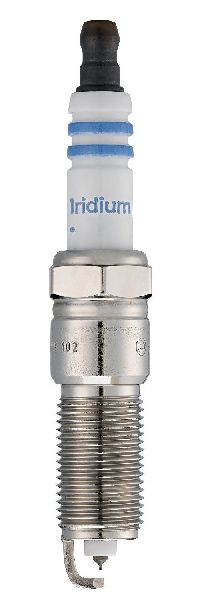
Est. part cost: $0-$5 - Worn or Faulty Spark Plug ⚪ Low Probability → Shop Spark Plug A spark plug with an excessive gap, carbon fouling, or a cracked insulator increases the resistance in the secondary ignition circuit. This can strain the ignition coil and reflect electrical noise (EMI) back to the ECM, potentially causing coil driver latch-up and damaging the coil.
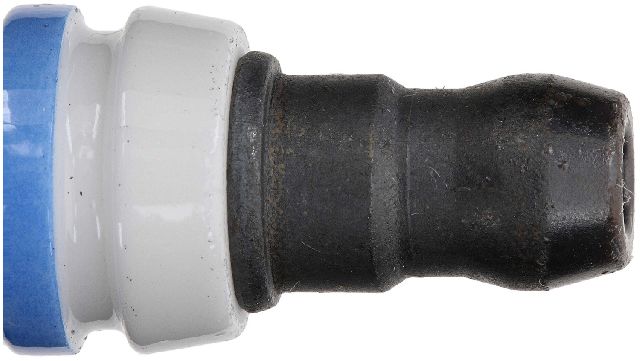
How to confirm: Remove and inspect the spark plug from cylinder 1. Look for wear (rounded electrode), heavy carbon fouling, oil, or cracks in the white ceramic insulator.
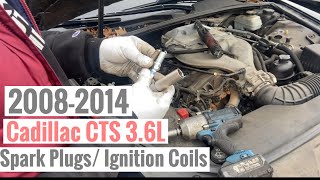
Typical fix: Replace the spark plug. If one is worn, it's best practice to replace all six to ensure balanced 🎬 Watch: Step-by-step guide to replacing all spark plugs and coils. engine performance.
Est. part cost: $10-$20 per plug
Rare But Worth Checking
- Faulty Engine Control Module (ECM): → Shop Engine Control Module (ECM) This is a last resort after all other possibilities are exhausted. TSB PIP5038B mentions that a faulty ECM can latch the coil driver 'ON', causing the coil to overheat and fail. In such cases, the TSB recommends replacing the ECM, all six coils, and all six spark plugs together to prevent the new ECM from being damaged by a pre-existing issue. A replacement ECM for a 2008 CTS with the 3.6L engine may have the part number 12614423.
Diagnosis Steps
- Read all stored DTCs with an OBD-II scanner. Note if P0351 is alone or present with other codes like P0300 or other P035x codes.
- Perform a visual inspection of the ignition coil, connector, and wiring for cylinder 1 (passenger side, front of engine). Look for any obvious damage, melting, or corrosion.
- If P0351 is the only code, swap the cylinder 1 ignition coil with cylinder 3 (passenger side, middle). Clear codes and test drive. If the code returns as P0353, the coil is bad and needs replacement.
- If the code P0351 returns after the swap, the coil is likely good. Inspect the spark plug for cylinder 1. Replace if it is worn, fouled, or damaged.
- If the spark plug is good, test the coil connector. With the key on, one pin should have 12V power. Another pin should have good continuity to ground (less than 1 Ohm). The third (signal) wire can be tested with a multimeter set to Hertz (Hz) while cranking the engine; a reading of 5-20 Hz indicates the ECM is sending a trigger signal.
- If there is no Hz signal, check for a broken wire between the ECM and the coil connector. If continuity is good but there's no signal, the ECM driver may be at fault.
- If multiple P035x codes are present, immediately inspect the common ignition coil ground points G130 (rear of right cylinder head) and G131 (left rear of engine). Ensure they are clean and tight. Also check main battery connections for corrosion.
- If grounds are good and coils are repeatedly failing (especially on one bank), suspect a faulty ECM as outlined in TSB PIP5038B.
Parts You'll Likely Need
- Ignition Coil
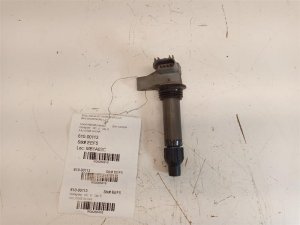
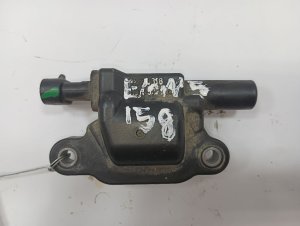
(OEM #12632479 (ACDelco D515C))— This is the most common failure part for an isolated P0351 code. Heat and vibration cause the internal windings to fail over time. The OEM part is ACDelco.
Trusted brands: ACDelco (OEM), Delphi, NGK, Denso
OEM price range: $50-$100
Aftermarket price range: $30-$70 - Spark Plug
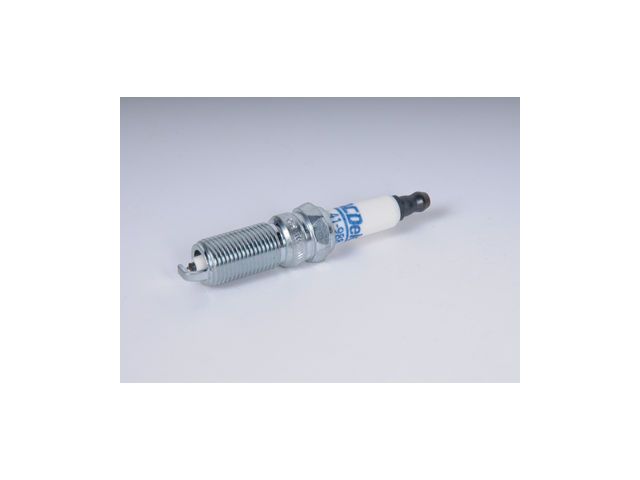
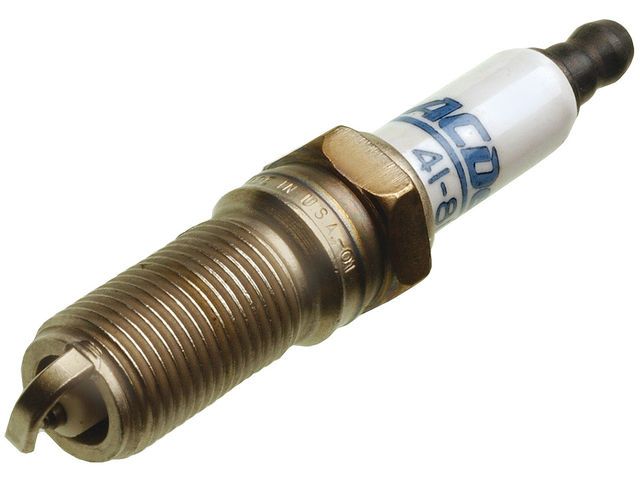
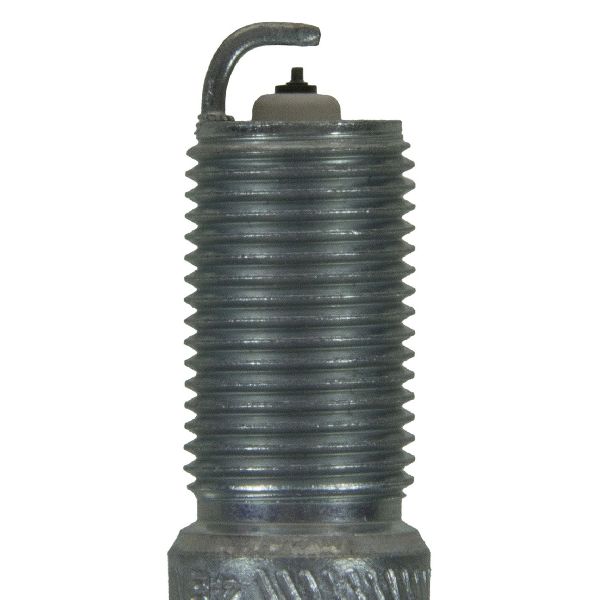
(OEM #41-109 (ACDelco Iridium))— A worn spark plug can cause the coil to work harder and fail prematurely. It is a routine maintenance item and should be replaced if its condition is poor. TSB PIP5038B identifies bad plugs as a potential source of EMI that can damage coils or the ECM.
Trusted brands: ACDelco (OEM), NGK, Bosch
OEM price range: $15-$25
Aftermarket price range: $8-$15 - Ignition Coil Connector Pigtail
(OEM #PT2785 (ACDelco))— The plastic locking tab on the original connector can become brittle and break, leading to a loose connection, intermittent misfires, and circuit codes.
Trusted brands: ACDelco, Dorman
OEM price range: $20-$35
Aftermarket price range: $15-$25
Related Codes That Often Appear With This One
- P0301 — This is a misfire code for cylinder 1. A P0351 fault directly prevents the spark plug 🎬 Watch: A simple explanation of the P0301 misfire code. from firing, causing a misfire on that cylinder.
- P0300 — This indicates a random or multiple cylinder misfire. It often appears alongside P035x codes when there is a systemic electrical issue affecting multiple coils, like a bad ground.
- P0352, P0353, P0354, P0355, P0356 — As noted in TSB PIP5038B, the presence of other ignition coil circuit codes strongly suggests a common problem like a bad ground, power feed issue, or a failing ECM, rather than multiple independent coil failures.
Technical Service Bulletins (TSBs) & Recalls
- PIP5038B: Addresses SES light and misfires with codes P0300-P0306 and P0351-P0356. Points to heat-stressed coils, poor grounds (G130, G131 on CTS), bad spark plugs, or a faulty ECM as potential causes. It explains that EMI from a bad spark event can travel to the ECM and cause a driver to latch, destroying the coil.
Platform-Specific Known Issues
- TSB PIP5038B points to a known issue on the 3.6L LLT engine where multiple ignition coil codes (P0351-P0356) can be set. This is often caused by systemic issues like poor coil grounds, bad battery connections, or a faulty ECM causing heat stress to the coils, rather than multiple coils failing at once.
Mechanic-Grade Diagnostic Values
- Ignition Coil Primary Winding Resistance — expected: 0.4 to 2.0 Ohms. Failure: A reading of zero indicates a short, while a significantly higher or infinite reading indicates an open circuit.
- Ignition Coil Secondary Winding Resistance — expected: 5,000 to 10,000 Ohms (5k-10k Ω). Failure: A reading significantly outside this range suggests a faulty coil.
- Ignition Coil Connector - Power Supply Pin — expected: 12 Volts with key on, engine off. Failure: Low or no voltage indicates a problem with the ignition power feed fuse or wiring.
- Ignition Coil Connector - Ground Pin — expected: Less than 1.0 Ohm of resistance to chassis ground. Failure: High resistance indicates a poor ground connection, which is a known issue on this platform.
- Ignition Coil Connector - ECM Trigger Signal — expected: Pulsing signal, approximately 5-20 Hz while cranking. Failure: No signal indicates a broken wire to the ECM or a failed ECM driver circuit.
Scan Tool Commands That Help
- GM Tech 2 / GDS2: Misfire Graphic — To view live and historical misfire counts for each cylinder. This helps confirm if the misfire is isolated to cylinder 1 (matching P0351) or if other cylinders are also misfiring, which would suggest a more systemic problem like a bad ground or fuel issue.
- GM Tech 2 / GDS2: Power Mode (Ignition Switch Position) — To verify that the ECM is correctly seeing the ignition switch state (Off, Accessory, Run, Crank). An intermittent ignition switch can cause various electrical issues, including power loss to the ignition system.
- GM Tech 2 / GDS2: Cylinder Power Balance Test — This bidirectional test deactivates one cylinder at a time to measure the RPM drop. A cylinder with a small or no RPM drop indicates it was not contributing power, confirming the misfire location. This is useful to verify the fault is on cylinder 1 before swapping parts.
Wiring & Ground Locations
- G130 — On the rear of the right (passenger side) cylinder head.. This is a primary ground for the Bank 1 (cylinders 1, 3, 5) ignition coils. TSB PIP5038B specifically identifies cleaning and tightening this ground as a critical diagnostic step when multiple coil codes are present.
- G131 — On the left rear of the engine.. This is a primary ground for the Bank 2 (cylinders 2, 4, 6) ignition coils. While not directly for cylinder 1, checking all major engine grounds is recommended by the TSB for any ignition system-wide issues.
- Ignition Coil 1 Connector — On top of the valve cover, connected to the front-most ignition coil on the passenger side of the engine.. This is the direct connection point for the failing circuit. The pins are: Pin A (Pink wire) = Ignition 1 Voltage (12V+), Pin B (Black/White wire) = Ground, Pin C (Dark Blue wire) = IC 1 Control Signal from ECM.
- ECM Connector X1, Pin 35 — The Engine Control Module (ECM) is located on the front right valve cover. Pin 35 of the X1 connector is for the Ignition Coil 1 Control circuit.. This is the origin point of the control signal for the cylinder 1 coil. A continuity test between this pin and Pin C at the coil connector can verify the integrity of the signal wire.
Real Owner Repair Stories
- NHTSA TSB #PIP5038B (2008-2009 Cadillac CTS with 3.6L LLT Engine) — Service Engine Soon light, engine misfire, multiple DTCs including P0351 through P0356.
❌ Tried (didn't work) Replacing only the single damaged ignition coil.
✅ What actually fixed it The documented fix involves a systemic approach: 1. Clean and properly torque ignition coil grounds (G130/G131) to 20 Nm. 2. Inspect and clean battery cable connections. 3. If a coil has been damaged by ECM latch-up, the official repair is to replace the ECM, all six ignition coils, and all six spark plugs to prevent a repeat failure.
OEM Part Supersession History
12618542, 12610626, 12590990→12632479 (also sold as ACDelco D515C)— Part consolidation and potential design improvements for durability and protection against internal shorts.
Heads up: The 2008-2011 CTS with the LLT engine uses coil 12632479 (D515C). Note that some part catalogs incorrectly state the earlier coil (12618542) fits, but the D515C is the correct updated part for this application.
Helpful Videos

Used OEM Parts in Stock
New Aftermarket Parts Available


The information in this article is provided for general reference and educational purposes only. Vehicle specifications, procedures, and part compatibility can vary by production date, trim level, and region. Always consult your vehicle's factory service manual and verify part numbers before purchasing or performing repairs. Safety-critical components such as airbags, seat belts, and braking systems should be installed by a qualified professional.
- Cadillac CTS:
- 🧭 Diagnostic Flowchart
- 🎬 Helpful Videos
- 🛍️ Shop This Part
- What's Unique About the 2008-2009 Cadillac CTS
- Symptoms You May Notice
- Most Likely Causes
- Rare But Worth Checking
- Diagnosis Steps
- Parts You'll Likely Need
- Related Codes That Often Appear With This One
- Technical Service Bulletins (TSBs) & Recalls
- Platform-Specific Known Issues
- Mechanic-Grade Diagnostic Values
- Scan Tool Commands That Help
- Wiring & Ground Locations
- Real Owner Repair Stories
- OEM Part Supersession History
- 🎟️ Get 5% Off