

P0351 on 2012-2020 Chevrolet Impala 3.6L: Ignition Coil 'A' Circuit Causes and Fixes
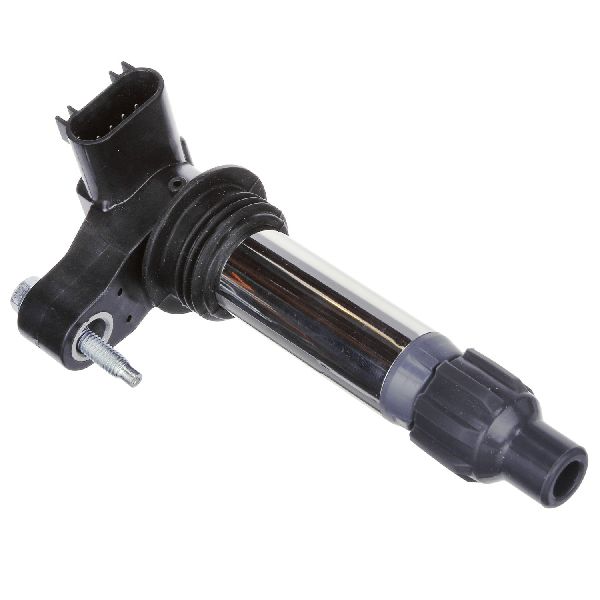
P0351 on a 3.6L Impala almost always means the ignition coil for cylinder #1 has failed. A simple 'swap test' with an adjacent coil can confirm this. Expect to pay $40-$80 for a new ACDelco coil, and note that cylinder #1 is on the difficult-to-access rear bank near the firewall. While the intake manifold doesn't have to be removed, access is very tight.
- P0351 points directly to a problem with the ignition coil circuit for cylinder #1.
- The most likely cause is a failed ignition coil, which can be confirmed with a simple 'swap test'.
- Cylinder #1 is on the rear bank against the firewall, making it harder to access than the front three cylinders.
- Always inspect or replace the spark plug for that cylinder when replacing the coil to prevent a repeat failure.
- Do not ignore a flashing check engine light, as it signals a severe misfire that can quickly damage your catalytic converter.
What's Unique About the 2012-2020 Chevrolet Impala
On the 3.6L LFX V6 engine, ignition coils are a known common failure item across many GM platforms. The key challenge for this specific code (P0351) is the location of cylinder #1. It is on the rear cylinder bank (Bank 1), tucked against the firewall on the passenger side. Access is significantly more difficult than for the front three cylinders (Bank 2). While removing the upper intake manifold is not strictly required to change the coil, it is a very tight space that demands patience, specialized tools like a universal joint socket, and can be frustrating for a DIYer. Many technicians and owners choose to remove the intake for easier access, especially if servicing multiple rear bank components.
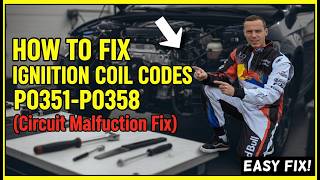
🎬 Watch: Step-by-step intake manifold removal and spark plug replacementGeneration note: This guide covers the 2012-2019 model years with the 3.6L LFX V6 engine. This includes the end of the ninth generation (2012-2016, including the 'Limited' fleet model) and the tenth generation (2014-2019). The engine and ignition system are consistent across these models regarding this fault. The 2020 model year switched to the LGX engine, which is a different V6 family.
Symptoms You May Notice
- Check Engine Light is on and may be flashing
- Engine shaking, stumbling, or running rough, especially at idle
- Noticeable loss of power during acceleration
- Reduced fuel economy
- Hesitation when trying to accelerate
- Replacing only the spark plug without testing the coil. The coil is the most likely failure point for a P035x code.
- Assuming the code is for the easiest-to-reach cylinder. It is critical to correctly identify cylinder #1 as being on the rear bank by the firewall.
- Replacing the PCM before exhaustively checking the coil, plug, and wiring harness for damage.
Most Likely Causes
- Failed Ignition Coil on Cylinder #1 🔴 High Probability → Shop Ignition Coil Ignition coils on the GM 3.6L V6 are a common wear item that fail from constant heat cycles and high voltage stress. The rear bank where cylinder #1 is located experiences higher ambient temperatures due to less airflow, increasing the failure rate.
How to confirm: Swap the ignition coil from cylinder #1 with the coil from cylinder #2 (front bank, passenger side). Clear the codes and drive. If the code changes to P0352, the coil is definitively bad.
Typical fix: Replace the faulty ignition coil. Since cylinder #1 is on the rear bank, this requires more labor than the front coils.
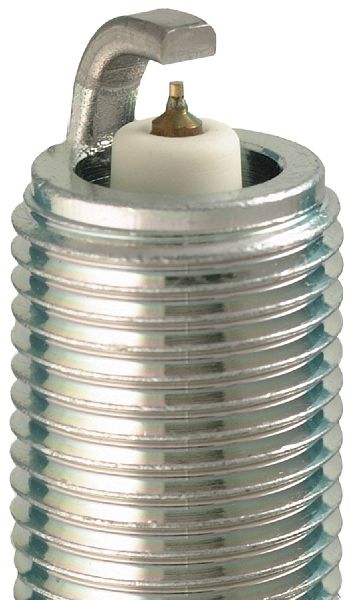
Est. part cost: $40-$80 - Worn or Fouled Spark Plug in Cylinder #1 🟡 Medium Probability → Shop Spark Plug Spark plugs have a limited service life (approx. 100,000 miles). An old plug with a wide gap forces the ignition coil to work harder to bridge the gap, leading to overheating and premature coil failure.
How to confirm: After removing the ignition coil, remove the spark plug and inspect it. Look for a worn electrode, heavy carbon buildup, or oil fouling. Compare the gap to the manufacturer's specification.
Typical fix: Replace the spark plug. It is highly recommended to replace the spark plug whenever you replace an ignition coil on the same cylinder. It's best practice to replace all six spark plugs if they are near the end of their service life, especially if accessing the difficult rear bank. 🎬 See this walkthrough on changing the spark plugs
Est. part cost: $10-$20 per plug - Damaged Wiring or Connector ⚪ Low Probability The engine wiring harness can sometimes chafe against engine components, and the plastic coil connectors can become brittle from heat cycles and break during removal. Manufacturer TSB Bulletin #PIP5147A notes that for vehicles experiencing engine misfires and codes P0351-P0358, technicians should inspect the wiring and ignition control circuits.
How to confirm: Visually inspect the wiring harness leading to the cylinder #1 ignition coil. Check for any signs of rubbing, melting, or breaks. Check the electrical connector for broken locking tabs, corrosion, or backed-out pins. A user on ChevroletForum.com reported finding a broken wire in the harness leading to the coil was the cause of their P0351 code.
Typical fix: Repair the damaged section of wire or replace the pigtail connector.
Est. part cost: $15-$30 for a connector pigtail
Rare But Worth Checking
- Failed Powertrain Control Module (PCM): → Shop Engine Control Module (ECM) This is very rare. TSB PIP5038B notes that a faulty driver circuit inside the PCM can fail due to electromagnetic interference from a failing coil. This should only be considered after a new coil, spark plug, and verified wiring do not resolve the code for cylinder #1.
- Blown Ignition Coil Fuse: → Shop Ignition Coil Extremely rare for a single coil fault, but TSB PIP5038B suggests that if an entire bank of coils is not firing, the corresponding fuse in the underhood fuse block should be inspected.
Diagnosis Steps
- Read the codes with an OBD-II scanner and confirm P0351 is present. Note any other codes like P0301.
- Identify Cylinder #1: It is on the rear cylinder bank (Bank 1, closest to the firewall), on the passenger side of the engine.
- Perform a 'Swap Test': Disconnect the battery. Carefully disconnect the electrical connector and remove the 10mm bolt holding the ignition coil for cylinder #1. Do the same for cylinder #2 (front bank, passenger side). Swap their positions: install the coil from #1 onto cylinder #2, and the coil from #2 onto cylinder #1. Reconnect everything.
- Clear the codes with your scanner, reconnect the battery, and start the engine. Let it run for a minute or drive it briefly.
- Re-scan for codes. If the code has changed to P0352 ('Ignition Coil 'B' Circuit'), this confirms the ignition coil you moved is faulty and needs to be replaced.
- If the code P0351 returns, the coil is not the problem. The issue is in the wiring or the PCM.
- Inspect the wiring and connector for cylinder #1 for any visible damage, corrosion, or loose pins. Use a multimeter to check for 12V power and a good ground at the connector with the key on, engine off.
- If the wiring appears okay, remove and replace the spark plug in cylinder #1 as a next step, as it's a common wear item that can cause coil failure.
- If the problem persists after replacing the coil, plug, and verifying wiring, the issue may be a rare PCM failure, which typically requires professional diagnosis.
Parts You'll Likely Need
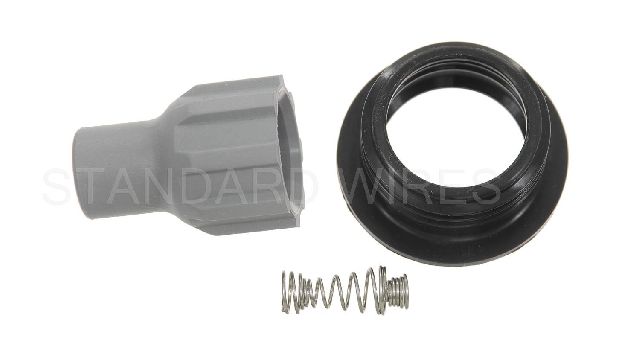
- Ignition Coil
(OEM #12632479)— This is the most common cause of a P0351 code on this engine.
Trusted brands: ACDelco (D515C), Delphi (GN10494), NGK (U5130), Standard Motor Products (UF569)
OEM price range: $55-$80
Aftermarket price range: $30-$60 - Iridium Spark Plug
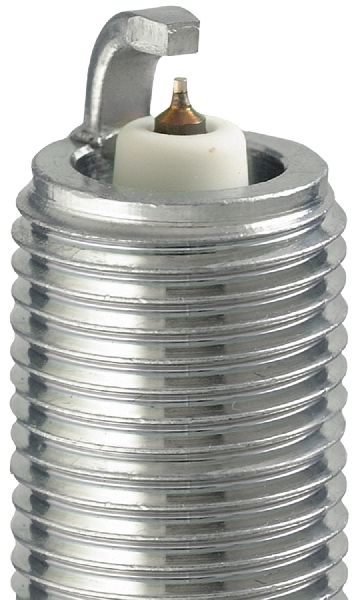
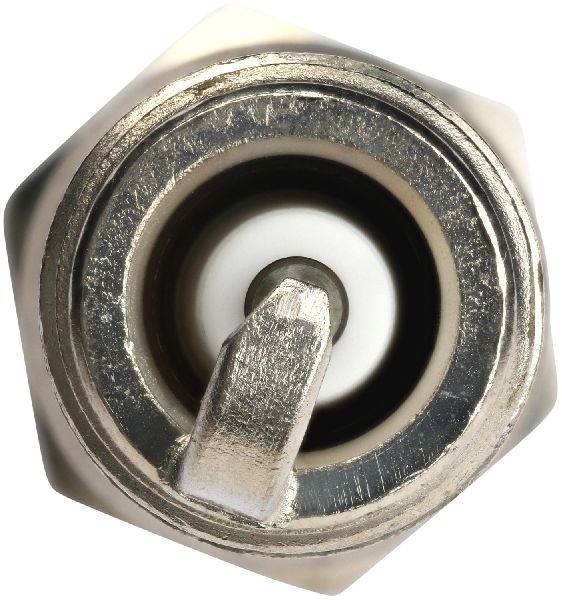
(OEM #12622561 (ACDelco 41-109))— A worn spark plug can cause the ignition coil to fail and should be replaced at the same time as a failed coil, especially given the labor to access the rear bank.
Trusted brands: ACDelco, NGK, Denso, Bosch
OEM price range: $10-$15
Aftermarket price range: $8-$12
Related Codes That Often Appear With This One
- P0301 — This code means 'Cylinder 1 Misfire Detected.' P0351 is the electrical cause (the coil circuit is failing), and P0301 is the mechanical result (the cylinder isn't firing correctly). They almost always appear together.
- P0300 — This code means 'Random/Multiple Cylinder Misfire Detected.' Sometimes, the electrical interference from a failing coil or a significant engine imbalance can be misinterpreted by the PCM as a random misfire before it isolates the problem to a single cylinder.
Technical Service Bulletins (TSBs) & Recalls
- PIP5038B: While for a different GM vehicle with the 3.6L engine, this TSB is relevant as it discusses engine misfires and P035x codes potentially being caused by a faulty Engine Control Module (ECM) driver. It advises checking for heat stress on the coil, checking ignition coil fuses, and ensuring grounds are clean and tight.
- Bulletin #PIP5147A: This manufacturer communication provides information regarding engine misfires where technicians may find Diagnostic Trouble Codes P0351-P0358. It highlights the need for technicians to inspect specific ignition control circuits when these codes are present.
Platform-Specific Known Issues
- Accessing the rear bank (Bank 1) where cylinder #1 is located is notoriously difficult due to tight clearance to the firewall. While the intake manifold does not technically need to be removed, many find it necessary for reasonable access.
- A user on a Chevrolet forum with P0351 and P0300 on a Silverado found the cause to be a broken wire in the harness leading to the ignition coil, not the coil itself. This highlights the importance of checking wiring.
Mechanic-Grade Diagnostic Values
- Ignition Coil Connector - Pin A (Ignition Voltage) — expected: 12V+ with Key On, Engine Off. Failure: No voltage indicates a problem with the power supply fuse or wiring.
- Ignition Coil Connector - Pin B (Ground) — expected: Less than 1 Ohm of resistance to chassis ground.. Failure: High resistance indicates a poor ground connection, which can cause weak spark and coil failure.
- Ignition Coil Connector - Pin D (Ignition Feedback Signal) — expected: A voltage pulse between 1-4V immediately after the coil is commanded to fire. This requires a lab scope to view accurately.. Failure: A constant 0V or 5V signal on this circuit indicates a fault. The PCM sees this lack of a valid feedback pulse and sets P0351.
- Ignition Coil Primary/Secondary Resistance — expected: Not a reliable test. Manufacturers do not publish official resistance specs for modern coil-on-plug units.. Failure: While an open circuit (infinite resistance) confirms a bad coil, coils often fail only when hot or under load, a condition a multimeter test cannot replicate. The 'swap test' is the definitive diagnostic method.
Hidden / Shadow Codes Worth Checking
- Mode 6, Test ID $A2: This is not a shadow code, but rather the onboard monitor for cylinder 1 misfire counts. A high count in the value for Test ID $A2 can confirm that cylinder 1 is the source of a misfire even before a P0301 code is set. (see via Using an advanced OBD-II scanner that can display Mode 6 data.)
Scan Tool Commands That Help
- GDS2 (GM Dealer Tool): Special Functions -> Ignition Control — This function allows a technician to view the real-time status of the Ignition Control (IC) and Ignition Feedback (IF) circuits for each cylinder without the engine running. It can instantly confirm if the PCM is seeing the fault on the cylinder 1 circuit, which helps differentiate a wiring/coil issue from an intermittent mechanical problem.
Wiring & Ground Locations
- Ignition Coil #1 Connector — On the rear cylinder bank (Bank 1), passenger side, connected to the ignition coil for the cylinder closest to the transmission.. This is the primary connection point for the circuit. The connector's plastic can become brittle from heat and break, and the wires can chafe or break internally right at the connector.
- G102 — Typically located at the left rear of the engine.. This is a primary ground point for the ignition coils. A loose or corroded G102 ground can cause intermittent misfires, weak spark, and codes for multiple ignition coils, not just P0351.
- G105 / G106 — Located on the radiator support, these are main chassis grounds.. While not the direct ground for the coil control circuit, a poor main chassis ground can cause widespread electrical issues, including erratic behavior from the PCM and other modules that can indirectly lead to ignition system faults.
Real Owner Repair Stories
- Various GM forums (Multiple GM vehicles with 3.6L LFX V6) — Persistent P035x code (e.g., P0351) that returns immediately after clearing, even with a new coil and spark plug.
❌ Tried (didn't work) Replacing the ignition coil, Replacing the spark plug, Swapping coils between cylinders (code did not move)
✅ What actually fixed it A broken wire for the ignition feedback circuit found *inside* the insulation, right at the coil connector. The wire appeared visually intact but had no continuity when tested with a multimeter. The fix was to replace the connector pigtail. This is a common failure due to engine vibration and heat cycles making the wire brittle.
OEM Part Supersession History
12610626, 12618542→12632479 (ACDelco D515C)— GM updated the ignition coil design for improved durability and better resistance to heat-related failures.
Heads up: The newest part number, 12632479, is the correct and backward-compatible replacement for all previous versions on the LFX engine.
Diagnostic Flowchart
Other Known Issues on This Vehicle
Issues unrelated to this code that are worth knowing about as an owner of this generation:
- Premature Timing Chain Stretch 🔴 High — Common, especially on earlier LFX models or those with extended oil change intervals. Often appears between 70,000-120,000 miles. Look for codes P0008, P0016, P0017. (Ref: Multiple TSBs exist for the GM High Feature V6 family regarding this issue.)
- Cracked Catalytic Converter Weld 🟠 Medium — A well-documented manufacturing defect where the converter cracks at the flange weld, causing an exhaust leak and codes P0420 or P0430. (Ref: TSB #17-NA-321)
- Water Pump Failure 🟠 Medium — A known failure point, often occurring between 80,000-120,000 miles. The pump is located behind the timing cover, making replacement very labor-intensive. It is recommended to replace it during a timing chain service.
- Carbon Buildup on Intake Valves 🟠 Medium — Common to all direct-injection (GDI) engines like the LFX. It can cause cold-start misfires and rough idle over time. Requires physical cleaning (e.g., walnut blasting).
- High Oil Consumption 🟡 Low — Some LFX engines are known to consume oil. GM considers up to 1 quart per 2,000 miles to be within normal operating parameters, but low oil levels can accelerate timing chain wear.
Used vs. New Parts: Buying Guide for This Vehicle
When a used part is the smart pick: For this repair, using a used part is almost never a smart choice. Ignition coils are a common wear item that fail from heat and high voltage stress. The cost of a new, quality aftermarket or OEM coil is low enough that it outweighs the risk and labor of installing a used part with an unknown lifespan.
Donor-vehicle mileage cap: roughly under 40000 miles for the part to have meaningful remaining life.
What to inspect on the donor part:
- If forced to use a used coil, source it from a low-mileage, rear-end collision vehicle.
- Inspect the plastic housing for any cracks, melting, or signs of arcing (white or black carbon tracks).
- Ensure the electrical connector area is clean and free of corrosion.
Aftermarket brands forum-validated for this vehicle:
- ACDelco (OEM)
- Delphi
- NGK
- Standard Motor Products (SMP)
Brands owners have reported issues with on this vehicle:
- Unbranded or generic 'value' coil sets sold on online marketplaces. Forum and mechanic consensus indicates these have a very high early failure rate, often within a few thousand miles.
Real Owner Stories
Aggregated from forums and TSBs cited above. Mileages and costs reflect what owners reported in those sources.
Chevrolet Silverado (GM 3.6L V6 variant)
Symptoms: The vehicle was throwing codes P0351 and P0300.
What fixed it: The owner identified a broken wire in the wiring harness leading to the ignition coil rather than a failed coil itself.
Source hint: ChevroletForum.com thread titled 'P0300 P0351 misfire'
Chevrolet Traverse (GM 3.6L V6 variant)
Symptoms: An owner reported a Service Engine Soon Malfunction Indicator Lamp with codes P0300 through P0306 and P0351 through P0356.
What fixed it: As noted in TSB PIP5038B, technicians were advised to follow published service information for these codes, which may involve checking for PCM driver failure or ignition coil fuse issues.
Related OBD-II Codes
Frequently Asked Questions
Where is Cylinder #1 located on my 2012-2020 Chevrolet Impala 3.6L LFX?
Do I need to remove the intake manifold to replace the ignition coil on Cylinder #1?
Could a faulty Engine Control Module (ECM) be causing my P0351 code?
Is it true that the LFX engine in my Impala is prone to timing chain issues?
Should I replace my spark plugs when I replace the ignition coil for P0351?
What is the 'Swap Test' for diagnosing a P0351 on this vehicle?
Helpful Videos

We Have This Part in Stock

The information in this article is provided for general reference and educational purposes only. Vehicle specifications, procedures, and part compatibility can vary by production date, trim level, and region. Always consult your vehicle's factory service manual and verify part numbers before purchasing or performing repairs. Safety-critical components such as airbags, seat belts, and braking systems should be installed by a qualified professional.
- Chevrolet Impala:
- 🧭 Diagnostic Flowchart
- 🎬 Helpful Videos
- 🛍️ Shop This Part
- What's Unique About the 2012-2020 Chevrolet Impala
- Symptoms You May Notice
- Most Likely Causes
- Rare But Worth Checking
- Diagnosis Steps
- Parts You'll Likely Need
- Related Codes That Often Appear With This One
- Technical Service Bulletins (TSBs) & Recalls
- Platform-Specific Known Issues
- Mechanic-Grade Diagnostic Values
- Hidden / Shadow Codes Worth Checking
- Scan Tool Commands That Help
- Wiring & Ground Locations
- Real Owner Repair Stories
- OEM Part Supersession History
- Other Known Issues on This Vehicle
- Used vs. New Parts: Buying Guide for This Vehicle
- Real Owner Stories
- Chevrolet Silverado (GM 3.6L V6 variant)
- Chevrolet Traverse (GM 3.6L V6 variant)
- Related OBD-II Codes
- Frequently Asked Questions
- 🎟️ Get 5% Off