

P0351 on 2001-2007 Ford Escape 3.0L V6: Ignition Coil 'A' Circuit Malfunction Causes and Fixes
P0351 on a 3.0L V6 Ford Escape indicates a fault in the ignition coil circuit for cylinder #1. The most common cause is a failed ignition coil. A simple diagnostic is to swap the coil with another cylinder and see if the code follows. Cylinder #1 is on the difficult-to-access rear bank, so replacing the coil requires removing the upper intake manifold. On 2005 models in particular, this code often points to a failed PCM.
- P0351 points to a problem with the ignition coil circuit for cylinder #1.
- On the 3.0L V6 Escape, cylinder #1 is on the rear bank, requiring removal of the upper intake manifold for access.
- The most common cause is a bad ignition coil, which can be diagnosed by swapping it with another cylinder's coil.
- Due to the high labor involved, it is strongly recommended to replace all three rear coils, all six spark plugs, and the intake gaskets at the same time.
- In rare cases, especially if a new coil doesn't fix the issue, the problem could be the wiring or a failed PCM.
What's Unique About the 2001-2007 Ford Escape
On the Ford Escape's transversely mounted 3.0L V6, the cylinder numbering places cylinder #1 on the rear bank, against the firewall. This location makes what is normally a simple repair much more involved, as the upper intake manifold must be removed to access the coil and spark plug. Additionally, 2005-2006 models were subject to TSB 05-11-1 (superseded by 09-2-6), where specific factory spark plugs could cause radio frequency (RF) interference, leading to PCM and ignition coil failure, often presenting with multiple P035x codes.
Generation note: This guide covers the first-generation Ford Escape (2001-2007) and its platform mates, the Mazda Tribute (2001-2007) and Mercury Mariner (2005-2007). A facelift occurred for the 2005 model year which included a new 2.3L base engine, but the 3.0L V6 engine and its ignition system remained fundamentally the same, making this guide applicable to the entire range.
Symptoms You May Notice
- Rough or shaky idle
- Flashing or solid Check Engine Light
- Engine hesitation or stumbling during acceleration
- Noticeable loss of engine power
- Engine may be hard to start
- Engine stall
- Replacing only the spark plug when the ignition coil is the root cause.
- Replacing the PCM before thoroughly testing the coil, spark plug, and wiring harness. A coil swap is the definitive test.
- Replacing the wrong coil due to confusion over the cylinder numbering layout. (Cylinders 1-2-3 are on the rear bank against the firewall; 4-5-6 are on the front bank).
- Replacing the PCM but failing to replace all six coils and plugs, leading to a repeat failure of the new PCM.
Most Likely Causes
- Failed Ignition Coil on Cylinder #1 🔴 High Probability → Shop Ignition Coil Coil-on-plug systems are a common failure point on many vehicles as they age. The rear bank coils on the Escape V6 may be subject to more heat soak due to tight packaging against the firewall, potentially shortening their lifespan.
How to confirm: Swap the ignition coil from cylinder #1 with one from an accessible front cylinder (e.g., cylinder #4). Clear the codes and drive the vehicle. If the code changes to P0354, the coil is confirmed to be faulty. This is the most definitive test.
Typical fix: Replace the failed ignition coil. Since accessing the rear bank is labor-intensive (requires removing the upper intake manifold), it is highly recommended to replace all three rear coils and all six spark plugs at the same time.
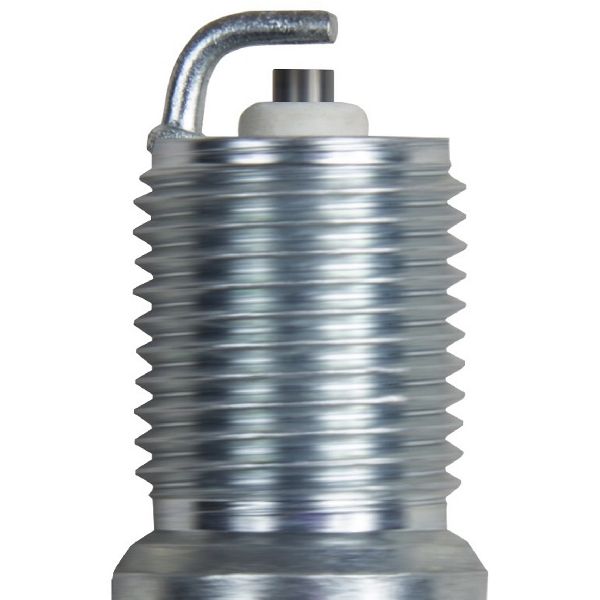
Est. part cost: $30-$75 per coil - Worn or Fouled Spark Plug 🟡 Medium Probability → Shop Spark Plug Spark plugs are a regular maintenance item. A worn plug with an excessive gap forces the ignition coil to generate a higher voltage to jump the gap, straining the coil and potentially causing it to fail and trigger a circuit code.
How to confirm: After removing the ignition coil, remove the spark plug and inspect it. Look for heavy carbon buildup, oil fouling, or a worn-down electrode. Check the gap against the specification (0.052 to 0.056 inches).
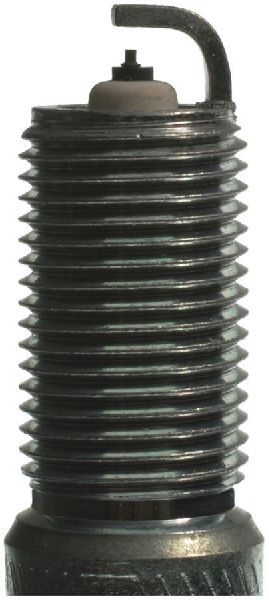
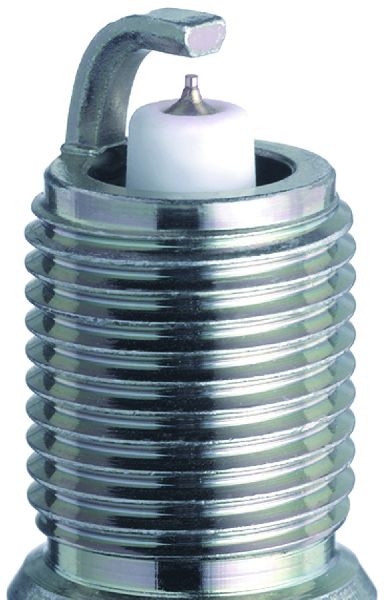
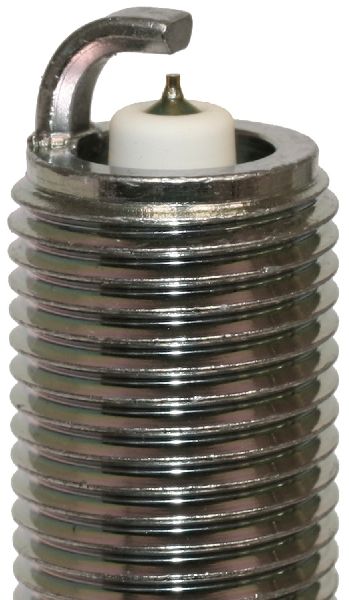
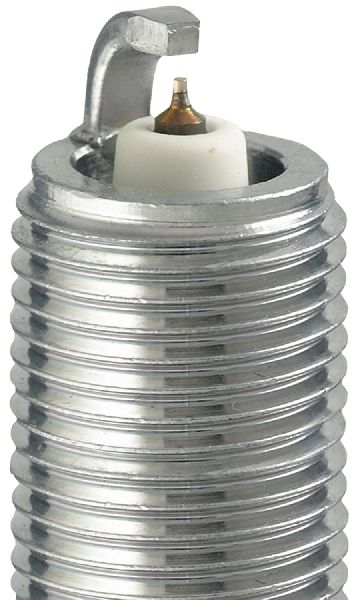
Typical fix: Replace the spark plug. It is best practice to replace all six spark plugs at once to ensure even performance and avoid repeating the labor-intensive intake manifold removal. Using OEM Motorcraft plugs is highly recommended to avoid issues.
Est. part cost: $5-$15 per plug - Damaged Wiring or Connector ⚪ Low Probability The wiring harness and connectors can become brittle from age and heat cycles. A known, though uncommon, failure point is the wiring within a few inches of the main PCM connector, where engine movement can cause wires to fatigue and break over time.
How to confirm: Visually inspect the ignition coil connector and its wiring for any signs of damage, corrosion, or loose pins. Perform a continuity test on the signal and power wires between the coil connector and the PCM connector. Check for 12-volt power at the connector with the key on.
Typical fix: Repair the damaged section of wire or replace the connector pigtail. If a wire is broken near the PCM, it will need to be carefully spliced and repaired.
Est. part cost: $10-$30
Rare But Worth Checking
- Failed Powertrain Control Module (PCM): → Shop Engine Control Module (ECM) This is a significant and well-documented issue, especially for 2005-2006 models, but can occur on all years. A failure of the internal driver circuit for coil #1 inside the PCM will set a P0351 code that returns immediately after clearing, even with a new coil and plug. This is often caused by a shorted coil sending a voltage spike back to the PCM. TSB 09-2-6 (which supersedes 05-11-1) specifically notes that incorrect spark plugs without a date code could cause RF interference that damages the PCM. If the PCM is replaced, it is MANDATORY to replace all six ignition coils and all six spark plugs at the same time to prevent immediate damage to the new computer. The replacement PCM will also require PATS (Passive Anti-Theft System) programming by a dealer or qualified locksmith.
Diagnosis Steps
- Read the trouble codes with an OBD-II scanner and confirm P0351 is present. Note any other codes, such as P0301 or other P035x codes.
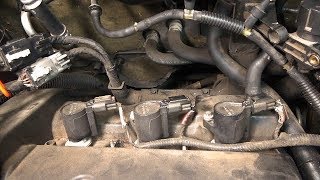
- Locate cylinder #1. On the 3.0L V6, it is on the rear bank (near the firewall), on the passenger side of the engine. The rear bank is cylinders 1-2-3 (passenger to driver), and the front bank is 4-5-6 (passenger to driver).
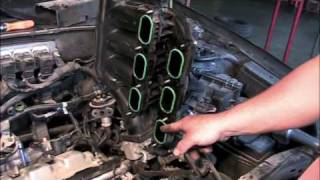
- To access the rear coils, the upper intake manifold must be removed. This involves disconnecting the air intake, throttle body, EGR tube, various vacuum lines, and electrical connectors before unbolting the manifold itself. It is critical to cover the open lower intake ports with rags to prevent debris from falling into the engine.
- Once the manifold is off, swap the ignition coil from cylinder #1 with the coil from cylinder #4 (front bank, passenger side). This moves the suspect coil to an easily accessible cylinder.
- Loosely reassemble the intake manifold enough to run the engine safely. Clear the codes with the scanner.
- Start the engine and let it run for a few minutes. Re-scan for codes.
- If code P0354 appears, the ignition coil you moved is bad and needs to be replaced. This confirms the coil was the problem.
- If code P0351 returns, the problem is not the coil. The fault lies with the spark plug, wiring, or PCM. Inspect the #1 spark plug and the coil's electrical connector and wiring first.
- If the wiring and spark plug are verified to be good, and the P0351 code persists on cylinder #1, a failed PCM is the most likely cause. This diagnosis is strengthened if multiple P035x codes were present from the start.
Parts You'll Likely Need
- Ignition Coil
(OEM #DG500 (Motorcraft))— This is the most frequent failure item for code P0351. Note: Later models may use DG514, always verify by VIN.
Trusted brands: Motorcraft, NGK, Denso
OEM price range: $50-$90
Aftermarket price range: $30-$75 - Spark Plug
(OEM #AGSF-32W-M1F4 (Motorcraft SP-432))— Often replaced along with the ignition coil as a preventative measure. Accessing the rear bank is difficult, so it's wise to replace them while the intake is off. Using OEM-spec plugs is critical to avoid PCM damage as noted in TSB 09-2-6.
Trusted brands: Motorcraft, NGK
OEM price range: $8-$15
Aftermarket price range: $5-$12 - Upper and Lower Intake Manifold Gaskets
(OEM #YL8Z-9H486-AA (Upper, 2001-~Dec 2003), 3F1Z-9H486-AA (Upper, ~Dec 2003-2007). Lower gaskets are also needed.)— These must be replaced whenever the intake manifold is removed to prevent vacuum leaks. They are single-use items.
Trusted brands: Motorcraft, Fel-Pro
OEM price range: $40-$70
Aftermarket price range: $20-$50
Related Codes That Often Appear With This One
- P0301 — P0301 indicates a misfire detected on cylinder #1. The ignition circuit fault reported by P0351 is the direct cause of this misfire.
- P0352, P0353, P0354, P0355, P0356 — If multiple P035x codes are present, it is a very strong indicator of a failed PCM, as it's unlikely for multiple coil circuits to fail simultaneously due to wiring or coil issues. This is the classic symptom described in TSB 09-2-6.
Technical Service Bulletins (TSBs) & Recalls
- 09-2-6: Supersedes TSB 05-11-1. Addresses an issue on some 2005-2006 3.0L models where RF interference from spark plugs could damage the PCM and ignition coils, resulting in codes P0351-P0356.
Platform-Specific Known Issues
- TSB 09-2-6 (which supersedes 05-11-1) was issued for 2005-2006 Escape/Mariner models where specific factory spark plugs could cause radio frequency (RF) interference, damaging the PCM and causing multiple coil circuit codes (P0351-P0356). The fix involved checking for a date code on the spark plugs; if absent, the procedure required replacing the PCM, all six coils, and all six spark plugs.
Mechanic-Grade Diagnostic Values
- Ignition Coil Primary Resistance — expected: 0.4 to 2.0 ohms (typical OEM), with some aftermarket coils around 0.660 ohms.. Failure: A reading of 0 ohms indicates a short; an infinite (OL) reading indicates an open circuit.
- Ignition Coil Secondary Resistance — expected: 5,000 to 10,000 ohms (5kΩ to 10kΩ).. Failure: A reading significantly outside this range suggests a faulty coil.
- Ignition Coil Connector Power Supply (KOEO) — expected: 12V+ (Battery Voltage) on the power supply wire (typically Red).. Failure: No voltage indicates a problem with the power supply wire or the fuse protecting the circuit.
- Ignition Coil Driver Signal (Engine Cranking/Running) — expected: A pulsing ground signal, best observed with a noid light or oscilloscope. A multimeter set to Hertz should show a reading between 5-20 Hz.. Failure: No pulsing signal or a steady ground/open circuit points to a wiring issue or a failed PCM driver.
- Continuity from Coil Connector to PCM — expected: Less than 2.0 - 5.0 ohms on the control wire between the coil connector and the corresponding PCM pin.. Failure: High resistance or an open circuit (OL) indicates a broken wire in the harness.
Hidden / Shadow Codes Worth Checking
- Mode 6, Test ID $53: Provides raw misfire counts for each individual cylinder, even for misfires that are not frequent enough to set a P030x code or illuminate the check engine light. (see via A capable scan tool that can access OBD-II Mode 6 data, such as FORScan software or professional-grade scanners. The data for cylinder 1 would be under Component ID (CID) $01.)
Scan Tool Commands That Help
- Ford IDS (Integrated Diagnostic System): Oscilloscope Escape PCM Driver Test — This is a specific function called for in TSB 09-2-6 when multiple P035x codes are present. It directly tests the functionality of the PCM's internal coil driver circuits to definitively confirm if the PCM has failed before ordering a replacement.
- Ford IDS (or equivalent high-level scanner): Power Balance Test — This bidirectional test allows the technician to disable one cylinder at a time and observe the corresponding drop in RPM. If disabling cylinder #1 causes no change in RPM, it confirms that cylinder is not contributing, which supports the P0351 fault. This helps verify the misfire location before disassembly.
Wiring & Ground Locations
- PCM Connector C175E, Pin 52 — The PCM is located on the center of the firewall in the engine bay. C175E is one of the main connectors.. Pin 52 is the specific pin for the Ignition Coil #1 driver control circuit (Circuit 927, typically a Tan/White wire). A continuity test between this pin and the control wire at the coil connector is essential to rule out a broken wire.
- G101 / G109 — On the rear of the engine compartment, on the firewall.. These are primary firewall ground points. The PCM and its sensor circuits rely on clean ground connections. A loose or corroded ground here can cause a wide range of electrical issues, including erratic PCM behavior that could mimic component failure.
- G104 / G108 — G104 is on the left front of the engine compartment; G108 is at the rear of the engine.. These are major engine and chassis ground points. While the coil has its own control circuit, the overall health of the engine's grounding system is critical for stable PCM operation and accurate sensor readings.
- Ignition Coil Connector — Directly on top of the ignition coil for cylinder #1 (rear bank, passenger side).. This connector is a common failure point. The plastic can become brittle and break, and the terminals can lose tension or corrode, causing an intermittent connection that sets a P0351. A wiggle test here can often identify the problem.
Real Owner Repair Stories
- 2CarPros forum user 'NOSEHAIR351' (2005 Ford Escape) — Check engine light with code P0351, car shudders when running.
❌ Tried (didn't work) Replaced spark plugs, Replaced ignition coil on cylinder #1
✅ What actually fixed it The wiring connector (pigtail) for the ignition coil was bad and had to be replaced. - YouTube channel 'GG' (Ford Escape 3.0L (year not specified, but first generation)) — Misfire with code P0351.
❌ Tried (didn't work) Customer had already replaced all three rear ignition coils and done a tune-up (spark plugs).
✅ What actually fixed it Diagnosis with a test light showed no ground pulse signal from the PCM on the cylinder #1 coil control wire, while a known-good cylinder did have a pulse. The conclusion was a failed PCM driver, requiring a new computer. - NHTSA ODI #10490822 — An owner reported having to pull to the side of the road because the car died totally, with computer codes P0351 through P0354 appearing.
- NHTSA ODI #11429061 — A driver reported the vehicle shut down on the interstate with codes P0351, P0352, P0353, P0354, P0355, and P0356 present.
OEM Part Supersession History
DG500 (Motorcraft)→DG514 (Motorcraft)— Updated design for improved performance and durability.
Heads up: Always verify the correct part number by VIN. While often interchangeable, there could be subtle differences. Using the part number specified for the vehicle's production date is the safest approach.
Model Year Variations Within This Range
- 2005-2006: These model years are specifically called out in TSB 09-2-6 for potential PCM failure due to RF interference from spark plugs lacking a 2-digit date code. The diagnostic procedure is different, immediately pointing to a potential PCM, coil, and plug replacement if multiple P035x codes are present.
- 2001-~Dec 2003 vs. ~Dec 2003-2007: The upper intake manifold gaskets have different part numbers (YL8Z-9H486-AA for early models, 3F1Z-9H486-AA for later models), indicating a design change in the intake manifold itself. This is critical to know when ordering parts for the repair.
- 2005+: The PCM driver test using an oscilloscope was introduced with IDS version B58 or later, primarily targeting the 2005-2006 models but applicable to later years as a diagnostic method.
Diagnostic Flowchart
Other Known Issues on This Vehicle
Issues unrelated to this code that are worth knowing about as an owner of this generation:
- Premature Alternator Failure 🔴 High — Common, especially over 100,000 miles. The alternator is located in a high-heat area near the exhaust manifold, contributing to failure. Replacement is labor-intensive, requiring removal of the passenger-side axle shaft.
- CD4E Automatic Transmission Failure 🔴 High — Very common in early models (2001-2004). Issues include hard shifting, slipping, and complete failure, often requiring a rebuild or replacement before 100,000 miles. Using the correct fluid (Mercon, not Mercon V despite some mislabeled dipsticks) is critical. (Ref: Recall on some remanufactured replacement transmissions, but not the original units.)
- Subframe and Suspension Rust/Corrosion 🔴 High — Widespread, especially in salt-belt regions. The front subframe and rear shock towers are highly susceptible to severe rust, which can lead to structural failure and loss of vehicle control. (Ref: Recall 14S02 was issued for the front lower control arm separating due to corrosion.)
- Cracked/Leaking Valve Cover Gaskets 🟠 Medium → Shop Engine Valve Cover — Common at higher mileage. The rear valve cover gasket leak is particularly problematic as oil drips onto the hot exhaust manifold, creating a fire risk and burning oil smell.
- Worn Valve Stem Seals / Blue Exhaust Smoke 🟡 Low — Becomes more common on engines over 150,000 km. Worn valve seals allow oil to enter the combustion chamber, causing puffs of blue smoke on startup or deceleration.
Used vs. New Parts: Buying Guide for This Vehicle
When a used part is the smart pick: A used Powertrain Control Module (PCM) from a junkyard can be a cost-effective option, provided it is from a vehicle that did not suffer the same failure and it can be properly programmed to your vehicle's VIN and PATS key system.
Donor-vehicle mileage cap: roughly under 150000 miles for the part to have meaningful remaining life.
What to inspect on the donor part:
- For a used PCM, inspect the case for any signs of physical damage or corrosion.
- Check the electrical connector pins to ensure they are straight, clean, and free of any water damage or corrosion.
- If possible, get the history of the donor vehicle to ensure it wasn't scrapped for a similar ignition-related electrical fault.
OEM-only on this vehicle (don't cheap out):
- Spark Plugs: Due to the sensitivity outlined in TSB 09-2-6, using OEM Motorcraft plugs is critical to prevent RF interference that can damage the PCM.
- Ignition Coils: While some aftermarket brands are acceptable, cheap, unbranded coils are known to fail prematurely and can even cause PCM damage. Sticking with Motorcraft is the safest bet.
- Powertrain Control Module (PCM): While a used OEM unit is an option, new aftermarket PCMs should be avoided. A repaired original PCM or a pre-programmed used OEM unit from a reputable supplier is a better choice.
Aftermarket brands forum-validated for this vehicle:
- Ignition Coils: NGK, Denso
- Gaskets: Fel-Pro
Brands owners have reported issues with on this vehicle:
- Unbranded 'white box' or suspiciously cheap ignition coils found on marketplace websites. These have a high failure rate and can lead to repeat repairs or damage to the PCM.
Real Owner Stories
Aggregated from forums and TSBs cited above. Mileages and costs reflect what owners reported in those sources.
2005 Ford Escape 3.0L V6
Symptoms: The owner experienced a P0351 code immediately after a spark plug blew out of the cylinder head.
What fixed it: The repair involved addressing the link between RF interference from the plugs and damage to the PCM and COPs (Coil on Plug) as referenced in TSB 05-11-1.
Source hint: 2CarPros.com thread titled 'ford-escape-2005-ford-escape-code-p0351'
2007 Ford Escape 3.0L V6
Symptoms: The owner self-diagnosed a P0351 code and took it to a dealer for confirmation.
What fixed it: The dealer confirmed a bad ECM (PCM) and replaced it.
Cost: $700-$800
Source hint: Ford-Trucks.com thread titled 'touble-code-p0351'
2005 Ford Escape 3.0L V6
Symptoms: Multiple coil circuit codes (P0351-P0356) and PCM issues.
What fixed it: Following TSB 09-2-6, the fix required replacing the PCM, all six ignition coils, and all six spark plugs due to RF interference damage.
Source hint: Ford-Trucks.com thread titled '2005-ford-escape-xlt-pcm-problem'
2005 Ford Escape 3.0L V6
Symptoms: An owner reported that a shop diagnosed P0354, P0351, P0355, and P0352 ignition coils and PCM failure, affecting the ability to control the vehicle (NHTSA ODI #11131030).
2005 Ford Escape 3.0L V6
Symptoms: Diagnostic codes P0351, P0354, and P0353 appeared simultaneously. The owner was charged $2700 to replace the PCM, spark plugs, and ignition coils at once (NHTSA ODI #10694980).
2005 Ford Escape 3.0L V6
Symptoms: Trouble codes P0351, P0352, P0353, and P0354 were identified. The owner was quoted $750 to replace all 6 coils and $1100 to replace the PCM (NHTSA ODI #10494379).
Related OBD-II Codes
Frequently Asked Questions
Does TSB 09-2-6 apply to my 2005 Ford Escape 3.0L with code P0351?
I have a P0351 on the rear bank; do I really need to replace all the coils?
Can I use any brand of spark plugs to fix the P0351 code on my Escape?
Is there a specific wiring issue I should look for on my 2001-2007 Escape?
Does my Mazda Tribute share this same ignition coil issue?
What is the correct spark plug gap for the 3.0L Duratec V6?
Helpful Videos

Used OEM Parts in Stock
New Aftermarket Parts Available

The information in this article is provided for general reference and educational purposes only. Vehicle specifications, procedures, and part compatibility can vary by production date, trim level, and region. Always consult your vehicle's factory service manual and verify part numbers before purchasing or performing repairs. Safety-critical components such as airbags, seat belts, and braking systems should be installed by a qualified professional.
- Ford Escape:
- 🧭 Diagnostic Flowchart
- 🎬 Helpful Videos
- 🛍️ Shop This Part
- What's Unique About the 2001-2007 Ford Escape
- Symptoms You May Notice
- Most Likely Causes
- Rare But Worth Checking
- Diagnosis Steps
- Parts You'll Likely Need
- Related Codes That Often Appear With This One
- Technical Service Bulletins (TSBs) & Recalls
- Platform-Specific Known Issues
- Mechanic-Grade Diagnostic Values
- Hidden / Shadow Codes Worth Checking
- Scan Tool Commands That Help
- Wiring & Ground Locations
- Real Owner Repair Stories
- OEM Part Supersession History
- Model Year Variations Within This Range
- Other Known Issues on This Vehicle
- Used vs. New Parts: Buying Guide for This Vehicle
- Real Owner Stories
- 2005 Ford Escape 3.0L V6
- 2007 Ford Escape 3.0L V6
- 2005 Ford Escape 3.0L V6
- 2005 Ford Escape 3.0L V6
- 2005 Ford Escape 3.0L V6
- 2005 Ford Escape 3.0L V6
- Related OBD-II Codes
- Frequently Asked Questions
- 🎟️ Get 5% Off