

P0351 on 2005-2008 Ford Escape 2.3L: Ignition Coil 'A' Circuit Malfunction Causes and Fixes
This code almost always points to a failed ignition coil on cylinder #1. It's a common, inexpensive, and easy DIY repair. Expect to pay $30-$60 for a quality aftermarket coil and replace it in under 30 minutes. In a notable minority of cases, particularly on 2005-2006 models, the coil failure can damage the PCM, requiring a more complex repair.
- P0351 on a 2005-2008 Escape 2.3L almost always means the ignition coil for cylinder #1 has failed.
- The most reliable diagnostic is to swap the cylinder #1 coil with another cylinder's coil and see if the code follows (e.g., changes to P0352).
- This is a simple DIY repair that requires only basic tools and can be completed in under 30 minutes.
- When replacing the coil, it is a good idea to inspect and, if needed, replace the spark plug at the same time.
- If a new coil does not fix the P0351 code, investigate the wiring connector for damage before suspecting a more serious PCM issue.
What's Unique About the 2005-2008 Ford Escape
On this generation of Ford Escape with the 2.3L engine, ignition coil failure is a very common wear-and-tear issue. A more serious, though less common, issue involves a faulty ignition coil sending a voltage spike back to the Powertrain Control Module (PCM), damaging the internal driver circuit for that coil. This is a known problem on 2005-2006 models that can lead to repeated P0351 codes even after replacing the coil, eventually requiring PCM repair or replacement. If the PCM is the cause, you will typically see no ground pulse signal at the coil connector when testing with a noid light or multimeter. Repairing this requires replacing the PCM, all four coils, and all four spark plugs to prevent the new PCM from being immediately damaged.
Symptoms You May Notice
- Check Engine Light is on (may be flashing if the misfire is severe)
- Rough or vibrating idle
- Engine hesitation or stumbling during acceleration
- Noticeable loss of power
- Reduced fuel economy
- Difficulty starting the engine
- Engine may stall unexpectedly
- Replacing only the spark plug when the coil is bad.
- Replacing the fuel injector for cylinder #1, as a misfire can feel similar to a fuel issue.
- Replacing the PCM without also replacing all coils and plugs, leading to immediate failure of the new PCM.
Most Likely Causes
- Failed Ignition Coil on Cylinder #1 🔴 High Probability → Shop Ignition Coil Ignition coils are a common failure item on many vehicles, including the 2.3L Duratec, due to constant exposure to engine heat and high voltage stress. A leaking valve cover gasket is also a very common issue that causes oil to pool in the spark plug wells, which can saturate the coil boot, cause a short, and destroy the coil.
How to confirm: The easiest way to confirm a bad coil is to swap it with the coil from another cylinder (e.g., cylinder #2). Clear the codes with a scanner and drive the vehicle. If the code changes to P0352 (Ignition Coil 'B' Circuit), the coil is definitively faulty.
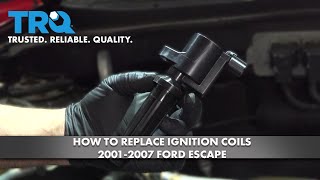
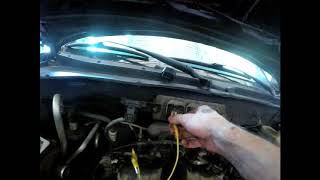
Typical fix: Replace the faulty ignition coil. It is held in by a single 8mm bolt. 🎬 Watch: How to replace the ignition coils While replacing one is sufficient, if the coils are original and high-mileage, replacing all four is good preventative maintenance.
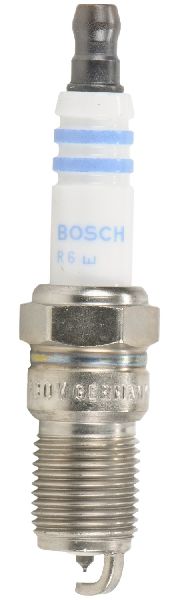
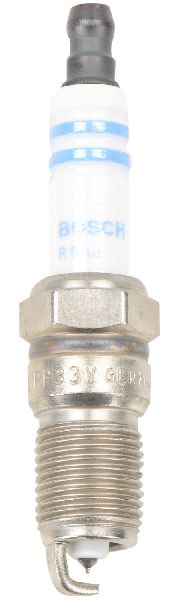
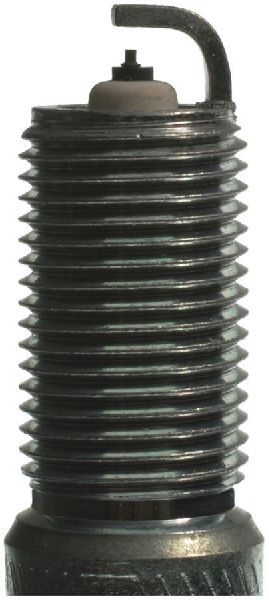
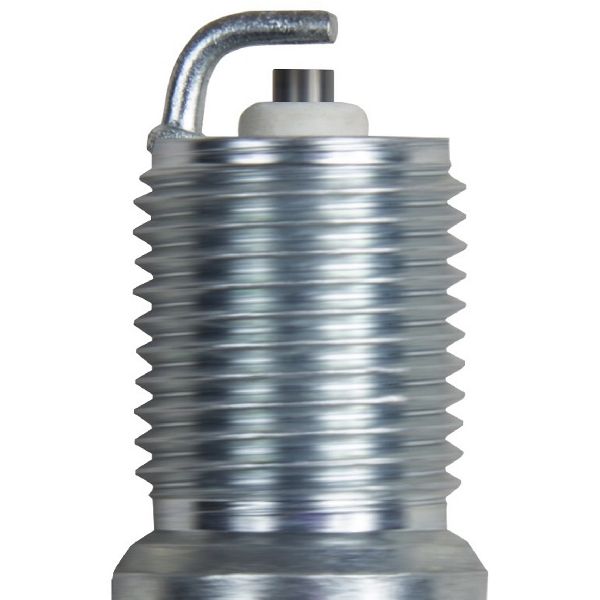
Est. part cost: $30-$70 - Worn or Fouled Spark Plug 🟡 Medium Probability → Shop Spark Plug A spark plug with an excessive gap from wear, or one that is fouled with oil or carbon, increases the electrical resistance of the ignition circuit. This strains the ignition coil, forcing it to generate a higher voltage, which can lead to overheating and premature failure, triggering a circuit code. It's strongly recommended to replace all four spark plugs when replacing coils, especially if they are near the end of their service life.
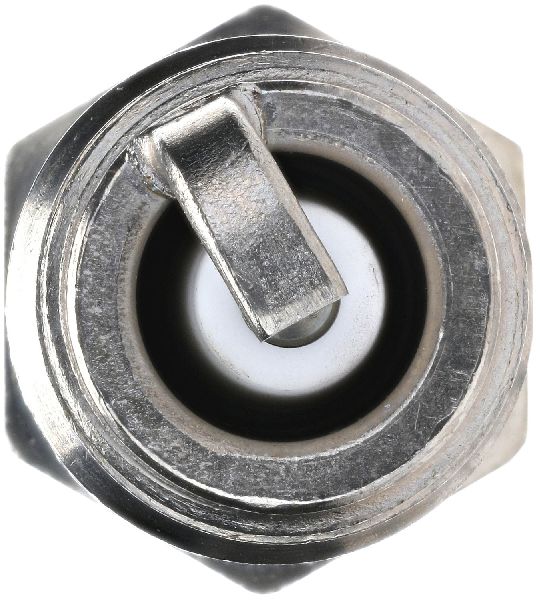
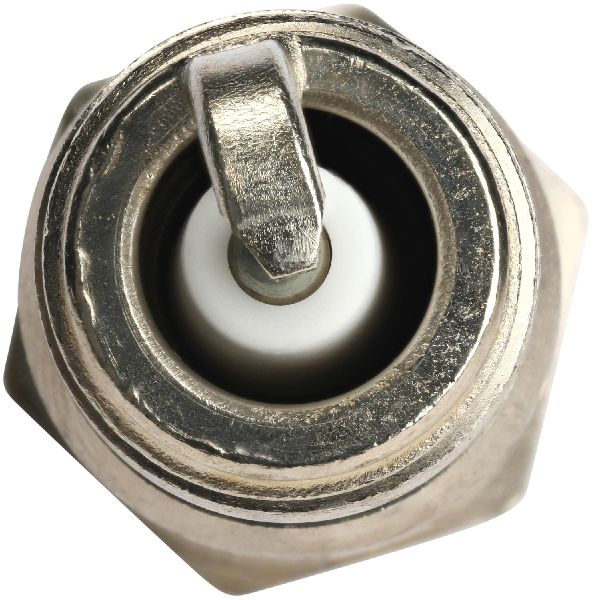
How to confirm: Remove the spark plug from cylinder #1 and inspect it. Look for a worn-down center electrode, a very wide gap, or heavy black (carbon) or oily (oil) deposits. Compare it to the other plugs for consistency.
Typical fix: Replace the spark plug. If one is worn, it's best practice to replace all four at the same time using OEM-spec plugs.
Est. part cost: $5-$15 per plug - Damaged Wiring or Connector ⚪ Low Probability
How to confirm: Visually inspect the wiring harness and two-wire connector for the cylinder #1 ignition coil. Look for brittle or cracked insulation, corrosion on the connector pins, or a loose-fitting connection. A 'wiggle test' on the harness while the engine is idling may cause the misfire to change, indicating a wiring issue. You can also test for 12V power on one wire and a pulsing ground signal from the PCM on the other wire using a multimeter or noid light.
Typical fix: Repair the damaged section of wire or replace the pigtail connector. The Motorcraft pigtail connector is often listed as part number WPT-1051.
Est. part cost: $15-$30 for a connector pigtail
Rare But Worth Checking
- Failed Powertrain Control Module (PCM): → Shop Engine Control Module (ECM) This is a known and well-documented issue on 2005-2006 Ford Escapes, Mariners, and Mazda Tributes with the 2.3L engine. A shorted ignition coil or spark plug sends a voltage surge back to the PCM, destroying the internal driver circuit for that specific coil. If you replace the coil and the P0351 code immediately returns (and you've verified the wiring is good), the PCM is the likely culprit. The only correct fix is to replace the PCM, all four ignition coils, and all four spark plugs simultaneously to prevent immediate repeat failure.
Diagnosis Steps
- Read the trouble codes with an OBD-II scanner to confirm P0351 and check for any other codes like P0301.
- Locate cylinder #1. On the 2.3L I4 engine, the cylinders are numbered 1-2-3-4 from the passenger side (front/belt side) to the driver side (rear/transmission side).
- Swap the ignition coil from cylinder #1 with the coil from cylinder #2. This is the most effective and definitive diagnostic step.
- Clear the OBD-II codes using the scanner.
- Start the engine and let it run or drive it briefly until the Check Engine Light comes back on.
- Re-scan for codes. If the code is now P0352, the ignition coil you moved is faulty and needs to be replaced.
- If the code remains P0351, the problem is not the coil. The next steps are to check the spark plug, wiring, and PCM.
- Remove and inspect the spark plug in cylinder #1. Replace if it is worn, fouled, or damaged. It is best practice to replace all four.
- If the plug is good, test the circuit. Disconnect the coil connector. With the key on, use a multimeter to check for 12V power on one wire. Then, connect a noid light or LED test light to both pins of the connector and crank the engine. The light should flash, indicating the PCM is sending a ground pulse.
- If the noid light does not flash, but power is present, there is a break in the signal wire or the PCM driver has failed. Check for continuity on the signal wire between the PCM connector and the coil connector.
- If wiring and signal are confirmed good but the code persists, and especially if multiple P035x codes are present, the PCM is the primary suspect.
Parts You'll Likely Need
- Ignition Coil
(OEM #DG-541 (Motorcraft), also seen as 4M5Z-12029-B/BC)— This is the most common failure point for a P0351 code. The coil is responsible for generating the spark and fails from heat and age.
Trusted brands: Motorcraft, NGK, Denso, Standard Motor Products
OEM price range: $55-$75
Aftermarket price range: $30-$60 - Spark Plug
(OEM #SP-490 (Motorcraft))— A worn or fouled spark plug can cause the ignition coil to work harder and fail. It's good practice to replace them if they are old, especially when replacing a coil.
Trusted brands: Motorcraft, NGK, Autolite
OEM price range: $8-$12
Aftermarket price range: $5-$10 - Ignition Coil Connector Pigtail
(OEM #WPT-1051 (Motorcraft))— The plastic connector and its locking tab can become brittle from engine heat and break during coil replacement, or the wires can fatigue.
Trusted brands: Motorcraft, Dorman, Standard Motor Products
OEM price range: $25-$40
Aftermarket price range: $10-$25
Related Codes That Often Appear With This One
- P0301 — P0301 means 'Cylinder 1 Misfire Detected'. Since P0351 indicates a fault in the ignition circuit for cylinder 1, a misfire is the direct physical result. These two codes almost always appear together.
- P0352, P0353, P0354 — If multiple P035x codes are present (e.g., P0351, P0353, P0354), it is a very strong indicator of a failed PCM with multiple damaged coil drivers, rather than multiple simultaneous coil failures.
Technical Service Bulletins (TSBs) & Recalls
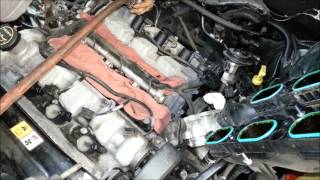
- TSB 10-18-10: Specifically for 2005-2006 models, this TSB addresses how radio frequency interference from the original ignition coils could damage the Powertrain Control Module's coil drivers. The official fix requires replacing the PCM, all ignition coils, and all spark plugs. 🎬 See this video on diagnosing Ford coil circuit failures
Platform-Specific Known Issues
- There is a Technical Service Bulletin (TSB 10-18-10) for 2005-2006 models which notes that radio frequency interference from original-design coils could damage the PCM. The fix involves replacing old coils with an updated design. While some TSBs specifically mention the 3.0L V6, the failure pattern of a bad coil/plug damaging the PCM driver is a well-documented occurrence on the 2.3L I4 as well.
Mechanic-Grade Diagnostic Values
- Ignition Coil Primary Resistance — expected: 0.4 to 2.0 Ohms. Failure: A reading of 0 (short) or infinite (open circuit) indicates a failed coil. Test across the two pins of the coil.
- Ignition Coil Secondary Resistance — expected: 5,600 to 10,000 Ohms (5.6kΩ - 10kΩ). Failure: A reading significantly outside this range indicates an internal failure. Test between the primary positive pin and the high-voltage output tower (where the boot connects).
- Ignition Coil Connector - Power Wire — expected: 12V+ (Battery Voltage) with Key On, Engine Off. Failure: No voltage indicates a problem with the fuse or power supply wire common to all coils.
- Ignition Coil Connector - Control Wire — expected: A flashing signal on a noid light or a pulsing square wave on an oscilloscope when cranking or running.. Failure: A steady light or no light/signal indicates a wiring fault or a failed PCM driver.
Hidden / Shadow Codes Worth Checking
- Mode $06, Test ID $53: This is not a trouble code, but a PCM self-test monitor for misfire counts on cylinder 1. It can show misfire events happening before they are frequent enough to set a P0301 code. On some newer scan tools, this data is presented more clearly under live data as 'Cylinder 1 Misfire Count'. (see via An advanced OBD-II scanner or professional tool (like Ford IDS) that can access Mode $06 data.)
Scan Tool Commands That Help
- Ford IDS (or equivalent professional scanner): Power Balance Test — This bidirectional test graphically displays the RPM contribution of each cylinder in real-time. A significant drop or lack of contribution from cylinder #1 provides immediate visual confirmation of a misfire, validating the P0351 code's impact on performance.
Wiring & Ground Locations
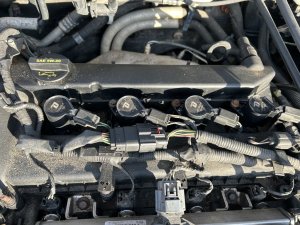
- Ignition Coil #1 Connector — On top of the valve cover, first coil from the passenger side.. This 2-pin connector provides power and the trigger signal. Pin 1 (Power) is typically a Red/Green wire shared by all coils. Pin 2 (Control) is a unique color, often Green/White for cylinder #1, and goes directly to the PCM.
- PCM Connector C175b, Pin 26 — At the Powertrain Control Module, located on the firewall in the engine bay.. This is the specific pin on the PCM that sends the trigger signal to the #1 ignition coil. Testing for continuity between this pin and Pin 2 at the coil connector can rule out a broken wire.
- G101 — Rear of the engine compartment, on the firewall.. This is a primary engine compartment and PCM ground. A poor connection here can cause a wide range of erratic electronic issues, including ignition faults.
- G104 / G105 — Left front of the engine compartment, near the battery junction box.. These are major chassis grounds that are part of the PCM's grounding scheme. Corrosion or looseness can cause intermittent issues.
- G108 — Left rear of the engine, near the transmission.. This is a critical engine-to-chassis ground. A bad connection can affect sensor readings and PCM operation.
Real Owner Repair Stories
- Ford Truck Enthusiasts Forum user 'firemanjonjon' (2002 Ford Escape V6 (Note: V6 but same P0351 code and PCM failure pattern)) — Persistent misfire and P0351 code.
❌ Tried (didn't work) Replaced the ignition coil on cylinder #1., Replaced all spark plugs., Swapped the new coil from cylinder #1 with the coil from cylinder #4.
✅ What actually fixed it The code remained P0351 after swapping coils, pointing away from the coil itself. The owner took it to a Ford dealer, who diagnosed a bad PCM. The owner opted to send the original PCM to a remanufacturer for repair, which resolved the issue. - 2CarPros Forum user 'NOSEHAIR351' (2005 Ford Escape (engine not specified, but 2.3L is likely)) — Check engine light with code P0351, engine stutters.
❌ Tried (didn't work) Changed spark plugs., Changed the ignition coil on cylinder #1.
✅ What actually fixed it The problem persisted after replacing the most common parts. The final fix was replacing the ignition coil's wiring connector pigtail, which had gone bad. The new pigtail cost $32. - YouTube channel 'Ford Boss Me' (2017 Ford Escape 1.5L (Note: Newer engine but demonstrates a relevant failure mode for P035x codes)) — Sudden severe misfire with codes P0351, P0352, P0353, and P0354 all appearing at once after other engine work was performed.
❌ Tried (didn't work) Initial diagnosis pointed towards a major electrical failure or bad PCM due to all four coil circuits faulting simultaneously.
✅ What actually fixed it The technician traced the wiring diagram and found a common ground circuit for all ignition coils. Upon physical inspection, the ground wire's stud on the back of the valve cover was found to be loose. Tightening the 10mm nut for the ground connection fixed all four codes immediately.
Documented NHTSA Reports
NHTSA ODI #10694980
An owner reported that a repair shop determined the PCM, spark plugs, and ignition coils all failed at once. Diagnostic error codes P0351, P0354, and P0353 were present during the failure.
NHTSA ODI #10494379
A report describes a vehicle being towed to a garage where diagnostic tools identified trouble codes P0351, P0352, P0353, and P0354. The owner was advised that both the ignition coils and the PCM required replacement.
NHTSA ODI #10490822
An owner reported the vehicle died totally on the side of the road with steering locking up. Computer codes P0351 through P0354 were documented by the mechanic.
NHTSA ODI #11131030
After a vehicle was towed, a shop diagnosed P0354, P0351, P0355, and P0352 ignition coil faults along with a PCM failure, resulting in a loss of ability to control the vehicle.
NHTSA ODI #11429061
A vehicle reportedly shut down on the interstate while displaying a sequence of codes including P0351, P0352, P0353, P0354, P0355, and P0356.
OEM Part Supersession History
4M5Z-12029-B, 4M5Z-12029-BA, 4M5Z-12029-BB→4M5Z-12029-BC / DG-541 (Motorcraft Service Number)— Standard part revisions and consolidation over the production run.
Heads up: All listed part numbers are generally interchangeable for this application. DG-541 is the most current and common service part number.5U7A-12A650-Ux, 6M6A-12A650-Bx, 7M6A-12A650-Dx→Various, see note.— Software updates and minor hardware revisions.
Heads up: For PCM replacement, it is critical to match the hardware code (e.g., LBO-845) or find a remanufacturer who can cross-reference the many compatible part numbers. PCMs for 2008 models (e.g., 8L8A- prefix) may not be compatible with 2005-2007 models. Always verify with the supplier.
Model Year Variations Within This Range
- 2005-2006: These model years are widely documented as being more susceptible to PCM driver failure as a result of a bad ignition coil or spark plug. Later models (2007-2008) appear to have a more robust PCM design, though failure is still possible.
- 2008: The 2008 model was a significant refresh. While the engine is the same, some component locations and part numbers may differ. For example, some wiring diagrams show G101 (firewall ground) moved to the rear of the engine, and PCM part numbers begin with an '8L8A' prefix instead of '5U7A', '6M6A', etc.
Diagnostic Flowchart
Other Known Issues on This Vehicle
Issues unrelated to this code that are worth knowing about as an owner of this generation:
- Rear Shock Tower Rust 🔴 High — Extremely common in rust-belt regions. The passenger side tower is notoriously prone to rusting completely through, detaching the shock from the body.
- Automatic Transmission Failure 🔴 High — The CD4E transmission has a reputation for failure, often before 150,000 miles. Symptoms include slipping, harsh shifting, or complete loss of movement. (Ref: A recall (15S28) was issued for service-replacement transmissions with improperly tightened shift lever bolts, but not for the common internal failures.)
- Rusted Body and Wheel Wells 🟠 Medium — Very common, especially on the rear wheel arches and rocker panels in areas where salt is used on roads.
- Cracked PCV Hose / Vacuum Leaks 🟡 Low — The rubber PCV hose and other vacuum lines become brittle with age, crack, and cause vacuum leaks, leading to lean codes (P0171) and a rough idle.
- Intake Manifold Runner Control (IMRC) Failure 🟠 Medium — The plastic swirl flaps inside the intake manifold can break or the actuator can fail, causing a rattling noise, rough idle, and loss of power.
Used vs. New Parts: Buying Guide for This Vehicle
When a used part is the smart pick: A used wiring harness pigtail from a junkyard is a perfectly acceptable and cost-effective repair if you can find one in good condition. A used PCM can also be an option, but carries risks and requires professional programming.
Donor-vehicle mileage cap: roughly under 80000 miles for the part to have meaningful remaining life.
What to inspect on the donor part:
- For wiring: Check for flexibility; avoid any harnesses where the plastic is brittle or cracked.
- For a PCM: Inspect the connector pins for any signs of corrosion or water intrusion. Try to get history on the donor vehicle to ensure it wasn't wrecked due to an electronic fault.
OEM-only on this vehicle (don't cheap out):
- Powertrain Control Module (PCM): Due to the high failure rate of the original units and the need for precise programming (PATS key matching), it is strongly recommended to use a genuine Ford replacement or a unit from a highly reputable remanufacturer that offers a warranty and support.
Aftermarket brands forum-validated for this vehicle:
- Ignition Coils: Motorcraft (OEM), NGK, Denso, Delphi, Bosch. These brands are known OEM suppliers or have a strong reputation for quality and longevity.
Brands owners have reported issues with on this vehicle:
- ENA: Some owners have reported issues like difficult starting and reduced power after installation.
- Generic/No-Name eBay/Amazon Coils: While inexpensive, these often have a very high premature failure rate, leading to repeated repairs.
Real Owner Stories
Aggregated from forums and TSBs cited above. Mileages and costs reflect what owners reported in those sources.
2002 Ford Escape V6
Symptoms: Persistent P0351 code that remained even after replacing the coil and spark plugs and swapping coils between cylinders.
What fixed it: The owner had the ECM (PCM) remanufactured after a dealer diagnosis confirmed the module was faulty.
Cost: $0-$300
Source hint: ford-trucks.com thread titled 'touble code p0351'
2001 Ford Escape
Symptoms: The P0351 code returned approximately 40 miles after the owner had already replaced the ignition coil and all spark plugs.
What fixed it: The context indicates this persisted beyond a coil swap, pointing toward a wiring or PCM issue.
Source hint: fordforums.com thread titled 'code p0-351'
2005 Mazda Tribute 2.3L I4
Symptoms: P0351 and P0352 codes present; a secondary ignition tester showed no activity on the coils for cylinders 1 and 2.
What fixed it: Diagnosis concluded the PCM drivers were 'munched' (failed).
Source hint: youtube.com video by user confirming PCM driver failure on platform mate
2005-2006 Ford Escape 2.3L I4
Symptoms: Radio frequency interference from original-design coils causing damage to the Powertrain Control Module's coil drivers.
What fixed it: Replacing the PCM, all ignition coils with the updated design, and all spark plugs.
Source hint: TSB 10-18-10
Related OBD-II Codes
Frequently Asked Questions
Does TSB 10-18-10 apply to my 2005 Ford Escape 2.3L?
Which cylinder should I check first for a P0351 code on my Duratec 2.3L engine?
Can a leaking valve cover gasket cause the P0351 code on this vehicle?
What is the specific Motorcraft part number for the coil wiring connector if mine is damaged?
Is it necessary to replace all four spark plugs if only the Cylinder #1 coil failed?
If I swap the coil to another cylinder and the code changes to P0352, what does that mean?
Helpful Videos

Used OEM Parts in Stock
New Aftermarket Parts Available

The information in this article is provided for general reference and educational purposes only. Vehicle specifications, procedures, and part compatibility can vary by production date, trim level, and region. Always consult your vehicle's factory service manual and verify part numbers before purchasing or performing repairs. Safety-critical components such as airbags, seat belts, and braking systems should be installed by a qualified professional.
- Ford Escape:
- 🧭 Diagnostic Flowchart
- 🎬 Helpful Videos
- 🛍️ Shop This Part
- What's Unique About the 2005-2008 Ford Escape
- Symptoms You May Notice
- Most Likely Causes
- Rare But Worth Checking
- Diagnosis Steps
- Parts You'll Likely Need
- Related Codes That Often Appear With This One
- Technical Service Bulletins (TSBs) & Recalls
- Platform-Specific Known Issues
- Mechanic-Grade Diagnostic Values
- Hidden / Shadow Codes Worth Checking
- Scan Tool Commands That Help
- Wiring & Ground Locations
- Real Owner Repair Stories
- Documented NHTSA Reports
- NHTSA ODI #10694980
- NHTSA ODI #10494379
- NHTSA ODI #10490822
- NHTSA ODI #11131030
- NHTSA ODI #11429061
- OEM Part Supersession History
- Model Year Variations Within This Range
- Other Known Issues on This Vehicle
- Used vs. New Parts: Buying Guide for This Vehicle
- Real Owner Stories
- 2002 Ford Escape V6
- 2001 Ford Escape
- 2005 Mazda Tribute 2.3L I4
- 2005-2006 Ford Escape 2.3L I4
- Related OBD-II Codes
- Frequently Asked Questions
- 🎟️ Get 5% Off