

P0351 on 1998-2005 Ford Focus: Ignition Coil 'A' Circuit Causes and Fixes
On a 1998-2005 Ford Focus, code P0351 almost always points to a failed ignition coil pack, worn spark plug wires, or bad spark plugs. Replacing the coil pack (Motorcraft DG-536) and a full set of plugs and wires is the most common fix. Also, inspect the coil's wiring harness for melting where it can contact the hot EGR tube.
- P0351 on a Mk1 Focus means there's a problem with the ignition circuit for cylinder 1.
- The most common culprits are a bad ignition coil pack, old spark plug wires, or worn spark plugs.
- It is highly recommended to replace the coil pack, spark plugs, and wires together as a set for a complete repair.
- Before replacing parts, perform a careful visual inspection of the coil wiring harness for any signs of melting or damage, especially where it runs near the hot EGR tube.
- Driving with this code can cause further damage to your catalytic converter, so it's best to address it promptly.
What's Unique About the 1998-2005 Ford Focus
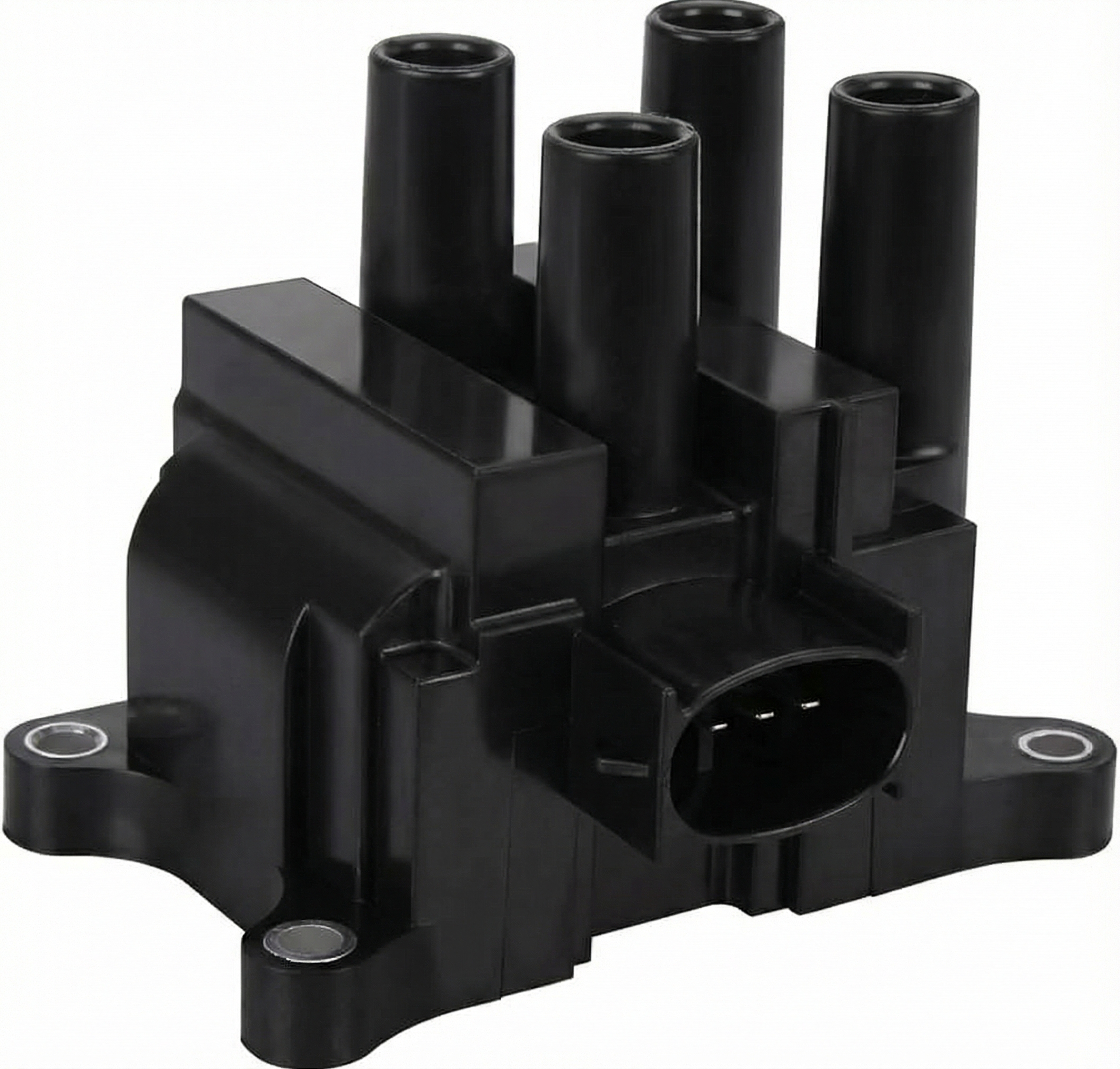
Unlike many modern cars with a coil-on-plug (COP) for each cylinder, the 1998-2005 Ford Focus Zetec engine uses a single ignition coil pack. This pack contains two coils that fire the spark plugs for all four cylinders in a 'waste spark' system (cylinders 1 and 4 fire together, as do 2 and 3). Therefore, a P0351 code points to a failure within the half of the coil pack responsible for cylinders 1 and 4. A very specific and well-documented issue on this platform is the wiring harness for the coil pack rubbing against the hot Exhaust Gas Recirculation (EGR) tube. This can melt the wire insulation and cause the control wire for the #1/#4 coil to short to ground, repeatedly destroying new coil packs until the wire is repaired.
Symptoms You May Notice
- Check Engine Light is on (can be solid or flashing)
- Engine misfires (feels like shaking, sputtering, or jerking)
- Rough or unstable idle
- Noticeable loss of power and sluggish acceleration
- Engine may stall, especially when idling at a stop
- Increased fuel consumption
- Difficulty starting the engine
- Backfiring or popping sounds from the exhaust
- Replacing only the spark plugs without checking the wires or coil pack.
- Replacing the fuel injectors when the problem is with the ignition system.
- Assuming the PCM is bad before thoroughly checking the wiring harness for shorts, especially near heat sources like the EGR tube.
- Replacing the ignition coil pack multiple times without finding the root cause of a shorted wiring harness, which destroys the new coil.
Most Likely Causes
- Faulty Ignition Coil Pack 🔴 High Probability → Shop Ignition Coil The coil pack is a standard wear item. Age and constant heat cycles cause the internal windings and external housing to degrade, sometimes resulting in a visible crack or a hole blown in the bottom of the unit. This is the most common failure part for P0351.
How to confirm: After ruling out plugs and wires, the coil pack is the next logical part to replace. You can inspect it for cracks, carbon tracking, or burn marks. Given its high failure rate and moderate cost, many owners replace it preventatively. Resistance tests can be performed, but are not always conclusive.
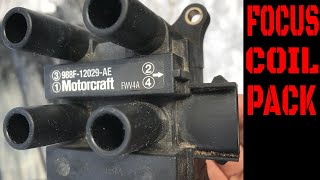
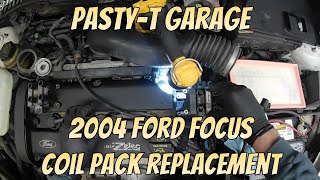
Typical fix: Replace the entire ignition coil pack. The OEM part is Motorcraft DG-536. 🎬 Watch: Step-by-step Zetec coil pack replacement guide
Est. part cost: $40-$100 - Worn or Damaged Spark Plug Wires 🔴 High Probability → Shop Spark Plug Like the coil pack, spark plug wires are subjected to high temperatures and vibrations, causing their internal resistance to increase and their insulation to crack over time, leading to a weak or misdirected spark.
How to confirm: Inspect wires for cracks, brittleness, or corrosion on the terminals. A simple test is to swap the wire for cylinder #1 with the wire for cylinder #2, clear the codes, and see if the fault code changes to P0352 (for the coil serving cylinder #2).
Typical fix: Replace all spark plug wires as a set. Motorcraft WR-5974 is a common part number for the 2.0L Zetec.
Est. part cost: $25-$60 - Damaged Wiring Harness or Connector 🟡 Medium Probability The wiring loom that connects to the 3-pin coil pack connector is often routed too close to the hot EGR tube. The heat melts the wire insulation, causing the control wire (Pin 3 for Cyl 1/4) to short to ground. This will often cause repeat coil pack failures.
How to confirm: Carefully inspect the entire length of the wiring harness leading to the ignition coil pack connector. Peel back the plastic conduit near the EGR tube and check for melted, brittle, or exposed copper wire. Check the connector itself for corrosion or loose pins.
Typical fix: Repair the damaged section of wire by cutting out the bad portion, soldering in a new piece of wire, and protecting it with heat-shrink tubing. Secure the repaired loom away from the heat source using a zip tie.
Est. part cost: $5-$15 - Worn or Fouled Spark Plugs 🟡 Medium Probability → Shop Spark Plug Spark plugs are a routine maintenance item. An incorrect gap, heavy carbon fouling, or oil contamination can increase the required firing voltage, stressing the coil and potentially causing a misfire that the PCM interprets as a coil circuit fault.
How to confirm: Remove the spark plug from cylinder #1 and inspect it for wear, damage, or fouling. Compare it to the other plugs. You can swap it with another cylinder's plug to see if the misfire code (e.g., P0301) follows the plug.
Typical fix: Replace all four spark plugs. Ensure they are gapped correctly to 0.050 inches before installation.
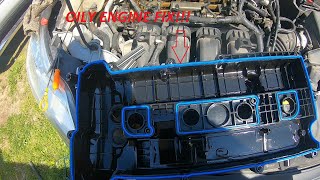
Est. part cost: $15-$40 - Oil Contamination in Spark Plug Wells ⚪ Low Probability → Shop Spark Plug It is extremely common for the valve cover gasket on the Zetec engine to fail and leak oil directly into the spark plug wells. This oil can saturate the spark plug boots and wires, causing the spark to short to the cylinder head instead of firing the plug, leading to misfires.
How to confirm: When removing the spark plug wires, look for liquid oil pooled in the bottom of the spark plug tubes. The spark plug wire boots will be wet with oil.
Typical fix: First, replace the valve cover gasket and the spark plug tube seals. Use a rag or turkey baster to remove the pooled oil from the wells before installing new spark plugs. Clean the oil off the spark plug wires or replace them if they are saturated.
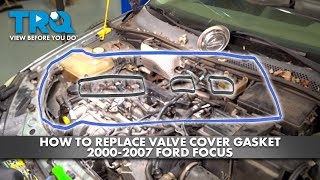
Est. part cost: $20-$50 (for gasket set) 🎬 Watch: How to replace a leaking valve cover gasket
Rare But Worth Checking
- Faulty Powertrain Control Module (PCM): → Shop Engine Control Module (ECM) This is very rare. The PCM's internal driver for the ignition coil can fail, but this should only be considered after all other possibilities (coil, plugs, wires, and wiring harness) have been thoroughly tested and ruled out. A manufacturer service bulletin, Bulletin #TSB 21-2174, notes that P0351 and related codes may be due to a software parameter within the PCM on other Ford models.
Diagnosis Steps
- Scan for Codes: Use an OBD-II scanner to confirm P0351 and check for any other related codes like P0301, P0304, or P0354.
- Visual Inspection: Inspect the ignition coil pack for cracks or burn marks. Check the spark plug wires for any signs of damage, arcing, or corrosion. Pull the wires and look down into the spark plug tubes for any pooled oil, which indicates a leaking valve cover gasket.
- Inspect Wiring Harness: This is a critical step. Trace the wiring harness from the 3-pin coil pack connector back towards the firewall. Pay extremely close attention to the area where it passes near the metal EGR tube. Look for any signs of melting, chafing, or exposed wires. Manufacturer bulletin #TSB 16-0163 suggests following specific service procedure steps when P0351-P0354 codes are present alongside other engine codes.
- Test Spark Plug Wires: If the visual inspection is clear, swap the spark plug wire from cylinder #1 with the one from cylinder #2. Clear the codes and drive the vehicle. If the code changes to P0352, the spark plug wire is faulty.
- Test Spark Plugs: If the wire test is inconclusive, return the wires to their original positions. Now, swap the spark plugs between cylinder #1 and #2. If the code changes to a misfire on cylinder 2 (P0302), the spark plug is the culprit.
- Check for Power at the Coil: Disconnect the 3-pin coil pack connector. With the key in the 'On' position, use a multimeter to verify there is battery voltage (around 12V) at the center pin (Pin 2) of the connector.
- Test the Control Wire: Check for continuity on the control wire (Pin 3 for cylinders 1/4) between the coil connector and the corresponding pin at the PCM. More importantly, check this wire for a short to ground, which is the common failure mode. A noid light or a voltmeter set to Hertz can be used to check for the trigger signal from the PCM while cranking the engine. 🎬 See this diagnostic walkthrough for P0351 codes Bulletin #SSM 45988 suggests that if a light flash is inconsistent or dim during diagnostics, further investigation is required.
- Replace the Coil Pack: If the wiring, plugs, and wires all test good, the ignition coil pack is the most likely failed component. Replace it with a quality part like Motorcraft DG-536.
- Final Check: If a new coil, plugs, and wires do not solve the issue, and the wiring harness has been meticulously inspected and repaired, only then should a faulty PCM be considered.
Parts You'll Likely Need
- Ignition Coil Pack
(OEM #DG-536)— This is the most common failure point for a P0351 code on this vehicle.
Trusted brands: Motorcraft, NGK, Delphi, Bosch
OEM price range: $70-$120
Aftermarket price range: $40-$80 - Spark Plug Wire Set
(OEM #WR-5974 (for 2.0L Zetec))— Often fails along with or is the root cause of the coil failure. It's best practice to replace them with the coil.
Trusted brands: Motorcraft, NGK, Denso
OEM price range: $40-$70
Aftermarket price range: $25-$50 - Spark Plugs
(OEM #SP-478-X)— A basic tune-up item that can cause misfires and stress the ignition coil if worn or incorrectly gapped.
Trusted brands: Motorcraft, NGK, Autolite
OEM price range: $20-$40
Aftermarket price range: $15-$30 - Ignition Coil Connector Pigtail
(OEM #3U2Z-14S411-TNA)— The connector itself can become brittle and fail, or the wiring near it can melt. Replacing the pigtail is often necessary when repairing the harness.
Trusted brands: Motorcraft, Dorman
OEM price range: $40-$80
Aftermarket price range: $15-$30
Related Codes That Often Appear With This One
- P0301 — P0301 means 'Cylinder 1 Misfire Detected.' Since P0351 indicates a problem with the ignition coil circuit for cylinder 1, a misfire in that cylinder is a direct symptom.
- P0354 — Because the Mk1 Focus uses a waste spark system where cylinders 1 and 4 are paired, a severe failure in that half of the coil pack can sometimes trigger faults for both cylinders.
- P0304 — Similar to P0354, a failure in the coil pack circuit for cylinder 1 can also cause a misfire in its paired cylinder, #4.
- P0300 — This code for 'Random/Multiple Cylinder Misfire' can appear if the ignition problem is intermittent or severe enough to affect multiple cylinders, sometimes as a result of the wiring short.
Platform-Specific Known Issues
- The wiring harness for the ignition coil is known to be routed close to the hot EGR tube, which can melt the insulation and cause a short circuit.
- The waste-spark system means a fault on the 'A' coil circuit (P0351) will affect both cylinder 1 and cylinder 4.
- Oil leaks from the valve cover gasket into the spark plug wells are a very common source of ignition misfires that can be mistaken for a primary component failure.
- Manufacturer bulletin #SSM 47180 notes that P0351 and related codes may be due to a poor connection at cylinder head ground G111 on some Ford platforms.
Mechanic-Grade Diagnostic Values
- Ignition Coil Primary Winding Resistance — expected: Approximately 0.5 to 0.7 Ohms. Failure: A reading of OL (Open Loop/infinite resistance) or significantly outside the expected range indicates a failed coil.
- Ignition Coil Secondary Winding Resistance — expected: Approximately 5,000 to 9,000 Ohms (5kΩ to 9kΩ). Failure: A reading of OL or significantly outside this range. Note that aftermarket coils may have different specs.
- Ignition Coil Connector - Power Supply Voltage — expected: Approximately 12V (Battery Voltage) with Key On, Engine Off.. Failure: Low or no voltage indicates a problem with the power supply wire or fuse, not the coil itself.
- Ignition Coil Connector - PCM Trigger Signal — expected: A pulsing ground signal when the engine is cranking or running. Can be observed as a flashing noid light or a frequency reading of 5-20 Hz on a multimeter.. Failure: No signal indicates a wiring issue back to the PCM or a faulty PCM driver. A constant ground indicates a shorted wire or failed PCM driver.
Scan Tool Commands That Help
- Ford IDS (Integrated Diagnostic System): Power Balance Test — This function allows a technician to disable one cylinder at a time to observe the corresponding drop in RPM. If disabling cylinder #1 causes no change in engine speed, it confirms that cylinder is not contributing, which is expected with a P0351 fault. It helps verify the location of the misfire.
Wiring & Ground Locations
- Ignition Coil Connector Pinout — 3-pin connector on the ignition coil pack.. Pin 1: Trigger signal from PCM for cylinders 2 & 3. Pin 2: 12V+ power supply (Key On). Pin 3: Trigger signal from PCM for cylinders 1 & 4. For P0351, the fault lies with the circuit connected to Pin 3.
- Main Chassis Ground — Under the air filter box, bolted to the driver's side inner fender/frame rail.. This is a primary ground point for the vehicle's electrical system. Corrosion or looseness here can cause a wide range of intermittent and difficult-to-diagnose electrical problems, including erratic ignition system performance. Cleaning this ground is a crucial preventative step.
- PCM Ground — Typically located on the firewall or inner fender, near the Powertrain Control Module (PCM) itself.. The PCM controls the ignition coil by switching its ground path. A poor ground connection for the PCM can lead to weak or inconsistent coil triggering, potentially causing misfires and setting circuit codes like P0351.
Real Owner Repair Stories
- FocusFanatics Forum User (2002 Ford Focus Zetec) — P0351 code, engine misfire, replaced coil pack twice but the new coil would fail again quickly.
❌ Tried (didn't work) Replacing the ignition coil pack (twice), Replacing spark plugs, Replacing spark plug wires
✅ What actually fixed it The user discovered the wiring harness for the ignition coil had melted where it was touching the hot EGR tube. The control wire for the #1/4 coil was shorting to ground, which was destroying the new coil packs. The final fix was to cut out the melted section of wire, solder in a new piece, protect it with heat shrink, and re-route the harness away from the EGR tube with a zip tie. - NHTSA ODI #10713413 — An owner reported a loss of power and violent shaking accompanied by a check engine light. Diagnostic codes included P0351, P0352, P0354, P0301, P0302, and P0316. A pinpoint test was performed on all coils and the fuel system to identify the failure.
OEM Part Supersession History
988Z-12029-A→DG-536— Standard part number update and consolidation by Ford/Motorcraft.
Model Year Variations Within This Range
- 2000-2004: While the prompt focuses on the Zetec engine, Ford also offered a 110-hp 2.0L Single Overhead Cam (SOHC) SPI (Split Port Induction) engine in some trims (like the base LX). This engine uses a similar waste-spark coil pack system, and the causes/fixes for P0351 are largely identical, though some part numbers for tune-up items may differ.
- 2005+: Starting in 2005, the Focus engine lineup was updated to the Duratec family. These engines use a coil-on-plug (COP) ignition system, where each cylinder has its own individual coil. While a P0351 code still points to the coil for cylinder #1, the diagnosis and parts are completely different from the 1998-2005 waste-spark system.
Diagnostic Flowchart
Other Known Issues on This Vehicle
Issues unrelated to this code that are worth knowing about as an owner of this generation:
- Cracking Plastic Thermostat Housing 🔴 High — Very common failure item. The plastic becomes brittle with age and heat cycles, leading to coolant leaks. Many owners report replacing it multiple times, with genuine Ford parts having the best longevity.
- Leaking Valve Cover Gasket 🟠 Medium → Shop Engine Valve Cover — Extremely common. The gasket hardens over time, allowing engine oil to leak externally and, more critically, into the spark plug wells, causing misfires.
- Premature Rear Wheel Bearing Failure 🟠 Medium — A widely reported issue where the rear wheel bearings become noisy (growling or howling sound) and fail prematurely. While some TSBs exist for later models (e.g., TSB 12-8-10 for 2007+), the problem is well-documented on Mk1s. (Ref: While no specific TSB for the Mk1 was found, the issue is a known weak point.)
- Failed Dual Stage Intake Manifold Runner Control (IMRC) 🟡 Low — The IMRC system on Zetec engines can fail, typically with the plastic linkage breaking or the actuator failing. This usually results in a loss of low-end torque or a rattling noise from the intake manifold.
Used vs. New Parts: Buying Guide for This Vehicle
When a used part is the smart pick: A used wiring harness pigtail for the ignition coil connector is a smart choice. If the connector housing is broken or the wires are melted near the connector, sourcing a pigtail from a junkyard vehicle with a clean harness is much cheaper than buying a new OEM connector.
Donor-vehicle mileage cap: roughly under 120000 miles for the part to have meaningful remaining life.
What to inspect on the donor part:
- For a wiring pigtail, ensure the plastic is not brittle and the locking tab is intact.
- Check for at least 6-8 inches of clean, unmelted wire attached to the connector.
- Inspect the donor vehicle's engine bay for signs of overheating or fire.
- Avoid harnesses from vehicles that show signs of major fluid leaks, as oil and coolant can degrade wire insulation over time.
OEM-only on this vehicle (don't cheap out):
- Ignition Coil Pack: While many aftermarket brands exist, forum consensus strongly favors the OEM Motorcraft (DG-536) part for longevity and reliability. Cheaper aftermarket coils have a high rate of premature failure on this platform.
Aftermarket brands forum-validated for this vehicle:
- NGK (for spark plugs and wires)
- Bosch (for spark plugs and wires)
- MSD (for performance-oriented coil and wire upgrades, but requires matched wires)
Brands owners have reported issues with on this vehicle:
- Unnamed, 'white-box' or exceptionally cheap ignition coils found on online marketplaces. These are frequently cited in forums as failing within weeks or months.
Real Owner Stories
Aggregated from forums and TSBs cited above. Mileages and costs reflect what owners reported in those sources.
Ford Focus Zetec
Symptoms: Owner experienced P0300, P0351, and P0352 codes. Upon inspection, they found issues with the wiring loom near the engine.
What fixed it: Discovered and repaired chafed wiring near the EGR tube that had melted due to heat exposure.
Source hint: https://www.geekdiymechanic.com/p/focus-p0300-p0351-p0352.html
Ford Focus
Symptoms: Misfires and codes related to the ignition system; owner found liquid oil pooled in the bottom of the spark plug tubes.
What fixed it: Replaced the valve cover gasket and spark plug tube seals, and cleaned the oil off the components.
Source hint: https://www.reddit.com/r/FordFocus/comments/69v9qj/oil_in_spark_plug_well/
Related OBD-II Codes
Frequently Asked Questions
Which specific ignition coil pack should I buy for my 2.0L Zetec Focus?
Why does my Focus keep blowing new coil packs shortly after I replace them?
I found oil on my spark plug boots while checking for P0351. Is this related?
If I have a P0351 code, which cylinders are affected on the Focus waste-spark system?
Can I test if a spark plug wire is bad by swapping it with another cylinder?
What is the correct spark plug gap for the Zetec engine to prevent stressing the coil?
Helpful Videos

We Have This Part in Stock

The information in this article is provided for general reference and educational purposes only. Vehicle specifications, procedures, and part compatibility can vary by production date, trim level, and region. Always consult your vehicle's factory service manual and verify part numbers before purchasing or performing repairs. Safety-critical components such as airbags, seat belts, and braking systems should be installed by a qualified professional.
- Ford Focus:
- 🧭 Diagnostic Flowchart
- 🎬 Helpful Videos
- 🛍️ Shop This Part
- What's Unique About the 1998-2005 Ford Focus
- Symptoms You May Notice
- Most Likely Causes
- Rare But Worth Checking
- Diagnosis Steps
- Parts You'll Likely Need
- Related Codes That Often Appear With This One
- Platform-Specific Known Issues
- Mechanic-Grade Diagnostic Values
- Scan Tool Commands That Help
- Wiring & Ground Locations
- Real Owner Repair Stories
- OEM Part Supersession History
- Model Year Variations Within This Range
- Other Known Issues on This Vehicle
- Used vs. New Parts: Buying Guide for This Vehicle
- Real Owner Stories
- Ford Focus Zetec
- Ford Focus
- Related OBD-II Codes
- Frequently Asked Questions
- 🎟️ Get 5% Off