

P0351 on 2011-2018 Ford Focus 2.0L: Ignition Coil 'A' Circuit Causes and Fixes
On a 2011-2018 Ford Focus, code P0351 almost always means the ignition coil for cylinder #1 has failed. Replacing the single coil is a simple 15-minute DIY job, with the part costing around $30-$60 for an aftermarket brand or $75-$125 for an OEM Motorcraft coil. Swapping the coil from cylinder #1 to another cylinder to see if the code follows (e.g., to P0352) is the definitive diagnostic test.
- P0351 on a 2011-2018 Focus almost certainly means the ignition coil on cylinder #1 is bad.
- The most effective diagnostic is to swap the cylinder #1 coil with another cylinder's coil and see if the code follows it (e.g., changes to P0352).
- This is a very DIY-friendly repair that requires only basic tools (an 8mm socket) and can be done in under 30 minutes.
- Do not drive the car if the check engine light is flashing, as this can cause expensive damage to the catalytic converter.
- While you're replacing the coil, it's a good idea to inspect the spark plug and consider replacing all four if they are due.
What's Unique About the 2011-2018 Ford Focus
The 2011-2018 Ford Focus (MK3 generation) uses a reliable coil-on-plug ignition system where each cylinder has its own dedicated coil. While the system is robust, these individual coils are a common wear-and-tear item. The P035x series of codes are very straightforward on this platform, almost always pointing to a failed coil itself rather than more complex wiring or computer issues. The accessibility of the coils on the 2.0L engine makes this a particularly common and easy DIY repair for owners.
Symptoms You May Notice
- Rough or shaking idle
- Engine hesitation or stumbling during acceleration
- Noticeable loss of engine power
- Solid Check Engine Light
- Flashing Check Engine Light (indicates a severe misfire)
- Reduced fuel economy
- Difficulty starting the engine.
- Replacing the fuel injector for cylinder #1. While a bad injector can cause a misfire (P0301), it will not cause an ignition coil circuit code like P0351.
- Replacing the catalytic converter. A misfire from P0351 can damage the converter, but the converter itself is not the cause of the code. A P0420 code may appear alongside P0351 if the misfire has been happening for a while.
Most Likely Causes
- Failed Ignition Coil (Cylinder #1) 🔴 High Probability → Shop Ignition Coil Ignition coils are a common wear item that are subjected to high temperatures and constant electrical cycling. They are the most frequent point of failure for this specific code on this vehicle.
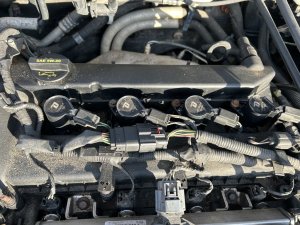
How to confirm: Swap the ignition coil from cylinder #1 with another cylinder (e.g., cylinder #2). Clear the codes and run the engine. If the code changes to P0352 (Ignition Coil 'B' Malfunction), the coil is definitively bad. Cylinder #1 is on the far right side of the engine when you are facing it (the side with the belts).
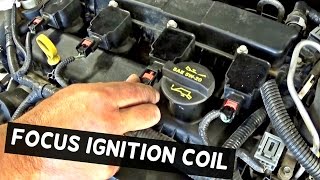
Typical fix: Replace the faulty ignition coil. It is a simple, single-bolt removal using an 8mm socket. 🎬 See this step-by-step ignition coil replacement video Applying a small amount of dielectric grease to the inside of the new coil boot is recommended to prevent moisture intrusion and ease future removal.
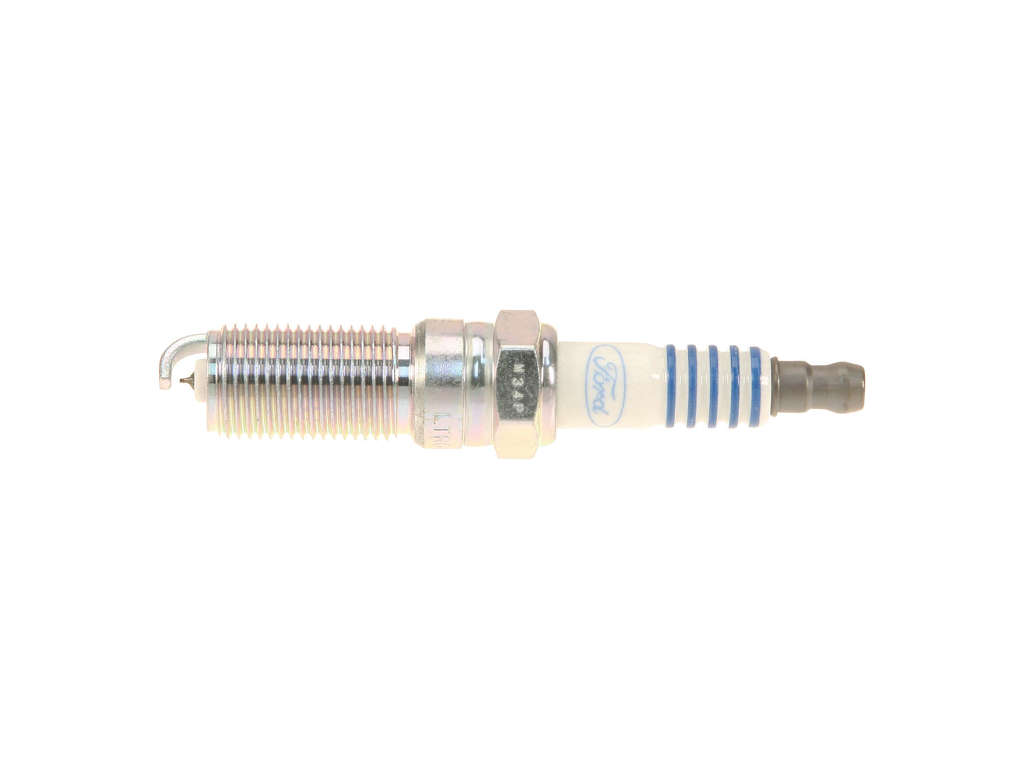
Est. part cost: $30-$125 - Worn or Fouled Spark Plug (Cylinder #1) 🟡 Medium Probability → Shop Spark Plug A spark plug with an excessive gap or heavy carbon fouling can increase the electrical load on the ignition coil, potentially causing it to fail or contributing to the circuit fault code.
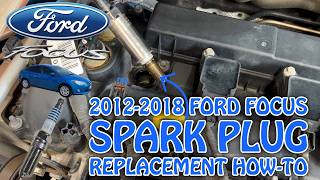
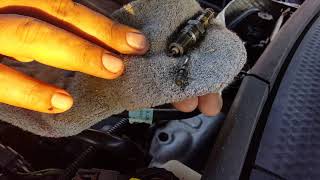
How to confirm: After removing the ignition coil, remove the spark plug from cylinder #1. Inspect it for wear, damage, or fouling (black, sooty, or oily deposits). Compare its condition to the other plugs. A worn plug will have a rounded center electrode. 🎬 Watch: How to replace your spark plugs
Typical fix: Replace the spark plug in cylinder #1. It is highly recommended to replace all four spark plugs at the same time if they are near the end of their service interval (typically 60,000-100,000 miles). Ensure the new plugs are gapped correctly per the vehicle's specification.
Est. part cost: $5-$20 per plug - Damaged Wiring or Connector ⚪ Low Probability Engine heat and vibration can make the plastic connector for the ignition coil brittle, or cause wires in the harness to break or short out over time. This can happen near the connector itself or where the harness might rub against other components.
How to confirm: Visually inspect the wiring harness and the electrical connector going to the cylinder #1 ignition coil. Look for any signs of cracked plastic, loose pins, or frayed/melted wires. Wiggle the connector with the engine running to see if it affects the misfire. A multimeter can be used to check for 12V power and the PCM ground pulse signal at the connector.
Typical fix: If the connector is damaged, a new pigtail connector (e.g., Motorcraft WPT-986, Dorman 85848) can be spliced into the harness. If a wire is broken further down the loom, the damaged section will need to be repaired, soldered, and protected with heat shrink tubing.
Est. part cost: $15-$40 for a pigtail
Rare But Worth Checking
- Faulty Powertrain Control Module (PCM): → Shop Engine Control Module (ECM) This is extremely rare. The PCM contains driver circuits that control each ignition coil. A failure in the driver for cylinder #1 could trigger P0351. This should only be considered after all other possibilities (coil, plug, wiring) have been exhaustively ruled out by confirming the coil and plug are good and that the wiring has continuity and is receiving power. A manufacturer service bulletin for other Ford models, TSB 21-2174, notes that an illuminated MIL with P0351 may be due to a software parameter within the PCM.
Diagnosis Steps
- Scan the vehicle's computer for trouble codes. Confirm P0351 is present and check for any other codes, like P0301.
- Identify Cylinder #1. On the 2.0L Duratec, it is the cylinder on the far right (passenger side) of the engine, closest to the accessory belts.
- Visually inspect the ignition coil connector and nearby wiring for any obvious damage, melting, or corrosion. Pay attention to the locking tab on the connector, which can become brittle.
- Swap the ignition coil from cylinder #1 with the coil from cylinder #2. This is the most crucial diagnostic step.
- Clear the fault codes using the scan tool.
- Start the engine and let it run for a minute or two, then re-scan for codes.
- If code P0352 appears, the ignition coil you moved is faulty and needs to be replaced.
- If code P0351 returns, the problem is not the coil. Proceed to inspect the spark plug and wiring for cylinder #1.
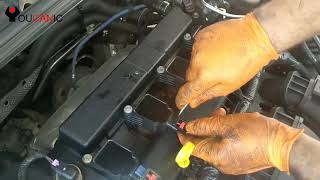
- If the wiring appears intact, use a multimeter or a noid light to check for 12V power at the coil connector (key on, engine off) and for a command pulse signal from the PCM while cranking the engine (this is an advanced step). 🎬 Watch: Diagnostic walkthrough for Ford ignition coil codes
- If all tests pass but the code persists, the issue may be an intermittent connection or, in very rare cases, a faulty PCM driver.
Parts You'll Likely Need
- Ignition Coil
(OEM #CM5Z-12029-K)— This is the most common failure part for code P0351 on this vehicle.
Trusted brands: Motorcraft, NGK, Denso, Delphi
OEM price range: $75-$125
Aftermarket price range: $30-$60 - Spark Plugs
(OEM #SP-535)— Often replaced as a set during an ignition coil job, either as preventative maintenance or as a potential cause of the coil failure.
Trusted brands: Motorcraft, NGK, Autolite
OEM price range: $8-$15 per plug
Aftermarket price range: $5-$10 per plug - Ignition Coil Connector Pigtail
(OEM #WPT-986 (Motorcraft))— Needed if the original plastic connector housing is cracked, melted, or the locking tab is broken, causing a poor connection.
Trusted brands: Motorcraft, Dorman (85848), Standard Motor Products
OEM price range: $25-$40
Aftermarket price range: $15-$30
Related Codes That Often Appear With This One
- P0301 — This code means 'Cylinder 1 Misfire Detected'. It is a direct result of the P0351 fault, as the problem with the ignition coil circuit prevents the spark plug from firing, causing the misfire.
Technical Service Bulletins (TSBs) & Recalls
- No TSBs directly address P0351 on the 2011-2018 Focus. However, TSB 18-2062 addresses various drivability concerns on 2012-2014 models due to wiring harness issues, which could theoretically cause a P035x code if the ignition coil circuit was affected.
- TSB 11-3-24 was issued for earlier Focus models (2000-2011) regarding engine vibration from debris in the rear engine mount, which is unrelated to P0351 but is a known platform issue.
- Manufacturer bulletin SSM 47180 for other Ford models notes that P0351 through P0354 may be due to a poor connection at cylinder head ground G111.
- Manufacturer bulletin SSM 45988 indicates that for some Ford vehicles, P0351 and P0352 may be accompanied by a rough run or hard start, and technicians should check for inconsistent or dim light flashes during pinpoint testing.
- Bulletin #TSB 16-0163 lists P0351 through P0354 among several other codes that may be present on related Ford platforms, requiring specific service procedure steps to resolve.
Mechanic-Grade Diagnostic Values
- Ignition Coil Trigger Signal (Frequency) — expected: 5 to 20 Hz. Failure: A reading of 0 Hz indicates no trigger signal from the PCM.
- Ignition Coil Connector - Power Supply Pin — expected: 12V (Battery Voltage) with Key On, Engine Off.. Failure: No voltage indicates a problem with the power supply circuit, potentially a fuse or relay.
- Ignition Coil Connector - Trigger Pin (DC Voltage) — expected: Near 0V. Significant DC voltage is not expected.. Failure: The presence of significant, steady DC voltage suggests a short to power in the driver circuit.
- Wiring Continuity (PCM to Coil Connector) — expected: Near 0 ohms.. Failure: High or infinite resistance (OL) indicates an open (broken) wire in the harness.
Scan Tool Commands That Help
- Ford IDS (Integrated Diagnostic System): Power Balance Test — This bidirectional test allows a technician to disable individual cylinders one by one to see the RPM drop. If disabling cylinder #1 causes no change in RPM, it confirms that cylinder is not contributing, which supports the P0351 fault.
- Ford IDS (Integrated Diagnostic System): Ignition System Test / Coil-On-Plug Stress Test — This is a specific self-test routine that commands the ignition system and monitors the response from each coil circuit, which can help confirm a fault in the #1 coil's primary circuit.
- High-End Scan Tool (e.g., FORScan): Mode 6, Test ID $82, Component ID $01 — This allows viewing of the raw misfire count data for cylinder 1. While P0301 indicates a misfire has exceeded the threshold, Mode 6 can show you lower-level misfire counts that may not have set a code yet, helping to confirm an intermittent issue.
Wiring & Ground Locations
- Ignition Coil #1 Connector — On top of the engine, far right side (passenger side), connected to the rearmost ignition coil.. This is the primary point for visual inspection and electrical testing (power, ground pulse). The connector itself or its wiring is a potential point of failure.
- Main Engine Ground (G104/G105) — Bolted to the chassis frame rail, located underneath the air filter box assembly on the driver's side of the engine bay.. A poor main engine ground can cause a host of intermittent and difficult-to-diagnose electrical issues, including erratic behavior from the ignition system. While not a direct cause of a single-cylinder code like P0351, it should be checked if multiple, seemingly unrelated electrical faults are present.
- PCM Ground — On Fords, there is typically a dedicated ground for the PCM located on the firewall or frame rail near the PCM itself.. A compromised PCM ground could theoretically cause issues with the coil driver circuits, though it would likely cause multiple codes, not just P0351.
Real Owner Repair Stories
- YouTube Channel 'Auto Repair Guys' (2013 Ford Focus MK3) — Engine light on, engine missing slightly.
✅ What actually fixed it The video diagnosed a P0353 (Cylinder 3) but the process is identical. The problem was a bad ignition coil. They replaced the single faulty coil, cleared the code, and the misfire was resolved. They used a known good used coil from a parts car for the repair. - Go-Parts.com Repair Article (Not specified, but general P0351 case study) — P0351 code returned after replacing the ignition coil.
❌ Tried (didn't work) Replacing the ignition coil
✅ What actually fixed it A leaking valve cover gasket had allowed oil to drip down and saturate the wiring harness for the ignition coil. The oil damaged the wire insulation, causing a short. Cleaning the oil from the harness and repairing the damaged section of wire resolved the code. - NHTSA ODI #10713413 — An owner reported that their vehicle experienced a loss of power and started shaking violently. Diagnostic codes P0351, P0352, P0354, P0301, P0302, and P0420 were stored, indicating multiple coil circuit failures and potential catalyst damage.
OEM Part Supersession History
CM5Z-12029-A→CM5Z-12029-K— Standard part revision and improvement by the manufacturer.DG-546→CM5Z-12029-K— Standard part revision and improvement by the manufacturer.
Model Year Variations Within This Range
- 2015-2018: The Ford Focus received a significant facelift for the 2015 model year, which included revised styling and interior, including a new center console with a larger SYNC 2 screen. In North America, a 1.0L EcoBoost engine became an option. However, the 2.0L Duratec GDI engine and its coil-on-plug ignition system remained fundamentally the same, so the diagnosis for P0351 is consistent across the 2011-2018 range for this engine.
Diagnostic Flowchart
Other Known Issues on This Vehicle
Issues unrelated to this code that are worth knowing about as an owner of this generation:
- PowerShift (DPS6) Automatic Transmission Failure 🔴 High — Extremely common on 2012-2016 models with the automatic transmission. Symptoms include shuddering, hesitation, jerky shifts, and complete loss of drive. (Ref: Multiple class-action lawsuits and extended warranty programs (e.g., 14M02) were issued, but no permanent recall fixed the underlying design flaw.)
- Faulty Canister Purge Valve 🟠 Medium — Common across 2012-2018 models. A stuck-open valve causes rough idle after refueling, erratic fuel gauge readings, and can lead to a deformed fuel tank. (Ref: Subject of recall 18S32 (NHTSA 18V-735), which involved a PCM reprogram and potential valve replacement.)
- Failing Passenger Side Engine Mount 🟠 Medium — The hydraulic passenger-side engine mount is prone to leaking and collapsing, typically after 60,000-90,000 miles, causing excessive engine vibration felt in the cabin, especially at idle and in gear.
- Steering System Faults 🟠 Medium — Some vehicles may experience a sudden loss of power steering or exhibit wandering at highway speeds. This can be due to faults in the Electric Power-Assisted Steering (EPAS) rack. (Ref: TSB 12-2-17 addressed steering wander on some vehicles.)
- Water Leaks into Hatch/Trunk 🟡 Low — Fairly common on hatchback models. Water can leak into the trunk area, typically through failed body seams or vents located behind the rear bumper cover, leading to a soggy carpet and potential mold.
Used vs. New Parts: Buying Guide for This Vehicle
When a used part is the smart pick: For an ignition coil, a used OEM (Motorcraft) part from a low-mileage donor vehicle can be a cost-effective and reliable option. OEM coils are generally very durable, and a used original part is often higher quality than a cheap, new aftermarket part.
Donor-vehicle mileage cap: roughly under 80000 miles for the part to have meaningful remaining life.
What to inspect on the donor part:
- Check for a clean, low-mileage donor vehicle.
- Inspect the part for any physical damage, cracks in the plastic housing, or corrosion on the electrical pins.
- Avoid parts that are covered in oil or show signs of overheating (discoloration).
- Ask the salvage yard for a short warranty (e.g., 30 days) to protect against a dead-on-arrival part.
Aftermarket brands forum-validated for this vehicle:
- NGK
- Denso
- Delphi
Brands owners have reported issues with on this vehicle:
- Unnamed, 'white-box' brands from online marketplaces should be avoided. While tempting due to very low prices, they have a high infant failure rate and may not have the correct internal resistance or radio-frequency suppression, potentially causing other issues.
Real Owner Stories
Aggregated from forums and TSBs cited above. Mileages and costs reflect what owners reported in those sources.
2012-2014 Ford Focus 2.0L
Symptoms: Drivability concerns related to wiring harness issues.
What fixed it: Repairs addressed via TSB 18-2062 regarding wiring harness integrity.
Source hint: TSB 18-2062
2018 Ford Focus 2.0L
Symptoms: Recurring issues, though the owner noted a purge valve problem common to the platform.
What fixed it: While the P0351 diagnostic path is standard, this platform often requires checking the purge valve (Recall 18S32) for related rough idle symptoms.
Source hint: Reddit r/FordFocus
Ford Focus (Older Model)
Symptoms: P0351 and P0352 codes present simultaneously.
What fixed it: Repairing a damaged wire in the harness that was rubbing against an EGR tube.
Source hint: Geek DIY Mechanic Forum
Related OBD-II Codes
Frequently Asked Questions
Where is Cylinder #1 located on my 2011-2018 Ford Focus 2.0L Duratec?
Does TSB 18-2062 apply to my P0351 code?
What specific replacement parts are recommended for a damaged ignition coil connector?
Can I just swap parts to see if the code moves on this engine?
Is there a specific tool needed to remove the ignition coil on my Focus?
How often should I replace the spark plugs to prevent P0351 on this vehicle?
Helpful Videos

Used OEM Parts in Stock
New Aftermarket Parts Available

The information in this article is provided for general reference and educational purposes only. Vehicle specifications, procedures, and part compatibility can vary by production date, trim level, and region. Always consult your vehicle's factory service manual and verify part numbers before purchasing or performing repairs. Safety-critical components such as airbags, seat belts, and braking systems should be installed by a qualified professional.
- Ford Focus:
- 🧭 Diagnostic Flowchart
- 🎬 Helpful Videos
- 🛍️ Shop This Part
- What's Unique About the 2011-2018 Ford Focus
- Symptoms You May Notice
- Most Likely Causes
- Rare But Worth Checking
- Diagnosis Steps
- Parts You'll Likely Need
- Related Codes That Often Appear With This One
- Technical Service Bulletins (TSBs) & Recalls
- Mechanic-Grade Diagnostic Values
- Scan Tool Commands That Help
- Wiring & Ground Locations
- Real Owner Repair Stories
- OEM Part Supersession History
- Model Year Variations Within This Range
- Other Known Issues on This Vehicle
- Used vs. New Parts: Buying Guide for This Vehicle
- Real Owner Stories
- 2012-2014 Ford Focus 2.0L
- 2018 Ford Focus 2.0L
- Ford Focus (Older Model)
- Related OBD-II Codes
- Frequently Asked Questions
- 🎟️ Get 5% Off