

P0351 on 2008 Ford Taurus 3.5L V6: Ignition Coil Circuit Malfunction Guide
This code indicates a fault in the ignition coil circuit for cylinder #1. The most common cause is a failed ignition coil. However, on 2008 models, a faulty Powertrain Control Module (PCM) is a known issue that can destroy new coils, so diagnosis is critical. Replacing the rear bank of coils is labor-intensive.
- P0351 on a 2008 Taurus 3.5L points to a problem with the cylinder #1 ignition coil circuit.
- A faulty PCM is a very real possibility on this specific model year and can destroy new ignition coils if not replaced. Check for TSB 13-4-17.
- Cylinder #1 is on the rear bank against the firewall, requiring removal of the upper intake manifold for access.
- Due to the high labor cost, it is strongly recommended to replace all three rear ignition coils (1, 2, 3) and all six spark plugs at the same time.
- If you have multiple P035x codes, you must replace the PCM, all six coils, and all six plugs to achieve a lasting repair.
What's Unique About the 2008-2008 Ford Taurus
The 2008 Ford Taurus with the 3.5L V6 has a well-documented issue where a failing Powertrain Control Module (PCM) can cause repeated ignition coil failures. The internal drivers in the PCM that control the coils are prone to shorting out, which overheats and destroys the ignition coil. Ford issued Technical Service Bulletin (TSB) 13-4-17 for this problem, which also affects platform mates like the Ford Edge and Lincoln MKX. If you have multiple coil-related codes (P0351-P0356), it is highly probable the PCM is the root cause and will need to be replaced along with all coils and plugs to prevent immediate failure of the new parts.
Symptoms You May Notice
- Check Engine Light is on (may be flashing if misfire is severe)
- Rough or uneven idle
- Engine hesitation or loss of power during acceleration
- Noticeable decrease in fuel economy
- Engine may stumble or run poorly
- Difficulty starting the engine
- Smell of unburned fuel from the exhaust
- Replacing only the single failed ignition coil without checking for the underlying PCM issue. If the PCM is faulty, it will destroy the new coil, leading to repeated repairs and wasted money.
- Replacing the PCM without replacing all six coils and spark plugs simultaneously. A weak, old coil can damage a new PCM, and a faulty PCM will destroy new coils.
Most Likely Causes
- Faulty Ignition Coil (Cylinder #1) 🔴 High Probability → Shop Ignition Coil Ignition coils are wear items that operate in a high-heat environment. The original Motorcraft coils on some 3.5L V6 engines from this era are known to fail, and the problem is exacerbated by the potential for a faulty PCM to cause them to overheat and crack.
How to confirm: Swap the ignition coil from cylinder #1 with another cylinder (e.g., cylinder #4 on the easily accessible front bank). Clear the codes and drive the vehicle. If the code changes to P0354, the coil is faulty. Visually inspect the coil for cracks or swelling, which are signs of it being burned out by a faulty PCM.
Typical fix: Replace the failed ignition coil. Cylinder #1 is on the rear bank, which requires removing the upper intake manifold for access. Due to the labor involved, it is highly recommended to replace all three rear coils (1, 2, 3) and their spark plugs at the same time. If the PCM is suspected, all six coils and plugs must be replaced.
Est. part cost: $75-$120 for a single OEM-quality coil. - Faulty Powertrain Control Module (PCM) 🟡 Medium Probability → Shop Engine Control Module (ECM) Ford TSB 13-4-17 specifically addresses an issue on 2008 Taurus models where the PCM's internal coil drivers fail, shorting out and destroying the ignition coils. This is a known manufacturing defect affecting vehicles built on or before March 1, 2008. Manufacturer service bulletin TSB 21-2174 also notes that similar rough running concerns and P0351 codes on other Ford models may be due to software parameters within the PCM.
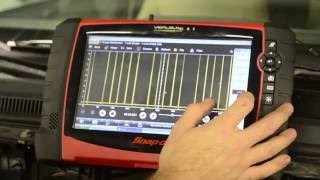
How to confirm: This is often diagnosed after replacing a coil and having it fail again immediately or very quickly. The presence of multiple, simultaneous coil codes (e.g., P0351, P0354, P0356) is a very strong indicator of PCM failure. A definitive test involves using a noid light or oscilloscope on the signal wire of the coil connector; a missing or constant ground signal (instead of a pulse) while cranking points to a bad PCM driver. 🎬 Watch: Diagnostic walkthrough for Ford ignition coil primary codes
Typical fix: The PCM must be replaced or repaired by a specialist. Crucially, all six ignition coils and all six spark plugs MUST be replaced at the same time as the PCM. Failure to do so will cause the faulty PCM to damage the new coils, or old, weakened coils to damage the new PCM.
Est. part cost: $600-$900 for a programmed PCM, or $200-$350 for a repair service. - Worn or Fouled Spark Plug (Cylinder #1) 🟡 Medium Probability → Shop Spark Plug A worn spark plug with an excessive gap requires higher voltage to create a spark. This increased demand strains the ignition coil, causing it to work harder, overheat, and eventually fail.
How to confirm: When accessing the ignition coil for cylinder #1, remove the spark plug and inspect it. Look for a worn-down center electrode, excessive carbon fouling, oil contamination, or a white, burned appearance.
Typical fix: Replace the spark plug. Since cylinder #1 is difficult to access, it is best practice to replace all six spark plugs at the same time. Use of OEM-spec plugs is recommended.
Est. part cost: $8-$20 per spark plug for OEM quality. - Damaged Wiring or Connector ⚪ Low Probability The wiring harness sits on top of a hot engine, and vibrations can cause wires to chafe or the plastic connector to become brittle and break. Manufacturer bulletin SSM 47180 indicates that for some Ford engines, P0351 can be caused by a poor connection at a cylinder head ground. Additionally, TSB 16-0163 suggests that a wide range of codes, including P0351-P0354, may require following specific service procedure steps to address wiring or communication issues.
How to confirm: Visually inspect the wiring harness and connector for cylinder #1's ignition coil. Look for any signs of cracking, melting, corrosion in the pins, or broken wires. Perform a wiggle test on the harness with the engine running to see if it affects the misfire. Use a multimeter to check for ~12V power at the connector with the key on, and for continuity on the signal wire back to the PCM.
Typical fix: Repair the damaged section of wire or replace the pigtail connector.
Est. part cost: $15-$30 for a new pigtail connector.
Diagnosis Steps
- Scan the vehicle for all DTCs. Note if P0301 or other P035x codes are present. Multiple P035x codes strongly suggest a PCM failure.
- Locate Cylinder #1. On the 3.5L V6 in the Taurus, the engine is transversely mounted. Cylinders 1, 2, and 3 are on the rear bank (against the firewall), and 4, 5, and 6 are on the front bank (by the radiator). Cylinder #1 is on the rear bank, passenger side.
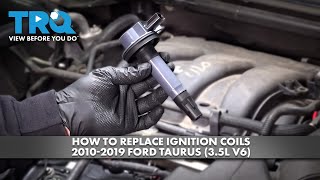
- Due to the difficult access, a coil swap is not the easiest first step. Prepare for intake manifold removal. 🎬 Watch: How to replace the coils and spark plugs This is a good time to order new intake manifold gaskets as they are one-time use.
- Remove the upper intake manifold to gain access to the rear bank of coils.
- Inspect the ignition coil and its electrical connector for any visible damage, such as cracks, melting, swelling, or corrosion. Manufacturer bulletin SSM 45988 notes that if a light flash is inconsistent or dim during pinpoint testing of the ignition circuit, it may indicate a specific failure mode.
- Swap the ignition coil from cylinder #1 with the coil from cylinder #4 (front bank, passenger side). This makes re-testing easier.
- Temporarily reinstall the intake manifold for the test. Clear the codes, start the engine, and let it run for a few minutes.
- Re-scan for codes. If the code has moved to P0354, the ignition coil is confirmed to be the problem.
- If the code remains P0351, the issue is likely in the wiring or the PCM. At this point, inspect the wiring harness for cylinder #1 for damage. Check for 12V power on one pin and a pulsing ground signal from the other pin using a noid light or multimeter while cranking.
- If the pulsing signal from the PCM is absent, and the wiring is confirmed to be good, the PCM is faulty and must be repaired or replaced.
- If P0351 is accompanied by other P035x codes, and the vehicle was built before 03/01/2008, strongly suspect a faulty PCM per TSB 13-4-17. The recommended repair is to replace the PCM, all six coils, and all six spark plugs together.
Parts You'll Likely Need
- Ignition Coil
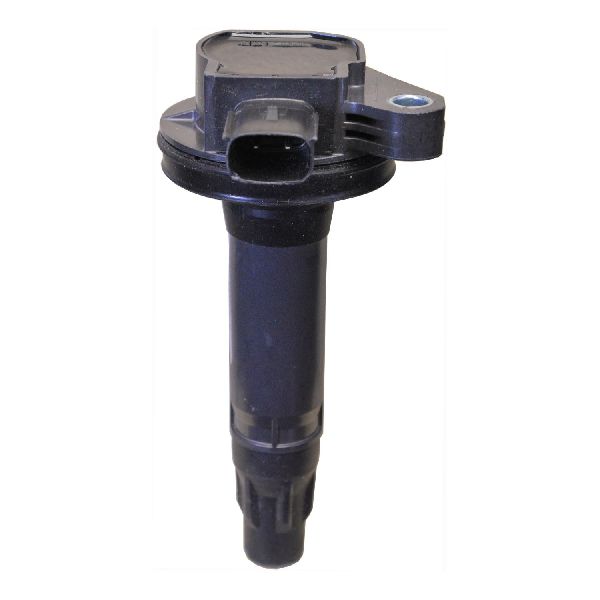
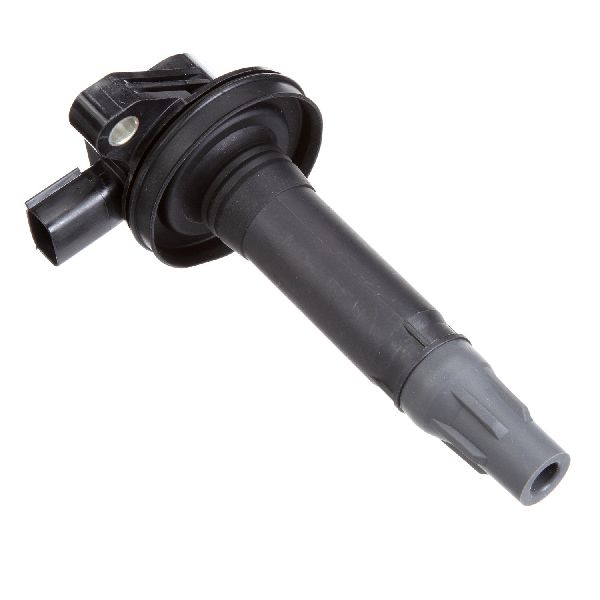
(OEM #7T4Z-12A366-A (Motorcraft DG520))— This is the most common failure point for a P0351 code. Cylinder #1 is on the difficult-to-access rear bank, so replacing all three rear coils (or all six) at once is recommended.
Trusted brands: Motorcraft, NGK, Delphi, Denso
OEM price range: $90-$120
Aftermarket price range: $50-$90 - Spark Plugs
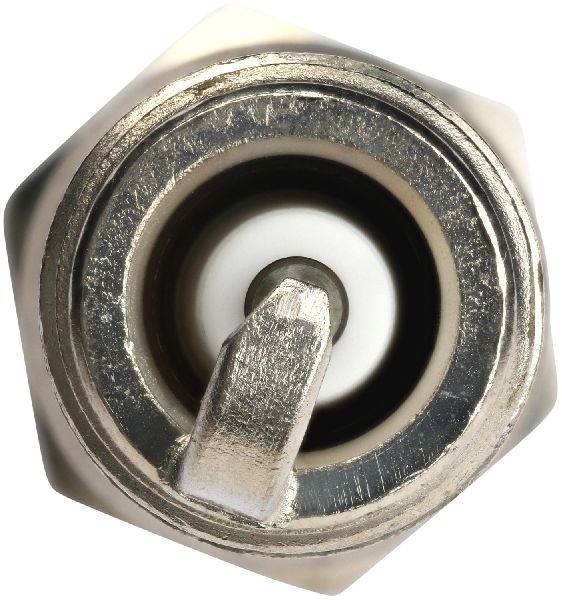
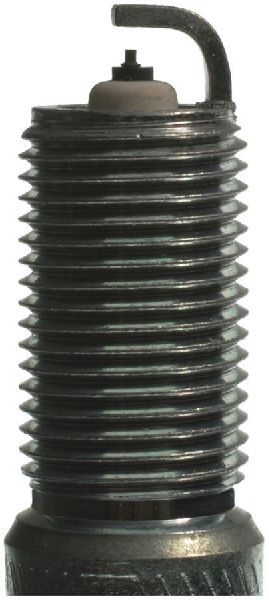
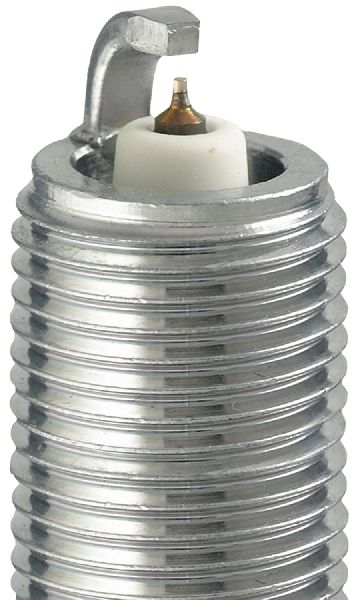
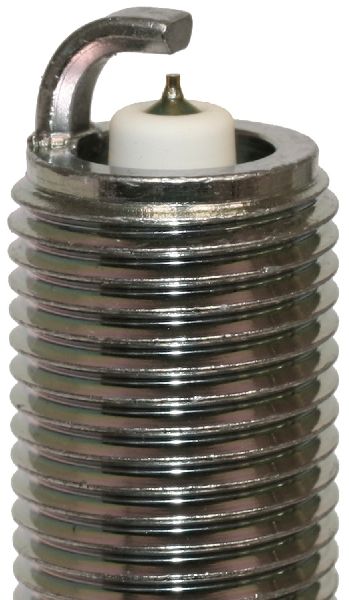
(OEM #SP-411 (Motorcraft AYFS22FM))— Since accessing the rear bank requires significant labor, it is highly advisable to replace the spark plugs at the same time. A worn plug can cause a new coil to fail prematurely.
Trusted brands: Motorcraft, NGK, Autolite
OEM price range: $10-$20
Aftermarket price range: $5-$15 - Upper Intake Manifold Gaskets
(OEM #Fel-Pro MS 97118)— These are single-use gaskets that must be replaced anytime the intake manifold is removed to access the rear coils.
Trusted brands: Motorcraft, Fel-Pro, Mahle
OEM price range: $40-$70
Aftermarket price range: $25-$50 - Powertrain Control Module (PCM) — Required if multiple coil codes are present or if a new coil fails immediately, indicating a failed PCM driver as per TSB 13-4-17. Must be replaced with all six coils and plugs.
Trusted brands: Ford (OEM), Cardone (Remanufactured), Circuit Board Medics (Repair Service)
OEM price range: $700-$900
Aftermarket price range: $250-$500
Related Codes That Often Appear With This One
- P0301 — P0301 means 'Cylinder 1 Misfire Detected'. Since P0351 indicates a fault in the ignition circuit for cylinder 1, it almost always results in a misfire, causing both codes to appear together.
- P0352, P0353, P0354, P0355, P0356 — The appearance of multiple ignition coil circuit codes simultaneously is a strong indicator that the Powertrain Control Module (PCM) is failing, as described in TSB 13-4-17. This is the classic symptom of the known PCM driver failure on this platform.
Technical Service Bulletins (TSBs) & Recalls
- TSB 13-4-17: Malfunction Indicator Lamp (MIL) ON With DTCs P0351-P0356.
- TSB 21-2174: Intermittent rough running concern with MIL and DTCs P0351, P0352, P0353 and/or P0354 stored in the PCM.
- TSB 16-0163: Service procedure for vehicles exhibiting multiple DTCs including P0351-P0354 and P0301-P0304.
- SSM 47180: Misfire, lack of power, or no start with DTCs P0351-P0354, potentially due to poor ground connections.
- SSM 45988: Check engine light with P0351 and/or P0352, possible rough run, hard start, or no start.
Platform-Specific Known Issues
- TSB 13-4-17: For vehicles built on or before March 1, 2008, a faulty PCM can cause one or more ignition coils to fail, setting codes P0351-P0356. The official fix requires replacing the PCM, all six ignition coils, and all six spark plugs.
- Owner Experience: An owner of a 2007 Ford Edge (platform mate) with the same issue reported being quoted $2100 by a dealer for the full PCM/coil/plug replacement. They discovered the TSB and that the repair should be covered under the 8-year/80,000-mile federal emissions warranty.
Mechanic-Grade Diagnostic Values
- Ignition Coil Primary Resistance — expected: 0.4 to 2.0 ohms. Failure: A reading of OL (infinite) indicates an open circuit, while near-zero ohms suggests a short.
- Ignition Coil Secondary Resistance — expected: 5,500 to 10,000 ohms (5.5kΩ to 10.0kΩ). Failure: A reading significantly outside this range indicates a failure in the secondary windings.
- Voltage at Coil Connector Power Wire (Key On, Engine Off) — expected: ~12 Volts (Battery Voltage). Failure: Low or no voltage points to a problem with the power supply wire or the PCM power relay.
- PCM Driver Signal at Coil Connector (Engine Cranking/Running) — expected: A pulsing ground signal, visible as a square wave on an oscilloscope or a flashing light on a noid light. Using a multimeter on the AC Hertz scale should show a reading between 5 and 20 Hz.. Failure: No signal, or a constant ground/voltage, points to a broken signal wire or a failed PCM driver.
Hidden / Shadow Codes Worth Checking
- Mode 6, Test ID $0A, Component ID $01-$0C: Mode 6 data tracks misfire counts per cylinder. While not a 'shadow code,' high misfire counts on cylinder #1 that don't always trip a P0301 can be an early indicator of the developing coil issue before the P0351 circuit code sets. (see via A professional scan tool capable of viewing Mode 6 data.)
Scan Tool Commands That Help
- Ford IDS (or equivalent professional scanner): Power Balance Test — This test graphically displays the power contribution of each cylinder. A significant drop from cylinder #1 confirms the misfire location, helping to focus diagnostic efforts before physically accessing the rear bank coils.
- Ford IDS (or equivalent J2534 tool): Programmable Module Installation (PMI) — This function is required when replacing the PCM. It is used to download the configuration data from the old PCM and upload it to the new one, including the VIN and other vehicle-specific parameters.
- Ford IDS (or equivalent J2534 tool): As-Built Data — If the original PCM is dead and cannot be read, the technician must retrieve the vehicle's original 'As-Built' data from Ford's servers using the VIN and manually program it into the new PCM.
Wiring & Ground Locations
- C175E — The middle of the three main connectors on the Powertrain Control Module (PCM), located at the rear of the engine compartment, on the firewall.. This connector contains the control wire for the #1 ignition coil. On a 2008 3.5L, the Coil On Plug (COP) 1 driver wire is a White/Brown wire at Pin 52. This is the pin to test for continuity back to the coil connector.
- Ignition Coil Connector (Cylinder 1) — On top of the cylinder #1 ignition coil, on the rear bank (firewall side), passenger side of the engine. Requires intake manifold removal.. This is the final connection point. Pin 1 (Violet/Green wire on some diagrams) should have battery voltage with the key on. Pin 2 (White/Brown wire) is the trigger wire from PCM pin C175E-52 that receives the ground pulse.
- G104 — On the right rear of the engine itself.. This is a primary ground for engine components. A loose or corroded G104 can cause erratic behavior in various sensors and actuators, including creating a poor ground reference for the ignition system, potentially leading to misdiagnosis.
- G101 — On the left front of the engine compartment, typically on the frame rail near the battery.. This is a main chassis ground. While less direct, poor grounding here can affect the PCM's operation and overall electrical system stability, which can manifest as phantom electrical codes.
Real Owner Repair Stories
- GenVibe Forums user 'energyguy88' (Pontiac Vibe (demonstrates a universal diagnostic principle)) — Intermittent rough engine with multiple coil codes appearing at once (P0351, P0352, P0353, P0354).
❌ Tried (didn't work) Replacing the PCM/ECM with a used unit and having it reflashed by a dealer.
✅ What actually fixed it The issue was traced to a single, faulty aftermarket ignition coil that was internally shorting and causing the PCM to throw codes for multiple cylinders. Replacing the bad aftermarket coil with a quality DENSO unit and replacing all spark plugs resolved the issue completely. - NHTSA ODI #10713413 — An owner reported that their vehicle experienced a sudden loss of power and violent shaking. Diagnostic codes P0351, P0352, P0354, P0301, P0302, and P0316 were found, requiring a pinpoint test on all coils and the fuel system.
OEM Part Supersession History
7T4Z-12029-E→DG-520 (Motorcraft Branding)— This is a standard part number update where the engineering number (7T4Z-...) is superseded by the service part number (DG-520) for retail sale. Any innovations or improvements are incorporated into the newer part number.
Model Year Variations Within This Range
- 2008 (built on or before March 1, 2008): Vehicles built on or before this date are specifically called out in Ford TSB 13-4-17 as being prone to PCM driver failure that destroys ignition coils. Vehicles built after this date likely have an updated PCM that is less susceptible to this specific failure mode.
Diagnostic Flowchart
Other Known Issues on This Vehicle
Issues unrelated to this code that are worth knowing about as an owner of this generation:
- Internal Water Pump Failure 🔴 High — Common failure, often occurring between 60,000 and 120,000 miles. Considered a 'when, not if' failure by many owners.
- Electronic Throttle Body (ETB) Failure 🔴 High — Widespread issue across many Ford models of this era using the 3.5L V6. Ford issued Customer Satisfaction Program 13N03 extending the warranty. (Ref: Customer Satisfaction Program 13N03)
- Power Transfer Unit (PTU) Failure (AWD Models) 🔴 High — Very common on All-Wheel Drive models. The fluid is considered 'lifetime' but often breaks down from heat.
Used vs. New Parts: Buying Guide for This Vehicle
When a used part is the smart pick: A used PCM can be a cost-effective option IF it is sourced from a donor vehicle manufactured AFTER the March 1, 2008 cutoff date mentioned in TSB 13-4-17, as it is less likely to have the inherent driver flaw. However, it will absolutely require professional reprogramming to your vehicle's VIN and security system.
Donor-vehicle mileage cap: roughly under 100000 miles for the part to have meaningful remaining life.
What to inspect on the donor part:
- Verify the donor vehicle's build date from its door jamb sticker; it should be post-03/2008.
- Inspect the PCM connectors for any signs of corrosion, bent pins, or heat damage.
- Obtain the VIN of the donor car to cross-reference its 'As-Built' data if needed for programming.
OEM-only on this vehicle (don't cheap out):
- Powertrain Control Module (PCM) - While remanufactured units from reputable sources (like Cardone) or repair services are viable, a cheap, unverified used PCM is a major risk. It must be correctly programmed by a professional with Ford-specific tools.
Aftermarket brands forum-validated for this vehicle:
- Ignition Coils: Motorcraft (OEM), Denso, NGK, Delphi.
- Gaskets: Fel-Pro, Mahle.
Brands owners have reported issues with on this vehicle:
- Unbranded, 'white box' ignition coils from online marketplaces. A single poor-quality coil can short internally and mimic a much more expensive PCM failure, leading to misdiagnosis and wasted money.
Real Owner Stories
Aggregated from forums and TSBs cited above. Mileages and costs reflect what owners reported in those sources.
2007 Ford Edge 3.5L V6
Symptoms: The owner was quoted $2100 by a dealer for a full PCM, coil, and plug replacement due to the known TSB issue.
What fixed it: The owner sought reimbursement under the 8-year/80,000-mile federal emissions warranty associated with TSB 13-04-17.
Cost: $2100-$2100
Source hint: Ford Edge Forum: Coil/PCM issues and reimbursement for TSB 13-04-17
2008 Ford Taurus 3.5L V6
Symptoms: After replacing all coils and plugs to fix a cylinder 2 misfire, the vehicle immediately threw new codes P0351 and P0354.
What fixed it: This is identified as a classic symptom of PCM driver failure requiring PCM replacement or repair.
Source hint: RepairPal: 2008 Ford Taurus Ignition coil pack
2008 Ford Edge 3.5L V6
Symptoms: The vehicle experienced a misfire caused by a physically melted ignition coil.
What fixed it: The technician identified a faulty PCM as the root cause that melted the coil, requiring replacement of the PCM and coils.
Source hint: YouTube: 2008 Ford Edge Misfire (Faulty PCM/Melted Ignition Coil)
Related OBD-II Codes
Frequently Asked Questions
Does TSB 13-4-17 apply to my 2008 Ford Taurus?
Why did my new ignition coil fail immediately after I replaced it?
Can I just replace the Cylinder #1 coil since that is the only code I have?
Is the PCM/Coil failure covered under warranty for a 2008 Taurus?
What are the signs that my PCM is the cause of the P0351 code instead of just a bad coil?
Where is Cylinder #1 located on the 3.5L V6 engine?
Helpful Videos

Used OEM Parts in Stock
New Aftermarket Parts Available

The information in this article is provided for general reference and educational purposes only. Vehicle specifications, procedures, and part compatibility can vary by production date, trim level, and region. Always consult your vehicle's factory service manual and verify part numbers before purchasing or performing repairs. Safety-critical components such as airbags, seat belts, and braking systems should be installed by a qualified professional.
- Ford Taurus:
- 🧭 Diagnostic Flowchart
- 🎬 Helpful Videos
- 🛍️ Shop This Part
- What's Unique About the 2008-2008 Ford Taurus
- Symptoms You May Notice
- Most Likely Causes
- Diagnosis Steps
- Parts You'll Likely Need
- Related Codes That Often Appear With This One
- Technical Service Bulletins (TSBs) & Recalls
- Platform-Specific Known Issues
- Mechanic-Grade Diagnostic Values
- Hidden / Shadow Codes Worth Checking
- Scan Tool Commands That Help
- Wiring & Ground Locations
- Real Owner Repair Stories
- OEM Part Supersession History
- Model Year Variations Within This Range
- Other Known Issues on This Vehicle
- Used vs. New Parts: Buying Guide for This Vehicle
- Real Owner Stories
- 2007 Ford Edge 3.5L V6
- 2008 Ford Taurus 3.5L V6
- 2008 Ford Edge 3.5L V6
- Related OBD-II Codes
- Frequently Asked Questions
- 🎟️ Get 5% Off