

P0351 on 2015-2024 Ford Transit 3.7L V6: Ignition Coil 'A' Circuit Causes and Fixes
P0351 on a Ford Transit 3.7L indicates a fault with the ignition coil for cylinder #1. The most common fix is replacing the coil and spark plug. However, cylinder #1 is on the rear bank under the intake manifold, making this a labor-intensive job costing between $500 and $900 at a shop. It's critical to also check for PCM damage, a known issue with this engine family.
- P0351 on this van means a problem with cylinder #1's ignition coil circuit.
- The biggest challenge is that cylinder #1 is under the intake manifold, making the repair labor-intensive.
- Due to the high labor cost, it is strongly recommended to replace all three rear coils (1, 2, 3), all six spark plugs, and the intake gaskets at the same time.
- Check for signs of water leaks from the cowl, as this is a known cause of coil failure on these vans.
- If the P0351 code returns immediately after replacing the coil, the engine computer (PCM) is likely damaged and needs repair or replacement.
What's Unique About the 2015-2024 Ford Transit
The defining issue for P0351 on the 3.7L Transit is the physical location of cylinder #1. Unlike engines where all coils are easily accessible, cylinder #1 is on the rear bank, tucked against the firewall and buried under the upper intake manifold. This transforms a simple 15-minute coil swap into a multi-hour job requiring significant disassembly, which drastically increases labor costs and DIY difficulty. Furthermore, the Ford 3.7L Cyclone engine family has a well-documented vulnerability where a failing ignition coil can short and send a voltage spike back to the engine computer (PCM), damaging the internal driver circuit. This makes diagnosis more complex, as a P0351 that returns immediately after a coil replacement points to a fried PCM.
Symptoms You May Notice
- Check Engine Light is on (may be flashing if the misfire is severe)
- Rough or shaking idle
- Engine hesitation or stumbling during acceleration
- Noticeable loss of engine power
- Reduced fuel economy
- Difficulty starting the engine
- Replacing only the ignition coil without also replacing the spark plug. A bad plug can cause the new coil to fail prematurely.
- Assuming the problem is fixed after replacing the coil, without checking for a damaged PCM. If the code returns immediately, the PCM driver is likely fried.
- Replacing the PCM without replacing all six ignition coils and spark plugs. The original faulty coil will immediately damage the new PCM.
Most Likely Causes
- Failed Ignition Coil on Cylinder #1 🔴 High Probability → Shop Ignition Coil Ignition coils are wear-and-tear components that fail over time due to heat and vibration. For 2015-2018 models, water intrusion from a known cowl leak (TSB 19-2091) can drip onto the engine and accelerate failure. Coils on the 3.7L engine sometimes fail between 70,000 and 100,000 miles.
How to confirm: Because cylinder #1 is under the intake manifold, the usual quick test of swapping the coil with another cylinder is not practical. Diagnosis is typically made by confirming the P0351 code (often with P0301) and proceeding with replacement due to the high labor cost of access. A definitive test involves checking the driver signal at the coil connector with a voltmeter set to Hertz; a reading of 5-20 Hz indicates the PCM is sending a signal and the coil is likely bad.
Typical fix: Replace the ignition coil for cylinder #1. It is highly recommended to replace all three rear coils (cylinders 1, 2, 3), all six spark plugs, and the intake manifold gaskets at the same time to avoid paying for the same labor again in the near future.
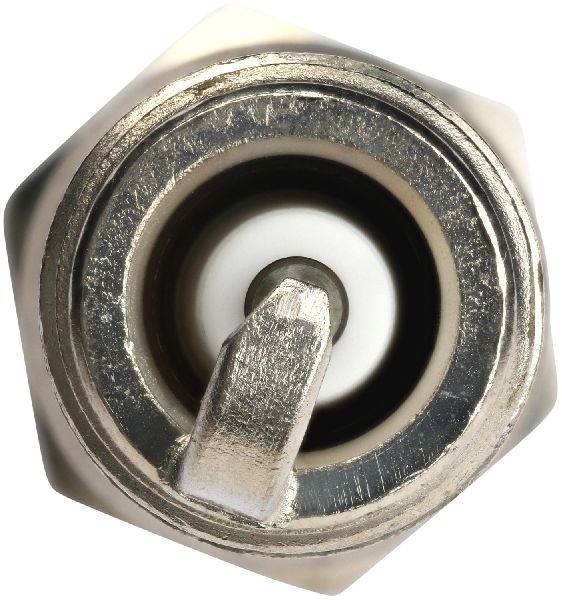
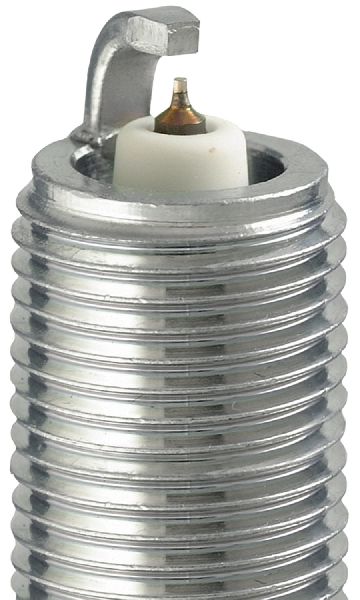
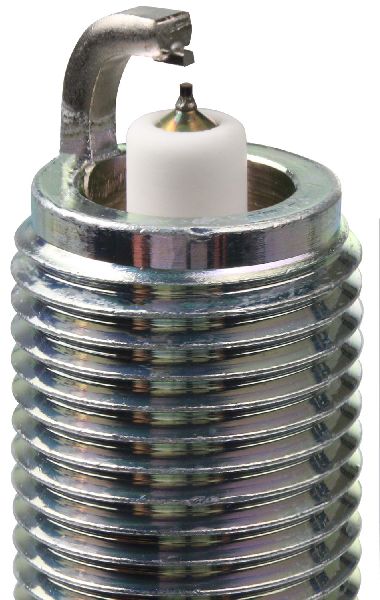
Est. part cost: $40-$80 for one OEM coil, $150-$250 for three. - Worn or Fouled Spark Plug 🟡 Medium Probability → Shop Spark Plug Spark plugs are a maintenance item. A worn plug with a large gap increases the voltage required to fire, straining the ignition coil and causing it to fail prematurely.
How to confirm: Inspect the spark plug after removing the intake manifold and ignition coil. Look for signs of wear (rounded electrode), carbon fouling, oil fouling, or physical damage.
Typical fix: Replace the spark plug. It is standard practice to replace all six spark plugs when replacing the coils, especially the hard-to-reach rear ones.
Est. part cost: $8-$15 per plug. - Damaged Wiring or Connector ⚪ Low Probability For 2015-2018 models, a known water leak from the cowl area (addressed in TSB 19-2091) can drip onto the engine, causing corrosion on the coil connectors. Rodents can also chew wiring, and the connector's locking tab can become brittle and break. Manufacturer service bulletin SSM 47180 notes that on other Ford platforms, P0351 can also be caused by a poor connection at the cylinder head ground.
How to confirm: After removing the intake manifold, visually inspect the wiring harness and the electrical connector for cylinder #1's coil. Look for green/white corrosion, chewed wires, loose pins, or a broken locking tab. A wiggle test on the harness while the engine is running (if possible) may change the idle, indicating a wiring issue.
Typical fix: If the connector is corroded, it may need to be cleaned or replaced with a new pigtail. Damaged sections of wire may need to be repaired or spliced.
Est. part cost: $15-$30 for a new connector pigtail.
Rare But Worth Checking
- Failed Powertrain Control Module (PCM): → Shop Engine Control Module (ECM) A shorted ignition coil can send a voltage spike back to the PCM, damaging the internal driver that controls the coil. This is a well-documented failure on the 3.7L Cyclone engine family. If the P0351 code returns instantly after replacing the coil and plug, the PCM is the likely culprit. Additionally, TSB 21-2174 indicates that on some Ford models, an intermittent rough running concern with P0351-P0354 may be due to a software parameter within the PCM. Specialized companies offer repair services for this specific failure, which can avoid costly dealership reprogramming. If replacing or repairing the PCM for this reason, it is mandatory to replace all six ignition coils and spark plugs at the same time to prevent a repeat failure.
Diagnosis Steps
- Confirm the presence of code P0351 using an OBD-II scanner. Note any other codes like P0301.
- Acknowledge that cylinder #1 is located on the rear bank under the intake manifold, making a simple coil swap for diagnosis impractical.
- Inspect the general engine bay for signs of water intrusion from the cowl area, especially on 2015-2018 models, per TSB 19-2091.
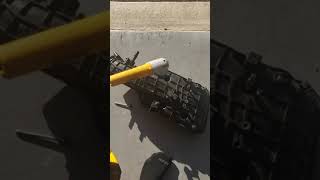
- Plan to remove the upper intake manifold to gain access. Inspect the manifold bolts for heavy rust before starting, 🎬 See this guide on how to remove the intake manifold safely. as they are known to seize and break.
- Once the manifold is off, remove the ignition coil from cylinder #1.
- Inspect the coil's electrical connector for corrosion, damage, or loose pins. Inspect the wiring harness leading to it. As noted in SSM 45988, if a light flash test is inconsistent or dim during diagnostics, it may suggest a failing circuit.
- Replace the ignition coil and the spark plug for cylinder #1. Best practice is to replace all three rear coils (1, 2, 3) and all six spark plugs at this time.
- Reassemble the intake manifold using new gaskets.
- Clear the codes and start the engine. If the code P0351 does not return, the repair is complete.
- If P0351 returns immediately, the PCM's ignition driver for cylinder #1 is likely damaged. The PCM will need to be repaired by a specialist service or replaced by a professional.
Parts You'll Likely Need
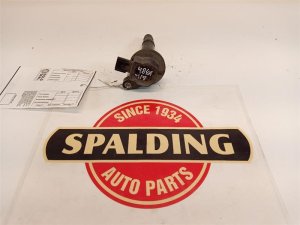
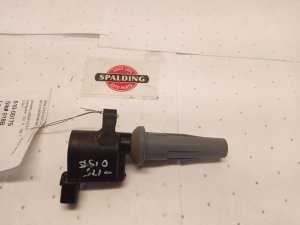
- Ignition Coil
(OEM #7T4Z-12029-E)— This is the most common cause of a P0351 code. The coil for cylinder #1 fails, disrupting the ignition circuit.
Trusted brands: Motorcraft (DG-520), Denso (673-6013), NGK
OEM price range: $45-$80
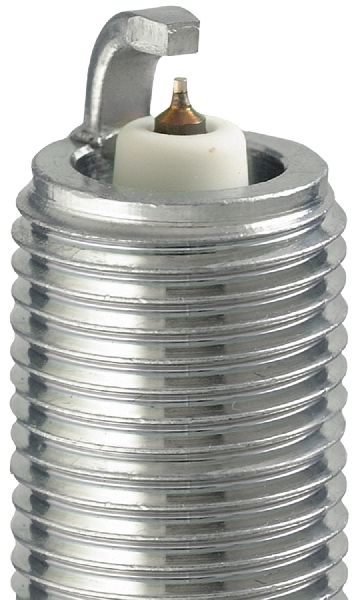
Aftermarket price range: $25-$50 - Spark Plugs
(OEM #Motorcraft SP-520)— Always replaced with coils as a set, especially when accessing the rear bank. A worn spark plug can cause a new coil to fail.
Trusted brands: Motorcraft (SP-520), NGK, Denso
OEM price range: $8-$15
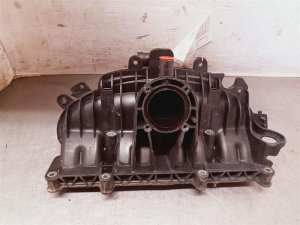
Aftermarket price range: $5-$10 - Intake Manifold Gasket Set
(OEM #Motorcraft BR3Z-9E926-A (verify by VIN))— The intake manifold must be removed to access cylinder #1. The gaskets are single-use and must be replaced to prevent vacuum leaks.
Trusted brands: Motorcraft, Fel-Pro, Mahle
OEM price range: $30-$50
Aftermarket price range: $15-$30
Related Codes That Often Appear With This One
- P0301 — P0301 means 'Cylinder 1 Misfire Detected'. Since a faulty ignition coil circuit (P0351) prevents a proper spark, it almost always causes a misfire on that cylinder. These two codes are very commonly seen together.
- P0300 — This code means 'Random/Multiple Cylinder Misfire'. If the coil is failing intermittently or causing electrical interference, the PCM might initially detect random misfires before it can isolate the problem to the specific circuit of cylinder #1.
Technical Service Bulletins (TSBs) & Recalls
- TSB 19-2091: Pertains to 2015-2018 models and describes a procedure for sealing body seams to prevent water intrusion into the engine compartment.
- TSB 16-0163: A manufacturer bulletin for related Ford models that lists P0351-P0354 among several other DTCs that may require specific service procedure steps to resolve.
Platform-Specific Known Issues
- Water Intrusion from Cowl (TSB 19-2091): On 2015-2018 models built before July 24, 2018, water can leak from the cowl/windshield area into the engine bay. This TSB addresses various drivability concerns, including misfires, by installing updated water management hardware, sealing a body joint, and sometimes a revised air cleaner cover. This moisture can directly cause corrosion and premature failure of ignition coils and their connectors.
- Rusted Intake Manifold Bolts: Owners and technicians frequently report that the bolts securing the plastic intake manifold are prone to heavy rust, making them difficult to remove without breaking. This can add significant time, complexity, and cost to the repair if a bolt needs to be extracted. Specialized kits exist to drill out and repair broken bolts without removing the cylinder head.
- Driveshaft Coupling Failure (Recall 19S38): A significant safety recall (superseding 17S15) was issued for 2015-2017 Transits due to premature failure of the driveshaft's flexible coupling. A failure can cause loss of motive power and potential secondary damage. While unrelated to P0351, it is a critical issue for owners of these model years to be aware of.
Mechanic-Grade Diagnostic Values
- Ignition Coil Driver Signal (at coil connector) — expected: 5-20 Hz. Failure: No signal, or a flat DC voltage, indicates a wiring or PCM driver issue. A good signal points to a bad coil.
- Ignition Coil Primary Resistance — expected: ~0.4 to 2.0 Ohms. Failure: A reading of infinity (open circuit) or near zero (short circuit) indicates a failed coil. This is a general specification for many coil-on-plug systems.
- Spark Plug Gap — expected: 0.049 - 0.053 in (1.25 - 1.35 mm). Failure: An incorrect gap can cause misfires and strain the ignition coil.
- Power Supply at Coil Connector — expected: Battery Voltage (approx. 12V). Failure: No voltage indicates a problem with the power supply wire or the related fuse.
Hidden / Shadow Codes Worth Checking
- Mode $06 Data: While not a hidden code, Mode $06 on a professional scan tool provides access to non-continuous monitor test results. For P0351, a technician would look at Test ID (TID) for misfire counts per cylinder. Even before a P0301 code is set, high counts for cylinder #1 can confirm the issue's location. (see via Professional OBD-II scan tool with Mode $06 capability.)
Scan Tool Commands That Help
- Ford IDS (Integrated Diagnostic System): Power Balance Test — This is a critical diagnostic step. The test graphically displays the power contribution of each cylinder in real-time. For a P0351 fault, the graph will show a significant, consistent drop for cylinder #1, confirming the misfire location and severity without any disassembly.
- Ford IDS or equivalent: Programmable Module Installation (PMI) — This function is required when replacing the PCM. It is used to download configuration data from the old PCM (if possible) and upload it to the new one, ensuring all vehicle options and parameters are correct.
- Ford IDS or equivalent: Parameter Reset — After installing a new or used PCM and performing the PMI, a parameter reset is necessary to 'handshake' the PCM with other modules, particularly the Body Control Module (BCM) for the PATS (Passive Anti-Theft System). The engine will not start until this is done.
Wiring & Ground Locations
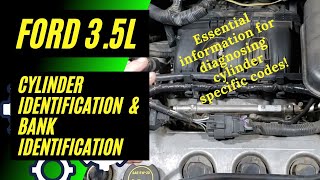
- Cylinder Numbering — Bank 1 (rear, against firewall) contains cylinders 1, 2, 3 from passenger to driver side. Bank 2 (front, by radiator) contains cylinders 4, 5, 6 from passenger to driver side. Cylinder #1 is at the rear, on the passenger side.. Correctly identifying cylinder #1 is the first step. Its location on the rear bank under the intake manifold is the primary reason for the high labor cost of this repair.
- G103 / G104 — These are common Ford engine bay ground points. G103 is often on the cowl, while G104 can be on the inner fender near the battery.. The PCM relies on clean, solid main ground connections. While the coil driver provides a pulsed ground, the PCM itself must be properly grounded. A corroded or loose main ground at G103 or G104 can cause a host of bizarre electrical issues, including phantom circuit faults that could mimic a P0351.
- Coil Connector (C1631 for Cyl #1) — On top of the ignition coil for cylinder #1, under the intake manifold.. This is the primary point for electrical testing. One pin is for 12V+ power (Key On), and the other is the ground pulse signal wire from the PCM driver. Testing for power and the Hertz signal happens here.
Model Year Variations Within This Range
- 2020-2021: For the 2020 model year refresh, Ford began phasing out the 3.7L V6, making the 3.5L PFDi V6 the new standard base engine. While some 2020 models may still have the 3.7L, owners of 2020+ Transits should verify their engine type before ordering parts, as P0351 diagnosis would be similar but parts may differ.
- 2015-2019: These model years were equipped with a 6-speed automatic transmission, whereas the 2020+ models with the new engines received a 10-speed automatic. This does not directly affect the P0351 code but is a key differentiator in the vehicle's powertrain.
Diagnostic Flowchart
Other Known Issues on This Vehicle
Issues unrelated to this code that are worth knowing about as an owner of this generation:
- Driveshaft Flexible Coupling Failure 🔴 High — Common enough to trigger a major safety recall (NHTSA 17V-408, superseded by 19S38) on 2015-2017 models. Failure can occur with increasing mileage, often noted after 30,000 miles. (Ref: Recall 19S38 (supersedes 17S15))
- Water Intrusion from Cowl Area 🟠 Medium — Affects 2015-2018 models built before July 24, 2018. The leak can cause various electrical and drivability problems. (Ref: TSB 19-2091)
- External Water Pump Failure 🟠 Medium — While the RWD Transit's 3.7L uses an external pump (less catastrophic than the internal pumps on FWD versions), failures are still noted. Leaks are a common symptom.
- Brake Vacuum Pump Failure 🔴 High — More prevalent on EcoBlue diesel models due to wet belt degradation clogging oil passages, but can also occur on gas models, leading to a hard brake pedal and loss of braking assist.
Used vs. New Parts: Buying Guide for This Vehicle
When a used part is the smart pick: A used Powertrain Control Module (PCM) from a junkyard can be a cost-effective option if the original is confirmed to be faulty, but it requires professional-level tools for programming. It is critical to get a PCM from an identical vehicle (year, engine, transmission, and drivetrain).
Donor-vehicle mileage cap: roughly under 80000 miles for the part to have meaningful remaining life.
What to inspect on the donor part:
- For a used PCM, ensure the donor vehicle is the exact same year, model, engine, and transmission.
- Verify the part number on the used PCM matches the original exactly.
- Inspect the connector pins on the used PCM for any signs of corrosion or damage before purchase.
OEM-only on this vehicle (don't cheap out):
- Ignition Coils: Forum consensus strongly recommends using only Motorcraft coils. Aftermarket brands like MSD, Accel, and others are frequently reported to cause misfires or fail prematurely on Ford's 3.5L/3.7L engines.
- Powertrain Control Module (PCM): While a used OEM unit is an option, avoid aftermarket or 'rebuilt' PCMs from unknown vendors. If not buying used, a new Motorcraft PCM or a repair of the original by a reputable specialist is the best path.
Aftermarket brands forum-validated for this vehicle:
- Spark Plugs: NGK and Denso are generally considered reliable alternatives to Motorcraft spark plugs.
- Intake Gaskets: Fel-Pro and Mahle are reputable brands for gaskets and are widely available.
Brands owners have reported issues with on this vehicle:
- Ignition Coils: Avoid generic, unbranded coils from online marketplaces. Brands like Accel and MSD, while known in the performance space, have been reported by Ford truck owners to be less reliable than OEM Motorcraft for daily driving applications.
Real Owner Stories
Aggregated from forums and TSBs cited above. Mileages and costs reflect what owners reported in those sources.
2016-2019 Ford Transit 3.7L
Symptoms: The vehicle experienced ignition coil failure which subsequently damaged the PCM's ignition driver, resulting in codes P0351 through P0356.
What fixed it: The PCM was sent to a specialist service for repair. All six ignition coils and all six spark plugs were replaced at the same time to prevent re-damaging the repaired unit.
Source hint: Circuit Board Medics: 2016 – 2019 Ford Transit 3.7L PCM Repair
2015 Ford Transit 3.7L V6 — ~85000 miles
Symptoms: Engine hesitation and loss of power; the owner found the intake manifold bolts were heavily rusted during the attempt to access the coils.
What fixed it: Replacement of the ignition coil and spark plug after removing the intake manifold; required careful extraction of rusted manifold bolts.
Source hint: Vehicle Specific Issues: Rusted Intake Manifold Bolts
Ford Owner Report — NHTSA ODI #10713413
Symptoms: An owner reported that the vehicle experienced a loss of power and started shaking violently when the check engine light came on. Diagnostic codes included P0351, P0352, P0354, P0301, P0302, and P0316.
What fixed it: A pinpoint test was performed on all coils and the fuel system to isolate the circuit failures.
Source hint: NHTSA ODI #10713413
Related OBD-II Codes
Frequently Asked Questions
Does TSB 19-2091 apply to my 2019 Ford Transit 3.7L?
Why is it so expensive to replace just the cylinder #1 coil on my Transit?
Can a bad ignition coil on my 3.7L Duratec engine damage the computer?
Is there a recall for the engine issues causing P0351 on my 2016 Transit?
Should I replace all the coils if only P0351 for cylinder #1 is showing?
What is the Hertz (Hz) reading I should look for when testing the coil signal?
Helpful Videos


Used OEM Parts in Stock
New Aftermarket Parts Available


The information in this article is provided for general reference and educational purposes only. Vehicle specifications, procedures, and part compatibility can vary by production date, trim level, and region. Always consult your vehicle's factory service manual and verify part numbers before purchasing or performing repairs. Safety-critical components such as airbags, seat belts, and braking systems should be installed by a qualified professional.
- Ford Transit:
- 🧭 Diagnostic Flowchart
- 🎬 Helpful Videos
- 🛍️ Shop This Part
- What's Unique About the 2015-2024 Ford Transit
- Symptoms You May Notice
- Most Likely Causes
- Rare But Worth Checking
- Diagnosis Steps
- Parts You'll Likely Need
- Related Codes That Often Appear With This One
- Technical Service Bulletins (TSBs) & Recalls
- Platform-Specific Known Issues
- Mechanic-Grade Diagnostic Values
- Hidden / Shadow Codes Worth Checking
- Scan Tool Commands That Help
- Wiring & Ground Locations
- Model Year Variations Within This Range
- Other Known Issues on This Vehicle
- Used vs. New Parts: Buying Guide for This Vehicle
- Real Owner Stories
- 2016-2019 Ford Transit 3.7L
- 2015 Ford Transit 3.7L V6 — ~85000 miles
- Ford Owner Report — NHTSA ODI #10713413
- Related OBD-II Codes
- Frequently Asked Questions
- 🎟️ Get 5% Off