

P0351 on 2015-2016 GMC Canyon 3.6L V6: Ignition Coil 'A' Circuit Causes and Fixes
P0351 on a 2015-2016 GMC Canyon 3.6L V6 almost always means the ignition coil for cylinder #1 has failed. Cylinder #1 is on the rear bank against the firewall, so the intake manifold must be removed for access. It is highly recommended to replace all three rear coils, all six spark plugs, and the intake gaskets at the same time to avoid repeat labor.
- P0351 points to a fault with the ignition coil circuit for cylinder #1.
- On the 3.6L V6 Canyon, cylinder #1 is on the rear bank, requiring removal of the intake manifold for access.
- The most common fix is a new ignition coil, but due to the high labor involved, it's wise to replace all three rear coils, all six spark plugs, and the intake gaskets simultaneously.
- A flashing check engine light is serious; it means unburned fuel is damaging your catalytic converter. Stop driving immediately.
- The DIY difficulty is high (4/5) solely because of the need to remove the intake manifold.
What's Unique About the 2015-2016 GMC Canyon
On the GMC Canyon's transversely mounted 3.6L LFX V6, cylinder #1 is located on the rear cylinder bank, tucked against the firewall. This location makes diagnosis and repair significantly more labor-intensive than for the front cylinders, as the entire upper intake manifold must be removed to access the coil and spark plug. 🎬 Watch: Step-by-step intake manifold removal and coil replacement guide Because of the difficult access and high heat exposure for the rear coils, a single P0351 code often leads to a larger preventative maintenance job of replacing all rear bank ignition components to prevent near-term failures of adjacent coils.
Symptoms You May Notice
- Check Engine Light is on
- Rough or shaking idle
- Engine hesitation or stumbling during acceleration
- Noticeable loss of power
- Flashing Check Engine Light (in cases of severe misfire)
- Reduced fuel economy
- Difficulty starting the engine
- Fuel smell from the exhaust due to unburned fuel
- Replacing only the spark plug without testing the ignition coil. The coil is the more probable failure point for a P035x code.
- Replacing a fuel injector. While a bad injector can cause a misfire (P0301), it will not cause an ignition coil circuit code (P0351).
- Ignoring the recommendation to replace all rear bank coils and plugs, leading to a repeat repair for cylinder 3 or 5 a short time later.
Most Likely Causes
- Failed Ignition Coil (Cylinder #1) 🔴 High Probability → Shop Ignition Coil Cylinder #1 is on the rear bank, which is subjected to more heat under the intake manifold, potentially shortening the coil's lifespan. Ignition coils are a common wear item on this engine.
How to confirm: The definitive test is to swap the ignition coil from cylinder #1 with another cylinder on the same bank 🎬 Watch: How to diagnose and fix P0351 circuit codes (e.g., cylinder #3). Clear the codes and drive. If the code changes to P0353, the ignition coil is faulty. This requires removing the intake manifold.
Typical fix: Replace the faulty ignition coil. It is strongly recommended to replace all three coils on the rear bank (cylinders 1, 3, 5) at the same time due to the labor involved.
Est. part cost: $30-$70 per coil - Worn or Fouled Spark Plug (Cylinder #1) 🟡 Medium Probability → Shop Spark Plug Spark plugs are a routine maintenance item. If neglected, the gap can widen or electrodes can foul, putting extra strain on the ignition coil, leading to a weak spark and misfires.
How to confirm: After removing the intake manifold and ignition coil, remove the spark plug from cylinder #1. Inspect for wear, carbon tracking, oil fouling, or a cracked insulator. A worn plug is a common finding.
Typical fix: Replace the spark plug. It is highly recommended to replace all six spark plugs at the same time you are replacing the coils.
Est. part cost: $8-$20 per plug - Damaged Wiring or Loose Connector ⚪ Low Probability Vibrations and heat can cause wiring to become brittle or connectors to loosen over time. A wiggle test on the harness while the engine is running can sometimes reveal an intermittent connection issue. GM has also had issues with harness chaffing on other platforms.
How to confirm: Visually inspect the wiring harness and connector going to the cylinder #1 ignition coil. Check for any signs of damage, corrosion, or loose pins. Use a multimeter to check for proper power, ground, and signal from the ECM.
Typical fix: Repair the damaged section of the wiring harness or replace the connector pigtail.
Est. part cost: $15-$40
Rare But Worth Checking
- Faulty Engine Control Module (ECM): → Shop Engine Control Module (ECM) This is the least likely cause. Before condemning the ECM, all other possibilities (coil, plug, wiring) must be exhaustively ruled out. A faulty ECM driver can sometimes overheat and melt the ignition coil. GM TSB PIP5038B discusses this possibility on similar engines. An ECM failure for a single coil driver is rare.
- Excessive Carbon Buildup on Intake Valves: As a direct-injection (GDI) engine, the LFX is prone to carbon buildup, which can restrict airflow and cause misfires, typically setting P030x codes. While less likely to cause a P0351 circuit code, it's a known issue on this platform that can present with similar symptoms. GM has issued service bulletins (e.g., 16-NA-383, PIP5029C) regarding this issue and recommends a top engine cleaning procedure.
Diagnosis Steps
- Confirm the code P0351 is present using an OBD-II scanner.
- Identify cylinder #1. On the LFX 3.6L V6 in the Canyon, it is on the rear bank (against the firewall) on the passenger side.
- Due to the location, the upper intake manifold must be removed to access the rear bank.
- Once the manifold is off, swap the ignition coil from cylinder #1 with the coil from cylinder #3 (middle coil on the rear bank).
- While access is available, inspect the spark plugs for all rear cylinders. Also inspect the wiring connectors for any signs of damage or corrosion.
- Reassemble the intake manifold using new gaskets. 🎬 Watch: Intake manifold installation torque specs and sequence Do not reuse the old gaskets as this can cause vacuum leaks.
- Clear the diagnostic trouble codes and start the engine. Let it run and/or test drive.
- Rescan for codes. If P0353 appears, the original coil from cylinder #1 is faulty. If P0351 reappears, the problem is likely in the wiring or ECM, not the coil itself. If no code returns, the issue may have been a poor connection that was resolved during the swap.
Parts You'll Likely Need
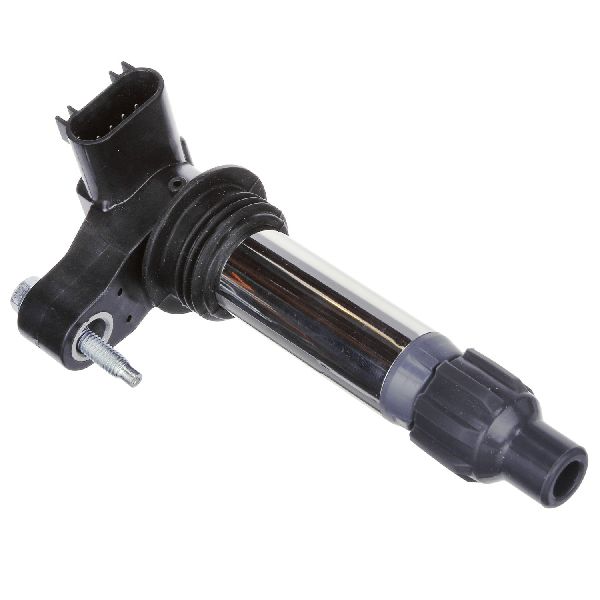
- Ignition Coil
(OEM #12632479)— This is the most common failure item for a P0351 code. The rear bank location leads to heat-related failures.
Trusted brands: ACDelco (D515C), Delphi, NGK (49018)
OEM price range: $50-$70
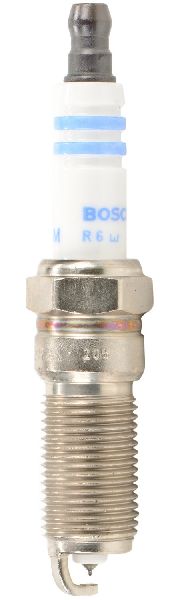
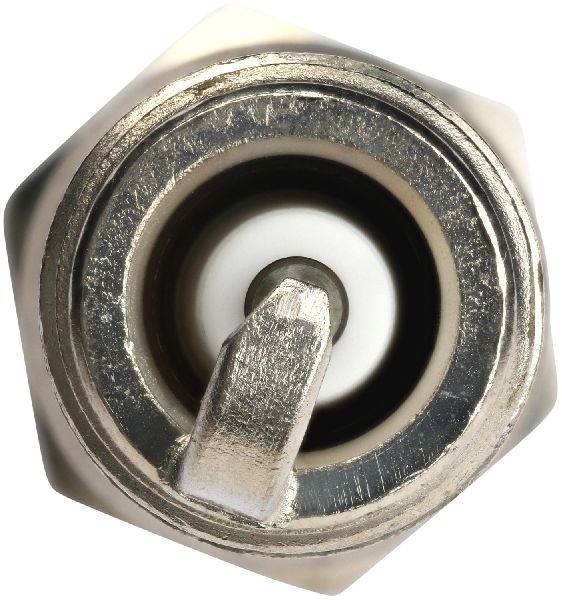
Aftermarket price range: $30-$55 - Spark Plug
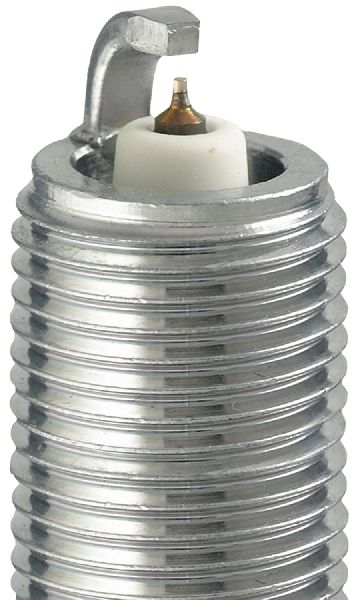
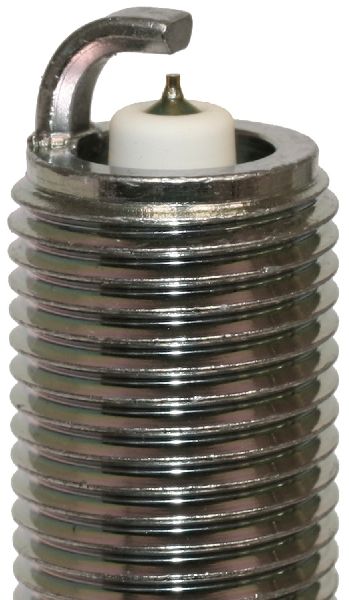
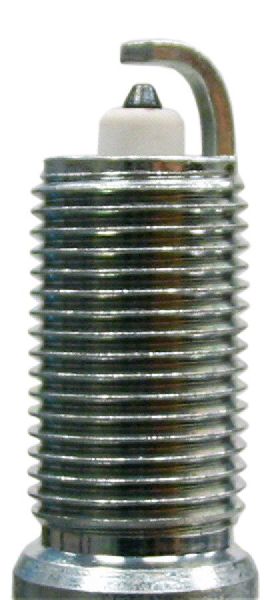
(OEM #41-109)— It is best practice to replace spark plugs when replacing coils, especially when the labor to access them is high. A worn plug can contribute to coil failure.
Trusted brands: ACDelco (Iridium), NGK (Iridium)
OEM price range: $15-$20
Aftermarket price range: $8-$15 - Upper Intake Manifold Gasket Set
(OEM #12676231)— These gaskets are single-use and must be replaced anytime the intake manifold is removed to prevent vacuum leaks.
Trusted brands: ACDelco, Fel-Pro (MS 97214)
OEM price range: $40-$60
Aftermarket price range: $25-$40
Related Codes That Often Appear With This One
- P0301 — P0301 means 'Cylinder 1 Misfire Detected.' A faulty ignition coil circuit (P0351) is a primary reason for a cylinder to misfire, so these codes frequently appear together.
- P0300 — P0300 means 'Random/Multiple Cylinder Misfire Detected.' If the ignition problem is intermittent or borderline, it may contribute to instability that the ECM interprets as a random misfire before isolating it to a specific cylinder.
Technical Service Bulletins (TSBs) & Recalls
- PIP5029C: Addresses engine misfires (P0300-P0306) on direct-injected engines, including the LFX, caused by significant carbon deposits on intake valves. Recommends a chemical cleaning procedure.
- 16-NA-383: Provides updated information and procedures for cleaning carbon buildup from intake valves and combustion chambers on gasoline engines to resolve misfires and rough idle conditions.
- PIP5038B: While not directly for the Canyon, this TSB for other GM vehicles with the 3.6L engine is relevant. It discusses diagnosing multiple ignition coil codes (P0351-P0356) and points to potential causes like faulty ECM drivers, bad grounds, or electrical feedback from spark plugs. It notes that a technician will find codes P0300-P0306 alongside P0351-P0356 and must follow published service information.
- Bulletin #PIP5147A: This communication provides information to technicians regarding vehicles that have an engine misfire. It notes that a technician may find Diagnostic Trouble Codes P0351-P0358, as well as related ignition coil circuit codes like P2300 and P2301.
Platform-Specific Known Issues
- Owner Experience: Misfire on cylinder 1 at 110k miles: An owner on a forum reported a P0301 and P0351 code at around 110,000 miles. Following advice, they removed the intake manifold and replaced all three rear coils and all six spark plugs. The issue was resolved and did not return. They noted the job took about 3-4 hours for a DIYer with moderate experience.
- Shop Recommendation: Always replace in sets: Multiple independent repair shop videos and forum posts emphasize the importance of replacing all three rear bank coils and plugs, plus the intake gaskets, when addressing a P0351. The rationale is that the labor to remove the intake manifold is the most significant part of the job, and the other rear coils, having been subjected to the same heat and mileage, are likely to fail soon after.
Mechanic-Grade Diagnostic Values
- Ignition Coil Primary Resistance — expected: 0.4 to 2.0 Ohms. Failure: A reading outside this range (e.g., OL for open, or 0 for shorted) indicates a faulty coil.
- Ignition Coil Secondary Resistance — expected: 6,000 to 10,000 Ohms. Failure: A reading significantly outside this range suggests the internal secondary windings are compromised.
- Ignition Coil Connector - Pin A (Ignition 1 Voltage) — expected: Battery Voltage (approx. 12V) with Key On, Engine Off (KOEO). Failure: No voltage indicates a problem with the power supply circuit, fuse, or relay.
- Ignition Coil Connector - Pin C (Low Reference/Ground) — expected: Near 0 Ohms of resistance to a known good ground (like the battery negative terminal).. Failure: High resistance indicates a poor ground connection, which is a common cause of ignition issues.
- Ignition Coil Connector - Pin B (Control Signal) — expected: 5-20 Hz signal with engine running/cranking (requires a multimeter with a frequency setting or an oscilloscope).. Failure: No signal indicates a problem with the wiring from the ECM or the ECM driver itself.
Scan Tool Commands That Help
- GDS2 (GM's Global Diagnostic System 2): Cylinder Power Balance Test — This function graphically displays the contribution of each cylinder, allowing a technician to confirm that cylinder #1 is indeed the source of the misfire before beginning the labor-intensive disassembly.
- GDS2 (GM's Global Diagnostic System 2): Output Controls > Spark Test — Allows the technician to command the ECM to fire the cylinder #1 coil on demand with a spark tester connected. This can help isolate a wiring or ECM driver issue if the coil doesn't fire during the test.
Wiring & Ground Locations
- Ignition Coil Connector (4-Pin) — On top of each ignition coil.. This is the primary test point. Pin A: Ignition Voltage (Pink wire on some diagrams), Pin B: Ignition Control Signal from ECM (Varies by cylinder), Pin C: Low Reference/Ground (Black wire on some diagrams), Pin D: Ignition 2 Reference/Feedback.
- G102 — Located at the left rear of the engine.. This ground point is specifically designated for the ignition coils. A loose or corroded connection here can cause intermittent or persistent circuit codes for one or more coils.
- Harness Chafe Point — The section of the wiring harness that runs along the back of the engine to the rear bank of coils.. This area is exposed to high heat and vibration. Wires can become brittle and break, or the loom can rub through against the engine block or firewall, causing a short or open circuit that triggers P0351.
Real Owner Repair Stories
- Colorado Fans Forum User (2016 Chevrolet Colorado 3.6L V6 (mechanically identical to GMC Canyon)) — P0301 and P0351 codes, with a noticeable misfire and rough idle.
❌ Tried (didn't work) Replaced the ignition coil on cylinder #1., Replaced the spark plug on cylinder #1.
✅ What actually fixed it After the new coil and plug did not resolve the issue, the owner inspected the wiring harness more closely. They found a broken wire for the ignition coil control signal inside the plastic loom, about two inches back from the connector. The wire's insulation was intact, hiding the break. Repairing the broken wire and re-securing the harness solved the problem permanently.
OEM Part Supersession History
12590990, 12610626, 12618542→12632479— Standard part evolution and consolidation for GM's 3.6L engine family across multiple platforms.
Heads up: The current part number, 12632479 (also sold as ACDelco D515C), is the correct and backward-compatible replacement for the earlier numbers on this vehicle.
Model Year Variations Within This Range
- 2015-2016: No significant variations in the ignition system, engine (LFX), or diagnostic procedure for P0351 are noted between the 2015 and 2016 model years for the GMC Canyon.
Diagnostic Flowchart
Other Known Issues on This Vehicle
Issues unrelated to this code that are worth knowing about as an owner of this generation:
- Timing Chain Stretch 🔴 High — Common on higher-mileage LFX engines, especially if oil change intervals are extended. Often presents with rattle on cold start and codes like P0008, P0016, P0017. (Ref: Multiple TSBs exist for earlier LY7/LLT versions, but the LFX is still susceptible. See TSB 12-06-01-009G for diagnostic guidance.)
- Intake Valve Carbon Buildup 🟠 Medium — A systemic issue for all Gasoline Direct Injection (GDI) engines, including the LFX. Causes misfires (P0300-P0306), rough idle, and performance loss, typically after 50k+ miles. (Ref: TSB 16-NA-383, PIP5029C)
- Transmission Shudder / Hesitation (6L50) 🟠 Medium — Common complaint on 2015-2016 models with the 6-speed automatic. Owners report shuddering or hesitation at low speeds or light acceleration. (Ref: TSB PIP5342B, TSB 18-NA-145 (TCM Recalibration))
- Oil Consumption 🟡 Low — Some owners report consuming up to 1 quart of oil between changes. Often attributed to PCV system design and low-tension piston rings. GM often considers this level of consumption within normal operating parameters.
- Power Steering Failure 🔴 High — Some 2015 models experienced intermittent or total loss of power steering assist, which led to a recall. (Ref: NHTSA Campaign Number: 16V582000 (GM Recall N162024980))
Used vs. New Parts: Buying Guide for This Vehicle
When a used part is the smart pick: For this repair, using used parts is strongly discouraged. The primary failure parts (ignition coils, spark plugs, gaskets) are wear items or single-use.
What to inspect on the donor part:
- Not applicable for this repair.
Aftermarket brands forum-validated for this vehicle:
- Ignition Coils: ACDelco (OEM), Delphi, NGK
- Spark Plugs: ACDelco (OEM), NGK
- Intake Gaskets: ACDelco (OEM), Fel-Pro
Brands owners have reported issues with on this vehicle:
- Unbranded, no-name ignition coils from online marketplaces. These often have a high premature failure rate, which is especially costly on this repair due to the high labor involved in accessing the rear bank.
Real Owner Stories
Aggregated from forums and TSBs cited above. Mileages and costs reflect what owners reported in those sources.
2015 GMC Canyon 3.6L V6 — 110000 miles
Symptoms: Check engine light showing P0301 and P0351 codes. The owner experienced a misfire on cylinder 1.
What fixed it: Removed the intake manifold and replaced all three rear coils and all six spark plugs.
Source hint: vehicle_specific_issues: Owner Experience: Misfire on cylinder 1 at 110k miles
Related OBD-II Codes
Frequently Asked Questions
Where is cylinder #1 located on my 2015 GMC Canyon 3.6L V6?
Do I really need to remove the intake manifold to fix a P0351 code?
Should I replace all the coils at once on my 2016 Canyon?
Could carbon buildup be causing my misfire symptoms instead of a bad coil?
Is there a TSB for multiple ignition coil codes like P0351 through P0356?
My Canyon is shuddering at low speeds; is this related to the P0351 ignition code?
Helpful Videos
![How To Replace Spark Plugs | 2015-2016 Chevrolet Colorado V6 3.6L | Part Numbers Included [DY]](https://img.youtube.com/vi/lJU4bikt3Zc/mqdefault.jpg)


We Have This Part in Stock

The information in this article is provided for general reference and educational purposes only. Vehicle specifications, procedures, and part compatibility can vary by production date, trim level, and region. Always consult your vehicle's factory service manual and verify part numbers before purchasing or performing repairs. Safety-critical components such as airbags, seat belts, and braking systems should be installed by a qualified professional.
- GMC Canyon:
- 🧭 Diagnostic Flowchart
- 🎬 Helpful Videos
- 🛍️ Shop This Part
- What's Unique About the 2015-2016 GMC Canyon
- Symptoms You May Notice
- Most Likely Causes
- Rare But Worth Checking
- Diagnosis Steps
- Parts You'll Likely Need
- Related Codes That Often Appear With This One
- Technical Service Bulletins (TSBs) & Recalls
- Platform-Specific Known Issues
- Mechanic-Grade Diagnostic Values
- Scan Tool Commands That Help
- Wiring & Ground Locations
- Real Owner Repair Stories
- OEM Part Supersession History
- Model Year Variations Within This Range
- Other Known Issues on This Vehicle
- Used vs. New Parts: Buying Guide for This Vehicle
- Real Owner Stories
- 2015 GMC Canyon 3.6L V6 — 110000 miles
- Related OBD-II Codes
- Frequently Asked Questions
- 🎟️ Get 5% Off