

P0351 on 2007-2011 Jeep Wrangler 3.8L: Ignition Coil 'A' Circuit Fixes
P0351 on a 3.8L Jeep Wrangler usually means a problem with the ignition system for cylinder #1. The most common fix is replacing the single ignition coil pack, spark plug wires, and spark plugs as a set. This is a common failure point on this engine, and a bad coil can damage the PCM if not addressed.
- P0351 on a 2007-2011 Wrangler points to an ignition problem on cylinder #1.
- The most likely cause is a failed ignition coil pack, which is a common issue on the 3.8L V6.
- For a complete and lasting repair, it is critical to replace the ignition coil, spark plug wires, and all six spark plugs at the same time.
- If the code returns after replacing these parts, the Powertrain Control Module (PCM) has likely been damaged and needs repair or replacement.
- Do not drive for extended periods with this code, as the misfire can cause expensive damage to the catalytic converter.
What's Unique About the 2007-2011 Jeep Wrangler
Unlike the later 3.6L Pentastar engine with individual coil-on-plug units, the 2007-2011 Wrangler's 3.8L V6 uses a single, waste-spark style ignition coil pack that sends spark to all six cylinders via long spark plug wires. This design makes the coil pack and wires common wear items. A failure in the coil pack's tower for cylinder #1 is a frequent cause of P0351. Furthermore, a failing coil pack on this specific platform has been known to send voltage spikes back to the Powertrain Control Module (PCM), potentially damaging the internal coil driver circuit and requiring a PCM repair or replacement. This is a well-documented failure pattern for the 3.8L Wrangler PCM.
Symptoms You May Notice
- Check Engine Light (CEL) is on or flashing
- Engine misfiring or running rough, especially under load
- Rough or unstable idle
- Hesitation and loss of power during acceleration
- Reduced fuel economy
- Difficulty starting the engine or engine cranks but won't start
- Engine may stall intermittently
- Replacing only the spark plug without checking the coil or wire.
- Replacing the PCM before confirming the coil, wires, and plugs are good. Always replace the other ignition components first, as a bad coil can immediately damage a new PCM.
- Assuming a cheap, aftermarket coil pack is good. Some owners report immediate or premature failure from low-quality aftermarket coils, leading them to mistakenly suspect the PCM.
Most Likely Causes
- Faulty Ignition Coil Pack 🔴 High Probability → Shop Ignition Coil The single coil pack design is a known failure point on the 3.8L V6. The tower responsible for cylinder #1 can fail internally due to heat and age. A failing coil can also damage the PCM.
How to confirm: Check for spark at the #1 wire. A simple method is to use a test light near the coil tower for cylinder #1 while cranking; a weak or absent spark indicates a bad coil. The best method is to swap the #1 and #3 spark plug wires at the coil pack, clear codes, and see if the code changes to P0353 (for cylinder #3). If it does, the coil pack is bad.
Typical fix: Replace the entire ignition coil pack. It is highly recommended to replace the spark plugs and wires at the same time to prevent a repeat failure and protect the new coil.
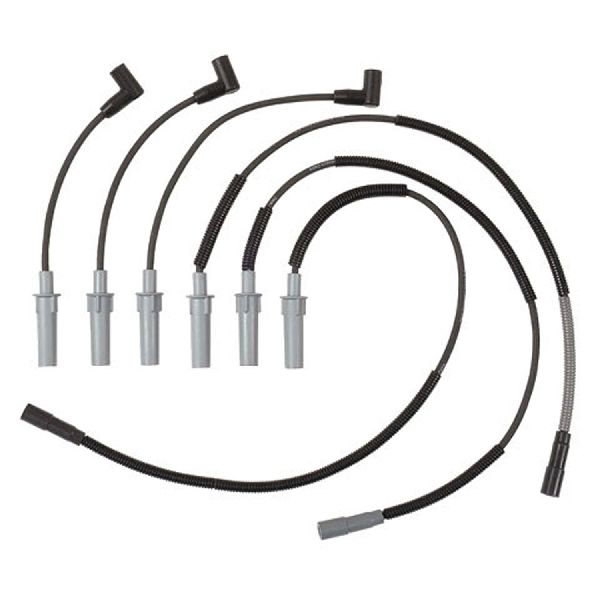
Est. part cost: $50-$150 - Bad Spark Plug Wire(s) 🟡 Medium Probability → Shop Spark Plug The long spark plug wires are exposed to high heat and vibration, causing them to degrade over time. The wires for the passenger side cylinders (1, 3, 5) are routed behind the engine and are particularly susceptible to heat damage.
How to confirm: Inspect the wire for cylinder #1 for any visible damage, cracks, arcing (white marks), or corrosion at the terminals. Measure the wire's resistance with a multimeter; it should be within the manufacturer's specification (typically under 10,000 ohms per foot). A high or infinite resistance reading means the wire is bad.
Typical fix: Replace the full set of spark plug wires. It is not recommended to replace only one.
Est. part cost: $40-$80 - Worn or Fouled Spark Plug 🟡 Medium Probability → Shop Spark Plug
How to confirm: Remove and inspect the spark plug from cylinder #1. Look for a worn electrode, carbon fouling, oil, or cracks in the porcelain. Oil fouling is common on the 3.8L engine due to known oil consumption issues.
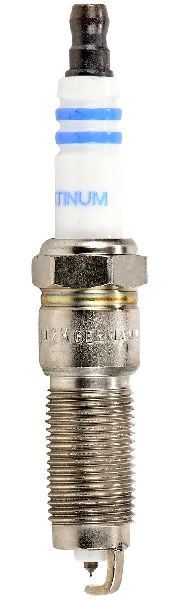
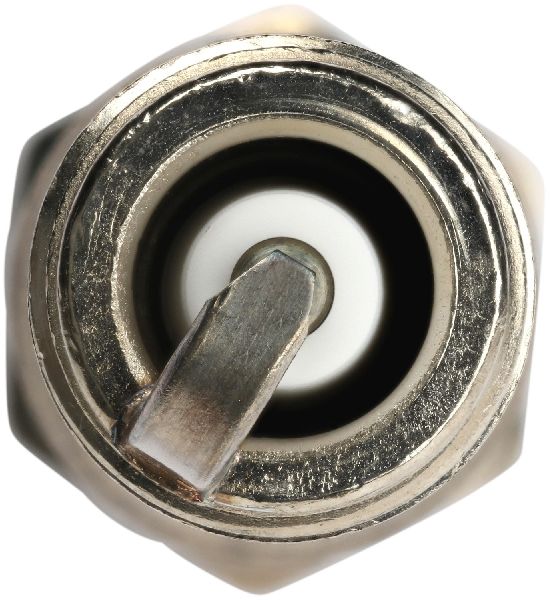
Typical fix: Replace all six spark plugs. Ensure they are gapped correctly before installation. Using high-quality Iridium plugs is often recommended by owners.
Est. part cost: $20-$60 - Damaged Wiring or Connector ⚪ Low Probability
How to confirm: Inspect the wiring harness connector at the ignition coil pack for loose pins, corrosion, or damage. Check the wiring between the coil and the PCM for breaks or shorts to ground. Wiggle the harness with the engine running to see if it affects the idle, which could indicate an intermittent short.
Typical fix: Repair the damaged section of wire or replace the pigtail connector.
Est. part cost: $15-$30
Rare But Worth Checking
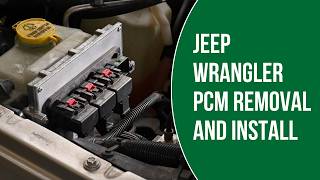
- Failed Powertrain Control Module (PCM): → Shop Engine Control Module (ECM) This is a known and common issue on 2007-2011 Wranglers. A shorted ignition coil can damage the coil driver circuit inside the PCM. If you have replaced the coil, wires, and plugs with quality parts but the P0351 code immediately returns (often without even starting the engine), the PCM is the likely culprit. This often appears with other coil codes (P0352-P0356) or secondary circuit codes like P2302. Companies like Circuit Board Medics offer repair services for this specific failure. 🎬 See this step-by-step guide on how to remove and replace your Wrangler's PCM.
- Faulty Automatic Shutdown (ASD) Relay: The ASD relay supplies power to the ignition coil circuit. A failing relay can cause intermittent power loss to the coil, mimicking a coil or wiring problem. If you have no power at the coil connector, the ASD relay is a possible suspect.
Diagnosis Steps
- Read the trouble codes with an OBD-II scanner. Confirm P0351 is present. Check for any other codes like P0301 or P2302, which provide additional clues.
- Locate cylinder #1. On the 3.8L V6, the passenger side of the engine is bank 1 (cylinders 1, 3, 5 from front to back) and the driver side is bank 2 (cylinders 2, 4, 6).
- Visually inspect the spark plug wire for cylinder #1, from the coil pack to the spark plug. Look for any signs of cracking, melting, arcing, or corrosion.
- Inspect the wiring harness and connector at the ignition coil pack. Ensure it is securely connected and free of damage or corrosion. Check for power and ground at the connector.
- Perform a 'swap test'. The coil pack has numbered towers for each cylinder. Swap the spark plug wires for cylinder #1 and cylinder #3 at the coil pack only. Clear the codes and run the engine. If the code changes to P0353 (Ignition Coil 'C' Malfunction), the ignition coil pack is faulty and must be replaced. 🎬 Watch this video to see how to diagnose a Wrangler coil pack misfire.
- If the code does not change, the issue is likely the spark plug wire or the spark plug for cylinder #1. Test the wire's resistance with a multimeter. If the wire is good, remove and inspect the spark plug.
- If the coil, wires, and plugs have all been replaced with known-good parts and the code persists or returns instantly, the problem is very likely the wiring to the PCM or a failed PCM driver circuit. At this point, testing the driver circuit signal from the PCM is necessary, or sending the PCM for testing and repair.
Parts You'll Likely Need
- Ignition Coil Pack
(OEM #4606869AD)— This is the most common failure point for a P0351 code on this engine.
Trusted brands: Mopar, NGK, Delphi, Standard Motor Products
OEM price range: $80-$120
Aftermarket price range: $50-$90 - Spark Plug Wire Set
(OEM #68017712AC)— Wires are a maintenance item and often fail along with the coil pack. They should be replaced as a set.
Trusted brands: Mopar, NGK, Denso
OEM price range: $60-$90
Aftermarket price range: $40-$80 - Spark Plugs (Set of 6)
(OEM #SPFR8TI332)— Worn spark plugs put extra strain on the ignition coil, hastening its failure. They should always be replaced with the coil. Oil fouling is also common.
Trusted brands: NGK, Champion, Bosch
OEM price range: $30-$50
Aftermarket price range: $20-$40
Related Codes That Often Appear With This One
- P0301 — P0301 is a 'Cylinder 1 Misfire' code. P0351 indicates the electrical fault in the coil circuit, and P0301 indicates the resulting physical misfire detected by the crankshaft position sensor.
- P2302 — This code is for 'Ignition Coil 'A' Secondary Circuit - Insufficient Ionization'. It is a more specific code that often accompanies P0351, pointing directly to a problem in the secondary (high-voltage) side of the coil circuit for cylinder 1.
- P0351, P0352, P0353, etc. — Multiple P035x codes appearing simultaneously strongly suggest a systemic problem rather than a single component failure. This could be a failed PCM, a bad ground, or a faulty ASD relay affecting the entire ignition system.
Technical Service Bulletins (TSBs) & Recalls
- TSB 18-024-16: 'Flash: 3.8L Diagnostic And System Improvements' - This TSB involves a software update for the PCM that can address certain MIL illumination issues. While not specific to P0351, it's relevant to PCM-related diagnostics.
Platform-Specific Known Issues
- A known issue for this platform is that a failing ignition coil pack can cause a voltage feedback that damages the driver circuit within the Powertrain Control Module (PCM). If P0351 (or other P035x codes) persist after replacing ignition components, a PCM repair or replacement is often necessary.
- Owners on forums frequently recommend using only Mopar or high-quality NGK ignition components. Some have reported that cheap aftermarket coil packs fail quickly or are dead on arrival, leading to a frustrating diagnostic loop.
Mechanic-Grade Diagnostic Values
- Ignition Coil Primary Resistance — expected: 0.58 - 0.62 ohms. Failure: A reading significantly outside this range, especially an open circuit (infinite resistance).
- Ignition Coil Secondary Resistance — expected: 8.8k - 10.2k ohms. Failure: A reading significantly outside this range.
- Ignition Coil Connector Power Supply — expected: 12V+ with key in ON/RUN position. Failure: No voltage indicates a problem with the ASD relay or wiring from the TIPM.
- PCM Driver Signal (at coil connector) — expected: Pulsing ground signal, observable as a flashing test light when cranking, or 5-20 Hz on a multimeter set to frequency.. Failure: No signal suggests a wiring issue between the PCM and coil, or a failed PCM driver. A steady ground or voltage indicates a shorted circuit or failed PCM.
- PCM to Coil Connector Driver Wire — expected: Pin #7 on PCM connector C2 to Pin #1 on the ignition coil connector.. Failure: Checking continuity on this wire can rule out a wire break if the PCM driver signal is missing at the coil.
Scan Tool Commands That Help
- wiTECH (Mopar Dealer Tool): Actuator Tests / System Tests — The wiTECH tool allows a technician to command the ASD relay on and off to verify its function and power delivery to the coil circuit. It can also perform an 'Ignition System' test or 'Power Balance' test to help isolate the failing cylinder, and view detailed ECU data not available on generic scanners.
Wiring & Ground Locations
- G201 / G203 — Located under the kick panel in the passenger footwell.. These are primary interior ground points for various electronic modules. While not directly for the engine, poor grounds here can cause widespread electrical issues that can be confusing during diagnosis.
- Engine Ground Strap — A flat, braided wire running from the passenger side of the engine block (often near the motor mount or behind the catalytic converter down tube) to the firewall or frame.. This is a critical ground for the entire engine. It is very common for this strap to break or corrode on JKs, leading to a host of electrical gremlins, including charging issues and intermittent sensor/ignition problems as the engine seeks a ground path through other components.
- Ignition Coil Connector — 4-pin connector on the ignition coil pack, located on the top-front of the engine.. This is the primary test point. Pin 1 is the driver signal from the PCM for cylinder #1. Another pin will have 12V+ from the ASD relay when the key is on. Checking for power, ground, and signal here is the core of diagnosing P0351.
Real Owner Repair Stories
- cherokeeforum.com user 'jawalter' (1998 Jeep Cherokee 4.0L (similar Chrysler ignition logic)) — Engine died on freeway, crank-no-spark, no injector signal. Threw P0351 after initial Cam/Crank codes were cleared.
❌ Tried (didn't work) Tested ASD relay (good), Tested Cam Position Sensor (good), Tested Crank Position Sensor (good), Bench tested coil (good), Replaced PCM (still no start, same P0351 code)
✅ What actually fixed it The final resolution was not posted in the thread, but the diagnostic path of replacing a PCM and still having the P0351 code highlights how the fault can be in the wiring or a different component (like a shorted wire) that the PCM is correctly identifying, rather than the PCM itself being the initial failure. - jk-forum.com user (2007 Jeep Wrangler JK) — No crank, intermittent starting issues.
❌ Tried (didn't work) Dealer replaced starter, Dealer replaced battery
✅ What actually fixed it The owner discovered the main engine-to-frame grounding strap was completely missing. After adding a new ground wire from the battery negative terminal to the bellhousing, the starting problems were resolved. This demonstrates the importance of checking primary grounds for electrical issues. - NHTSA ODI #10627898 — An owner reported that driving in a certain direction would cause the vehicle to hiccup or stall, with the only code shown being the unspecific P0351 ignition system code.
- NHTSA ODI #10520663 — A vehicle owner described spending over $3500 on repairs, including replacing components for codes P0442, P0455, and P0351, yet the vehicle continued to stall.
OEM Part Supersession History
4606869AA, 4606869AB, 4606869AC→4606869AD— Standard part revision and consolidation over the production lifecycle.
Heads up: All previous versions are replaced by 4606869AD, which is the current correct Mopar part for the entire 2007-2011 range.
Model Year Variations Within This Range
- 2007-2011: While the engine and ignition system remained the same (3.8L V6 with a single coil pack), the 2011 model is generally considered the most refined of this era, with many early production issues resolved. However, the core causes and fixes for P0351 are identical across all 2007-2011 model years.
Diagnostic Flowchart
Other Known Issues on This Vehicle
Issues unrelated to this code that are worth knowing about as an owner of this generation:
- Excessive Oil Consumption 🔴 High — Very common, especially on engines over 75,000 miles. Chrysler's official stance was that 1 quart per 1000 miles was 'acceptable'. Causes are debated but include piston ring design, PCV issues, and leaking intake manifold gaskets. (Ref: TSB 09-005-08 was issued for early 3.8L engines regarding an oil consumption test procedure.)
- Cracked Exhaust Manifolds 🟠 Medium — Common failure due to thermal stress. Often presents as a ticking noise when the engine is cold that may disappear as the manifold heats up and expands.
- TIPM (Totally Integrated Power Module) Failure 🔴 High — A widespread and well-documented issue affecting many 2007-2014 Chrysler vehicles, including the Wrangler. Failure causes a wide range of bizarre electrical problems, most notably with the fuel pump, horn, wipers, and door locks. (Ref: Multiple recalls and a class-action lawsuit were issued, but they primarily focused on other models like the Grand Cherokee.)
- PCM (Powertrain Control Module) Failure 🟠 Medium — As mentioned in the main article, the PCM is prone to failure, often induced by a bad ignition coil. It can also fail independently, causing charging system issues (P0622) or other misfire codes.
Used vs. New Parts: Buying Guide for This Vehicle
When a used part is the smart pick: A used ignition coil pack can be a cost-effective temporary fix if sourced from a low-mileage donor vehicle. However, given the high failure rate of this part and the risk of it damaging the PCM, it's generally not a recommended long-term solution. A used PCM from a reputable recycler can be a viable option if it comes with a warranty and is confirmed to be from a vehicle without ignition or charging system faults.
Donor-vehicle mileage cap: roughly under 60000 miles for the part to have meaningful remaining life.
What to inspect on the donor part:
- For a used coil pack, inspect the housing for cracks, melting, or any signs of arcing (white or black dust) around the towers.
- For a used PCM, ensure the donor vehicle was not involved in a front-end collision and has no record of electrical, ignition, or charging system problems.
- Verify the part number on the used PCM exactly matches your original unit.
OEM-only on this vehicle (don't cheap out):
- Powertrain Control Module (PCM): While remanufacturing services are a great option, if buying a replacement, a new or remanufactured Mopar unit is strongly advised over a used one due to the high failure rate and programming requirements.
- Ignition Coil Pack: Due to the risk of a faulty coil damaging the expensive PCM, using a new OEM Mopar or a top-tier aftermarket brand is highly recommended over a used or cheap aftermarket part.
Aftermarket brands forum-validated for this vehicle:
- NGK (for coil pack, wires, and plugs)
- Delphi (for coil pack)
- Standard Motor Products (for coil pack)
- Denso (for spark plug wires)
Brands owners have reported issues with on this vehicle:
- Unnamed, low-cost 'white box' brands from online marketplaces are frequently reported on forums as being dead-on-arrival or failing prematurely, leading to wasted time and money.
Real Owner Stories
Aggregated from forums and TSBs cited above. Mileages and costs reflect what owners reported in those sources.
2007-2011 Jeep Wrangler 3.8L V6
Symptoms: P035x codes persisted even after the owner replaced the ignition coil, spark plugs, and wires.
What fixed it: Repair or replacement of the Powertrain Control Module (PCM) due to a failed driver circuit caused by voltage feedback from a bad coil.
Source hint: JK-Forum.com: Multiple threads corroborate that P035x codes persisting after coil/plug/wire replacement often lead to a PCM failure diagnosis.
2002 Dodge Grand Caravan 3.8L V6
Symptoms: The vehicle experienced P0351, P0352, and P0353 codes simultaneously.
What fixed it: Diagnosis pointed towards a common failure point such as the PCM or its power supply.
Source hint: DodgeForum.com: A thread on a 2002 Dodge Grand Caravan with the same engine family
2007-2011 Jeep Wrangler 3.8L V6 — ~85000 miles
Symptoms: Spark plug fouling and misfires.
What fixed it: Addressing oil consumption issues; the engine's tendency to burn oil was identified as a root cause for fouling plugs.
Source hint: BobIsTheOilGuy.com: Forum discussions detail the 3.8L's tendency to burn oil, which can lead to spark plug fouling and misfires.
NHTSA Reported Incident
Symptoms: Intermittent stalling and hiccups while driving in specific directions, accompanied by code P0351.
What fixed it: While the final fix was not detailed, the owner noted that the only code ever shown related to the stall was the unspecific P0351 ignition system code.
Source hint: NHTSA ODI #10627898
Related OBD-II Codes
Frequently Asked Questions
Does TSB 18-024-16 apply to my 3.8L Wrangler if I have a P0351 code?
Why does my 2007-2011 Wrangler keep burning through ignition coils?
Can a bad spark plug wire on the passenger side cause P0351?
Is it true that a bad coil pack can ruin the computer (PCM) on my Jeep?
Could my Jeep's oil consumption issue be related to the P0351 misfire code?
How can I tell if the P0351 code is the coil pack or the PCM?
Helpful Videos

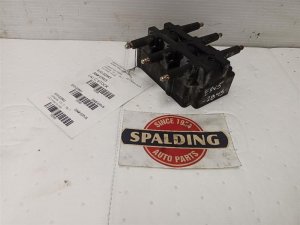
Used OEM Parts in Stock
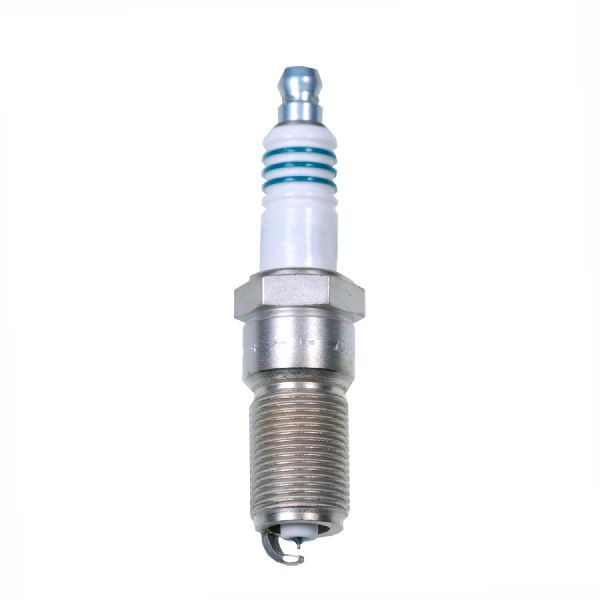
New Aftermarket Parts Available


The information in this article is provided for general reference and educational purposes only. Vehicle specifications, procedures, and part compatibility can vary by production date, trim level, and region. Always consult your vehicle's factory service manual and verify part numbers before purchasing or performing repairs. Safety-critical components such as airbags, seat belts, and braking systems should be installed by a qualified professional.
- Jeep Wrangler:
- 🧭 Diagnostic Flowchart
- 🎬 Helpful Videos
- 🛍️ Shop This Part
- What's Unique About the 2007-2011 Jeep Wrangler
- Symptoms You May Notice
- Most Likely Causes
- Rare But Worth Checking
- Diagnosis Steps
- Parts You'll Likely Need
- Related Codes That Often Appear With This One
- Technical Service Bulletins (TSBs) & Recalls
- Platform-Specific Known Issues
- Mechanic-Grade Diagnostic Values
- Scan Tool Commands That Help
- Wiring & Ground Locations
- Real Owner Repair Stories
- OEM Part Supersession History
- Model Year Variations Within This Range
- Other Known Issues on This Vehicle
- Used vs. New Parts: Buying Guide for This Vehicle
- Real Owner Stories
- 2007-2011 Jeep Wrangler 3.8L V6
- 2002 Dodge Grand Caravan 3.8L V6
- 2007-2011 Jeep Wrangler 3.8L V6 — ~85000 miles
- NHTSA Reported Incident
- Related OBD-II Codes
- Frequently Asked Questions
- 🎟️ Get 5% Off