

P0351 on 2018-2023 Kia Stinger 3.3L: Ignition Coil 'A' Circuit Fixes and Causes
P0351 on a Kia Stinger 3.3L means a fault with the ignition coil for cylinder 1. This cylinder is on the rear bank (Bank 1, passenger side) against the firewall, requiring intake manifold removal for access. The most common fix is replacing the faulty coil, but due to the 3-5 hours of labor, it's highly recommended to replace all three rear coils, all six spark plugs, and the intake gaskets at the same time.
- P0351 on a Stinger 3.3L points to a fault in the cylinder 1 ignition coil circuit.
- Cylinder 1 is located on the rear bank against the firewall, making access a difficult, high-labor job (3-5 hours).
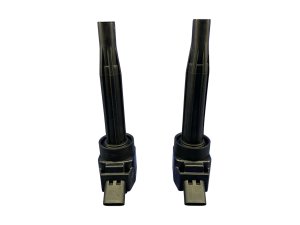
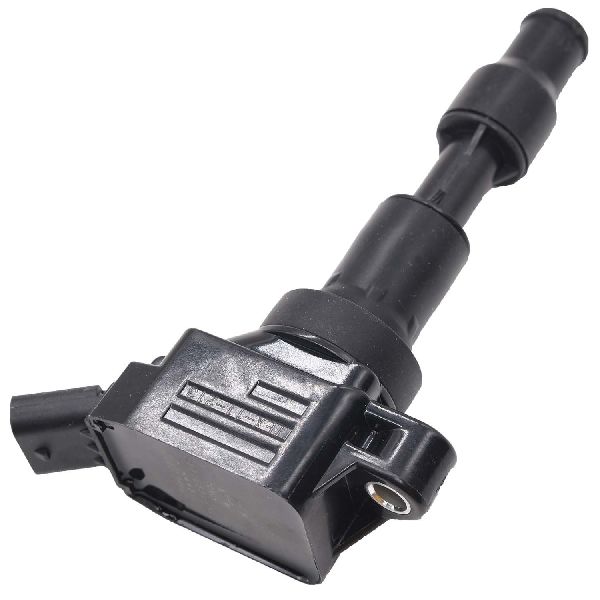
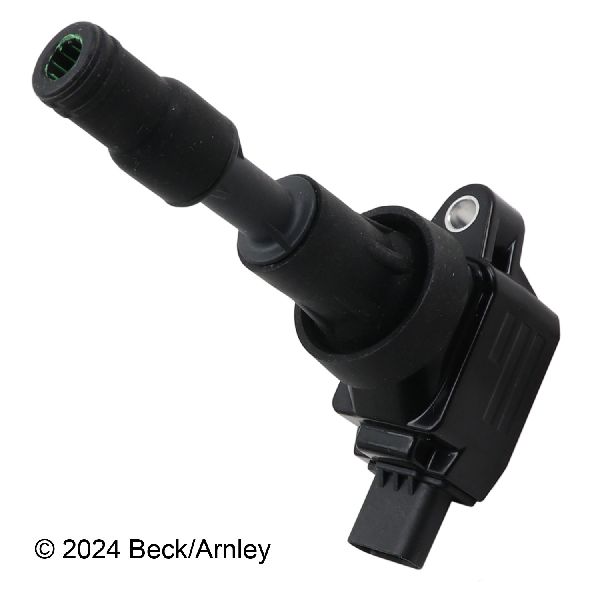
- Due to the high labor cost, the recommended fix is to replace all three rear bank ignition coils (Part #27310-3L000), all six spark plugs, and the intake manifold gaskets at the same time.
- Do not drive if the Check Engine Light is flashing to avoid expensive catalytic converter damage.
- Ensure you purchase the correct ignition coil; the rear bank coil (27310-3L000) is different from the front bank coil (27310-3L030).
What's Unique About the 2018-2023 Kia Stinger
The key challenge with a P0351 code on the Stinger's 3.3L V6 is the location of cylinder 1. On this transverse engine, Bank 1 (cylinders 1, 3, 5) is the rear bank, tucked against the firewall and buried under the upper intake manifold. This makes a simple coil swap a significant job requiring 3-5 hours of labor just for access. Furthermore, this engine uses two different, non-interchangeable ignition coils: part number 27310-3L000 for the rear bank (Bank 1) and 27301-3L100 for the front bank (Bank 2). This complexity heavily influences the diagnostic and repair strategy, making a comprehensive parts replacement more cost-effective than repeated repairs.
Symptoms You May Notice
- Check Engine Light is on (may be steady or flashing)
- Engine misfire, rough idle, or shaking
- Hesitation or loss of power during acceleration
- Reduced fuel economy
- Difficulty starting the engine
- In some cases, the car may enter a limp mode with reduced RPM limit
- Replacing an easily accessible front bank ignition coil instead of the correct rear bank coil.
- Purchasing the wrong part number (using a front coil, 27301-3L100, for the rear bank, which requires 27310-3L000).
- Replacing only the single failed coil and spark plug, leading to another failure on the same bank shortly after and requiring the same high-labor-cost job to be repeated.
Most Likely Causes
- Failed Ignition Coil (Cylinder 1) 🔴 High Probability → Shop Ignition Coil The rear bank coils are subjected to significant heat soak from the engine and twin-turbo setup, which can lead to premature failure. Multiple owners on forums report failures, sometimes across the entire rear bank (1, 3, 5) simultaneously.
How to confirm: After removing the intake manifold, swap the ignition coil from cylinder 1 with another cylinder on the same rear bank (e.g., cylinder 3). If the code changes to P0353 after clearing and re-scanning, the coil is confirmed bad. Alternatively, test the coil with a multimeter; primary resistance should be 0.3-1.5 Ohms and secondary resistance should be 5k-15k Ohms.
Typical fix: Replace the ignition coil. It is strongly recommended to replace all three rear bank coils (cylinders 1, 3, 5) at the same time due to the high labor cost of access. Some owners opt to replace all six.
Est. part cost: $50-$110 per coil - Worn or Faulty Spark Plug (Cylinder 1) 🟡 Medium Probability → Shop Spark Plug The recommended service interval for spark plugs is just 42,000 miles. Plugs nearing or past this interval, especially on a tuned vehicle, have a higher chance of failure, which can overwork and damage the ignition coil.
How to confirm: After removing the intake manifold and ignition coil, inspect the spark plug for wear, fouling, or cracks. A worn plug is a common culprit for ignition coil codes.
Typical fix: Replace the spark plug. Given the labor, it is best practice to replace all six spark plugs if accessing the rear bank.
Est. part cost: $15-$25 per plug - Damaged Wiring or Connector ⚪ Low Probability The wiring harness is in a high-heat area, which can make connectors brittle over time. The clips can break easily during removal. A recall on 2018 models for a chafing wiring harness highlights the potential for wiring issues.
How to confirm: Visually inspect the wiring and connector for cylinder 1's ignition coil for any signs of melting, corrosion, or broken wires. Use a multimeter to check for 12V power, ground, and the command signal from the PCM at the connector.
Typical fix: Repair the damaged section of the harness or replace the connector pigtail.
Est. part cost: $15-$50
Rare But Worth Checking
- Faulty Powertrain Control Module (PCM): → Shop Engine Control Module (ECM) This is very rare. The PCM's internal driver for the cylinder 1 coil can fail. This should only be considered after all other possibilities (coil, plug, wiring) have been exhaustively ruled out by a professional.
Diagnosis Steps
- Confirm the code with an OBD-II scanner. Note if the Check Engine Light is flashing, which indicates a severe misfire.
- Acknowledge that cylinder 1 is on the rear bank (Bank 1, passenger side) and requires intake manifold removal for access. This is a multi-hour job.
- Plan for a comprehensive service. Purchase three rear bank ignition coils, six new spark plugs, and a new set of intake manifold gaskets before starting.
- Disconnect the battery.
- Carefully label and disconnect all sensors, vacuum lines, and hoses attached to the upper intake manifold, then unbolt and remove the manifold itself.
- With the rear bank exposed, you can now access the ignition coils for cylinders 1, 3, and 5.
- Preventative Maintenance: Replace all three ignition coils on the rear bank. It is highly advisable.
- Preventative Maintenance: Replace all six spark plugs (three on the rear bank, three on the more accessible front bank). Ensure they are gapped correctly if required.
- Install the new intake manifold gaskets. These are single-use and crucial for preventing vacuum leaks.
- Reassemble the intake manifold and all related connections in the reverse order of removal. Torque bolts to manufacturer specifications.
- Reconnect the battery, clear all fault codes with the scanner, and start the vehicle to confirm the repair.
Parts You'll Likely Need
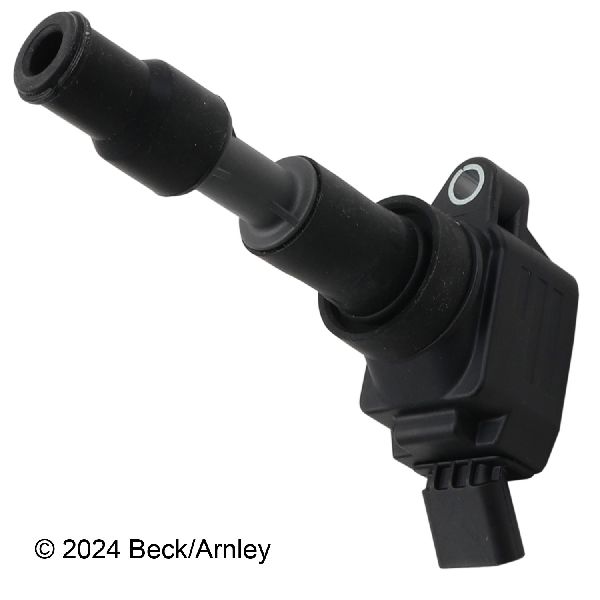
- Ignition Coil (Rear Bank, Cyl 1, 3, 5)
(OEM #27310-3L000)— This is the most likely cause of the code. This specific part number is for the rear bank cylinders and is different from the front bank coils.
Trusted brands: Kia/Hyundai (Genuine), Denso, Delphi, Bosch, Worms Racing (Performance)
OEM price range: $70-$110
Aftermarket price range: $40-$80 - Ignition Coil (Front Bank, Cyl 2, 4, 6)
(OEM #27301-3L100 (or superseded 27310-3L030))— Listed for reference to avoid mis-purchase. This coil is for the easily accessible front bank and is NOT interchangeable with the rear.
Trusted brands: Kia/Hyundai (Genuine), Bosch, Delphi, NGK
OEM price range: $75-$110
Aftermarket price range: $50-$80 - Spark Plug
(OEM #18852-09070 (NGK SILZKR8E8G))— A worn spark plug can cause a misfire and damage the ignition coil. It is essential to replace them, especially when performing the high-labor job of accessing the rear bank. The OEM interval is 42,000 miles. 🎬 Watch: Step-by-step HKS spark plug installation on the 3.3T.
Trusted brands: NGK (OEM), HKS (Performance/Tuning), Denso
OEM price range: $20-$40
Aftermarket price range: $15-$25 - Intake Manifold Gasket Set
(OEM #28411-3L100)— The intake manifold must be removed to access the rear coils. The gaskets are single-use and must be replaced to prevent vacuum leaks after reassembly.
Trusted brands: Kia (Genuine), Fel-Pro, Mahle
OEM price range: $30-$50
Aftermarket price range: $20-$40
Related Codes That Often Appear With This One
- P0301 — P0301 indicates a misfire specifically on cylinder 1. P0351 is a circuit code that is a common cause for a P0301 misfire. 🎬 See this diagnostic guide for troubleshooting a Cylinder 1 misfire.
- P0300 — If the ignition issue is intermittent or causing timing disruptions, it could lead to random misfires across multiple cylinders, triggering a P0300 code.
- P0303, P0305 — If heat has caused one rear coil to fail, it's common for the others on the same bank (cylinders 3 and 5) to fail around the same time, leading to multiple misfire codes for that bank.
Technical Service Bulletins (TSBs) & Recalls
- TSB SC300 / NHTSA 24V169000: Recall for deteriorating left turbocharger oil feed pipe on 2018-2023 3.3T models, which increases under-hood temperatures and stress on components like ignition coils.
- TSB SA322 / SA347: Service actions to fix a common tailgate rattle on 2018 models by adjusting bumpers or the striker.
Platform-Specific Known Issues
- Owners on enthusiast forums have reported premature ignition coil failures, particularly on earlier 2018-2020 models.
- A Reddit user with a 2018 GT2 reported a simultaneous misfire on cylinders 1, 3, and 5, requiring an engine-out diagnosis at the dealer, highlighting the potential for bank-wide failure.
Mechanic-Grade Diagnostic Values
- Ignition Coil Primary Resistance — expected: 0.3 - 1.5 Ohms. Failure: A reading outside this range, especially an open circuit (infinite resistance), indicates a faulty primary coil winding.
- Ignition Coil Secondary Resistance — expected: 5,000 - 15,000 Ohms (5kΩ - 15kΩ). Failure: A reading significantly outside this range points to a failure in the secondary windings.
- Ignition Coil Driver Signal (at connector) — expected: 5 - 20 Hz (using a voltmeter set to Hertz scale with engine running). Failure: No Hertz reading indicates a lack of command signal from the PCM, pointing to a wiring or PCM driver issue.
- Ignition Coil Power Supply (at connector) — expected: 12V (B+) with ignition on. Failure: No voltage indicates a problem with the power supply from the main relay or a wiring fault.
Scan Tool Commands That Help
- Kia GDS/KDS: Actuation Test: Ignition Coils — This function allows a technician to command individual ignition coils to fire. It can be used with the engine off to listen for the 'click' of the coil or to check for spark with a spark tester. This helps isolate a faulty coil without swapping parts.
- Kia GDS/KDS: Resetting Adaptive Values — After replacing major components like ignition coils or spark plugs that were causing a persistent misfire, it's good practice to reset the engine's adaptive learning values. This forces the ECU to relearn fuel trims and ignition timing for the new components immediately.
Wiring & Ground Locations
- Ignition Coil #1 Connector — On the ignition coil for cylinder 1, located on the rear bank (passenger side) under the intake manifold.. This is the primary point for electrical testing. Pin 1 is Ground, Pin 2 is the control signal from the ECM (Connector A, Pin 41), and Pin 4 is battery power (B+) from the main relay.
- Engine Ground Wiring Assembly (91860-J5010) — This harness provides the main ground path for various engine components.. A poor or corroded engine ground can cause a weak spark across all cylinders, leading to intermittent misfires and placing extra stress on ignition coils. While not a primary cause for a single-cylinder code like P0351, it's a critical check if multiple ignition issues are present or if the code persists after replacing the coil.
OEM Part Supersession History
Older style two-piece ignition coils (various PNs)→27301-3L100 (Front Bank), 27310-3L030 (Rear Bank, appears to supersede 27310-3L000)— Early model year coils were prone to failure. The updated coils used in the facelifted 2022+ models are a more reliable one-piece design.
Heads up: The front bank coil (27301-3L100) and rear bank coil (27310-3L000 / 27310-3L030) are physically different and NOT interchangeable.
Model Year Variations Within This Range
- 2022-2023: The facelifted 2022+ Stinger and Genesis G70 models received upgraded OEM ignition coils that are more durable and reliable. These newer coils are direct plug-and-play replacements for the older, failure-prone coils on 2018-2021 models. The 3.3L V6 also received a slight power bump from 365 hp to 368 hp due to a new variable exhaust system.
Diagnostic Flowchart
Other Known Issues on This Vehicle
Issues unrelated to this code that are worth knowing about as an owner of this generation:
- High-Pressure Fuel Pump (HPFP) Failure 🔴 High — Common enough to warrant a recall (SC281) on 2.0L models and is a known failure point on the 3.3L, often causing loss of power. (Ref: NHTSA 23V-632 (Recall SC281 for 2.0L, but 3.3L also affected))
- Left Turbocharger Oil Feed Pipe/Hose Leak 🔴 High — Affects 2018-2023 3.3L models. The hose can deteriorate from heat, leak oil onto hot components, and increase fire risk. (Ref: NHTSA 24V169000 / Kia Recall SC300)
- Brake Rotor Warping / Vibration 🟠 Medium — A very common complaint from owners of 2018-2021 models, causing steering wheel vibration under braking. Often attributed to the stock Brembo pads and rotors.
- Tailgate / Hatch Rattle 🟡 Low — Prevalent on early (2018) models, causing a rattling or knocking sound from the rear over bumps. (Ref: TSB SA322, TSB SA347)
- Front Wiring Harness Chafing 🔴 High — Primarily affected 2018 models. A harness could contact a body panel burr, leading to a short circuit and potential fire risk. (Ref: NHTSA 18V-754 / Kia Recall SC170)
- Oil Pressure Sensor Failure 🟠 Medium — Some owners report failure of the oil pressure switch/sensor, typically at higher mileage (75k+ miles), causing an oil light to illuminate despite correct oil levels.
Used vs. New Parts: Buying Guide for This Vehicle
When a used part is the smart pick: For this repair, using used parts is generally NOT recommended. Ignition coils and spark plugs are wear items, and the high labor cost of accessing the rear bank makes it unwise to install a part with an unknown history. The only exception might be a major structural component like an intake manifold if it were damaged during repair, but never the electronic/wear components themselves.
Donor-vehicle mileage cap: roughly under 40000 miles for the part to have meaningful remaining life.
What to inspect on the donor part:
- For ignition coils, avoid any with cracks, signs of melting, or corrosion on the terminals.
- Verify the part number on the coil itself matches the required part for the bank you are servicing (27310-3L000 for rear, 27301-3L100 for front).
- If possible, source from a 2022+ model to get the upgraded coil design.
OEM-only on this vehicle (don't cheap out):
- Intake Manifold Gaskets: These are single-use and critical for preventing vacuum leaks. Always use new OEM or high-quality aftermarket (Fel-Pro, Mahle) gaskets.
- Ignition Coils: While good aftermarket options exist, OEM coils (especially the 2022+ updated design) are the safest bet given the labor involved. Avoid no-name, unbranded coils.
Aftermarket brands forum-validated for this vehicle:
- Ignition Coils: Delphi, Bosch, NGK, Denso, Beck/Arnley.
- Performance Coils: Worms Racing is a known performance brand in the Stinger community.
- Spark Plugs: NGK (OEM), HKS (for tuned applications).
Brands owners have reported issues with on this vehicle:
- Avoid generic, unbranded ignition coils from online marketplaces. The potential for premature failure is high and not worth the risk given the 3-5 hour labor cost to replace them on the rear bank.
Real Owner Stories
Aggregated from forums and TSBs cited above. Mileages and costs reflect what owners reported in those sources.
2018 Kia Stinger GT2 3.3L V6
Symptoms: Simultaneous misfire on cylinders 1, 3, and 5; the vehicle required an engine-out diagnosis at the dealer after initial misdiagnosis.
What fixed it: Replacement of the ignition coils on the affected bank.
Source hint: Reddit r/kiastinger user report
2018 Kia Stinger 3.3L V6
Symptoms: Check engine light with a bank-wide failure on the rear cylinders (1, 3, 5).
What fixed it: The dealer initially suggested a new engine, but the issue was related to the ignition system on the rear bank.
Source hint: stingerforum.org and Reddit r/StingerGT
Related OBD-II Codes
Frequently Asked Questions
Why is cylinder 1 so difficult to access on the 3.3L T-GDI engine?
Could the P0351 code be related to the 2018 Kia Stinger wiring harness recall?
Does the turbocharger oil feed pipe recall (SC300) affect my ignition coils?
Should I only replace the coil for cylinder 1 if I have a P0351 code?
What is the recommended spark plug interval for the Stinger 3.3L to prevent coil damage?
Can I use a multimeter to verify if my Cylinder 1 coil is actually bad?
Helpful Videos
Used OEM Parts in Stock
New Aftermarket Parts Available


The information in this article is provided for general reference and educational purposes only. Vehicle specifications, procedures, and part compatibility can vary by production date, trim level, and region. Always consult your vehicle's factory service manual and verify part numbers before purchasing or performing repairs. Safety-critical components such as airbags, seat belts, and braking systems should be installed by a qualified professional.
- Kia Stinger:
- 🧭 Diagnostic Flowchart
- 🎬 Helpful Videos
- 🛍️ Shop This Part
- What's Unique About the 2018-2023 Kia Stinger
- Symptoms You May Notice
- Most Likely Causes
- Rare But Worth Checking
- Diagnosis Steps
- Parts You'll Likely Need
- Related Codes That Often Appear With This One
- Technical Service Bulletins (TSBs) & Recalls
- Platform-Specific Known Issues
- Mechanic-Grade Diagnostic Values
- Scan Tool Commands That Help
- Wiring & Ground Locations
- OEM Part Supersession History
- Model Year Variations Within This Range
- Other Known Issues on This Vehicle
- Used vs. New Parts: Buying Guide for This Vehicle
- Real Owner Stories
- 2018 Kia Stinger GT2 3.3L V6
- 2018 Kia Stinger 3.3L V6
- Related OBD-II Codes
- Frequently Asked Questions
- 🎟️ Get 5% Off