

P0351 on 2007-2012 Lexus ES 350: Ignition Coil 'A' Circuit Causes and Fixes
On the 2007-2012 Lexus ES 350, code P0351 almost always means the ignition coil for cylinder #1 has failed. It's a common issue and a straightforward DIY fix for the front bank, but cylinder #1 is on the difficult-to-access rear bank. Expect to pay around $50-$90 for a quality aftermarket (Denso) coil.
- P0351 on a 2007-2012 ES 350 is almost certainly a bad ignition coil for cylinder #1.
- Cylinder #1 is on the rear bank (against the firewall) on the passenger side, and accessing it requires removing the upper intake manifold.
- The easiest way to confirm a bad coil is to swap it with another cylinder and see if the code 'moves' with the coil.
- Due to the difficult access, it is highly recommended to replace all three rear coils, spark plugs, and the intake gaskets at the same time.
- This is a challenging but achievable DIY repair for those with patience and the right tools; otherwise, expect 2-3 hours of shop labor.
What's Unique About the 2007-2012 Lexus ES 350
The 2GR-FE engine used in the ES 350 is known for ignition coil failures that set P035x codes. The issue is common enough that Toyota, Lexus's parent company, released an updated ignition coil design to improve reliability. While the code points specifically to cylinder #1, a failing coil on another cylinder can sometimes short the shared confirmation (IGF) circuit, causing the ECM to incorrectly report a P0351. However, in the vast majority of cases, the fault lies with the coil on the cylinder indicated by the code.
Symptoms You May Notice
- Check Engine Light is on
- Engine misfire, which may feel like a rough idle, shaking, or hesitation during acceleration
- Reduced engine power
- VSC and/or TRAC OFF lights illuminated on the dashboard, as the ECM disables these systems as a precaution.
- In some cases, especially early on, there may be no noticeable symptoms other than the Check Engine Light
- Replacing the ECM. This is an expensive and unlikely fix. The issue is almost always the coil or wiring.
Most Likely Causes
- Failed Ignition Coil on Cylinder #1 🔴 High Probability → Shop Ignition Coil This is a very common failure item on the 2GR-FE engine. Toyota later revised the part to improve durability. The rear bank coils, including #1, are often cited as failing more frequently, possibly due to increased heat soak from the firewall.
How to confirm: Swap the ignition coil from cylinder #1 with another cylinder (e.g., cylinder #2 on the front bank). This requires removing the intake plenum for access. Clear the codes and drive. If the code changes to P0352, the ignition coil is confirmed bad.
Typical fix: Replace the faulty ignition coil. It is often recommended to replace the corresponding spark plug at the same time, and many owners choose to replace all three rear bank coils and plugs due to the labor involved in accessing them.
Est. part cost: $50-$120 - Damaged Wiring or Connector ⚪ Low Probability The plastic connectors and wiring insulation can become brittle over time due to engine heat cycles, leading to broken wires or poor connections at the coil connector. Rodent damage to the soy-based wiring insulation is also a possibility.
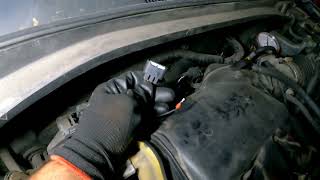
How to confirm: Visually inspect the ignition coil connector and wiring for cylinder #1. Look for broken plastic tabs, corrosion on the pins, or frayed/broken wires. Gently wiggle the connector with the engine running to see if it induces a misfire. A YouTube video by Irfan Chaudhry shows this exact failure on a 2007 ES 350. 🎬 Watch this video showing how to find and repair the broken wire.
Typical fix: Repair the broken wire or replace the connector pigtail.
Est. part cost: $15-$30
Rare But Worth Checking
- Failed Spark Plug: → Shop Spark Plug A worn-out or fouled spark plug can increase the electrical resistance, overworking the ignition coil and causing it to fail. While not the direct cause of the P0351 circuit code, it's a common underlying factor and should be checked.
- Faulty Engine Control Module (ECM): → Shop Engine Control Module (ECM) This is extremely rare. The ECM should only be considered after all other possibilities (coil, plug, wiring) have been definitively ruled out by proper diagnostics.
- Shorted Coil on a Different Cylinder: In a rare failure mode, a coil on a different cylinder can short the shared IGF confirmation signal line to ground, causing the ECM to log a code for the first cylinder in the sequence, P0351. One user on ClubLexus traced a persistent P0351 to a bad coil on cylinder #2.
Diagnosis Steps
- Read the code: Use an OBD-II scanner to confirm P0351 is present and check for any other codes, particularly P0301.
- Locate Cylinder #1: On the transverse 2GR-FE engine, the cylinders against the firewall are Bank 1 (odd-numbered: 1, 3, 5) and the cylinders near the radiator are Bank 2 (even-numbered: 2, 4, 6). Cylinder #1 is on the rear bank (Bank 1), closest to the passenger side of the vehicle.
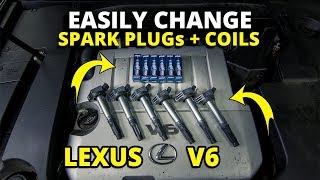
- Access the Rear Coils: Accessing cylinder #1 requires significant disassembly. You must remove the engine cover, air intake assembly, and the upper intake manifold (plenum). This is a time-consuming step. 🎬 See this step-by-step walkthrough to access and replace the rear coils.
- Swap the Ignition Coil: Once the plenum is removed, unplug the connector and remove the 10mm bolt holding the ignition coil for cylinder #1. Swap this coil with an easier-to-access coil on the front bank, such as cylinder #2. Reinstall the coils, bolts, and connectors.
- Test the Swap: Temporarily reinstall the intake plenum (without bolting it down fully if you are confident in the swap). Clear the OBD-II codes with the scanner. Start the engine and let it run until the Check Engine Light comes back on.
- Re-read the Codes: If the code has moved to P0352 ('Ignition Coil B'), the ignition coil you moved is faulty and needs to be replaced.
- If the Code Returns as P0351: The coil is not the problem. The issue is in the wiring, connector, or (rarely) the ECM. With the plenum still off, carefully inspect the connector and wiring harness for cylinder #1 for any signs of damage, corrosion, or loose pins.
- Inspect the Spark Plug: While you have access, it is highly recommended to remove and inspect the spark plug from cylinder #1. A heavily worn, fouled, or damaged plug can cause coil failure and should be replaced. Given the labor, replacing all three rear plugs is a common practice.
- Final Check: If all other components check out, the problem may be in the ECM driver circuit, which requires advanced diagnostics with an oscilloscope to check the IGT and IGF signals at the ECM connector.
Parts You'll Likely Need
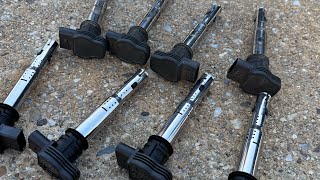
- Ignition Coil
(OEM #90919-A2004)— This is the most common failure point for code P0351 on the 2GR-FE engine. Toyota issued this updated part number to supersede older, more failure-prone versions like 90919-02251, 90919-A2002, and 90919-A2007. The latest superseded number may be 90919-A2013.
Trusted brands: Denso (OEM supplier), NGK
OEM price range: $90-$140
Aftermarket price range: $50-$90 - Spark Plug
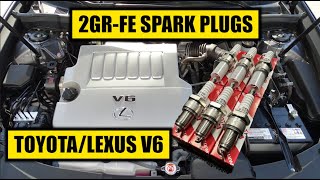
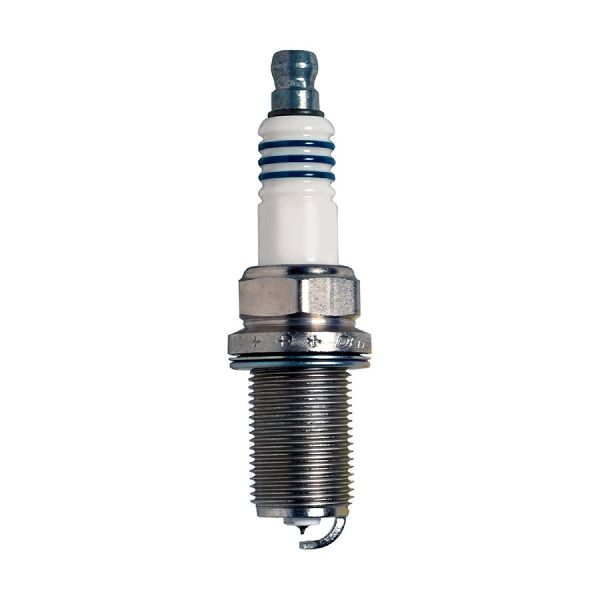
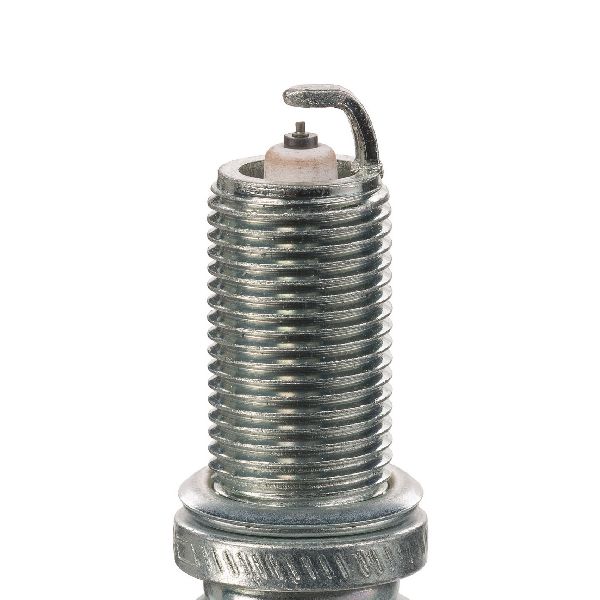
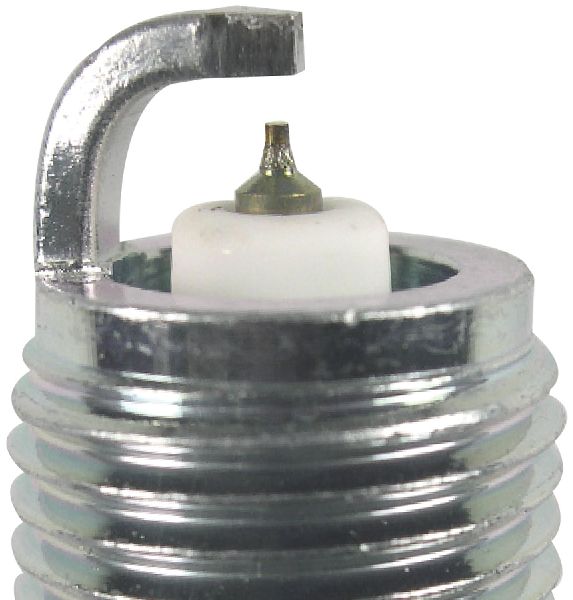
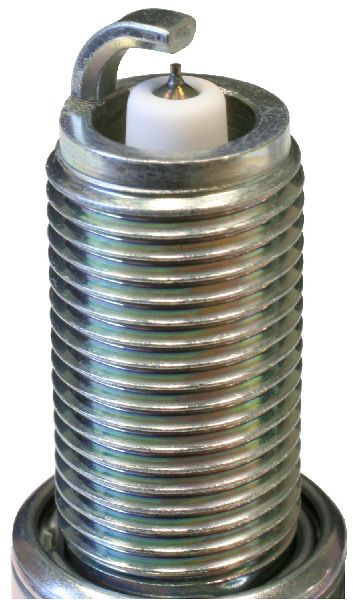
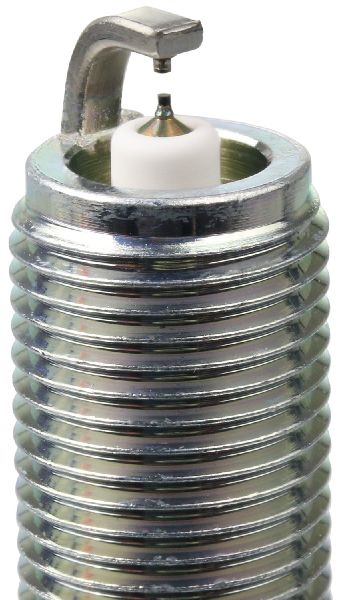
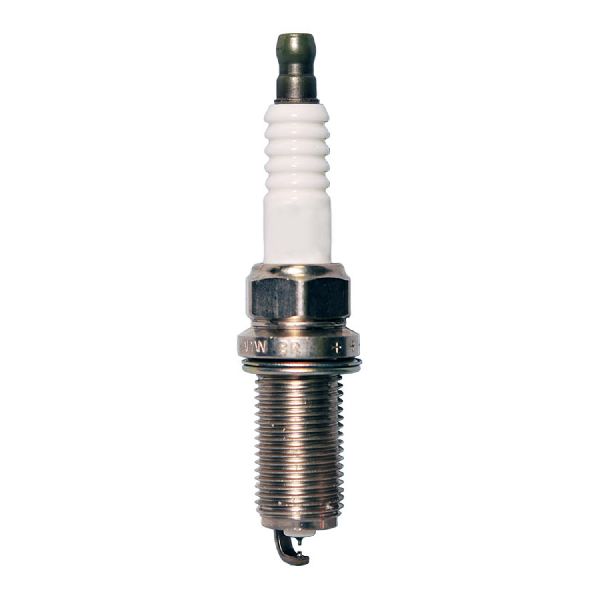
(OEM #Denso FK20HR11)— It is best practice to replace the spark plug when replacing a coil, as a worn plug can cause the new coil to fail prematurely. If plugs haven't been changed in over 60,000 miles, it's wise to replace all six, especially the three on the rear bank while the intake manifold is removed.
Trusted brands: Denso Iridium Long Life, NGK Laser Iridium
OEM price range: $15-$25
Aftermarket price range: $10-$18 - Intake Manifold Gasket Set — The upper intake manifold (plenum) must be removed to access the rear ignition coils. The gaskets are considered a one-time use part and should be replaced to prevent vacuum leaks upon reassembly.
Trusted brands: Fel-Pro, Mahle, OEM Toyota
OEM price range: $30-$50
Aftermarket price range: $15-$25
Related Codes That Often Appear With This One
- P0301 — P0301 means 'Cylinder 1 Misfire Detected.' Since P0351 indicates a fault in the ignition circuit for cylinder 1, a misfire in that same cylinder is a direct and expected consequence.
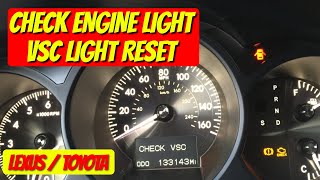
- C1201 — This is an 'Engine Control System Malfunction' code stored in the ABS/VSC module. When a powertrain code like P0351 occurs, the ECM tells other modules to disable systems like Vehicle Stability Control (VSC) and Traction Control as a precaution, which logs C1201 and illuminates the VSC/TRAC lights. Fixing the P0351 will resolve this code. 🎬 Watch how to diagnose and clear these warning lights.
- P0352, P0353, P0354, P0355, P0356 — If multiple P035x codes are present, it points towards a systemic issue rather than a single coil failure. This could be a shared power or ground circuit problem, a damaged wiring harness, or a failure within the ECM.
Technical Service Bulletins (TSBs) & Recalls
- While not for the ignition coil itself, Toyota issued a Limited Service Campaign (LSC) for the VVT-i oil line on early 2GR-FE engines, which is a critical preventative repair for owners of 2007-2009 models.
Platform-Specific Known Issues
- Accessing the rear bank (Bank 1) where cylinder #1 is located is notoriously difficult and time-consuming, requiring the removal of the upper intake manifold. Many DIYers and shops recommend replacing all three rear coils and spark plugs at once to avoid repeat labor.
- A ClubLexus forum member documented a frustrating case where a persistent P0351 was ultimately caused by a shorted coil on cylinder #2 (front bank), which was confusing the ECM's diagnostic system.
Mechanic-Grade Diagnostic Values
- Ignition Coil Primary Resistance — expected: 0.49 - 0.57 Ω at 68°F (20°C). Failure: A reading outside this range indicates a faulty coil.
- Ignition Coil Secondary Resistance — expected: 9.5 - 11.1 kΩ. Failure: A reading outside this range indicates a faulty coil.
- Ignition Coil Power Supply (+B wire at connector) — expected: Battery Voltage (approx. 12.6V) with Ignition ON. Failure: Voltage below 10V or 0V indicates a problem with the power supply circuit or IG2 fuse.
- IGF1 Signal Voltage (at ECM connector) — expected: 4.5 - 5.5V with Ignition ON. Failure: Voltage outside this range can indicate a short in the IGF wire or a faulty coil on any cylinder, as the IGF circuit is shared.
- IGT1 Signal (at ECM connector) — expected: Pulsing 0-5V square wave during cranking/idle (requires oscilloscope). Failure: No signal or a flat line indicates a problem with the ECM driver or the wiring between the ECM and the coil.
Hidden / Shadow Codes Worth Checking
- Mode $06, TID $82: On CAN-equipped Toyota/Lexus vehicles, this Test ID often corresponds to misfire counts for specific cylinders. While not a 'shadow code' in the traditional sense, monitoring the misfire count for cylinder 1 (CID $01) via Mode $06 can reveal intermittent issues before they are severe enough to set a P0301 code consistently. (see via An advanced OBD-II scan tool capable of displaying Mode $06 data.)
Scan Tool Commands That Help
- Toyota Techstream: Active Test: 'Control the Spark' — This bidirectional command allows a technician to individually fire each ignition coil with the engine off. If all other coils produce a spark during the test but cylinder #1 does not (using a spark tester), it strongly points to a bad coil or a specific wiring issue for that cylinder, helping to rule out the ECM.
Wiring & Ground Locations
- ECM Connector E5, Pin 13 (IGT1) — The ECM is located behind the glove box. Connector E5 is one of the main plugs. Pin 13 is the Ignition Trigger (IGT) signal wire for cylinder #1.. This is the specific pin to test with an oscilloscope for the 'fire' signal from the ECM to the #1 coil. No signal here points to an ECM fault.
- ECM Connector E5, Pin 7 (IGF1) — Located on the same ECM connector as the IGT1 signal, behind the glove box.. This is the pin for the Ignition Confirmation (IGF) signal from the coil back to the ECM. An incorrect voltage here (should be 4.5-5.5V) is what directly causes the P0351 code to be set. Since this circuit is shared by all coils, a short on another coil can pull this voltage down and falsely trigger a P0351.
- Engine Harness Ground (Bank 1) — On the side of the cylinder head (Bank 1, rear bank), located underneath the throttle body area.. This is a primary grounding point for the engine harness, which includes the ground circuit for the rear bank of ignition coils. A loose or corroded connection here can cause intermittent and hard-to-diagnose ignition faults, including P0351.
Real Owner Repair Stories
- YouTube channel 'Irfan Chaudhry' (2007 Lexus ES 350 with 126,000 miles) — Check engine light, multiple misfire codes (P0301-P0306), and a specific P0351 code. The engine was shaking and running poorly.
❌ Tried (didn't work) Clearing codes (P0351 and cylinder 1 misfire returned immediately), Smoke test for vacuum leaks (passed), Fuel pressure test (passed)
✅ What actually fixed it The technician found a broken wire right at the ignition coil connector for cylinder #1. After replacing the connector pigtail, the engine ran smoothly and all codes were resolved. - ClubLexus forum user 'matts6887' (2007-2012 Lexus ES 350 (specific year not mentioned)) — Intermittent rough running, limp mode, and a persistent P0351 code.
❌ Tried (didn't work) Replacing the ignition coil on cylinder #1. The P0351 code returned instantly.
✅ What actually fixed it The actual cause was a faulty ignition coil on cylinder #2 (the easily accessible front bank). The failing #2 coil was shorting the shared IGF feedback circuit to ground, causing the ECM to incorrectly report a fault on cylinder #1. The fix was to unplug coils one by one until the 5V reference on the IGF circuit returned, which identified the bad coil on cylinder #2.
OEM Part Supersession History
90919-02251→90919-A2002, then 90919-A2004, then 90919-A2007, and currently 90919-A2013— Improved durability and reliability to address common failures on the 2GR-FE engine.
Heads up: All listed part numbers are interchangeable, but it is highly recommended to use the latest available part number (90919-A2013) for the most updated design.
Model Year Variations Within This Range
- 2007-2011: The 2GR-FE engine in the ES 350 remained largely unchanged during this period. The primary variations relate to part supersessions, such as the ignition coils, where later model years would have been factory-equipped with more reliable revisions of the parts. However, the diagnostic and repair procedure for P0351 is identical across the entire 2007-2012 range.
Diagnostic Flowchart
Other Known Issues on This Vehicle
Issues unrelated to this code that are worth knowing about as an owner of this generation:
- VVT-i Oil Line Rupture 🔴 High — Common on 2007-2009 models that have not had the updated part installed. Failure can occur without warning at any mileage. (Ref: Toyota issued a Limited Service Campaign (LSC) to replace the original rubber/metal hose with an all-metal line (Part No. 15772-31030).)
- Melting/Cracked Dashboard 🟡 Low — Extremely common on 2007-2008 models, especially in warmer climates. The dashboard surface becomes sticky and can crack. (Ref: Lexus issued a Warranty Enhancement Program (ZLD/ZLZ) to replace affected dashboards, though the program has since expired.)
- U660E Transmission Shift Flare 🟠 Medium — Often reported on earlier models (2007-2009). Typically presents as a brief RPM surge (flare) when shifting between 2nd-3rd or 3rd-4th gears, especially when the transmission fluid is cold. (Ref: A dealer-installable TCM software update was available for some VINs to address this, but it is not a guaranteed fix.)
- Water Pump Failure 🟠 Medium — The water pump on the 2GR-FE is a known wear item, often failing between 80,000 and 120,000 miles. Failure is usually indicated by a pink, crusty residue around the weep hole or a coolant leak.
Used vs. New Parts: Buying Guide for This Vehicle
When a used part is the smart pick: A used ignition coil is generally not recommended for this repair. Given that ignition coils are a known common failure item on the 2GR-FE, a used part from a junkyard has an unknown history and a high probability of premature failure. The labor involved in accessing the rear bank makes it unwise to risk using a part that may not last.
Donor-vehicle mileage cap: roughly under 60000 miles for the part to have meaningful remaining life.
What to inspect on the donor part:
- Check for cracks in the plastic housing, especially near the top and around the bolt hole.
- Inspect the connector pins for corrosion or damage.
- Look for signs of oil contamination on the coil boot, which could indicate a leaking valve cover gasket on the donor car.
OEM-only on this vehicle (don't cheap out):
- Ignition Coil
Aftermarket brands forum-validated for this vehicle:
- Denso (the Original Equipment Manufacturer)
- NGK
Brands owners have reported issues with on this vehicle:
- Unnamed, no-brand 'white box' coils from online marketplaces. While cheap, they have a very high failure rate and are not worth the risk, especially for the labor-intensive rear bank.
Real Owner Stories
Aggregated from forums and TSBs cited above. Mileages and costs reflect what owners reported in those sources.
2007 Lexus ES 350 2GR-FE
Symptoms: The owner experienced a persistent P0351 code for Ignition Coil Pack Cylinder #1.
What fixed it: After troubleshooting, it was discovered that a shorted coil on cylinder #2 (located on the front bank) was actually causing the ECM to trigger the P0351 code for cylinder #1.
Source hint: ClubLexus - 'P0351 Ignition Coil Pack Cylinder #1 Nightmare(solved)' [2020-12-26]
2007 Lexus ES 350 2GR-FE
Symptoms: Engine misfire and Check Engine Light; visual inspection revealed issues with the wiring at the coil.
What fixed it: Repairing the broken wire or replacing the connector pigtail at the ignition coil.
Source hint: YouTube video by Irfan Chaudhry cited in 'Damaged Wiring or Connector' section
2014 Lexus ES 350 2GR-FE
Symptoms: Owner reported a P0351 code and sought confirmation on the cylinder location.
What fixed it: Identified as a likely bad coil on plug for cylinder #1 located at the right rear of the engine.
Source hint: ClubLexus - 'Code P0351?' [2014-01-16]
Related OBD-II Codes
Frequently Asked Questions
Where is cylinder #1 located on my 2007-2012 Lexus ES 350?
Why did my VSC and TRAC OFF lights come on at the same time as the P0351 code?
Is there a TSB for the VVT-i oil line on my 2007-2009 ES 350?
Can I replace the cylinder #1 coil without removing the intake plenum?
Should I replace all the coils at once since the intake manifold has to come off?
Is there a warranty program for my sticky or cracked dashboard on my 2007 ES 350?
Helpful Videos
We Have This Part in Stock

The information in this article is provided for general reference and educational purposes only. Vehicle specifications, procedures, and part compatibility can vary by production date, trim level, and region. Always consult your vehicle's factory service manual and verify part numbers before purchasing or performing repairs. Safety-critical components such as airbags, seat belts, and braking systems should be installed by a qualified professional.
- Lexus ES 350:
- 🧭 Diagnostic Flowchart
- 🎬 Helpful Videos
- 🛍️ Shop This Part
- What's Unique About the 2007-2012 Lexus ES 350
- Symptoms You May Notice
- Most Likely Causes
- Rare But Worth Checking
- Diagnosis Steps
- Parts You'll Likely Need
- Related Codes That Often Appear With This One
- Technical Service Bulletins (TSBs) & Recalls
- Platform-Specific Known Issues
- Mechanic-Grade Diagnostic Values
- Hidden / Shadow Codes Worth Checking
- Scan Tool Commands That Help
- Wiring & Ground Locations
- Real Owner Repair Stories
- OEM Part Supersession History
- Model Year Variations Within This Range
- Other Known Issues on This Vehicle
- Used vs. New Parts: Buying Guide for This Vehicle
- Real Owner Stories
- 2007 Lexus ES 350 2GR-FE
- 2007 Lexus ES 350 2GR-FE
- 2014 Lexus ES 350 2GR-FE
- Related OBD-II Codes
- Frequently Asked Questions
- 🎟️ Get 5% Off