

P0352 on 2008-2016 Audi A4 2.0T: Ignition Coil 'B' Circuit Malfunction Causes and Fixes
On a 2008-2016 Audi A4 2.0T, code P0352 almost always points to a failed ignition coil on cylinder #2. This is a very common issue, and the recommended fix is to replace all four ignition coils (with the latest OEM revision, part number 06E905115G or 07K905715G) and all four spark plugs at the same time. Expect to pay $100-$200 for a set of quality aftermarket parts (Bosch, NGK, Eldor), and the repair is a straightforward DIY job (1/5 difficulty) that can be done in under 30 minutes.
- P0352 on a 2008-2016 Audi A4 2.0T almost certainly means the ignition coil for cylinder #2 has an electrical fault.
- This is an extremely common failure on this engine.
- The universally recommended repair is to replace all four ignition coils and all four spark plugs at the same time.
- Use the latest revised OEM part number for the coils to ensure the most reliable repair.
- If the check engine light is flashing, stop driving immediately to prevent damage to the catalytic converter.
What's Unique About the 2008-2016 Audi A4
The 2.0T TFSI engine (engine codes CAEB, CAED, CPMB, etc.) used in the B8 generation Audi A4 is known for having ignition coil failures as a common wear-and-tear item. It's not unusual for owners to experience a failure between 30,000 and 60,000 miles. Audi has released multiple revisions of the ignition coils to improve reliability. Because the coils are subjected to high heat and vibration, when one fails, the others are often near the end of their service life. For this reason, the standard practice in the Audi community is to replace all four coils and spark plugs simultaneously to prevent future misfires and ensure reliable performance.
Generation note: The 2008-2016 year range primarily covers the B8/B8.5 generation of the Audi A4 (2008-2016). The repair process for ignition coils and spark plugs is consistent across this generation for the 2.0T TFSI engine (EA888 Gen 2).
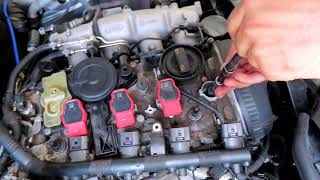
🎬 Watch: Step-by-step B8.5 coil and spark plug replacementSymptoms You May Notice
- Check Engine Light is on (solid or flashing)
- Engine misfires, which may feel like a stumble, bucking, or hesitation during acceleration
- Rough or uneven idle
- Reduced engine power and sluggish performance
- Decreased fuel economy
- Difficulty starting the engine
- Smell of raw gasoline from the exhaust
- Replacing only the spark plug without testing the ignition coil.
- Replacing only the single failed ignition coil, leading to another coil failing shortly after.
- Replacing other fuel system components before confirming the ignition system is functioning correctly.
Most Likely Causes
- Failed Ignition Coil on Cylinder #2 🔴 High Probability → Shop Ignition Coil Ignition coils on the 2.0T TFSI engine are a well-documented, high-failure item due to heat and vibration in the engine bay. They are considered a regular wear-and-tear part, and Audi has released several updated part numbers to improve reliability.
How to confirm: Swap the ignition coil from cylinder #2 with another cylinder (e.g., cylinder #1). Clear the codes and drive the vehicle. If the code changes to P0351 (for cylinder #1), the ignition coil is confirmed to be faulty. This is the standard diagnostic procedure recommended in Audi technical service bulletins.
Typical fix: Replace the faulty ignition coil. It is highly recommended to replace all four ignition coils and all four spark plugs at the same time with the latest revised parts to ensure reliability.
Est. part cost: $25-$50 per coil - Worn or Fouled Spark Plug 🟡 Medium Probability → Shop Spark Plug Spark plugs are a regular maintenance item with a replacement interval of around 40,000 miles. A worn plug with an excessive gap can strain the ignition coil, leading to its premature failure.
How to confirm: Remove the spark plug from cylinder #2 and inspect its condition. Look for excessive wear on the electrode, carbon fouling, oil deposits, or a cracked ceramic insulator. Compare it to the other plugs.
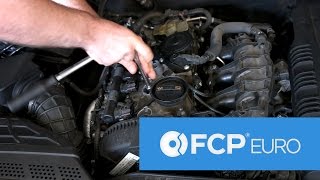
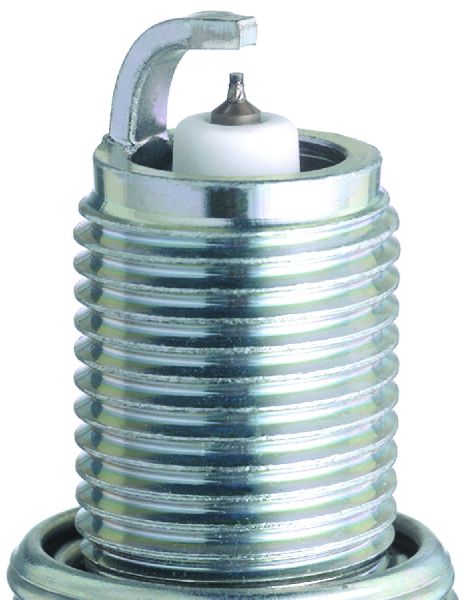
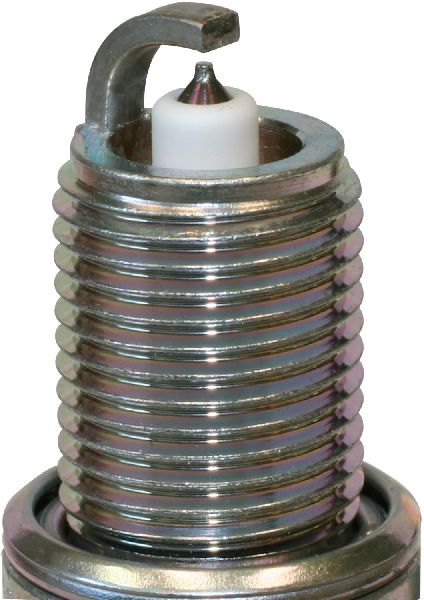
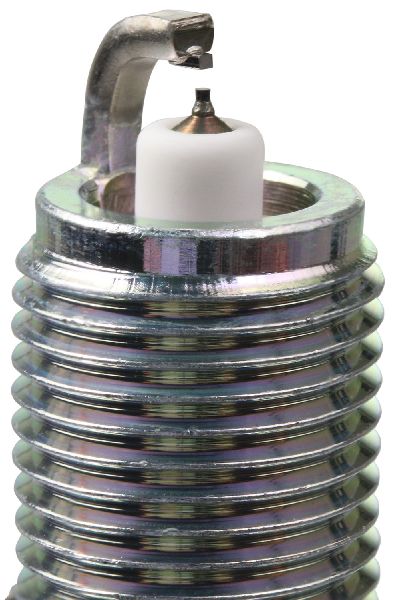
Typical fix: Replace the spark plug. As a best practice, replace all four spark plugs when replacing ignition coils. The OEM recommended plug is often an NGK PFR7S8EG or equivalent. 🎬 See how to replace spark plugs on a B8
Est. part cost: $10-$20 per plug - Damaged Ignition Coil Wiring Harness or Connector ⚪ Low Probability → Shop Ignition Coil Over time, the plastic connectors and wiring insulation can become brittle from engine heat cycles and crack, leading to poor electrical connections or short circuits.
How to confirm: Visually inspect the wiring harness and the connector for cylinder #2's ignition coil. Look for any cracks, frayed wires, or corroded pins. Wiggle the harness with the engine running to see if it induces a misfire. A multimeter can be used to check for 12V power, ground, and signal continuity from the PCM.
Typical fix: Repair the damaged section of wiring or replace the connector pigtail. In some cases, a harness repair kit may be available.
Est. part cost: $20-$110
Rare But Worth Checking
- Powertrain Control Module (PCM) Failure: → Shop Engine Control Module (ECM) This is very uncommon. The PCM's internal driver for the ignition coil can fail, but all other potential causes, especially the coil and wiring, should be exhaustively ruled out before considering PCM replacement.
Diagnosis Steps
- Read the trouble codes with an OBD-II scanner to confirm P0352 and check for any other related codes like P0302.
- Perform a visual inspection of the ignition coil, connector, and wiring for cylinder #2. Look for any obvious signs of damage, cracking, or corrosion.
- To confirm a bad coil, swap the ignition coil from cylinder #2 with one from another cylinder (e.g., cylinder #3). A special tool (T40039) is recommended for removal to avoid damaging the coil.
- Clear the fault codes using the scanner.
- Start the engine and let it run, or take a short test drive until the check engine light returns.
- Re-scan for codes. If the code has moved to the cylinder where you placed the suspect coil (e.g., P0353), you have confirmed the ignition coil is the faulty part.
- If the code remains P0352, the problem is likely in the wiring or, rarely, the PCM. Inspect the wiring harness for continuity and check for power and ground at the coil connector using a multimeter.
- While the coils are out, it is best practice to inspect and replace the spark plugs, especially if their service history is unknown. Check for carbon or oil fouling which could indicate other engine issues like PCV failure or piston ring problems.
Parts You'll Likely Need
- Ignition Coil
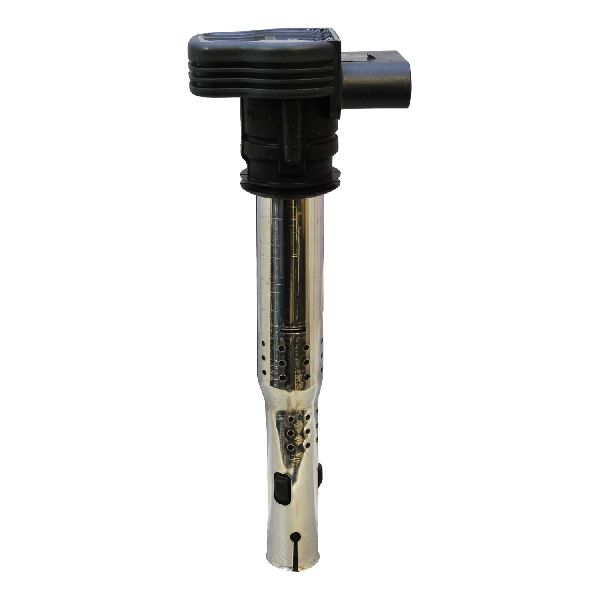
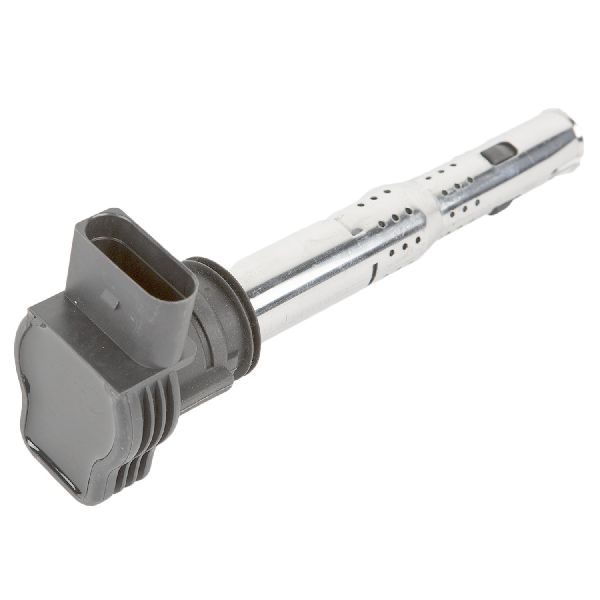
(OEM #06E905115G (latest revision, often red top))— This is the most frequent cause of a P0352 code on this engine. It is recommended to replace all four at once. Part number 06E905115E has been superseded by F and then G versions. Another compatible updated part number is 07K905715G.
Trusted brands: Bosch, NGK, Eldor, APR (performance upgrade)
OEM price range: $40-$60 per coil
Aftermarket price range: $25-$50 per coil - Spark Plug
(OEM #NGK PFR7S8EG)— Worn spark plugs can cause ignition coil failure and should always be replaced at the same time as the coils for best performance and longevity. This is a standard maintenance item.
Trusted brands: NGK, Bosch
OEM price range: $15-$25 per plug
Aftermarket price range: $10-$20 per plug - Ignition Coil Wiring Harness Repair Kit — If the diagnostic process points to a damaged connector or wiring, this kit can be used to repair the harness without replacing the entire engine harness. The plastic connectors become brittle with age.
Trusted brands: ECS Tuning, UroTuning
OEM price range: N/A
Aftermarket price range: $100-$120
Related Codes That Often Appear With This One
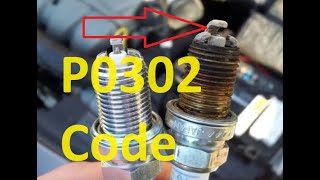
- P0302 — P0302 means 'Cylinder 2 Misfire Detected'. P0352 is the specific electrical fault for the coil circuit, which is the root cause of the misfire. 🎬 Watch: Diagnosing and fixing a Cylinder 2 misfire
- P0300 — This code means 'Random/Multiple Cylinder Misfire Detected'. If the coil is failing intermittently or if multiple coils are weak, it can sometimes trigger this more general code before the specific P0352 is logged.
- P0301, P0303, P0304 — Misfire codes for other cylinders may appear alongside P0352 if multiple ignition coils are failing around the same time, which is a common scenario on this platform.
Technical Service Bulletins (TSBs) & Recalls
- TSB 2033630/2 (01-14-63): Addresses misfire detection (P0300-P0304) and outlines the proper Guided Fault Finding (GFF) procedure, which includes swapping coils to confirm failure before replacement.
- TSB 2033561/2: Specifically mentioned premature failure on early Bosch coils and recommended updating to newer part numbers.
Platform-Specific Known Issues
- Ignition coil failure is a widely documented common issue on the 2.0T TFSI engine from this era, often occurring well before 100,000 miles.
- Audi has issued Technical Service Bulletins (TSBs) related to misfires and acknowledged premature failure on early ignition coil designs, recommending replacement with updated parts.
Mechanic-Grade Diagnostic Values
- Ignition Coil Primary Winding Resistance — expected: 0.4 to 2.0 ohms. Failure: A reading outside this range, or infinite (open circuit), indicates a faulty primary winding.
- Ignition Coil Secondary Winding Resistance — expected: 6,000 to 10,000 ohms (6kΩ - 10kΩ). Failure: A reading significantly outside this range indicates a faulty secondary winding. Note: Some coils have an internal diode that prevents this test with a standard multimeter; in these cases, swapping the coil is the definitive test.
- Ignition Coil Connector Pin 1 (Signal) — expected: Pulsing ground signal from ECM (requires oscilloscope to view properly). Failure: No signal or a constant signal indicates a wiring or ECM driver issue.
- Ignition Coil Connector Pin 2 (Ground) — expected: < 0.5 ohms resistance to chassis ground. Failure: High resistance indicates a poor ground connection, which is a common issue.
- Ignition Coil Connector Pin 3 (Power) — expected: 12V+ with key on, engine off. Failure: Low or no voltage points to a problem with the power supply fuse or wiring.
- Ignition Coil Connector Pin 4 (Power Ground) — expected: < 0.5 ohms resistance to chassis ground. Failure: High resistance points to a bad ground connection at the cylinder head.
Hidden / Shadow Codes Worth Checking
- P130A: Cylinder Disabling. This is not a shadow code but a related fault that the ECU may log. It indicates the engine computer has intentionally shut down the fuel injector for the misfiring cylinder (in this case, cylinder #2) to protect the catalytic converter from raw fuel. (see via VCDS or other advanced VAG-specific scan tools.)
Scan Tool Commands That Help
- VCDS (VAG-COM): Measuring Blocks / Live Data — Use Measuring Blocks to monitor misfire counters for each cylinder in real-time. This helps confirm that the misfire is isolated to cylinder 2 and allows you to see if swapping the coil moves the misfire to another cylinder without waiting for a new trouble code to set.
Wiring & Ground Locations
- Ignition Coil Ground — The primary ground for the ignition coils is a brown wire that typically grounds to a stud on the cylinder head or engine block, near the coils themselves.. A loose or corroded ground connection at this point can cause a weak or intermittent spark, leading to misfires and codes like P0352. This is often overlooked when diagnosing ignition issues.
- G105 — Engine block-to-firewall ground strap.. A degraded main engine ground strap can cause a host of electrical issues, including intermittent ignition problems. Voltage drop tests across this strap can identify a bad connection.
- Ignition Harness Tray — The plastic tray that runs over the valve cover and holds the ignition coil wiring.. This plastic tray and the connectors within it become extremely brittle from heat cycles. Cracks in the tray can allow the harness to rub or chafe, and the connector locking tabs frequently break, leading to poor connections at the coil.
Real Owner Repair Stories
- Audizine Forums (2009 Audi A4 2.0T) — Intermittent P0352 and P0302 codes, rough running, hesitation.
❌ Tried (didn't work) Replaced spark plug for cylinder 2, Replaced ignition coil for cylinder 2 (twice), Swapped coils between cylinders (code remained on cylinder 2)
✅ What actually fixed it The wiring in the harness leading to the cylinder 2 ignition coil connector was frayed and making intermittent contact. The owner discovered this by wiggling the harness while the engine was running, which would cause the misfire to appear and disappear. Repairing the damaged section of the wire and replacing the brittle connector pigtail resolved the issue permanently.
OEM Part Supersession History
06H905115A / 06H905115B (Black Top)→06E905115E, 06E905115F, 06E905115G (Often Red Top)— Early black-top ignition coils had a high rate of premature failure due to internal insulation breakdown from heat. The revised red-top versions from suppliers like Bosch and Eldor offer improved durability and heat resistance.
Heads up: While all revisions are physically and functionally interchangeable, it is critical to replace all four coils with the same, latest-revision part number to ensure consistent dwell time and spark energy across all cylinders.
Model Year Variations Within This Range
- 2008-2012 (B8): Primarily used the EA888 Gen 2 engine with engine code CAEB. These earlier models were more susceptible to the initial faulty black-top ignition coils.
- 2013-2016 (B8.5 Facelift): Introduced revised versions of the EA888 Gen 2 engine (e.g., CAED, CPMB) which included updates to the PCV system and other components. While still using the same fundamental ignition coil design, these later models were typically factory-equipped with more reliable coil revisions. The diagnostic and repair process for P0352 remains identical.
Diagnostic Flowchart
Other Known Issues on This Vehicle
Issues unrelated to this code that are worth knowing about as an owner of this generation:
- Excessive Oil Consumption 🔴 High — Very common, especially on 2009-2011 models (CAEB engine). Can start as early as 50,000 miles. Caused by faulty piston ring design. (Ref: Subject of a class-action lawsuit which resulted in warranty extensions and repair reimbursements for some owners.)
- Timing Chain Tensioner Failure 🔴 High — Very common on earlier models (approx. 2008-2012) with the original tensioner design. Failure can be catastrophic, causing piston-to-valve contact. (Ref: No recall, but multiple TSBs exist. An updated tensioner was introduced in later models. Inspection is recommended around 70,000-100,000 miles.)
- Water Pump Failure 🟠 Medium — Common failure item. The plastic housing can crack or the gasket can leak, causing coolant loss. Can occur at various mileages, some as early as 25,000 miles. (Ref: A class-action lawsuit led to an extended warranty for this component on some models.)
- PCV Valve Failure 🟠 Medium — The PCV (Pressure Control Valve) or oil separator can fail, leading to excessive crankcase pressure, oil leaks, rough idle, and increased oil consumption.
- Intake Manifold Runner Flap Issues 🟡 Low → Shop Engine Intake Manifold — The plastic intake manifold can have issues with the runner flaps, leading to fault codes and performance issues. More common on Gen 1 TSI engines but still seen on this platform.
- Carbon Buildup on Intake Valves 🟠 Medium — As a direct-injection engine, fuel doesn't wash over the intake valves, leading to carbon buildup over time (typically every 40,000-60,000 miles). This causes misfires, rough idle, and reduced performance.
Used vs. New Parts: Buying Guide for This Vehicle
When a used part is the smart pick: For this specific repair, using used parts is strongly discouraged for the primary failure components. However, a used ignition coil wiring harness connector pigtail or the plastic harness tray from a low-mileage donor car can be a cost-effective alternative to a new repair kit if the plastic is in good, pliable condition.
Donor-vehicle mileage cap: roughly under 60000 miles for the part to have meaningful remaining life.
What to inspect on the donor part:
- For a wiring connector, check that the plastic is not brittle or cracked.
- Ensure the locking tab on the connector is intact and functional.
- Inspect the wire insulation for any signs of cracking, melting, or previous repairs.
- Verify there is no corrosion on the metal pins inside the connector.
OEM-only on this vehicle (don't cheap out):
- While not strictly 'OEM-only', it is critical to use ignition coils from the OEM supplier (Bosch, NGK, Eldor) or a highly reputable performance brand. Cheap, unbranded ignition coils are known to have a very high failure rate and should be avoided.
Aftermarket brands forum-validated for this vehicle:
- Bosch
- NGK
- Eldor
- APR (performance upgrade)
Brands owners have reported issues with on this vehicle:
- Generic, unbranded 'no-name' parts from online marketplaces.
Real Owner Stories
Aggregated from forums and TSBs cited above. Mileages and costs reflect what owners reported in those sources.
2009 Audi A4 (B8) 2.0T
Symptoms: Owner experienced a cylinder 1 misfire and replaced all plugs and coils, but multiple misfire codes (P0300, P0301, P0302, P0303, P0304) returned only weeks later.
What fixed it: The source illustrates that one failure is often a precursor to others, though the specific final resolution for the recurring codes was not detailed beyond the initial full replacement of plugs and coils.
Source hint: Reddit.com/r/MechanicAdvice - Thread '2009 Audi A4 (B8) Misfire Issue'
Audi A4 (B6) 2.0T
Symptoms: A frustrating P0352 and P0302 issue that persisted even after replacing the ignition coils. The owner noticed that moving the wiring harness temporarily resolved the misfire.
What fixed it: The issue was attributed to the wiring harness, as manipulating the wires affected the misfire condition.
Source hint: AudiForums.com - Thread 'P0352 / 2nd cylinder misfire'
Related OBD-II Codes
Frequently Asked Questions
Which specific TSBs address misfires and ignition coil failures on my 2.0T TFSI?
What is the recommended spark plug for the 2008-2016 Audi A4 2.0T?
Is there a special tool required to replace the ignition coils on this Audi?
Can I just replace the one bad coil on cylinder #2?
Could my P0352 code be related to the common oil consumption issues on the 2009-2011 models?
How can I confirm if the P0352 code is definitely the coil and not the wiring?
Helpful Videos
We Have This Part in Stock


The information in this article is provided for general reference and educational purposes only. Vehicle specifications, procedures, and part compatibility can vary by production date, trim level, and region. Always consult your vehicle's factory service manual and verify part numbers before purchasing or performing repairs. Safety-critical components such as airbags, seat belts, and braking systems should be installed by a qualified professional.
- Audi A4:
- 🧭 Diagnostic Flowchart
- 🎬 Helpful Videos
- 🛍️ Shop This Part
- What's Unique About the 2008-2016 Audi A4
- Symptoms You May Notice
- Most Likely Causes
- Rare But Worth Checking
- Diagnosis Steps
- Parts You'll Likely Need
- Related Codes That Often Appear With This One
- Technical Service Bulletins (TSBs) & Recalls
- Platform-Specific Known Issues
- Mechanic-Grade Diagnostic Values
- Hidden / Shadow Codes Worth Checking
- Scan Tool Commands That Help
- Wiring & Ground Locations
- Real Owner Repair Stories
- OEM Part Supersession History
- Model Year Variations Within This Range
- Other Known Issues on This Vehicle
- Used vs. New Parts: Buying Guide for This Vehicle
- Real Owner Stories
- 2009 Audi A4 (B8) 2.0T
- Audi A4 (B6) 2.0T
- Related OBD-II Codes
- Frequently Asked Questions
- 🎟️ Get 5% Off