

P0352 on 1997-2014 Ford E-Series 5.4L: Ignition Coil 'B' Circuit Malfunction Causes and Fixes
P0352 on a Ford E-Series van with the 5.4L V8 almost always means the ignition coil on cylinder #2 has failed. This is often caused by water leaking from a bad cowl or windshield seal into the spark plug well. A new Motorcraft coil (DG508) costs around $45-$75. Swapping the coil with a neighboring one (e.g., cylinder #1) is the easiest way to confirm the diagnosis.
- P0352 on your E-Series van points directly to a problem with the ignition coil circuit for cylinder #2 (second from front, passenger side).
- The most likely cause is a failed ignition coil, often triggered by moisture in the spark plug well. Always check for water when you remove the coil.
- The 'coil swap' is your best first diagnostic step. Move the #2 coil to another cylinder and see if the code follows it.
- Due to tight access in the van, be prepared for a more difficult repair than on a truck. Removing the passenger seat can help significantly.
- Always use a quality replacement coil, like Motorcraft (DG508), and consider replacing the spark plug (SP-479) at the same time to ensure a lasting repair.
What's Unique About the 1997-2014 Ford E-Series
On the Ford E-Series vans, the 5.4L Triton V8 is shoehorned into a tight engine compartment, often called the 'doghouse'. This makes accessing the ignition coils, especially for cylinder #2 on the passenger side, more challenging than on an F-150 or Expedition. Furthermore, these vans are notoriously prone to water leaks from the cowl panel or windshield seals. This allows rainwater to drip directly onto the top of the engine and pool in the spark plug wells, shorting out the ignition coils and corroding the connectors. This water intrusion is a very common underlying cause for P0352 on this platform.
Generation note: This guide covers the fourth generation of the Ford E-Series (1992-present), specifically models from 1997 to 2014 equipped with the 5.4L 2-valve Triton V8. While there were cosmetic updates in 1997 and 2008, the fundamental engine design and ignition system remained consistent. The primary challenge across all years is the difficult engine access from inside the van's cabin. The 5.4L 2V engine was used up to 2014 in the E-Series, long after it was replaced by the 3V version in other Ford trucks.
Symptoms You May Notice
- Rough, shaky engine idle
- Noticeable loss of power and hesitation during acceleration
- Flashing Check Engine Light, especially under load
- Engine sputtering, bucking, or stumbling
- Difficulty starting the engine
- Possible backfiring sounds from the exhaust
- Engine may feel like it's running on 7 cylinders
- Replacing only the spark plug without checking the coil or for moisture in the well.
- Replacing the fuel injector for cylinder #2, as the PCM often disables it, but the root cause is the ignition fault.
- Assuming any misfire is a bad coil without performing the 'coil swap' diagnostic test first to rule out wiring issues.
Most Likely Causes
- Faulty Ignition Coil (Cylinder #2) 🔴 High Probability → Shop Ignition Coil Heat, vibration, and especially moisture from cowl leaks cause the coil's internal windings or the external boot to fail. Water intrusion into the spark plug wells is a very frequent root cause.
How to confirm: Swap the ignition coil from cylinder #2 with the coil from cylinder #1. Clear the codes and run the engine. If the code changes to P0351 ('A' circuit), the coil is confirmed bad. If P0352 returns, the problem is in the wiring or PCM.
Typical fix: Replace the failed ignition coil. It is strongly recommended to replace the spark plug at the same time and apply dielectric grease to the inside of the new coil boot.
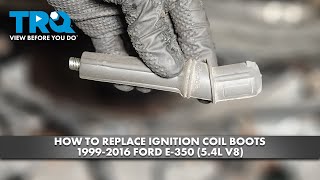
Est. part cost: $45-$75 for an OEM Motorcraft coil - Water or Oil in the Spark Plug Well 🟡 Medium Probability → Shop Spark Plug E-Series vans have well-documented issues with leaks from the cowl panel and windshield seals, allowing rainwater to pool around the coils. Additionally, aging valve cover gaskets can leak oil into the plug wells, which degrades the coil boot and causes a short. 🎬 See this guide on replacing ignition coil boots to prevent shorts.
How to confirm: When you remove the ignition coil for cylinder #2, visually inspect the well for any liquid (water, coolant, or oil). Use a light and mirror. A coolant leak may indicate a cracked intake manifold, another common issue on this engine.
Typical fix: Dry out the spark plug well completely using compressed air before installing a new coil. The source of the leak (cowl seal, valve cover gasket, etc.) must be repaired to prevent a repeat failure. A new cowl seal is often the fix.
Est. part cost: $20-$60 for a valve cover gasket set, or ~$20 for weatherstripping to reseal the cowl. - Damaged Wiring Harness or Connector ⚪ Low Probability The tight engine bay and high temperatures can make the wiring harness brittle. The small plastic locking tab on the coil connector is notoriously easy to break, leading to a loose connection that vibrates and causes an intermittent circuit fault. In some cases, a wiring harness may even melt on an ignition coil, causing the vehicle to lose power or stutter (NHTSA ODI #11270907).
How to confirm: Visually inspect the wiring going to the #2 coil for any signs of cracking, melting, or chafing. Wiggle the connector with the engine running to see if it induces a misfire. Check that the connector 'clicks' securely onto the coil and cannot be easily pulled off.
Typical fix: If the connector is broken, replace it with a new pigtail connector (e.g., Dorman 645-205), which requires cutting and splicing wires with butt connectors. If wires are damaged, they must be repaired.
Est. part cost: $10-$25 for a connector pigtail - Worn or Fouled Spark Plug ⚪ Low Probability → Shop Spark Plug While a bad plug usually throws a misfire code (P0302), a plug that is severely worn, damaged, or fouled with oil or carbon can create excessive resistance or a short to ground, stressing the ignition coil and contributing to a circuit fault code.
How to confirm: Remove the spark plug from cylinder #2 and inspect it. Look for a worn-down electrode, heavy carbon buildup, cracked porcelain, or signs of oil or coolant fouling.
Typical fix: Replace the spark plug. It's best practice to replace all 8 if they are near the end of their service life (typically 100,000 miles).
Est. part cost: $5-$10 per spark plug
Rare But Worth Checking
- Failed Powertrain Control Module (PCM): → Shop Engine Control Module (ECM) This is a last-resort diagnosis. The internal driver circuit in the PCM that fires the coil can fail. If you have confirmed the coil, plug, and wiring are all good (using a 'noid' light or multimeter to check the signal wire), but P0352 persists, the PCM may be the culprit. An owner reported that even after changing all spark plugs and the coil, the P0352 code remained, pointing toward a PCM issue (NHTSA ODI #10644521).
Diagnosis Steps
- Confirm P0352 is present using an OBD-II scanner. Note any other codes like P0302. 🎬 Watch: A breakdown of common causes and fixes for P0302 codes.
- Locate cylinder #2. On the 5.4L V8, it is the second cylinder from the front on the passenger side.
- Swap the ignition coil from cylinder #2 with the coil from cylinder #1 (the front-most on the passenger side). This is the easiest and most reliable test.
- Clear the trouble codes with the scanner.
- Start the engine and let it run for a few minutes. You may need to drive it to trigger the code. Re-scan for codes.
- If code P0351 appears, the ignition coil you moved is faulty and must be replaced.
- If code P0352 reappears, the problem is not the coil. Proceed with inspecting the wiring, connector, and spark plug well.
- Remove the coil again and thoroughly inspect the spark plug well for water, oil, or coolant. Use compressed air to blow it out completely.
- Inspect the electrical connector for cylinder #2. Check for a broken locking tab, corroded pins, or damaged wires. Wiggle the connector with the engine running to see if it affects the idle.
- If the wiring looks good and the well is dry, remove and inspect the spark plug for excessive wear or fouling.
- If all of the above check out, use a multimeter or noid light to test for a pulse signal from the PCM on the signal wire of the #2 coil connector. If no signal is present, a wiring or PCM fault is likely.
Parts You'll Likely Need
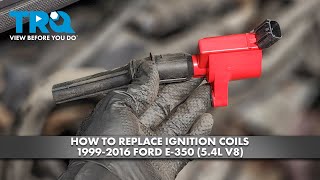
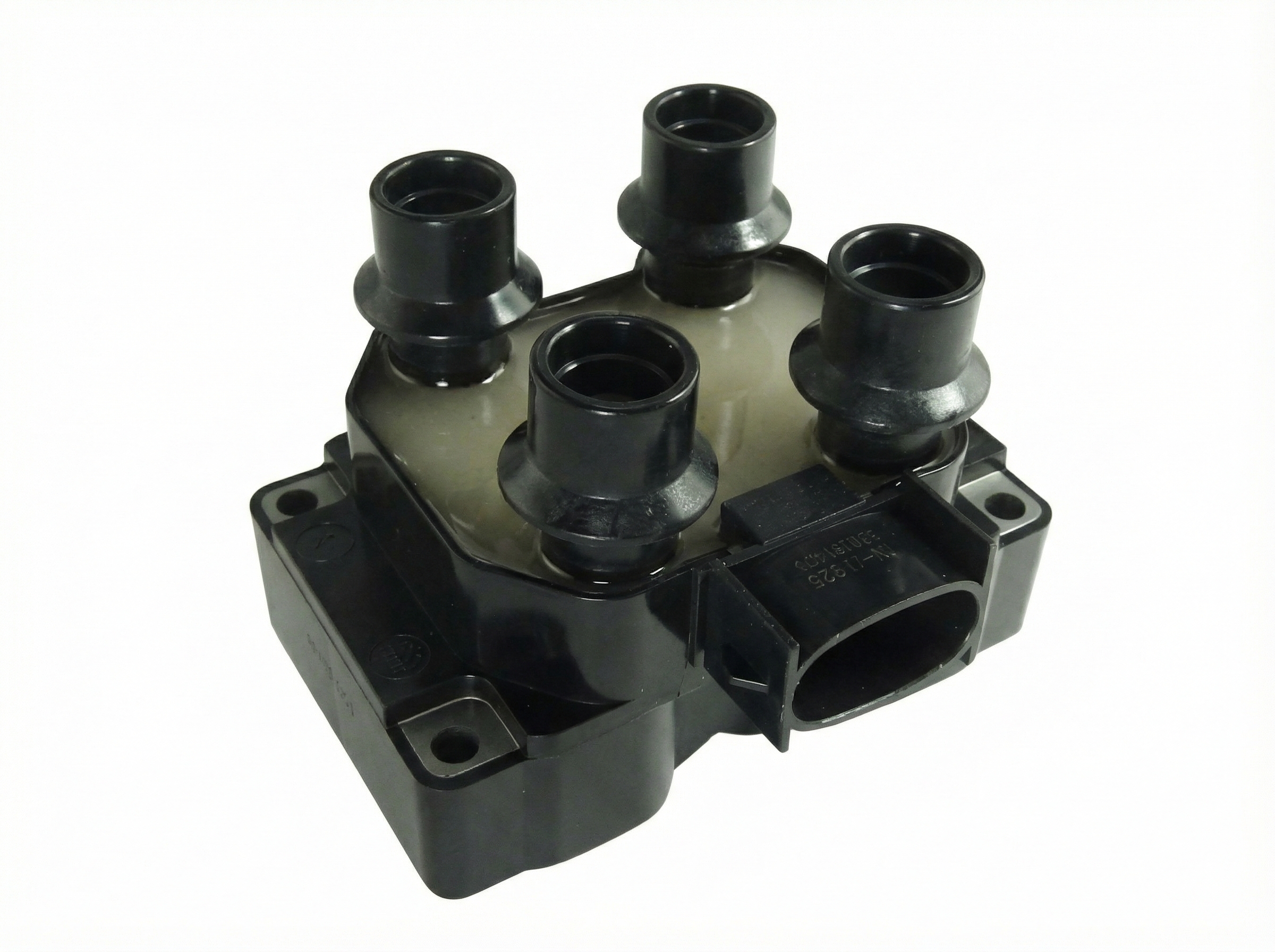
- Ignition Coil (Coil-On-Plug)
(OEM #DG508)— This is the most frequent point of failure for a P0352 code. The OEM Motorcraft part is strongly recommended for reliability over cheaper aftermarket options which have a high failure rate.
Trusted brands: Motorcraft, Denso (reportedly makes the OEM part)
OEM price range: $45-$75
Aftermarket price range: $15-$50 - Spark Plug
(OEM #SP-479 (Motorcraft))— It is best practice to replace the spark plug when replacing a coil, as a worn plug can contribute to coil failure. The Motorcraft SP-479 is the correct platinum plug for the 5.4L 2V engine. Be sure to torque to spec (28 ft-lbs recommended by many technicians to prevent blowout) to avoid the infamous spark plug ejection issue.
Trusted brands: Motorcraft, NGK, Autolite
OEM price range: $5-$10
Aftermarket price range: $3-$8 - Ignition Coil Connector Pigtail
(OEM #WPT-131 (Motorcraft), 645-205 (Dorman))— The plastic locking tab on the original connector often becomes brittle and breaks, causing a poor connection that can trigger a P0352 code. Replacing the connector is a common repair.
Trusted brands: Motorcraft, Dorman
OEM price range: $20-$30
Aftermarket price range: $10-$20
Related Codes That Often Appear With This One
- P0302 — P0302 means 'Cylinder 2 Misfire Detected'. P0352 is the specific electrical cause (the coil circuit failed), and P0302 is the effect (the cylinder misfired as a result). They almost always appear together.
- P0300 — This code for 'Random/Multiple Cylinder Misfire' can appear alongside P0352 if the misfire is severe enough to affect engine timing and cause other cylinders to misfire sympathetically. A mechanic's diagnostic report (NHTSA ODI #11681823) noted P0300 and P0352 appearing together, indicating multiple cylinder misfires.
- P1000 — This is not a fault code. It simply means the vehicle's readiness monitors have not completed since the codes were last cleared. It will go away on its own after a drive cycle.
Technical Service Bulletins (TSBs) & Recalls
- TSB 07-15-2: Spark Plug Thread Out of Warranty Repair Procedure for Aluminum Heads
- Bulletin #SSM 52455: Notes that E-Series vehicles equipped with a gas engine may exhibit an illuminated MIL with ignition system DTC P0352 set in the powertrain control module.
- Bulletin #TSB 24-2406: While for different models, this bulletin confirms that Ford vehicles may exhibit an illuminated MIL with ignition system DTC P0352 set in the PCM.
Platform-Specific Known Issues
- Water intrusion into spark plug wells from a leaking cowl or windshield seal is the number one cause of repeated coil failures on the E-Series.
- Access to the engine is difficult due to the 'doghouse' engine cover inside the van, requiring more time for repairs compared to an F-150.
- The wiring harness in the engine valley is susceptible to heat damage and rodent nesting, which can cause shorts or opens in the coil wiring.
Mechanic-Grade Diagnostic Values
- Ignition Coil Primary Resistance — expected: 0.4 to 2.0 ohms. Failure: A reading outside this range, or OL (Open Line), indicates a faulty coil. However, this test can sometimes pass on a thermally intermittent coil.
- Ignition Coil Secondary Resistance — expected: 6,100 to 11,500 ohms (6.1kΩ - 11.5kΩ). Failure: A reading outside this range points to a failure in the coil's secondary windings.
- Coil Connector Power Supply Pin Voltage — expected: 12V+ (Battery Voltage) with Key On, Engine Off (KOEO). Failure: No voltage or low voltage indicates a problem with the power supply wire (often Red w/ Light Green stripe) or a blown fuse.
- PCM Driver Signal (Frequency) — expected: 5 to 20 Hz with engine running (measured at the signal wire on the coil connector). Failure: A reading of 0 Hz indicates no trigger signal from the PCM. This points to a wiring issue or a failed PCM driver.
- Wiring Harness Continuity — expected: Less than 5.0 ohms. Failure: High resistance or an OL (Open Line) reading between the coil connector signal pin and the corresponding pin at the PCM connector indicates a broken wire.
Hidden / Shadow Codes Worth Checking
- Mode $06, Test ID $A2-$AB, Component ID $01-$08: Mode $06 data can access raw misfire counts for each cylinder before they are high enough to trigger a P030x code. This is useful for detecting intermittent or low-grade misfires on cylinder #2 that accompany the P0352 circuit code. (see via A professional scan tool or an advanced OBD-II app that supports Mode $06 data access.)
Scan Tool Commands That Help
- Ford IDS (Integrated Diagnostic System): Power Balance Test — This test graphically displays the power contribution of each cylinder, allowing a technician to instantly see that cylinder #2 is not contributing, confirming the location of the fault without swapping parts.
- Ford IDS (or equivalent high-end scan tool): Driver on Coil Ignition Test / Oscilloscope Function — This is the definitive test for a suspected PCM or wiring issue. The tool commands the coil to fire and displays the voltage and current waveforms. A good PCM driver signal with a bad coil waveform confirms a bad coil; a missing or erratic driver signal with a good coil confirms a wiring or PCM issue.
Wiring & Ground Locations
- Ignition Coil Connector — On top of the ignition coil for cylinder #2 (second from front, passenger side).. This 2-pin connector is the direct interface between the harness and the coil. One pin is 12V+ power (Key On), the other is the ground-side trigger from the PCM. A broken locking tab, corrosion from water, or spread terminals are common failure points.
- G104 — On the left side of the engine compartment.. This is a primary engine ground point. While not directly in the coil circuit, a poor engine ground can cause widespread electrical issues, creating noise and voltage drops that can affect ignition performance and potentially trigger fault codes.
- PCM Connector — Typically located on the passenger side firewall in the engine bay.. This is the termination point for the coil's signal wire. When diagnosing a persistent P0352 after a coil swap, a continuity test must be performed from the coil connector all the way to the correct pin on this connector to rule out a wiring break. Water intrusion at the PCM connector is also a known issue.
Real Owner Repair Stories
- Ford Truck Enthusiasts Forums (2001 Ford Expedition 5.4L) — Engine skip, P0352 code.
❌ Tried (didn't work) Initial diagnosis
✅ What actually fixed it Replaced the Coil-On-Plug (COP) for cylinder #2. The problem was resolved immediately. - Ford F150 Forum (1999 Ford Econoline E150 5.4L) — Running rough, bucking on acceleration, codes for misfire on cylinders 1, 2, & 3, which resolved to only P0352 after initial repairs.
❌ Tried (didn't work) Replaced all 8 spark plugs with Motorcraft, Replaced all 8 ignition coils with Accel (yellow aftermarket) brand, Replaced fuel filter, PCV valve, cleaned MAF and IAC
✅ What actually fixed it The user's P0352 code persisted even with a new aftermarket coil. Another user in the thread with similar symptoms on a different vehicle fixed their issue by replacing the upper intake manifold gaskets, suggesting a possible vacuum or coolant leak was the underlying cause of the misfire or coil failure. The original poster did not confirm their final fix, but the experience highlights the potential for faulty new aftermarket parts. - Ford Truck Enthusiasts Forums (Ford Escape (engine not specified, but P035x diagnosis is universal)) — Intermittent misfire, P0352 code.
❌ Tried (didn't work) Replacing the ignition coil for cylinder #2, Taking it to a mechanic who replaced the same coil again, claiming the new part was faulty
✅ What actually fixed it The final diagnosis in the thread pointed towards an open circuit in the wiring harness. One user suggested flexing the harness with the engine running to try and duplicate the fault, noting that a wire can be broken inside the insulation and only lose connection when the engine moves.
OEM Part Supersession History
F7TZ12029AB / F7TZ12029BA→DG508 (Motorcraft), 3W7Z12029AA (Ford)— Part number consolidation and design updates over the vehicle's long production run.
Heads up: Ensure the coil has the correct black/dark gray boot for the 2V engine's spark plug wells. The DG511 coil, for the later 5.4L 3V engine, has a brown boot and different physical dimensions and will not fit or seal correctly.
Model Year Variations Within This Range
- 1997-1998 vs 1999-2014: In 1999, Ford introduced the 'Power Improved' (PI) heads for the 5.4L 2V engine, which increased horsepower. While the DG508 ignition coil works for all years, the PI engines have different intake manifolds and other subtle changes.
- 1997-~2003: Early 2V engines had cylinder heads with fewer spark plug threads, making them susceptible to 'spark plug blowout'. A Ford TSB (07-21-2) addresses stripped threads. Technicians often recommend a higher torque spec (28 ft-lbs) on these plugs than factory to prevent this, but care must be taken not to overtighten.
Diagnostic Flowchart
Other Known Issues on This Vehicle
Issues unrelated to this code that are worth knowing about as an owner of this generation:
- Spark Plug Ejection (Blowout) 🔴 High → Shop Spark Plug — Very common on 2V engines (pre-2004) due to cylinder heads having only a few threads for the spark plugs. Can happen at any mileage, often without warning. (Ref: TSB 07-15-2 details an authorized out-of-warranty thread repair procedure.)
- Cracked Plastic Intake Manifold 🟠 Medium → Shop Engine Intake Manifold — Common on models with the all-plastic intake. The front coolant crossover section is prone to cracking from heat cycles, causing coolant leaks that can drip into spark plug wells and cause misfires.
- Broken Exhaust Manifold Studs 🔴 High — Extremely common. The factory steel studs corrode and break, causing an exhaust leak typically heard as a ticking noise that may go away as the engine warms up. The rear-most studs are often the first to fail.
- A/C Defaults to Defrost Vents 🟡 Low — A very frequent issue caused by a loss of vacuum. The most common culprits are a cracked vacuum reservoir ball or a failed vacuum check valve located in the engine bay.
Used vs. New Parts: Buying Guide for This Vehicle
When a used part is the smart pick: For this repair, buying used parts is generally not recommended, with two exceptions: 1) A complete engine wiring harness from a low-mileage donor vehicle if a specific break in the original harness cannot be located. 2) A used PCM if it has been professionally tested and comes with a warranty, as a last resort.
Donor-vehicle mileage cap: roughly under 100000 miles for the part to have meaningful remaining life.
What to inspect on the donor part:
- For a wiring harness, inspect for any signs of brittleness, cracking, or previous repairs (splices).
- Ensure the donor vehicle was not involved in a fire or flood.
- For a PCM, match the part number and calibration code exactly. Check for any signs of water intrusion or corrosion on the case and connectors.
OEM-only on this vehicle (don't cheap out):
- Ignition Coil (Coil-On-Plug)
Aftermarket brands forum-validated for this vehicle:
- Denso (often the original equipment manufacturer for Ford)
- Standard Motor Products (SMP)
Brands owners have reported issues with on this vehicle:
- Unbranded, low-cost coil sets from online marketplaces.
- Visually distinct 'performance' coils (e.g., yellow Accel coils) have been reported on forums to be unreliable for daily driving applications.
Real Owner Stories
Aggregated from forums and TSBs cited above. Mileages and costs reflect what owners reported in those sources.
1997 Ford E-350 5.4L
Symptoms: Owner reported a misfire trouble on the 5.4L engine.
What fixed it: The context identifies swapping coils to confirm failure; for this platform, fixing the source of water intrusion like the cowl seal is often required to prevent repeat failure.
Source hint: https://www.ford-trucks.com/forums/640758-1997-e-350-5-4-misfire-trouble.html
Ford F-150 5.4L 2V
Symptoms: P0352 misfire code.
What fixed it: Replacing the ignition coil; the owner noted that while the code is common, engine access is easier than the E-Series.
Source hint: https://www.f150forum.com/f6/p0352-misfire-339796/
Ford E-Series 5.4L Triton V8 — ~100000 miles
Symptoms: Engine sputtering and stumbling; felt like it was running on 7 cylinders.
What fixed it: Drying out the spark plug well with compressed air and replacing the coil after finding water intrusion from a leaking cowl.
Source hint: vehicle_specific_issues
Related OBD-II Codes
Frequently Asked Questions
Is there a specific TSB for the spark plug issues on my 5.4L Triton V8?
Why does my E-Series van keep failing the #2 ignition coil after it rains?
I'm seeing P0352; could this be related to the coolant leak near the front of my engine?
Is the repair for P0352 more difficult on an E-Series van than an F-150?
The plastic clip on my #2 coil connector is broken. Do I need to replace the whole harness?
Could a ticking noise from my exhaust be related to my misfire code?
Helpful Videos
We Have This Part in Stock

The information in this article is provided for general reference and educational purposes only. Vehicle specifications, procedures, and part compatibility can vary by production date, trim level, and region. Always consult your vehicle's factory service manual and verify part numbers before purchasing or performing repairs. Safety-critical components such as airbags, seat belts, and braking systems should be installed by a qualified professional.
- Ford E-Series:
- 🧭 Diagnostic Flowchart
- 🎬 Helpful Videos
- 🛍️ Shop This Part
- What's Unique About the 1997-2014 Ford E-Series
- Symptoms You May Notice
- Most Likely Causes
- Rare But Worth Checking
- Diagnosis Steps
- Parts You'll Likely Need
- Related Codes That Often Appear With This One
- Technical Service Bulletins (TSBs) & Recalls
- Platform-Specific Known Issues
- Mechanic-Grade Diagnostic Values
- Hidden / Shadow Codes Worth Checking
- Scan Tool Commands That Help
- Wiring & Ground Locations
- Real Owner Repair Stories
- OEM Part Supersession History
- Model Year Variations Within This Range
- Other Known Issues on This Vehicle
- Used vs. New Parts: Buying Guide for This Vehicle
- Real Owner Stories
- 1997 Ford E-350 5.4L
- Ford F-150 5.4L 2V
- Ford E-Series 5.4L Triton V8 — ~100000 miles
- Related OBD-II Codes
- Frequently Asked Questions
- 🎟️ Get 5% Off