

P0352 on 2007-2014 Ford Edge 3.5L: Ignition Coil 'B' Failure Causes and Fixes
P0352 on a Ford Edge means the ignition coil for cylinder #2 has failed or has a circuit problem. Cylinder #2 is on the difficult-to-access rear bank, requiring intake manifold removal. A bad coil can damage the engine computer (PCM), so it's a critical repair. Expect to replace the coil, spark plug, and possibly the PCM, and it is highly recommended to replace all rear coils and all six plugs at the same time.
- P0352 on a 2007-2014 Edge indicates a problem with the ignition system for cylinder #2.
- Cylinder #2 is on the rear bank against the firewall, making this a labor-intensive repair that requires removing the intake manifold.
- A failed ignition coil can damage the engine computer (PCM). If a new coil doesn't fix the problem, the PCM is the next likely culprit.
- Due to the difficult access, it is strongly recommended to replace all three rear coils, all six spark plugs, and the intake gaskets at the same time.
- If the PCM is replaced, all six ignition coils and spark plugs must also be replaced to prevent immediate damage to the new computer.
What's Unique About the 2007-2014 Ford Edge
On the Ford Edge with the transverse 3.5L V6, cylinder #2 is located on the rear bank of cylinders, tucked against the firewall. This makes access extremely difficult, as the upper intake manifold must be removed to reach the coil and spark plug. A significant and well-documented issue with this platform is that a failing ignition coil can short out and send a voltage spike back to the Powertrain Control Module (PCM), damaging the internal driver circuit for that cylinder. This can turn a simple coil replacement into a much more expensive PCM replacement. Ford acknowledged this issue with TSB 13-4-17 for 2007-2008 models, which recommends replacing the PCM and all six coils if any are found to be physically damaged (e.g., cracked).
Generation note: This guide covers the first generation Ford Edge (2007-2010) and its facelift (2011-2014). The 3.5L Duratec V6 engine and its ignition system are fundamentally the same across this entire period, so the causes and fixes are consistent. The core issue of coil failure leading to PCM damage is most prominently documented for the 2007-2008 models per TSB 13-4-17, but the underlying design is shared across the generation.
Symptoms You May Notice
- Check Engine Light is on or flashing
- Rough, shaking, or vibrating idle
- Engine misfiring and sputtering, especially under load
- Noticeable loss of engine power and poor acceleration
- Reduced fuel economy
- Difficulty starting the engine
- Engine stalling
- Smell of unburnt gasoline from the exhaust
- Replacing only the single ignition coil on cylinder #2 without checking the PCM. If the PCM driver is bad, the new coil will not fire and the code will persist, wasting the time spent removing the intake manifold.
- Replacing the PCM without replacing all six ignition coils. A faulty coil that is not replaced can immediately damage the new PCM.
- Assuming the problem is only a misfire (P0302) and not a circuit fault (P0352). P0352 indicates an electrical problem that must be addressed, not just a tune-up item.
Most Likely Causes
- Failed Ignition Coil on Cylinder #2 🔴 High Probability → Shop Ignition Coil Heat and vibration lead to eventual failure. Aftermarket coils have been noted by owners to have a higher failure rate. A shorted coil can also be a symptom of a deeper PCM issue, or the cause of future PCM failure.
How to confirm: Swap the ignition coil from cylinder #2 with a coil from an easily accessible cylinder on the front bank (e.g., cylinder #5). Clear the codes. If the code changes to P0355, the coil is confirmed bad. Note: This requires removing the intake manifold.
Typical fix: Replace the ignition coil for cylinder #2. Due to the labor involved, it is highly recommended to replace all three rear coils and all six spark plugs at the same time.
Est. part cost: $30-$80 per coil - Damaged Powertrain Control Module (PCM) 🟡 Medium Probability → Shop Engine Control Module (ECM) A known weakness on this platform is that a short-circuiting ignition coil can destroy the driver circuit inside the PCM. Ford issued TSB 13-4-17 (superseding others like 12-8-17) for 2007-2008 models for this exact issue, often requiring replacement of the PCM, all six coils, and all six plugs if physical damage to a coil is found. This issue is common enough that PCM repair services specifically list P035x codes as a primary symptom for this vehicle family.
How to confirm: If a new, known-good coil and spark plug are installed on cylinder #2 and the P0352 code immediately returns, the PCM driver is likely faulty. A mechanic can confirm this by checking for a pulsing ground signal on the coil's control wire with an oscilloscope or a noid light. The absence of this signal with good wiring points to a bad PCM.
Typical fix: Replace or repair the PCM. The new/repaired PCM will need to be programmed to the vehicle by a dealer or a qualified shop. It is critical to also replace all six ignition coils and spark plugs at the same time to prevent the new PCM from being damaged by a lingering bad coil.
Est. part cost: $300-$800 for a remanufactured PCM - Failed or Worn Spark Plug 🟡 Medium Probability → Shop Spark Plug Spark plugs are a normal wear item. A worn plug with a large gap can strain the ignition coil, causing it to overheat and fail, which can then lead to the cascade failure damaging the PCM.
How to confirm: After removing the intake manifold to access cylinder #2, inspect the spark plug for wear, fouling, or damage. If the plug is old, has a wide gap, or looks worn, it's suspect.
Typical fix: Replace the spark plug in cylinder #2. It is best practice to replace all six spark plugs at the same time, especially if their age is unknown and the intake manifold is already removed.
Est. part cost: $8-$25 per plug - Wiring Harness or Connector Issue ⚪ Low Probability
How to confirm: Visually inspect the wiring connector for cylinder #2's coil for damage, corrosion, or loose pins. Use a multimeter to check for 12V power at the connector with the key on. Check the signal wire for the pulsing ground signal from the PCM during cranking. A broken wire inside the insulation near the connector has been reported by owners.
Typical fix: Repair the damaged section of the wiring harness or replace the connector pigtail.
Est. part cost: $15-$40 for a connector pigtail
Diagnosis Steps
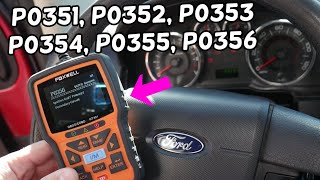
- Confirm code P0352 (and likely P0302) with an OBD-II scanner.
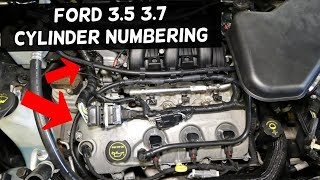
- Identify cylinder locations. On the 3.5L transverse engine, the rear bank (against the firewall) is cylinders 1-2-3 from passenger to driver side. The front bank (by the radiator) is 4-5-6 from passenger to driver side. Cylinder #2 is the middle cylinder on the rear bank.
- Due to access, the upper intake manifold must be removed to service the rear bank. This is a labor-intensive step.
- Once the manifold is off, swap the ignition coil from cylinder #2 with the coil from cylinder #5 (middle, front bank).
- Loosely reinstall the intake manifold for testing. Clear the codes, start the engine, and let it run until the check engine light returns.
- Re-scan for codes. If the code has moved to P0355 ('Ignition Coil E'), the ignition coil is faulty.
- If the code P0352 returns, the original coil is likely good. The problem is the spark plug, wiring, or the PCM.
- Inspect and replace the spark plug in cylinder #2. Given the labor, replace all six plugs using properly gapped Iridium plugs.
- If the code still persists, inspect the wiring and connector for cylinder #2. Check for 12V power on the violet wire at the connector with the key on.
- If wiring and the plug are good, the PCM is the most likely culprit. This should be confirmed by a professional with an oscilloscope before replacing the module. A DIY method is to use a noid light on the control wire pin of the connector while cranking; if it doesn't flash, the PCM driver is not sending a signal.
Parts You'll Likely Need
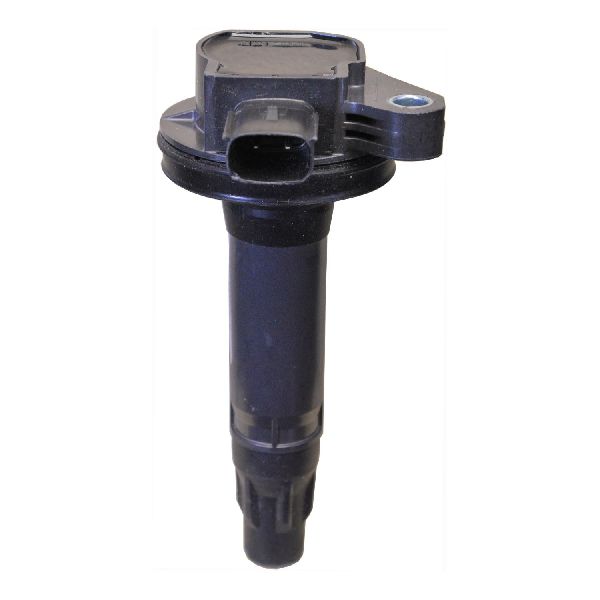
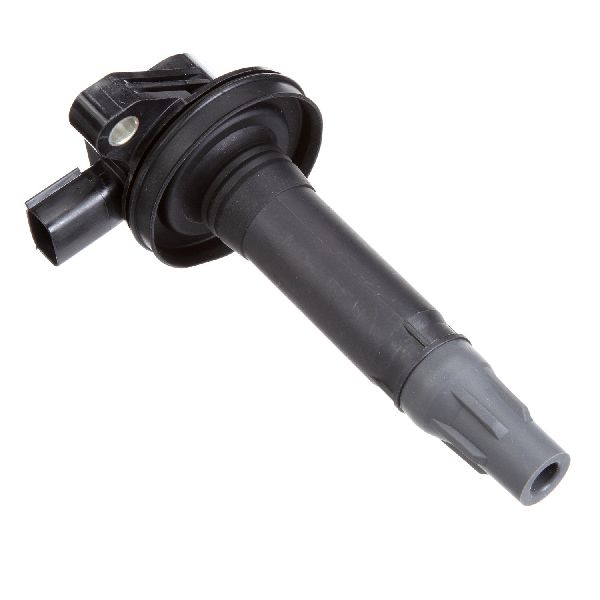
- Ignition Coil
(OEM #7T4Z-12029-E / DG520 (Motorcraft))— This is the most common failure point for code P0352. A bad coil is the primary cause of the circuit malfunction.
Trusted brands: Motorcraft, Denso, NGK, Standard Motor Products (UF553)
OEM price range: $60-$90
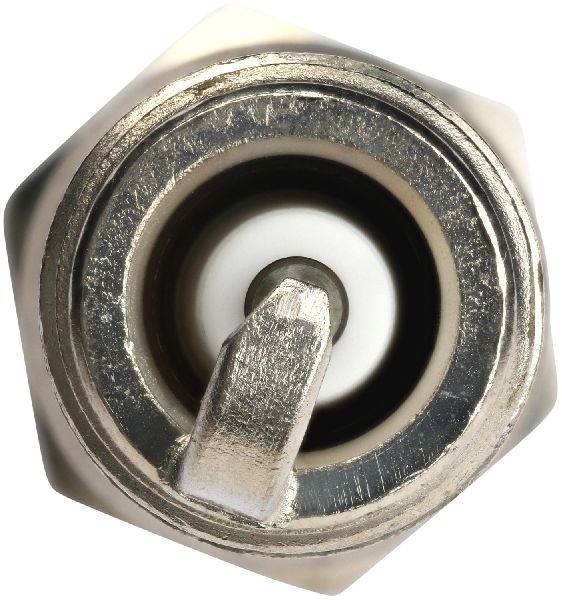
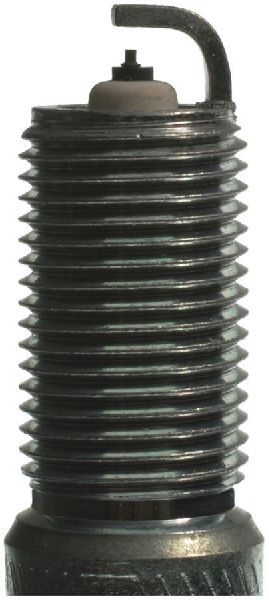
Aftermarket price range: $30-$60 - Spark Plugs
(OEM #SP535 (Motorcraft Iridium))— A worn spark plug can cause a coil to fail, and they are a routine maintenance item. They should always be replaced when doing a coil job of this magnitude.
Trusted brands: Motorcraft, NGK, Autolite
OEM price range: $10-$15 per plug
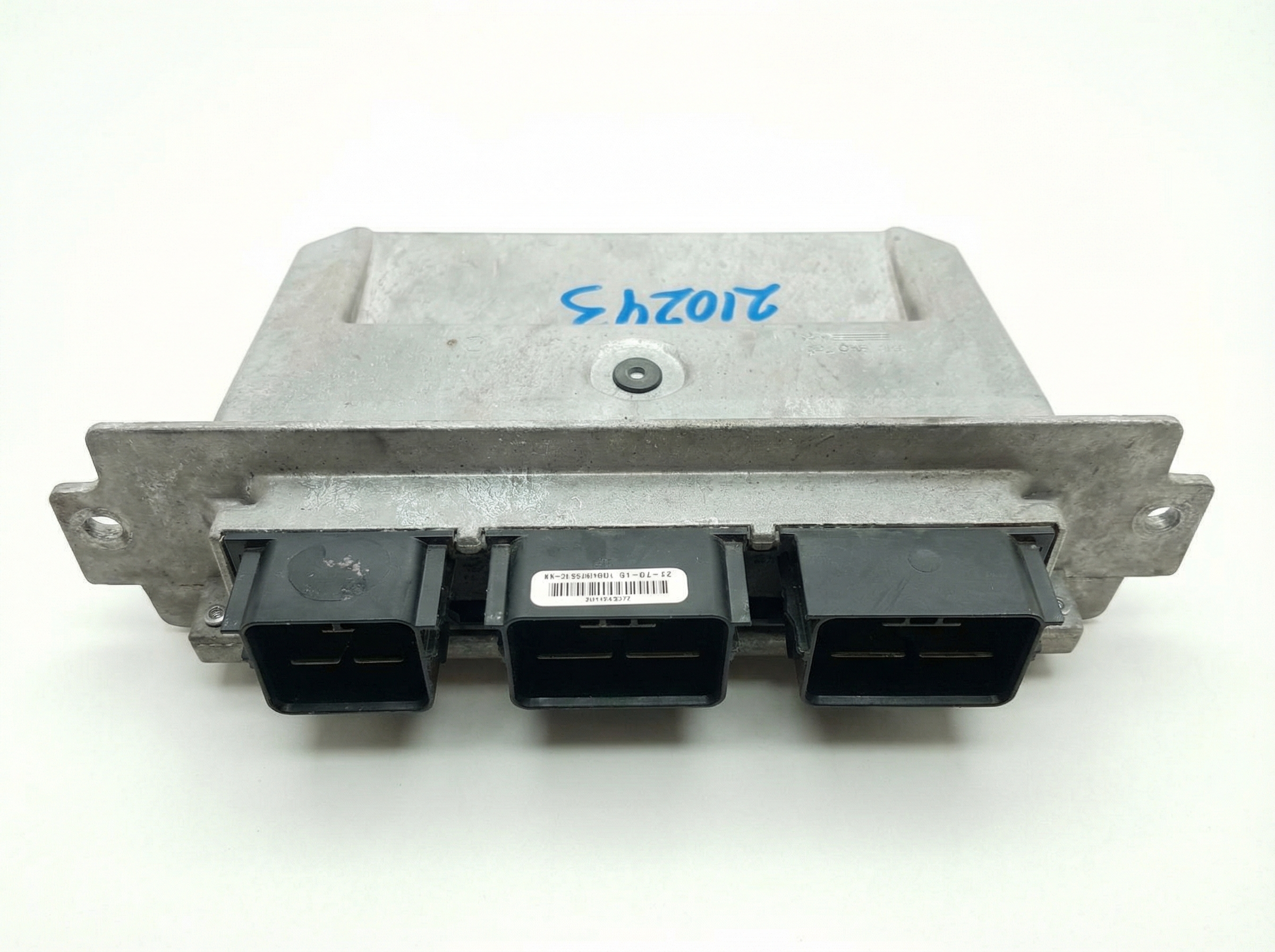
Aftermarket price range: $8-$12 per plug - Powertrain Control Module (PCM)
(OEM #Varies by VIN, requires catalog lookup)— A known weak point. A shorted coil often damages the PCM's driver circuit, making PCM replacement necessary to fix the code after a new coil is installed.
Trusted brands: Motorcraft (new or reman), Cardone (reman), FS1 (reman)
OEM price range: $600-$900
Aftermarket price range: $300-$500 (remanufactured) - Upper Intake Manifold Gaskets
(OEM #Fel-Pro MS 96684 is a common aftermarket set)— These must be replaced whenever the intake manifold is removed to prevent vacuum leaks.
Trusted brands: Fel-Pro, Mahle, Motorcraft
OEM price range: $30-$50
Aftermarket price range: $20-$40
Related Codes That Often Appear With This One
- P0302 — P0302 means 'Cylinder 2 Misfire Detected'. Since P0352 indicates a fault in the ignition circuit for cylinder 2, a misfire is the direct result. These two codes almost always appear together.
- P0300 — P0300 indicates 'Random/Multiple Cylinder Misfire'. This can occur if the failing coil or PCM issue causes instability across the ignition system.
Technical Service Bulletins (TSBs) & Recalls
- Covers 2007-2008 Edge/MKX and other models with 3.0L/3.5L engines for P035x codes. Recommends inspecting coils for damage and, if found, replacing the PCM, all six coils, and all six spark plugs.
- Reportedly supersedes TSB 13-4-17, revising the procedure to only replace the affected coil and plug, not the PCM and all six coils unless further diagnosis points to a wider failure.
Platform-Specific Known Issues
- A shorted ignition coil frequently damages the Powertrain Control Module (PCM), requiring replacement of both components to resolve the issue permanently.
Mechanic-Grade Diagnostic Values
- Ignition Coil Primary Resistance — expected: 0.5 to 0.7 ohms. Failure: A reading of OL (infinite resistance) for an open circuit or near zero for a shorted circuit.
- Ignition Coil Secondary Resistance — expected: 5,500 to 11,500 ohms (5.5kΩ to 11.5kΩ). Failure: A reading significantly outside this range indicates a failure in the secondary windings.
- Voltage at Coil Connector Power Wire (Key On, Engine Off) — expected: Approximately 12V (Battery Voltage). Failure: Low or no voltage points to a wiring or fuse issue upstream of the coil.
- Coil Control Signal (Cranking) — expected: Pulsing ground signal visible on an oscilloscope or flashing noid light.. Failure: A flat line or constant ground signal indicates a bad PCM driver.
Scan Tool Commands That Help
- Ford IDS (Integrated Diagnostic System): Power Balance Test — This test graphically displays the power contribution of each cylinder in real-time. For a P0352, the graph for cylinder #2 would show a significant drop or no contribution, confirming the lack of combustion. It's used to verify the misfire is isolated to cylinder #2 before tearing down the intake manifold.
Wiring & Ground Locations
- Ignition Coil Connector (Cylinder #2) — On top of the ignition coil for the middle cylinder on the rear bank, under the upper intake manifold.. This is the primary test point for power, ground, and the PCM control signal. The power wire is typically a shared color across coils (e.g., Red/Green or Violet), while the control wire will have a unique color for each cylinder.
- G104 — Left front of the engine compartment, on the chassis.. This is a primary engine and chassis ground point. A corroded or loose G104 can cause numerous, difficult-to-diagnose electrical issues, including erratic ignition system behavior.
- G102 — Left side of the engine compartment, near the rear.. An additional critical ground point for engine components. Ensuring this ground is clean and tight is a key step when diagnosing any electrical fault.
- PCM Connector C175B — This is one of the main connectors on the Powertrain Control Module, located in the engine bay, typically on the right (passenger) side near the firewall.. This connector contains the pin for the ignition coil #2 control wire. Advanced diagnostics involve back-probing this pin to confirm if the PCM is sending the signal, definitively isolating the fault to the PCM or the wiring.
Real Owner Repair Stories
- Ford Edge Forum user (2008 Ford Edge, 74k miles) — Running rough, trouble going uphill, Check Engine Light on with codes P0302, P0351, P0352, and P0354.
❌ Tried (didn't work) The owner took it to a Ford dealer with a copy of TSB 13-4-17. The dealer identified a bad coil on cylinder 5 but initially wanted to charge the owner for coil and plug replacement.
✅ What actually fixed it The Ford dealer ultimately agreed to replace the Powertrain Control Module (PCM) under the emissions warranty. The user noted that according to the dealer, a bad coil damages the PCM, which was the root of the multiple P035x codes. - NHTSA ODI #10644521 — An owner reported that after the check engine light came on with code P0352, they replaced all spark plugs and the cylinder 2 coil, but this did not resolve the issue, suggesting the common PCM failure.
- NHTSA ODI #10713413 — A driver experienced a sudden loss of power and violent shaking accompanied by a check engine light for codes including P0351, P0352, and P0354, requiring a tow to a mechanic for diagnostic pinpoint testing.
OEM Part Supersession History
SP520A→SP589— Updated design or material for the spark plug.
Heads up: SP589 is the newer recommended plug when purchasing a Motorcraft kit like DG520/SP520A.cyfs12y1, sp535→SP-535-X— Standard part number consolidation and updates for Motorcraft spark plugs.
Heads up: SP-535-X is the current part number for the recommended Iridium plug.7T4Z-12029-E→DG520 (Service Number)— DG520 is the common service part number for the coil specified by the original engineering number.
Model Year Variations Within This Range
- 2007-2010: The 3.5L V6 engine produced 265 horsepower and had variable timing on the intake camshafts only.
- 2011-2014: The 3.5L V6 was updated with Twin Independent Variable Camshaft Timing (Ti-VCT), allowing timing changes on both intake and exhaust cams. This, along with other tuning, increased output to 285 horsepower. The fundamental ignition system design and P0352 failure mode remained the same.
- 2007-2008: These model years are specifically called out in Ford TSB 13-4-17 regarding P035x codes leading to PCM failure, suggesting the issue was most prevalent in these early models.
Diagnostic Flowchart
Other Known Issues on This Vehicle
Issues unrelated to this code that are worth knowing about as an owner of this generation:
- Internal Water Pump Failure 🔴 High — A widely reported issue. Failure can occur without warning, often between 80,000 and 120,000 miles. Because the pump is internal and chain-driven, its failure allows coolant to mix directly with engine oil, leading to catastrophic engine damage if not caught immediately.
- Power Transfer Unit (PTU) Failure (AWD Models) 🔴 High — Common on AWD models. The PTU is located near the hot exhaust, causing its small fluid capacity (approx. 12 oz) to break down prematurely. Ford calls it a 'lifetime' fluid, but it often fails, leading to grinding noises, a burning smell, and eventual loss of AWD or driveline lockup. Regular fluid changes (every 30k miles) are recommended for prevention.
- Faulty Brake Booster 🟠 Medium — Common across 2007-2015 models. The internal diaphragm can tear, causing a hissing noise when the brake pedal is pressed, a hard or spongy pedal feel, and reduced braking assistance. (Ref: Customer Satisfaction Program 13N02 extended warranty coverage to 10 years/150,000 miles for this repair.)
- Electronic Throttle Body (ETB) Failure 🟠 Medium — A known high-failure part. Internal electronic faults cause the vehicle to suddenly lose power and enter 'limp mode,' which is a major safety concern. Cleaning may provide a temporary fix, but replacement is often required. (Ref: TSB 10-21-6 and Customer Satisfaction Program 13N03 addressed this for some models/years, but have since expired.)
- Transmission Problems (Early Models) 🔴 High — Particularly noted in 2007-2008 models. Issues include sudden shutdowns, hard shifting, and premature failure, sometimes occurring around 80,000 miles.
Used vs. New Parts: Buying Guide for This Vehicle
When a used part is the smart pick: For this specific repair, using used parts is generally not recommended. The ignition coils and PCM are known failure points. A used coil has an unknown lifespan and could fail shortly after the labor-intensive installation. A used PCM from a junkyard may have the same internal weakness or could have been damaged by the same coil failure issue in the donor car.
What to inspect on the donor part:
- Not applicable, as used electronic components for this repair are highly discouraged.
OEM-only on this vehicle (don't cheap out):
- Ignition Coils: Forum and mechanic consensus strongly recommends using only OEM Motorcraft (DG520) coils. Aftermarket coils, even from reputable-sounding brands, are widely reported to have a very high premature failure rate for this application, often causing a repeat of the entire repair process.
- Powertrain Control Module (PCM): While remanufactured units from reputable sources (like Cardone or FS1) are a viable option, a used PCM from a junkyard is a major gamble. It must be professionally programmed to the vehicle's VIN and key information, and there is no guarantee it isn't already damaged.
Aftermarket brands forum-validated for this vehicle:
- Upper Intake Manifold Gaskets: Fel-Pro is a widely trusted and reliable brand for gaskets and seals needed for this job.
Brands owners have reported issues with on this vehicle:
- Ignition Coils: General consensus is to avoid all non-Motorcraft ignition coils. Brands mentioned in forums with reported problems include Accel, MSD, and various unbranded 'eBay' or 'Amazon' coils.
Real Owner Stories
Aggregated from forums and TSBs cited above. Mileages and costs reflect what owners reported in those sources.
2013 Ford Edge 3.5L V6
Symptoms: P0352 code appearing on a 2013 model.
What fixed it: The owner investigated the P0352 code specifically for the 2013 model year to determine if it followed the same PCM failure pattern as earlier models.
Source hint: https://www.fordedgeforum.com/topic/29965-13-ford-edge-p0352/
2007-2008 Ford Edge 3.5L V6
Symptoms: Physical damage found on the ignition coils and P035x codes present.
What fixed it: Replacement of the PCM, all six ignition coils, and all six spark plugs as per TSB 13-4-17.
Source hint: TSB 13-4-17
2007-2014 Ford Edge 3.5L V6
Symptoms: Cracked coil causing issues and misfires in other cylinders.
What fixed it: Identification of a cracked coil as the root cause of interference with other cylinders.
Source hint: https://www.fordedgeforum.com/topic/31070-cracked-coil-causing-issues-in-other-cylinders/
Related OBD-II Codes
Frequently Asked Questions
Where is cylinder #2 located on my 3.5L Ford Edge?
Does TSB 13-4-17 apply to my 2007-2008 Ford Edge?
Can I just replace the one bad coil on my 2013 Edge according to Ford's latest guidelines?
Why do I have to remove the intake manifold just to test the P0352 code?
Is it true that a bad ignition coil can ruin my car's computer (PCM)?
What kind of spark plugs should I use for the replacement?
Helpful Videos
Used OEM Parts in Stock
New Aftermarket Parts Available


The information in this article is provided for general reference and educational purposes only. Vehicle specifications, procedures, and part compatibility can vary by production date, trim level, and region. Always consult your vehicle's factory service manual and verify part numbers before purchasing or performing repairs. Safety-critical components such as airbags, seat belts, and braking systems should be installed by a qualified professional.
- Ford Edge:
- 🧭 Diagnostic Flowchart
- 🎬 Helpful Videos
- 🛍️ Shop This Part
- What's Unique About the 2007-2014 Ford Edge
- Symptoms You May Notice
- Most Likely Causes
- Diagnosis Steps
- Parts You'll Likely Need
- Related Codes That Often Appear With This One
- Technical Service Bulletins (TSBs) & Recalls
- Platform-Specific Known Issues
- Mechanic-Grade Diagnostic Values
- Scan Tool Commands That Help
- Wiring & Ground Locations
- Real Owner Repair Stories
- OEM Part Supersession History
- Model Year Variations Within This Range
- Other Known Issues on This Vehicle
- Used vs. New Parts: Buying Guide for This Vehicle
- Real Owner Stories
- 2013 Ford Edge 3.5L V6
- 2007-2008 Ford Edge 3.5L V6
- 2007-2014 Ford Edge 3.5L V6
- Related OBD-II Codes
- Frequently Asked Questions
- 🎟️ Get 5% Off