

P0352 on 2002-2005 Ford Explorer 4.6L: Ignition Coil 'B' Circuit Failure Causes and Fixes
P0352 on a 2002-2005 Ford Explorer 4.6L V8 almost always means the ignition coil on cylinder #2 has failed. This is a common issue due to age and heat. A new Motorcraft coil costs about $40-$75, and replacing it is a simple DIY job taking less than 30 minutes.
- P0352 on your Explorer almost certainly points to a bad ignition coil on cylinder #2.
- Cylinder #2 is the second one back from the front on the passenger side of the engine.
- Confirm the bad coil by swapping it with another cylinder (like #1) and seeing if the code follows the coil (changes to P0351).
- This is a very easy and inexpensive DIY repair. Always replace the spark plug at the same time as the coil and use the recommended higher torque spec.
- If the Check Engine Light is flashing, avoid driving to prevent costly damage to your catalytic converter.
- Using genuine Motorcraft (DG508) or other high-quality brand coils is strongly recommended over cheap aftermarket parts to avoid repeat failures.
What's Unique About the 2002-2005 Ford Explorer
The 4.6L 2-Valve Modular V8 in this generation of Explorer uses a Coil-On-Plug (COP) ignition system. These individual coils are a very common failure point due to constant exposure to high engine temperatures, which degrades their internal windings and plastic housings over time. While the code is generic, the cause on these specific trucks is almost always the coil itself, making for a straightforward diagnosis. Many owners on forums strongly recommend using genuine Motorcraft coils over cheaper aftermarket alternatives, which have a reputation for premature failure.
Symptoms You May Notice
- Engine misfire (stumbling, shaking, or hesitation, especially under load)
- Rough idle
- Flashing or solid Check Engine Light
- Loss of power and poor acceleration
- Reduced fuel economy
- Smell of unburnt gasoline from the exhaust
- Fuel Injector Failure: While a bad injector can cause a misfire (P0302), it will not cause a P0352 code, which is specific to the ignition coil's electrical circuit.
Most Likely Causes
- Failed Ignition Coil (Coil-On-Plug) 🔴 High Probability → Shop Ignition Coil The Coil-On-Plug units on Ford's modular engines are a well-documented, common failure item due to heat cycles, age, and moisture intrusion. The plastic can become brittle and crack, allowing moisture to compromise the internal electronics.
How to confirm: The easiest way to confirm is to swap the ignition coil from cylinder #2 with another cylinder (e.g., cylinder #1). Clear the codes and drive the vehicle. If the code changes to P0351 (for cylinder #1), the coil is faulty. Also inspect the coil's plastic housing for cracks and the rubber boot for tears or carbon tracking.
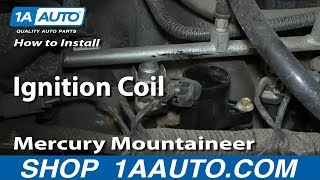
Typical fix: Replace the faulty ignition coil. It is held on by a single 7mm bolt. 🎬 See this step-by-step coil replacement walkthrough
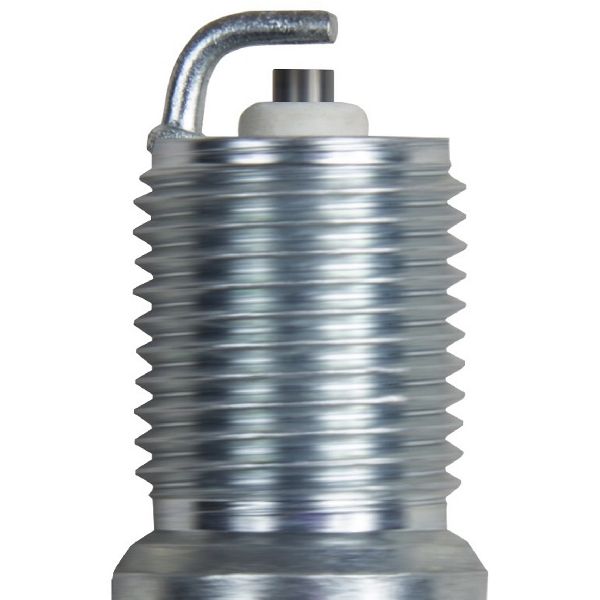
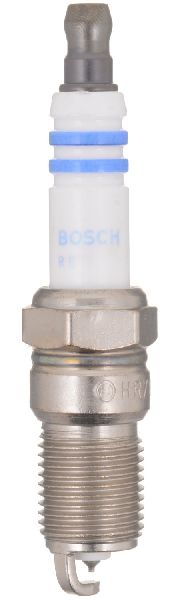
Est. part cost: $40 - $75 for a single OEM-quality coil. - Worn or Fouled Spark Plug 🟡 Medium Probability → Shop Spark Plug The 4.6L 2V engine heads have a known issue with having few threads for the spark plugs, which can lead to plugs backing out if not torqued correctly. An improperly torqued or worn plug can increase resistance, overworking the coil and causing it to fail.
How to confirm: When the ignition coil is removed, inspect the spark plug. Look for heavy carbon buildup, oil fouling, a worn electrode, or a cracked porcelain insulator. A worn plug can overwork the coil, causing it to fail.
Typical fix: Replace the spark plug. It's highly recommended to replace the spark plug when replacing the coil. Torque the new plug to the revised specification of 28 ft-lbs (dry) to prevent it from backing out. 🎬 Watch: How to replace the spark plugs
Est. part cost: $5 - $15 - Damaged Electrical Connector or Wiring ⚪ Low Probability The wiring harness in the engine bay is exposed to heat and vibration, which can make the plastic connector brittle and the wires fragile over time. The locking tab on the connector is particularly prone to breaking.
How to confirm: Visually inspect the wiring harness and connector going to the cylinder #2 ignition coil. Look for any signs of cracking, melting, corrosion on the pins, or broken locking tabs. Use a multimeter to check for 12V power on one wire and a pulsing ground signal from the PCM on the other wire with the engine cranking.
Typical fix: Repair the damaged section of wiring or replace the connector pigtail.
Est. part cost: $10 - $25 for a new pigtail connector.
Rare But Worth Checking
- Faulty Powertrain Control Module (PCM): → Shop Engine Control Module (ECM) This is extremely rare. The coil driver circuit inside the PCM can fail, but this should only be considered after exhaustively ruling out the coil, plug, and wiring. Professional diagnosis is typically required to confirm a bad PCM.
- Water Intrusion: On some Ford V8s, a poorly designed cowl can allow water to drip onto the rear cylinders, but this is less common for cylinder #2. However, it's worth checking the spark plug well for any signs of water or coolant after removing the coil, which could indicate a leak from a heater hose or a cracked intake manifold.
Diagnosis Steps
- Read the trouble codes with an OBD-II scanner to confirm P0352 is present, along with any other codes like P0302.
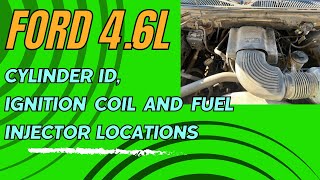
- Locate cylinder #2. On the 4.6L V8, 🎬 Watch: Locate your cylinders, coils, and injectors Bank 1 is the passenger side. Cylinders are numbered 1-4 from front to back. Cylinder #2 is the second coil from the front on the passenger side.
- Swap the ignition coil from cylinder #2 with the coil from cylinder #1 (the front-most coil on the passenger side). This is the most effective and common diagnostic step.
- Clear the trouble codes with the scanner.
- Start the engine and drive the vehicle until the Check Engine Light comes back on.
- Re-scan for codes. If the code has changed to P0351 ('Ignition Coil A Circuit Malfunction'), the ignition coil you moved is faulty and needs to be replaced.
- If the P0352 code returns, the problem is not the coil. Inspect the electrical connector and wiring for cylinder #2 for damage. Check for a secure connection and look for corrosion or pushed-out pins.
- With the key on, engine off, use a multimeter to verify battery voltage at the coil connector's power wire. Check the other wire for a pulsing ground signal from the PCM while cranking the engine.
- If the wiring is good, remove the coil and spark plug. Inspect the spark plug for damage, excessive wear, or fouling from oil or coolant. Check the spark plug well for contamination.
- Replace the spark plug for cylinder #2 as a matter of good practice, ensuring it is gapped and torqued correctly.
Parts You'll Likely Need
- Ignition Coil (Coil-On-Plug)
(OEM #3W7Z-12029-AA)— This is the most common failure point for a P0352 code on this engine due to age and heat cycles.
Trusted brands: Motorcraft (DG508), Denso, NGK
OEM price range: $40-$75
Aftermarket price range: $25-$50 - Spark Plug
(OEM #SP-493)— It is best practice to replace the spark plug at the same time as the coil, as a worn plug can cause a new coil to fail prematurely. An incorrect torque value can lead to plugs backing out of the cylinder head.
Trusted brands: Motorcraft, Autolite, NGK
OEM price range: $5-$10
Aftermarket price range: $3-$8 - Ignition Coil Connector Pigtail — The plastic locking tab on the original connector often becomes brittle and breaks, leading to a poor connection that can set a P0352 code.
Trusted brands: Motorcraft (WPT-1055), Dorman
OEM price range: $20-$30
Aftermarket price range: $10-$20
Related Codes That Often Appear With This One
- P0302 — P0302 means 'Cylinder 2 Misfire Detected.' Since the P0352 code indicates a fault with the ignition coil for cylinder 2, the cylinder will not fire correctly, directly causing a P0302 code to be stored as well.
- P0300 — This code for 'Random/Multiple Cylinder Misfire' can sometimes appear if the misfire from cylinder 2 is severe enough to affect the engine's overall rotational speed, confusing the sensor.
- P0171 — System Too Lean (Bank 1). A misfire means unburnt oxygen is sent into the exhaust. The oxygen sensor can interpret this as a lean condition, causing the PCM to incorrectly add more fuel.
- P0174 — System Too Lean (Bank 2). While cylinder #2 is on Bank 1, a severe misfire can sometimes affect readings enough to trigger codes for the opposite bank as the computer struggles to compensate.
Technical Service Bulletins (TSBs) & Recalls
- TSB 05-22-8: This bulletin provides general diagnostic tips for Coil-On-Plug (COP) misfires for a wide range of Ford vehicles, including the 2002-2005 Explorer. It notes that about 50% of coils returned under warranty are not actually faulty, emphasizing proper diagnosis (like swapping coils) before replacement.
- Bulletin #SSM 52455: A manufacturer service bulletin notes that certain Ford vehicles equipped with a gas engine may exhibit an illuminated MIL with ignition system DTC P0352 and other related coil circuit codes set in the powertrain control module.
- Bulletin #TSB 24-2406: Manufacturer records indicate that various Ford models may exhibit an illuminated MIL with ignition system DTCs including P0352, P0353, and P0354 set in the PCM.
Platform-Specific Known Issues
- Many owners report that aftermarket 'no-name' ignition coils from online marketplaces have a very high failure rate, sometimes within weeks or months. Sticking with a reputable brand like Motorcraft or Denso is highly recommended for longevity.
Mechanic-Grade Diagnostic Values
- Ignition Coil Primary Resistance — expected: 0.55 ohms for OEM Motorcraft coils. Aftermarket coils may range from 0.3 to 1.0 ohms.. Failure: A reading of infinity (open circuit) or near zero (short circuit) indicates a failed coil.
- Ignition Coil Secondary Resistance — expected: 5,500 ohms (5.5k Ω) for OEM Motorcraft coils. Aftermarket coils may range from 5.4k to 11.5k ohms.. Failure: A reading significantly outside the expected range, or infinity, indicates a failed coil.
- Voltage at Coil Connector (Power Wire) — expected: Battery voltage (approximately 12V) with Key On, Engine Off.. Failure: A reading below 9V suggests a problem with the power supply wiring or a related fuse.
- PCM Trigger Signal at Coil Connector (Signal Wire) — expected: A pulsing ground signal when the engine is cranking or running. This is best observed with a noid light or an oscilloscope.. Failure: No signal or a constant ground/voltage indicates a wiring problem or a faulty PCM coil driver.
Hidden / Shadow Codes Worth Checking
- Mode $06, Test ID $A2-$AF: This is not a trouble code but a system monitor for misfire counts for each cylinder (Cylinder 1 is $A2, Cylinder 2 is $A3, etc.). It can reveal intermittent misfires or misfires on other cylinders that haven't yet reached the threshold to set a P030x code. (see via An advanced OBD-II scanner capable of viewing Mode $06 data.)
Scan Tool Commands That Help
- Ford IDS (or equivalent professional scanner): Power Balance Test — This is the most definitive way to confirm which cylinder is not contributing power. The test graphically displays the RPM drop from each cylinder as the PCM disables them one by one. For a P0352, the graph for cylinder #2 would show little to no RPM drop, confirming it's the dead cylinder.
Wiring & Ground Locations
- Cylinder #2 Ignition Coil Connector — On the passenger side of the engine (Bank 1), it is the second coil from the front.. This is the primary connection point for the circuit. The two wires are the power feed and the PCM trigger signal. The plastic connector and its locking tab are prone to breaking from heat and age.
- Coil Connector Pinout — At the 2-pin connector for the cylinder #2 coil.. The power feed wire is typically Red with a Light Green stripe (RD/LG). The trigger signal wire from the PCM is Pink with a White stripe (PK/WH). Knowing these colors is critical for accurately testing for power and the PCM signal.
- PCM Ground — The PCM grounds are typically located on the firewall or inner fender in the engine bay. A wiring diagram is needed to trace the specific ground for the coil driver circuits.. While not a common cause, a poor PCM ground can cause a wide range of erratic issues, including ignition circuit faults. All grounds should be clean and tight.
Real Owner Repair Stories
- F150online.com forum user (Ford F-150 with 4.6L V8 (similar platform)) — Persistent P0352 code and misfire on cylinder #2.
❌ Tried (didn't work) Replacing the ignition coil on cylinder #2, Replacing the spark plug on cylinder #2
✅ What actually fixed it The Pink/White signal wire was broken inside the insulation right at the back of the electrical connector. The wire appeared intact visually but had no continuity. Replacing the pigtail connector resolved the issue. - NHTSA ODI #10644521 — An owner reported a P0352 code (Ignition Coil 2 or PCM) and changed all spark plugs and coil 2, but this still didn't fix the problem.
- NHTSA ODI #11270907 — An owner reported that the vehicle loses power intermittently or stutters with P0352 codes, and eventually found the wiring harness melted on an ignition coil.
OEM Part Supersession History
3L3E-12A366-CA→3W7Z-12029-AA (Service Part Number: DG508)— Part number consolidation and potential minor design updates over the years for reliability.
Heads up: While other coils may physically fit, the boot length and connector angle can differ slightly. The DG508 is the correct service part for this application.
Diagnostic Flowchart
Other Known Issues on This Vehicle
Issues unrelated to this code that are worth knowing about as an owner of this generation:
- Cracked Plastic Intake Manifold 🔴 High → Shop Engine Intake Manifold — Very common, especially on earlier 2002 models. Can occur anytime after 60,000 miles. (Ref: No recall, but a class-action lawsuit was settled. Ford later used a revised design with an aluminum coolant crossover.)
- 5R55W/S Transmission Failure 🔴 High — Extremely common. Issues with the solenoid body or servo bores can cause harsh shifting, loss of gears, or complete failure, often between 80,000 and 150,000 miles.
- Cracked Rear Liftgate Panel 🟡 Low — Almost universal on 2002-2005 models. A cosmetic crack develops in the plastic applique below the rear window, often near the brand emblem. (Ref: Multiple TSBs issued (e.g., 05-24-2) but no recall.)
- Timing Chain Cassette Rattle/Failure 🔴 High — More prevalent on the 4.0L V6, but the 4.6L V8 can also suffer from worn timing chain guides and tensioners, causing a rattling noise on startup that can lead to catastrophic engine failure if ignored.
- Wheel Bearing Failure 🟠 Medium — Common for both front and rear wheel bearings to fail, causing a humming or grinding noise that changes with vehicle speed.
- Heater Blend Door Actuator Failure 🟠 Medium — A common failure causing a clicking sound from the dashboard and an inability to control cabin temperature (e.g., stuck on full heat).
Used vs. New Parts: Buying Guide for This Vehicle
When a used part is the smart pick: For this specific repair, using a used part is strongly discouraged. Ignition coils are a common failure item that degrades with heat cycles and age. A used coil from a junkyard has an unknown history and is likely to fail soon, if it works at all.
Donor-vehicle mileage cap: roughly under 20000 miles for the part to have meaningful remaining life.
What to inspect on the donor part:
- If forced to use one in an emergency, source from the newest, lowest-mileage vehicle possible.
- Inspect the plastic housing for any hairline cracks or signs of heat stress.
- Ensure the rubber boot is soft and pliable, not dry-rotted or torn.
OEM-only on this vehicle (don't cheap out):
- Ignition Coil (Coil-On-Plug)
Aftermarket brands forum-validated for this vehicle:
- Denso
- NGK
Brands owners have reported issues with on this vehicle:
- Unbranded, 'no-name' coil sets sold on online marketplaces are widely reported on forums to have extremely high premature failure rates.
Real Owner Stories
Aggregated from forums and TSBs cited above. Mileages and costs reflect what owners reported in those sources.
2002-2005 Ford Explorer 4.6L V8
Symptoms: Engine misfire, stumbling, and shaking especially under load; flashing Check Engine Light and a smell of unburnt gasoline from the exhaust.
What fixed it: Replaced the faulty ignition coil on cylinder #2 with a Motorcraft unit after a swap test confirmed the failure.
Source hint: ARTICLE CONTEXT: symptoms and common_causes
1997-2010 Ford F-150 4.6L 2V V8
Symptoms: The owner experienced the common issue of spark plugs backing out of the 2-valve heads due to having too few threads.
What fixed it: Installed Motorcraft SP-493 spark plugs and torqued them to the revised specification of 28 ft-lbs (dry).
Source hint: F150forum.com - '4.6 2V Spark Plugs'
2002-2005 Ford Explorer 4.6L V8 — ~60000 miles
Symptoms: While diagnosing ignition issues, the owner discovered a cracked plastic intake manifold causing coolant issues.
What fixed it: Replacement of the plastic intake manifold with a revised design featuring an aluminum coolant crossover.
Source hint: ARTICLE CONTEXT: known_issues (Cracked Plastic Intake Manifold)
NHTSA Reported Incident
Symptoms: A diagnostic machine retrieved DTCs P0300, P0304, P0305, P0306, and P0352, indicating several cylinder misfires.
What fixed it: The vehicle was diagnosed after being towed to the dealer following these multiple misfire and ignition circuit codes.
Source hint: NHTSA ODI #11681823
Related OBD-II Codes
Frequently Asked Questions
Where is cylinder #2 located on my 2002-2005 Ford Explorer 4.6L V8?
Is there a TSB for ignition coil misfires on my Explorer?
What is the correct torque for spark plugs on the 4.6L 2V engine to prevent them from backing out?
Should I buy cheap aftermarket ignition coils from online marketplaces?
Can a worn spark plug cause my P0352 code?
What specific spark plug is recommended for the 4.6L 2V engine?
Helpful Videos
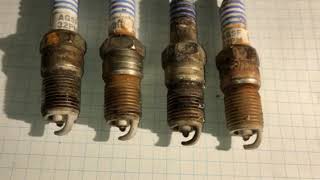
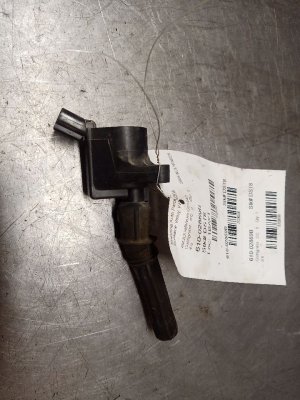
Used OEM Parts in Stock
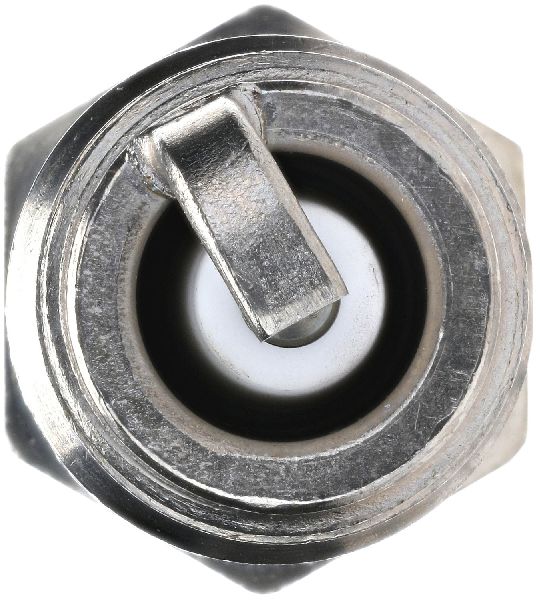
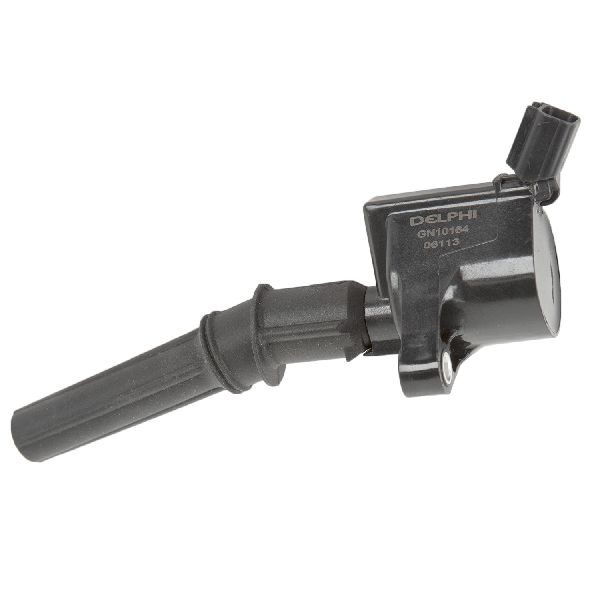
New Aftermarket Parts Available


The information in this article is provided for general reference and educational purposes only. Vehicle specifications, procedures, and part compatibility can vary by production date, trim level, and region. Always consult your vehicle's factory service manual and verify part numbers before purchasing or performing repairs. Safety-critical components such as airbags, seat belts, and braking systems should be installed by a qualified professional.
- Ford Explorer:
- 🧭 Diagnostic Flowchart
- 🎬 Helpful Videos
- 🛍️ Shop This Part
- What's Unique About the 2002-2005 Ford Explorer
- Symptoms You May Notice
- Most Likely Causes
- Rare But Worth Checking
- Diagnosis Steps
- Parts You'll Likely Need
- Related Codes That Often Appear With This One
- Technical Service Bulletins (TSBs) & Recalls
- Platform-Specific Known Issues
- Mechanic-Grade Diagnostic Values
- Hidden / Shadow Codes Worth Checking
- Scan Tool Commands That Help
- Wiring & Ground Locations
- Real Owner Repair Stories
- OEM Part Supersession History
- Other Known Issues on This Vehicle
- Used vs. New Parts: Buying Guide for This Vehicle
- Real Owner Stories
- 2002-2005 Ford Explorer 4.6L V8
- 1997-2010 Ford F-150 4.6L 2V V8
- 2002-2005 Ford Explorer 4.6L V8 — ~60000 miles
- NHTSA Reported Incident
- Related OBD-II Codes
- Frequently Asked Questions
- 🎟️ Get 5% Off