

P0352 on 2007-2012 Lincoln MKZ: Ignition Coil 'B' Circuit Malfunction Causes and Fixes
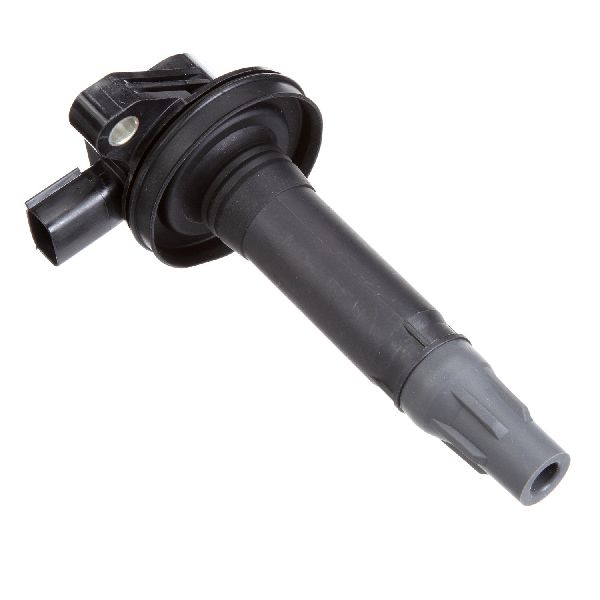
P0352 on a 2007-2012 Lincoln MKZ indicates a fault with the ignition coil for cylinder #2. The most common fix is replacing the ignition coil. However, cylinder #2 is on the rear bank of the engine, requiring removal of the upper intake manifold for access, which significantly increases repair complexity and cost. It is highly recommended to replace all three rear coils, all six spark plugs, and the intake gaskets at the same time. A shorted coil can also damage the PCM, a known issue requiring
- P0352 points directly to a problem with the ignition system for cylinder #2.
- The most likely cause is a bad ignition coil, but the spark plug and wiring should also be checked.
- Cylinder #2 is on the rear bank against the firewall, meaning the upper intake manifold must be removed for access. This makes the repair significantly more difficult and costly.
- Due to the high labor involved, it is highly recommended to replace all three rear coils, all six spark plugs, and the intake gaskets at the same time.
- In rare cases, a bad coil can damage the engine computer (PCM), which is a much more expensive repair.
What's Unique About the 2007-2012 Lincoln MKZ
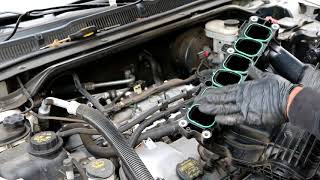
The 2007-2012 Lincoln MKZ uses the Ford 3.5L Duratec V6 engine (part of the Cyclone engine family). A key challenge with this code on this specific platform is the location of cylinder #2. It is on the rear bank of the engine, close to the firewall. Accessing this cylinder's ignition coil and spark plug requires removing the upper intake manifold 🎬 Watch: Step-by-step guide to removing the upper intake manifold., a task that adds significant labor time and complexity compared to working on the front three cylinders. Additionally, a shorted ignition coil on this engine can sometimes damage the ignition coil driver circuit within the Powertrain Control Module (PCM), a more complex and expensive repair. This is a known issue across many Ford products using this engine, and was the subject of Ford TSB 13-4-17 for 2007-2008 models.
Symptoms You May Notice
- Rough or shaking idle
- Engine hesitation or stumbling during acceleration
- Noticeable loss of engine power
- Flashing or solid Check Engine Light
- Decreased fuel economy
- Engine sounds like it's backfiring into the intake manifold.
- Replacing only the spark plug without testing the ignition coil.
- Replacing the PCM before thoroughly testing the ignition coil and its wiring circuit. A forum user on Lincoln vs Cadillac Forums emphasizes testing the wiring for continuity and shorts to ground before condemning the PCM.
- Assuming the misfire code (P0302) is the root cause, when it is actually a symptom of the P0352 circuit fault.
Most Likely Causes
- Failed Ignition Coil on Cylinder #2 🔴 High Probability → Shop Ignition Coil Coil-on-plug ignition systems are common failure points as they age due to constant heat cycles and vibration. The rear bank location may subject the coil to higher temperatures, accelerating degradation. A short in the coil is a frequent failure mode which can damage the PCM.
How to confirm: The most reliable method is to swap the ignition coil from cylinder #2 with one from an easily accessible cylinder on the front bank (e.g., cylinder #5). Clear the codes and run the engine. If the trouble code changes to P0355 (for cylinder #5), the coil is confirmed to be faulty. This test requires removing the upper intake manifold.
Typical fix: Replace the failed ignition coil. Since accessing the rear bank is labor-intensive, many owners and technicians choose to replace all three rear ignition coils and all six spark plugs at the same time to avoid future repeat labor.
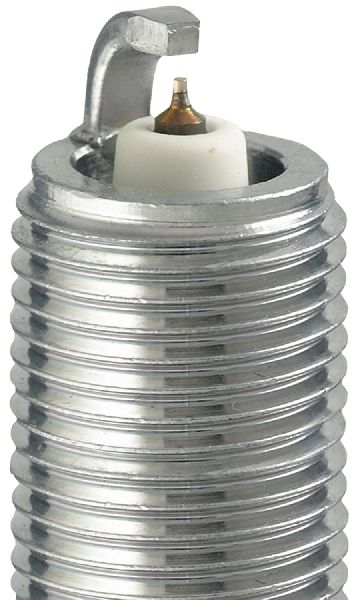
Est. part cost: $40-$110 for a single Motorcraft coil - Worn or Fouled Spark Plug 🟡 Medium Probability → Shop Spark Plug Spark plugs are a regular maintenance item with a service life of around 100,000 miles. An old plug with a wide gap forces the ignition coil to generate a higher voltage, which can overwork it and lead to premature coil failure.
How to confirm: After removing the intake manifold to access cylinder #2, remove the spark plug and inspect it for wear (rounded electrode), carbon tracking, oil fouling, or physical damage. If the service interval is unknown, replacement is recommended.
Typical fix: Replace the spark plug. It is highly recommended to replace all six spark plugs at once 🎬 Watch: How to replace spark plugs on the 3.5L V6., especially since the labor to access the rear bank has already been performed.
Est. part cost: $8-$20 per plug - Damaged Wiring or Connector ⚪ Low Probability The plastic connector for the ignition coil can become brittle from engine heat cycles and the locking tab can break, leading to a loose connection. Wires can also be damaged (chafed, melted, or pinched) during previous repairs, especially around the valve covers.
How to confirm: Visually inspect the connector for cracks, broken locking tabs, or pushed-out pins. Check the wiring harness leading to the coil for any signs of chafing, melting, or breaks. Use a multimeter to check for 12V power on the Violet (VT) wire and for a pulsing ground signal from the PCM on the control wire with the engine running (a noid light or oscilloscope is useful for this).
Typical fix: Repair the damaged section of wire or replace the pigtail connector.
Est. part cost: $15-$30 for a new connector pigtail
Rare But Worth Checking
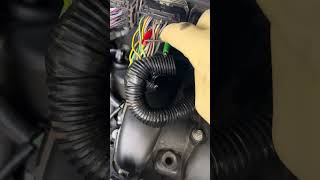
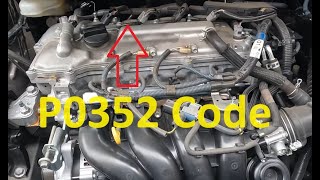
- Failed Powertrain Control Module (PCM): → Shop Engine Control Module (ECM) A shorted ignition coil can send a voltage spike back to the PCM, damaging the internal driver circuit that controls it. If a new coil and verified wiring do not fix the P0352 code, the PCM is the next suspect. 🎬 See a quick diagnostic walkthrough for the P0352 code. This is often indicated by the P0352 code returning immediately after being cleared, even with a known-good coil. Ford issued Technical Service Bulletins (including TSB 12-8-17 and its successor TSB 13-4-17) for 2007-2008 models related to PCM replacement for P035x codes after finding damaged coils.
Diagnosis Steps
- Read the trouble codes with an OBD-II scanner to confirm P0352 is present, and check for any other codes like P0302.
- Identify cylinder #2. On the transverse 3.5L V6 in the MKZ, the cylinders against the firewall are 1-2-3 (passenger to driver side). The cylinders near the radiator are 4-5-6 (passenger to driver side). Cylinder #2 is in the middle of the rear bank.
- Accessing cylinder #2 requires removing the upper intake manifold. This is a multi-step process involving disconnecting various hoses, sensors, and bolts. New upper intake manifold gaskets are required for reassembly to prevent vacuum leaks.
- Once the manifold is off, swap the ignition coil from cylinder #2 with the coil from cylinder #5 (middle cylinder on the front bank).
- Reinstall the intake manifold temporarily for testing (or use long leads to test wiring if proficient), clear the codes, and start the engine. Let it run for a minute.
- Re-scan for codes. If the code has moved to P0355 ('Ignition Coil E'), the ignition coil you moved is faulty and needs to be replaced.
- If the code P0352 returns, the issue is not the coil. The problem lies in the spark plug, wiring, or PCM.
- Inspect the spark plug in cylinder #2 for wear, damage, or fouling. If it's old or in poor condition, replace it. It's best practice to replace all six.
- Inspect the wiring connector for cylinder #2's coil. Check for corrosion, damage, or loose pins. With the key on, engine off, use a multimeter to verify 12V+ on the Violet (VT) wire. Then, check the other wire (the control wire) for a pulsing ground signal from the PCM when the engine is cranking or running. A noid light or oscilloscope is the most effective tool for this test.
- If the control wire shows a constant ground even with the PCM connector unplugged, the wire is shorted to ground in the harness. If the control wire only shows a constant ground when the PCM is connected, the PCM driver has failed.
- If the PCM is condemned, the official Ford procedure outlined in TSB 13-4-17 for early models is to replace the PCM, all six ignition coils, and all six spark plugs to prevent a repeat failure.
Parts You'll Likely Need
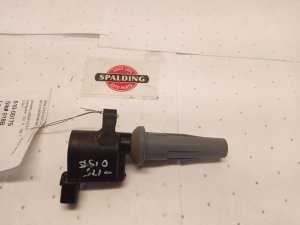
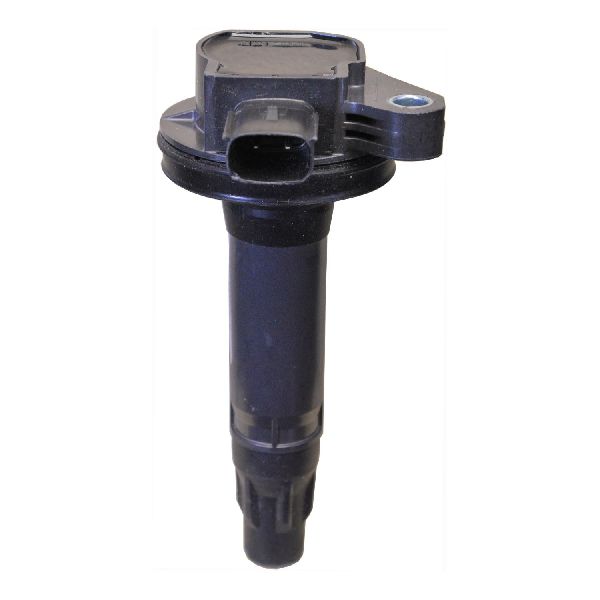
- Ignition Coil
(OEM #DG520 (Motorcraft alternate 7T4Z-12029-E))— This is the most frequent cause of a P0352 code. Heat and age cause the internal windings to fail. Using genuine Motorcraft parts is recommended for longevity, especially for the difficult-to-access rear bank.
Trusted brands: Motorcraft, NGK, Denso, Delphi
OEM price range: $70-$110
Aftermarket price range: $40-$80 - Spark Plugs
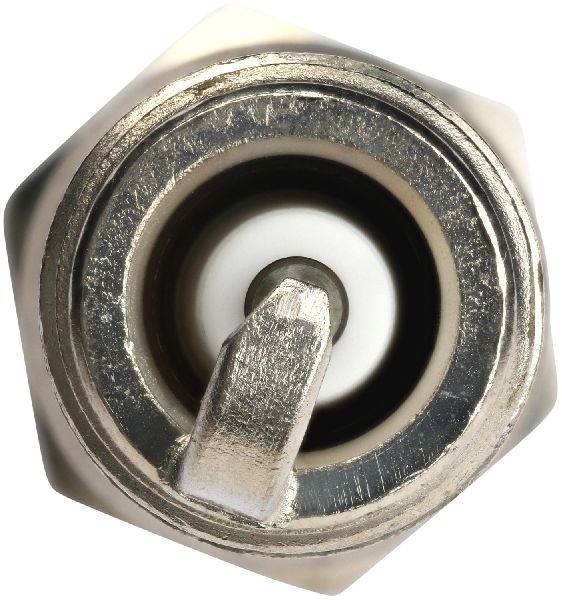
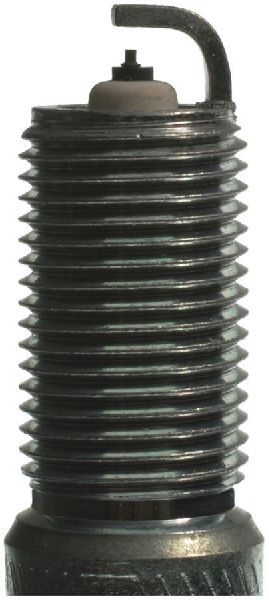
(OEM #SP580 (replaces SP534))— Should be replaced along with the coils, especially since accessing the rear bank is labor-intensive. Worn plugs can cause coil failure. SP580 is the updated part number for the original SP534.
Trusted brands: Motorcraft, NGK, Autolite
OEM price range: $12-$20 per plug
Aftermarket price range: $8-$15 per plug - Upper Intake Manifold Gaskets
(OEM #7T4Z-9H486-DA (also known as a plenum gasket set))— These are single-use gaskets and must be replaced anytime the upper intake manifold is removed to prevent vacuum leaks, which would cause new, different driveability problems.
Trusted brands: Fel-Pro (MS 97120), Mahle (MS19557), Motorcraft
OEM price range: $25-$40 for a set
Aftermarket price range: $15-$30 for a set
Related Codes That Often Appear With This One
- P0302 — P0302 means 'Cylinder 2 Misfire Detected'. Since P0352 indicates a fault in the ignition circuit for cylinder 2, a misfire is the direct result, and these two codes almost always appear together.
Technical Service Bulletins (TSBs) & Recalls
- TSB 13-4-17: Malfunction Indicator Lamp (MIL) on with DTCs P0351-P0356. For some 2007-2008 models, this bulletin (which supersedes TSB 12-8-17) addresses diagnosing these codes. If the coil shows physical damage, the procedure may lead to replacing the PCM, the affected coil, and all spark plugs.
- TSB 14-0059: This bulletin, published March 20, 2014, addresses MIL on with DTCs P0351 through P0356 for vehicles built on or before 3/1/2008, noting issues with the control module and faulty or damaged ignition coils (NHTSA ODI #10811949).
Platform-Specific Known Issues
- A known issue on this platform is that a failed ignition coil can send a voltage spike back to the Powertrain Control Module (PCM), damaging the driver circuit for that coil. If replacing the coil doesn't fix the code, the PCM may need to be repaired or replaced. It is strongly recommended to replace all six coils and plugs if a PCM failure is found.
- TSB 13-4-17 (superseding 12-8-17) was issued for 2007-2008 models, instructing technicians to inspect all coils for physical damage (cracks, heat damage) if any P035x code is present. If damage is found, the service procedure calls for replacing the PCM, all six coils, and all six spark plugs.
Mechanic-Grade Diagnostic Values
- Ignition Coil Primary Resistance — expected: 0.5 to 0.7 ohms. Failure: A reading significantly outside this range, especially an open circuit (infinite resistance) or a dead short (zero resistance).
- Ignition Coil Secondary Resistance — expected: 5,500 to 10,000 ohms (5.5kΩ to 10kΩ). Failure: A reading outside this range indicates a failure in the secondary windings.
- Voltage at Coil Connector Power Wire (Violet) — expected: Battery Voltage (approx. 12V) with Key On, Engine Off.. Failure: Low or no voltage indicates a problem with the power supply from the fuse box.
- Signal at Coil Connector Control Wire — expected: A pulsing ground signal when the engine is cranking or running, best viewed on an oscilloscope.. Failure: A constant ground signal (indicates a shorted PCM driver or wire) or no signal at all (open circuit in wire or dead PCM driver).
Hidden / Shadow Codes Worth Checking
- Mode 6 Data: While not a shadow code, Mode 6 provides raw data from the PCM's self-tests. For this issue, it's invaluable for viewing misfire counts per cylinder before they are high enough to set a P030x code. This can help confirm the misfire is isolated to cylinder #2. (see via Advanced OBD-II scanners or dealer-level tools like Ford IDS.)
Scan Tool Commands That Help
- Ford IDS (Integrated Diagnostic System): Power Balance Test — This is the most effective command for this issue. It graphically displays the power contribution of each cylinder in real-time. For a P0352, the graph will show a significant drop or 'solid miss' for cylinder #2, instantly confirming the location of the dead cylinder.
- Ford IDS (Integrated Diagnostic System): Coil on Plug Stress Test — This function commands the coils to fire in a specific sequence to test the integrity of the primary circuit under controlled conditions. It can help isolate intermittent failures in the wiring or PCM driver.
Wiring & Ground Locations
- Ignition Coil Connector (Cylinder #2) — On top of the ignition coil for cylinder #2, which is the middle cylinder on the rear bank of the engine, under the upper intake manifold.. This is the primary test point. Pin 1 (Violet wire) should have 12V+ with key on. Pin 2 (wire color varies by cylinder) is the control wire from the PCM that provides the pulsing ground.
- PCM Connector C1551E — This is one of the main connectors at the Powertrain Control Module (PCM), typically located in the engine bay near the firewall or fender.. This connector contains the control wires for the ignition coils. Based on similar 3.5L engines, the control wire for cylinder #2 is at Pin 40. Testing for the signal directly at this pin can differentiate a wiring problem from a PCM problem.
- G103 — On the 3.5L platform, this ground is typically located on the left (driver's) side of the engine compartment, sometimes on the cowl above the brake booster.. This is a major engine compartment ground. A poor connection here can cause a variety of erratic electronic issues, including problems with PCM sensor readings and driver circuits.
- G104 — On the 3.5L platform, this ground is located on the right (passenger) side of the engine compartment, often near the strut tower.. This is a primary ground point for the engine and PCM. A loose or corroded G104 can cause incorrect signals and phantom electrical faults, including ignition system codes.
Real Owner Repair Stories
- YouTube video from a professional technician (2012 Ford Edge 3.5L (same engine and likely electronics)) — Obvious misfire, P0352 code stored.
❌ Tried (didn't work) The vehicle came from another shop that had already replaced all six ignition coils.
✅ What actually fixed it The technician used an oscilloscope on the coil #2 control wire and found no signal (it was held to ground). This confirmed the PCM driver had failed. The final fix was replacing the PCM, which resolved the misfire. The tech noted the original coil likely shorted and destroyed the old PCM's driver. - Ford Edge Forum user 'Fishinfool98' (2012 Ford Edge 3.5L) — Misfire on cylinder #1 (P0351, but same diagnostic principle).
❌ Tried (didn't work) Replaced all spark plugs., Replaced all ignition coils (twice)., Replaced all fuel injectors., Sent original PCM out for repair/rebuild and reinstalled it.
✅ What actually fixed it After all parts replacement failed, the owner tested the ignition harness with all components disconnected. He found that five of the control wires were shorted together within the harness itself. The final fix was repairing or replacing the faulty engine wiring harness.
OEM Part Supersession History
SP534→SP580— Standard part evolution and updates by the manufacturer.
Heads up: SP580 is the direct, correct replacement for SP534 for a stock vehicle.SP520 / SP520X→SP589— Standard part evolution for different applications of the 3.5L/3.7L engine family. While SP580 is the primary replacement for the MKZ's original plug, SP589 is a later replacement for the SP520 used in other 3.5L/3.7L vehicles and is also compatible.
Heads up: SP589 is a compatible platinum plug that replaces SP520. For this vehicle, SP580 is the most commonly cited direct replacement.
Model Year Variations Within This Range
- 2007-2008 (built on or before 3/1/2008): These earlier models are specifically called out in Ford TSB 13-4-17. The procedure for a P035x code is to inspect all coils for heat damage or cracks. If any damage is found, the TSB mandates the replacement of the PCM along with all six coils and spark plugs, suggesting this coil-to-PCM failure was more prevalent in the early production years.
Diagnostic Flowchart
Other Known Issues on This Vehicle
Issues unrelated to this code that are worth knowing about as an owner of this generation:
- Internal Water Pump Failure 🔴 High — Common after 80,000-120,000 miles. Failure is a matter of 'when', not 'if'.
- Harsh Shifting / Transmission Faults 🟠 Medium — Commonly reported across many model years.
- ABS Hydraulic Control Unit (HCU) Failure 🔴 High — Affects 2006-2010 models, subject to a recall. (Ref: Ford Recall 19S54 (NHTSA ID 19V904))
- Power Steering Fluid Leaks 🟡 Low — Commonly reported on 2007-2012 models.
- Takata Airbag Inflator Rupture 🔴 High — Affects all model years in this range, part of a massive global recall. (Ref: Multiple Recalls, e.g., NHTSA ID 19V001, 16V384)
Used vs. New Parts: Buying Guide for This Vehicle
When a used part is the smart pick: A used PCM from a junkyard can be a cost-effective option IF you have access to a Ford dealer or a well-equipped independent shop that can reprogram it to your vehicle's VIN and PATS key information. A used ignition coil or spark plug is never recommended.
Donor-vehicle mileage cap: roughly under 80000 miles for the part to have meaningful remaining life.
What to inspect on the donor part:
- For a used PCM, ensure the part number on the sticker is an exact match to your original.
- Check the donor vehicle for signs of flood or fire damage.
- Ask for the VIN of the donor car to run a vehicle history report if possible, avoiding those with major electrical issues.
OEM-only on this vehicle (don't cheap out):
- Ignition Coils: Strongly recommended to use Motorcraft. Aftermarket coils for this platform are notorious for premature failure, which can again lead to PCM damage.
- Powertrain Control Module (PCM): While a used OEM unit can be reprogrammed, avoid generic aftermarket PCMs. A better alternative to new OEM is having your original PCM repaired by a reputable service, which often requires no reprogramming.
Aftermarket brands forum-validated for this vehicle:
- NGK and Denso are generally considered reliable alternatives for ignition coils if Motorcraft is unavailable.
- Fel-Pro and Mahle are trusted brands for the required intake manifold gaskets.
Brands owners have reported issues with on this vehicle:
- Unnamed, no-brand ignition coils sold on online marketplaces. Many forum and repair shop accounts cite these as having a very high failure rate, sometimes within days or weeks, putting the new or repaired PCM at risk.
Real Owner Stories
Aggregated from forums and TSBs cited above. Mileages and costs reflect what owners reported in those sources.
2010 Lincoln MKZ (3.5L V6)
Symptoms: A persistent P0352 Check Engine Light that would not go away after initial repair attempts.
What fixed it: The owner was advised by others to thoroughly test the wiring harness for shorts or open circuits before condemning and replacing the Powertrain Control Module (PCM).
Source hint: lincolnvscadillac.com forum thread titled 'code p0352 wont go away'
2008 Ford Edge (3.5L V6)
Symptoms: Malfunction Indicator Lamp (MIL) on with one or more P035x codes stored.
What fixed it: The service procedure outlined in the relevant TSB calls for replacing the PCM, all six ignition coils, and all six spark plugs if the original coil shows physical damage like cracks or heat damage.
Source hint: Ford Edge forum post containing the text of TSB 13-4-17
2007 Lincoln MKX (3.5L V6)
Symptoms: The vehicle experienced a MIL ON condition with multiple diagnostic trouble codes including P0351, P0352, P0353, P0354, P0355, and P0356.
What fixed it: According to NHTSA ODI #10811949, the issue involved a faulty or damaged ignition coil and the control module (PCU), which is addressed by manufacturer service bulletin TSB 14-0059.
Source hint: NHTSA ODI #10811949
Related OBD-II Codes
Frequently Asked Questions
Where is cylinder #2 located on my 2007-2012 Lincoln MKZ?
Do I have to remove the intake manifold to replace the ignition coil on cylinder #2?
I replaced the coil for cylinder #2, but the P0352 code came back. What's the problem?
Since it's so much work, should I replace anything else while I have the intake manifold off?
Does TSB 13-4-17 apply to my 2008 Lincoln MKZ?
My mechanic says the PCM is bad. What does the official Ford procedure recommend replacing?
Helpful Videos

Used OEM Parts in Stock
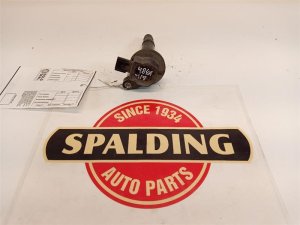
New Aftermarket Parts Available


The information in this article is provided for general reference and educational purposes only. Vehicle specifications, procedures, and part compatibility can vary by production date, trim level, and region. Always consult your vehicle's factory service manual and verify part numbers before purchasing or performing repairs. Safety-critical components such as airbags, seat belts, and braking systems should be installed by a qualified professional.
- Lincoln MKZ:
- 🧭 Diagnostic Flowchart
- 🎬 Helpful Videos
- 🛍️ Shop This Part
- What's Unique About the 2007-2012 Lincoln MKZ
- Symptoms You May Notice
- Most Likely Causes
- Rare But Worth Checking
- Diagnosis Steps
- Parts You'll Likely Need
- Related Codes That Often Appear With This One
- Technical Service Bulletins (TSBs) & Recalls
- Platform-Specific Known Issues
- Mechanic-Grade Diagnostic Values
- Hidden / Shadow Codes Worth Checking
- Scan Tool Commands That Help
- Wiring & Ground Locations
- Real Owner Repair Stories
- OEM Part Supersession History
- Model Year Variations Within This Range
- Other Known Issues on This Vehicle
- Used vs. New Parts: Buying Guide for This Vehicle
- Real Owner Stories
- 2010 Lincoln MKZ (3.5L V6)
- 2008 Ford Edge (3.5L V6)
- 2007 Lincoln MKX (3.5L V6)
- Related OBD-II Codes
- Frequently Asked Questions
- 🎟️ Get 5% Off