

P0353 on 2008-2009 Cadillac CTS: Ignition Coil C Malfunction Causes and Fixes
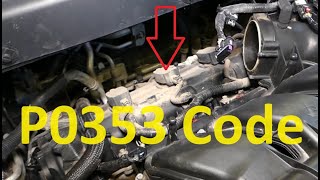
P0353 on a 2008-2009 Cadillac CTS indicates a fault in the ignition coil circuit for cylinder #3. The most common fix is replacing the ignition coil for that cylinder, which is a straightforward DIY job with the part costing between $40 and $115. However, wiring issues or oil leaks into the spark plug tube are also common culprits that should be investigated.
- P0353 on your CTS means there's a problem with the ignition coil circuit for cylinder 3.
- The most likely cause is a failed ignition coil, which is a simple and affordable part to replace.
- Before replacing the coil, check for oil in the spark plug tube, as a leaking valve cover gasket is a common root cause.
- If multiple coil codes are present, investigate shared wiring, grounds, and fuses as suggested by GM's service bulletin before replacing all the coils.
What's Unique About the 2008-2009 Cadillac CTS
For the 2008-2009 CTS with the 3.6L V6 (LLT) engine, a P0353 code is a common issue. A key GM Technical Service Bulletin (PIP5038B) covers the 2008 model and notes that this code often appears with a full suite of other ignition coil and misfire codes (P0300-P0306 and P0351-P0356). The TSB points investigators toward issues beyond a single coil, such as poor ignition coil grounds (specifically G130 and G131 on the CTS), loose connections at the Underhood Body Electrical Center (UBEC), or chafed wiring harnesses. This makes a thorough inspection of shared electrical paths critical on this platform.
Diagnostic Flowchart
Tap your situation to follow the diagnostic path that matches what you're seeing on this vehicle.
Symptoms You May Notice
- Check Engine Light is on
- Engine runs rough or idles poorly
- Noticeable hesitation or stumbling during acceleration
- Reduced engine power
- Flashing Check Engine Light (if the misfire is severe)
- Smell of unburned gasoline from the exhaust
- Replacing the spark plug without first testing the ignition coil. The coil is the more likely failure point for a P035x code.
- Replacing the PCM without thoroughly testing the coil and wiring circuit first.
- Replacing a single ignition coil without checking for oil contamination from a leaking valve cover gasket, leading to repeat failure of the new coil.
Most Likely Causes
- Failed Ignition Coil (Cylinder 3) 🔴 High Probability → Shop Ignition Coil Coil-on-plug ignition systems on the 3.6L LLT engine are subject to high heat and constant vibration, which can cause the internal windings to fail over time. Oil contamination from leaking valve cover gaskets can also saturate the coil boot and cause failure.
How to confirm: Swap the ignition coil from cylinder #3 with another cylinder (e.g., cylinder #1). Clear the codes and drive. If the code changes to P0351, the coil is confirmed bad. Cylinder #3 is the middle cylinder on the passenger side (Bank 1).
Typical fix: Replace the faulty ignition coil. If oil is present on the coil boot, the valve cover gasket and spark plug tube seal should be replaced as well.
Est. part cost: $40-$115 - Damaged Wiring or Connector 🟡 Medium Probability TSB #PIP5038B specifically calls out checking for poor connector engagement at the UBEC, loose terminals, and improper grounds. The plastic connector at the coil can become brittle and break, or wires in the harness can chafe from heat and vibration.
How to confirm: Visually inspect the wiring harness and connector for cylinder #3's ignition coil. Look for broken clips, corroded pins, or frayed wires. Check for secure connection at the UBEC. Use a multimeter to check for 12V power and a good ground at the connector with the key on.
Typical fix: Repair the damaged section of the wiring harness or replace the connector pigtail. Ensure all ground connections are clean and tight.
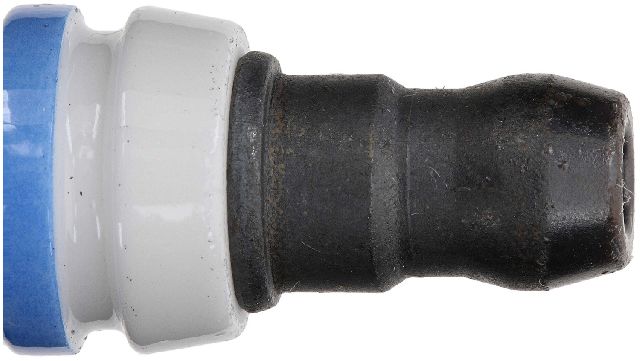
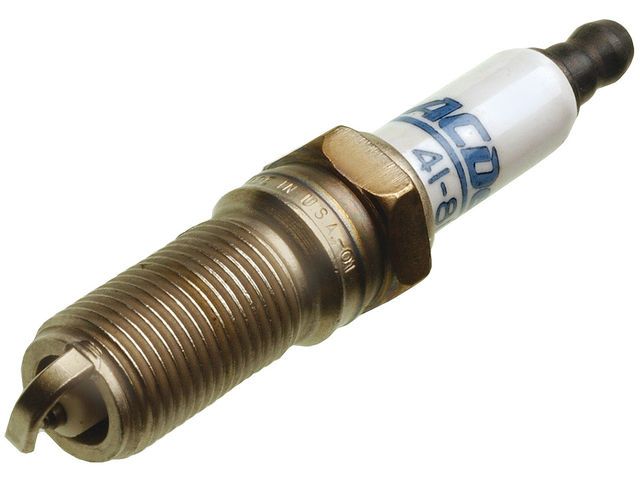
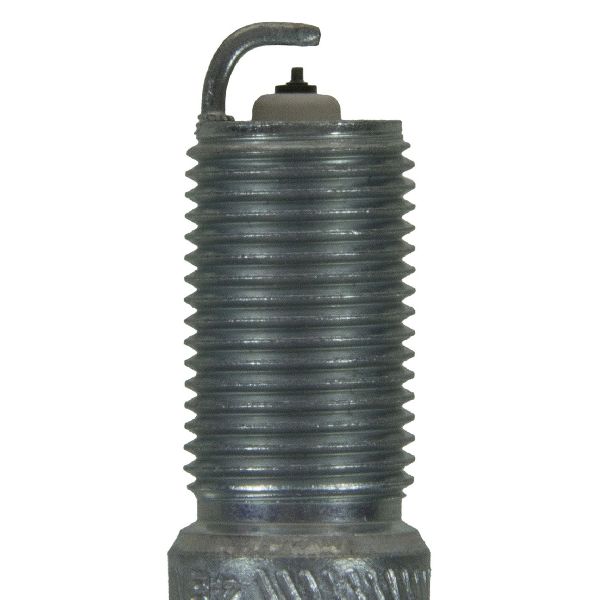
Est. part cost: $15-$35 for a new connector pigtail (e.g., ACDelco PT1627). - Worn or Fouled Spark Plug (Cylinder 3) 🟡 Medium Probability → Shop Spark Plug A worn spark plug with an excessive gap requires the ignition coil to produce a higher voltage, stressing the coil and potentially causing it to fail or trigger a circuit fault. The direct-injection nature of the LLT engine can also lead to carbon fouling.
How to confirm: After confirming the coil is good, inspect the spark plug for wear, carbon fouling, or oil. A bad plug can cause a misfire (P0303) which can sometimes be associated with a circuit code.
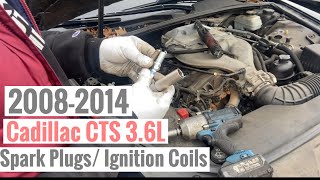
Typical fix: Replace the spark plug. It is best practice to replace all spark plugs at the same time. 🎬 See this walkthrough for replacing CTS spark plugs and coils.
Est. part cost: $10-$25 per plug - Oil in Spark Plug Tube 🟡 Medium Probability → Shop Spark Plug The valve cover gaskets and integrated spark plug tube seals on the 3.6L V6 are known to harden and leak over time. When oil fills the spark plug well, it can short out the ignition coil and/or the spark plug, leading to misfires and circuit fault codes.
How to confirm: When removing the ignition coil for cylinder #3, look for liquid oil on the coil boot and down in the spark plug tube.
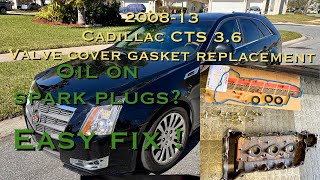
Typical fix: Replace the valve cover gasket and the spark plug tube seals for the affected bank. Thoroughly clean all oil out of the spark plug tube before installing the new spark plug and coil. 🎬 Watch: How to replace the valve cover gaskets on this engine.
Est. part cost: $50-$100 for a valve cover gasket set
Rare But Worth Checking
- Faulty Powertrain Control Module (PCM): → Shop Engine Control Module (ECM) This is a rare cause. The internal driver circuit for a specific coil can fail. This should only be considered after all other possibilities (coil, plug, wiring, oil leaks) have been definitively ruled out.
Diagnosis Steps
- Read all fault codes using an OBD-II scanner. Note any other codes that are present, especially other P035x or P030x codes.
- Locate cylinder #3. On the 3.6L V6, the engine is mounted longitudinally. The passenger side of the engine is Bank 1, and the cylinders are numbered 1, 3, 5 from front to back. Cylinder #3 is the middle cylinder on the passenger side.
- Visually inspect the ignition coil, connector, and wiring for cylinder #3. Look for any obvious signs of damage, corrosion, or loose connections.
- Remove the ignition coil. Inspect the coil boot and the spark plug tube for any signs of oil. If oil is present, the valve cover gasket is likely leaking and must be replaced.
- To confirm if the coil is the problem, swap the ignition coil from cylinder #3 with the coil from cylinder #1 (the front cylinder on the same side).
- Clear the codes with the scanner, start the engine, and let it run for a few minutes. A short drive may be necessary.
- Re-scan for codes. If the code has changed to P0351 ("Ignition Coil 'A' Circuit Malfunction"), the ignition coil is faulty and needs to be replaced.
- If the P0353 code returns, the problem is not the coil. The next step is to inspect the wiring and spark plug for cylinder #3.
- Using a multimeter, verify that the coil connector for cylinder #3 is receiving battery voltage (around 12V) on one pin and has a good ground on another when the ignition is on (engine off). Check the signal wire for continuity back to the PCM.
- If wiring is confirmed good, remove and inspect the spark plug for cylinder #3. Replace if it is worn, fouled, or damaged.
- If multiple coil codes are present, inspect shared components per TSB PIP5038B, including the ignition coil fuse in the UBEC and the main engine grounds (G130/G131).
Parts You'll Likely Need
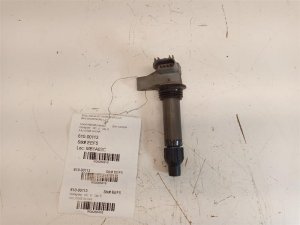
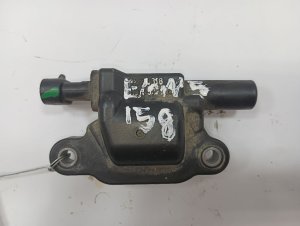
- Ignition Coil
(OEM #12632479)— This is the most frequent point of failure for a P0353 code.
Trusted brands: ACDelco, Delphi, Standard Motor Products, DENSO
OEM price range: $65-$115
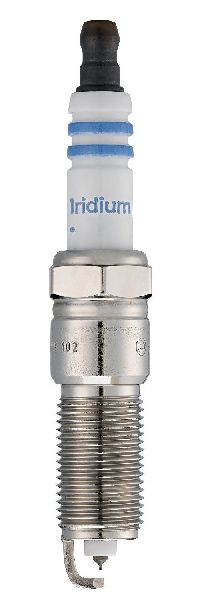
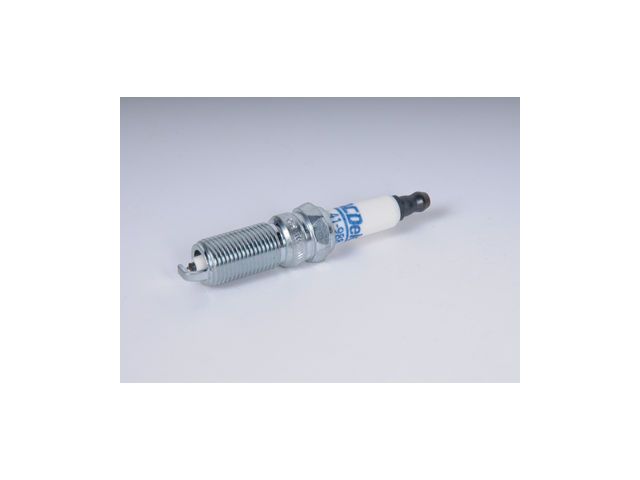
Aftermarket price range: $40-$75 - Spark Plug
(OEM #41-109)— Often replaced along with the ignition coil, especially if it is due for replacement. A bad spark plug can overwork the coil.
Trusted brands: ACDelco, NGK
OEM price range: $15-$25
Aftermarket price range: $10-$20 - Ignition Coil Connector Pigtail
(OEM #PT1627)— The locking tab on the original connector often becomes brittle and breaks, leading to a poor connection. This pigtail is used to replace a damaged connector.
Trusted brands: ACDelco (GM Genuine), Duralast, EFI Connection
OEM price range: $25-$40
Aftermarket price range: $15-$30
Related Codes That Often Appear With This One
- P0303 — P0303 means "Cylinder 3 Misfire Detected". Since P0353 indicates a problem with the coil circuit for cylinder 3, a misfire on that same cylinder is a direct consequence.
- P0300 — P0300 means "Random/Multiple Cylinder Misfire Detected". This can occur if the underlying electrical issue is intermittent or if a single cylinder misfire is severe enough to affect overall engine stability, causing other cylinders to misfire.
- P0351, P0352, P0354, P0355, P0356 — As noted in TSB #PIP5038B, it is common on these vehicles for multiple ignition coil circuit codes to appear together, often pointing to a shared problem like a wiring harness ground (G130/G131), a loose fuse block (UBEC), or a failing fuse.
Technical Service Bulletins (TSBs) & Recalls
- PIP5038B: Mentions the potential for multiple ignition coil and misfire codes (P035x, P030x) and points towards checking shared grounds (G130, G131), the UBEC, and fuses before replacing individual coils.
Platform-Specific Known Issues
- GM Technical Service Bulletin #PIP5038B addresses an issue on the 2008 CTS where codes P0300, P0301-P0306, and P0351-P0356 can all be stored. The bulletin advises technicians to check ignition coil grounds (G130 and G131 for CTS), inspect for loose connections at the underhood fuse block (UBEC), and check the relevant ignition coil fuse before replacing multiple components.
- A common owner complaint on forums involves misfires isolated to one bank of cylinders (e.g., P0302, P0304, P0306). While this can be related to the wiring issues in TSB PIP5038B, it is also a classic symptom of a stretched timing chain on the 3.6L LLT engine, which can cause cam/crank correlation issues that manifest as misfires.
Mechanic-Grade Diagnostic Values
- Ignition Coil Primary Resistance — expected: 0.4 to 2.0 Ohms. Failure: A reading of 0 (short) or OL/infinity (open) indicates a failed coil.
- Ignition Coil Secondary Resistance — expected: 6,000 to 10,000 Ohms (6k-10k Ω). Failure: A reading significantly outside this range, or OL/infinity, indicates a failed coil.
- Ignition Coil Connector - Power Supply Pin — expected: Battery Voltage (approx. 12.6V with key on, engine off). Failure: Low or no voltage indicates a problem with the fuse or wiring from the UBEC.
- Ignition Coil Connector - Ground Pin — expected: Near 0 Ohms resistance to chassis ground.. Failure: High resistance indicates a poor ground connection, likely at G130 or G131.
Scan Tool Commands That Help
- Tech2 / GDS2: Cylinder Power Balance Test — This function allows the technician to individually disable cylinders to determine if a specific cylinder is not contributing to engine power, which helps confirm a misfire on cylinder 3 before swapping parts.
- Tech2 / GDS2: Ignition Control (IC) Spark Test — This bidirectional command allows the user to command the PCM to fire a specific ignition coil. If the tool can command a spark from coil #1 but not from coil #3 (after swapping them), it points towards a wiring or PCM driver issue for the cylinder #3 circuit.
Wiring & Ground Locations
- G130 — On the rear of the right cylinder head (Bank 1 / Passenger side).. This is a primary ground point for the ignition coils on Bank 1 (cylinders 1, 3, 5). A loose or corroded G130 is a known cause for multiple misfire and coil circuit codes on this bank, as highlighted in TSB PIP5038B.
- G131 — On the left rear of the engine/cylinder head (Bank 2 / Driver side).. While P0353 is on Bank 1, TSB PIP5038B mentions checking all major engine grounds. If multiple codes across both banks are present, this ground is also critical.
- Ignition Coil #3 Connector — On the middle ignition coil on the passenger side of the engine.. This 4-pin connector provides power, ground, and the control/feedback signals. The pins are: Pin A (Ignition Voltage), Pin B (IC Control Signal from PCM), Pin C (Ground), Pin D (IC Fault/Feedback Signal to PCM). Testing for voltage, ground, and signal on these specific pins is essential for diagnosis.
OEM Part Supersession History
12590990, 12610626, 12618542→12632479— Standard part evolution for improved durability and performance.
Model Year Variations Within This Range
- 2008: According to a Q&A on a GM parts site, accessing the rear bank of ignition coils on 2008 and earlier models may require removing the underhood fuse/relay box. On 2009 and later models, the intake manifold may need to be removed instead.
Helpful Videos
Used OEM Parts in Stock
New Aftermarket Parts Available


The information in this article is provided for general reference and educational purposes only. Vehicle specifications, procedures, and part compatibility can vary by production date, trim level, and region. Always consult your vehicle's factory service manual and verify part numbers before purchasing or performing repairs. Safety-critical components such as airbags, seat belts, and braking systems should be installed by a qualified professional.
- Cadillac CTS:
- 🧭 Diagnostic Flowchart
- 🎬 Helpful Videos
- 🛍️ Shop This Part
- What's Unique About the 2008-2009 Cadillac CTS
- Symptoms You May Notice
- Most Likely Causes
- Rare But Worth Checking
- Diagnosis Steps
- Parts You'll Likely Need
- Related Codes That Often Appear With This One
- Technical Service Bulletins (TSBs) & Recalls
- Platform-Specific Known Issues
- Mechanic-Grade Diagnostic Values
- Scan Tool Commands That Help
- Wiring & Ground Locations
- OEM Part Supersession History
- Model Year Variations Within This Range
- 🎟️ Get 5% Off