

P0353 on 2017-2019 Ford Escape 2.0L: Ignition Coil 'C' Circuit Causes and Fixes
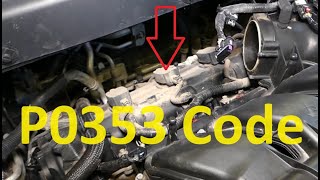
Code P0353 on a 2017-2019 Ford Escape 2.0L EcoBoost indicates a fault in the ignition coil circuit for cylinder #3. The most common cause is a failed ignition coil, which is a straightforward DIY replacement costing about $30-$60 for the part. Always consider replacing the spark plug at the same time. However, be aware this engine has a known coolant intrusion issue that can cause this code, which is a much more serious problem.
- P0353 points to a fault in the ignition coil circuit for cylinder #3.
- The most likely fix is replacing the ignition coil and spark plug for cylinder #3.
- A simple diagnostic test is to swap the coil from cylinder #3 with another cylinder to see if the code follows the coil.
- Be aware of the potential for a more serious coolant intrusion issue on this specific engine if you are also losing coolant.
- Do not ignore a flashing check engine light, as it signals a severe misfire that can quickly damage your catalytic converter.
What's Unique About the 2017-2019 Ford Escape
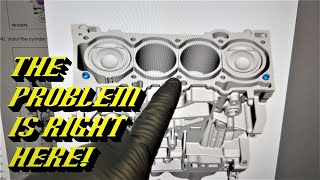
For the 2017-2019 Ford Escape with the 2.0L EcoBoost, an ignition misfire code like P0353 warrants careful diagnosis. While a bad coil is the most frequent cause, this specific engine generation is known for a more serious issue: coolant intrusion into the cylinders due to a design flaw in the open-deck engine block. This can foul spark plugs and damage coils, leading to misfire codes, particularly on cylinders 2 and 3. If you have unexplained coolant loss along with this code, it's crucial to investigate this possibility before simply replacing ignition parts, as the ultimate fix is often a long block engine replacement per Ford's TSB 19-2346.
Symptoms You May Notice
- Check Engine Light is on (may be flashing if the misfire is severe)
- Rough or shaky idle
- Engine stumbling or hesitating during acceleration
- Noticeable loss of power
- Reduced fuel economy
- Engine may stall completely
- Replacing only the spark plug when the ignition coil was the actual cause of failure.
- Replacing ignition components without checking for the underlying coolant intrusion issue, leading to a quick return of the code and damage to new parts.
- Assuming a transmission problem due to rough running and hesitation, when the root cause is an engine misfire.
Most Likely Causes
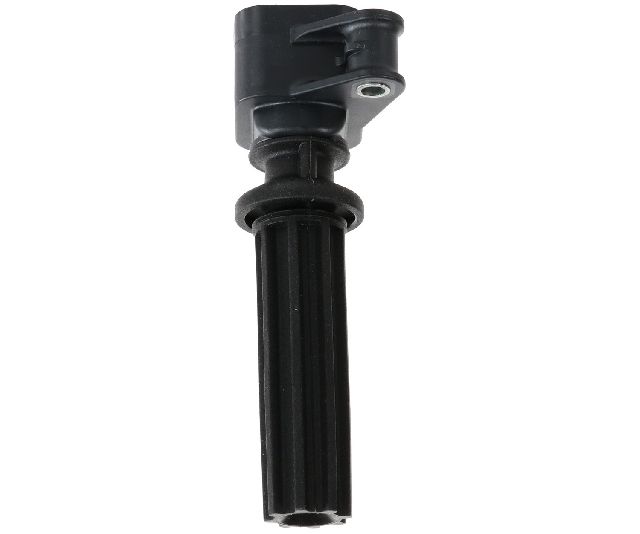
- Failed Ignition Coil 🔴 High Probability → Shop Ignition Coil Coil-on-plug systems are common failure points on many modern engines due to high heat and vibration. The EcoBoost engines, being turbocharged, can generate significant under-hood heat which accelerates coil failure. Coils can fail internally after 60,000 to 100,000 miles.
How to confirm: Swap the ignition coil from cylinder #3 with another cylinder (e.g., cylinder #2). Clear the codes and run the engine. If the code changes to P0352 ('Ignition Coil 'B' Circuit'), the coil is confirmed to be faulty.
Typical fix: Replace the faulty ignition coil. It is often recommended to replace all four coils at once if the vehicle has high mileage or if they are original.
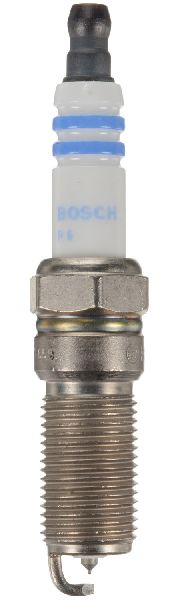
Est. part cost: $30-$80 - Worn or Fouled Spark Plug 🟡 Medium Probability → Shop Spark Plug A worn spark plug creates a larger gap, forcing the ignition coil to work harder and eventually fail. On this specific engine, a plug can also be fouled by coolant from the known coolant intrusion issue, which appears as a white, chalky residue.
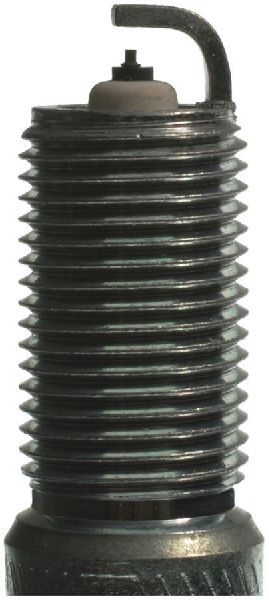
How to confirm: After removing the ignition coil, remove the spark plug from cylinder #3. Inspect it for wear (worn electrode), carbon buildup, oil fouling, or signs of coolant (a white, chalky residue or wetness).
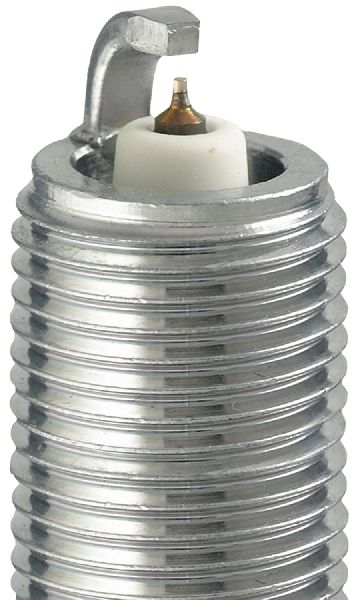
Typical fix: Replace the spark plug. It is best practice to replace all four spark plugs at the same time to ensure balanced engine performance. Always replace the plug when replacing a coil.
Est. part cost: $10-$25 per plug - Damaged Wiring or Connector ⚪ Low Probability Engine vibration and heat can cause wires to become brittle or the plastic connector lock to break over time, leading to a poor connection. Manufacturer service bulletin #SSM 47180 notes that for some EcoBoost engines, codes P0351-P0354 may be due to a poor connection at cylinder head ground G111 near the coil on plug.
How to confirm: Visually inspect the wiring harness and connector leading to the cylinder #3 ignition coil. Look for any signs of burns, breaks, corrosion, or loose pins. Wiggle the connector with the engine running to see if it affects the idle. Check for a secure ground connection.
Typical fix: Repair the damaged section of wire or replace the pigtail connector. The connector itself is a common point of failure.
Est. part cost: $15-$40 for a connector pigtail
Rare But Worth Checking
- Engine Coolant Intrusion: This is a known, serious issue on 2017-2019 2.0L EcoBoost engines. A design flaw allows a crack to form in the engine block between cylinders, letting coolant leak into the cylinder. This fouls the spark plug and can cause P0353, often accompanied by P0303. If you are losing coolant, see white sweet-smelling smoke from the exhaust on startup, or have a recurring misfire on cylinder 2 or 3, this must be investigated. Ford's official fix per TSB 19-2346 is a complete long block engine replacement.
- Faulty Powertrain Control Module (PCM): → Shop Engine Control Module (ECM) This is extremely rare. The PCM's internal driver circuit for the coil can fail. However, all other possibilities (coil, plug, wiring) should be exhaustively ruled out before considering PCM replacement, which requires professional diagnosis and programming. NHTSA ODI #10494379 describes a situation where an owner was told the PCM module required replacement after codes P0351 through P0354 appeared.
Diagnosis Steps
- Read the trouble codes with an OBD-II scanner to confirm P0353 and check for any other related codes (e.g., P0303, P0316).
- Crucial First Check: Check the coolant reservoir level. If it is low, and there are no visible external leaks, suspect the coolant intrusion issue. Look for white, sweet-smelling exhaust smoke, especially on a cold start.
- Locate cylinder #3. On the 2.0L EcoBoost, the cylinders are numbered 1-2-3-4 from the passenger side (transaxle side) to the driver side (timing belt side) of the engine.
- Swap the ignition coil from cylinder #3 with the coil from cylinder #2. This is the easiest way to isolate a bad coil.
- Clear the codes, start the engine, and let it run for a minute. A short drive may be necessary.
- Re-scan for codes. If the code is now P0352, the ignition coil is bad and needs to be replaced.
- If the code P0353 returns, the problem is not the coil. Turn off the engine and proceed.
- Inspect the wiring and connector for cylinder #3. Look for broken plastic clips, corrosion on the pins, or any frayed/burnt wires.
- If the wiring appears good, remove the spark plug from cylinder #3. Inspect it for excessive wear, damage, or fouling. A wet or white/green crystalline appearance strongly indicates coolant.
- If the spark plug is fouled, replace it. It is recommended to replace all four.
- If all components appear to be in good condition but the code persists, the issue may be a rare PCM fault or the coolant intrusion problem. A professional should perform a cooling system pressure test or use a borescope to check for coolant inside the cylinder to confirm the latter.
Parts You'll Likely Need
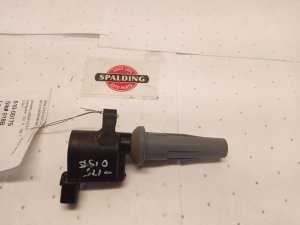
- Ignition Coil
(OEM #CM5Z-12029-K)— This is the most common failure point for a P0353 code. The original part number CM5Z-12029-A has been superseded by CM5Z-12029-K.
Trusted brands: Motorcraft, NGK, Denso, MSD
OEM price range: $50-$80
Aftermarket price range: $30-$60 - Spark Plug
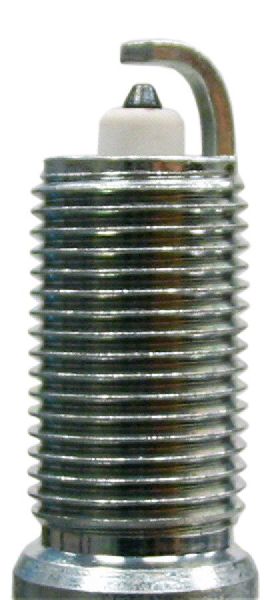
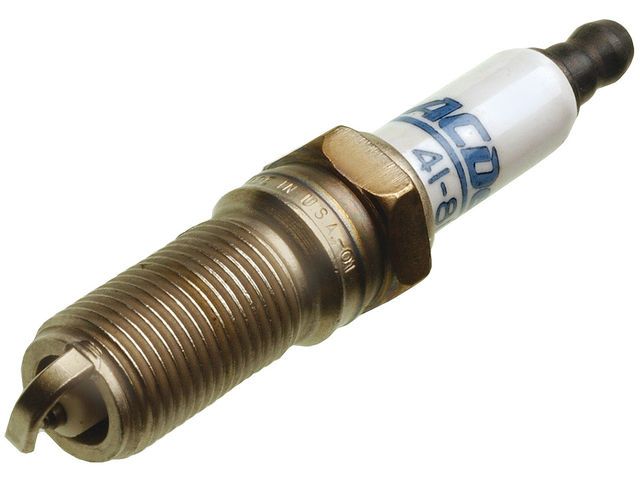
(OEM #SP-550 (CYFS-12Y-T))— A worn spark plug can cause a coil to fail, and a failed coil can damage a spark plug. It is best practice to replace them together, especially if the service history is unknown or if coolant fouling is suspected.
Trusted brands: Motorcraft, NGK
OEM price range: $15-$25
Aftermarket price range: $10-$20 - Ignition Coil Connector Pigtail — The plastic locking tab on the connector can become brittle and break, causing a loose connection that sets a P0353 code. Replacing the pigtail is often necessary for a secure connection.
Trusted brands: Motorcraft, Dorman, Standard Motor Products
OEM price range: $25-$45
Aftermarket price range: $15-$30
Related Codes That Often Appear With This One
- P0303 — This code means 'Cylinder 3 Misfire Detected.' P0353 is a circuit code for the coil, while P0303 is the effect (the misfire). They almost always appear together. NHTSA ODI #10484858 notes an instance where P0303 and P0353 appeared together along with a cylinder head temperature sensor code.
- P0300 — This 'Random/Multiple Cylinder Misfire' code can appear if the issue is causing misfires on other cylinders, or if a related problem like the coolant intrusion is affecting the entire engine.
- P0316 — 'Misfire Detected on Startup (First 1000 Revolutions)'. This often accompanies P0303 and P0353, especially if the problem is pronounced on a cold start, which is typical of coolant fouling.
Technical Service Bulletins (TSBs) & Recalls
- TSB 19-2346: This is the key document for the coolant intrusion issue on 2017-2019 Escapes with the 2.0L engine. It lists symptoms (low coolant, white smoke, rough run) and associated DTCs (P0300-P0304, P0316, etc.) and specifies that the corrective action is to replace the long block engine assembly. It applies to Escapes built on or before May 16, 2019.
- Bulletin #SSM 47180: This bulletin notes that vehicles with a 1.5L EcoBoost may exhibit misfires and DTCs P0351-P0354 due to a poor connection at cylinder head ground G111.
- TSB 20-2338: This TSB is unrelated to P0353 but is relevant to Ford owners. It addresses excessive oil consumption on some 5.0L engines and is not applicable to the 2.0L EcoBoost Escape.
Platform-Specific Known Issues
- A known design flaw in the 2.0L EcoBoost engine block for model years 2017-2019 can lead to coolant leaking into the cylinders, particularly cylinders 2 and 3. This can cause misfires and trigger codes like P0353. Ford has issued Technical Service Bulletin (TSB) 19-2346, which supersedes previous versions and recommends a long block engine replacement as the definitive repair. This issue affects Escapes built on or before May 16, 2019. If you have this code accompanied by coolant loss, it is a strong indicator of this more serious problem.
Mechanic-Grade Diagnostic Values
- Ignition Coil Primary Circuit Voltage (Key On, Engine Off) — expected: Approximately 12 Volts (Battery Voltage). Failure: Absence of voltage or significantly lower voltage points to an open circuit or wiring issue upstream of the coil.
- Ignition Coil Primary Winding Resistance — expected: 0.5 to 2.0 ohms (general specification). Failure: A reading of infinite resistance (open) or very low resistance (short) indicates a failed coil.
- Ignition Coil Secondary Winding Resistance — expected: 5,000 to 15,000 ohms (general specification). Failure: A reading outside this range, especially infinite resistance, indicates a failed secondary winding in the coil.
- Ignition Control (IC) Signal from PCM — expected: A pulsing Hertz signal (typically 5-20 Hz) when the engine is running or cranking.. Failure: No signal indicates a wiring problem between the PCM and coil, or a faulty PCM driver.
Scan Tool Commands That Help
- Ford IDS (Integrated Diagnostic System) / FORScan: Power Balance Test / Cylinder Cutout Test — This function allows a technician to individually disable cylinders to observe the effect on engine RPM. If cutting out cylinder #3 causes no change in how the engine runs, it confirms that cylinder is not contributing (misfiring). This is a powerful way to verify the misfire location before swapping parts.
- Advanced OBD-II Scanners (e.g., FORScan): Mode $06 Test Results — Mode $06 provides access to non-continuous monitor test results. For ignition systems, you can view misfire counts per cylinder for the current and last driving cycles. This can help confirm if the misfires are solely on cylinder 3 or if other cylinders are also experiencing intermittent misfires that haven't yet set a code.
Wiring & Ground Locations
- Ignition Coil Connector (C1693 for Cylinder 3) — On top of the engine, directly connected to the ignition coil for cylinder #3 (third from the passenger side).. This is the primary connection point. Pin 1 (typically a Green wire) is the control signal from the PCM. Pin 2 (typically a Yellow with Violet stripe wire) is the 12V+ power feed. Pin 3 is the ground. A poor connection, corrosion, or broken lock tab here is a common cause of P0353.
- Main Engine/Battery Ground Point — On the chassis, located to the right of the battery near the engine compartment fuse box.. A poor main ground can cause a host of electrical issues, including intermittent ignition problems. While not a direct cause of a single-cylinder coil code, it can create voltage drops and electrical noise that can lead to PCM misdiagnosis or erratic component behavior. Always ensure this connection is clean and tight.
Real Owner Repair Stories
- BobIsTheOilGuy forum (2017 Ford Escape Titanium 2.0L EcoBoost, 64k miles at onset) — Intermittent rough running, hesitation, and misfires. General and specific misfire codes were present.
❌ Tried (didn't work) Replaced MAP sensor (twice), Replaced the ECU (PCM)
✅ What actually fixed it The dealership eventually performed a pressure test and used a borescope, confirming a coolant leak into cylinder #2. The final repair was a new long block engine, with Ford of Canada covering a significant portion of the cost despite being out of warranty. - Reddit user in r/fordescape (2017 Ford Escape 2.0L, 58,600 miles) — Check engine light, misfiring.
❌ Tried (didn't work) Replaced cylinder head at 28,000 miles for a previous, similar issue.
✅ What actually fixed it The dealership diagnosed coolant leaking into the cylinders again. The ultimate fix was a complete engine replacement under the powertrain warranty. - NHTSA ODI #11429061 — An owner reported that their vehicle shut down on the interstate with codes P0351 through P0356 and would not restart.
- NHTSA ODI #10694980 — One driver reported that their PCM, spark plugs, and ignition coils all failed at once, with diagnostics showing codes P0351, P0354, and P0353.
OEM Part Supersession History
CM5Z-12029-A→CM5Z-12029-K— Standard part revision and improvement by the manufacturer. The new part number is the current OEM replacement.
Heads up: The parts are interchangeable, but it is always recommended to use the latest revision (CM5Z-12029-K) for any repairs.
Model Year Variations Within This Range
- 2017-Early 2019: Engines built on or before May 16, 2019, feature the original open-deck block design that is susceptible to the coolant intrusion issue (TSB 19-2346). Engines produced after this date have a revised block design to correct this flaw.
- 2017: The 2017 model year marked a facelift for the Escape, which included the introduction of the twin-scroll 2.0L EcoBoost engine, replacing the earlier single-scroll version. This new engine produced slightly more power (245 hp vs 240 hp).
Diagnostic Flowchart
Other Known Issues on This Vehicle
Issues unrelated to this code that are worth knowing about as an owner of this generation:
- Engine Coolant Intrusion 🔴 High — A widely documented design flaw affecting 2017-2019 2.0L engines built before mid-2019. Failure can occur anywhere from 50,000 miles onward. (Ref: TSB 19-2346)
- 6F35 Transmission Problems 🟠 Medium — Common complaints of shuddering, hesitation, harsh shifts, and premature failure, sometimes before 100,000 miles. (Ref: Multiple lawsuits filed, but no widespread recall for this specific issue.)
- Turbocharger Wastegate/Solenoid Issues 🟡 Low — Can occur and lead to codes like P0299 (underboost). Not as common as coolant or transmission issues but a known failure point on EcoBoost engines. (Ref: TSB 15-0162 (for 1.6L but relevant concept))
Used vs. New Parts: Buying Guide for This Vehicle
When a used part is the smart pick: For simple, external bolt-on parts like an ignition coil connector pigtail, a used part from a junkyard can be a cost-effective solution. If the locking tab on your original connector is broken, sourcing a used pigtail with an intact tab is a viable repair.
Donor-vehicle mileage cap: roughly under 80000 miles for the part to have meaningful remaining life.
What to inspect on the donor part:
- For a connector pigtail, ensure the plastic is not brittle, the locking tab is intact and functional, and there are several inches of wire to allow for splicing.
- For a used ignition coil, check for cracks in the plastic housing and ensure the rubber boot is not torn or oil-soaked. However, buying used ignition coils is generally not recommended due to their nature as a wear item.
OEM-only on this vehicle (don't cheap out):
- Ignition Coils
- Spark Plugs
Aftermarket brands forum-validated for this vehicle:
- Motorcraft (OEM)
- NGK
- Denso
Brands owners have reported issues with on this vehicle:
- Unnamed or 'white box' generic brands. Forum discussions frequently advise against low-cost aftermarket coils, citing high failure rates and performance issues compared to OEM Motorcraft parts for EcoBoost engines.
Real Owner Stories
Aggregated from forums and TSBs cited above. Mileages and costs reflect what owners reported in those sources.
2018 Ford Escape 2.0L — 94000 miles
Symptoms: Owner experienced engine failure starting with a misfire code.
What fixed it: The issue was identified as the coolant intrusion design flaw affecting 2.0L engines built before May 2019.
Source hint: Reddit r/fordescape - Thread titled '2019 Ford Escape 2.0L should I worry??'
2017 Ford Escape
Symptoms: Motor issues where codes P0351 through P0354 would appear intermittently.
What fixed it: The problem was resolved after checking connections, pointing toward a potential wiring or ground issue as the codes came and went.
Source hint: Car Talk Community - '2017 Ford Escape motor issues'
Related OBD-II Codes
Frequently Asked Questions
Does TSB 19-2346 apply to my 2018 Ford Escape 2.0L EcoBoost?
I have a P0353 code and my coolant is low; could this be the engine block design flaw?
How can I tell if my P0353 code is a simple coil failure or the more serious coolant intrusion issue?
Where is cylinder #3 located on the Ford Escape 2.0L EcoBoost engine?
Is it necessary to replace all four spark plugs if only the cylinder #3 plug is fouled?
Can a damaged wiring connector cause the P0353 code on my Escape?
Helpful Videos
Used OEM Parts in Stock
New Aftermarket Parts Available

The information in this article is provided for general reference and educational purposes only. Vehicle specifications, procedures, and part compatibility can vary by production date, trim level, and region. Always consult your vehicle's factory service manual and verify part numbers before purchasing or performing repairs. Safety-critical components such as airbags, seat belts, and braking systems should be installed by a qualified professional.
- Ford Escape:
- 🧭 Diagnostic Flowchart
- 🎬 Helpful Videos
- 🛍️ Shop This Part
- What's Unique About the 2017-2019 Ford Escape
- Symptoms You May Notice
- Most Likely Causes
- Rare But Worth Checking
- Diagnosis Steps
- Parts You'll Likely Need
- Related Codes That Often Appear With This One
- Technical Service Bulletins (TSBs) & Recalls
- Platform-Specific Known Issues
- Mechanic-Grade Diagnostic Values
- Scan Tool Commands That Help
- Wiring & Ground Locations
- Real Owner Repair Stories
- OEM Part Supersession History
- Model Year Variations Within This Range
- Other Known Issues on This Vehicle
- Used vs. New Parts: Buying Guide for This Vehicle
- Real Owner Stories
- 2018 Ford Escape 2.0L — 94000 miles
- 2017 Ford Escape
- Related OBD-II Codes
- Frequently Asked Questions
- 🎟️ Get 5% Off