

P0353 on 2009-2015 Ford Flex 3.5L: Ignition Coil 'C' Circuit Failure Causes and Fixes
P0353 on a Ford Flex means the ignition coil for cylinder #3 has failed. This cylinder is on the difficult-to-access rear bank against the firewall. The most likely fix is replacing the ignition coil and spark plug, which requires removing the intake manifold. Expect to pay a professional $350-$550 for this repair. While there, it is critical to inspect the old coil for damage; a cracked coil can damage the PCM, necessitating a much more expensive repair.
- P0353 points to a failure in the ignition system for cylinder #3.
- Cylinder #3 is on the rear bank, requiring removal of the intake manifold for access, which makes the repair significantly more difficult and expensive.
- The most common fix is a bad ignition coil and/or spark plug.
- Due to the high labor cost, it is strongly recommended to replace all three rear ignition coils, spark plugs, and the intake gaskets at the same time.
- Be aware that in rare cases, the failed coil can damage the engine computer (PCM), leading to a much more costly repair.
What's Unique About the 2009-2015 Ford Flex
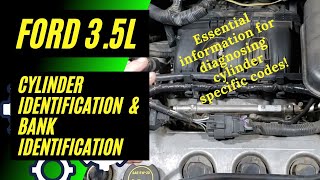
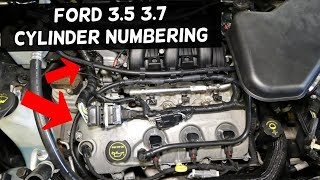
On the Ford Flex with the transverse 3.5L Duratec V6, the cylinder banks are numbered with 1-2-3 on the rear bank (firewall side) and 4-5-6 on the front bank (radiator side). 🎬 Watch this quick guide to identify Ford 3.5L cylinder banks. Cylinder #3 is located on this rear bank, pressed up against the firewall. This location is significant because the entire upper intake manifold must be removed to access the coil and spark plug. This turns a simple 15-minute coil replacement into a multi-hour job, making it crucial for owners to consider replacing all three rear coils and spark plugs at the same time to avoid duplicating the labor cost in the near future.
Symptoms You May Notice
- Check Engine Light is on and may be flashing
- Rough, shaking, or vibrating idle
- Engine hesitation or stumbling on acceleration
- Noticeable loss of engine power
- Reduced fuel economy
- Replacing only the spark plug without testing the coil.
- Replacing a fuel injector when the problem is ignition-related.
- Assuming the code is for an easily accessible front cylinder without verifying the cylinder layout.
Most Likely Causes
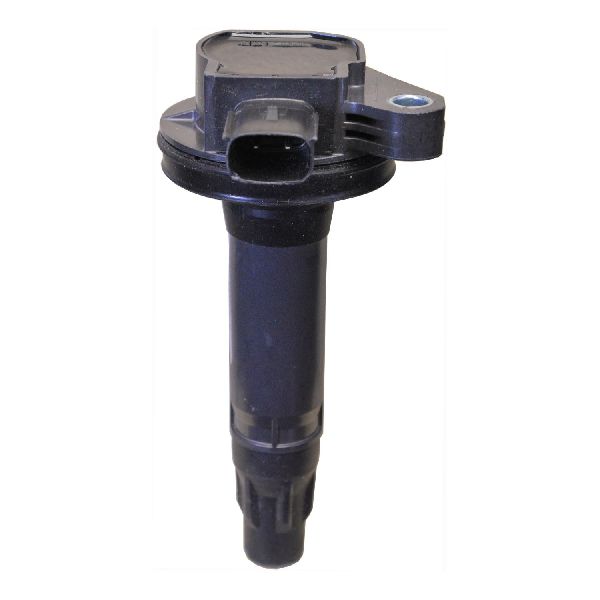
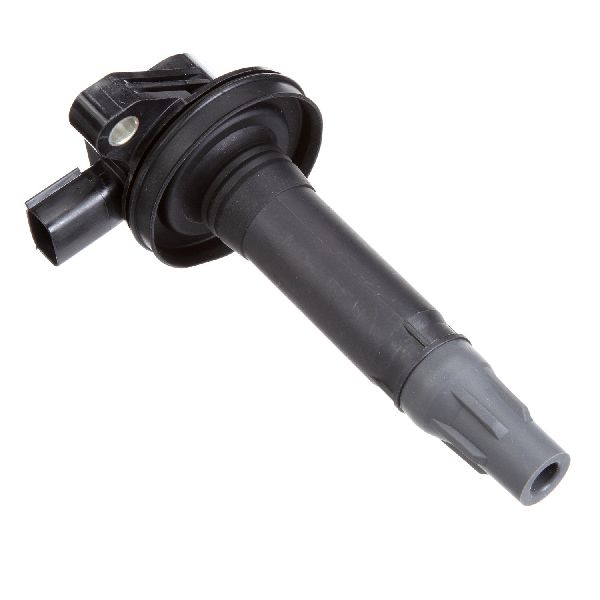
- Failed Ignition Coil 🔴 High Probability → Shop Ignition Coil Ignition coils are a common wear item that can fail from heat cycles and vibration over time. The rear bank coils may experience higher ambient temperatures due to their location. An internal short in the coil is a frequent failure mode.
How to confirm: The most common DIY method is to clear the codes and swap the cylinder #3 coil with an accessible front coil (e.g., cylinder #4). If the code changes to P0354, the coil is confirmed bad. However, this is impractical for cylinder #3 due to the labor involved. The best approach is to test the coil's primary circuit for correct voltage and ground signals from the PCM using a multimeter after accessing the coil.
Typical fix: Replace the ignition coil for cylinder #3. It is highly recommended to replace the spark plug at the same time, and ideally all three coils and plugs on the rear bank.
Est. part cost: $70-$115 for one OEM coil. - Worn or Fouled Spark Plug 🟡 Medium Probability → Shop Spark Plug Worn spark plugs create a larger gap, forcing the ignition coil to work harder to generate a spark. This strain can lead to coil failure and can also cause a misfire on its own.
How to confirm: After removing the intake manifold and ignition coil, remove the spark plug and inspect it. Look for a worn-down electrode, excessive carbon buildup, or oil fouling. The correct spark plug gap is 0.049 - 0.053 inches (1.25 mm - 1.35 mm).
Typical fix: Replace the spark plug. Since the intake manifold must be removed, it is best practice to replace all six spark plugs at once.
Est. part cost: $8-$15 per plug. - Damaged Wiring or Connector ⚪ Low Probability Engine bay heat and vibration can make plastic connectors brittle and wires fragile over time. Rodents can also chew on wiring. Corrosion can develop on connector pins, creating an open or shorted circuit.
How to confirm: Visually inspect the wiring harness and connector for cylinder #3's ignition coil. Check for broken wires, loose pins, or corrosion. Use a multimeter to check for continuity and proper voltage at the connector.
Typical fix: Repair the damaged section of wiring or replace the connector pigtail.
Est. part cost: $15-$30 for a new pigtail connector.
Rare But Worth Checking
- Failed Powertrain Control Module (PCM) Driver: → Shop Engine Control Module (ECM) A critical issue documented in Ford TSB 13-4-17 for the 3.5L engine family is that an internally shorted ignition coil can crack and send a voltage spike back to the PCM, destroying the driver circuit. If a new coil and plug do not resolve the P0353 code and wiring is good, the PCM is the likely culprit. Repair services like Circuit Board Medics specialize in fixing this exact issue for the 2009-2015 Flex. The TSB specifies that if a coil is found with cracks or heat damage, the PCM and all six coils and plugs MUST be replaced.
Diagnosis Steps
- Confirm the presence of code P0353 using an OBD-II scanner.
- Verify the cylinder layout for the 3.5L V6: Cylinders 1-2-3 are on the rear bank (firewall side), and 4-5-6 are on the front bank (radiator side). Cylinder #3 is the rearmost on the passenger side.
- Due to the labor involved, prepare for intake manifold removal. It is advisable to have new intake manifold gaskets, three new ignition coils, and three new spark plugs on hand before starting.
- Disconnect the battery. Remove the upper intake manifold following the correct procedure and 8mm bolt sequence. 🎬 See how to remove the intake manifold and replace the gaskets.
- Once the rear bank is exposed, carefully inspect the wiring and connector for coil #3 for any visible damage, corrosion, or loose pins.
- Crucially, inspect the body of the ignition coil itself for any cracks, melting, or signs of heat damage. Per TSB 13-4-17, this is an indicator of an internal short that may have damaged the PCM.
- If wiring appears okay, remove the 8mm bolt holding the ignition coil, disconnect it, and pull it out.
- Remove the spark plug from cylinder #3. Inspect its condition. A worn, fouled, or damaged plug should be replaced.
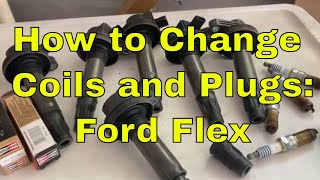
- Given the high probability of coil failure and the labor to access it, the most efficient repair is to replace the ignition coil, spark plug, and coil boot for cylinder #3. Best practice is to replace all three rear coils and plugs. 🎬 Watch a step-by-step walkthrough of this coil and plug replacement.
- Apply a small amount of dielectric grease to the inside of the new coil boot before installing it over the new spark plug.
- Reinstall the ignition coil and its 8mm bolt. Reconnect the electrical connector.
- Install new intake manifold gaskets and reinstall the upper intake manifold, torquing the bolts to specification in the correct sequence.
- Reconnect all hoses, electrical connectors, and the battery.
- Clear the codes with the OBD-II scanner and start the engine. Check for a smooth idle and take a test drive to ensure the code does not return. If the code immediately returns, further testing of the wiring and PCM driver circuit is required.
Parts You'll Likely Need
- Ignition Coil
(OEM #DG-520 (or superseded DG-549))— This is the most common failure point for a P035x code. The coil is responsible for generating the high voltage for the spark.
Trusted brands: Motorcraft, NGK, Denso
OEM price range: $70-$115
Aftermarket price range: $40-$75 - Spark Plug
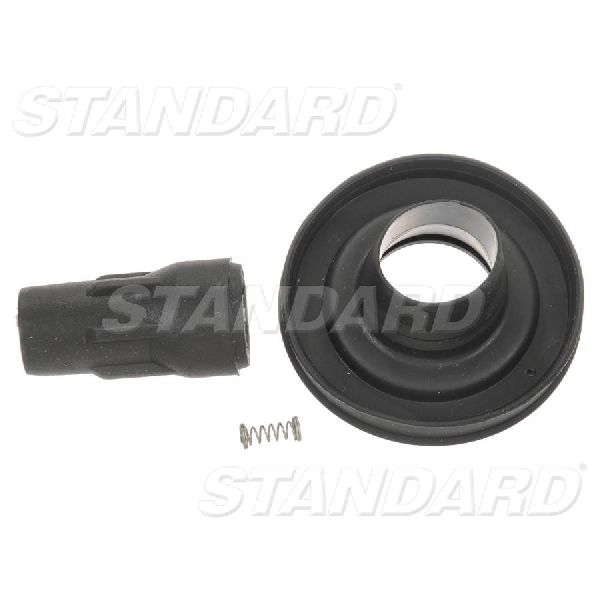
(OEM #SP-520 (or superseded SP-534))— A worn spark plug can cause the misfire directly or put extra strain on the coil, causing it to fail. It should always be replaced with the coil, especially when performing a labor-intensive repair.
Trusted brands: Motorcraft, NGK, Autolite
OEM price range: $8-$15
Aftermarket price range: $5-$12 - Upper and Lower Intake Manifold Gaskets
(OEM #AA5Z-9439-A (Upper, example))— These gaskets are single-use and must be replaced anytime the intake manifold is removed to prevent vacuum leaks.
Trusted brands: Motorcraft, Fel-Pro, Mahle
OEM price range: $20-$40 (set)
Aftermarket price range: $15-$30 (set) - Coil/Spark Plug/Gasket Service Kit
(OEM #BA5Z-12259-A)— Ford offers a service kit for the 3.5L engine which includes all six coils, six spark plugs, and the necessary intake gaskets, as recommended by TSB 13-4-17 for a complete repair when PCM damage is suspected.
Trusted brands: Motorcraft
OEM price range: $400-$550
Related Codes That Often Appear With This One
- P0303 — P0303 means 'Cylinder 3 Misfire Detected'. P0353 is the specific electrical circuit fault that is causing the misfire, so these codes almost always appear together.
Technical Service Bulletins (TSBs) & Recalls
- TSB 13-4-17: Applies to 2006-2008 3.5L engines but is highly relevant. It directs technicians who find a P035x code and a physically damaged (cracked, heat-damaged) ignition coil to replace the PCM, all six coils, and all six spark plugs to fully resolve the issue and prevent a repeat failure of the new coil.
- TSB Bulletin #SSM 52455: Notes that various gas engine vehicles may exhibit an illuminated MIL with ignition system DTCs including P0353 set in the powertrain control module (PCM).
- TSB Bulletin #TSB 24-2406: Describes instances where vehicles equipped with EcoBoost engines may exhibit an illuminated MIL with ignition system DTCs such as P0353 set in the PCM.
Platform-Specific Known Issues
- The location of cylinder #3 on the rear bank requires removal of the intake manifold, significantly increasing repair time and cost compared to a front-bank coil failure.
- The 3.5L engine family has a known issue where a failing ignition coil can short internally, sending a voltage spike back to the PCM. This damages the coil driver circuit, requiring PCM replacement or repair. This is a critical diagnostic consideration if a new coil does not fix the code.
Mechanic-Grade Diagnostic Values
- Ignition Coil Primary Resistance — expected: 0.5 to 0.7 ohms. Failure: A reading of OL (infinite) indicates an open circuit, while near-zero ohms indicates a short.
- Ignition Coil Secondary Resistance — expected: 5,500 to 11,500 ohms (5.5kΩ to 11.5kΩ). Failure: A reading significantly outside this range indicates a failure in the secondary windings.
- Voltage at Coil Connector Power Wire (Key On, Engine Off) — expected: Approximately 12V (Battery Voltage). Failure: Low or no voltage points to a problem with the power supply circuit, fuse, or wiring.
- Coil Control Signal (Cranking or Idling) — expected: A pulsing ground signal, best viewed on an oscilloscope or with a noid light.. Failure: A constant ground or a flat line (no signal) indicates a failed PCM driver or a break in the signal wire.
- Mode $06 Misfire Count — expected: A count at or near zero for the specified cylinder.. Failure: A high or rapidly increasing count under Test ID $53 (TID $53) for the corresponding cylinder confirms the PCM is detecting misfire events, even before a P030x code is set.
Hidden / Shadow Codes Worth Checking
- Mode $06, TID $53: This is not a standard trouble code, but a monitor within the OBD-II system that provides raw misfire counts for each cylinder. It allows a technician to see intermittent misfires that haven't yet met the threshold to trigger a P0303 trouble code. (see via An advanced professional scan tool or a DIY tool/app with Mode $06 capability, such as FORScan.)
Scan Tool Commands That Help
- Ford IDS (or equivalent professional scanner): Power Balance Test — This function allows a technician to disable one cylinder at a time to observe the corresponding drop in engine RPM. If disabling cylinder #3 causes no change in RPM, it confirms that cylinder was not contributing, which is expected with a P0353. It helps verify the location of the dead cylinder.
Wiring & Ground Locations
- G104 — On the transmission assembly.. This is a major case ground. A poor connection here can cause a host of electrical issues, including erratic behavior from the PCM and its controlled components like ignition coils.
- G101 — On the right side fender apron, near the battery.. This is a primary power ground. Corrosion or a loose connection here can affect the entire electrical system's stability.
- Ignition Coil Connector — Connects directly to the top of the ignition coil for cylinder #3.. The connector itself is a common point of failure. The plastic locking tab can become brittle and break, or the internal pins can corrode or loosen, causing an intermittent open or short in the coil's primary circuit.
Real Owner Repair Stories
- CarKiller forum user (Vehicle with 3.5L engine, failure started at 150,000 km and continued to 250,000 km) — Intermittent P0353 code. Check engine light would come on and car would shake, but the issue would resolve itself after turning the car off and on again. This happened about 3 times a year.
❌ Tried (didn't work) Swapping ignition coils (the code did not move to another cylinder)., Replacing all spark plugs with OEM parts.
✅ What actually fixed it The problem was diagnosed as a faulty wiring connector or harness leading to the #3 ignition coil. The issue re-appeared immediately after a mechanic disconnected and reconnected it to change the spark plugs, indicating the connector itself was the source of the intermittent fault. - YouTube video by 'Repairs101' (2006 Ford Expedition (different vehicle, but same coil connector style and issue)) — P0353 Ignition Coil C Circuit Malfunction.
❌ Tried (didn't work) Initial diagnosis pointed to the coil, but the connector was the true cause.
✅ What actually fixed it The plastic locking tab on the ignition coil connector was broken and the weather seal gasket inside was degraded, preventing a secure connection. The fix was to cut off the old connector and splice in a new pigtail connector, which resolved the circuit fault code.
Documented NHTSA Reports
- An owner reported in NHTSA ODI #11145130 that their vehicle jerked in gears on the freeway before the check engine light displayed P0353; replacing the ignition coil and all six spark plugs did not clear the code.
- NHTSA ODI #11429061 describes a vehicle shutting down on the interstate with multiple ignition codes including P0353.
- In NHTSA ODI #10694980, a technician determined that the PCM, spark plugs, and ignition coils all failed at once after codes P0351, P0354, and P0353 appeared.
OEM Part Supersession History
Motorcraft SP-520→Motorcraft SP-534— Revision to the part. Both are Iridium-tip spark plugs with similar designs.Motorcraft SP-534→Motorcraft SP-580— Further part number revision, partly for inventory management. The plugs are functionally identical Iridium plugs.
Heads up: SP-580 is a direct replacement for SP-534.Motorcraft DG-520→Motorcraft DG-549 (as noted in Pass 2)— Standard part number update/revision.
Diagnostic Flowchart
Other Known Issues on This Vehicle
Issues unrelated to this code that are worth knowing about as an owner of this generation:
- Internal Water Pump Failure 🔴 High — A well-documented, common failure point, often occurring between 80,000 and 150,000 miles. Failure can be sudden.
- Electronic Throttle Body (ETB) Failure 🟠 Medium — Widespread issue, common enough for Ford to issue Customer Satisfaction Program 13N03 (now expired). (Ref: Customer Satisfaction Program 13N03)
- Door Ajar Sensor Malfunction 🟡 Low — Extremely common across many Ford models of this era, including the Flex. (Ref: Customer Satisfaction Program 19N09 (for some models))
Used vs. New Parts: Buying Guide for This Vehicle
When a used part is the smart pick: A used part is generally not recommended for this repair, with two exceptions: the upper intake manifold if it were damaged during removal, or the wiring pigtail connector if sourced from a junkyard. For all electronic and wear components, new is the correct choice.
Donor-vehicle mileage cap: roughly under 100000 miles for the part to have meaningful remaining life.
What to inspect on the donor part:
- For a wiring pigtail: ensure the plastic is not brittle, the locking tab clicks firmly, and the weather seal is intact and pliable.
- For an intake manifold: check for cracks, warping, and ensure all mounting points are intact.
OEM-only on this vehicle (don't cheap out):
- Ignition Coil: Strongly recommend Motorcraft. An aftermarket coil failing can short and destroy the PCM, a much more expensive repair. The OEM coils are known to have this failure mode, but aftermarket quality control is a significant risk.
- Powertrain Control Module (PCM): If PCM replacement is necessary, a new or professionally repaired OEM unit is the only reliable option. Used PCMs require programming (PATS key matching) which can be complex.
Aftermarket brands forum-validated for this vehicle:
- NGK (for Ignition Coils and Spark Plugs)
- Denso (for Ignition Coils)
- Fel-Pro (for Intake Gaskets)
Brands owners have reported issues with on this vehicle:
- Unnamed, generic ignition coils from online marketplaces. The risk of premature failure and potential for PCM damage is too high to justify the low cost.
Real Owner Stories
Aggregated from forums and TSBs cited above. Mileages and costs reflect what owners reported in those sources.
2008 Ford 3.5L DOHC Cyclone Engine
Symptoms: The owner documented a step-by-step removal of the upper intake manifold to access the rear cylinder bank for coil and plug service.
What fixed it: Removal of the upper intake manifold using an 8mm bolt sequence to replace the ignition components on the rear bank.
Source hint: Ford 3.5L DOHC Upper Intake manifold removal (cyclone engine) - YouTube
Related OBD-II Codes
Frequently Asked Questions
Where is cylinder #3 located on my Ford Flex 3.5L V6?
Does TSB 13-4-17 apply to my Ford Flex if I have a P0353 code?
Why is the repair for P0353 more expensive than a front-bank coil code?
Should I replace all the spark plugs when fixing this code?
Can a bad ignition coil damage my Flex's computer (PCM)?
What is the correct spark plug gap for the 3.5L Duratec engine?
Helpful Videos
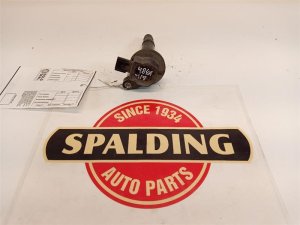
Used OEM Parts in Stock
New Aftermarket Parts Available
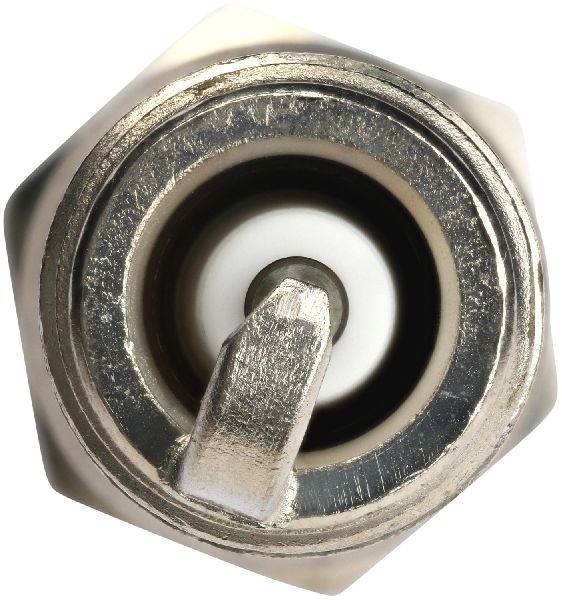
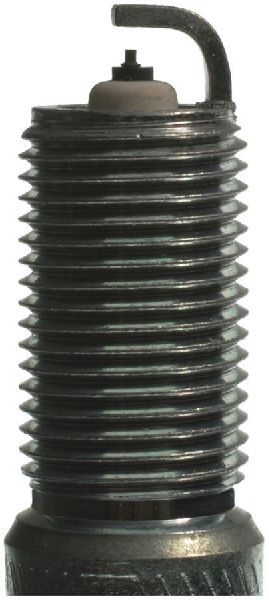


The information in this article is provided for general reference and educational purposes only. Vehicle specifications, procedures, and part compatibility can vary by production date, trim level, and region. Always consult your vehicle's factory service manual and verify part numbers before purchasing or performing repairs. Safety-critical components such as airbags, seat belts, and braking systems should be installed by a qualified professional.
- Ford Flex:
- 🧭 Diagnostic Flowchart
- 🎬 Helpful Videos
- 🛍️ Shop This Part
- What's Unique About the 2009-2015 Ford Flex
- Symptoms You May Notice
- Most Likely Causes
- Rare But Worth Checking
- Diagnosis Steps
- Parts You'll Likely Need
- Related Codes That Often Appear With This One
- Technical Service Bulletins (TSBs) & Recalls
- Platform-Specific Known Issues
- Mechanic-Grade Diagnostic Values
- Hidden / Shadow Codes Worth Checking
- Scan Tool Commands That Help
- Wiring & Ground Locations
- Real Owner Repair Stories
- Documented NHTSA Reports
- OEM Part Supersession History
- Other Known Issues on This Vehicle
- Used vs. New Parts: Buying Guide for This Vehicle
- Real Owner Stories
- 2008 Ford 3.5L DOHC Cyclone Engine
- Related OBD-II Codes
- Frequently Asked Questions
- 🎟️ Get 5% Off