

P0353 on 2010-2019 Ford Taurus 3.5L: Ignition Coil 'C' Circuit Malfunction Causes and Fixes
On a 2010-2019 Ford Taurus with the 3.5L V6, code P0353 is almost always caused by a failed ignition coil on cylinder #3. Because cylinder #3 is on the rear bank under the intake manifold, this is a more involved repair than for the front cylinders. Expect to pay $300-$650 for a shop to replace the coil and spark plug, with many owners opting to replace all three rear coils and all six plugs due to the high labor cost.
- P0353 on this vehicle points to a problem with the ignition coil circuit for cylinder #3.
- The biggest challenge is that cylinder #3 is on the rear bank, requiring the removal of the upper intake manifold to access it.
- The most common fix is to replace the ignition coil and spark plug for cylinder #3.
- Due to the high labor involved, it is highly recommended to replace the intake manifold gaskets and consider servicing the other two rear cylinders (#1 and #2) at the same time.
- Ignoring this code can lead to damage to the catalytic converter, a much more expensive repair.
What's Unique About the 2010-2019 Ford Taurus
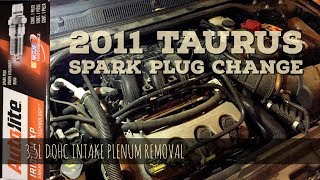
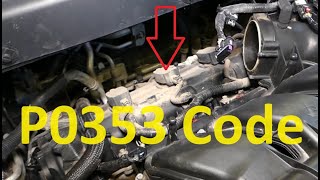
The single most important factor for this code on the 3.5L V6-equipped Ford Taurus is the location of cylinder #3. The firing order is 1-4-2-5-3-6. Cylinders 1-2-3 are on the rear bank (Bank 1) against the firewall, while 4-5-6 are on the front bank (Bank 2) near the radiator. To access the ignition coil and spark plug for cylinder #3 (the rearmost cylinder on the driver's side), the entire upper intake manifold must be removed. 🎬 Watch this step-by-step guide on removing the upper intake manifold. This turns a simple 15-minute coil replacement (for the front cylinders) into a 2-3 hour job, significantly increasing labor costs and DIY difficulty.
Symptoms You May Notice
- Check Engine Light is on (may be flashing if the misfire is severe)
- Rough or shaky idle
- Noticeable engine misfire or hesitation, especially during acceleration
- Reduced engine power and sluggish performance
- Worse than normal fuel economy, sometimes dropping by 20% or more.
- The engine may stall intermittently
- Replacing only the spark plug without testing or replacing the coil. A bad coil can quickly foul a new spark plug.
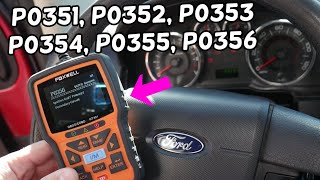
- Replacing a fuel injector. While a bad injector can cause a misfire (P0303), it will not cause an ignition coil circuit code like P0353. 🎬 See this video explaining the causes and fixes for code P0353.
- Not replacing the upper intake manifold gaskets. Reusing old gaskets is a common DIY mistake that can lead to vacuum leaks, causing rough running and new trouble codes.
Most Likely Causes
- Failed Ignition Coil (Cylinder #3) 🔴 High Probability → Shop Ignition Coil Coil-on-plug systems are a common failure point on many modern vehicles as they age. The rear bank of coils, including #3, is subject to more heat soak due to less airflow near the firewall, which can shorten their lifespan. A TSB for earlier models with this engine (TSB 12-8-17, superseded by 13-4-17 and 14-0100) noted issues with heat-related damage to coils.
How to confirm: The most definitive test is to swap the coil from cylinder #3 with a coil from one of the front cylinders (e.g., cylinder #4). Clear the codes and drive. If the code changes to P0354 (for cylinder #4), the coil is faulty. However, this requires removing the intake manifold first, so many mechanics and DIYers replace the coil and plug as the primary suspect due to the high labor involved.
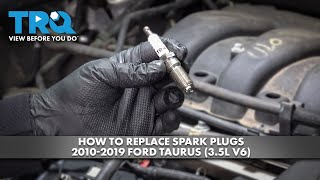
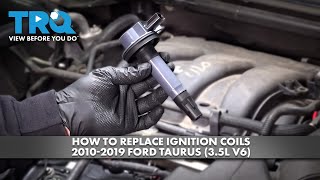
Typical fix: Replace the ignition coil for cylinder #3. It is highly recommended to replace the corresponding spark plug at the same time. Many owners choose to replace all three rear coils (for cylinders 1, 2, and 3) and all six spark plugs to avoid future repairs requiring intake removal.
Est. part cost: $40-$80 - Worn or Fouled Spark Plug (Cylinder #3) 🟡 Medium Probability → Shop Spark Plug Spark plugs are a regular maintenance item with a service life of around 100,000 miles. A worn plug with a large gap forces the ignition coil to work harder, which can lead to premature coil failure. Since the labor to access cylinder #3 is significant, it is considered best practice to replace the plug even if it's not the primary cause.
How to confirm: After removing the intake manifold and ignition coil, remove the spark plug and inspect it for wear, fouling, or damage. The gap should be within spec (typically 0.049 - 0.053 inches).
Typical fix: Replace the spark plug for cylinder #3. It's wise to replace all three rear spark plugs and potentially all six if they are near the end of their service life.
Est. part cost: $10-$25 - Damaged Wiring or Connector ⚪ Low Probability The wiring harness sits on a hot engine and is subjected to vibration, which can cause wires to become brittle or chafe over time. The connector's locking tab can also become brittle and break, leading to a poor connection. This has been noted in forums as a potential issue after a repair if the connector wasn't handled carefully.
How to confirm: Visually inspect the wiring harness and connector for cylinder #3's ignition coil. Look for any signs of cracking, melting, corrosion on the pins, or rodent damage. Wiggle the connector with the engine running (if accessible and safe) to see if it induces a misfire.
Typical fix: If the connector is damaged, a new connector pigtail can be spliced into the harness. If a wire is broken, it will need to be repaired.
Est. part cost: $15-$30
Rare But Worth Checking
- Failed Powertrain Control Module (PCM): → Shop Engine Control Module (ECM) This is a rare cause, but it is a known issue. A shorted ignition coil can sometimes damage the coil driver circuit within the PCM. Ford TSBs for older models specifically mention replacing the PCM along with all coils if heat damage is found on the coils. Before condemning the PCM, all other possibilities (coil, plug, wiring) must be exhaustively ruled out. A shop would use an oscilloscope to test the driver signal from the PCM.
- Vacuum Leak: While less common to cause a specific circuit code, a significant vacuum leak, especially from a poorly seated intake manifold gasket after a repair, can cause misfires and potentially lead to other codes. This is a critical check after reassembling the intake manifold.
Diagnosis Steps
- Confirm the presence of code P0353 (and likely P0303) with an OBD-II scanner.
- Acknowledge that cylinder #3 is on the rear bank (Bank 1, against the firewall) and requires removal of the upper intake manifold for access.
- Disconnect the battery. Remove the air intake tubing and disconnect all necessary sensors (like the MAP sensor), vacuum lines, and bolts to remove the upper intake manifold. Keep track of all bolts and components.
- Once the manifold is off, you can access the rear ignition coils. Cylinder #3 is on the driver's side of the rear bank.
- Disconnect the electrical connector from the coil and remove the 8mm bolt holding it in place. Inspect the connector for cracks or corrosion.
- Remove the ignition coil. Inspect it and the spark plug tube for any signs of damage, melting, or oil intrusion from a leaking valve cover gasket.
- At this point, given the high labor involved, the most practical step is to replace the ignition coil and the spark plug for cylinder #3. It is strongly recommended to also replace the coils and plugs for cylinders #1 and #2 at the same time.
- Before reinstalling the intake manifold, it is critical to replace the upper intake manifold gaskets to prevent vacuum leaks. Do not reuse the old ones.
- Reassemble the intake manifold, ensuring all bolts are torqued to the manufacturer's specification in the correct sequence. Reconnect all sensors and hoses.
- Reconnect the battery, clear the trouble codes, and start the engine to verify the repair. Listen for any hissing sounds that would indicate a vacuum leak.
Parts You'll Likely Need
- Ignition Coil
(OEM #DG520 (Motorcraft))— This is the most common cause of a P0353 code. The coil is responsible for generating the spark and is a frequent wear item, especially on the hot rear bank.
Trusted brands: Motorcraft, NGK, Delphi, Denso
OEM price range: $55-$75
Aftermarket price range: $35-$60 - Spark Plug
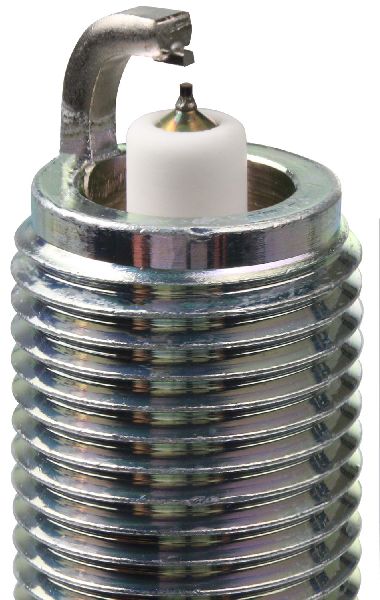
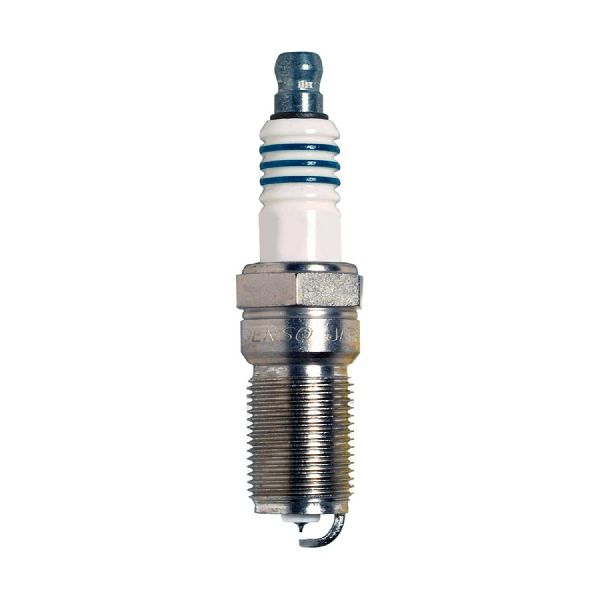
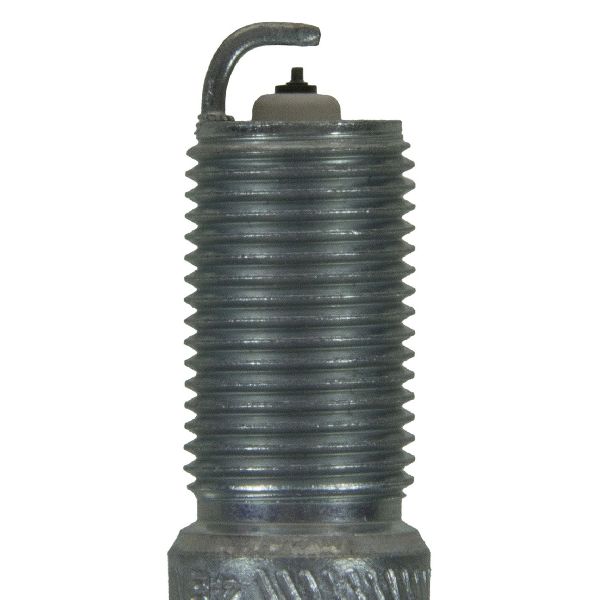
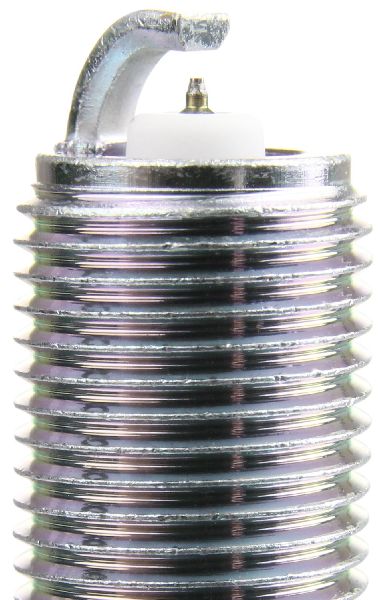
(OEM #SP-534 or SP-580 (Motorcraft, check for specific year/model updates))— A worn spark plug can cause the coil to fail and should always be replaced when servicing a coil, especially when the job requires removing the intake manifold.
Trusted brands: Motorcraft, NGK, Autolite
OEM price range: $12-$20
Aftermarket price range: $8-$15 - Upper Intake Manifold Gasket Set
(OEM #9L8Z-9E936-A (Motorcraft))— These gaskets are 'crush' style and are designed for one-time use. Reusing old gaskets after removing the intake manifold is a major risk for creating vacuum leaks. Aftermarket equivalents are widely available.
Trusted brands: Motorcraft, Fel-Pro (MS97120), Mahle
OEM price range: $30-$50
Aftermarket price range: $20-$40
Related Codes That Often Appear With This One
- P0303 — P0303 means 'Cylinder 3 Misfire Detected'. P0353 is the specific electrical fault in the ignition circuit that is causing the misfire. They almost always appear together.
- P0300 — This code for 'Random/Multiple Cylinder Misfire' might appear if the problem is intermittent or if other cylinders are also beginning to have ignition issues.
- P0351, P0352 — Codes for other cylinders on the same bank (Bank 1). If seen together, it could point to a shared wiring or power supply issue, or simply that all rear coils are failing around the same time due to age and heat.
Technical Service Bulletins (TSBs) & Recalls
- TSB 14-0100 (supersedes 13-4-17 & 12-8-17): While for earlier models (up to 2008), this series of TSBs addresses multiple P035x codes on the 3.5L engine. It instructs technicians to inspect coils for heat damage (cracks) and, if found, to replace the PCM along with all six coils and plugs. This highlights a known potential for coils to fail and damage the PCM.
- Bulletin #TSB 24-2406: Manufacturer records for other Ford models with EcoBoost engines note that vehicles may exhibit an illuminated MIL with ignition system DTCs including P0353 set in the PCM.
- Bulletin #SSM 52455: A manufacturer service bulletin notes that various gas engine models may exhibit an illuminated MIL with ignition system DTCs P0352, P0353, and P0354 among others.
Platform-Specific Known Issues
- Owners on forums consistently report that while the job is time-consuming, it is manageable for an experienced DIYer.
Mechanic-Grade Diagnostic Values
- Ignition Coil Primary Resistance — expected: 0.5 to 0.7 ohms. Failure: A reading of OL (infinite) indicates an open circuit, while near-zero ohms suggests a short.
- Ignition Coil Secondary Resistance — expected: 5,500 to 6,200 ohms (5.5kΩ to 6.2kΩ). Failure: A reading significantly outside this range indicates a failure in the secondary windings.
- Voltage at Coil Connector Power Wire (Key On, Engine Off) — expected: Approximately 12 Volts (Battery Voltage). Failure: Absence of voltage points to an open circuit in the power supply wire from the fuse box.
- Signal at Coil Driver Circuit (using a noid light or oscilloscope) — expected: A rapid flashing from the noid light while cranking, or a square wave pattern on an oscilloscope.. Failure: No flash or a steady light indicates a problem with the PCM or the wiring from the PCM.
Scan Tool Commands That Help
- Ford IDS (Integrated Diagnostic System): Power Balance Test — This bidirectional test allows a technician to disable one cylinder at a time to observe the drop in RPM. If disabling cylinder #3 causes no change in engine speed, it confirms that cylinder is not contributing, which is expected with a P0353 code. It helps verify the misfire location before disassembly.
Wiring & Ground Locations
- Cylinder #3 Ignition Coil Connector — On the rear bank (against the firewall), driver's side. Requires removal of the upper intake manifold to access.. This is the direct connection to the failing component. The two wires are the power feed and the PCM trigger.
- Coil Power Wire — One of the two wires in the coil connector. On similar Ford models, this is often a Red wire with a Light Green stripe (RD/LG).. This wire should have constant battery voltage with the key on. A lack of voltage here indicates a wiring or fuse issue, not a coil or PCM driver issue.
- Coil Driver (Trigger) Wire — The second wire in the coil connector. On similar Ford models, this can be a White wire with a Pink stripe (WH/PK).. The PCM sends a ground signal down this wire to fire the coil. An oscilloscope is used to test this signal. A break in this wire or a fault in the PCM driver will prevent the coil from firing.
Real Owner Repair Stories
- Ford Edge Forum user 'ls973800' (2008 Ford Edge 3.5L V6, 85,000 miles) — Check Engine Light on, intermittent miss, then complete failure of cylinder #1 followed by cylinder #3 (P0353).
❌ Tried (didn't work) Replacing only the single failed ignition coil for cylinder #3.
✅ What actually fixed it The failed coil had damaged the driver circuit inside the PCM. The owner sent the PCM to a repair service (Circuit Board Medics) to be rebuilt. After getting the repaired PCM back, they replaced ALL SIX ignition coils and ALL SIX spark plugs at the same time to prevent a repeat failure. The total cost was around $900 ($547 for parts, $360 for PCM repair). - NHTSA ODI #11145130: An owner reported that their vehicle was jumping in gears on the freeway when the check engine light came on for P0353. They replaced the ignition coil and all six spark plugs, but the code did not clear.
- NHTSA ODI #10694980: A driver reported that the PCM, spark plugs, and ignition coils all failed at once after codes P0351, P0354, and P0353 appeared, resulting in a $2700 repair.
- NHTSA ODI #11429061: A driver experienced a vehicle shutdown on the interstate while codes P0351 through P0356 were present.
OEM Part Supersession History
7T4Z12029E→DG520— Standard part number update and branding under the Motorcraft name.
Model Year Variations Within This Range
- 2010-2012: The standard 3.5L V6 produced 263 horsepower.
- 2013-2019: The Taurus received a facelift. The standard 3.5L V6 was updated to produce 288 horsepower.
Diagnostic Flowchart
Other Known Issues on This Vehicle
Issues unrelated to this code that are worth knowing about as an owner of this generation:
- Internal Water Pump Failure 🔴 High — Common after 100,000 miles. Failure can lead to coolant mixing with engine oil, causing catastrophic engine damage if not caught immediately.
- Power Transfer Unit (PTU) Failure (AWD Models) 🔴 High — The PTU fluid gets cooked by the nearby exhaust, leading to breakdown and failure. The unit is sealed from the factory with no drain plug, making service difficult. Symptoms include grinding/binding on turns and a propane-like smell.
- Electronic Throttle Body Failure 🟠 Medium — Can cause sudden 'limp mode' where the vehicle loses power unexpectedly. Often throws codes P2111 and P2112. (Ref: Ford Customer Satisfaction Program 13N03 (expired) and TSB 16-0139 addressed this.)
Used vs. New Parts: Buying Guide for This Vehicle
When a used part is the smart pick: For this repair, using used parts is generally not recommended. The primary failure items are wear-and-tear components (coils, plugs) or sensitive electronics (PCM). The labor cost to access the rear bank is too high to risk using a part with an unknown history.
Donor-vehicle mileage cap: roughly under 80000 miles for the part to have meaningful remaining life.
What to inspect on the donor part:
- If considering a used PCM, verify the exact part number matches.
- For used coils, inspect the plastic housing for any cracks, melting, or discoloration from heat.
- Check the electrical connector pins for corrosion or damage.
OEM-only on this vehicle (don't cheap out):
- Ignition Coils: Due to the risk of a failed coil damaging the PCM, using high-quality OEM (Motorcraft) or reputable OEM-equivalent (NGK, Denso) coils is strongly advised by mechanics and parts suppliers.
- Powertrain Control Module (PCM): If the PCM needs replacement, a new or professionally remanufactured unit with a warranty is the safest choice. A used PCM may carry the same internal fault or have incompatible programming.
Aftermarket brands forum-validated for this vehicle:
- Fel-Pro (for intake manifold gaskets)
- NGK (for ignition coils and spark plugs)
- Denso (for ignition coils)
Brands owners have reported issues with on this vehicle:
- Unnamed, no-brand ignition coils from online marketplaces are a significant risk. Forum discussions frequently mention these failing quickly, sometimes causing damage to the PCM, which negates any initial cost savings.
Real Owner Stories
Aggregated from forums and TSBs cited above. Mileages and costs reflect what owners reported in those sources.
2014 Ford Edge 3.5L V6
Symptoms: The owner discussed a 'Bad Coil Went Backwards and Killed PCM/ECM', noting that heat damage to the coils can lead to expensive computer failure.
What fixed it: Replacing the PCM along with all six coils and plugs as instructed by the TSB procedure.
Source hint: Ford Edge Forum - 'Bad Coil Went Backwards and Killed PCM/ECM FIX'
2010-2019 Ford Taurus 3.5L V6 — ~100000 miles
Symptoms: Owners report the job is time-consuming but manageable for an experienced DIYer, often triggered by the 100,000-mile service life of the spark plugs.
What fixed it: Replacing the ignition coil and spark plug for cylinder #3, along with the upper intake manifold gaskets.
Source hint: vehicle_specific_issues
Ford V6 (Transverse Platform)
Symptoms: A user shared a shop estimate for replacing coils where some are under the intake, highlighting the significant labor cost difference for the hidden bank.
What fixed it: Ignition coil replacement(s) involving intake manifold removal.
Source hint: Reddit r/AskMechanics - 'Is this reasonable estimate? Ignition coil replacement(s)'
Related OBD-II Codes
Frequently Asked Questions
Where is cylinder #3 located on my 2010-2019 Ford Taurus 3.5L?
Does TSB 14-0100 apply to my 2010-2019 Taurus if I have a P0353 code?
Why is the labor for P0353 so much higher than other ignition codes on this car?
Should I replace the intake manifold gaskets when fixing a P0353 code?
Can I just swap the #3 coil with another one to test it like on other cars?
Is there anything else I should replace while the intake manifold is off for the P0353 repair?
Helpful Videos
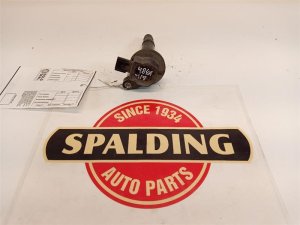
Used OEM Parts in Stock
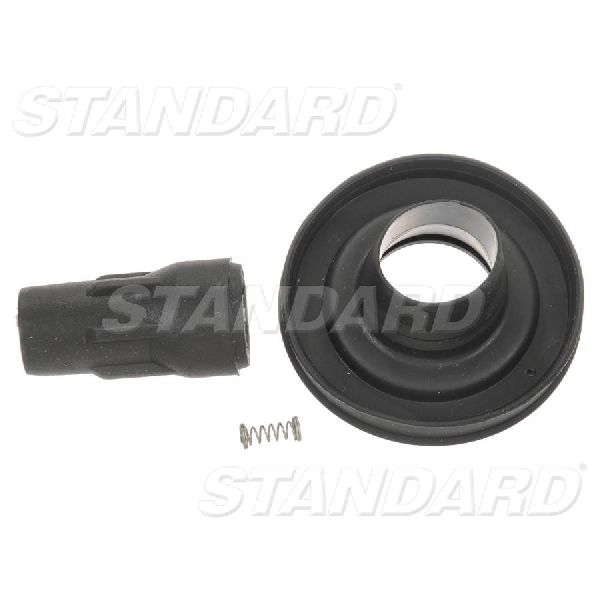
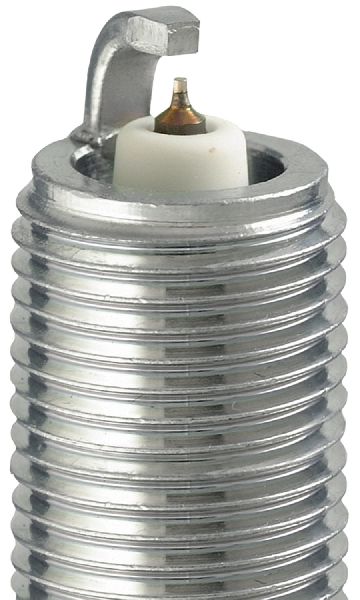
New Aftermarket Parts Available

The information in this article is provided for general reference and educational purposes only. Vehicle specifications, procedures, and part compatibility can vary by production date, trim level, and region. Always consult your vehicle's factory service manual and verify part numbers before purchasing or performing repairs. Safety-critical components such as airbags, seat belts, and braking systems should be installed by a qualified professional.
- Ford Taurus:
- 🧭 Diagnostic Flowchart
- 🎬 Helpful Videos
- 🛍️ Shop This Part
- What's Unique About the 2010-2019 Ford Taurus
- Symptoms You May Notice
- Most Likely Causes
- Rare But Worth Checking
- Diagnosis Steps
- Parts You'll Likely Need
- Related Codes That Often Appear With This One
- Technical Service Bulletins (TSBs) & Recalls
- Platform-Specific Known Issues
- Mechanic-Grade Diagnostic Values
- Scan Tool Commands That Help
- Wiring & Ground Locations
- Real Owner Repair Stories
- OEM Part Supersession History
- Model Year Variations Within This Range
- Other Known Issues on This Vehicle
- Used vs. New Parts: Buying Guide for This Vehicle
- Real Owner Stories
- 2014 Ford Edge 3.5L V6
- 2010-2019 Ford Taurus 3.5L V6 — ~100000 miles
- Ford V6 (Transverse Platform)
- Related OBD-II Codes
- Frequently Asked Questions
- 🎟️ Get 5% Off