

P0353 on 2003-2015 Honda Pilot: Ignition Coil 'C' Failure Causes and Fixes
Code P0353 on a Honda Pilot almost always means the ignition coil on cylinder #3 has failed. The easiest way to confirm is to swap the coil with another cylinder and see if the code follows. A single OEM-quality coil costs about $70-$100, and it's a 15-minute DIY job if you have basic tools. On 2009-2013 models, this is often a symptom of an oil-fouled spark plug caused by the VCM system.
- P0353 on a Honda Pilot means there's a problem with the ignition coil circuit for cylinder #3.
- The most likely cause is a failed ignition coil, which is a straightforward DIY replacement.
- On 2009-2013 models, a failed coil is often a symptom of a deeper problem: an oil-fouled spark plug caused by the VCM system.
- Always perform the coil swap test to confirm the coil is bad before buying parts.
- When replacing the coil, it is highly recommended to also inspect and likely replace the spark plug in that cylinder.
What's Unique About the 2003-2015 Honda Pilot
On the second-generation Pilot (2009-2013), a P0353 code is often a symptom of a deeper issue related to the Variable Cylinder Management (VCM) system. Honda issued a Technical Service Bulletin (TSB 13-082) for misfires on cylinders 1-4 (P0301-P0304) due to piston rings rotating and aligning. This alignment allows oil to seep into the combustion chamber, fouling the spark plugs. A fouled spark plug in cylinder 3 can overwork and destroy the ignition coil, triggering the P0353 circuit code. While the coil is the immediate failure, the root cause is frequently this more serious engine issue, which was the subject of a class-action lawsuit.
Generation note: This guide covers the first (2003-2008) and second (2009-2015) generation Honda Pilot. Both use a J35 V6 engine, but the ignition coils and some underlying issues are different. Notably, TSB 13-082 regarding spark plug fouling from VCM-related piston ring issues applies specifically to 2009-2013 models. The ignition coil part numbers are different between generations.
Symptoms You May Notice
- Check Engine Light is on or flashing
- Rough or shaky idle
- Engine hesitation or stumbling during acceleration
- Noticeable loss of engine power
- Reduced fuel economy
- Engine feels like it's shifting or vibrating unusually while driving at a steady speed (a symptom of VCM engagement issues)
- Replacing only the spark plug without testing the coil. A bad plug can kill a coil, but a bad coil is the more direct cause of a P0353 circuit code.
- On 2nd gen models, replacing the coil and plug without addressing the underlying VCM issue. The new parts will likely fail again.
- Replacing the PCM before thoroughly checking the wiring. A simple broken wire is far more common than a failed computer.
Most Likely Causes
- Failed Ignition Coil on Cylinder 3 🔴 High Probability → Shop Ignition Coil Ignition coils are wear-and-tear components that operate under high heat and voltage. They commonly fail after 80,000+ miles. On VCM-equipped models, a fouled spark plug can put extra stress on the coil, leading to premature failure.
How to confirm: Swap the ignition coil from cylinder #3 with another cylinder (e.g., cylinder #4, which is on the front bank and easy to access). Clear the codes. If the code changes to P0354, the coil is confirmed bad.
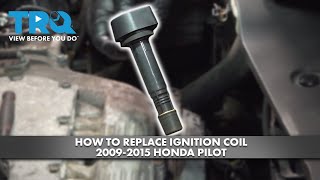
Typical fix: Replace the faulty ignition coil. It is held in by a single 10mm bolt. 🎬 Watch: How to replace the ignition coil
Est. part cost: $30-$100 - Worn or Fouled Spark Plug 🟡 Medium Probability → Shop Spark Plug On 2009-2013 models, the VCM system can cause spark plugs in cylinders 1-4 to become fouled with oil, leading to misfires and subsequent coil failure. This is a widely documented issue covered by TSB 13-082. On all models, a spark plug with an excessive gap from normal wear can also overwork and damage the coil.
How to confirm: When you remove the ignition coil, remove the spark plug from cylinder #3 and inspect it. Look for heavy black carbon buildup, wet oil deposits, or a worn-down electrode. A heavily fouled plug is a strong indicator of the VCM issue on 2nd gen Pilots.
Typical fix: Replace the spark plug. If it is oil-fouled on a 2009-2013 model, be aware of TSB 13-082, as the problem may return until the root cause (piston rings) is addressed or a VCM disabler is installed. 🎬 Watch: How to install a VCM disable device
Est. part cost: $15-$25 for a single iridium plug - Damaged Wiring or Connector ⚪ Low Probability The plastic connector can become brittle from engine heat cycles and the locking tab can break. Wires can also be damaged by rodents or abrasion, which is a known cause for this code.
How to confirm: Visually inspect the wiring harness and the 3-pin connector going to the cylinder #3 ignition coil. Check for broken wires, corrosion on the pins, or a loose connection.
Typical fix: Repair the damaged section of wire or replace the connector pigtail.
Est. part cost: $10-$25 for a new pigtail
Rare But Worth Checking
- Leaking Valve Cover Gasket: → Shop Engine Valve Cover A common issue on many V6 engines. Oil can leak from the valve cover gasket into the spark plug tube, saturating the ignition coil boot and causing it to short out and fail. If you find liquid oil pooled in the spark plug tube when you pull the coil out, the valve cover gasket set needs to be replaced.
- Failed Powertrain Control Module (PCM): → Shop Engine Control Module (ECM) This is very rare. The internal driver circuit in the PCM that controls the ignition coil can fail. This should only be considered after all other possibilities (coil, plug, wiring) have been definitively ruled out.
Diagnosis Steps
- Verify the code P0353 is present using an OBD-II scanner.
- Identify Cylinder #3. On the Honda J35 V6, the cylinders are typically numbered with the rear bank (against the firewall) being 1-2-3 from passenger to driver side, and the front bank being 4-5-6. Cylinder #3 is the rear-most cylinder on the driver's side. Note: Some sources show a different layout, so visual confirmation is best.
- Gain access to the rear ignition coils by removing the plastic engine cover.
- Swap the ignition coil from cylinder #3 with an easier-to-access coil, such as cylinder #4 (front bank, passenger side).
- Clear the trouble codes with the scanner.
- Start the engine and let it run for a few minutes, then re-scan for codes.
- If code P0354 ('Ignition Coil D Circuit Malfunction') appears, the ignition coil you moved is faulty.
- If code P0353 returns, the coil is good. The problem lies with the spark plug, wiring, or PCM circuit for cylinder #3.
- Remove and inspect the spark plug for cylinder #3. If it is black, sooty, or wet with oil, replace it. This is highly likely on 2009-2013 models.
- While the coil is out, inspect the spark plug tube for pooled oil, which indicates a leaking valve cover gasket.
- If the plug is good, inspect the wiring connector for cylinder #3 for damage, corrosion, or loose pins.
Parts You'll Likely Need
- Ignition Coil (Cylinder 3)
(OEM #30520-RN0-A01 (2009-2015), 30520-RCA-A02 (replaces 30520-PVJ-A01 for 2005-2008))— This is the most common failure part for a P0353 code.
Trusted brands: Denso (OEM), NGK, Hitachi (OEM)
OEM price range: $70-$100
Aftermarket price range: $30-$60 - Iridium Spark Plug
(OEM #NGK IZFR6K11 or DENSO SKJ20DR-M11)— Often replaced as a preventative measure or if it is found to be fouled, which is a common secondary cause or related failure, especially on 2nd gen Pilots.
Trusted brands: NGK (OEM), Denso (OEM)
OEM price range: $20-$25
Aftermarket price range: $15-$20
Related Codes That Often Appear With This One
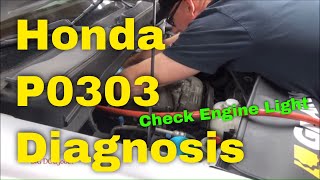
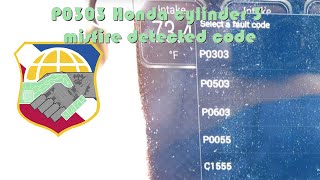
- P0303 — P0303 means 'Cylinder 3 Misfire Detected'. P0353 is the cause (the coil circuit failed), and P0303 is the effect 🎬 See this step-by-step cylinder 3 misfire diagnosis (the cylinder is misfiring).
- P0300 — This indicates a 'Random/Multiple Cylinder Misfire'. You might see this along with P0353 if the misfire is severe enough to affect engine timing and cause other cylinders to misfire intermittently.
- P0301, P0302, P0304 — On 2009-2013 models, seeing these codes along with P0303 is a strong indicator that the VCM system is causing widespread spark plug fouling across the affected cylinders, as described in TSB 13-082.
Technical Service Bulletins (TSBs) & Recalls
- 13-082: Warranty Extension: MIL Comes On With DTCs P0301 thru P0304.
- 13-081: A similar TSB for the Honda Odyssey, confirming the VCM issue is shared across platforms.
Platform-Specific Known Issues
- TSB 13-082 for 2009-2013 Pilots: Notes that misfires on cylinders 1-4 can be caused by fouled spark plugs resulting from an underlying piston ring issue due to VCM operation. This can lead to the failure of the ignition coil on cylinder 3, triggering P0353. The full fix per the TSB may require a PCM update and/or piston ring replacement.
- Owner Experience on Piloteers.org: A thread titled 'P0303, P0353, and VSA light' on Piloteers.org details an owner's 2011 Pilot with these codes. The consensus and eventual fix was replacing the fouled #3 spark plug and bad coil, with many members advising to also install a VCM muzzler/disabler to prevent recurrence.
- YouTube Repair Walkthrough: The YouTube channel 'BigDog50001' has a video titled 'Honda V6 Check Engine Light (CEL) - P0303 - Cylinder 3 Misfire Diagnosis' on a 2012 Pilot. The video clearly shows the oil-fouled spark plugs on cylinders 1-4 as a direct result of VCM and confirms that replacing the plugs resolved the misfire.
Mechanic-Grade Diagnostic Values
- Ignition Coil Primary Winding Resistance — expected: Approximately 0.5 to 2.0 Ohms. Some sources specify a tighter range of 0.49-0.57 Ohms. The key is consistency across all coils.. Failure: A reading of infinity (Open Loop) or a significant deviation from the other coils on the engine.
- Ignition Coil Secondary Winding Resistance — expected: Approximately 5,000 to 15,000 Ohms (5kΩ - 15kΩ). A specific document cites 9.5kΩ-11.1kΩ.. Failure: A reading outside the specified range, or a reading that is significantly different (e.g., over 100 Ohms difference) from the other coils.
- Ignition Coil Connector - Power Pin Voltage — expected: Battery Voltage (approx. 12V) with Key On, Engine Off. This is typically a Black/Yellow wire on Hondas.. Failure: Low or no voltage indicates a problem with the power supply from the fuse/relay.
- Ignition Coil Connector - Ground Pin Test — expected: 10-12 Volts when testing between the ground pin (typically Black wire) and the positive battery terminal. This confirms the ground path is good.. Failure: No voltage indicates a break in the ground circuit, possibly related to a main ground like G101.
- Ignition Coil Connector - PCM Trigger Signal (Hertz) — expected: Fluctuating values between 5 and 60 Hertz (Hz) while the engine is cranking or running. This signal comes from the PCM.. Failure: No Hertz signal indicates a wiring problem between the PCM and the coil, or a failed PCM driver.
Hidden / Shadow Codes Worth Checking
- Mode $06, Test ID $80: Honda uses Mode $06 to store detailed data from non-continuous monitor tests. Misfire data is often logged under Test ID $80 (or similar, varies by year/ECU). This can show raw misfire counts per cylinder, even if they aren't high enough to set a P030x code. A technician can use this to see if cylinder 3 is accumulating misfires before the P0353 circuit code is set, or to confirm the fix worked by observing zero misfires after repair. (see via A professional scan tool with Mode $06 capability is required. The data is presented as raw hexadecimal values that need to be interpreted using Honda-specific documentation.)
Scan Tool Commands That Help
- Honda HDS (or advanced bidirectional scanner): Cylinder Power Balance Test — This function allows the technician to individually disable fuel injectors for each cylinder while the engine is running. While it doesn't test the coil directly, if disabling cylinder #3 causes no change in engine RPM, it confirms that cylinder is not contributing. This helps isolate the problem to cylinder #3's ignition, fuel, or compression before physically touching parts.
Wiring & Ground Locations
- Ignition Coil #3 Connector — On the J35 V6, cylinder #3 is on the rear bank (near the firewall), on the driver's side of the vehicle. The connector is a 3-pin plug on top of the ignition coil.. This is the primary connection point for all electrical signals to the coil. Pin 1 is the trigger signal from the PCM (e.g., White/Black wire), Pin 2 is ground (Black wire), and Pin 3 is 12V+ power (Black/Yellow wire). All voltage and signal tests for P0353 are performed here.
- G101 — On many Honda V6 engines, G101 is a critical engine and ECU ground located on the thermostat housing or the left side of the engine block.. This ground is the termination point for the ECU's power and logic circuits. A corroded or loose G101 ground can cause intermittent and difficult-to-diagnose electrical issues, including ignition coil circuit faults, as it can create resistance in the ground path for the entire ignition system.
Real Owner Repair Stories
- YouTube channel 'gopowersports' (Honda Odyssey with J35 V6 (shared engine platform)) — Check engine light with a misfire on cylinder 3.
❌ Tried (didn't work) Swapping the ignition coil from cylinder 3 to another cylinder did not make the misfire code follow the coil.
✅ What actually fixed it The spark plug in cylinder 3 was found to be worn out. Upon further testing with a multimeter, the original ignition coil from cylinder 3 showed a resistance of 1835 ohms, while all other coils were around 1725-1730 ohms. The technician concluded the coil was also failing (likely due to the bad plug) despite passing the swap test. Replacing both the worn spark plug and the high-resistance ignition coil for cylinder 3 resolved the misfire. - NHTSA ODI #11078950 (Honda Odyssey with shared platform) — An owner reported a P0303 misfire on cylinder 3. Shortly after, a P0353 cylinder 3 ignition coil circuit code appeared. Despite the misfire being on cylinder 3, the manufacturer representative initially suggested the code was not within the P0301 to P0304 range typically associated with the VCM warranty extension.
OEM Part Supersession History
30520-PVJ-A01→30520-RCA-A02— Standard part update and consolidation by Honda.
Heads up: These parts are for the first generation Pilot (approx. 2005-2008). They are not compatible with the second generation.30520-RN0-A01→Current— This is the correct part number for the second generation Pilot (2009-2015).
Heads up: This coil is physically different and will not work on first-generation (pre-2009) or third-generation (2016+) Pilots.
Model Year Variations Within This Range
- 2003-2008 vs 2009-2015: The ignition coils are different parts between the first and second generations. First-gen uses part number 30520-RCA-A02 (which superseded earlier numbers), while the second-gen uses 30520-RN0-A01. They are not interchangeable.
- 2009-2013: These specific years of the second generation are most prone to the VCM-related oil fouling issue described in TSB 13-082. While a P0353 on a 2014-2015 Pilot is likely just a failed coil, on a 2011 model it is highly suspect as a symptom of the deeper VCM problem.
Diagnostic Flowchart
Other Known Issues on This Vehicle
Issues unrelated to this code that are worth knowing about as an owner of this generation:
- Variable Cylinder Management (VCM) Malfunctions 🔴 High — Very common on 2nd gen (2009-2015) Pilots. Can manifest as excessive oil consumption, fouled spark plugs, and engine vibrations. (Ref: TSB 13-082, TSB 13-081)
- Transmission Cooler Failure ('Strawberry Milkshake') 🔴 High — A critical and well-documented issue on 1st gen (2003-2008) Pilots. The radiator's internal transmission cooler fails, mixing coolant and ATF, which destroys the transmission.
- Failing/Leaking Spool Valve (VTEC Solenoid) 🟠 Medium — Common on 2nd gen models. The gasket fails, causing an oil leak that often drips directly onto the alternator, causing its premature failure. (Ref: Honda TSB 20-023)
- Prematurely Worn Compliance Bushings 🟠 Medium — Common on 2nd gen models, causing clunking noises over bumps or during braking. (Ref: Honda TSB 15-045)
- Early Transmission Failures 🔴 High — Particularly problematic on the 2003 model year, but a concern for the entire first generation. Failures can be sudden and catastrophic. (Ref: Recall #04V176000)
- Takata Airbag Inflator Recall 🔴 High — Affects all model years from 2003-2015. The inflators can rupture, sending metal fragments into the cabin. This is a critical safety recall. (Ref: NHTSA Recalls / Honda Safety Campaigns)
Used vs. New Parts: Buying Guide for This Vehicle
When a used part is the smart pick: A used ignition coil is generally not recommended as it is a high-wear electrical component with a finite lifespan. A used connector pigtail from a junkyard is a viable option if the original connector is broken, as long as the wiring is in good condition.
Donor-vehicle mileage cap: roughly under 80000 miles for the part to have meaningful remaining life.
What to inspect on the donor part:
- For a connector pigtail, inspect for brittle plastic, cracks, or corrosion on the pins.
- Ensure the locking tab is intact and functional.
- Check that the wires are flexible and not stiff or cracked.
OEM-only on this vehicle (don't cheap out):
- Ignition Coil
Aftermarket brands forum-validated for this vehicle:
- Denso (often the OEM supplier)
- NGK
- Hitachi (often the OEM supplier)
Brands owners have reported issues with on this vehicle:
- Unnamed, no-brand ignition coils from online marketplaces. Forum discussions frequently mention premature failure of cheap, unbranded coil packs, leading to the code returning within a short period.
Real Owner Stories
Aggregated from forums and TSBs cited above. Mileages and costs reflect what owners reported in those sources.
2011 Honda Pilot
Symptoms: Check engine light on with codes P0303 and P0353, accompanied by the VSA light.
What fixed it: Replacing the fouled #3 spark plug and the bad ignition coil.
Source hint: piloteers.org thread titled 'P0303, P0353, and VSA light'
2012 Honda Pilot
Symptoms: Check engine light (CEL) and misfire on cylinder 3.
What fixed it: Replacing the oil-fouled spark plugs on cylinders 1-4 caused by the VCM system.
Source hint: YouTube channel 'BigDog50001' video titled 'Honda V6 Check Engine Light (CEL) - P0303 - Cylinder 3 Misfire Diagnosis'
2013 Honda Pilot
Symptoms: Engine misfiring with code P0303.
What fixed it: The owner was advised that while a VCM fix prevents future fouling, existing damage to plugs or rings must be addressed first.
Source hint: reddit.com/r/hondapilot thread titled '2013 Honda Pilot misfiring with code P0303? Wondering if I need a VCM fix?'
Honda Odyssey (Shared Platform)
Symptoms: CEL with P0303 misfire on cylinder 3, followed by P0353 ignition coil circuit code.
What fixed it: The owner reported that Honda initially stated the code was not between P0301 to P0304 for the VCM warranty extension, but the misfire and circuit codes were directly related to the cylinder 3 failure.
Source hint: NHTSA ODI #11078950
Related OBD-II Codes
Frequently Asked Questions
Does TSB 13-082 apply to my 2012 Honda Pilot regarding the P0353 code?
Where is Cylinder #3 located on my Honda J35 V6 engine?
Can I swap coils to test if the P0353 error is actually a bad part?
Why does my 2nd generation Pilot keep fouling the spark plug in cylinder 3?
Will installing a VCM disabler help with my P0353 code?
Is the P0353 code related to the 'Strawberry Milkshake' issue on my 2005 Pilot?
Helpful Videos


Used OEM Parts in Stock
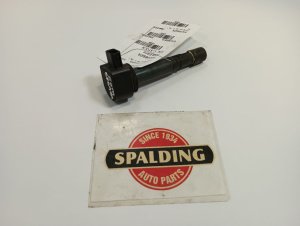
New Aftermarket Parts Available

The information in this article is provided for general reference and educational purposes only. Vehicle specifications, procedures, and part compatibility can vary by production date, trim level, and region. Always consult your vehicle's factory service manual and verify part numbers before purchasing or performing repairs. Safety-critical components such as airbags, seat belts, and braking systems should be installed by a qualified professional.
- Honda Pilot:
- 🧭 Diagnostic Flowchart
- 🎬 Helpful Videos
- 🛍️ Shop This Part
- What's Unique About the 2003-2015 Honda Pilot
- Symptoms You May Notice
- Most Likely Causes
- Rare But Worth Checking
- Diagnosis Steps
- Parts You'll Likely Need
- Related Codes That Often Appear With This One
- Technical Service Bulletins (TSBs) & Recalls
- Platform-Specific Known Issues
- Mechanic-Grade Diagnostic Values
- Hidden / Shadow Codes Worth Checking
- Scan Tool Commands That Help
- Wiring & Ground Locations
- Real Owner Repair Stories
- OEM Part Supersession History
- Model Year Variations Within This Range
- Other Known Issues on This Vehicle
- Used vs. New Parts: Buying Guide for This Vehicle
- Real Owner Stories
- 2011 Honda Pilot
- 2012 Honda Pilot
- 2013 Honda Pilot
- Honda Odyssey (Shared Platform)
- Related OBD-II Codes
- Frequently Asked Questions
- 🎟️ Get 5% Off