

P0353 on 2007-2012 Lexus ES350: Ignition Coil 'C' (Cylinder #3) Circuit Failure Causes and Fixes
This code indicates a problem with the ignition coil for cylinder #3. On the ES350's 2GR-FE engine, this is almost always a failed ignition coil. Cylinder #3 is the middle cylinder on the rear bank against the firewall, making replacement labor-intensive and requiring removal of the upper intake manifold. A shop repair can cost between $350-$650. A single OEM Denso coil costs around $90-$130.
- P0353 on a 2007-2012 ES350 almost always means you need a new ignition coil for cylinder #3.
- The most important diagnostic step is to swap the cylinder #3 coil with a front coil (e.g., #4) to see if the trouble code follows the part.
- Cylinder #3 is on the rear bank against the firewall, making this a difficult and labor-intensive repair. Budget for 2.5-4 hours of labor.
- Due to the high labor cost, it is wise to replace all three rear ignition coils and spark plugs at the same time.
- Always replace the upper intake manifold gaskets when performing this repair to avoid future vacuum leaks.
What's Unique About the 2007-2012 Lexus ES350
The key challenge with a P0353 code on the 2GR-FE engine in the ES350 is the location of cylinder #3. It is part of the rear cylinder bank (Bank 1), positioned against the firewall. This makes access extremely difficult compared to the front three cylinders (Bank 2), requiring the removal of the upper intake manifold (plenum) and throttle body to service the ignition coil and spark plug. This significantly increases labor time and cost for what would otherwise be a simple repair.
Symptoms You May Notice
- Check Engine Light is on
- Rough or shaky idle
- Engine misfire, which may feel like a stumble or hesitation during acceleration
- Reduced engine power
- In some cases, the VSC (Vehicle Stability Control) light may also illuminate
- Reduced fuel economy
- Trouble starting the engine
- Replacing only the spark plug without testing the ignition coil.
- Replacing the wrong cylinder's ignition coil due to confusion about the cylinder layout. The rear bank (firewall side) is Bank 1, containing cylinders 1, 3, 5 (passenger to driver). The front bank (radiator side) is Bank 2, containing cylinders 2, 4, 6.
Most Likely Causes
- Failed Ignition Coil 🔴 High Probability → Shop Ignition Coil Toyota issued revised ignition coil designs for the 2GR-FE engine, suggesting the original coils were prone to failure. This is a very common issue on this engine as it ages.
How to confirm: The most effective method is the 'swap test.' Swap the ignition coil from cylinder #3 with an easily accessible coil from the front bank (e.g., cylinder #4, the middle coil on Bank 2). Clear the codes and drive the vehicle. If the code changes to P0354, the ignition coil is confirmed as faulty.
Typical fix: Replace the faulty ignition coil. It is often recommended to replace the corresponding spark plug at the same time. Due to the high labor cost to access the rear bank, many owners and shops choose to replace all three rear coils and plugs simultaneously to prevent future repairs.
Est. part cost: $90-$130 for one OEM Denso coil - Damaged Wiring or Connector ⚪ Low Probability Wiring can become brittle over time due to heat cycles in the engine bay. Rodent damage is also a possibility. The issue is more likely at the connector itself than in the middle of the harness.
How to confirm: Visually inspect the wiring harness and 4-pin connector for cylinder #3's ignition coil. Look for any signs of damage, corrosion, or loose pins. Use a multimeter to check for 12V power, ground, and the IGT trigger signal from the ECM at the connector.
Typical fix: Repair the damaged section of the wiring harness or replace the connector pigtail.
Est. part cost: $15-$40
Rare But Worth Checking
- Faulty Engine Control Module (ECM/PCM): → Shop Engine Control Module (ECM) This is a very rare cause. Before condemning the ECM, all other possibilities, including the ignition coil and wiring, must be thoroughly ruled out. An ECM failure would typically require advanced diagnostics, such as using an oscilloscope to verify the IGT signal is not being sent from the ECM pin for cylinder #3.
- Worn Spark Plug: → Shop Spark Plug While a worn spark plug typically causes a misfire code (P0303), a severely fouled or damaged plug with an excessive gap can increase the electrical load on the ignition coil, potentially contributing to its failure and triggering a circuit code. It's best practice to replace the spark plug when replacing the coil, especially on a high-mileage vehicle.
Diagnosis Steps
- Confirm the code with an OBD-II scanner. Note any other codes present, especially P0303.
- Identify Cylinder #3. On the transverse 2GR-FE engine, the rear bank (against the firewall) is Bank 1 and contains cylinders 1, 3, and 5, from the passenger side to the driver's side. Cylinder #3 is the middle cylinder on the rear bank.
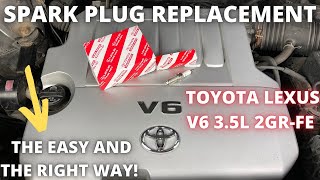
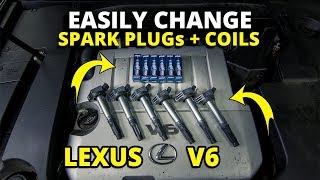
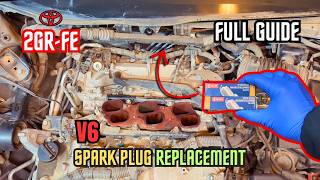
- To access the rear coils, you will need to remove the engine cover, the air intake assembly, the throttle body, and the upper intake manifold/plenum. 🎬 See this ultimate guide to V6 spark plug replacement
- Perform the 'Ignition Coil Swap Test'. This is the most crucial step. Swap the ignition coil from cylinder #3 with one from the front bank (e.g., cylinder #4, the middle coil near the radiator).
- While the coil is out, inspect the spark plug well for oil or water contamination.
- After swapping the coils, clear the trouble codes with the scanner.
- Start the engine and drive the vehicle until the Check Engine Light returns.
- Re-scan for codes. If the code has changed to P0354 (or whichever cylinder you swapped with), the ignition coil is confirmed to be the faulty part.
- If the P0353 code returns, the problem lies in the wiring to cylinder #3's coil or, in rare cases, the ECM. Inspect the wiring and connector for damage. Use a multimeter to verify power and ground at the connector.
Parts You'll Likely Need
- Ignition Coil
(OEM #90919-A2013)— This is the most common failure point for a P035x code. The original coils on the 2GR-FE engine were known to have issues. Part number 90919-A2013 is the latest revision, superseding 90919-A2007, 90919-A2004, 90919-A2002, and 90919-02251.
Trusted brands: Denso (OEM), NGK
OEM price range: $90-$130
Aftermarket price range: $40-$80 - Spark Plug
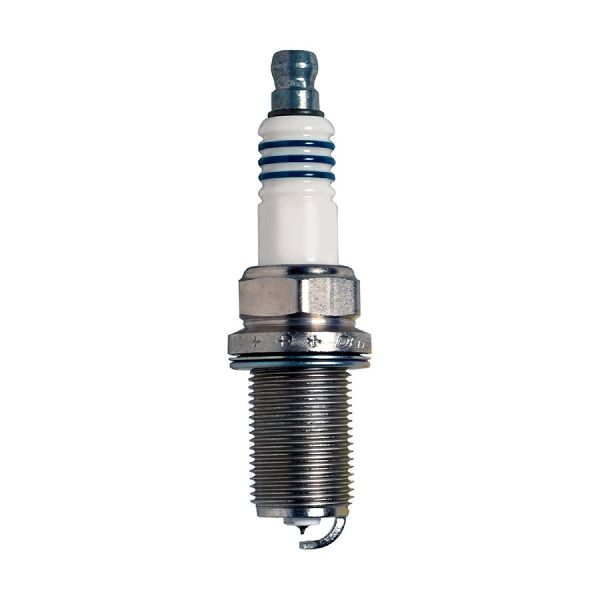
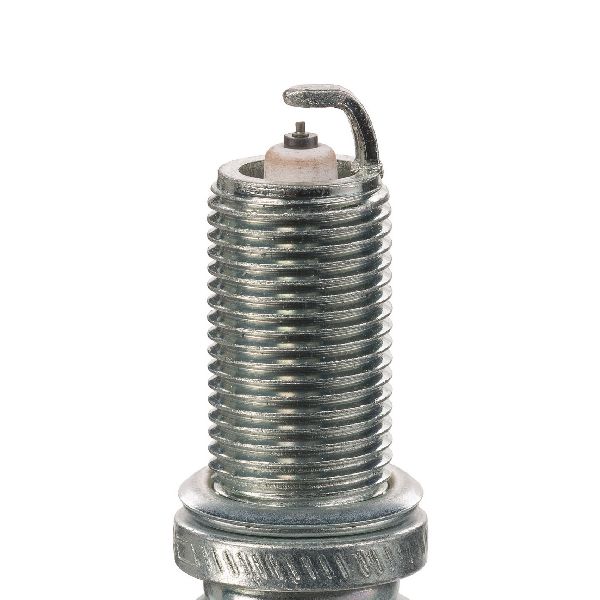
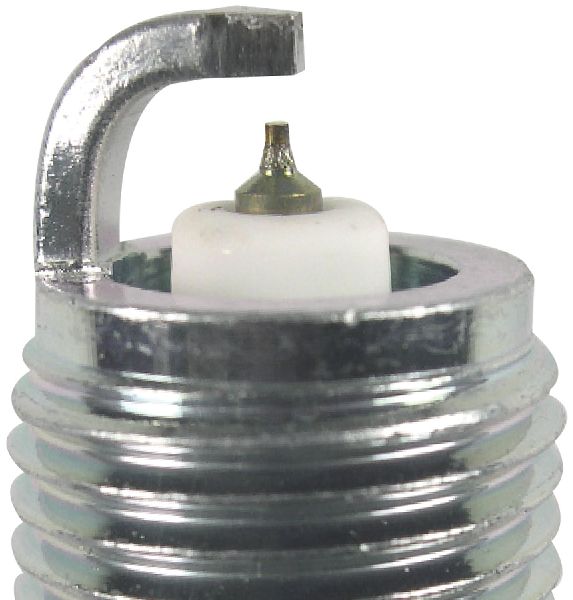
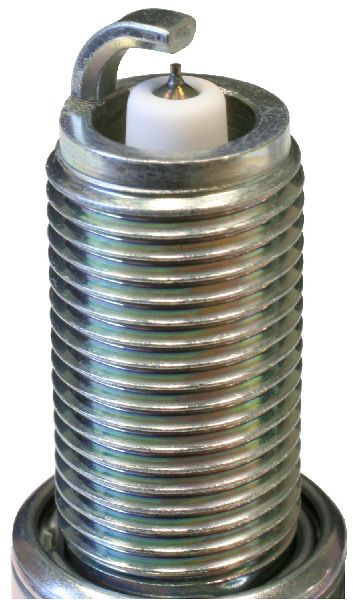
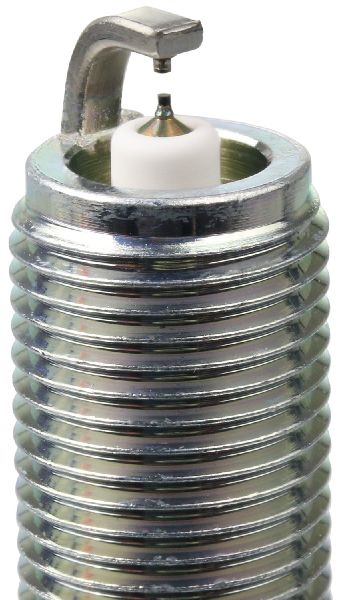
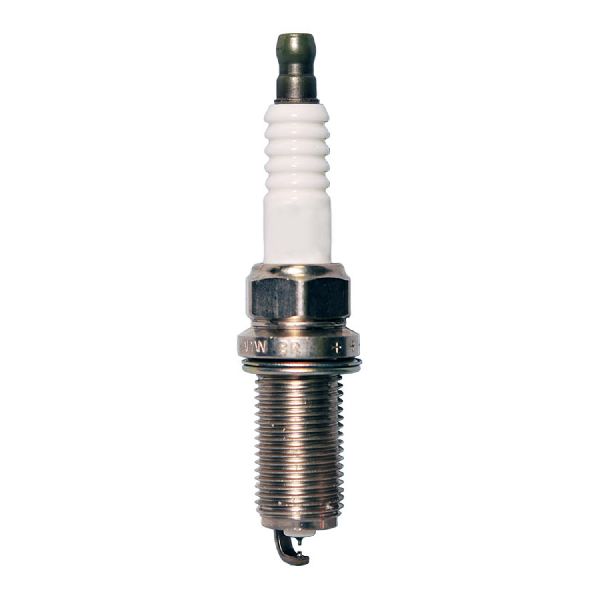
(OEM #90919-01247)— It is highly recommended to replace the spark plug in the affected cylinder while the intake manifold is removed. A worn plug can stress the new coil, and the labor to access it again later is significant. The OEM plugs are typically Denso FK20HR11.
Trusted brands: Denso, NGK
OEM price range: $15-$25
Aftermarket price range: $8-$15 - Upper Intake Manifold Gasket Set — The upper intake manifold must be removed to access the rear ignition coils. The gaskets are one-time use and must be replaced to prevent vacuum leaks, which would cause new driveability problems.
Trusted brands: Fel-Pro (Part #MS 96912), Mahle, OEM
OEM price range: $30-$50
Aftermarket price range: $15-$30
Related Codes That Often Appear With This One
- P0303 — P0303 indicates 'Cylinder 3 Misfire Detected.' Since a faulty ignition coil prevents the spark plug from firing, a misfire on that cylinder is a direct consequence. These codes often appear together.
- P0300 — This code for 'Random/Multiple Cylinder Misfire' might appear if the failing coil is intermittent, causing instability that the ECM briefly interprets as a wider issue before pinpointing cylinder #3.
- P0351, P0355 — If other codes for the rear bank coils appear (P0351 for cylinder #1, P0355 for cylinder #5), it may suggest a common issue like a shared ground or power problem for that bank, or simply that multiple coils are failing around the same time, which is common.
Technical Service Bulletins (TSBs) & Recalls
- T-SB-0047-10 (January 28, 2010): Titled 'MIL "ON" DTC P0351, P0352, P0353, P0354, P0355, P0356', this TSB applies to 2008-2010 models with the 2GR-FE engine. It acknowledges the ignition coil circuit codes and instructs technicians to inspect the wiring and, if no issues are found, replace the affected ignition coil with an updated part number.
Platform-Specific Known Issues
- Toyota released an updated ignition coil design to address frequent failures on the 2GR-FE engine. Using the latest OEM revision (90919-A2013) is recommended for longevity.
- Accessing the rear bank requires careful removal of the intake plenum. There are several brackets and hoses that must be disconnected. Taking photos during disassembly is highly recommended for DIYers.
Mechanic-Grade Diagnostic Values
- Ignition Coil Primary Winding Resistance — expected: 0.5 Ω to 0.7 Ω at 68°F (20°C).. Failure: A reading of infinite resistance (open circuit) or significantly outside the specified range indicates a faulty coil.
- Ignition Coil Secondary Winding Resistance — expected: 7.0 kΩ to 12.0 kΩ.. Failure: A reading of infinite resistance or far outside the expected range points to an internal failure of the coil.
- Voltage at Ignition Coil Connector Pin 1 (+B) — expected: Battery voltage (approx. 12.6V) with Ignition Key ON, Engine OFF.. Failure: No voltage indicates a problem with the power supply circuit, potentially a blown IG2 fuse or a wiring issue.
- Spark Plug Electrode Gap — expected: 1.0 to 1.1 mm (0.039 to 0.043 in.) for a new plug.. Failure: A gap exceeding the maximum of 1.4 mm (0.055 in.) for a used plug can over-stress the ignition coil.
Hidden / Shadow Codes Worth Checking
- Mode $06 Misfire Counters: The ECM continuously tracks misfires for each cylinder, even if the count is not high enough to set a P0303 code. This data can reveal intermittent misfires on cylinder #3 that haven't yet triggered a persistent light. (see via Use a professional scan tool that supports Mode $06, such as Toyota's Techstream software. Navigate to the misfire monitor data to view the raw misfire counts for each cylinder during the current and previous drive cycles.)
Scan Tool Commands That Help
- Toyota Techstream: DTC Check / Clear — This is a fundamental step used after performing the coil swap test. Clearing the existing P0353 code is necessary before driving the vehicle to see if the fault moves to the new cylinder (e.g., P0354), which confirms a bad coil.
- Toyota Techstream: All Readiness Monitor Check — After a repair, this utility can be used to check the status of the engine's self-diagnostic tests. It helps confirm that the conditions have been met to verify the fix and ensure the P0353 code does not return as a pending or permanent DTC.
Wiring & Ground Locations
- Ignition Coil #3 Connector (C12) — On top of the ignition coil for cylinder #3, the middle cylinder on the rear bank against the firewall.. This 4-pin connector is the primary point for testing. Pin 1: +B (12V+), Pin 2: IGF (Ignition Confirmation), Pin 3: IGT3 (Ignition Trigger), Pin 4: GND (Ground). Testing for power, ground, and signal here is the first step in diagnosing a wiring fault.
- ECM Connector C55 — The Engine Control Module (ECM) is located in the right rear of the engine compartment.. For advanced diagnosis, this is where you test the IGT and IGF signals directly from the source. Pin 38 is IGT3 (Trigger for Coil #3). Pin 106 is IGF1 (Confirmation signal, shared among coils). An absent signal here when the coil and wiring are good points to a faulty ECM.
- Engine Ground Points — Key grounds for the 2GR-FE are located on the valve covers, with wires running from a bolt on the cover to a grounding point on the chassis, typically near the strut towers.. A poor engine ground can cause a host of electrical issues, including weak spark and intermittent ignition circuit codes. Ensuring these grounds are clean and tight is a crucial, often overlooked, diagnostic step.
Real Owner Repair Stories
- Reddit user post (Lexus ES350 with 171k miles) — Car running rough, 'Check VSC' and traction control lights on.
❌ Tried (didn't work) Initial assumption might be a simple component failure.
✅ What actually fixed it Rodents had chewed through six wires in the engine bay wiring harness. The fix was to repair the damaged sections of the harness, not replace any primary components like the ignition coil.
When the Usual Fixes Don't Work
- While the overwhelming majority of P0353 codes on the 2GR-FE are fixed by replacing the ignition coil, there are documented cases where the coil swap test does not resolve the issue. In one such instance involving a Lexus ES350, the root cause was found to be rodent damage to the engine wiring harness. This highlights the importance of performing a full circuit continuity test from the coil connector to the ECM if the fault does not move with the coil, rather than assuming the replacement coil is also faulty.
OEM Part Supersession History
90919-02251, 90919-A2002, 90919-A2004, 90919-A2007→90919-A2013— Improved design to address higher than average failure rates in the original coils.
Model Year Variations Within This Range
- 2011-2012: Engine horsepower was rated slightly lower (268 hp vs 272 hp) because Lexus changed the recommended fuel from premium to regular unleaded. This change does not impact the ignition system hardware or the diagnosis of a P0353 code.
Diagnostic Flowchart
Other Known Issues on This Vehicle
Issues unrelated to this code that are worth knowing about as an owner of this generation:
- Rupturing VVT-i Oil Line 🔴 High — Common on 2007-2008 models. The original rubber hose degrades and can burst, causing rapid oil loss and potential engine seizure. (Ref: Limited Service Campaign (LSC) 9LH was issued to replace the rubber hose with an all-metal line.)
- Melting / Sticky Dashboard 🟡 Low — Very common on 2007-2008 models, especially in hot climates. The dashboard material becomes shiny, sticky, and can crack. (Ref: Warranty Enhancement Program ZLD was issued to cover replacement, though the program has since expired.)
- Water Pump Failure 🟠 Medium — The water pump is a known wear item on the 2GR-FE, often failing between 100k-150k miles. Failure can lead to overheating.
- Transmission Hesitation or Harsh Shifting 🟠 Medium — Some owners report issues with the U660E 6-speed automatic transmission, including hesitation or rough shifts. Often addressed with a software update or fluid change.
Used vs. New Parts: Buying Guide for This Vehicle
When a used part is the smart pick: For this repair, using used parts is generally not recommended. The only exception might be for a wiring harness connector pigtail if a new one is unavailable and the used part is in excellent condition with no brittle plastic or corrosion.
Donor-vehicle mileage cap: roughly under 80000 miles for the part to have meaningful remaining life.
What to inspect on the donor part:
- For a connector pigtail, inspect for any cracks in the plastic housing.
- Ensure the locking tab is intact and functional.
- Check that the wire insulation is not cracked, stiff, or heat-damaged.
OEM-only on this vehicle (don't cheap out):
- Upper Intake Manifold Gaskets: These are single-use and must be replaced with new ones to prevent vacuum leaks.
- Ignition Coils: While high-quality aftermarket options exist, OEM Denso coils are strongly recommended for longevity and to avoid compatibility issues. Cheap, unbranded online coils are a significant gamble.
Aftermarket brands forum-validated for this vehicle:
- Denso (OEM supplier)
- NGK
Brands owners have reported issues with on this vehicle:
- Generic, unbranded 'sets of 6' from online marketplaces which often have high failure rates.
Real Owner Stories
Aggregated from forums and TSBs cited above. Mileages and costs reflect what owners reported in those sources.
2007 Lexus ES 350
Symptoms: Check engine light and traction control light came on.
What fixed it: The mechanic recommended replacing all 3 ignition coils on the rear bank (cylinders 1, 3, and 5) to save on labor costs in the future.
Cost: $700
Source hint: reddit.com - r/MechanicAdvice thread titled 'Ignition Coil Replacement (2007 Lexus ES 350)'
2004 Lexus ES330 — 64000 miles
Symptoms: Engine has been running quite rough and shaking. The check engine light was blinking for a while and then remained solid.
What fixed it: The codes identified were P0303 and P0353, indicating a failure at cylinder #3.
Source hint: ClubLexus forum citation
Related OBD-II Codes
Frequently Asked Questions
Does TSB-0047-10 apply to my 2009 Lexus ES350?
Which cylinder is associated with code P0353 on the ES350?
Why is the labor cost so high for a P0353 repair on this vehicle?
What is the recommended replacement part for a failed ignition coil?
Should I replace all the coils if only P0353 is present?
Can a bad ignition coil cause the VSC light to come on?
Helpful Videos

We Have This Part in Stock

The information in this article is provided for general reference and educational purposes only. Vehicle specifications, procedures, and part compatibility can vary by production date, trim level, and region. Always consult your vehicle's factory service manual and verify part numbers before purchasing or performing repairs. Safety-critical components such as airbags, seat belts, and braking systems should be installed by a qualified professional.
- Lexus ES350:
- 🧭 Diagnostic Flowchart
- 🎬 Helpful Videos
- 🛍️ Shop This Part
- What's Unique About the 2007-2012 Lexus ES350
- Symptoms You May Notice
- Most Likely Causes
- Rare But Worth Checking
- Diagnosis Steps
- Parts You'll Likely Need
- Related Codes That Often Appear With This One
- Technical Service Bulletins (TSBs) & Recalls
- Platform-Specific Known Issues
- Mechanic-Grade Diagnostic Values
- Hidden / Shadow Codes Worth Checking
- Scan Tool Commands That Help
- Wiring & Ground Locations
- Real Owner Repair Stories
- When the Usual Fixes Don't Work
- OEM Part Supersession History
- Model Year Variations Within This Range
- Other Known Issues on This Vehicle
- Used vs. New Parts: Buying Guide for This Vehicle
- Real Owner Stories
- 2007 Lexus ES 350
- 2004 Lexus ES330 — 64000 miles
- Related OBD-II Codes
- Frequently Asked Questions
- 🎟️ Get 5% Off