

P0353 on 2005-2014 Toyota Highlander: Ignition Coil 'C' Failure Causes and Fixes
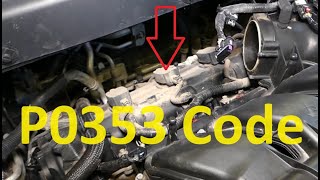
P0353 on a Toyota Highlander indicates a fault with the ignition coil on cylinder #3. This is most often caused by a failed ignition coil. A simple diagnostic is to swap the coil with an adjacent one to see if the code follows. A replacement Denso coil typically costs between $50 and $90. On V6 models, cylinder #3 is on the difficult-to-access rear bank against the firewall, making the repair more labor-intensive.
- P0353 means there is a problem with the ignition coil circuit for cylinder #3.
- The most likely cause is a failed ignition coil, which is a common wear item.
- The easiest way to diagnose a bad coil is to swap it with one from another cylinder and see if the code follows.
- On V6 models, cylinder #3 is on the rear bank against the firewall, making access difficult and increasing labor time for the repair.
- To avoid repeat labor, it is highly recommended to replace all three rear coils and spark plugs at the same time if you have a V6 model.
What's Unique About the 2005-2014 Toyota Highlander
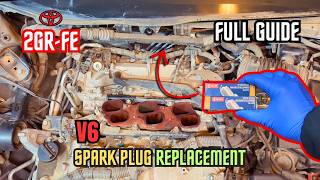
The 2005-2014 Highlander spans two generations with different V6 engines (3MZ-FE and 2GR-FE), but the challenge with code P0353 is consistent: cylinder #3 is on the rear bank, against the firewall. Access is significantly more difficult than for the front three coils, requiring the removal of the upper intake manifold and cowl assembly on the second generation (2008-2013) with the 2GR-FE engine. This turns a simple coil replacement into a more labor-intensive job that also requires replacing the intake manifold gasket.
Generation note: This range covers the first generation (2005-2007, with 3.3L 3MZ-FE V6) and the second generation (2008-2013, with 3.5L 2GR-FE V6). The 2014 model year is the first year of the third generation. While the P0353 code has the same meaning for all, the procedure to access the rear ignition coils, including cylinder #3, is more involved on the second-generation 2GR-FE engine, often requiring removal of the intake manifold. The 4-cylinder (2AZ-FE) models also log this code, but access to all coils is straightforward.
Symptoms You May Notice
- Rough idle or engine stumbling
- Noticeable loss of power and poor acceleration
- Engine hesitation or misfiring
- Flashing Check Engine Light
- Decreased fuel economy
- Replacing only the spark plug without testing the ignition coil. A bad coil can foul a new plug, and a bad plug can damage a new coil.
- Assuming the ECM is bad without performing a proper coil swap test and wiring check first.
- Replacing the wrong coil. On V6 models, cylinder #3 is the middle cylinder on the rear bank (firewall side). The front bank cylinders are 2, 4, and 6.
Most Likely Causes
- Failed Ignition Coil (Cylinder #3) 🔴 High Probability → Shop Ignition Coil Ignition coils are a common wear item that fail from heat and high voltage stress over time. Coil failures on Toyota's V6 engines are a well-documented maintenance issue as they age.
How to confirm: Swap the ignition coil from cylinder #3 with another cylinder (e.g., cylinder #1 on the same rear bank or cylinder #2 on the front bank). Clear the codes and run the engine. If the code changes to P0351 or P0352 respectively, the ignition coil is faulty.
Typical fix: Replace the failed ignition coil. It is often recommended to replace the spark plug at the same time. Due to the difficult access on V6 models, many owners and mechanics choose to replace all three rear coils and plugs simultaneously to save on future labor.
Est. part cost: $50 - $90 for one OEM-quality coil. - Worn or Fouled Spark Plug 🟡 Medium Probability → Shop Spark Plug A spark plug with an excessive gap or heavy deposits increases the electrical resistance, forcing the ignition coil to work harder, which can lead to overheating and premature failure. While less common than a direct coil failure for this specific code, it's a contributing factor.
How to confirm: After confirming the coil is good, remove the spark plug from cylinder #3. Inspect it for wear (worn electrode), damage (cracked porcelain), or fouling from oil or carbon.
Typical fix: Replace the spark plug. Use high-quality Iridium plugs from brands like Denso or NGK. It's best practice to replace all spark plugs at the same time, especially on the V6 rear bank.
Est. part cost: $10 - $20 per spark plug. - Damaged Wiring or Connector ⚪ Low Probability The wiring harness and connectors, especially for the rear bank of cylinders, are exposed to significant heat, which can make them brittle and prone to cracking or breaking over time. The plastic locking tab on the connector is a frequent point of failure, leading to a loose connection.
How to confirm: Visually inspect the wiring harness and the connector for cylinder #3's ignition coil. Check for broken wires, corrosion on the pins, or a broken locking tab on the connector. Wiggle the connector with the engine running to see if it induces a misfire. Use a multimeter to check for 12V power, ground, and the IGT signal at the connector.
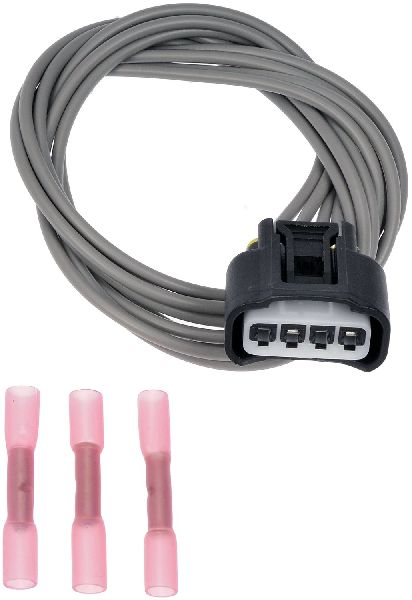
Typical fix: Repair the damaged section of wire or replace the connector pigtail. If the locking tab is broken, a new connector may be needed to ensure a secure fit.
Est. part cost: $10 - $30 for a new connector pigtail.
Rare But Worth Checking
- Leaking Valve Cover Gasket: → Shop Engine Valve Cover A leaking valve cover gasket can allow engine oil to seep into the spark plug tubes. This oil can saturate the ignition coil boot, causing a misfire and eventually destroying the coil. If you find oil on the coil when you remove it, the valve cover gasket needs to be replaced.
- Faulty Engine Control Module (ECM): → Shop Engine Control Module (ECM) This is the least likely cause. The internal driver circuit for cylinder #3 in the ECM can fail, but all other possibilities should be exhausted before considering ECM replacement.
- Loose or Corroded Ground Strap: A poor ground connection between the engine and the chassis can cause a variety of intermittent electrical issues, including ignition coil circuit faults. Forum users have reported that cleaning and tightening the main engine ground straps resolved persistent P035x codes after coils were replaced.
Diagnosis Steps
- Read the trouble codes with an OBD-II scanner to confirm P0353 is present.
- Identify cylinder #3. For V6 models, the cylinders closer to the firewall are 1, 3, and 5 (passenger to driver side). Cylinder #3 is the middle one on the rear bank.
- Perform a 'swap test'. Switch the ignition coil from cylinder #3 with the coil from cylinder #1 (rear bank, passenger side) or a front bank cylinder if access is easier for testing.
- Clear the codes with the scanner, start the engine, and let it run for a minute.
- Re-scan for codes. If code P0351 appears (or the code for the cylinder you swapped with), the ignition coil is confirmed to be faulty.
- If code P0353 returns, the issue is not the coil. Proceed to inspect the spark plug in cylinder #3 for wear, fouling, or damage.
- If the spark plug is in good condition, inspect the electrical connector and wiring going to the cylinder #3 coil for any signs of damage, corrosion, or a broken locking tab.
- If the wiring appears intact, use a multimeter to test for 12V power, ground, and the IGT trigger signal at the coil connector with the key on (engine off).
- Check and clean the main engine-to-chassis ground straps, as a poor ground can cause intermittent ignition faults.
- If all of the above check out, the problem may be with the ECM, which should be diagnosed by a professional.
Parts You'll Likely Need
- Ignition Coil
(OEM #90919-A2007 (supersedes 90919-02255, 90919-A2002))— This is the most common cause of a P0353 code. The original coil fails internally from age and heat cycles.
Trusted brands: Denso, NGK
OEM price range: $90-$130
Aftermarket price range: $40-$80 - Iridium Spark Plug
(OEM #90919-01247 (for 2GR-FE), 90919-01233 (for 3MZ-FE))— A worn spark plug can cause the coil to fail, and it is best practice to replace them together, especially when performing difficult-to-access repairs on the rear bank.
Trusted brands: Denso, NGK
OEM price range: $15-$25
Aftermarket price range: $10-$18 - Intake Manifold Gasket
(OEM #17176-0P021 (for 2GR-FE))— For 2008-2013 V6 models, the intake manifold must be removed to access the rear coils. The gasket is a one-time use part and must be replaced to prevent vacuum leaks.
Trusted brands: Toyota OE, Fel-Pro, Mahle
OEM price range: $20-$30
Aftermarket price range: $10-$20
Related Codes That Often Appear With This One
- P0303 — This code means 'Cylinder 3 Misfire Detected'. P0353 is the specific electrical cause (a fault in the ignition coil circuit), and P0303 is the effect (the resulting misfire). They almost always appear together.
- P0300 — This code for 'Random/Multiple Cylinder Misfire' can appear alongside P0353 if the misfire is severe enough to affect engine timing and cause other cylinders to misfire sympathetically, or if there are underlying issues like a bad ground connection affecting multiple coils.
Platform-Specific Known Issues
- Real Owner Experience: Intermittent P0353 after plug change: A user on the CarKiller forum reported a recurring P0353 code that appeared after a mechanic replaced the spark plugs. After replacing the coil and plug himself with no luck, the forum determined the most likely cause was a damaged wiring connector or a wire that was stressed during the initial repair, causing an intermittent connection fault.
- Real Owner Experience: Multiple P035x codes from bad ground: Several reports on Toyota Sienna forums (which share the 2GR-FE engine) indicate that multiple, seemingly random ignition coil circuit codes (like P0351, P0353, P0355) can be triggered by a single loose or corroded main engine-to-chassis ground strap. Replacing coils did not fix the issue, but cleaning and tightening the ground connection resolved all codes.
Mechanic-Grade Diagnostic Values
- Ignition Coil Primary Winding Resistance — expected: 0.3 - 0.8 Ohms (cold). Failure: A reading outside this range indicates a faulty coil.
- Ignition Coil Secondary Winding Resistance — expected: 8.0 - 12.0 kOhms (cold). Failure: A reading outside this range indicates a faulty coil.
- Ignition Coil Connector Pin 1 (+B) Voltage — expected: Battery Voltage (approx. 12V) with ignition ON. Failure: No voltage indicates a problem with the power supply from the IG2 relay/fuse.
- Ignition Coil Connector Pin 4 (GND) Continuity — expected: Continuity to ground (near 0 Ohms). Failure: High resistance or an open circuit indicates a bad ground connection.
- Ignition Coil Connector Pin 2 (IGF) Voltage — expected: A 5V square wave signal back to the ECM while the engine is running (requires an oscilloscope). A multimeter may show a fluctuating low DC voltage.. Failure: No signal or a flat line indicates the coil's internal igniter is not sending the confirmation signal.
- Ignition Coil Connector Pin 3 (IGT) Voltage — expected: A 5V square wave trigger signal from the ECM while the engine is cranking or running (requires an oscilloscope).. Failure: No signal indicates a wiring issue or a problem with the ECM's driver circuit.
Scan Tool Commands That Help
- Toyota Techstream: Active Test: Control the Injection/Ignition — This function allows a technician to command a single ignition coil to fire on demand. It helps verify if the ECM driver and the IGT signal wiring are functioning correctly. If the command is sent but the engine's running condition doesn't change, it points towards a fault in that cylinder's ignition circuit.
- Toyota Techstream: Misfire Monitor Utility — This utility provides detailed misfire counts per cylinder, which can be more sensitive than the standard P030x codes. It can help confirm if the misfire is isolated to cylinder #3, as expected with a P0353, or if other cylinders are also affected intermittently.
Wiring & Ground Locations
- Engine Harness Ground (Bank 1 Side) — On the side of the cylinder head (Bank 1, front/radiator side), often sharing a bolt with other harness brackets.. A poor ground at this location can cause erratic behavior and fault codes for the front bank of coils (2, 4, 6) and other sensors. While less likely to cause an isolated P0353, it's a critical ground to check for any ignition issues.
- Engine Harness Ground (Bank 2 Side) — On the side of the cylinder head (Bank 2, rear/firewall side), located directly underneath the throttle body. This can be difficult to see and access.. This is a primary ground point for the rear bank of cylinders (1, 3, 5). A loose or corroded connection here is a known cause of intermittent P0351, P0353, and P0355 codes, even if the coils themselves are good.
- Valve Cover to Chassis Grounds — There are typically two braided ground straps, one on each valve cover, that connect directly to the chassis/frame rail.. These ensure the entire engine assembly has a solid ground path to the vehicle's body and battery negative terminal. A loose or corroded strap can cause widespread, hard-to-diagnose electrical gremlins, including random ignition coil codes.
- Ignition Coil Connector (4-pin) — Connects directly to the top of each ignition coil.. Pin 1: +12V Power (from IG2 relay), Pin 2: IGF (Ignition Confirmation to ECM), Pin 3: IGT (Ignition Trigger from ECM), Pin 4: Ground. Knowing the pinout is essential for testing the circuit with a multimeter.
Real Owner Repair Stories
- Bob Is The Oil Guy forum user (2013 Toyota Sienna w/ 2GR-FE engine (shared with Highlander)) — Intermittent P0356 (Coil 'F' circuit) and P0607 (ECM performance) codes, sometimes appearing months apart.
❌ Tried (didn't work) Swapping ignition coils (the code did not follow the coil)., Replacing spark plugs and coil connector housings.
✅ What actually fixed it The user was advised that the IGF (confirmation) signal from all six coils is daisy-chained together on a single circuit back to the ECM. The problem was not the coil, but an intermittent connection or wiring issue specific to the harness for that one cylinder, causing it to drop its signal from the shared circuit. - YouTube user Asim AFi AUTO (Toyota Vitz (similar coil design)) — Check engine light, severe engine vibration, P0353 code.
❌ Tried (didn't work) The user diagnosed the issue before attempting other fixes.
✅ What actually fixed it The plastic locking tab on the ignition coil #3 electrical connector was broken. Engine vibration caused the connector to work itself loose, creating an open circuit. Securing the connector resolved the P0353 code.
OEM Part Supersession History
90919-02251→90919-02255— Standard part evolution, likely for improved durability or manufacturing process.90919-02255→90919-A2002, 90919-A2004, 90919-A2007— Further revisions for reliability and performance. 90919-A2007 is one of the latest common replacements.
Heads up: All these part numbers are generally cross-compatible for the 2GR-FE engine.
Model Year Variations Within This Range
- 2005-2007 (3MZ-FE V6): Access to the rear bank of coils, while still tight, does not typically require the complete removal of the upper intake manifold as it does on the later 2GR-FE engine. The job is simpler on these earlier models.
- 2008-2014 (2GR-FE V6): Accessing cylinder #3 requires removing the wiper cowl assembly and the upper intake manifold (plenum). This makes the repair significantly more labor-intensive and requires replacing the intake manifold gasket.
Diagnostic Flowchart
Other Known Issues on This Vehicle
Issues unrelated to this code that are worth knowing about as an owner of this generation:
- Rupturing VVT-i Oil Line (2GR-FE V6) 🔴 High — Common on 2007-2010 models with the original rubber/metal hose. Failure can cause catastrophic engine damage from rapid oil loss. (Ref: Limited Service Campaign (LSC) issued by Toyota to replace the rubber hose with an all-metal line (Part No. 15772-31030).)
- Steering Intermediate Shaft Clunk/Pop 🟠 Medium — Common on 2008-2013 models. A popping or clunking noise is heard when turning the steering wheel. (Ref: Toyota TSB T-SB-0034-13 Rev1 addresses this with an updated intermediate shaft (Part No. 45220-48171).)
- Oil Cooler Line Failure (V6 w/ Tow Package) 🔴 High — Affects 2nd generation V6 models (2008-2013) equipped with the tow package. Similar to the VVT-i line, a rubber section of the oil cooler hose can rupture, leading to rapid oil loss and potential engine seizure. (Ref: A warranty enhancement program was issued for some models.)
- Engine Oil Sludge (1st Gen V6) 🟠 Medium — Primarily affected early 1st generation V6 engines (1MZ-FE, but can apply to 3MZ-FE if maintenance is neglected). Insufficient oil changes can lead to sludge buildup, blocking oil passages.
Used vs. New Parts: Buying Guide for This Vehicle
When a used part is the smart pick: A used wiring harness pigtail from a junkyard is a viable option if only the plastic connector is broken. A complete used engine wiring harness can also be a cost-effective solution for widespread rodent damage. Used ignition coils are generally not recommended.
Donor-vehicle mileage cap: roughly under 80000 miles for the part to have meaningful remaining life.
What to inspect on the donor part:
- For a connector pigtail, ensure the plastic is not brittle and the locking tab is intact.
- Check for any signs of corrosion on the metal pins inside the connector.
- Verify the donor vehicle was not in a front-end collision that could have stressed the engine harness.
OEM-only on this vehicle (don't cheap out):
- Ignition Coils (Denso is the OEM supplier and is highly recommended over other aftermarket brands).
Aftermarket brands forum-validated for this vehicle:
- Denso (OEM supplier)
- NGK (for ignition coils and spark plugs)
Brands owners have reported issues with on this vehicle:
- Unbranded, low-cost ignition coil sets sold online in packs of six have a very high failure rate, with many owners reporting they fail within months or are even dead-on-arrival.
Real Owner Stories
Aggregated from forums and TSBs cited above. Mileages and costs reflect what owners reported in those sources.
2021 Lexus RX 350 (2GR-FE)
Symptoms: P0353 with multiple other misfires and recurring faults.
What fixed it: The owner followed a diagnostic process to address recurring faults on the same engine family used in the Highlander.
Source hint: ClubLexus Forum - A 2021 thread titled 'P0353 with multiple other misfires'
2023 Toyota Highlander V6
Symptoms: P0353 code returned immediately after a mechanic replaced the spark plugs.
What fixed it: Repairing a damaged wiring connector or wire that was stressed during the initial spark plug replacement.
Source hint: CarKiller.com Forum - A 2023 thread discusses how a P0353 code returned after a spark plug change
Toyota Sienna (2GR-FE)
Symptoms: Multiple, seemingly random ignition coil circuit codes including P0351, P0353, and P0355; replacing coils did not fix the problem.
What fixed it: Cleaning and tightening a single loose or corroded main engine-to-chassis ground strap.
Source hint: Toyota Sienna forums (which share the 2GR-FE engine)
Related OBD-II Codes
Frequently Asked Questions
Where is cylinder #3 located on my Highlander V6 engine?
Is there a TSB for the clunking noise I hear in my 2008-2013 Highlander steering?
I have a 2009 Highlander V6; is there a specific oil line issue I should be aware of?
Why did my P0353 code come back right after I changed my spark plugs?
Can a bad ground cause P0353 on my Highlander?
What spark plugs should I use for my Highlander V6?
Helpful Videos
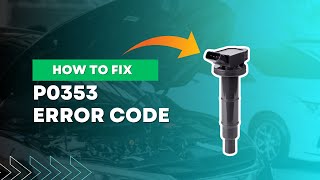
![How to Fix TOYOTA P0353 Engine Code in 2 Minutes [1 DIY Method / Only $3.81]](https://img.youtube.com/vi/aGB9VrskIGg/mqdefault.jpg)
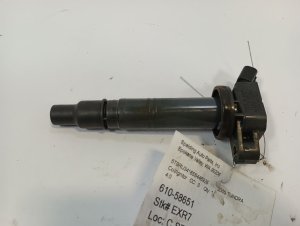
Used OEM Parts in Stock
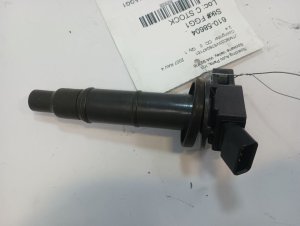
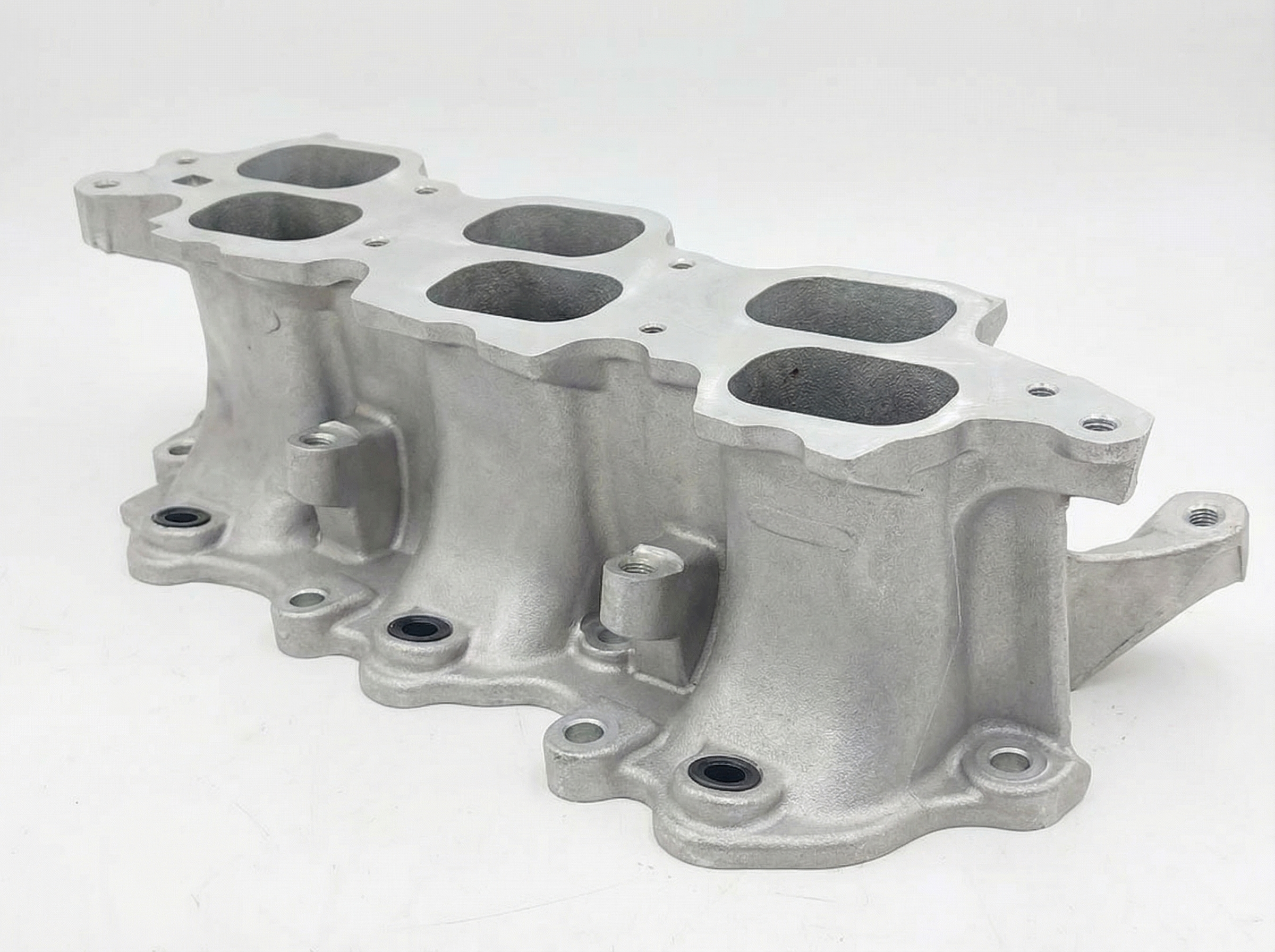
New Aftermarket Parts Available


The information in this article is provided for general reference and educational purposes only. Vehicle specifications, procedures, and part compatibility can vary by production date, trim level, and region. Always consult your vehicle's factory service manual and verify part numbers before purchasing or performing repairs. Safety-critical components such as airbags, seat belts, and braking systems should be installed by a qualified professional.
- Toyota Highlander:
- 🧭 Diagnostic Flowchart
- 🎬 Helpful Videos
- 🛍️ Shop This Part
- What's Unique About the 2005-2014 Toyota Highlander
- Symptoms You May Notice
- Most Likely Causes
- Rare But Worth Checking
- Diagnosis Steps
- Parts You'll Likely Need
- Related Codes That Often Appear With This One
- Platform-Specific Known Issues
- Mechanic-Grade Diagnostic Values
- Scan Tool Commands That Help
- Wiring & Ground Locations
- Real Owner Repair Stories
- OEM Part Supersession History
- Model Year Variations Within This Range
- Other Known Issues on This Vehicle
- Used vs. New Parts: Buying Guide for This Vehicle
- Real Owner Stories
- 2021 Lexus RX 350 (2GR-FE)
- 2023 Toyota Highlander V6
- Toyota Sienna (2GR-FE)
- Related OBD-II Codes
- Frequently Asked Questions
- 🎟️ Get 5% Off