

P0354 on 2012-2016 Chevrolet Impala: Ignition Coil 'D' Circuit Fixes
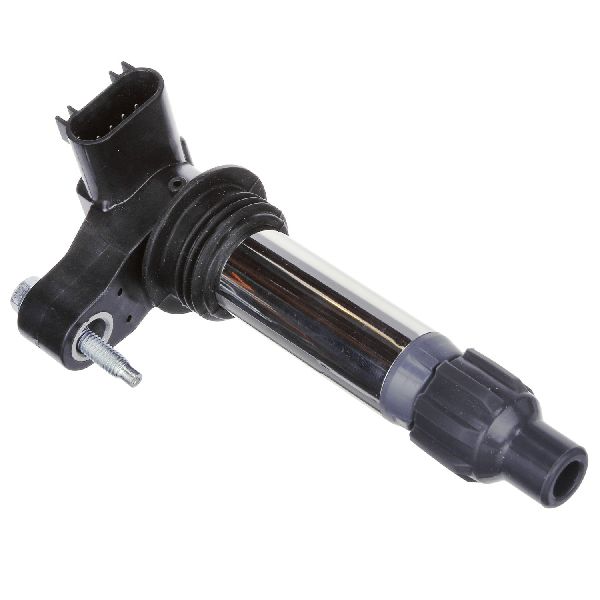
P0354 on a 3.6L V6 Impala indicates a problem with the ignition coil circuit for cylinder #4. The most common fix is replacing the #4 ignition coil and spark plug. This is a straightforward DIY repair, with the part costing between $30 and $75. Always check the wiring and connector for damage before replacing parts.
- P0354 specifically points to an electrical problem in the ignition circuit for cylinder #4.
- The most likely cause is a bad ignition coil, which is a common wear-and-tear item.
- A simple 'swap test' by moving the cylinder #4 coil to another cylinder is the fastest way to confirm if the coil is the problem.
- Cylinder #4 is the middle cylinder on the front bank (closest to the radiator), making it easy to access.
- Always consider replacing the spark plug at the same time as the coil for best results and to prevent future failures.
- If a new coil and plug do not fix the code, the wiring harness or connector to the coil should be thoroughly inspected before considering a rare PCM fault.
What's Unique About the 2012-2016 Chevrolet Impala
The 3.6L LFX V6 engine uses a reliable coil-on-plug ignition system, where each cylinder has its own dedicated coil. Failures are typically isolated to a single coil and are often due to age and heat cycles in the engine bay, which can degrade the coil's internal windings or housing. While generally robust, when a coil does fail, it's a common and well-understood issue on this platform. The key to diagnosis is identifying the correct cylinder, as the V6 engine has two cylinder banks. Cylinder #4 is easily accessible on the front bank.
Generation note: This guide covers both the end of the 9th generation Impala (sold as the 'Impala Limited' from 2014-2016) and the 10th generation Impala (2014-2016). Both generations used the 3.6L LFX V6 engine with the same ignition system components, 🎬 Watch: Complete 3.6L LFX engine tune-up guide so the causes and repair procedures are identical.
Symptoms You May Notice
- Check Engine Light is on
- Flashing Check Engine Light (during misfire)
- Rough idle or engine stumbling
- Engine hesitation or loss of power during acceleration
- Difficulty starting the engine
- Reduced fuel economy
- Replacing fuel injectors when the issue is ignition-related.
- Replacing the crankshaft position sensor without diagnosing the specific coil circuit fault.
- Replacing the oxygen sensor because of poor engine performance.
Most Likely Causes
- Failed Ignition Coil on Cylinder #4 🔴 High Probability → Shop Ignition Coil Ignition coils are a common wear item that fail from repeated exposure to high heat in the engine bay over many miles. The plastic housings can crack and internal windings can short out.
How to confirm: The easiest way to confirm a bad coil is to swap it with another one. Move the ignition coil from cylinder #4 to another cylinder on the same bank (e.g., cylinder #2 or #6). Clear the codes and run the engine. If the code changes to P0352 or P0356, the coil is faulty.
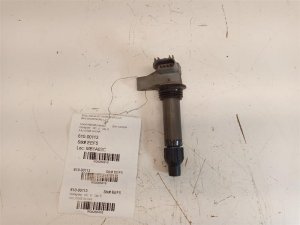
Typical fix: Replace the ignition coil for cylinder #4. It is held on by a single 10mm bolt.
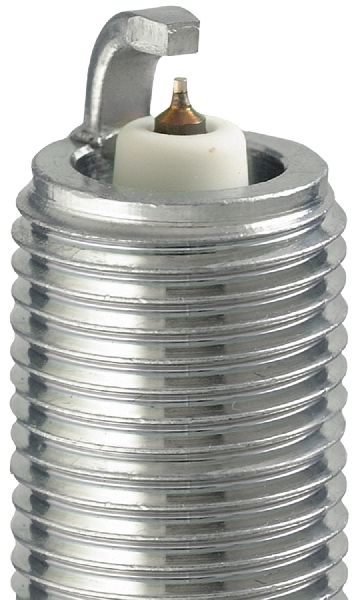
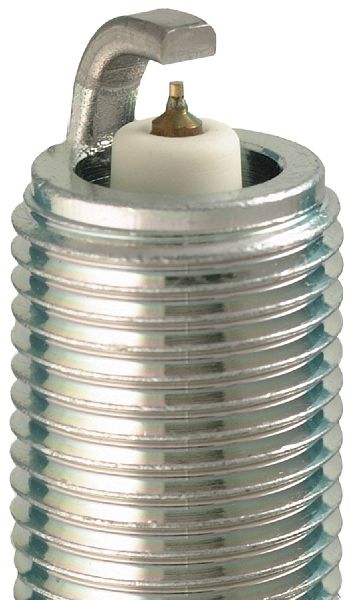
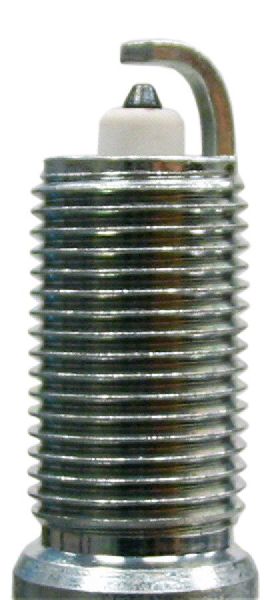
Est. part cost: $30 - $75 - Worn or Fouled Spark Plug in Cylinder #4 🟡 Medium Probability → Shop Spark Plug The original ACDelco iridium spark plugs have a service life of around 100,000 miles. A worn plug with a wide gap forces the ignition coil to work harder, which can lead to premature coil failure. Oil fouling from worn piston rings or valve seals can also cause misfires.
How to confirm: After confirming the coil is good with a swap test, remove the spark plug from cylinder #4. Inspect it for a worn electrode, heavy carbon deposits, oil fouling, or a cracked insulator.
Typical fix: Replace the spark plug in cylinder #4. It is highly recommended to replace the spark plug any time a coil is replaced. It is best practice to replace all six plugs if they are near their service interval.
Est. part cost: $10 - $20 - Damaged Wiring or Connector ⚪ Low Probability The plastic connector or wiring for the ignition coil can become brittle from heat and vibration, leading to a poor connection or broken wires. The locking tab on the connector is particularly susceptible to breaking.
How to confirm: Visually inspect the electrical connector and wiring going to the #4 ignition coil. Check for cracked plastic, corroded pins, or frayed wires. With the engine running, carefully wiggle the connector and harness to see if it affects the misfire.
Typical fix: Repair the damaged section of wiring or replace the connector pigtail.
Est. part cost: $15 - $30
Rare But Worth Checking
- Faulty Powertrain Control Module (PCM): → Shop Engine Control Module (ECM) This is very rare. The internal driver circuit for the #4 coil within the PCM can fail. Before condemning the PCM, all other possibilities (coil, plug, wiring) must be exhaustively tested and ruled out. This requires advanced diagnostics.
Diagnosis Steps
- Confirm the code P0354 is present using an OBD-II scanner. Note any other codes, like P0304.
- Locate cylinder #4. On the transversely mounted 3.6L LFX V6, the cylinders against the firewall (rear bank, Bank 1) are 1-3-5 (passenger to driver side). The cylinders at the front (near the radiator, Bank 2) are 2-4-6 (passenger to driver side). Cylinder #4 is the middle cylinder on the front bank, making it easily accessible.
- Visually inspect the wiring harness and electrical connector for the cylinder #4 ignition coil. Look for any signs of damage, melting, corrosion, or a broken locking tab.
- Perform an 'ignition coil swap test'. Disconnect the electrical connectors and remove the 10mm bolts holding the coils for cylinder #4 and cylinder #2 (an adjacent, easy-to-access coil). Swap their positions.
- Clear the trouble codes with the scanner. Start the engine and let it run for a minute or two until the Check Engine Light returns.
- Re-scan for codes. If the code has changed to P0352 ('Ignition Coil 'B' Circuit Malfunction'), the ignition coil you moved is faulty and must be replaced.
- If the code P0354 returns, the problem is not the coil. A user on Reddit reported this exact scenario, where replacing the coil and plug did not fix the issue, pointing towards a wiring or PCM problem. 🎬 Watch: What to check when new plugs and coils don't fix a misfire
- Remove the coil again and inspect the spark plug for cylinder #4. Replace it if it is worn, fouled, or damaged. The factory gap is 0.043 inches (1.1mm), but iridium plugs are pre-gapped and should not be adjusted.
- If the coil and spark plug are good, test the circuit. Disconnect the coil connector. Use a multimeter to check for 12V power on one pin with the key on. Check for a good ground on another pin. The remaining pin is the signal wire from the PCM. A professional tip is to set a multimeter to AC Hertz and check for a 5-20Hz signal on the signal wire while the engine is running, which indicates the PCM driver is working.
Parts You'll Likely Need
- Ignition Coil
(OEM #12632479 (Supersedes: 12590990, 12610626, 12618542))— This is the most common failure point for a P0354 code, typically failing due to heat and age.
Trusted brands: ACDelco (OEM), Delphi, NGK, Standard Motor Products (SMP)
OEM price range: $60 - $75
Aftermarket price range: $30 - $55 - Iridium Spark Plug
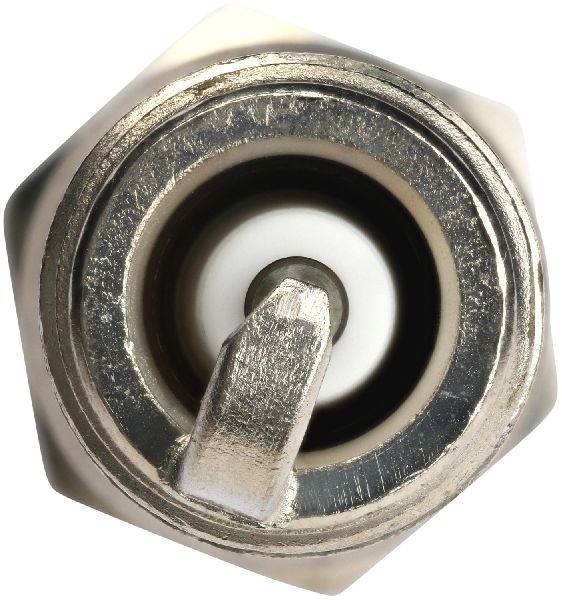
(OEM #ACDelco 41-109 (GM #12622561))— A worn spark plug can cause the misfire and put extra strain on the coil. It's best practice to replace the plug when replacing the coil, especially if near the 100,000-mile service interval.
Trusted brands: ACDelco (OEM), NGK, Bosch
OEM price range: $15 - $20
Aftermarket price range: $10 - $15
Related Codes That Often Appear With This One
- P0304 — P0304 means 'Cylinder 4 Misfire Detected'. Since P0354 indicates a fault in the ignition circuit for cylinder 4, a misfire on that same cylinder is a direct and expected consequence.
- P0300 — P0300 means 'Random/Multiple Cylinder Misfire'. While P0354 is specific to cylinder 4, a severe misfire on one cylinder can sometimes be misinterpreted by the PCM as a random misfire, especially at idle or under certain load conditions.
Technical Service Bulletins (TSBs) & Recalls
- TSB #PIP5029D: Addresses engine misfires on cold starts that can be caused by heavy carbon buildup on the intake valves of direct-injection engines like the 3.6L LFX.
- TSB Bulletin #PIP5038B: Notes that technicians may find a Malfunction Indicator Lamp on with codes P0351 through P0356 and P0300 through P0306; it advises following published Service Information diagnostics for these codes first.
Platform-Specific Known Issues
- Carbon Buildup Can Contribute to Misfires: As a direct-injection engine, the 3.6L LFX is prone to carbon buildup on the intake valves. While this typically sets a P0300 random misfire code, severe buildup on a single cylinder's valves could potentially contribute to the conditions that lead to a P0354, especially if it causes intermittent misfires that stress the ignition components. Regular induction cleaning is a recommended preventative maintenance item for this engine. 🎬 Watch: Step-by-step intake removal and valve cleaning
Mechanic-Grade Diagnostic Values
- Ignition Coil Primary Resistance — expected: 0.4 - 2.0 Ohms (Ω). Failure: A reading outside this range indicates a fault in the primary winding of the coil.
- Ignition Coil Secondary Resistance — expected: 6,000 - 12,000 Ohms (Ω). Failure: A reading outside this range suggests a failure in the secondary winding.
- Ignition Coil Connector - 12V Supply — expected: ≥ 12.0 Volts with Key On, Engine Off. Failure: Low or no voltage indicates a problem with the ignition feed circuit, fuse, or relay.
- Ignition Coil Connector - Ground Circuit — expected: < 100 mV. Failure: High voltage reading indicates a poor ground connection, which can cause weak or no spark.
- Ignition Coil Connector - PCM Trigger Signal — expected: Pulsing 5V square wave (visible on oscilloscope) or 5-20 Hz reading on a multimeter while cranking. Failure: No signal or a steady voltage indicates a problem with the wiring from the PCM or the PCM's internal driver circuit.
Scan Tool Commands That Help
- GDS2 (GM Dealer Tool) or equivalent: Cylinder Balance Test / Injector Kill Test — This function allows a technician to disable one cylinder at a time and monitor the corresponding drop in RPM. While typically used for misfires (P0304), it can help confirm if the cylinder is truly 'dead' when a P0354 is present, which helps isolate the issue before swapping parts. A consistent lack of RPM drop from cylinder #4 points definitively to a problem in that cylinder's ignition or fuel system.
- GDS2 (GM Dealer Tool) or equivalent: Ignition System Test — Some advanced scan tools can directly command the PCM to cycle the coil driver for a specific cylinder. This allows a technician to test the entire control circuit from the PCM to the coil connector with a noid light or multimeter, definitively ruling out a bad PCM driver without guesswork.
Wiring & Ground Locations
- Cylinder #4 Ignition Coil Connector — On top of the ignition coil for cylinder #4, which is the middle cylinder on the front bank (near the radiator).. This 3-pin connector is the primary point for electrical testing. Pin A is the ground circuit, Pin B is the low reference/signal from the PCM, and Pin D is the 12V ignition voltage supply. A fault on any of these circuits will cause P0354.
- G111 — On the engine block, located above the starter motor on 3.6L LFX models.. This is a primary engine ground point. A loose, corroded, or broken connection at G111 can create high resistance in the ground path for multiple components, including the ignition coils, leading to intermittent and hard-to-diagnose ignition faults.
- Engine Wiring Harness Chafe Points — While less common on the Impala than on GM trucks, inspect the harness for rubbing against sharp edges on brackets near the ECM/TCM, the upper control arm, and the shock tower.. Vibration can cause the harness loom to wear through, potentially shorting the ignition control or power feed wire for the #4 coil to ground, causing an immediate P0354 code.
Real Owner Repair Stories
- Forum user with a GM 3.6L engine (Vehicle with a 3.6L V6 (similar to LFX)) — Persistent P035x code for a single cylinder.
❌ Tried (didn't work) Replaced the ignition coil, Replaced the spark plug
✅ What actually fixed it The owner found a chafed wire in the engine harness that was intermittently shorting to ground. The damage was not at the coil connector but further back in the main loom where it was rubbing against a bracket. Repairing the wire resolved the code permanently. - Forum user on a platform-mate vehicle (Cadillac SRX) (2011 Cadillac SRX with 3.0L V6 (similar architecture to LFX)) — Misfire, required a tune-up.
✅ What actually fixed it The user performed a full spark plug and coil replacement. During the process, they noted significant carbon buildup on the intake valves, which is a known characteristic of these direct-injection engines and can contribute to poor combustion and misfires that stress ignition components.
When the Usual Fixes Don't Work
- While the vast majority of P0354 codes are fixed by replacing the ignition coil and/or spark plug, it is critical to not stop diagnosing if these parts do not resolve the issue. The Reddit forum citation highlights a case where these common fixes failed. In such instances, the problem is almost certainly in the wiring harness between the coil and the PCM, a poor ground connection, or, in very rare cases, a failed PCM driver. A methodical circuit test with a multimeter is required before replacing any more parts.
OEM Part Supersession History
12590990, 12610626, 12618542→12632479— GM periodically updates parts to improve durability and performance. Changes often involve improved internal windings, higher-quality epoxy filling for better heat dissipation, and more robust boot materials.
Heads up: All listed part numbers are fully interchangeable for the 3.6L LFX engine.
Model Year Variations Within This Range
- 2012-2016: There are no significant variations in the ignition system, coil part numbers, or diagnostic procedures for the P0354 code on the 3.6L LFX engine within this vehicle's year range. The system remained consistent across the end of the 9th generation ('Impala Limited') and the start of the 10th generation.
Diagnostic Flowchart
Other Known Issues on This Vehicle
Issues unrelated to this code that are worth knowing about as an owner of this generation:
- Premature Timing Chain Stretch 🔴 High — Common between 70,000 and 120,000 miles, especially on 2012 models or vehicles with extended oil change intervals. Often presents with codes P0008, P0016, P0017. (Ref: TSB #12-06-01-009F)
- Intake Valve Carbon Buildup 🟠 Medium — A systemic issue for the direct-injection LFX engine, typically becoming noticeable after 60,000 miles. Causes rough idle, hesitation, and misfire codes (P0300). (Ref: TSB #PIP5029D)
- Faulty Camshaft Position Actuator Solenoids 🟠 Medium — A very common failure item that can get clogged with oil sludge, leading to various timing-related codes (e.g., P0021, P0022). (Ref: TSB #PIP5096C)
- Cracked Catalytic Converter Flange 🟡 Low — An exhaust leak can develop at the catalytic converter's mounting flange, potentially causing emissions-related codes like P0420 or affecting O2 sensor readings. (Ref: TSB #17-NA-321)
- Carbon-Fouled Throttle Body 🟡 Low — Oil and fuel vapors from the PCV system can bake onto the throttle plate, causing a sticking throttle, unstable idle, and correlation codes like P0068. (Ref: TSB #PIP4578B)
Used vs. New Parts: Buying Guide for This Vehicle
When a used part is the smart pick: For this specific repair, using a used ignition coil is NOT recommended. Ignition coils are a wear-and-tear component with a finite lifespan determined by heat cycles. A used coil from a junkyard has an unknown history and may fail shortly after installation, forcing you to do the job again.
Donor-vehicle mileage cap: roughly under 30000 miles for the part to have meaningful remaining life.
What to inspect on the donor part:
- Check for cracks or signs of melting on the plastic housing.
- Ensure the electrical connector pins are clean and free of corrosion.
- Inspect the spark plug boot for tears, swelling, or signs of oil contamination.
OEM-only on this vehicle (don't cheap out):
- While not strictly OEM-only, it is highly advisable to use either the OEM ACDelco spark plugs or a direct equivalent from NGK (Iridium). Cheap spark plugs can cause performance issues and fail prematurely.
Aftermarket brands forum-validated for this vehicle:
- Ignition Coils: Delphi (often the original OEM supplier), NGK, Standard Motor Products (SMP), DENSO.
- Spark Plugs: ACDelco (OEM), NGK
Brands owners have reported issues with on this vehicle:
- Unbranded, low-cost ignition coil sets sold on sites like Amazon or eBay. Forum users frequently report premature failure of these parts, sometimes within weeks or months of installation. If a deal for a full set of six coils seems too good to be true, it likely is.
Real Owner Stories
Aggregated from forums and TSBs cited above. Mileages and costs reflect what owners reported in those sources.
2012-2016 Chevrolet Impala 3.6L LFX V6
Symptoms: The owner experienced a P0354 code and attempted to fix it by replacing both the ignition coil and the spark plug, but the code returned.
What fixed it: The issue required further diagnostic testing of the wiring and PCM circuit, as the standard coil and plug replacement did not resolve the malfunction.
Source hint: Reddit r/autorepair - 'P0354 code. Replaced coil and spark plug with no luck. Advice?'
2012-2015 Chevrolet Camaro 3.6L LFX V6
Symptoms: Misfires and performance issues related to the LFX engine platform's tendency for carbon accumulation.
What fixed it: Performing a manual intake manifold removal and intake valve cleaning to remove carbon buildup.
Source hint: Camaro5 Forums - 'DIY LFX Intake Manifold / Valve Cleaning'
Related OBD-II Codes
Frequently Asked Questions
Where is cylinder #4 located on my 2012-2016 Chevrolet Impala 3.6L LFX?
Does TSB #PIP5029D apply to my Impala's misfire issues?
What spark plugs should I use for my 3.6L LFX engine?
How can I tell if the P0354 code is a bad coil or a PCM issue?
Is there a specific maintenance item I should perform to prevent ignition stress on this engine?
What is the service life of the spark plugs in the 2012-2016 Impala 3.6L?
Helpful Videos
Used OEM Parts in Stock
New Aftermarket Parts Available

The information in this article is provided for general reference and educational purposes only. Vehicle specifications, procedures, and part compatibility can vary by production date, trim level, and region. Always consult your vehicle's factory service manual and verify part numbers before purchasing or performing repairs. Safety-critical components such as airbags, seat belts, and braking systems should be installed by a qualified professional.
- Chevrolet Impala:
- 🧭 Diagnostic Flowchart
- 🎬 Helpful Videos
- 🛍️ Shop This Part
- What's Unique About the 2012-2016 Chevrolet Impala
- Symptoms You May Notice
- Most Likely Causes
- Rare But Worth Checking
- Diagnosis Steps
- Parts You'll Likely Need
- Related Codes That Often Appear With This One
- Technical Service Bulletins (TSBs) & Recalls
- Platform-Specific Known Issues
- Mechanic-Grade Diagnostic Values
- Scan Tool Commands That Help
- Wiring & Ground Locations
- Real Owner Repair Stories
- When the Usual Fixes Don't Work
- OEM Part Supersession History
- Model Year Variations Within This Range
- Other Known Issues on This Vehicle
- Used vs. New Parts: Buying Guide for This Vehicle
- Real Owner Stories
- 2012-2016 Chevrolet Impala 3.6L LFX V6
- 2012-2015 Chevrolet Camaro 3.6L LFX V6
- Related OBD-II Codes
- Frequently Asked Questions
- 🎟️ Get 5% Off