

P0354 on 2009-2012 Ford Escape 2.5L: Ignition Coil 'D' Circuit Causes and Fixes
On a 2009-2012 Ford Escape with the 2.5L engine, code P0354 is almost always caused by a failed ignition coil on cylinder #4. It's a straightforward DIY replacement costing $30-$80 for a quality aftermarket coil. Always replace the spark plug at the same time. If the code persists after replacing the coil and plug, the PCM is the next likely culprit, as coil failure can damage the PCM's internal driver circuit—a known issue on this platform.
- P0354 on this Escape points directly to a problem with the ignition system for cylinder #4.
- The most likely cause is a bad ignition coil, which is an easy and inexpensive DIY fix.
- Always swap the suspect coil with one from another cylinder to confirm it's the problem before buying parts.
- Replace the spark plug for cylinder #4 at the same time as the coil to ensure a lasting repair.
- If a new coil doesn't fix the problem, investigate the wiring and consider the possibility of a damaged PCM, a known and well-documented issue for this vehicle.
What's Unique About the 2009-2012 Ford Escape
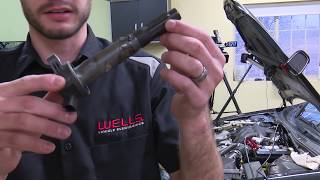
For this generation of Ford Escape with the 2.5L engine, a common and significant issue is that an ignition coil can fail by shorting internally. When this happens, it can send a voltage spike back to the Powertrain Control Module (PCM), damaging the internal driver circuit for that coil. This can lead to repeated coil failures or a persistent P0354 code even after replacing the coil, ultimately requiring the PCM to be repaired or replaced. Repair services like Circuit Board Medics specialize in fixing 🎬 Watch: How a shorted coil damages the PCM this specific type of PCM failure for Ford Escapes, which confirms its prevalence.
Symptoms You May Notice
- Check Engine Light is on (solid or flashing)
- Rough or shaking idle
- Engine misfires, which may feel like a stumble or hesitation during acceleration
- Reduced engine power and sluggish performance
- Decreased fuel economy
- Difficulty starting the engine
- Replacing only the spark plug without testing the ignition coil.
- Replacing the PCM before confirming the ignition coil and wiring are good.
- Assuming a fuel injector or compression issue is causing the misfire without first addressing the specific P0354 circuit code.
Most Likely Causes
- Failed Ignition Coil on Cylinder #4 🔴 High Probability → Shop Ignition Coil Coil-on-plug systems are common failure points due to constant exposure to high heat and vibration directly on top of the engine. Internal windings can short out or break down over time.
How to confirm: The most reliable method is to swap the ignition coil from cylinder #4 with another cylinder (e.g., cylinder #3). Clear the codes and drive the vehicle. If the code changes to P0353, you have confirmed the coil is the faulty component. This is a widely accepted diagnostic step for this code.
Typical fix: Replace the faulty ignition coil. It is best practice to replace the corresponding spark plug at the same time. Applying a small amount of dielectric grease to the inside of the new coil boot can prevent moisture intrusion and corrosion.
Est. part cost: $30-$80 - Worn or Fouled Spark Plug in Cylinder #4 🟡 Medium Probability → Shop Spark Plug Spark plugs are a regular maintenance item with a service life of up to 100,000 miles. A worn plug with a large electrode gap requires higher voltage to create a spark, which strains the ignition coil and can cause it to overheat and fail prematurely.
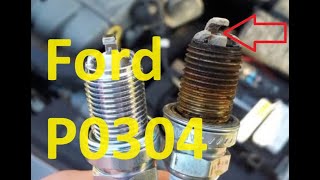
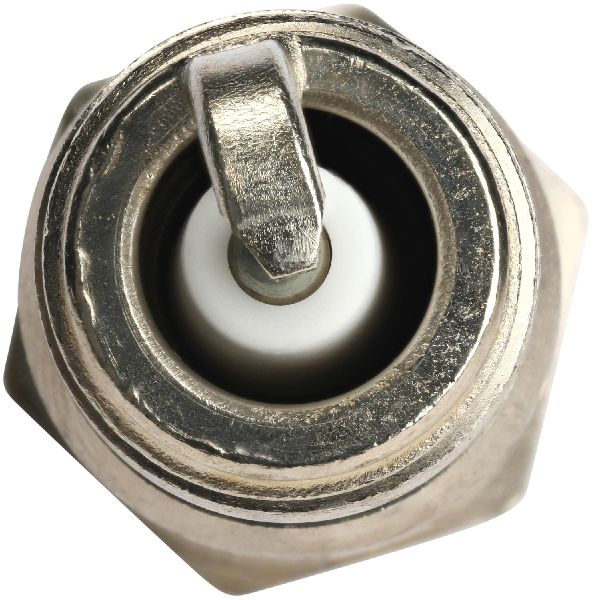
How to confirm: Remove the spark plug from cylinder #4 and inspect it. Look for signs of wear, such as a rounded center electrode, or fouling from oil or carbon buildup. Compare it to the other plugs. The correct gap for the OEM Motorcraft SP-530 plug is approximately 0.051 inches.
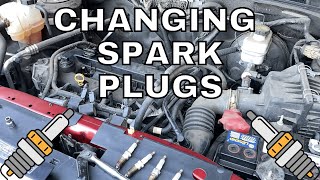
Typical fix: Replace the spark plug in cylinder #4. It is highly recommended to replace all four spark plugs at the same time to ensure even performance and prevent 🎬 See this step-by-step spark plug replacement walkthrough future coil failures.
Est. part cost: $8-$25 per plug - Damaged Wiring or Connector for Coil #4 ⚪ Low Probability
How to confirm: Visually inspect the wiring harness and electrical connector going to the ignition coil on cylinder #4. Look for any signs of cracking, melting, corrosion, or loose pins. You can perform a 'wiggle test' on the harness with the engine running to see if it induces a misfire. Use a multimeter to check for 12V+ at the connector with the key on and for continuity on the signal wire back to the PCM.
Typical fix: Repair the damaged section of wiring or replace the pigtail connector.
Est. part cost: $15-$30 for a new connector
Rare But Worth Checking
- Failed Powertrain Control Module (PCM): → Shop Engine Control Module (ECM) This is a known issue on this platform. An ignition coil can short out and damage the coil driver circuit inside the PCM. This should be suspected if a new coil does not fix the P0354 code or if the new coil fails immediately. Specialized services can repair the damaged PCM, which is often more cost-effective than buying and programming a new one from a dealer.
Diagnosis Steps
- Read the trouble codes with an OBD-II scanner and confirm P0354 is present. Note any other codes, especially P0304.
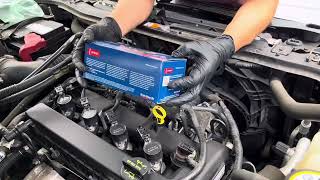
- To confirm if the coil is bad, swap the ignition coil from cylinder #4 with another cylinder (e.g., cylinder #2). The coils are held on by a single 8mm bolt. 🎬 Watch: How to remove and install the ignition coils
- Clear the codes with the scanner.
- Start the engine and go for a short drive until the check engine light comes back on.
- Re-scan for codes. If the code has moved to P0352 ('Ignition Coil 'B' Circuit Malfunction'), the ignition coil is confirmed to be faulty.
- If the P0354 code returns, the problem is likely in the wiring or the PCM.
- Inspect the wiring and connector for coil #4 for any damage, melting, or corrosion. Check for 12 volts at the connector with the key on.
- If the coil swap test fails (P0354 returns) and the wiring looks good, the final and most probable cause is a faulty PCM driver circuit. This can be confirmed by using a noid light or oscilloscope on the signal wire at the coil connector to check for the trigger pulse from the PCM.
Parts You'll Likely Need
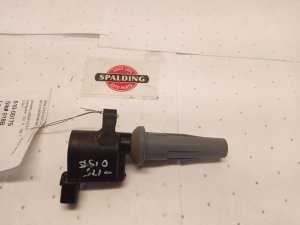
- Ignition Coil
(OEM #9E5Z12029A)— This is the most common failure part for a P0354 code. The coil is responsible for generating the high voltage needed to fire the spark plug.
Trusted brands: Motorcraft, NGK, Denso, Delphi, Bosch
OEM price range: $60-$90
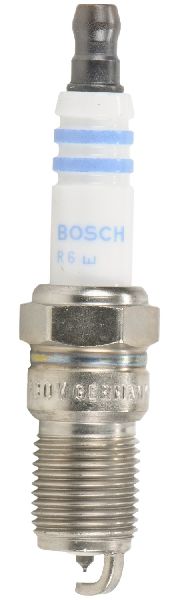
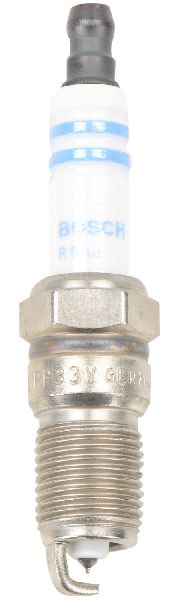
Aftermarket price range: $30-$80 - Spark Plug
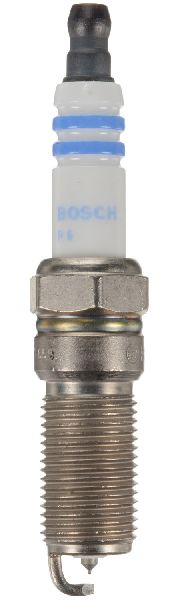
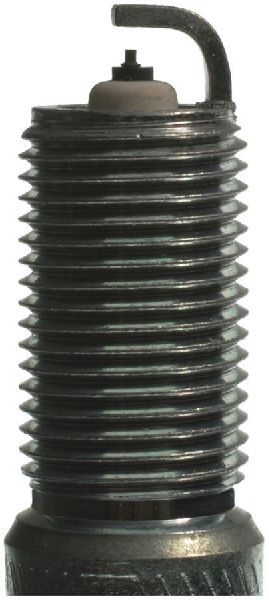
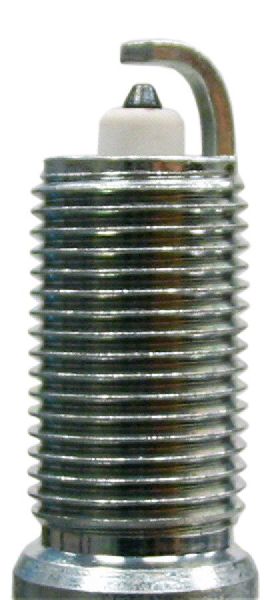
(OEM #SP-530-X)— It is best practice to replace the spark plug when replacing an ignition coil. A worn spark plug can cause the new coil to fail prematurely. The OEM plug is an iridium/platinum design for long life.
Trusted brands: Motorcraft, NGK, Autolite
OEM price range: $10-$15
Aftermarket price range: $8-$25
Related Codes That Often Appear With This One
- P0304 — This code means 'Cylinder 4 Misfire Detected.' It frequently appears with P0354 because the ignition coil circuit fault prevents the spark plug from firing, directly causing a misfire in that cylinder.
Technical Service Bulletins (TSBs) & Recalls
- TSB 11-10-10: Addresses intermittent rough idle and DTCs P0351-P0358 on some Ford models. It recommends inspecting coil-on-plug connectors for corrosion and applying dielectric grease.
- Bulletin #SSM 47180: Notes that an engine may exhibit a misfire, lack of power, or no start with codes P0351-P0354 stored in the PCM, potentially due to a poor connection at cylinder head ground G111 near the coil on plug connector.
Platform-Specific Known Issues
- A known failure pattern involves an ignition coil shorting internally, which can damage the driver circuit within the Powertrain Control Module (PCM). If replacing the coil and plug doesn't resolve the code, the PCM may need to be tested and repaired.
- Some owners have reported water intrusion into the spark plug wells, which can cause arcing and lead to misfires and coil failure. Ford issued a TSB for a similar issue on other models, recommending sealing the CHT sensor boot to prevent water entry.
Mechanic-Grade Diagnostic Values
- Ignition Coil Primary Resistance — expected: 0.4 to 2.0 ohms. Failure: A reading outside of this range indicates a faulty primary winding in the coil.
- Ignition Coil Secondary Resistance — expected: 6,000 to 10,000 ohms. Failure: A reading outside of this range suggests a failure in the secondary winding.
- Voltage at Coil Connector (Power Pin) — expected: 12.6V+ (Battery Voltage) with Key On, Engine Off. Failure: Low or no voltage points to a problem in the power supply circuit, not the coil itself.
Scan Tool Commands That Help
- FORScan or equivalent Ford-specific scanner: Power Balance Test — This test graphically displays the power contribution of each cylinder by selectively disabling fuel injectors. A cylinder with a faulty coil (P0354) will show no RPM drop when its injector is disabled, confirming it was not contributing power. This helps differentiate an ignition fault from a fuel or mechanical issue.
Wiring & Ground Locations
- Engine Block Ground — On the lower part of the engine block, next to the oil filter. A black cable with a purple stripe connects from the battery negative terminal to this point.. A poor or corroded engine ground can cause a variety of electrical issues, including intermittent ignition problems. While the PCM directly grounds the coil for firing, the overall system relies on a solid engine-to-chassis ground. Cleaning this contact point is a crucial step if electrical issues are suspected.
Real Owner Repair Stories
- Ford Truck Enthusiasts Forums (2005 Ford Escape 3.0L (similar platform, same code behavior)) — Engine light on, running poorly, popping back through the air intake.
❌ Tried (didn't work) Swapped coil from cylinder #4 with #5 and #6; the code followed the coil (P0355, P0356)., Replaced the identified bad coil and spark plug with new parts from NAPA., Cleared codes., Disconnected the battery.
✅ What actually fixed it The user's problem persisted after replacing the confirmed bad coil, and the engine still ran rough with the P0354 code returning. Forum members advised that the next logical step was a fault in the wiring harness or the PCM itself, as the new coil did not resolve the issue, pointing towards a damaged coil driver in the PCM.
Documented NHTSA Reports
- NHTSA ODI #11131030: An owner reported that after being towed, an auto shop diagnosed P0351, P0352, P0354, and P0355 ignition coils and PCM failure, noting an inability to control the vehicle and get it off the road.
- NHTSA ODI #10694980: A report describes a situation where the PCM, spark plugs, and ignition coils all failed at once, with diagnostic codes P0351, P0353, and P0354 appearing.
- NHTSA ODI #10494379: An owner was informed by a local garage that trouble codes P0351, P0352, P0353, and P0354 required the replacement of all 6 coils and the PCM module.
- NHTSA ODI #11429061: A vehicle reportedly shut down on the interstate and would not restart, with codes P0351 through P0356 stored.
OEM Part Supersession History
9E5E-12A366-AA→9E5Z-12029-A (Motorcraft DG-522)— Standard part number evolution and supplier changes.
Diagnostic Flowchart
Other Known Issues on This Vehicle
Issues unrelated to this code that are worth knowing about as an owner of this generation:
- Electric Power Steering (EPS) Failure 🔴 High — Very common. Ford issued recall 14S05 for 2008-2011 models due to a faulty steering torque sensor that could cause a sudden loss of power assist. (Ref: Recall 14S05)
- 6F35 Transmission Problems 🔴 High — Commonly reported, with symptoms including harsh shifting, shuddering, delayed engagement, and premature failure. Class action lawsuits have been filed regarding this transmission.
- Electronic Throttle Body (ETB) Failure 🟠 Medium — A widespread issue across many Ford models of this era, causing the vehicle to enter 'limp mode' with sudden loss of power. Ford had a customer satisfaction program (13N03) for some models. (Ref: TSB 09-23-5, Customer Satisfaction Program 13N03)
- Leaking Driver's Side Axle Seal 🟠 Medium — A frequently mentioned leak point, causing loss of transmission fluid. Repair kits are available from Ford to address the seal and related components.
- Cracked Front ABS Tone Ring 🟡 Low — The ABS tone ring on the front axle can crack, leading to an illuminated ABS light and erratic traction control behavior. It's a relatively inexpensive part to replace.
- Rust on Rear Wheel Arches/Quarter Panels 🟠 Medium — Common in regions where road salt is used. Rust often forms on the inside lip of the rear wheel wells and can progress to perforate the quarter panel.
Used vs. New Parts: Buying Guide for This Vehicle
When a used part is the smart pick: A used Powertrain Control Module (PCM) from a reputable recycler is a smart choice if the original PCM is diagnosed with a failed coil driver. It is significantly cheaper than a new unit from the dealer. Ensure the seller provides the VIN of the donor vehicle to match part numbers correctly.
Donor-vehicle mileage cap: roughly under 120000 miles for the part to have meaningful remaining life.
What to inspect on the donor part:
- Verify the part number on the used PCM exactly matches the original.
- Inspect the connectors for any signs of corrosion, bent pins, or water damage.
- Choose a seller that offers a warranty or return policy.
- Ask if the donor vehicle had any electrical or engine issues.
OEM-only on this vehicle (don't cheap out):
- While aftermarket coils are available, using an OEM Motorcraft coil is strongly recommended for longevity and to prevent potential damage to the PCM. Some aftermarket coils can have incorrect resistance values that stress the PCM driver.
Aftermarket brands forum-validated for this vehicle:
- Denso
- NGK
- Delphi
Brands owners have reported issues with on this vehicle:
- Unnamed, no-brand "value" coils from online marketplaces are frequently reported to fail prematurely.
Real Owner Stories
Aggregated from forums and TSBs cited above. Mileages and costs reflect what owners reported in those sources.
2013 Ford Fusion 2.5L I4
Symptoms: Stalling at low speeds and multiple circuit failure codes including P0351 and P0354.
What fixed it: The report indicates multiple coil circuit failures which point toward a wiring or PCM issue rather than a single failed coil.
Source hint: Reddit r/fordfusion: A user with a 2013 Fusion 2.5L (same engine family) reported P0351 and P0354 codes together
Related OBD-II Codes
Frequently Asked Questions
Does TSB 11-10-10 apply to my 2009-2012 Ford Escape regarding the P0354 code?
What specific spark plugs should I use for my 2.5L I4 engine to prevent P0354?
I replaced the coil on cylinder #4 but the P0354 code returned. What is the next step for this specific vehicle?
Is there a recall for the steering issues I'm feeling alongside my engine misfire?
Can water getting into the engine cause the P0354 code on the Escape?
Should I buy a new or used PCM if mine is damaged by the P0354 circuit fault?
Helpful Videos
Used OEM Parts in Stock
New Aftermarket Parts Available

The information in this article is provided for general reference and educational purposes only. Vehicle specifications, procedures, and part compatibility can vary by production date, trim level, and region. Always consult your vehicle's factory service manual and verify part numbers before purchasing or performing repairs. Safety-critical components such as airbags, seat belts, and braking systems should be installed by a qualified professional.
- Ford Escape:
- 🧭 Diagnostic Flowchart
- 🎬 Helpful Videos
- 🛍️ Shop This Part
- What's Unique About the 2009-2012 Ford Escape
- Symptoms You May Notice
- Most Likely Causes
- Rare But Worth Checking
- Diagnosis Steps
- Parts You'll Likely Need
- Related Codes That Often Appear With This One
- Technical Service Bulletins (TSBs) & Recalls
- Platform-Specific Known Issues
- Mechanic-Grade Diagnostic Values
- Scan Tool Commands That Help
- Wiring & Ground Locations
- Real Owner Repair Stories
- Documented NHTSA Reports
- OEM Part Supersession History
- Other Known Issues on This Vehicle
- Used vs. New Parts: Buying Guide for This Vehicle
- Real Owner Stories
- 2013 Ford Fusion 2.5L I4
- Related OBD-II Codes
- Frequently Asked Questions
- 🎟️ Get 5% Off