

P0354 on 2000-2007 Ford Taurus: Ignition Coil 'D' Circuit Malfunction Explained
This code indicates a problem with the ignition coil for cylinder #4. The most common fix is to replace the faulty ignition coil and the spark plug for that cylinder. This is a relatively simple DIY repair, with parts costing between $25 and $60.
- P0354 on a 2000-2007 Taurus specifically points to an issue with the ignition circuit for cylinder #4, which is the front-most cylinder on the passenger side.
- The most probable cause is a failed ignition coil pack, followed by a bad spark plug or wire.
- This is a very DIY-friendly repair on the common 3.0L Vulcan engine. Always consider replacing the spark plugs and wires when replacing the coil pack to ensure a complete and lasting fix.
- Before buying parts, swap the spark plug wire for cylinder #4 with an adjacent cylinder at the coil pack to see if the fault code follows the wire, which is a no-cost way to confirm the diagnosis.
What's Unique About the 2000-2007 Ford Taurus
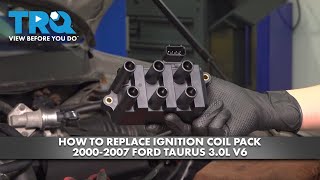
The 2000-2007 Ford Taurus with the common 3.0L V6 'Vulcan' engine uses a distributorless ignition system with a single coil pack. Unlike coil-on-plug systems where each cylinder has an individual coil, this generation Taurus uses one coil pack that houses all six coils. The less common 3.0L 'Duratec' V6 in some models does use a coil-on-plug system. For the Vulcan engine, a failure in the section of the pack responsible for cylinder #4 will trigger the P0354 code. These coil packs are known to develop cracks in their plastic housing over time due to engine heat, which can lead to internal shorting and failure.
Symptoms You May Notice
- Check Engine Light is on
- Rough or shaking idle
- Engine misfires, especially under acceleration
- Hesitation or loss of power
- Reduced fuel economy
- Difficulty starting the engine
- Engine may stall
- Replacing only the spark plug without checking the ignition coil or wire.
- Assuming a fuel injector is bad when the issue is with the ignition system.
- Replacing ignition components when the root cause is a vacuum leak causing a misfire.
Most Likely Causes
- Faulty Ignition Coil Pack 🔴 High Probability → Shop Ignition Coil The coil packs on the 3.0L Vulcan engine are susceptible to cracking from heat cycles, allowing moisture to enter and cause internal short circuits. This is the most common cause for a P035x code.
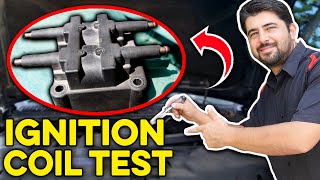
How to confirm: Visually inspect the coil pack housing for fine cracks or burn marks. The most definitive test is to swap the spark plug wires for cylinder #4 and another cylinder (e.g., cylinder #1, which corresponds to P0351) at the coil pack. Clear the codes and drive. If the code changes to P0351, the coil pack is faulty. You can also test the primary and secondary resistance of the coil tower for cylinder #4 with a multimeter. 🎬 Watch: How to test an ignition coil pack
Typical fix: Replace the entire ignition coil pack. It is a very simple DIY job, typically held on by a few 8mm bolts. 🎬 Watch: How to replace the ignition coil pack It is highly recommended to replace all spark plugs and spark plug wires at the same time to ensure a complete repair.
Est. part cost: $50-$150 for a coil pack, $20-$50 for spark plugs and wires. - Worn or Damaged Spark Plug 🟡 Medium Probability → Shop Spark Plug
How to confirm: Remove the spark plug from cylinder #4 and inspect it for wear (rounded electrode), damage (cracked porcelain), or heavy carbon/oil fouling. A worn plug creates a wider gap, forcing the coil to work harder and potentially fail.
Typical fix: Replace the spark plug for cylinder #4. It is best practice to replace all six spark plugs at the same time for even performance.
Est. part cost: $3-$10 per spark plug. - Damaged Spark Plug Wire 🟡 Medium Probability → Shop Spark Plug
How to confirm: Visually inspect the spark plug wire for cylinder #4 for any signs of cracking, burning, or corrosion on the contacts. Test the wire's resistance with a multimeter; it should be within the manufacturer's specified range per foot.
Typical fix: Replace the spark plug wire for cylinder #4. It is recommended to replace the entire set of wires. When replacing, transfer one wire at a time from the old coil to the new one to avoid mixing up the firing order. 🎬 See this step-by-step spark plug and wire replacement
Est. part cost: $20-$50 for a set. - Wiring or Connector Issue ⚪ Low Probability
How to confirm: Inspect the main wiring harness connector at the ignition coil pack. Look for any broken or frayed wires, loose connections, or green/white corrosion on the pins. A poor connection here can mimic a failed coil.
Typical fix: Clean the connector pins with electrical contact cleaner or repair the damaged section of the wiring harness. Connector pigtails are available for replacement if the original is too damaged.
Est. part cost: $5-$30 for connector pigtails or wiring repair supplies.
Rare But Worth Checking
- Faulty Powertrain Control Module (PCM): → Shop Engine Control Module (ECM) This is the least likely cause. The internal driver circuit in the PCM that controls the ignition coil can fail. This should only be considered after all other possibilities (coil, plug, wires, and wiring) have been thoroughly ruled out. TSB 13-4-17 for later model Fords notes that a damaged coil can sometimes cause the PCM driver to fail, requiring replacement of both components.
Diagnosis Steps
- Retrieve the stored trouble code(s) with an OBD-II scanner to confirm P0354 is present.
- On the 3.0L V6, the cylinders are numbered 1-2-3 on the rear bank (near the firewall) and 4-5-6 on the front bank (near the radiator), from passenger side to driver side. Cylinder #4 is therefore the front cylinder on the passenger side.
- Visually inspect the ignition coil pack for any obvious signs of damage, such as cracks, burn marks, or oil contamination.
- Inspect the spark plug wire for cylinder #4 for damage. Ensure it is securely connected at both the coil pack and the spark plug.
- Check the main electrical connector and wiring harness leading to the coil pack for loose connections, corrosion, or frayed wires.
- To isolate the fault, swap the spark plug wire from cylinder #4 with the wire from cylinder #5 at the coil pack only. Clear the codes and run the engine. If the code changes to P0355 (Ignition Coil 'E' Malfunction), the spark plug wire is bad. If the P0354 code returns, the issue is likely the coil pack itself.
- If the coil pack and wire are deemed good, remove and inspect the spark plug from cylinder #4. Replace it if it is worn, fouled, or damaged.
- If the coil, plug, and wire are all confirmed to be good, the final step is to check for a signal from the PCM to the coil. This requires a multimeter or noid light to verify the driver signal is present at the coil connector's pin for cylinder #4. Absence of a signal points to a wiring issue between the PCM and coil, or a rare PCM failure.
Parts You'll Likely Need
- Ignition Coil Pack
(OEM #2M2Z-12029-AC, DG530 (Motorcraft))— This is the most frequent point of failure for a P035x code on this vehicle due to age and heat exposure.
Trusted brands: Motorcraft, Spectra Premium, NGK, Delphi
OEM price range: $90-$150
Aftermarket price range: $50-$120 - Spark Plugs
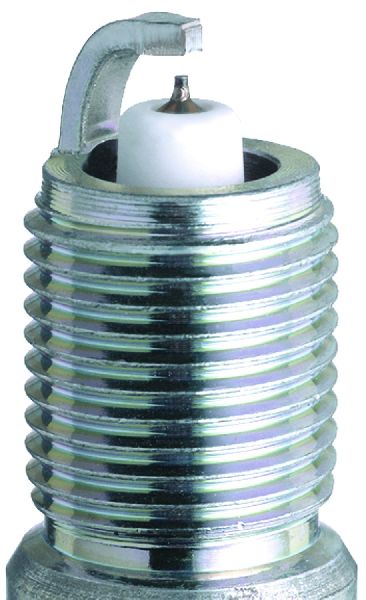
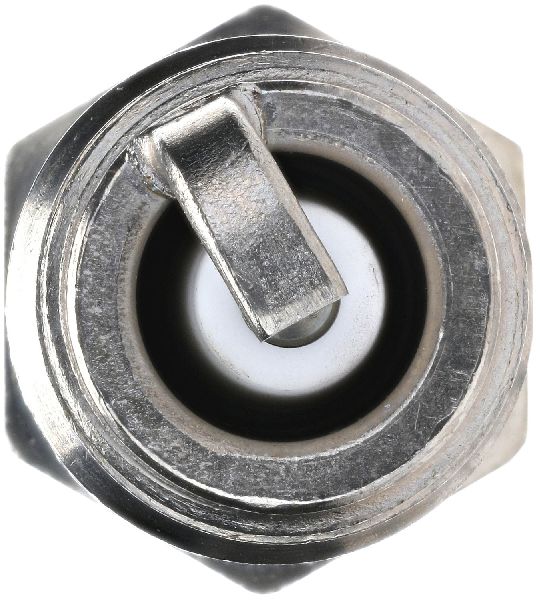
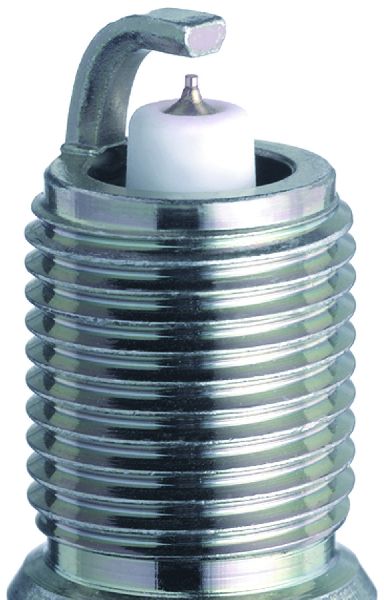
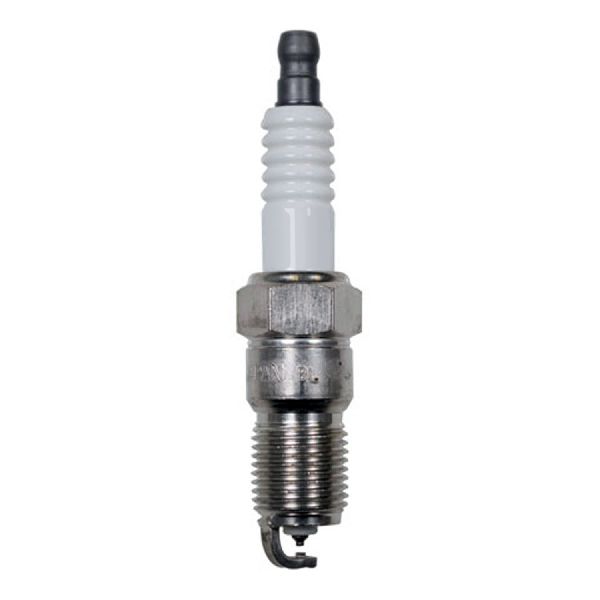
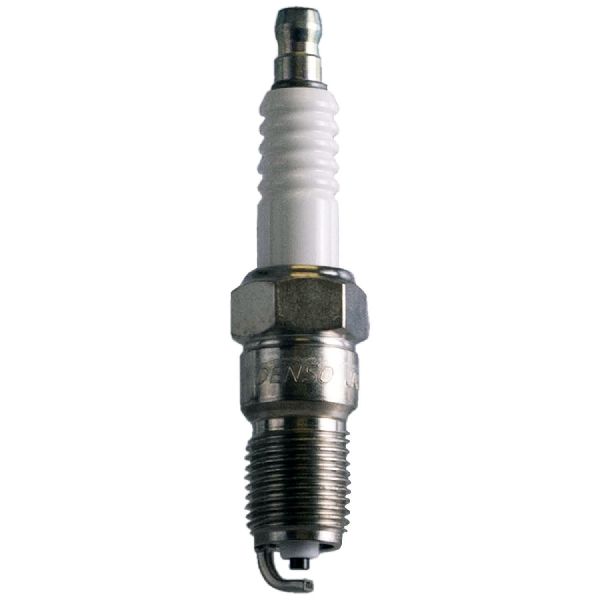
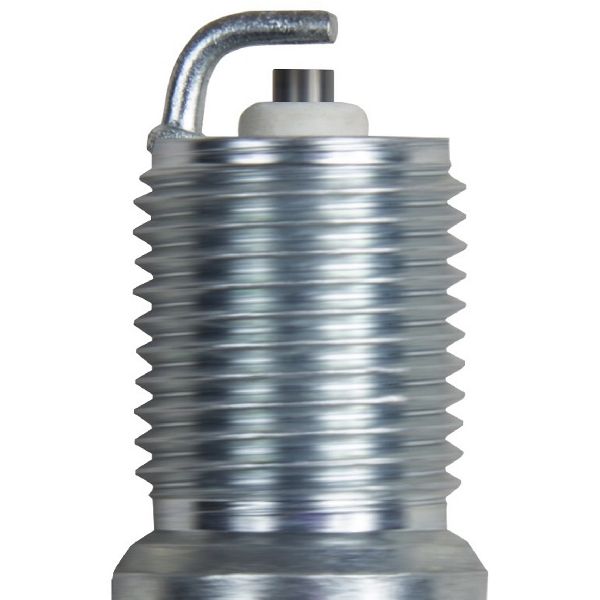
(OEM #SP-432, AGSF32FM (Motorcraft))— A worn spark plug can cause an ignition coil to fail, and it's best practice to replace them when installing a new coil. The recommended spark plug gap is 0.044 inches.
Trusted brands: Motorcraft, NGK, Autolite, Bosch
OEM price range: $5-$10 per plug
Aftermarket price range: $3-$8 per plug - Spark Plug Wire Set
(OEM #WR-5934 (Motorcraft))— The wire connecting the coil pack to the spark plug can degrade over time, causing high resistance or spark leakage, which overworks the coil.
Trusted brands: Motorcraft, NGK, Denso
OEM price range: $40-$70
Aftermarket price range: $20-$50
Related Codes That Often Appear With This One
- P0304 — P0304 means 'Cylinder 4 Misfire Detected.' Since P0354 indicates a fault in the ignition circuit for cylinder 4, a misfire in that same cylinder is a direct and expected consequence.
Technical Service Bulletins (TSBs) & Recalls
- TSB 13-4-17: This TSB applies to slightly later model years (2008 Taurus) and other Fords with 3.0L/3.5L engines that use a coil-on-plug (COP) system. It notes that P035x codes can be caused by a damaged ignition coil, and that in some cases, the failed coil can damage the PCM driver circuit, requiring replacement of the PCM, all six coils, and all six spark plugs. While the 2000-2007 Taurus Vulcan engine uses a coil pack, this TSB highlights a known failure pattern in Ford ignition systems of the era where a bad coil can lead to PCM failure.
- Bulletin #SSM 52455: A manufacturer service bulletin notes that various Ford chassis and E-Series vehicles equipped with gas engines may exhibit an illuminated MIL with ignition system DTCs including P0354 set in the powertrain control module (PCM).
- Bulletin #TSB 24-2406: This bulletin indicates that other Ford models with EcoBoost engines may exhibit an illuminated MIL with ignition system DTCs such as P0354 set in the PCM.
Mechanic-Grade Diagnostic Values
- Ignition Coil Primary Winding Resistance — expected: 0.5 to 2.0 ohms. Failure: A reading of OL (over-limit/infinite) indicates an open circuit, while a reading of 0.0 ohms indicates a short. Either requires coil replacement.
- Ignition Coil Secondary Winding Resistance — expected: 6,500 to 11,500 ohms (6.5k to 11.5k ohms). Failure: Readings significantly outside this range indicate a faulty coil winding, requiring replacement of the coil pack.
- Voltage at Coil Connector (Power Wire) — expected: 12.6 Volts (Battery Voltage) with Key On, Engine Off. Failure: Low or no voltage indicates a problem with the power supply wire from the fuse/relay, not the coil itself.
- Continuity of Coil Driver Wire — expected: Less than 5.0 ohms between the coil connector and the corresponding PCM pin.. Failure: High resistance or an OL reading indicates a break or corrosion in the wire, which is a common failure point.
Scan Tool Commands That Help
- Ford IDS (Integrated Diagnostic System): Power Balance Test — This function graphically displays the power contribution of each cylinder in real-time. For a P0354, the graph would show a significant drop or no contribution from cylinder #4, confirming a lack of combustion. This is useful to verify the misfire is isolated to that cylinder before disassembly.
- Ford IDS (Integrated Diagnostic System): Self-Test (All CMDTCs) — After a repair, such as replacing the PCM, this function is used to retrieve and clear diagnostic trouble codes from all networked modules on the vehicle, ensuring no residual codes remain.
Wiring & Ground Locations
- Ignition Coil Connector (C119) — The 4-pin rectangular electrical connector on the ignition coil pack itself.. This is the primary point for testing. Pin 4 (Red/Light Green wire) is the 12V+ power feed. Pin 1 (Tan/White wire) is the trigger signal from the PCM for cylinders 1 & 5. Pin 2 (Tan/Orange wire) is for cylinders 2 & 6. Pin 3 (Tan/Yellow wire) is the trigger for cylinders 3 & 4. A fault on Pin 3's circuit will cause P0354.
- PCM Connector Pins — At the Powertrain Control Module, typically located in the engine bay near the firewall.. For a P0354, the specific wire to test for continuity is the Tan/Yellow wire running from Pin 3 of the coil connector to Pin 77 of the PCM connector. A break in this wire will cause the code.
- G101 (Main Engine Ground) — Typically located on the upper part of the engine block or bell housing, connecting via a thick ground strap to the chassis/firewall.. A poor engine ground can cause a weak or inconsistent spark across all cylinders. While it may not isolate to just one cylinder, it can cause intermittent ignition issues and stress the ignition coil, leading to premature failure.
Real Owner Repair Stories
- Go-Parts.com forum citation (1999 Ford Mustang GT (Uses a similar ignition system logic)) — Persistent P0354 code.
❌ Tried (didn't work) Replaced the ignition coil for cylinder 4, Replaced the spark plug for cylinder 4, Confirmed 12V power at the coil connector
✅ What actually fixed it A broken wire was found inside the wiring harness. Wiggling the harness near the coil while the engine was running caused the misfire to change, which pinpointed the location of the internal break. The wire was repaired to resolve the code. - 2CarPros Forum User (2004 Ford Taurus 3.0L Vulcan) — Rough running engine with codes P0351, P0352, and P0354 stored simultaneously.
❌ Tried (didn't work) Replaced ignition coil pack, Replaced spark plugs
✅ What actually fixed it The user suspected a faulty PCM or a wiring issue affecting multiple coil driver circuits and was seeking a PCM pinout chart to test the wiring harness for continuity between the coil pack and the PCM. This indicates that when multiple P035x codes appear together, the problem is more likely in the shared wiring or the PCM itself rather than the individual components. - NHTSA ODI #11131030 — An owner reported an inability to control the vehicle and get it off the road; after being towed, the shop diagnosed P0354, P0351, P0355, and P0352 ignition coils and PCM failure.
- NHTSA ODI #10713413 — A report describes a vehicle that started shaking violently with a check engine light; diagnostics revealed codes P0351, P0352, P0354, P0301, P0302, P0316, and P0420.
- NHTSA ODI #11429061 — An owner reported that the vehicle shut down on the interstate and would not restart, with codes P0351, P0352, P0353, P0354, P0355, and P0356 present.
OEM Part Supersession History
1F2Z-12029-AA→1F2Z-12029-AC, 5F2Z-12029-AD, DG530 (Motorcraft Service Number)— Standard part revisions for improved reliability and manufacturing efficiency. Later versions may have improved epoxy filling to better resist cracking from heat.
Model Year Variations Within This Range
- 2000-2007: While the ignition system on the 3.0L Vulcan engine remained largely unchanged, it's critical to distinguish it from the 3.0L DOHC Duratec engine, also available in the Taurus. The Duratec uses a coil-on-plug (COP) system where each cylinder has its own coil. A P0354 on a Duratec engine points to the individual coil on cylinder #4, not a coil pack. The 8th digit of the VIN being 'U' or '2' confirms the Vulcan engine.
Diagnostic Flowchart
Other Known Issues on This Vehicle
Issues unrelated to this code that are worth knowing about as an owner of this generation:
- Automatic Transmission Failure (AX4N/AX4S) 🔴 High — Very common, often occurring between 90,000 and 120,000 miles. Symptoms include slipping, harsh shifting, or sudden loss of forward gears due to stripped torque converter splines.
- Camshaft Synchronizer Failure 🔴 High — A frequent issue on the 3.0L Vulcan engine. A persistent chirping or squeaking noise from the engine is the primary warning sign. If it fails completely, it stops driving the oil pump, leading to catastrophic engine failure due to oil starvation.
- Front Coil Spring Fracture 🔴 High — Common in regions that use road salt. Corrosion can cause the front coil springs to break suddenly, which can puncture the front tire and lead to a loss of vehicle control. (Ref: NHTSA Recall 04V332000)
- Leaking Oil Pan Gasket 🟡 Low — A very common oil leak source on the 3.0L Vulcan engine, often dripping onto the hot exhaust and causing a burning smell.
- Faulty DPFE Sensor 🟠 Medium — The EGR Pressure Feedback (DPFE) sensor is a known high-failure part, especially the original metal-cased versions. Failure typically causes EGR-related codes (like P0401/P0402), a rough idle, and stalling.
Used vs. New Parts: Buying Guide for This Vehicle
When a used part is the smart pick: For this specific repair, using a used part is generally not recommended. The primary failure part, the ignition coil pack, fails due to age and heat cycles. A used part from a junkyard will have similar age and exposure, making it likely to fail soon after installation. It is a poor value proposition.
Donor-vehicle mileage cap: roughly under 40000 miles for the part to have meaningful remaining life.
What to inspect on the donor part:
- If considering a used coil, inspect the plastic housing meticulously for any hairline cracks or signs of arcing (white or black carbon tracks).
- Check the electrical connector pins for any green or white corrosion.
- Ask for the donor vehicle's mileage; a low-mileage donor is always preferable, though still a risk.
OEM-only on this vehicle (don't cheap out):
- Powertrain Control Module (PCM) - Aftermarket or improperly programmed used PCMs can cause a host of issues. If the PCM is condemned, an OEM unit programmed specifically to the vehicle's VIN is the only reliable solution.
Aftermarket brands forum-validated for this vehicle:
- NGK
- Delphi
- Spectra Premium
Brands owners have reported issues with on this vehicle:
- Unbranded, 'white-box' parts from online marketplaces often have high failure rates and should be avoided for critical ignition components.
Real Owner Stories
Aggregated from forums and TSBs cited above. Mileages and costs reflect what owners reported in those sources.
2000 Ford Taurus 3.0L V6
Symptoms: The car suffered a sudden transmission failure where it would not engage any gear.
What fixed it: The repair shop diagnosed a failed torque converter that had filled the transmission cooler with clutch material, requiring a transmission repair/replacement.
Source hint: TaurusClub.com thread titled '2000 Taurus won't shift into any gear'
Related OBD-II Codes
Frequently Asked Questions
Does TSB 13-4-17 regarding ignition coil and PCM failure apply to my 2000-2007 Ford Taurus?
Where is cylinder #4 located on the 3.0L V6 engine for diagnosis?
Is there a recall for the front coil springs on this generation of Taurus?
Can I just replace the single spark plug wire for cylinder #4 to fix P0354?
Why do the coil packs on the 3.0L Vulcan engine fail so often?
What is the 'chirping' noise coming from my 3.0L Vulcan engine?
Helpful Videos
We Have This Part in Stock

The information in this article is provided for general reference and educational purposes only. Vehicle specifications, procedures, and part compatibility can vary by production date, trim level, and region. Always consult your vehicle's factory service manual and verify part numbers before purchasing or performing repairs. Safety-critical components such as airbags, seat belts, and braking systems should be installed by a qualified professional.
- Ford Taurus:
- 🧭 Diagnostic Flowchart
- 🎬 Helpful Videos
- 🛍️ Shop This Part
- What's Unique About the 2000-2007 Ford Taurus
- Symptoms You May Notice
- Most Likely Causes
- Rare But Worth Checking
- Diagnosis Steps
- Parts You'll Likely Need
- Related Codes That Often Appear With This One
- Technical Service Bulletins (TSBs) & Recalls
- Mechanic-Grade Diagnostic Values
- Scan Tool Commands That Help
- Wiring & Ground Locations
- Real Owner Repair Stories
- OEM Part Supersession History
- Model Year Variations Within This Range
- Other Known Issues on This Vehicle
- Used vs. New Parts: Buying Guide for This Vehicle
- Real Owner Stories
- 2000 Ford Taurus 3.0L V6
- Related OBD-II Codes
- Frequently Asked Questions
- 🎟️ Get 5% Off