

P0354 on 2005-2011 Honda Civic: Ignition Coil 'D' Circuit Malfunction Guide
P0354 on a 2005-2011 Honda Civic almost always means the ignition coil on cylinder 4 has failed. It's a simple, 15-minute DIY fix that involves swapping the coil. Expect to pay $40-$80 for a quality aftermarket coil or $90-$150 for an OEM part.
- P0354 on a 2005-2011 Civic points directly to a problem with the ignition coil circuit for cylinder 4.
- The most probable cause is a failed ignition coil, which is a simple and inexpensive DIY replacement.
- A 'swap test' (moving the cylinder 4 coil to another cylinder) is the fastest and most definitive way to diagnose a bad coil.
- Do not ignore this code. Continued driving with a misfire can lead to costly damage to your catalytic converter.
What's Unique About the 2005-2011 Honda Civic
The 2006-2011 eighth-generation Honda Civic uses a reliable coil-on-plug ignition system, where each spark plug has its own dedicated ignition coil. This design is efficient but means an individual coil failure is a common maintenance item as the vehicle ages. There are no widespread, systemic issues causing P0354 on this specific generation; it's typically a straightforward case of a single coil reaching the end of its service life due to heat and vibration.
Generation note: The 2005-2011 year range covers two Honda Civic generations. The 2005 model year is the final year of the 7th generation, while 2006-2011 models belong to the 8th generation. Both generations use a coil-on-plug ignition system, and the causes and diagnostic steps for P0354 are virtually identical for both.
Symptoms You May Notice
- Check Engine Light is on (may be flashing if misfire is severe)
- Rough or shaking idle
- Engine misfiring, which may feel like a stutter or hesitation during acceleration
- Noticeable loss of engine power
- Reduced fuel economy
- Engine is hard to start
- Vehicle may stall unexpectedly
- Smell of unburnt fuel from the exhaust
- Replacing spark plugs when the ignition coil is the actual cause.
- Replacing the PCM when the problem is a simple wiring issue.
- Replacing the fuel injector on cylinder 4, when the issue is spark-related.
Most Likely Causes
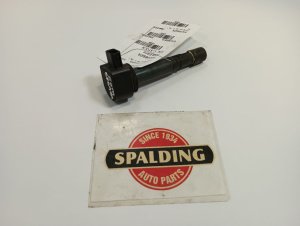
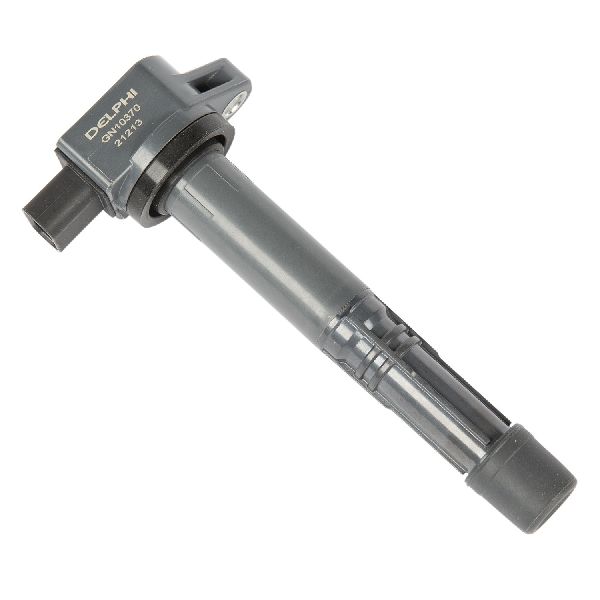
- Faulty Ignition Coil on Cylinder 4 🔴 High Probability → Shop Ignition Coil Ignition coils are a normal wear-and-tear component. Heat cycles and vibration eventually cause the internal windings to fail, leading to a circuit fault. On average, coils may need replacement every 60,000 to 100,000 miles.
How to confirm: The easiest way to confirm a bad coil is to swap it. Move the ignition coil from cylinder 4 to another cylinder (e.g., cylinder 3). Clear the codes and start the engine. If the code changes to P0353 (for cylinder 3), the coil is definitively bad. This is the most common outcome.
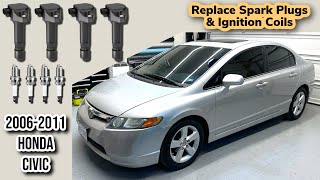
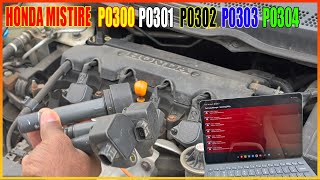
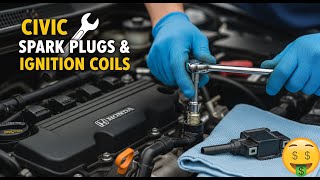
Typical fix: Replace the faulty ignition coil. 🎬 Watch: Step-by-step guide to replacing coils and spark plugs It is generally recommended to replace only the failed coil, though some owners prefer to replace all four as preventative maintenance if they are original and high-mileage.
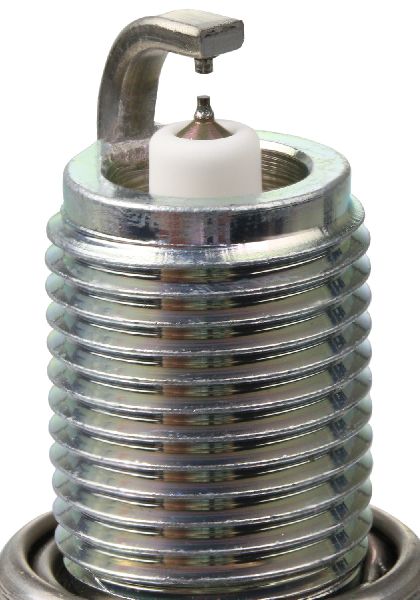
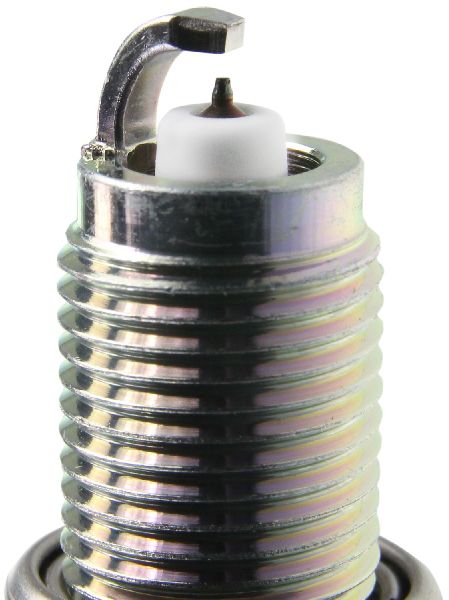
Est. part cost: $40 - $150 - Worn or Fouled Spark Plug in Cylinder 4 🟡 Medium Probability → Shop Spark Plug A spark plug with a very large gap due to wear requires more voltage to create a spark. This increased demand can overwork the ignition coil, potentially causing it to fail or trigger a circuit fault code.
How to confirm: After confirming the coil is good (by swapping it and having P0354 return), remove the spark plug from cylinder 4. Inspect it for signs of wear (rounded electrode), fouling (black, sooty, or oily deposits), or damage. Compare it to the other plugs.
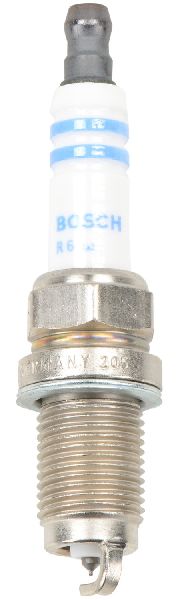
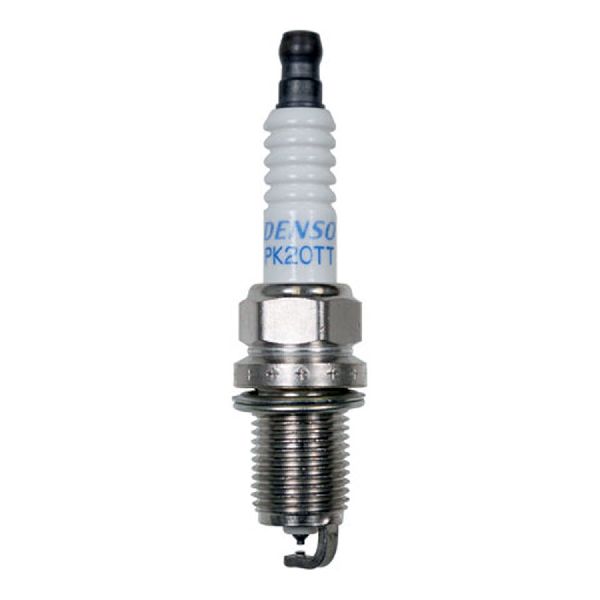
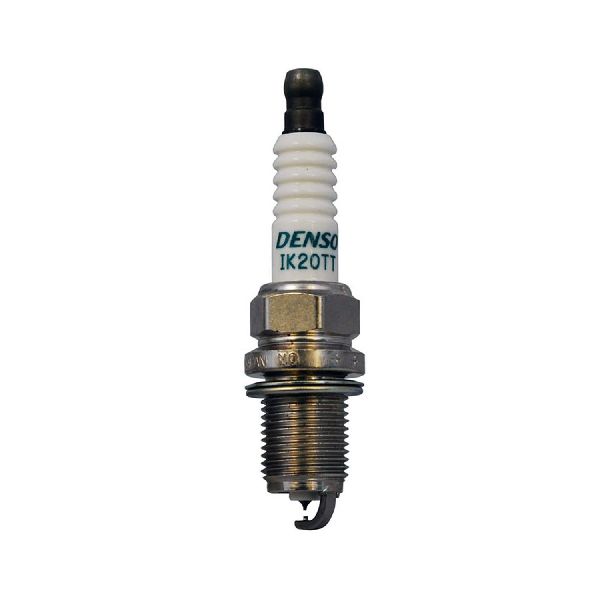
Typical fix: Replace the spark plugs. It is critical to replace all spark plugs as a set to ensure even performance. Use NGK or Denso brand plugs, which are the original equipment manufacturer for Honda.
Est. part cost: $20 - $50 for a set of four - Damaged Wiring or Connector ⚪ Low Probability The plastic locking tab on the ignition coil electrical connector can become brittle with age and heat cycles, then break, leading to a poor connection. Rodents can also chew on the soy-based wire insulation.
How to confirm: Visually inspect the wiring harness and the 3-pin connector for cylinder 4's ignition coil. Check for any frayed wires, corrosion in the pins, or a loose connection. Wiggle the connector with the engine running to see if it induces a misfire. A multimeter can be used to check for 12V power, ground, and the signal from the PCM at the connector pins.
Typical fix: If the connector is damaged, a new pigtail can be spliced into the harness. If wires are damaged, they will need to be repaired.
Est. part cost: $15 - $30 for a connector pigtail
Rare But Worth Checking
- Faulty Powertrain Control Module (PCM): → Shop Engine Control Module (ECM) This is extremely rare. The internal driver circuit in the PCM that controls the ignition coil can fail. This should only be considered after all other possibilities (coil, plug, wiring) have been exhaustively ruled out by a professional.
Diagnosis Steps
- Read the trouble codes with an OBD-II scanner to confirm P0354 is present. Note any other codes, like P0304.
- Identify cylinder 4. On Honda's inline four-cylinder engines, the cylinders are numbered 1-2-3-4 from passenger side to driver's side. Cylinder 4 is the cylinder on the far left (driver's side).
- Swap the ignition coil from cylinder 4 with the coil from cylinder 3.
- Clear the trouble codes using the scanner.
- Start the engine and let it run for a minute, or take a short test drive until the check engine light returns.
- Re-scan for codes. If the code has changed to P0353 ('Ignition Coil 'C' Circuit Malfunction'), the ignition coil you moved is faulty and must be replaced. This is the most common resolution.
- If P0354 returns, the coil is likely good. The next step is to inspect the spark plug in cylinder 4. Remove it and check for excessive wear, fouling, or damage. If it is in poor condition, replace all four spark plugs as a set. 🎬 See how to easily replace your spark plugs
- If the spark plugs are good, carefully inspect the electrical connector and wiring going to the cylinder 4 ignition coil. Check for a broken locking tab, corroded pins, or chewed/frayed wires.
- As an advanced step, use a multimeter to verify there is 12V power and a good ground at the coil connector with the key on. If power or ground is missing, there is a wiring issue that needs to be traced.
- If no issues are found with the coil, plug, or wiring, the problem may be with the PCM, which requires professional diagnosis.
Parts You'll Likely Need
- Ignition Coil
(OEM #30520-RNA-A01)— This is the most frequent cause of a P0354 code, representing a direct failure of the component responsible for firing the spark plug in cylinder 4.
Trusted brands: Denso, NGK, Hitachi, Delphi
OEM price range: $90-$150
Aftermarket price range: $40-$80 - Spark Plugs (Set of 4)
(OEM #For 1.8L (R18A1): NGK IZFR6K-11S (Honda P/N: 9807B-561BW) or Denso SKJ20DR-M11S (Honda P/N: 9807B-5617W). For 2.0L (K20Z3): Denso SK22PR-M11S (Honda P/N: 98079-571CV).)— Worn spark plugs can contribute to ignition coil failure and are a critical maintenance item that should be checked or replaced during this repair.
Trusted brands: NGK, Denso
OEM price range: $30-$50
Aftermarket price range: $20-$40 - Ignition Coil Connector Pigtail
(OEM #Connector reference: 6189-7058)— If the plastic locking tab on the original connector breaks or the terminals corrode, a new pigtail is needed to ensure a secure electrical connection to the ignition coil.
Trusted brands: Standard Motor Products, Dorman, Wells
Aftermarket price range: $15 - $30
Related Codes That Often Appear With This One
- P0304 — P0304 means 'Cylinder 4 Misfire Detected'. Since P0354 indicates a fault in the circuit that fires the spark plug for cylinder 4, a misfire is the direct result. It is very common to see both codes appear together.
Mechanic-Grade Diagnostic Values
- Ignition Coil Primary Winding Resistance — expected: 0.4 to 2.0 Ohms. Failure: A reading of infinity (OL) indicates an open circuit, while a reading near zero indicates a short. Any reading significantly outside the expected range suggests a faulty coil.
- Ignition Coil Secondary Winding Resistance — expected: 6,000 to 10,000 Ohms (6k-10k Ω). Failure: A reading outside of this range indicates the internal secondary coil windings are compromised.
- Voltage at Coil Connector Pin 1 (Power) — expected: Battery Voltage (approx. 12V) with Key On, Engine Off. Failure: No voltage indicates a problem with the power supply wire or the ignition system fuse/relay.
- Voltage at Coil Connector Pin 2 (Ground) — expected: Near 0V (Good Ground Connection). Failure: Voltage present on this pin indicates a poor ground connection, which is a common cause of circuit codes.
- Signal at Coil Connector Pin 3 (PCM Trigger) — expected: A pulsing signal when the engine is cranking or running. This is best observed as a square wave on an oscilloscope or a flashing light on a noid light.. Failure: No signal or a constant voltage indicates a break in the signal wire back to the PCM or a failed PCM driver.
Hidden / Shadow Codes Worth Checking
- Permanent DTC (PDTC): Honda systems can store a 'permanent' version of a fault code, like P0354, if it's related to emissions control and is confirmed on a subsequent drive cycle. This code cannot be cleared with a standard 'Clear Codes' command from many basic scanners. (see via Most OBD-II scanners will show this, but they may not differentiate it from a standard active code. A key symptom is a code that reappears instantly after being cleared without the engine running. Clearing it requires the vehicle to run and pass its own internal self-test for that monitor, which may take several drive cycles after the underlying fault is fixed.)
Scan Tool Commands That Help
- Honda HDS (or equivalent professional scanner): Ignition Coil Driver Test / Actuator Test — This command is used after a coil swap and wiring check have failed to find the issue. It allows the technician to command the PCM to fire the cylinder 4 coil driver directly. If the command is sent but no spark occurs (verified with a spark tester), it strongly suggests a failed PCM driver, assuming the wiring and coil are known-good.
Wiring & Ground Locations
- G101 — Typically located on the thermostat housing or nearby on the cylinder head on the passenger side of the engine bay.. G101 is a primary engine control ground point. A loose or corroded connection here can cause intermittent and difficult-to-diagnose electrical issues across multiple systems, including the ignition coils, potentially leading to a P0354 code.
- Cylinder 4 Ignition Coil Connector — Plugged into the top of the ignition coil on the cylinder furthest to the driver's side.. This 3-pin connector is the direct interface for the coil. Pin 1 is 12V+ power (often Black/Yellow wire), Pin 2 is Ground (often Black wire), and Pin 3 is the trigger signal from the PCM. Damage to this connector or its pins is a common point of failure.
Real Owner Repair Stories
- Reddit r/MechanicAdvice (2011 Honda Pilot (V6, but same P035x code logic)) — Misfire, followed by P0354 code.
❌ Tried (didn't work) Replaced the single faulty coil with a new aftermarket part, code remained., Replaced all 6 ignition coils with brand new OEM parts, but the P0354 code still returned immediately after clearing.
✅ What actually fixed it The owner recalled that during initial diagnosis, they had started the car with the cylinder 4 coil connector unplugged. This action set a 'permanent' DTC in the PCM. The code would not clear with a standard scanner command because the vehicle's internal self-test had not yet re-verified the circuit as functional. The car was running fine with the new coils, and the code eventually cleared itself after several drive cycles. The key takeaway was that a P035x code can become 'stuck' and may not indicate a current fault if it was triggered by a temporary disconnect.
When the Usual Fixes Don't Work
- While P0354 is overwhelmingly caused by a failed ignition coil, it is critical to understand how the code is set. As one owner discovered, running the engine even briefly with a coil unplugged can set a 'permanent' version of the code that will not clear with a simple scan tool command. In this scenario, even after replacing all the coils with new OEM parts, the code remained, causing significant confusion. The actual fix was to complete several drive cycles, allowing the PCM's internal monitor to run and verify the repair, after which the code cleared on its own. This proves that if the code returns instantly after clearing (without even starting the engine), the issue may be a latched permanent code from a previous event rather than a current hard fault.
OEM Part Supersession History
30520-RNA-A01→30520-RNA-A01 (current)— This part number has remained stable for the 2006-2011 1.8L (R18A1) engine, with no major supersessions noted.
Model Year Variations Within This Range
- 2005 (7th Generation): The 2005 Civic uses the D17 series engine. The correct ignition coil is a different part, commonly OEM part number 30520-PGK-A01 or Denso equivalent 673-2302. It is not interchangeable with the 8th generation coil.
- 2006-2011 (8th Generation, 1.8L R18A1): This is the most common platform, using ignition coil part number 30520-RNA-A01.
- 2006-2011 (8th Generation Si, 2.0L K20Z3): The high-performance Si model uses a different ignition coil compatible with the K-series engine, commonly OEM part number 30520-PNA-007 or Denso equivalent 099700-116.
Diagnostic Flowchart
Other Known Issues on This Vehicle
Issues unrelated to this code that are worth knowing about as an owner of this generation:
- Cracked Engine Block (R18A1) 🔴 High — Affects some 2006-2008 and early 2009 models. A coolant leak develops on the back of the engine block. (Ref: Honda TSB 10-048 extended the warranty on the engine block to 10 years with no mileage limit, though this has now expired.)
- Uneven Rear Tire Wear 🟠 Medium — Common on 2006-2008 models. The factory rear upper control arms can cause the inside edge of the rear tires to wear out prematurely ('cupping'). (Ref: Honda TSB 08-001 (and later versions) advised installing a redesigned rear upper control arm kit to correct the suspension geometry.)
- Failing Sun Visors 🟡 Low — Very common across the 2006-2011 generation. The plastic hinge cracks, causing the visor to droop or fall off completely.
- Peeling/Fading Paint 🟠 Medium — Widespread issue, particularly on dark-colored cars. The clear coat fails, leading to large patches of peeling or oxidized paint, especially on the roof, hood, and trunk. (Ref: Honda addressed this with a warranty extension for some colors/years, but it has since expired.)
- 3rd Gear Grind/Pop-Out (Si K20Z3) 🟠 Medium — A known issue on the 6-speed manual transmission in the Si models. Can lead to difficult shifting into 3rd gear or having it pop out of gear during acceleration. (Ref: Honda TSB 08-020 described replacing the 3rd gear set and carbon-lined synchronizers with updated parts.)
Used vs. New Parts: Buying Guide for This Vehicle
When a used part is the smart pick: For this repair, buying a used ignition coil is generally not recommended. They are a common wear-and-tear component with a finite lifespan determined by heat cycles and mileage. A used coil from a junkyard has an unknown history and may fail shortly after installation, wasting time and money. The only exception might be sourcing a very low-mileage set from a known rear-end collision vehicle.
Donor-vehicle mileage cap: roughly under 40000 miles for the part to have meaningful remaining life.
What to inspect on the donor part:
- Check the plastic housing for any cracks, especially around the bolt hole.
- Inspect the electrical connector for broken locking tabs or corroded pins.
- Examine the rubber boot for any swelling, tears, or signs of oil contamination.
- Ask for the mileage of the donor vehicle if possible.
OEM-only on this vehicle (don't cheap out):
- While not strictly 'OEM-only', using a reputable OE-supplier brand for the ignition coil is highly recommended for longevity and performance.
Aftermarket brands forum-validated for this vehicle:
- Denso (Original Equipment supplier)
- NGK (Original Equipment supplier)
- Hitachi
- Delphi
Brands owners have reported issues with on this vehicle:
- Unbranded, low-cost ignition coils sold on marketplaces like Amazon or eBay. Forum discussions frequently mention these failing prematurely, sometimes within weeks or months, causing the same P0354 code to return.
Real Owner Stories
Aggregated from forums and TSBs cited above. Mileages and costs reflect what owners reported in those sources.
2008 Honda Civic
Symptoms: Check engine light showing P0354 and P0304.
What fixed it: The owner performed a swap test and confirmed the fix was a single bad ignition coil on cylinder 4. They replaced it with a Denso coil.
Source hint: 8thcivic.com: A user with P0354 and P0304 on a 2008 Civic
2007 Honda Civic
Symptoms: Flashing CEL and rough running with codes P0354 and P0304.
What fixed it: A coil swap confirmed the coil was the culprit. The owner replaced the single coil and all spark plugs as a precaution.
Source hint: civicforums.com: A 2007 Civic owner experienced a flashing CEL and rough running
2005-2011 Honda Civic
Symptoms: P0354 code; owner initially replaced the spark plug but the issue persisted.
What fixed it: A subsequent coil swap to cylinder 2 moved the fault to P0352, proving the ignition coil was the root cause.
Source hint: honda-tech.com: Discussion on a P0354 code where a user initially replaced the spark plug with no change
Related OBD-II Codes
Frequently Asked Questions
Which cylinder is responsible for the P0354 code on my 2005-2011 Honda Civic?
Should I replace all four ignition coils if only Cylinder 4 is failing?
What brand of spark plugs should I use for my 2007 Civic to avoid ignition issues?
My 2008 Civic has a P0354 code and a coolant leak; is there a TSB for the leak?
Can a loose electrical connector cause the P0354 code on this generation of Civic?
Is there a specific TSB for the 3rd gear grind on my Civic Si?
Helpful Videos
Used OEM Parts in Stock
New Aftermarket Parts Available

The information in this article is provided for general reference and educational purposes only. Vehicle specifications, procedures, and part compatibility can vary by production date, trim level, and region. Always consult your vehicle's factory service manual and verify part numbers before purchasing or performing repairs. Safety-critical components such as airbags, seat belts, and braking systems should be installed by a qualified professional.
- Honda Civic:
- 🧭 Diagnostic Flowchart
- 🎬 Helpful Videos
- 🛍️ Shop This Part
- What's Unique About the 2005-2011 Honda Civic
- Symptoms You May Notice
- Most Likely Causes
- Rare But Worth Checking
- Diagnosis Steps
- Parts You'll Likely Need
- Related Codes That Often Appear With This One
- Mechanic-Grade Diagnostic Values
- Hidden / Shadow Codes Worth Checking
- Scan Tool Commands That Help
- Wiring & Ground Locations
- Real Owner Repair Stories
- When the Usual Fixes Don't Work
- OEM Part Supersession History
- Model Year Variations Within This Range
- Other Known Issues on This Vehicle
- Used vs. New Parts: Buying Guide for This Vehicle
- Real Owner Stories
- 2008 Honda Civic
- 2007 Honda Civic
- 2005-2011 Honda Civic
- Related OBD-II Codes
- Frequently Asked Questions
- 🎟️ Get 5% Off