

P0354 on 2016-2020 Jeep Compass 2.4L: Ignition Coil 'D' Circuit Fixes
P0354 on a Jeep Compass with the 2.4L Multiair engine almost always means the ignition coil on cylinder #4 has failed. A simple coil swap to another cylinder can confirm the diagnosis. However, the root cause is often a leaking valve cover gasket that allows oil to damage the coil. Expect to pay $40-$80 for a quality aftermarket coil and around $100 for an OEM part.
- P0354 specifically points to a fault in the ignition coil circuit for cylinder #4.
- The most likely cause is a failed ignition coil, but this is often a symptom of a leaking valve cover gasket on the 2.4L engine.
- A quick way to diagnose a bad coil is to swap it with another cylinder and see if the code follows.
- Always inspect the spark plug well for oil when the coil is removed; its presence confirms a leaking valve cover gasket is the root cause.
What's Unique About the 2016-2020 Jeep Compass
The 2017-2020 MP generation of the Jeep Compass uses the 2.4L 'Tigershark' Multiair engine, which has a well-documented vulnerability that directly leads to ignition coil failure. The valve cover gasket, specifically the seals for the spark plug tubes, is prone to leaking oil. This oil pools in the spark plug well, saturating the ignition coil's boot and housing, causing it to degrade and eventually fail electrically, triggering the P0354 code. While coil failure is common on all cars, on this platform it is frequently a consequential failure, not the root cause. The engine is also known for excessive oil consumption, which can foul spark plugs and put additional stress on the ignition system.
Generation note: The 2016-2020 range covers the end of the first generation (MK, through 2017) and the start of the second generation (MP, 2017-present). This guide focuses on the second-generation MP Compass with the 2.4L Multiair 'Tigershark' engine, as it's the dominant platform for these years. The first-gen used a different 2.4L 'World' engine, though diagnostic principles are similar.
Symptoms You May Notice
- Check Engine Light is on (may be flashing)
- Rough or shaking idle
- Engine hesitation or stumbling during acceleration
- Noticeable loss of engine power
- Reduced fuel economy
- Engine may have trouble starting
- Replacing the fuel injector for cylinder 4. While a bad injector can cause a misfire (P0304), it will not cause a specific ignition coil circuit code like P0354.
Most Likely Causes
- Failed Ignition Coil (Cylinder 4) 🔴 High Probability → Shop Ignition Coil Failure is extremely common, but it is often caused by a leaking valve cover gasket's spark plug tube seal. Oil pools in the well, saturating the coil boot and causing it to swell and fail electrically. Heat and vibration also contribute to the eventual failure of the coil's internal windings.
How to confirm: Swap the ignition coil from cylinder 4 with another cylinder (e.g., cylinder 3). Clear the codes. If the code changes to P0353, the coil is confirmed bad. When the coil is removed, inspect the well for pooled oil, which indicates the valve cover gasket is the root cause.
Typical fix: Replace the faulty ignition coil. If oil was present in the spark plug well, the valve cover gasket must also be replaced to prevent repeat failure. It is recommended to replace the spark plug at the same time.
Est. part cost: $40-$100 - Worn or Fouled Spark Plug (Cylinder 4) 🟡 Medium Probability → Shop Spark Plug The 2.4L Tigershark engine is known for oil consumption issues, which can cause spark plugs to foul with oil or carbon deposits prematurely, well before their 100,000-mile service interval. A fouled plug increases resistance, stressing the ignition coil and potentially causing it to fail.
How to confirm: After confirming the coil is good, remove the spark plug from cylinder 4. Look for black, oily deposits, heavy carbon buildup, or a cracked insulator. Compare it to a plug from a working cylinder.
Typical fix: Replace the spark plug. It is best practice to replace all four spark plugs at the same time to maintain even performance and prevent future misfires.
Est. part cost: $10-$25 per plug - Damaged Wiring or Connector ⚪ Low Probability Engine heat can make the plastic connector and wiring brittle. A broken locking tab on the connector is common. In some cases, coolant from a leaking overflow hose can drip directly onto the cylinder 4 coil connector, causing corrosion and failure. Rodent damage is also possible.
How to confirm: Visually inspect the wiring harness and connector for ignition coil #4. Look for any signs of melting, chafing, corrosion, green or white crust, or broken wires. Ensure the connector clicks securely into place.
Typical fix: Repair the damaged section of wire or replace the connector pigtail. Pigtail kits are readily available.
Est. part cost: $15-$40 for a connector pigtail
Rare But Worth Checking
- Faulty Powertrain Control Module (PCM): → Shop Engine Control Module (ECM) This is very rare. A failed coil can sometimes short and damage the driver circuit within the PCM, but this is not common on this platform. Before condemning the PCM, all other possibilities (coil, plug, wiring, and mechanical engine health) must be exhaustively ruled out by a professional.
Diagnosis Steps
- Read the trouble codes with an OBD-II scanner to confirm P0354 is present. Note any other codes, especially P0304, which is expected.
- Identify cylinder #4. On the 2.4L Multiair engine, the cylinders are numbered 1-2-3-4 from the passenger side (right) to the driver's side (left). Cylinder 4 is on the far left when facing the engine.
- Inspect the wiring and connector for the cylinder 4 ignition coil. Check for a secure connection, corrosion (especially from coolant leaks), or any visible damage to the wires.
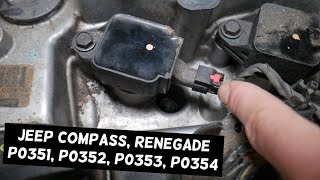
- Perform the 'coil swap test'. Disconnect the electrical connector (slide the red locking tab back first) and remove the 10mm bolt holding the coil. Swap the coil from cylinder 4 with the coil from cylinder 3.
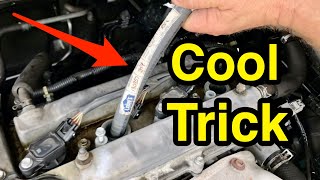
- CRITICAL SUB-STEP: While the coil is removed, use a flashlight to look deep into the spark plug tube. 🎬 Watch: An easy trick to remove oil from spark plug wells. If you see a pool of liquid oil, the valve cover gasket has failed and is the root cause of the problem.
- Clear the fault codes using the scanner. Start the engine and let it run for a minute. Re-scan for codes.
- If the code has changed to P0353 ('Ignition Coil C Circuit Malfunction'), the ignition coil you moved to cylinder 3 is faulty and must be replaced.
- If the code P0354 returns, the problem is not the coil. The issue lies in the wiring or, rarely, the PCM. If the spark plug hasn't been changed recently, it is the next most likely culprit.
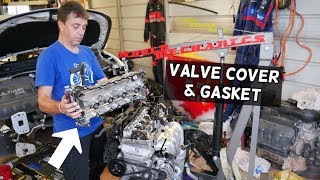
- If you found oil in the spark plug tube in step 5, the primary repair is to replace the valve cover gasket. 🎬 See this walkthrough for replacing the valve cover gasket. The ignition coil should also be replaced as the oil has likely damaged it, even if it hasn't failed completely yet.
Parts You'll Likely Need
- Ignition Coil
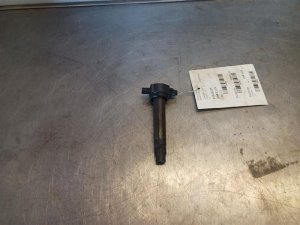
(OEM #68242286AB (supersedes 68080580ab, 68242286aa))— This is the most common failure part for a P0354 code. The internal electronics fail from heat, vibration, and very often, contamination from leaking engine oil.
Trusted brands: Mopar, NGK, Delphi, Standard Motor Products
OEM price range: $90-$120
Aftermarket price range: $40-$80 - Spark Plug
(OEM #Champion 9775 (REC10WMPB4))— A worn or oil-fouled spark plug can cause misfires and put extra strain on the ignition coil. It's best practice to replace it when replacing a coil, especially on this engine known for oil consumption.
Trusted brands: Champion, NGK
OEM price range: $15-$25
Aftermarket price range: $10-$20 - Valve Cover Gasket with Spark Plug Tube Seals
(OEM #68194632AC)— This is often the root cause of recurring P035x coil failures on the 2.4L Tigershark. The spark plug tube seals fail, allowing oil to flood the coil well and destroy the coil. If oil is found on the coil or plug, this part must be replaced.
Trusted brands: Mopar, Fel-Pro, Mahle
OEM price range: $50-$70
Aftermarket price range: $25-$50
Related Codes That Often Appear With This One
- P0304 — P0304 means 'Cylinder 4 Misfire Detected'. P0354 is the specific electrical fault in the ignition coil circuit that is preventing a spark, which in turn is the direct cause of the P0304 misfire.
Technical Service Bulletins (TSBs) & Recalls
- While TSB #18-033-19 was noted by some databases for addressing misfires via coil boot replacement, a more direct and verifiable issue is the widespread problem of oil leaks from the valve cover gasket damaging the coils. Numerous other TSBs exist for this platform, such as 18-035-19 REV. D, which involve PCM software updates to address various MIL illumination conditions, though not always directly for P0354.
Platform-Specific Known Issues
- Leaking Valve Cover Gasket Causing Coil Failure: → Shop Engine Valve Cover The most significant vehicle-specific issue for P0354 on the 2.4L Tigershark engine is the failure of the valve cover gasket's integrated spark plug tube seals. This allows engine oil to leak directly into the spark plug wells. The pooled oil saturates the boot of the ignition coil, causing it to swell, degrade, and eventually short out, leading to the P0354 fault. Many owners who only replace the coil find the code returns within months because the underlying oil leak was not fixed.
- Coolant Leak Dripping on Coil/Connector: A less common but reported issue is a crack or leak in the coolant overflow hose near cylinder 4. Dripping coolant can land on the ignition coil and its electrical connector, causing corrosion and an electrical fault that triggers P0354.
Mechanic-Grade Diagnostic Values
- Ignition Coil Primary Resistance — expected: 0.4 to 2.0 Ohms. Failure: A reading of 0 Ohms (short) or infinite/OL (open) indicates a bad coil.
- Ignition Coil Secondary Resistance — expected: 6,000 to 15,000 Ohms (6kΩ - 15kΩ). Failure: A reading significantly outside this range, or OL, indicates a failure in the secondary windings.
- Ignition Coil Connector - Power Supply Pin Voltage (Key On, Engine Off) — expected: 12V (Battery Voltage). Failure: A reading of 0V points to a blown fuse, faulty ASD (Auto Shutdown) relay, or a break in the power wire.
- Ignition Coil Connector - Control Signal Wire (Engine Idling) — expected: Pulsing signal, typically 5-20 Hz on a multimeter set to frequency.. Failure: No signal or a steady voltage indicates a wiring break or a failed PCM driver. A signal that is present while a misfire is still occurring points to a bad coil.
- Spark Plug Gap — expected: 0.047 inches (1.2 mm). Failure: An incorrect or excessively worn gap can cause weak spark and misfires.
Hidden / Shadow Codes Worth Checking
- Mode $06, Test ID $53, Component ID $04: This is not a trouble code, but a raw data monitor for misfire counts on cylinder 4 for the current and last driving cycles. High or incrementing counts confirm a persistent misfire on cylinder 4. (see via Requires an advanced scan tool with Mode $06 capability, such as the dealer-level wiTECH software, or higher-end aftermarket tools from brands like Autel, Launch, or AlfaOBD.)
Scan Tool Commands That Help
- wiTECH (Dealer Tool), High-End Aftermarket Scanners: Ignition System Test / Coil Driver Test — This is a bidirectional control that allows a technician to command the PCM to fire the ignition coil. It is used after confirming the coil itself is good (via swap test or resistance test). If the command is sent but the coil doesn't fire (or no spark is produced), it confirms the issue is in the wiring or the PCM driver circuit.
- wiTECH (Dealer Tool), High-End Aftermarket Scanners: Power Balance Test — This function allows the technician to individually disable cylinders to observe the RPM drop of each. If disabling cylinder 4 results in little or no change in engine RPM, it confirms that cylinder 4 was not contributing power, validating the misfire.
Wiring & Ground Locations
- Ignition Coil 4 Connector — On top of the valve cover, far left side (driver's side) when facing the engine.. This is the primary connection point. The two wires are the power feed (from the ASD relay) and the control signal (from the PCM). A visual inspection for corrosion, damage, or a broken locking tab is a critical first step.
- PCM Connector C2, Pin 51 — The Powertrain Control Module (PCM) is located on the left side of the engine compartment. C2 is one of the large multi-pin connectors. Pin 51 is the 'COIL CONTROL 4' circuit.. This is the specific pin on the PCM that sends the control signal to the #4 ignition coil. If the coil and wiring are good, a technician would test for a signal at this pin to determine if the PCM driver has failed. The wire color is typically Dark Blue/Light Green.
- G904 Ground Point — Located at the front center of the engine compartment.. While the coils are grounded through the PCM driver circuit, this is a primary engine compartment ground. A poor ground here can cause a host of electrical issues and erratic sensor readings that could indirectly affect ignition performance. Checking that this ground is clean and tight is good practice during any engine electrical diagnosis.
OEM Part Supersession History
68080580AB→68242286AA, then 68242286AB— Standard part evolution. Later revisions often include internal improvements for durability and resistance to heat or electrical failure. There are no known incompatibility issues when using the newest part number (68242286AB) on a vehicle that originally used an older version.
Model Year Variations Within This Range
- 2016-2017 (MK Generation): The 2016 and some early 2017 models are first-generation (MK) Compasses which may have the 2.4L 'World' engine, not the 'Tigershark' Multiair. While the P0354 code diagnosis is functionally identical (coil, plug, wiring), the part numbers for the coil and valve cover gasket are different and not interchangeable with the second-generation (MP) Compass.
- 2017-2020 (MP Generation): These models use the 2.4L 'Tigershark' Multiair engine. The primary vehicle-specific issue of the leaking valve cover gasket causing coil failure is most prominent on this generation. All part numbers and diagnostic values in this guide are specific to this platform.
Diagnostic Flowchart
Used vs. New Parts: Buying Guide for This Vehicle
When a used part is the smart pick: For this repair, using used parts is generally not recommended. However, a used wiring harness connector pigtail from a junkyard is a viable and cost-effective option if only the connector is damaged.
Donor-vehicle mileage cap: roughly under 80000 miles for the part to have meaningful remaining life.
What to inspect on the donor part:
- For a connector pigtail, ensure the plastic is not brittle or cracked.
- Check that the locking tab is intact and functional.
- Inspect the wire insulation for at least 6 inches back from the connector for any signs of cracking, melting, or previous repairs.
OEM-only on this vehicle (don't cheap out):
- Powertrain Control Module (PCM) - A used PCM will not work as it is VIN-locked to the donor vehicle and requires dealer programming which is often not possible or supported.
Aftermarket brands forum-validated for this vehicle:
- Ignition Coils: NGK, Delphi, Denso, Standard Motor Products (SMP)
- Valve Cover Gaskets: Fel-Pro, Mahle
Brands owners have reported issues with on this vehicle:
- Unnamed, no-brand ignition coils from online marketplaces. These often have poor internal windings, use inferior boot material that swells with oil, and have a high premature failure rate.
Real Owner Stories
Aggregated from forums and TSBs cited above. Mileages and costs reflect what owners reported in those sources.
Dodge Dart 2.4L Tigershark
Symptoms: Engine misfire codes, specifically P0304 and P0354.
What fixed it: The root cause was identified as oil leaking from the valve cover gasket into the spark plug holes, which damaged the ignition coils. The fix involves replacing the valve cover gasket and the affected coil.
Source hint: YouTube - DODGE DART ENGINE MISFIRE (Platform Mate)
Jeep with 2.4L Engine
Symptoms: A P0354 trouble code was present.
What fixed it: The owner discovered a cracked coolant overflow line was dripping coolant directly onto the cylinder 4 coil and connector area, causing the electrical fault. The fix was to repair the coolant line and address any corrosion on the electrical components.
Source hint: Jeep Liberty Forum - P0354 Troubleshooting
2007 Jeep Compass 2.4L
Symptoms: A persistent P0304 (Cylinder 4 Misfire) code at idle that did not resolve after swapping the coil, spark plug, and injector.
What fixed it: The owner ultimately found oil in the intake manifold, pointing to the engine's known oil handling and consumption issues as the underlying cause of the persistent misfire.
Source hint: Car Talk Community - P0304 - Cylinder 4 Misfire (random)
Documented NHTSA Reports
Jeep Liberty Owner Report
Symptoms: Codes P0354 and P0304 indicating failure in the coil and engine misfire.
What fixed it: NHTSA ODI #10249438 describes a situation where replacing the coil and spark plugs did not permanently resolve the issue, as the problem kept returning, a frustration shared by other owners online.
Source hint: NHTSA ODI #10249438
Related OBD-II Codes
Frequently Asked Questions
I replaced the ignition coil for P0354 on my Compass, but the code came back. What's the most likely reason?
Where is cylinder 4 located on the 2.4L Multiair engine?
When I replace the bad ignition coil for P0354, what other parts should I replace at the same time?
I heard a coolant leak can cause a P0354 code on these Jeeps. Is that true?
Are there any official TSBs that address the P0354 coil failure?
My Jeep has the same 2.4L engine as a Dodge Dart. Do they have the same ignition coil problems?
Helpful Videos

We Have This Part in Stock

The information in this article is provided for general reference and educational purposes only. Vehicle specifications, procedures, and part compatibility can vary by production date, trim level, and region. Always consult your vehicle's factory service manual and verify part numbers before purchasing or performing repairs. Safety-critical components such as airbags, seat belts, and braking systems should be installed by a qualified professional.
- Jeep Compass:
- 🧭 Diagnostic Flowchart
- 🎬 Helpful Videos
- 🛍️ Shop This Part
- What's Unique About the 2016-2020 Jeep Compass
- Symptoms You May Notice
- Most Likely Causes
- Rare But Worth Checking
- Diagnosis Steps
- Parts You'll Likely Need
- Related Codes That Often Appear With This One
- Technical Service Bulletins (TSBs) & Recalls
- Platform-Specific Known Issues
- Mechanic-Grade Diagnostic Values
- Hidden / Shadow Codes Worth Checking
- Scan Tool Commands That Help
- Wiring & Ground Locations
- OEM Part Supersession History
- Model Year Variations Within This Range
- Used vs. New Parts: Buying Guide for This Vehicle
- Real Owner Stories
- Dodge Dart 2.4L Tigershark
- Jeep with 2.4L Engine
- 2007 Jeep Compass 2.4L
- Documented NHTSA Reports
- Jeep Liberty Owner Report
- Related OBD-II Codes
- Frequently Asked Questions
- 🎟️ Get 5% Off