

P0354 on 2014-2019 Toyota Corolla: Ignition Coil 'D' Circuit Causes and Fixes
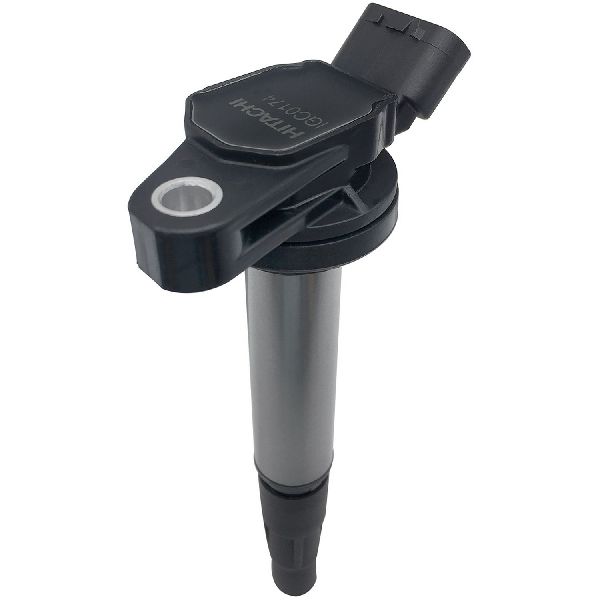
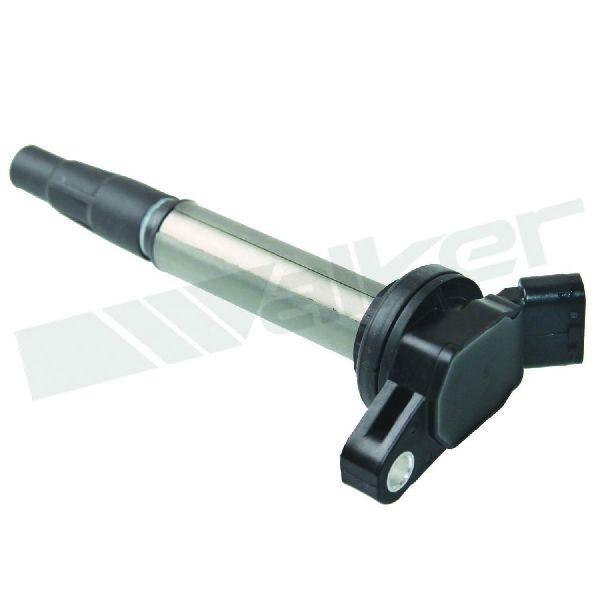
P0354 on a 2014-2019 Toyota Corolla almost always means the ignition coil for cylinder 4 has failed. A new OEM-quality coil from a brand like Denso costs around $40-$75, and replacement is a simple DIY job that takes about 15 minutes.
- P0354 means there is a problem with the ignition coil circuit for cylinder #4.
- The most likely cause is a failed ignition coil, which is a simple and inexpensive DIY replacement.
- Diagnose the issue with 100% certainty by swapping the coil from cylinder 4 with another cylinder and seeing if the code follows the coil.
- Cylinder 4 is on the driver's side of the engine.
- Driving with this code can damage your catalytic converter, so it's best to address it promptly.
What's Unique About the 2014-2019 Toyota Corolla
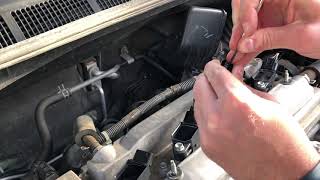
The 2ZR-FE engine in the 2014-2019 Corolla uses a reliable coil-on-plug ignition system. Failures are typically isolated to a single coil and are not indicative of a systemic problem. The most common owner experience is a straightforward coil replacement. One minor but frequent annoyance is that the plastic locking tab on the ignition coil's electrical connector can become brittle with heat and age, sometimes breaking upon removal. A replacement connector housing is available if this occurs, and a YouTube video demonstrates how to de-pin the old connector and install the new housing without cutting wires.
🎬 See how to replace the broken connector housing without cutting wiresSymptoms You May Notice
- Check Engine Light is on
- Engine misfiring, running rough, or shaking, especially at idle.
- Loss of power and sluggish acceleration.
- Decreased fuel economy
- Difficulty starting the engine.
- A flashing Check Engine light may occur during misfire events.
- Replacing the spark plug without testing the ignition coil first. While a bad plug can be a cause, the coil is the more probable culprit for a P035x code.
- Assuming a loose gas cap caused the P0354 code. While a loose gas cap can trigger a Check Engine Light (usually for an EVAP system code), it will not cause an ignition coil circuit code.
Most Likely Causes
- Failed Ignition Coil on Cylinder 4 🔴 High Probability → Shop Ignition Coil Ignition coils are wear-and-tear components that operate in a high-heat environment. After many years and thousands of heat cycles, the internal windings can degrade and fail. This is the most common cause for a P035x code on this platform.
How to confirm: The easiest way to confirm is to swap the ignition coil from cylinder 4 with another cylinder (e.g., cylinder 3). Clear the codes, run the engine, and re-scan. If the code changes to P0353 (for cylinder 3), the coil is definitively faulty. Cylinder 4 is the cylinder on the far left when facing the engine from the front of the car (driver's side in the US).
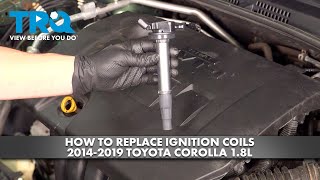
Typical fix: Replace the faulty ignition coil. This is a simple task involving a single 10mm bolt. 🎬 Watch: How to replace the ignition coils on your Corolla Many owners recommend replacing all four coils if they are original and the vehicle has high mileage, as the others may fail soon.
Est. part cost: $40-$120 - Worn or Faulty Spark Plug ⚪ Low Probability → Shop Spark Plug While the coils are more likely to fail, a heavily worn or fouled spark plug can increase the electrical resistance, overworking the ignition coil and potentially causing a circuit fault or misfire. High-mileage 2ZR-FE engines can consume oil, which can foul the spark plugs.
How to confirm: After removing the ignition coil, remove the spark plug from cylinder 4. Inspect it for excessive wear, carbon fouling, or oil contamination. Compare it to a plug from a healthy cylinder. The maximum electrode gap for a used plug is 1.3 mm (0.0512 in); replace if it exceeds this.
Typical fix: Replace the spark plug. It is recommended to replace all four spark plugs at the same time for even performance. New plugs should be gapped between 1.0 to 1.1 mm (0.0394 to 0.0433 in). 🎬 Watch this step-by-step spark plug and coil replacement guide
Est. part cost: $20-$50 for a set of 4 - Damaged Wiring or Connector ⚪ Low Probability Rodents can chew on wiring, and the connector's locking tab can become brittle and break, leading to a poor connection. A loose connection can cause intermittent P0354 codes. In some cases, the damage may be more extensive; NHTSA ODI #11052055 describes a situation where a dealer diagnosed a P0354 code and recommended a full engine wire harness replacement.
How to confirm: Visually inspect the wiring harness and the electrical connector going to the cylinder 4 ignition coil. Look for any signs of fraying, breaks, melting, or corrosion on the pins. Wiggle the connector with the engine running to see if it induces a misfire.
Typical fix: Repair the damaged section of wire or replace the connector pigtail. The connector housing itself is part number 90980-11885 if only the plastic is broken. This allows for a repair without cutting wires.
Est. part cost: $10-$30 for a connector housing or pigtail.
Rare But Worth Checking
- Faulty Engine Control Module (ECM): → Shop Engine Control Module (ECM) This is extremely rare. The ECM's internal driver for the ignition coil can fail, but all other possibilities should be exhausted before considering ECM replacement. This is a last-resort diagnosis.
Diagnosis Steps
- Read the trouble codes with an OBD-II scanner to confirm P0354 is the primary code.
- Turn off the engine and remove the plastic engine cover (it pulls straight up).
- Locate cylinder 4. On the 2ZR-FE engine, the cylinders are numbered 1-2-3-4 from the passenger side (accessory belts) to the driver side (transmission). Cylinder 4 is on the far left.
- Disconnect the electrical connector from the cylinder 4 coil and the cylinder 3 coil. Be gentle with the locking tabs, as they are known to become brittle.
- Unscrew the 10mm bolt holding each coil in place.
- Swap the ignition coil from cylinder 4 with the coil from cylinder 3. Re-install the bolts and reconnect the connectors to their original positions.
- While the coil is out, it is a good opportunity to inspect the spark plug tube for oil, which would indicate a leaking valve cover gasket that could damage the coil boot.
- Clear the trouble codes using the scanner.
- Start the engine and let it idle for a minute. Re-scan for codes.
- If the code has changed to P0353 ('Ignition Coil C'), the ignition coil you moved is bad and needs to be replaced.
- If the code P0354 returns, the problem is not the coil. The issue lies in the wiring, connector, or (rarely) the ECM for the cylinder 4 circuit.
- Inspect the wiring and connector for cylinder 4 for any visible damage. Check for a loose-fitting connector. If the wiring is good, the next step would be more advanced electrical testing of the circuit, which may require a professional.
Parts You'll Likely Need
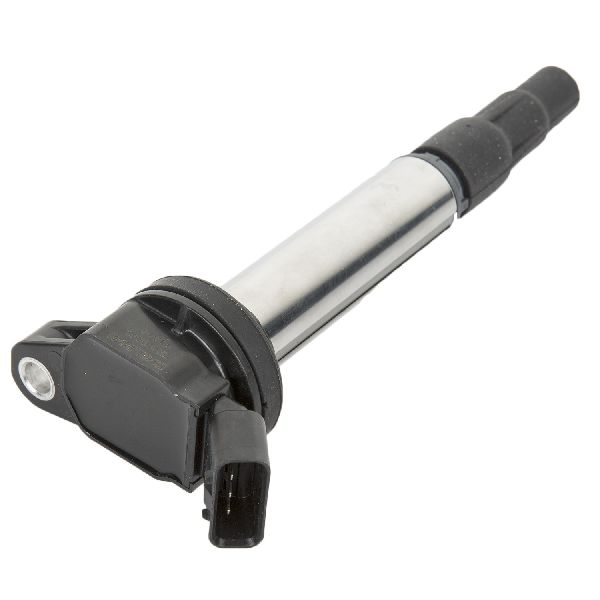
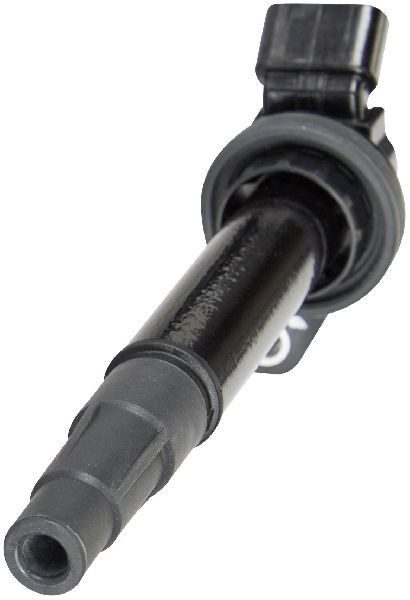
- Ignition Coil
(OEM #90919-02258)— This is the most common failure item for code P0354. It is a wear-and-tear component that fails electronically.
Trusted brands: Denso (OEM Manufacturer), NGK, Delphi
OEM price range: $90-$140
Aftermarket price range: $40-$75 - Ignition Coil Connector Housing
(OEM #90980-11885)— The locking tab on the original connector often becomes brittle and breaks during removal. This part allows for replacement of the plastic housing without needing to cut and splice wires.
Trusted brands: Toyota (OEM)
OEM price range: $9-$15
Aftermarket price range: $5-$10
Related Codes That Often Appear With This One
- P0304 — P0304 means 'Cylinder 4 Misfire Detected'. Since P0354 indicates a fault in the ignition circuit for cylinder 4, the cylinder cannot fire correctly, which directly causes a misfire. P0354 is the root cause code, and P0304 is the resulting symptom code.
Technical Service Bulletins (TSBs) & Recalls
- T-SB-0103-20: While not directly for P0354, this TSB addresses water pump leaks on 2020-2021 Corollas. A significant coolant leak could potentially affect nearby components, though this is not a primary cause.
Platform-Specific Known Issues
- Real-World Repair Story: Coil Swap Confirms Failure: A user on a ToyotaNation forum with a similar Toyota engine experienced a P0354 and P0304 code. They successfully diagnosed the issue by swapping the cylinder 4 coil with the cylinder 2 coil. The codes followed the coil, changing to P0352 and P0302, confirming a bad coil. The owner replaced the single Denso coil and resolved the problem, noting their connector clip also broke during the process and was temporarily secured with a zip tie.
- Owner Experience: Intermittent Code from Loose Connector: A 2017 Corolla owner was experiencing an intermittent P0354 code. A mechanic found that the connector for ignition coil 'D' was loose and not locking properly. After replacing the connector with a new one, ensuring a secure fit, the code was cleared and did not return.
Mechanic-Grade Diagnostic Values
- Ignition Coil Connector Pin 1 (+B) to Ground — expected: Battery voltage (approx. 12V) with key on, engine off.. Failure: 0V or significantly low voltage indicates a problem with the power supply from the EFI-MAIN relay.
- Ignition Trigger (IGT) Signal at ECM — expected: Using an oscilloscope, a square wave signal should be present while the engine is cranking or running. The voltage will pulse between approximately 0V and 5V.. Failure: A flat line at 0V or 5V indicates the ECM is not sending the trigger signal.
- Ignition Confirmation (IGF) Signal at ECM — expected: Using an oscilloscope, a square wave signal should be present, mirroring the IGT signal. This confirms the coil has charged and fired.. Failure: A missing or erratic waveform when a good IGT signal is present indicates a fault in the coil's internal igniter or the wiring back to the ECM. This is the direct trigger for the P035x code.
- Spark Plug Electrode Gap (Used) — expected: Less than 1.3 mm (0.0512 in.). Failure: A gap larger than 1.3 mm requires plug replacement.
Hidden / Shadow Codes Worth Checking
- Mode $06, Test ID $81, Component ID $04: This is not a 'hidden code' but rather a standard OBD-II function. Accessing Mode $06 data with an advanced scan tool allows you to view misfire counts for each specific cylinder, including cylinder 4 (Component ID $04). This can confirm an active misfire even before the general P0304 code is set. (see via Advanced OBD-II scan tool with Mode $06 functionality.)
Scan Tool Commands That Help
- Toyota Techstream: Active Test: 'Control the Ignition' — This function allows a technician to command a specific cylinder's ignition coil to fire without the engine running. It's used to verify the ECM driver, wiring, and coil's ability to create a spark when the coil swap test is inconclusive. The technician can command cylinder 4 to fire and use a spark tester to confirm output.
Wiring & Ground Locations
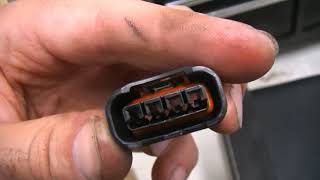
- Ignition Coil Connector (Cylinder 4) — 4-pin connector on top of the ignition coil for the cylinder on the far driver's side.. This is the primary connection point. Pin 1: +B (12V Power), Pin 2: IGT (Ignition Trigger from ECM), Pin 3: IGF (Ignition Confirmation to ECM), Pin 4: Ground.
- ECM Connector A50, Pin 95 (IGT4) — At the Engine Control Module (ECM), typically located in the engine bay or behind the glove box.. This is the specific pin at the ECM that sends the trigger signal (IGT) to the cylinder 4 ignition coil. It's a key point for testing continuity or signal with an oscilloscope.
- ECM Connector B31, Pin 118 (IGF1) — At the Engine Control Module (ECM).. This is the pin where the ECM receives the confirmation signal (IGF) from all coils. A fault in the IGF circuit for cylinder 4 will cause a problem here.
- Engine Ground Points (e.g., EA, EB) — Bolted directly to the cylinder head or engine block, often near the valve cover.. The ignition coils share a common ground. A loose or corroded ground point can cause intermittent and hard-to-diagnose ignition issues across one or more cylinders, including a P0354.
Real Owner Repair Stories
- YouTube video by 'Car Checkup' (2017 Toyota Corolla) — Check Engine Light with code P0354, significant engine misfire.
❌ Tried (didn't work) The owner did not report trying other fixes first.
✅ What actually fixed it The mechanic found the electrical connector for the cylinder 4 ignition coil was loose. The locking tab was broken, preventing it from seating securely. Replacing the connector with a new pigtail (spliced in) or a new connector housing (de-pinned and re-pinned) resolved the issue permanently. The coil itself was not faulty.
OEM Part Supersession History
90919-02252→90919-02258— Standard part revision by the manufacturer for improved reliability or a change in supplier.
Diagnostic Flowchart
Other Known Issues on This Vehicle
Issues unrelated to this code that are worth knowing about as an owner of this generation:
- CVT Transmission Issues (Early Models) 🟠 Medium — More common on early 2014 models. Can manifest as shuddering, hesitation, or premature failure. Reliability is generally considered good, but fluid changes every 60k miles are recommended for longevity. (Ref: A recall for a software update was issued for early models; if not performed, it could lead to valve body or transmission replacement.)
- Water Pump Failure 🟡 Low — Not widespread, but failures can occur, sometimes as early as 30,000-50,000 miles. Symptoms include coolant leaks from the passenger side, whining noises, or overheating. (Ref: T-SB-0103-20 provides diagnostic tips for water pump leaks on slightly newer models but the principles apply.)
- Front Timing Cover Oil Leak 🟡 Low — A slow oil seep can develop from the front timing cover seal at higher mileage. It's often a minor annoyance but can be expensive to repair due to labor.
- Infotainment System Glitches 🟡 Low — Owners report issues with the touchscreen being unresponsive, freezing, or rebooting randomly.
Used vs. New Parts: Buying Guide for This Vehicle
When a used part is the smart pick: A used part is generally NOT recommended for the ignition coil itself, as it is a primary wear item with no visible way to determine its remaining lifespan. However, sourcing a used ignition coil CONNECTOR pigtail from a junkyard harness is an excellent, low-cost option if only the connector is broken.
Donor-vehicle mileage cap: roughly under 100000 miles for the part to have meaningful remaining life.
What to inspect on the donor part:
- For a connector pigtail, ensure the locking tab is intact and clicks firmly.
- Check that the wiring insulation is flexible and not cracked or brittle.
- Ensure there is at least 4-6 inches of wire to make splicing easy.
OEM-only on this vehicle (don't cheap out):
- Engine Control Module (ECM)
Aftermarket brands forum-validated for this vehicle:
- Denso (OEM manufacturer, best choice)
- NGK
Brands owners have reported issues with on this vehicle:
- Unbranded '4-pack' deals on sites like Amazon or eBay.
- BWD / Standard Motor Products (SMP) have been anecdotally reported by some mechanics to have higher failure rates on Toyota applications.
Real Owner Stories
Aggregated from forums and TSBs cited above. Mileages and costs reflect what owners reported in those sources.
Toyota Corolla 2ZR-FE
Symptoms: Experienced a P0354 and P0304 code. The owner noted the connector clip broke during the diagnostic process.
What fixed it: Swapped the cylinder 4 coil with the cylinder 2 coil to confirm the fault followed the coil (changing to P0352/P0302), then replaced the single Denso coil. The broken connector was temporarily secured with a zip tie.
Source hint: ToyotaNation Forums
2017 Toyota Corolla 1.8L
Symptoms: Experiencing an intermittent P0354 code.
What fixed it: A mechanic found the connector for ignition coil 'D' was loose and not locking properly. Replacing the connector with a new one to ensure a secure fit resolved the issue.
Source hint: vehicle_specific_issues: Owner Experience: Intermittent Code from Loose Connector
Toyota RAV4 (Cross-Model Reference)
Symptoms: An owner reported that code P0354 was thrown around 50,000 miles, followed later by P0356 at 58,000 miles (NHTSA ODI #10969044).
What fixed it: The owner replaced the ignition coil on cylinder 4 to resolve the P0354 code, noting that this was not the first time ignition coils had failed on the vehicle.
Source hint: NHTSA ODI #10969044
Related OBD-II Codes
Frequently Asked Questions
Where is cylinder 4 located on my 2ZR-FE engine?
Can I use the ignition coils from a Pontiac Vibe or Scion xD to fix my Corolla's P0354 code?
My ignition coil connector tab broke while I was checking the P0354 code. Do I need a whole new harness?
Does TSB-0103-20 explain why I have a P0354 code on my 2017 Corolla?
What is the correct spark plug gap for my 2014-2019 Corolla 1.8L?
Is there a specific tool needed to replace the ignition coil on my 2ZR-FE?
Helpful Videos
We Have This Part in Stock


The information in this article is provided for general reference and educational purposes only. Vehicle specifications, procedures, and part compatibility can vary by production date, trim level, and region. Always consult your vehicle's factory service manual and verify part numbers before purchasing or performing repairs. Safety-critical components such as airbags, seat belts, and braking systems should be installed by a qualified professional.
- Toyota Corolla:
- 🧭 Diagnostic Flowchart
- 🎬 Helpful Videos
- 🛍️ Shop This Part
- What's Unique About the 2014-2019 Toyota Corolla
- Symptoms You May Notice
- Most Likely Causes
- Rare But Worth Checking
- Diagnosis Steps
- Parts You'll Likely Need
- Related Codes That Often Appear With This One
- Technical Service Bulletins (TSBs) & Recalls
- Platform-Specific Known Issues
- Mechanic-Grade Diagnostic Values
- Hidden / Shadow Codes Worth Checking
- Scan Tool Commands That Help
- Wiring & Ground Locations
- Real Owner Repair Stories
- OEM Part Supersession History
- Other Known Issues on This Vehicle
- Used vs. New Parts: Buying Guide for This Vehicle
- Real Owner Stories
- Toyota Corolla 2ZR-FE
- 2017 Toyota Corolla 1.8L
- Toyota RAV4 (Cross-Model Reference)
- Related OBD-II Codes
- Frequently Asked Questions
- 🎟️ Get 5% Off