

P0355 on 2011-2015 Ford Explorer 3.5L V6: Ignition Coil 'E' Circuit Causes and Fixes
This code means there's an electrical problem with the ignition coil circuit for cylinder #5. The most common fix is replacing the ignition coil on that cylinder. It's a straightforward DIY job, and a new coil costs between $30 and $80. Cylinder #5 is on the front, radiator-side bank, making it easy to access.
- P0355 on this Explorer points to an electrical issue with the ignition coil circuit for cylinder #5.
- Cylinder #5 is the middle cylinder on the front bank of the engine, closest to the radiator, making it easy to access.
- The most likely cause is a bad ignition coil, which can be diagnosed with a simple coil swap test.
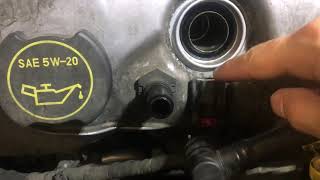
- Always inspect the wiring connector for damage, especially the red locking tab, before replacing parts.
- If a new coil doesn't fix the code, the PCM's driver circuit may be damaged, a rare but known issue for this engine family that requires replacing the PCM and all six coils.
What's Unique About the 2011-2015 Ford Explorer
On the 2011-2015 Ford Explorer with the transversely mounted 3.5L V6, cylinder #5 is located on the front bank of the engine (closest to the radiator), in the middle position. This makes it significantly easier to access than the coils on the rear bank, which are tucked under the intake manifold. While coil failures are common across many modern engines, the easy access to cylinder #5 on this specific vehicle makes diagnosis and repair a much simpler task for a DIY mechanic. Some owners have noted that the plastic locking tab on the coil connector can become brittle and break, leading to a poor connection that can trigger this code.
Symptoms You May Notice
- Check Engine Light is on (may be flashing if the misfire is severe)
- Rough idle or engine stumbling
- Noticeable loss of power and poor acceleration
- Engine hesitation
- Possible smell of unburned gasoline from the exhaust
- Shaking or shuddering, especially under load or when shifting into Overdrive.
- Uneven exhaust note or a "pop-pop" sound during acceleration.
- Replacing the fuel injector for cylinder #5 when the issue is electrical (ignition). The PCM often disables the injector in response to the P0355 code, which can be misleading.
- Replacing the PCM before thoroughly testing the coil and wiring.
- Mistaking a bad coil boot for a bad coil. Sometimes, only the rubber boot and spring need replacement due to carbon tracking or moisture intrusion.
Most Likely Causes
- Failed Ignition Coil on Cylinder #5 🔴 High Probability → Shop Ignition Coil Ignition coils are a common wear-and-tear item that operate under high heat and voltage. Over time, the internal windings can break down, leading to failure. The high cylinder pressures in the related 3.5L EcoBoost engine are known to stress ignition components, a trait that may carry over to the naturally aspirated version. Manufacturer Bulletin #TSB 24-2406 notes that various EcoBoost engines may exhibit an illuminated MIL with ignition system DTCs including P0355 set in the PCM.
How to confirm: The easiest way to confirm a bad coil is to swap it with an adjacent coil (e.g., cylinder #4 or #6). Clear the codes, drive the vehicle, and see if the code changes to the cylinder you moved the coil to (e.g., P0354 or P0356). If the code follows the coil, the coil is bad.
Typical fix: Replace the faulty ignition coil. It is often recommended to replace the corresponding spark plug at the same time.
Est. part cost: $30-$80 - Worn or Fouled Spark Plug 🟡 Medium Probability → Shop Spark Plug A worn-out spark plug with an excessive gap or carbon fouling can put extra strain on the ignition coil, eventually causing it to fail and trigger a circuit code. Ford recommends replacing spark plugs at regular intervals to prevent this.
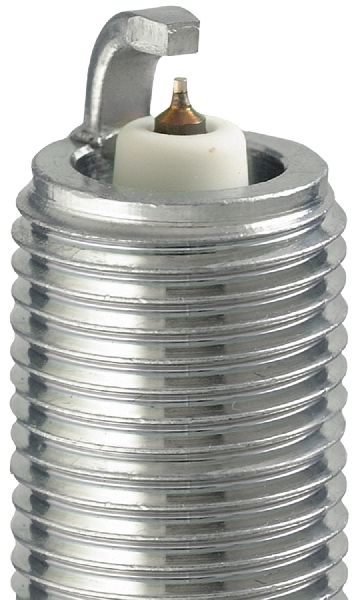
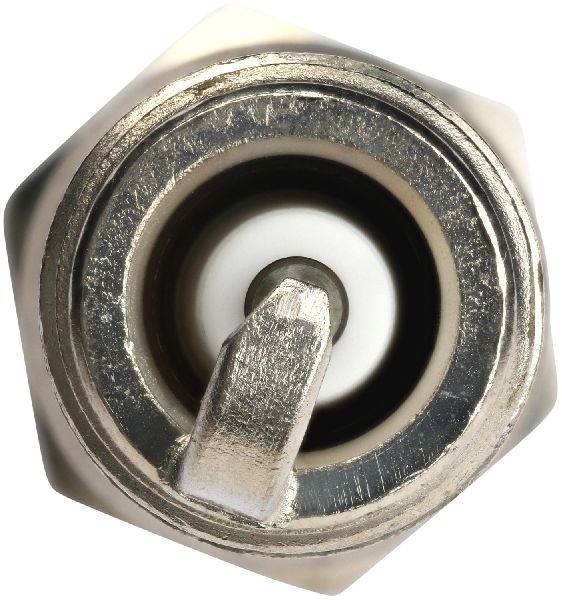
How to confirm: After removing the ignition coil, remove the spark plug from cylinder #5 and inspect it. Look for signs of wear, damage, or heavy deposits. Compare it to a new spark plug. A shorted plug is a specific, though less common, failure mode that can cause a P035x code.
Typical fix: Replace the spark plug for cylinder #5. It is best practice to replace all six spark plugs if they are near the end of their service interval.
Est. part cost: $5-$20 per plug - Wiring or Connector Issue ⚪ Low Probability Engine vibrations and heat can cause wiring to chafe or connectors to become loose or corroded over time. The red locking tab on the ignition coil connector is known to become brittle and break, which can lead to a loose connection. In NHTSA ODI #11130559, an owner reported a P0355 code accompanied by a "death rattle" shaking, which was initially resolved by installing new wires.
How to confirm: Visually inspect the wiring harness and connector going to the cylinder #5 ignition coil. Check for any signs of damage, melting, or corrosion on the pins. Ensure the connector is fully seated and the locking tab is engaged. Use a multimeter to check for 12V power and ground at the connector with the key on, engine off.
Typical fix: Repair the damaged section of wire or clean/replace the electrical connector pigtail. Applying dielectric grease to the new connector can help prevent moisture intrusion.
Est. part cost: $5-$25 for connector pigtail
Rare But Worth Checking
- Powertrain Control Module (PCM) Failure: → Shop Engine Control Module (ECM) This is the least likely cause, but it is a known issue on Ford 3.5L engines. A shorted ignition coil can feed back and damage the coil driver circuit inside the PCM. 🎬 Watch: How a coil malfunction can damage your Ford's PCM. If P0355 returns immediately after replacing the coil and plug and verifying the wiring, the PCM is the likely culprit. This should only be considered after definitively ruling out the coil, spark plug, and wiring. If replacing the PCM for this reason, it is critical to replace all six coils and plugs simultaneously to prevent immediate damage to the new PCM. Manufacturer Bulletin #SSM 52455 notes that various gas engines may set DTC P0355 in the powertrain control module due to internal circuit issues.
Diagnosis Steps
- Read the trouble codes with an OBD-II scanner to confirm P0355 and any other related codes like P0305.
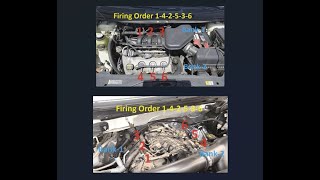
- Locate cylinder #5. On the 3.5L V6 in the Explorer, the engine is transverse. The rear bank (against the firewall) has cylinders 1, 2, 3 (passenger to driver side). The front bank (near the radiator) has cylinders 4, 5, 6 (passenger to driver side). Cylinder #5 is the middle cylinder on the front bank. 🎬 Watch: Visual guide to Ford 3.5L cylinder locations and firing order.
- Inspect the electrical connector and wiring going to the cylinder #5 ignition coil. Check for obvious damage, looseness, corrosion, or a broken red locking tab.
- Perform a coil swap test. Disconnect and remove the ignition coil from cylinder #5. Swap it with the coil from cylinder #4 (to its right/passenger side).
- Clear the trouble codes using the scanner. Start the engine and let it run for a few minutes or take a short drive.
- Re-scan for codes. If the code has changed to P0354 (Cylinder 4 Ignition Coil Circuit), the ignition coil is faulty and needs to be replaced.
- If the code P0355 returns, the problem is likely not the coil itself. Remove and inspect the spark plug for wear, fouling, or damage. If the plug is old or looks bad, replace it.
- If the plug and coil are good, test the wiring. Use a multimeter to check for 12V power on one wire and a good ground on another at the coil connector (with key on). The third wire is the signal wire from the PCM; you can check for continuity between the connector and the PCM plug if you have a wiring diagram.
- If the wiring, spark plug, and coil are all confirmed to be good, the issue is likely a rare PCM driver failure. This is a known issue where a bad coil can damage the PCM, so it's critical to replace all coils if you replace the PCM.
Parts You'll Likely Need
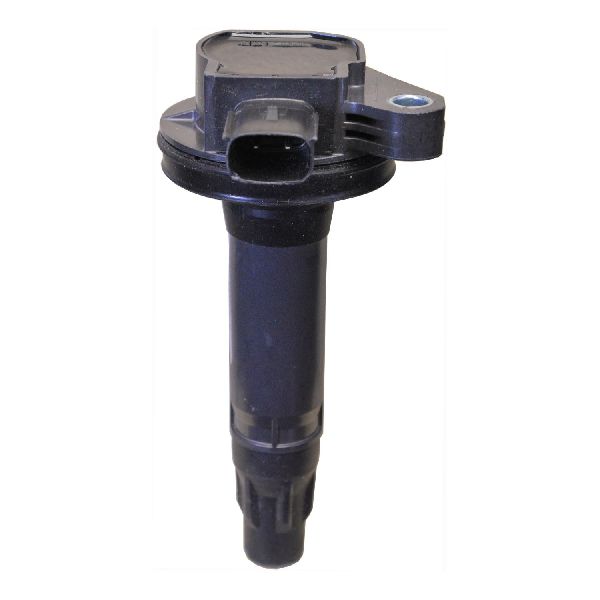
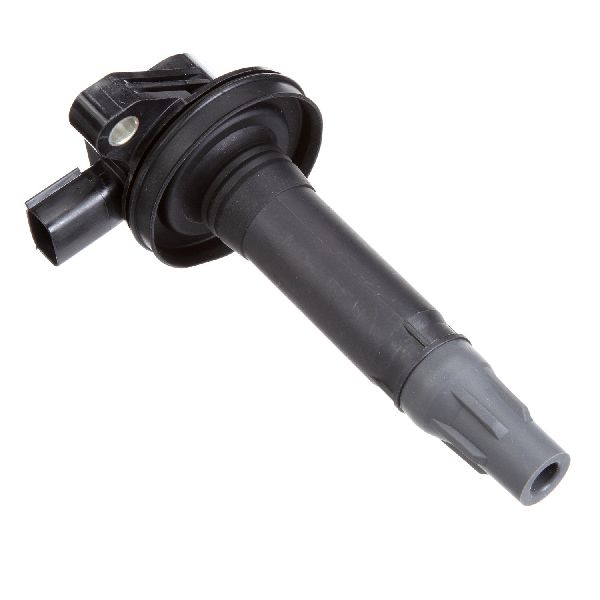
- Ignition Coil
(OEM #DG549 (Motorcraft))— This is the most common failure point for a P0355 code. The coil is responsible for generating the spark and is a high-wear electrical component.
Trusted brands: Motorcraft, NGK, Denso, Delphi
OEM price range: $50-$80
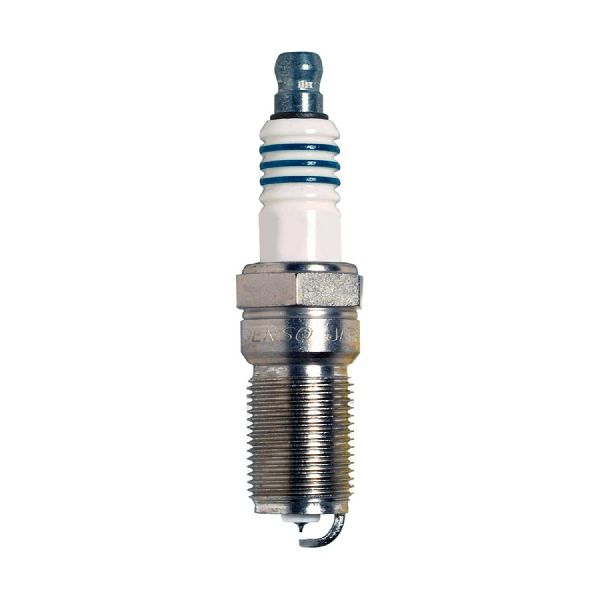
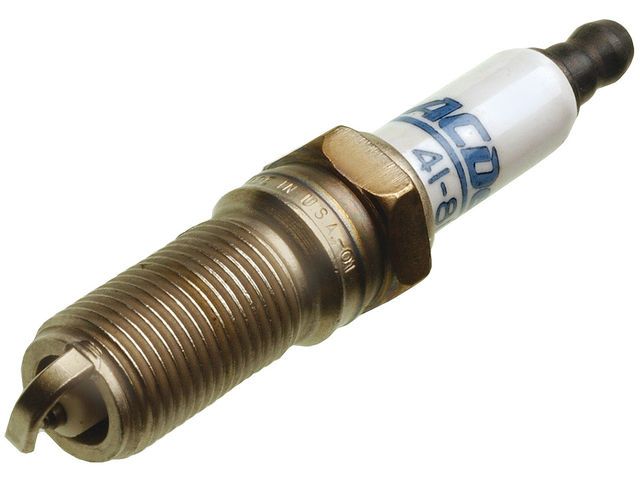
Aftermarket price range: $30-$60 - Spark Plug
(OEM #SP534 (Motorcraft))— A worn spark plug can cause a coil to fail, and it's good practice to replace it when replacing the coil to ensure optimal performance and prevent a repeat failure.
Trusted brands: Motorcraft, NGK, Autolite
OEM price range: $8-$15
Aftermarket price range: $5-$10
Related Codes That Often Appear With This One
- P0305 — P0305 means 'Cylinder 5 Misfire Detected'. Since P0355 indicates a fault in the ignition circuit for cylinder 5, the cylinder will not fire correctly, which will almost always trigger a P0305 code alongside it.
- P0300 — P0300 means 'Random Misfire Detected'. If the ignition coil issue is intermittent or if other ignition components are failing, the PCM might log a random misfire code before or along with the specific cylinder code.
Technical Service Bulletins (TSBs) & Recalls
- TSB 13-4-17 / TSB 14-0059: While this TSB officially applies to earlier model year (pre-2009) Ford/Lincoln vehicles with 3.0L and 3.5L engines, it describes the exact failure pattern of a bad ignition coil causing PCM damage and triggering P035x codes. It mandates the replacement of the PCM and all six coils. This indicates a known history of this issue within the engine family.
- Manufacturer Bulletin #SSM 52455: This bulletin notes that vehicles equipped with a gas engine may exhibit an illuminated MIL with ignition system DTCs including P0355 set in the powertrain control module (PCM).
- Manufacturer Bulletin #TSB 24-2406: This bulletin describes how certain EcoBoost engines may exhibit an illuminated MIL with ignition system DTCs P0352, P0353, P0354, and P0355 set in the PCM.
Platform-Specific Known Issues
- PCM Driver Failure: On Ford's 3.0L and 3.5L engines, there is a known, albeit uncommon, failure pattern where a shorted ignition coil can send a voltage spike back to the Powertrain Control Module (PCM), destroying the internal driver circuit for that cylinder. This results in a persistent P035x code that won't clear even with a new coil and good wiring. The only fix is to replace the PCM, and it is mandatory to replace all six ignition coils and spark plugs at the same time to prevent the same failure from happening to the new PCM.
- Water Intrusion (EcoBoost-related): While the subject vehicle has a naturally aspirated V6, the related 3.5L EcoBoost engine is notorious for moisture accumulating in the charge air cooler (intercooler) and being ingested by the engine, causing misfires. While not a direct cause for P0355 on the NA engine, it highlights a sensitivity to moisture in the ignition system for this engine family. It's wise to avoid pressure washing the engine bay, especially around the coils.
Mechanic-Grade Diagnostic Values
- Ignition Coil Primary Resistance — expected: 0.4 to 2.0 Ohms. More specifically, 0.5 to 0.6 Ohms is typical for this engine.. Failure: A reading of infinity (OL) indicates an open circuit. A reading of 0 Ohms indicates a short. Significant deviation from the expected range suggests a faulty coil.
- Ignition Coil Secondary Resistance — expected: 5,500 to 10,000 Ohms (5.5kΩ to 10kΩ).. Failure: A reading of infinity (OL) indicates an open secondary winding and a failed coil.
- Coil Connector Power Supply (Key On, Engine Off) — expected: 12V+ (Battery Voltage) on the Violet wire.. Failure: No voltage or significantly low voltage indicates a problem with the power supply wire or a fuse in the power distribution box.
- Coil Connector Ground — expected: Less than 0.5 Ohms of resistance between the Black/Green wire and the battery negative terminal.. Failure: High resistance or an open circuit (OL) indicates a bad ground connection.
- Mode 6 Misfire Count (Cylinder 5) — expected: Zero or very low counts on a healthy engine.. Failure: A high number of misfire counts logged for cylinder 5 confirms it is the source of the misfire. Some scanners may also show a percentage for catalyst-damaging misfires.
Scan Tool Commands That Help
- Ford IDS, Snap-on, or other professional scan tool: Power Balance Test (formerly Cylinder Contribution Test) — This is used to definitively confirm which cylinder is not contributing power. The test disables the fuel injector to each cylinder one by one and graphs the resulting drop in engine RPM. If disabling cylinder #5 causes little or no RPM drop compared to other cylinders, it confirms cylinder #5 is the source of the misfire.
Wiring & Ground Locations
- Cylinder 5 Coil Connector — On the front (radiator side) cylinder bank, the middle ignition coil.. This is the direct connection point for the faulty circuit. Pin 1 (varies, check diagram): 12V+ Power (Violet wire). Pin 2: Ground (Black/Green wire). Pin 3: PCM Control Signal (White/Brown wire).
- PCM Connector C1551E, Pin 58 — At the Powertrain Control Module (PCM), which is typically located in the engine bay near the firewall or battery.. This is the specific pin on the PCM that sends the control signal to the cylinder 5 ignition coil. Testing for continuity between this pin and the signal wire at the coil connector can rule out a broken wire in the harness.
- G104 / G105 — G104 is a primary engine compartment ground located on the right (passenger) side of the engine compartment. G105 is on the top right side of the engine.. The ignition coils rely on a solid engine ground to function correctly. A loose or corroded ground at G104 or G105 can cause intermittent and difficult-to-diagnose ignition faults, including a P0355.
Real Owner Repair Stories
- 2CarPros Forum (2012 Ford F-150 3.5L (same engine family and electronics)) — Codes for coil 5 and 6, with the control wires for both coils being grounded at all times.
❌ Tried (didn't work) Initial diagnosis pointed towards wiring or coils.
✅ What actually fixed it After testing the wiring for continuity and shorts, it was determined the PCM itself was faulty. The user confirmed the coil driver transistors inside the PCM for cylinders 5 and 6 were shorted to ground, requiring PCM replacement and programming to fix the issue. - NHTSA ODI #11429061 — An owner reported that their vehicle, displaying codes P0351 through P0356, shut down on the interstate and would not restart, which was linked to a PCM failure.
- NHTSA ODI #11131030 — After being towed, an auto shop diagnosed a vehicle with P0351, P0352, P0354, and P0355, concluding there was a simultaneous ignition coil and PCM failure.
OEM Part Supersession History
BL3Z12029A, BL3Z12029B, BL3Z12029C→DG549 (Motorcraft)— Part number consolidation and potential minor revisions for reliability or manufacturing efficiency.
Heads up: DG549 is the correct and compatible replacement. Using older stock or incorrect aftermarket cross-references can lead to issues.
Model Year Variations Within This Range
- 2011-2015: No significant variations have been identified for the ignition coil or connector on the 3.5L naturally aspirated V6 within this model year range. All years use a 3-pin connector for the ignition coil.
Diagnostic Flowchart
Used vs. New Parts: Buying Guide for This Vehicle
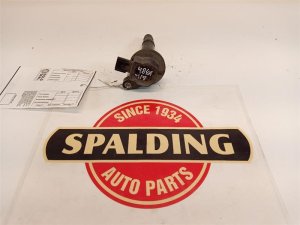
When a used part is the smart pick: A used wiring connector pigtail from a junkyard is an excellent, cost-effective choice if only the plastic connector is broken. A used PCM can also be a viable option, but it MUST be reprogrammed (flashed) for your vehicle's specific VIN and options by a dealer or a specialized service.
Donor-vehicle mileage cap: roughly under 80000 miles for the part to have meaningful remaining life.
What to inspect on the donor part:
- For a connector pigtail, ensure the plastic is not brittle, the locking tab is intact, and there's plenty of wire length for splicing.
- For a PCM, check for any signs of water damage or physical case damage. Try to source it from a vehicle with no collision damage near the module's location.
OEM-only on this vehicle (don't cheap out):
- Powertrain Control Module (PCM): While a used OEM unit can work, it requires professional reprogramming. Avoid aftermarket PCMs as they can have compatibility issues. If you must replace the PCM, it is critical to also replace all six ignition coils and spark plugs with new Motorcraft parts to prevent immediate damage to the replacement PCM.
- Ignition Coils: Strongly recommend new Motorcraft (DG549) or reputable OEM-quality brands like NGK or Denso. Cheap, no-name aftermarket coils are a common source of repeat failures and can even damage the PCM.
Aftermarket brands forum-validated for this vehicle:
- NGK
- Denso
- Delphi
- ACCEL (Performance-oriented)
Brands owners have reported issues with on this vehicle:
- Unbranded, low-cost coil sets from online marketplaces are frequently cited on forums as having high failure rates.
Real Owner Stories
Aggregated from forums and TSBs cited above. Mileages and costs reflect what owners reported in those sources.
Ford Edge 3.5L V6
Symptoms: Owner experienced a P0355 code.
What fixed it: The issue was a poor connection at the coil caused by a broken red locking tab on the electrical connector. The problem was resolved by securing the connection, without replacing any parts.
Source hint: YouTube - 'Ford Edge Ignition Coil Circuit Malfunction...'
Ford vehicle with 3.5L V6
Symptoms: The owner had a P0355 code and observed that the PCM would shut down the fuel injector to cylinder #5 approximately 10 seconds after starting the engine.
What fixed it: This was identified as a protective strategy by the PCM in response to the ignition coil circuit fault. The underlying cause of the P0355 code needed to be addressed.
Source hint: Ford Truck Enthusiasts - 'P0355 with Dead Injector after 10 seconds.'
Ford vehicle
Symptoms: An ignition coil code was present, initially for cylinder #2.
What fixed it: The owner confirmed the ignition coil was faulty by swapping the suspected bad coil from cylinder #2 to cylinder #5. The code then changed to P0355, confirming the coil was the problem and needed replacement.
Source hint: Reddit r/AskMechanics - 'P0355 Ignition Coil Code'
Ford F-150
Symptoms: The vehicle started to shake and developed a "death rattle" while driving, triggering code P0355.
What fixed it: According to NHTSA ODI #11130559, the owner initially fixed the code by installing new wires for $500.00, though the issue returned two weeks later.
Related OBD-II Codes
Frequently Asked Questions
Where is cylinder #5 on my 2011-2015 Explorer's 3.5L V6 engine?
I swapped the ignition coil from cylinder #5 to #4, but the P0355 code came back. What should I check next?
Is it true that a bad ignition coil can damage the computer (PCM) on this engine?
The little red locking tab on my ignition coil connector is broken. Could this cause a P0355 code?
If I have to replace the PCM, what else needs to be done?
Does TSB 13-4-17 apply to my 2012 Explorer?
Helpful Videos

Used OEM Parts in Stock
New Aftermarket Parts Available

The information in this article is provided for general reference and educational purposes only. Vehicle specifications, procedures, and part compatibility can vary by production date, trim level, and region. Always consult your vehicle's factory service manual and verify part numbers before purchasing or performing repairs. Safety-critical components such as airbags, seat belts, and braking systems should be installed by a qualified professional.
- Ford Explorer:
- 🧭 Diagnostic Flowchart
- 🎬 Helpful Videos
- 🛍️ Shop This Part
- What's Unique About the 2011-2015 Ford Explorer
- Symptoms You May Notice
- Most Likely Causes
- Rare But Worth Checking
- Diagnosis Steps
- Parts You'll Likely Need
- Related Codes That Often Appear With This One
- Technical Service Bulletins (TSBs) & Recalls
- Platform-Specific Known Issues
- Mechanic-Grade Diagnostic Values
- Scan Tool Commands That Help
- Wiring & Ground Locations
- Real Owner Repair Stories
- OEM Part Supersession History
- Model Year Variations Within This Range
- Used vs. New Parts: Buying Guide for This Vehicle
- Real Owner Stories
- Ford Edge 3.5L V6
- Ford vehicle with 3.5L V6
- Ford vehicle
- Ford F-150
- Related OBD-II Codes
- Frequently Asked Questions
- 🎟️ Get 5% Off