

P0355 on 2016-2019 Ford Explorer 3.5L V6: Ignition Coil 'E' Circuit Causes and Fixes
Code P0355 on a 2016-2019 Ford Explorer 3.5L V6 is almost always a failed ignition coil on cylinder 5. Since cylinder 5 is on the easy-to-access front bank of the engine, this is a simple DIY fix. Expect to pay $30-$60 for an aftermarket coil or $70-$100 for an OEM Motorcraft part. A simple 'swap test' with an adjacent coil can confirm the diagnosis in minutes.
- P0355 on this Explorer points directly to the ignition circuit for cylinder 5.
- Cylinder 5 is located in the middle of the front bank of the engine, making it very easy to access.
- The most likely cause is a bad ignition coil, which can be diagnosed with a simple 'swap test' using an adjacent coil.
- If a coil swap doesn't move the code, inspect the wiring connector for damage and consider replacing the pigtail (Motorcraft WPT-1251).
- This is a very DIY-friendly repair that can be done in under 30 minutes with basic tools.
- Do not ignore this code, as continued driving can lead to costly damage to the catalytic converter.
What's Unique About the 2016-2019 Ford Explorer
For this specific generation of Ford Explorer, the 3.5L V6 engine is mounted transversely (sideways). This is great news for a P0355 code because it places cylinder 5 on the front bank of the engine, closest to the radiator. This makes the ignition coil extremely easy to access and replace with basic tools, unlike the rear coils which require removing the intake manifold. What could be a multi-hour job on other cylinders becomes a 15-minute fix for cylinder 5.
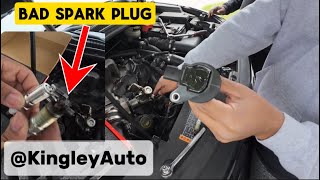
🎬 Watch: A quick walkthrough on replacing these front-bank ignition coils.Symptoms You May Notice
- Check Engine Light is on or flashing
- Rough idle or engine shaking
- Noticeable loss of power and hesitation during acceleration
- Engine stumbling or feeling jerky
- Reduced fuel economy
- Popping sound from the exhaust during acceleration
- Replacing the fuel injector for cylinder 5. A P0355 is an ignition circuit code, not a fuel circuit code (which would be in the P02xx range).
- Assuming the problem is on the difficult-to-access rear bank. It's critical to know that cylinder 5 is on the front.
Most Likely Causes
- Failed Ignition Coil 🔴 High Probability → Shop Ignition Coil Coil-on-plug systems are a common failure point on many modern vehicles as they age due to constant exposure to high temperatures and vibration. The Motorcraft coils are generally reliable but can fail internally, causing an open or short in the primary circuit.
How to confirm: The easiest method is the 'swap test'. Swap the ignition coil from cylinder 5 with the one from cylinder 4 or 6 (also on the front bank). Clear the codes. If the code changes to P0354 or P0356, you have confirmed the coil is bad. 🎬 See how to diagnose and repair a cylinder 5 misfire.
Typical fix: Replace the faulty ignition coil. It is held in by a single 8mm bolt.
Est. part cost: $30-$100 - Worn or Faulty Spark Plug 🟡 Medium Probability → Shop Spark Plug A spark plug with an excessive gap, carbon fouling, or a cracked ceramic insulator can increase the electrical resistance, putting extra strain on the ignition coil and causing it to fail or trigger a circuit code. It's often recommended to replace spark plugs at the same time as coils if they are near the end of their 100,000-mile service life.
How to confirm: After removing the ignition coil, remove the spark plug (requires a 5/8" spark plug socket). Inspect it for wear, carbon fouling, oil contamination, or damage to the ceramic insulator.
Typical fix: Replace the spark plug. It's best practice to replace all six if they are due. 🎬 Watch: How to replace your spark plugs and coils correctly.
Est. part cost: $8-$20 per plug - Damaged Wiring or Connector ⚪ Low Probability The plastic ignition coil connector can become brittle from heat cycles and break, or the terminals can corrode. Wires in the harness can also break from vibration, causing an intermittent open in the circuit.
How to confirm: Visually inspect the wiring harness and the connector going to the cylinder 5 ignition coil. Look for any signs of corrosion, broken wires, or a loose connection. Gently wiggle the connector with the engine running to see if it affects the misfire. For a more definitive test, use a multimeter to check for 12V power and a proper ground at the connector with the key on.
Typical fix: If the connector is damaged, a new pigtail connector (Motorcraft P/N WPT-1251) can be spliced in. If a wire is broken, it will need to be repaired.
Est. part cost: $20-$35 for a pigtail
Rare But Worth Checking
- Faulty Powertrain Control Module (PCM): → Shop Engine Control Module (ECM) This is the least likely cause. The internal driver circuit in the PCM that controls the ignition coil can fail. This should only be considered after definitively ruling out the coil, spark plug, and wiring with 100% certainty.
- Internal Water Pump Failure: The 3.5L Duratec engine in transverse applications (like the Explorer) has a known design flaw where the water pump is located internally and is driven by the timing chain. When the pump fails, it can leak coolant directly into the crankcase, mixing with the oil. While this typically causes catastrophic engine failure, it's conceivable that coolant contamination could cause widespread electrical issues or damage to sensors before the engine is completely destroyed, though it's not a direct cause of a single coil code.
Diagnosis Steps
- Confirm the presence of code P0355 with an OBD-II scanner. Note any other codes, such as P0305.
- Open the hood and locate the engine cover. Remove it by pulling up firmly.
- Identify the front bank of cylinders, closest to the radiator. From the passenger side to the driver side, these are cylinders 4, 5, and 6.
- Locate the ignition coil for cylinder 5 (the middle one on the front bank).
- Perform the 'swap test': Disconnect the electrical connector from coil 5 and coil 6. Remove the 8mm bolt holding each coil. Swap the positions of the two coils. Reinstall the bolts and reconnect the connectors.
- Clear the trouble codes with your scanner and start the engine. Let it run for a minute.
- Re-scan for codes. If the code has changed to P0356 (for cylinder 6), the ignition coil is faulty and needs to be replaced.
- If the code P0355 returns, the problem is not the coil. Proceed to inspect the spark plug and the wiring connector for cylinder 5.
- (Advanced) If the swap test is inconclusive, test the electrical connector for cylinder 5 with a multimeter. With the key on, engine off, one pin should have 12V+ power, and another should be ground. The third wire is the signal wire from the PCM.
- If the plug and wiring appear fine and test correctly, the issue may be a rare PCM fault, which typically requires professional diagnosis.
Parts You'll Likely Need
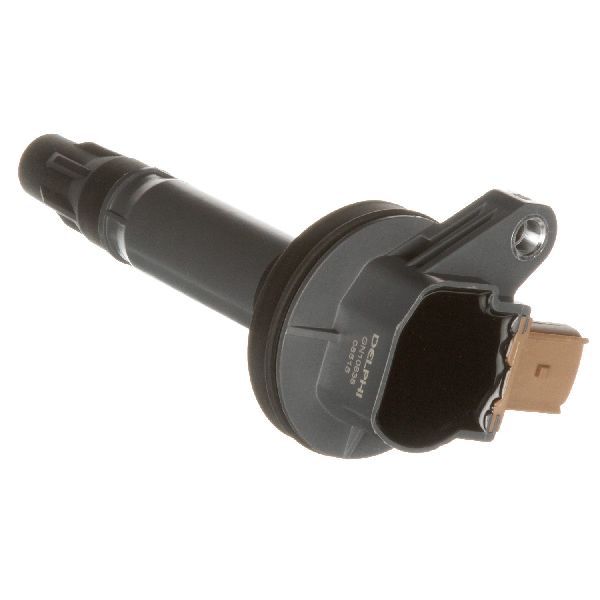
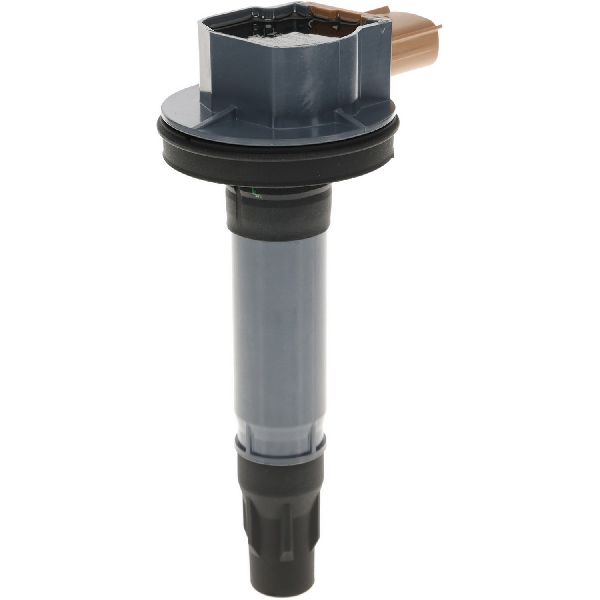
- Ignition Coil
(OEM #DG563)— This is the most common failure item for a P0355 code.
Trusted brands: Motorcraft, NGK, Denso, Bosch
OEM price range: $70-$100
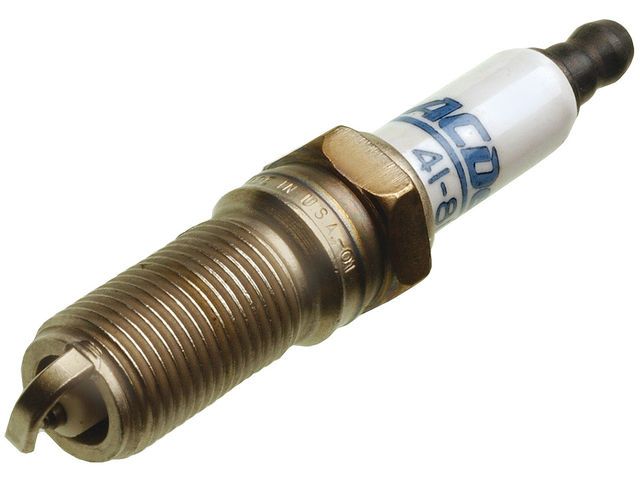
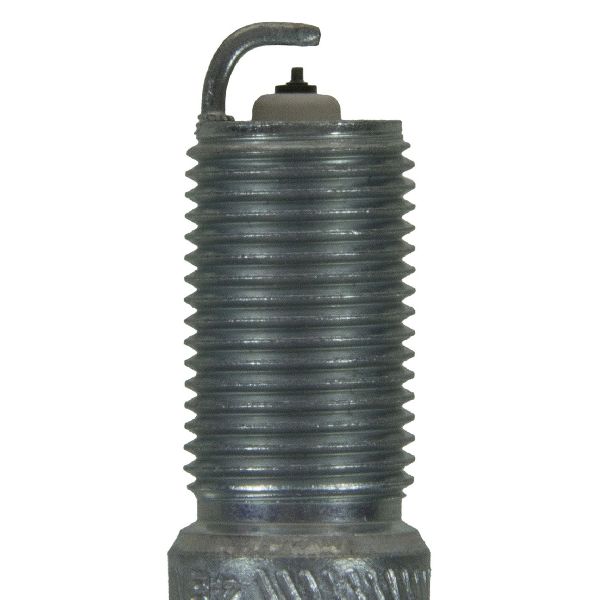
Aftermarket price range: $30-$60 - Spark Plug
(OEM #SP-520 / SP-580)— Often replaced as a preventative measure along with the coil, or if it is found to be the cause of the coil failure. The SP-580 is a newer part number that may be supplied.
Trusted brands: Motorcraft, NGK, Bosch
OEM price range: $12-$20
Aftermarket price range: $8-$15 - Ignition Coil Connector Pigtail
(OEM #WPT-1251)— Needed if the original plastic connector is cracked, broken, or the terminals are corroded, causing a poor connection.
Trusted brands: Motorcraft
OEM price range: $20-$35
Aftermarket price range: $15-$25
Related Codes That Often Appear With This One
- P0305 — P0355 indicates the electrical cause (the coil circuit failed), while P0305 indicates the effect (cylinder 5 is misfiring). You will almost always see these two codes together.
Technical Service Bulletins (TSBs) & Recalls
- No specific TSBs were found for P0355 on the 2016-2019 Ford Explorer 3.5L. Searches for TSBs like 19-2344 relate to different engines (6.7L Power Stroke) and different codes.
- Manufacturer Bulletin #SSM 52455 notes that certain Ford gas engines may exhibit an illuminated MIL with ignition system DTCs including P0355 set in the powertrain control module (PCM).
- Manufacturer Bulletin #TSB 24-2406 also documents instances where Ford vehicles equipped with EcoBoost engines may set DTC P0355 in the PCM.
Mechanic-Grade Diagnostic Values
- Ignition Coil Primary Resistance — expected: ~0.5 Ohms. Failure: A reading of 0 ohms indicates a short, while an infinite reading (OL) indicates an open circuit.
- Ignition Coil Secondary Resistance — expected: ~5.95k Ohms (5,950 Ohms). Failure: A significantly different value, or a reading of 0 or OL, indicates a faulty coil winding.
- Coil Connector Power Supply — expected: ~12 Volts (Battery Voltage). Failure: A reading of 0V indicates a blown fuse or a break in the power supply wire.
- Coil Control Circuit (at coil connector) — expected: Using a noid light or LED test light connected to the control and power pins, the light should flash while cranking the engine.. Failure: If the light does not flash, there is a problem in the wiring or with the PCM driver.
- Control Wire Continuity (Coil connector to PCM connector) — expected: Near 0 Ohms. Failure: A high resistance or OL (Over Limit) reading indicates a break in the wire between the PCM and the coil connector.
Hidden / Shadow Codes Worth Checking
- Mode $06, TID $53: This is not a separate trouble code, but a specific test identifier within the OBD-II system's Mode 6 data. It tracks the raw misfire count for each cylinder per drive cycle, even for misfires not yet severe enough to set a P030x code. (see via An advanced scan tool capable of reading Mode 6 data, such as FORScan or professional-grade scanners.)
Scan Tool Commands That Help
- Ford IDS / FORScan / Advanced Scanners: Power Balance / Cylinder Contribution Test — This is a critical diagnostic function to use when a misfire is felt but the cause is uncertain. The tool displays a graph of each cylinder's relative power output, immediately highlighting a weak cylinder. It also allows the user to disable individual injectors to see how it affects engine operation, helping to isolate the source of the misfire.
- Oscilloscope with Low-Amp Probe: Ignition Coil Current Ramping — This is the most definitive test for an ignition coil's health. By clamping the probe around the coil's power wire, you can visualize the electrical signature of the coil as it charges and fires. A bad coil will have a visibly different waveform (e.g., a missing oscillation or an incorrect ramp) compared to a known-good coil, confirming the failure with 100% accuracy before replacing parts.
Wiring & Ground Locations
- Main Engine Ground Strap — On similar Ford 3.5L platforms, the main engine-to-chassis ground strap is located on the transmission case, below the brake booster.. A poor engine ground can cause a host of electrical issues, including erratic behavior from ignition components. The PCM relies on a solid ground reference to accurately control the coils. Voltage drops across a bad ground can trigger circuit codes.
- Ignition Coil Power Supply — All six ignition coils often share a common power feed wire that comes from a single fuse in the Battery Junction Box / underhood fuse panel.. While a failure here would likely cause multiple coil codes (P035x), a partial failure or corrosion at a splice point in the harness could theoretically affect a single coil.
- Coil Control Wire — This is the individual wire running from the ignition coil #5 connector directly back to a specific pin on the Powertrain Control Module (PCM) connector.. This wire is what the PCM uses to send the ground signal to fire the coil. A break or short-to-ground on this specific wire is a primary cause of P0355 when the coil itself is good. Diagnosis requires a continuity test between the coil connector and the correct PCM pin.
Real Owner Repair Stories
- Ford F-250 Forum / YouTube Mechanic Video (2016 Ford F-250 6.2L V8) — Check Engine Light with code P0355, A/C blowing warm (due to limp mode).
❌ Tried (didn't work) The technician first tested the ignition coil with a multimeter; its resistance was 1.4 ohms, which was within the 0.5-2.0 ohm spec., The technician then checked the wiring for shorts to power and ground; all tests passed.
✅ What actually fixed it A Technical Service Bulletin (TSB) existed for the coil driver software in the PCM. The technician reprogrammed the PCM with the updated software, which resolved the P0355 code. This is often missed by those who would just replace the coil and plug. - Ford Edge Forum user 'Fishinfool98' (2012 Ford Edge 3.5L V6 with 154,000 miles) — Persistent misfire on cylinder #1.
❌ Tried (didn't work) Replaced all spark plugs, Replaced all ignition coils (twice), Replaced all fuel injectors, Replaced the PCM
✅ What actually fixed it After all components were replaced, the misfire remained. A continuity test on the engine wiring harness revealed that five wires were shorted together within the harness itself. The final fix was to repair or replace the faulty engine wiring harness. - NHTSA ODI #11130559 — An owner reported that their vehicle started to shake and developed a "nasty rattle" before throwing code P0355. They initially fixed the code by installing new wires, but the issue returned two weeks later.
Documented NHTSA Reports
- NHTSA ODI #11429061: A driver reported that their vehicle shut down on the interstate and would not restart, with a series of codes including P0355, which was attributed to a PCM failure.
- NHTSA ODI #11131030: An owner described a situation where they lost the ability to control the vehicle; a diagnostic shop subsequently identified P0355 along with other ignition coil codes and a PCM failure.
When the Usual Fixes Don't Work
- While a bad ignition coil is the cause of P0355 over 90% of the time, there are documented cases where the fix is far more complex. In one instance involving a similar Ford 6.2L engine, the coil and wiring tested perfectly fine. The actual solution was a PCM software update per a TSB, as the logic for monitoring the coil driver was too sensitive. In another case on a 3.5L V6, after replacing every conceivable part (plugs, coils, injectors, PCM), the owner discovered a short within the engine wiring harness itself was the true root cause. These cases highlight the importance of performing advanced wiring continuity tests and checking for TSBs before replacing the expensive PCM.
OEM Part Supersession History
SP-520, SP-534→SP-580 (CYFS12YT4X)— Ford updated the part number for its Iridium spark plugs. The parts are considered identical and interchangeable for this application.SP-530→SP-530X— The 'X' suffix does not indicate a change in the spark plug itself. It was part of a Ford inventory management program that allowed dealers to order plugs in smaller quantities (e.g., packs of 4) instead of bulk cases. The plugs are identical.
Model Year Variations Within This Range
- 2011-2017 vs 2017-2019: There may be different OEM ignition coil part numbers used within the generation. Part catalogs show DG-520 and DG-549 used on earlier models, while DG-563 is specified for 2017-2019 Explorers. While likely interchangeable, it is best to verify the correct part number for the specific vehicle year.
Diagnostic Flowchart
Used vs. New Parts: Buying Guide for This Vehicle
When a used part is the smart pick: For this repair, using used parts is generally not recommended for the electronic components. A used wiring pigtail from a junkyard is acceptable if the plastic is not brittle and the locking tab is intact. Avoid used ignition coils and spark plugs entirely.
Donor-vehicle mileage cap: roughly under 80000 miles for the part to have meaningful remaining life.
What to inspect on the donor part:
- For a pigtail connector, inspect for any cracks in the plastic housing.
- Ensure the locking tab clicks firmly into place.
- Check that the wire insulation is not frayed or heat-damaged.
- Look for any signs of green or white corrosion on the metal terminals inside the connector.
OEM-only on this vehicle (don't cheap out):
- Powertrain Control Module (PCM) - Aftermarket or used PCMs can have compatibility and programming issues. If the PCM is condemned, a new or remanufactured unit from Ford or a reputable specialist like Flagship One is the only reliable option.
Aftermarket brands forum-validated for this vehicle:
- Ignition Coils: NGK, Denso, Bosch. These are often the original equipment manufacturers for Ford and are trusted alternatives to Motorcraft.
- Spark Plugs: NGK. Often the OEM supplier for Motorcraft plugs.
Brands owners have reported issues with on this vehicle:
- Unnamed, 'white-box' ignition coils from online marketplaces. These often have a high failure rate due to poor quality internal windings and epoxy that can't withstand engine bay temperatures, leading to a repeat failure.
Real Owner Stories
Aggregated from forums and TSBs cited above. Mileages and costs reflect what owners reported in those sources.
2016 Ford Explorer 3.5L v6
Symptoms: Multiple engine codes appeared at once after a water pump replacement, including P0355, P0300, P0108, P0113, and P1289.
What fixed it: The final solution was not provided, but a commenter suggested the issue could be a missed ground connection or that the injector and spark coil connections were not fully locked in place.
Source hint: Reddit r/FordExplorer
2016-2019 Ford Explorer 3.5L V6
Symptoms: A persistent P0355 code remained even after changing the ignition coil.
What fixed it: The discussion concluded that the issue was likely in the wiring, and the next step was to check the wiring harness for 12V power and continuity, as the code points to a circuit issue, not just the coil itself.
Source hint: f150online.com - 'Code P0355, Changed Coils still there, what else to check?'
2011-2018 Ford Edge 3.5L V6
Symptoms: The vehicle was showing a P0355 code, which points to a fault in the primary wiring circuit for the ignition coil.
What fixed it: The discussion pointed to several potential causes beyond a simple coil failure, including corroded connectors, broken wires within the harness, or, in rare cases, a fault with the PCM.
Source hint: Reddit r/MechanicAdvice - 'Code P0355'
Related OBD-II Codes
Frequently Asked Questions
Where is cylinder 5 located on my 2016-2019 Explorer's 3.5L V6 engine?
What is the 'swap test' and how do I perform it to diagnose P0355?
I swapped the ignition coil, but the P0355 code came back. What should I check next?
My ignition coil connector for cylinder 5 is broken. Is there a specific part number for a replacement?
Are there any official Ford TSBs for the P0355 code on my Explorer?
Should I replace the spark plugs when I replace the ignition coil for cylinder 5?
What other vehicles share this same P0355 problem with the 3.5L engine?
Helpful Videos
Used OEM Parts in Stock
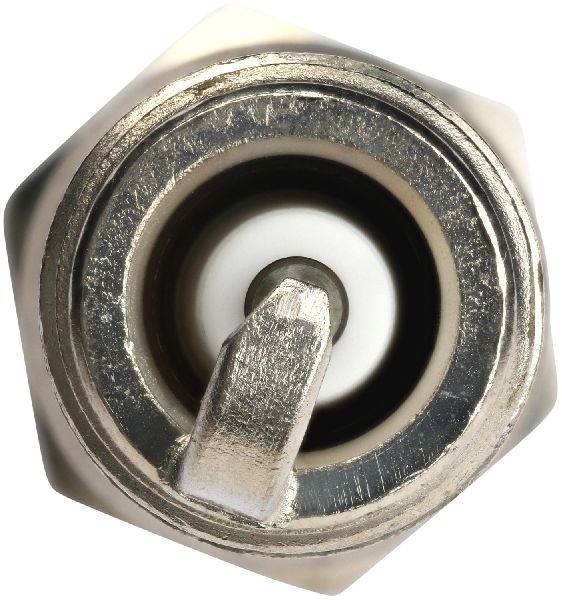
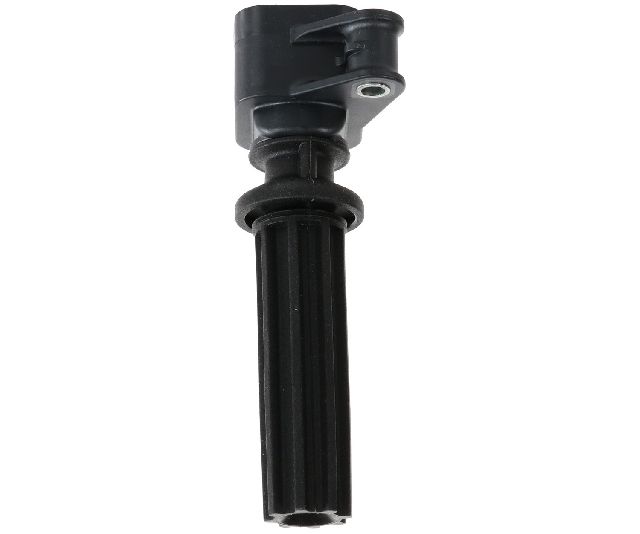
New Aftermarket Parts Available

The information in this article is provided for general reference and educational purposes only. Vehicle specifications, procedures, and part compatibility can vary by production date, trim level, and region. Always consult your vehicle's factory service manual and verify part numbers before purchasing or performing repairs. Safety-critical components such as airbags, seat belts, and braking systems should be installed by a qualified professional.
- Ford Explorer:
- 🧭 Diagnostic Flowchart
- 🎬 Helpful Videos
- 🛍️ Shop This Part
- What's Unique About the 2016-2019 Ford Explorer
- Symptoms You May Notice
- Most Likely Causes
- Rare But Worth Checking
- Diagnosis Steps
- Parts You'll Likely Need
- Related Codes That Often Appear With This One
- Technical Service Bulletins (TSBs) & Recalls
- Mechanic-Grade Diagnostic Values
- Hidden / Shadow Codes Worth Checking
- Scan Tool Commands That Help
- Wiring & Ground Locations
- Real Owner Repair Stories
- Documented NHTSA Reports
- When the Usual Fixes Don't Work
- OEM Part Supersession History
- Model Year Variations Within This Range
- Used vs. New Parts: Buying Guide for This Vehicle
- Real Owner Stories
- 2016 Ford Explorer 3.5L v6
- 2016-2019 Ford Explorer 3.5L V6
- 2011-2018 Ford Edge 3.5L V6
- Related OBD-II Codes
- Frequently Asked Questions
- 🎟️ Get 5% Off