

P0363 on 2010-2019 Ford Taurus 3.5L EcoBoost: Misfire & Fuel Cut-Off Guide
P0363 means the engine computer detected a severe misfire and cut fuel to a cylinder to prevent damage. This is almost always caused by a bad ignition coil or a worn-out spark plug. A single coil and plug costs ~$70-$120, but be aware that replacing parts on the rear bank of the engine requires removing the intake manifold, adding significant labor.
- P0363 is a reaction to a severe misfire; find and fix the cylinder-specific misfire code (P0301-P0306) that is also present.
- The most likely cause is a bad spark plug or ignition coil.
- Be prepared for high labor costs or significant DIY time if the misfire is on the rear cylinders (1, 2, or 3), as the intake manifold must be removed.
- When replacing spark plugs, use high-quality parts and verify the correct gap (around 0.028") before installation.
- Do not drive the vehicle. A flashing check engine light and a P0363 code indicate a severe problem that can quickly lead to more expensive damage.
What's Unique About the 2010-2019 Ford Taurus
The 3.5L EcoBoost V6 in the Taurus, particularly the high-performance SHO (Super High Output) model, is a powerful twin-turbo, direct-injection engine that is notoriously hard on ignition components. The key challenge on this platform is the engine's transverse (sideways) mounting. This places cylinders 1, 2, and 3 against the firewall, making access to their spark plugs and ignition coils extremely difficult. Servicing these rear cylinders requires the complete removal of the upper intake manifold, turning a simple job into a multi-hour repair that requires new intake gaskets.
Symptoms You May Notice
- Flashing or solid Check Engine Light
- Severe engine shaking, vibrating, or shuddering, especially under acceleration
- Significant loss of engine power and hesitation
- Rough or unstable idle
- Engine stalling or difficulty starting
- Smell of unburned fuel from the exhaust
- Replacing only the spark plug when the ignition coil was also weak.
- Replacing an O2 sensor that has a code, when the O2 sensor code was actually triggered by the unburned fuel from the misfire itself.
Most Likely Causes
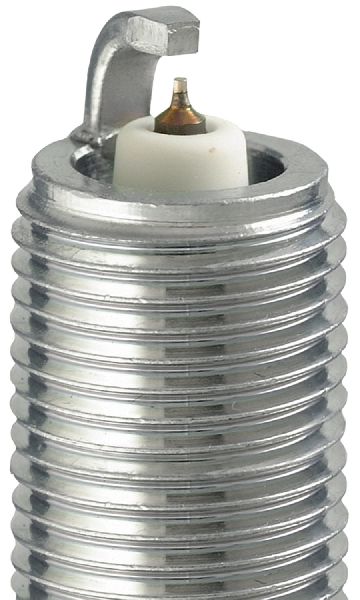
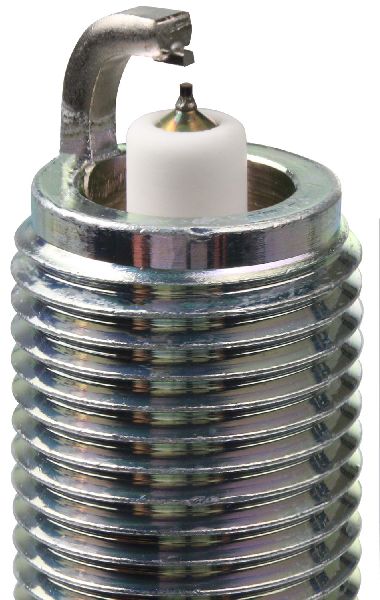
- Worn or Faulty Spark Plugs 🔴 High Probability → Shop Spark Plug The high cylinder pressures of the EcoBoost engine lead to accelerated wear on spark plugs. They are a common failure item and should be considered a regular maintenance item, often before Ford's recommended interval, sometimes as early as 40,000-50,000 miles.
How to confirm: Inspect the spark plug from the misfiring cylinder. Look for worn electrodes, heavy carbon fouling, or cracks in the white porcelain insulator, which can be a hairline fracture. A common diagnostic step is to swap the spark plug with a known good cylinder and see if the misfire code moves.
Typical fix: Replace all six spark plugs. It is critical to use high-quality Iridium plugs specified for the EcoBoost engine (like Motorcraft SP-580) and to gap them correctly (typically around 0.028-0.030 inches) before installation.
Est. part cost: $60-$120 - Failed Ignition Coil 🔴 High Probability → Shop Ignition Coil Heat and vibration lead to ignition coil failure over time. While the original Motorcraft coils are generally reliable, they are a frequent point of failure as the vehicle ages.
How to confirm: The most common diagnostic technique is to swap the ignition coil from the misfiring cylinder with a coil from a non-misfiring cylinder. Clear the codes and drive the vehicle. If the misfire code follows the coil to the new cylinder (e.g., P0303 becomes P0301 after swapping coils from cylinder 3 to 1), the coil is bad.
Typical fix: Replace the faulty ignition coil. It is best practice to also replace the corresponding spark plug at the same time. Many owners choose to replace all coils on a high-mileage vehicle, especially if accessing the rear bank.
Est. part cost: $40-$90 per coil - Faulty Fuel Injector 🟡 Medium Probability → Shop Fuel Injector Direct injection (DI) fuel injectors operate under extremely high pressure (over 2,000 PSI) and can become clogged or fail electronically over time. Carbon buildup can also affect injector performance.
How to confirm: This is diagnosed when a misfire stays on one cylinder after swapping both the spark plug and ignition coil. A professional technician can perform a fuel injector balance test with a high-end scan tool to confirm. On some forums, owners have attempted to diagnose a leaky injector by removing the fuel rail and priming the system to visually check for drips, though this is difficult on the EcoBoost.
Typical fix: Replace the faulty fuel injector. This is an involved repair, especially on the rear bank, as it requires removing the intake manifold and fuel rail.
Est. part cost: $50-$150 per injector
Rare But Worth Checking
- Carbon Buildup on Intake Valves: A known downside of first-generation direct-injection engines like this one. Oil vapor from the PCV system bakes onto the back of the intake valves, restricting airflow and causing misfires, especially on cold starts. This requires professional cleaning (e.g., walnut blasting), as fuel additives do not touch the back of the valves.
- Faulty Powertrain Control Module (PCM): → Shop Engine Control Module (ECM) There is a known issue where the ignition coil driver circuit within the PCM can fail, causing it to repeatedly destroy the ignition coil on a single cylinder. If you replace a coil and it fails again quickly on the same cylinder, the PCM is a likely suspect and needs repair or replacement.
- Low Engine Compression: If ignition and fuel causes are ruled out, a mechanical issue like a worn piston ring, bad valve, or stretched timing chain could be the cause. A compression test and cylinder leak-down test are needed to verify this.
Diagnosis Steps
- Read all fault codes with an OBD-II scanner. Identify the specific cylinder misfire code (P0301-P0306) that is causing the P0363.
- Determine which bank the misfire is on. Cylinders 1-2-3 are on the rear bank (against the firewall); Cylinders 4-5-6 are on the front bank (by the radiator).
- If the misfire is on the front bank (4, 5, or 6), access is easy. Swap the ignition coil from the misfiring cylinder with an adjacent one (e.g., swap coil 4 and 5).
- Clear the codes and drive the vehicle until the check engine light returns. Re-scan the codes.
- If the code moved with the coil (e.g., from P0304 to P0305), the ignition coil is faulty and must be replaced.
- If the code stayed on the original cylinder, the problem is likely the spark plug or fuel injector. Remove and inspect the spark plug for cracks or wear. Replace if questionable.
- If the misfire is on the rear bank (1, 2, or 3), diagnosis is the same, but execution requires removing the upper intake manifold to access the coils and plugs. Due to the high labor involved, it is highly recommended to replace all three spark plugs and ignition coils on the rear bank at the same time, along with the upper intake manifold gaskets.
- If a new plug and coil do not fix the misfire on a specific cylinder, the fuel injector is the next likely cause, followed by a compression test for mechanical issues.
Parts You'll Likely Need
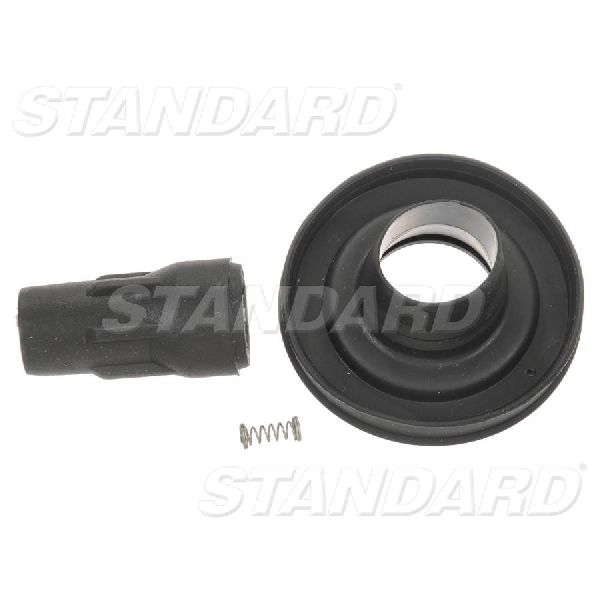
- Ignition Coil
(OEM #DG549)— One of the two most common failure points for a misfire on the 3.5L EcoBoost.
Trusted brands: Motorcraft, MSD, Denso, NGK
OEM price range: $50-$90
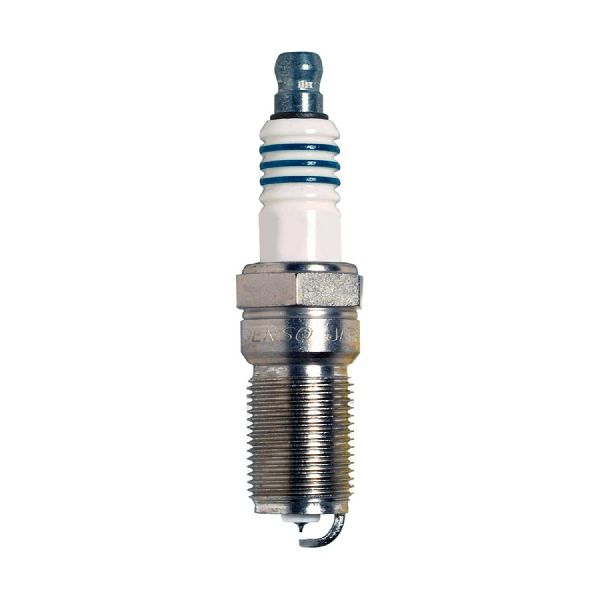
Aftermarket price range: $30-$70 - Iridium Spark Plug
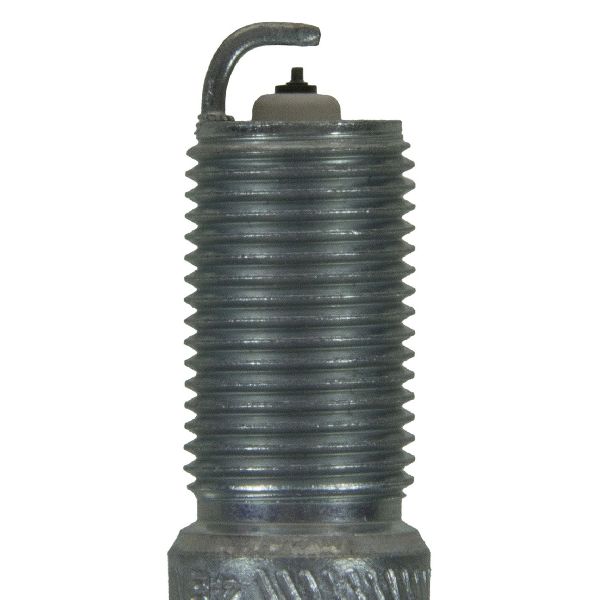
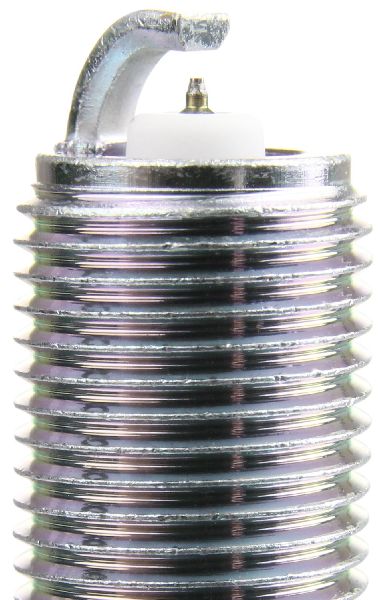
(OEM #SP-580 (CYFS-12Y-T))— A primary cause of misfires. These engines are hard on plugs, and using the correct, properly-gapped plug is critical for performance.
Trusted brands: Motorcraft, NGK, Bosch
OEM price range: $12-$20 per plug
Aftermarket price range: $8-$15 per plug - Upper Intake Manifold Gasket Set
(OEM #BL3Z-9439-A (Quantity 6 required))— Required if performing any work on the rear bank of cylinders (1, 2, or 3), as the intake manifold must be removed. These are individual gaskets, one for each intake port.
Trusted brands: Motorcraft, Fel-Pro, Mahle
OEM price range: $5-$10 per gasket
Aftermarket price range: $3-$7 per gasket
Related Codes That Often Appear With This One
- P0300 — This is a code for a random/multiple cylinder misfire. P0363 may be set if the misfires are severe across several cylinders.
- P0301, P0302, P0303, P0304, P0305, P0306 — These codes specify which cylinder is misfiring (e.g., P0301 is Cylinder 1). P0363 is the action the PCM takes *because* one of these misfires is severe. You will almost always have one of these codes alongside P0363.
- P0316 — Indicates a misfire was detected within the first 1,000 engine revolutions on startup. This often points to cold-start issues like carbon buildup or failing components.
Technical Service Bulletins (TSBs) & Recalls
- TSB 18-2305: Supersedes TSB 16-0027. Addresses a cold start rattle on 2011-2015 F-150 3.5L EcoBoost engines by recommending replacement of all four VCT units and the primary timing chain. While for the F-150, it highlights the known timing system issues on the Gen 1 engine.
- TSB 15-0131: An earlier bulletin for the F-150 EcoBoost startup rattle, which was a precursor to TSB 18-2305 and involved replacing the timing chain. Its revision to include phasers shows the evolution of the diagnosis.
- Recall 16V925000: For 2013-2015 Taurus models, this recall add
Platform-Specific Known Issues
- Access to the rear bank of cylinders (1, 2, 3) is blocked by the intake manifold, significantly increasing the labor and cost to replace spark plugs or coils on those cylinders.
- A known failure of the PCM's internal coil driver can cause repeated failure of the same ignition coil.
Mechanic-Grade Diagnostic Values
- Ignition Coil Primary Resistance — expected: ~0.5 Ohms. Failure: A reading significantly higher than 0.5 Ohms or an open circuit (infinite resistance).
- Ignition Coil Secondary Resistance — expected: 6.0 - 6.2 kOhms. Failure: A reading far outside this range indicates an internal failure of the coil windings.
- Direct Fuel Injector Resistance — expected: 1.0 - 2.0 Ohms. Failure: An open circuit (infinite resistance) or a reading outside this very low range. Note: The 2010-2019 Taurus 3.5L EcoBoost is direct-injection only.
- Low-Pressure Fuel System (In-tank pump) — expected: 55-75 PSI (Key On, Engine Off). Failure: Pressure below 55 PSI, erratic readings, or rapid pressure drop-off indicates a weak in-tank pump or leak.
- High-Pressure Fuel System (at idle) — expected: >200 PSI. Failure: Actual pressure on a scan tool is significantly lower than the desired pressure reading.
- High-Pressure Fuel System (under load) — expected: 1,500 - 2,150+ PSI. Failure: The actual fuel rail pressure fails to climb with the desired pressure during acceleration, indicating a failing HPFP.
Hidden / Shadow Codes Worth Checking
- Mode $06, TID $53: This is not a standard DTC, but a Test ID within Mode $06 that provides raw misfire count data for each individual cylinder. It can reveal which cylinder is misfiring before the count is high enough to set a P030x code and trigger the check engine light. (see via Requires a professional-grade scan tool or advanced DIY software (like FORScan) that can access and interpret Ford's Mode $06 data.)
Scan Tool Commands That Help
- Ford IDS (or high-end aftermarket like Launch/Autel): Power Balance Test — This is the definitive test for identifying a misfiring cylinder on a Ford. The tool disables one cylinder at a time (by cutting fuel) and displays a graph of the RPM drop for each. A cylinder that causes little or no RPM drop when disabled is not contributing power and is the source of the misfire. This is superior to just reading codes as it shows the real-time contribution of each cylinder.
Wiring & Ground Locations
- Ignition Coil Connector — Directly on top of each ignition coil, under the engine cover.. The control wire for each ignition coil runs from this connector back to the Powertrain Control Module (PCM). A continuity test from the specific coil's pin at this connector to the corresponding pin at the PCM connector is necessary if a PCM driver failure is suspected.
- PCM Power Ground — On a 104-pin PCM connector typical of this era, power grounds are often located at pins 24 and 51.. A poor ground connection for the PCM can cause a wide range of erratic issues, including misfires and false sensor readings. Verifying a clean, tight ground is a crucial step in complex electrical diagnostics.
- Ignition Coil Control Pins at PCM — At the 104-pin PCM connector. For example, on some Ford V6 applications, Coil 1 is pin 26, Coil 2 is pin 52, etc. A specific wiring diagram for the exact year is required for 100% accuracy.. When diagnosing a recurring misfire on the same cylinder with a known-good coil, a technician would check for a pulsed ground signal at the specific PCM pin to determine if the PCM's internal driver has failed.
"I Checked Everything" — The Actual Cause
- On first-generation 3.5L EcoBoost engines, a persistent misfire (especially in humid weather or under sudden acceleration) that doesn't have an obvious ignition cause can be due to condensation building up inside the charge air cooler (intercooler). A smoke test for vacuum leaks will come back clean. The water gets ingested by the engine, causing a temporary, severe misfire. The fix involves installing an updated intercooler or, in some DIY cases, drilling a small weep hole in the bottom of the intercooler to drain moisture.
- A misfire that seems to appear after long periods of idling can be caused by a faulty PCV valve or an issue with the PCV hose adapter on the valve cover, particularly on 2013-2015 models. This allows oil to be drawn into the intake, fouling plugs and causing misfires that may not be related to a vacuum leak a smoke test would find.
OEM Part Supersession History
Motorcraft SP-534 (CYFS-12Y-T3)→Motorcraft SP-580 (CYFS-12Y-T4)— SP-580 is the revised, current OEM recommended iridium spark plug for this application. The previous SP-534 plugs are outdated.
Heads up: While both are iridium plugs, using the latest specified part (SP-580) is critical. An earlier version, SP-528, was platinum and known for insulator cracking issues.
Model Year Variations Within This Range
- 2013-2019: A mid-cycle refresh for the 2013 model year introduced revised styling and some mechanical tweaks, but the core 3.5L EcoBoost engine architecture related to misfires remained the same as the 2010-2012 models.
- 2015+: Starting in 2015, the 3.5L EcoBoost engine began using plastic valve covers instead of aluminum. This is primarily a service note and does not change the diagnosis for P0363.
- 2017+: While the Taurus SHO retained the first-generation 3.5L EcoBoost through 2019, the F-150 received a second-generation engine in 2017 with dual injection (port and direct). This change, which helps prevent intake valve carbon buildup, does not apply to the Taurus.
Diagnostic Flowchart
Other Known Issues on This Vehicle
Issues unrelated to this code that are worth knowing about as an owner of this generation:
- Internal Water Pump Failure 🔴 High — Common on engines over 80,000-100,000 miles. Failure can be catastrophic, as it leaks coolant directly into the engine oil, leading to engine seizure if not caught immediately.
- Power Transfer Unit (PTU) Overheating and Failure 🔴 High — Very common on AWD models, with failures reported anywhere from 40,000 to 100,000+ miles. The unit is not easily serviceable and is located next to the hot exhaust, causing the gear oil to break down.
- Timing Chain Stretch and Cam Phaser Rattle 🟠 Medium — More common on early (2010-2014) models, often presenting as a brief rattle on cold startups. Can occur from 70,000 miles onward, especially if oil change intervals are extended. (Ref: TSB 18-2305 (for F-150, but relevant))
- High-Pressure Fuel Pump (HPFP) Failure 🟠 Medium — A known failure item, particularly at higher mileage. Symptoms often appear as hesitation or stumbling under heavy acceleration or high RPMs.
- Cracked Plastic Valve Covers 🟡 Low → Shop Engine Valve Cover — Can occur over time due to heat cycles. Not extremely common but a documented source of oil leaks.
Used vs. New Parts: Buying Guide for This Vehicle
When a used part is the smart pick: For this repair, used parts are generally not recommended due to the nature of the failures. The only exception might be a complete, low-mileage upper intake manifold if the original was damaged during removal. Avoid all used electronic or wear components.
Donor-vehicle mileage cap: roughly under 50000 miles for the part to have meaningful remaining life.
What to inspect on the donor part:
- For an intake manifold, check for cracks, especially around mounting points.
- Ensure all threaded inserts are intact and not stripped.
- Verify the part is from the correct vehicle and engine, as variations exist.
OEM-only on this vehicle (don't cheap out):
- Spark Plugs: Always use new, OEM Motorcraft plugs. The EcoBoost is highly sensitive to plug quality and gap. Aftermarket equivalents often cause issues.
- Ignition Coils: While some aftermarket brands are reputable, the cost savings are minimal compared to the risk of premature failure and the high labor cost of replacement, especially on the rear bank. Stick with Motorcraft (DG549).
- Gaskets: Always use new intake manifold gaskets (Motorcraft or Fel-Pro) whenever the manifold is removed. Reusing old gaskets guarantees a vacuum leak.
Aftermarket brands forum-validated for this vehicle:
- Ignition Coils: MSD is a well-regarded performance alternative to Motorcraft.
- Gaskets: Fel-Pro is a widely trusted OEM-equivalent for intake gaskets.
Brands owners have reported issues with on this vehicle:
- Unbranded, 'white-box' ignition coils and spark plugs from online marketplaces. These are notorious for high failure rates, often within a few thousand miles, and can lead to repeated, expensive repairs.
Real Owner Stories
Aggregated from forums and TSBs cited above. Mileages and costs reflect what owners reported in those sources.
2010-2019 Ford Taurus SHO 3.5L EcoBoost
Symptoms: Misfire diagnosis and difficulty changing spark plugs due to the intake manifold blocking the rear bank.
What fixed it: Removing the intake manifold to access and replace spark plugs and coils.
Source hint: shoforum.com
2013-2019 Ford Explorer Sport 3.5L EcoBoost — ~90000 miles
Symptoms: Internal water pump failure leading to coolant leaking into the engine oil, creating a 'milkshake' consistency.
What fixed it: The context identifies this as a catastrophic design flaw where the water pump is driven by the timing chain; failure often requires extensive engine repair or replacement.
Source hint: vehicle_specific_issues
2011-2015 Ford F-150 3.5L EcoBoost
Symptoms: Cold start rattle.
What fixed it: Replacement of all four VCT units and the primary timing chain.
Source hint: TSB 18-2305
Related OBD-II Codes
Frequently Asked Questions
Which spark plugs should I use for my 3.5L EcoBoost Taurus to prevent P0363?
How often should I change the spark plugs on my Taurus SHO to avoid misfire codes?
Is there a recall for my 2013-2015 Taurus related to engine issues?
Why is the labor cost so much higher for a misfire on the rear bank of my Taurus?
Could a rattle during a cold start be related to my misfire issues?
My Taurus is shaking under acceleration and the light is flashing; what does this mean?
Helpful Videos

Used OEM Parts in Stock
New Aftermarket Parts Available

The information in this article is provided for general reference and educational purposes only. Vehicle specifications, procedures, and part compatibility can vary by production date, trim level, and region. Always consult your vehicle's factory service manual and verify part numbers before purchasing or performing repairs. Safety-critical components such as airbags, seat belts, and braking systems should be installed by a qualified professional.
- Ford Taurus:
- 🧭 Diagnostic Flowchart
- 🎬 Helpful Videos
- 🛍️ Shop This Part
- What's Unique About the 2010-2019 Ford Taurus
- Symptoms You May Notice
- Most Likely Causes
- Rare But Worth Checking
- Diagnosis Steps
- Parts You'll Likely Need
- Related Codes That Often Appear With This One
- Technical Service Bulletins (TSBs) & Recalls
- Platform-Specific Known Issues
- Mechanic-Grade Diagnostic Values
- Hidden / Shadow Codes Worth Checking
- Scan Tool Commands That Help
- Wiring & Ground Locations
- "I Checked Everything" — The Actual Cause
- OEM Part Supersession History
- Model Year Variations Within This Range
- Other Known Issues on This Vehicle
- Used vs. New Parts: Buying Guide for This Vehicle
- Real Owner Stories
- 2010-2019 Ford Taurus SHO 3.5L EcoBoost
- 2013-2019 Ford Explorer Sport 3.5L EcoBoost — ~90000 miles
- 2011-2015 Ford F-150 3.5L EcoBoost
- Related OBD-II Codes
- Frequently Asked Questions
- 🎟️ Get 5% Off