

P0363 on 2019-2023 Genesis G70 3.3T: Misfire Detected & Fuel Cut-Off Causes and Fixes
P0363 means your G70's engine has a severe misfire and has cut fuel to a cylinder to prevent damage. This is almost always caused by a bad ignition coil or a worn spark plug. If the misfire is on the rear cylinders (1, 3, or 5), repair is labor-intensive, and it's recommended to replace all rear coils and all six spark plugs at once. This issue is identical on the Kia Stinger GT.
- P0363 is a critical code indicating a severe misfire; stop driving immediately, especially if the Check Engine Light is flashing, to prevent catalytic converter damage.
- The most likely causes are bad ignition coils or worn spark plugs.
- Diagnosis and repair cost depend heavily on which cylinder is misfiring. The rear cylinders (1, 3, 5) require removing the intake manifold, a labor-intensive job.
- If a rear cylinder is at fault, save money by replacing all three rear ignition coils, all six spark plugs, and the intake gasket at the same time.
- Ensure you use the correct ignition coil part number, as the front and rear banks use different parts that are not interchangeable.
What's Unique About the 2019-2023 Genesis G70
On the Genesis G70's 3.3L Twin-Turbo V6, the primary challenge with any misfire-related code is physical access. The engine uses a different ignition coil for the front and rear banks of cylinders. The rear bank (cylinders 1, 3, 5) is tucked against the firewall, underneath the upper intake manifold. This means a simple diagnostic step like swapping an ignition coil becomes a significant 3-4 hour job by the book, making the repair strategy and cost very different depending on which cylinder is misfiring. This exact issue is shared with its platform-mate, the Kia Stinger GT.
Symptoms You May Notice
- Flashing or solid Check Engine Light
- Significant loss of engine power (limp mode)
- Rough, shaking, or vibrating idle
- Engine stumbling or hesitating during acceleration
- Louder or unusual exhaust note, possibly backfiring
- Strong smell of gasoline from the exhaust
- Replacing only the single failed ignition coil or spark plug on the rear bank. While this fixes the immediate problem, the high labor cost ($400-$800) will likely be incurred again when another original coil or plug fails soon after. The standard, cost-effective repair is to replace all rear-bank components at once.
- Assuming a software issue. On other Genesis engines like the 2.5T, misfire codes can sometimes be caused by overly sensitive software that requires an update. For the 3.3T V6, P0363 and its related P030x codes almost always indicate a real hardware failure.
Most Likely Causes
- Faulty Ignition Coil 🔴 High Probability → Shop Ignition Coil Ignition coils are a very common failure item on the 3.3T platform, with numerous owner reports of failures causing misfires, sometimes at relatively low mileage (e.g., 19,000 miles). The high heat environment at the rear of the engine bay may contribute to premature failure of the rear bank coils.
How to confirm: Use a scan tool to identify the specific misfiring cylinder (e.g., P0304). Swap the ignition coil from the misfiring cylinder with one from a known good cylinder. If the misfire code 'moves' to the new cylinder (e.g., P0304 becomes P0302 after swapping coils from cylinder 4 to 2), the coil is bad. This is straightforward for front cylinders (2, 4, 6) but requires intake manifold removal for rear cylinders (1, 3, 5).
Typical fix: Replace the faulty ignition coil. If the failed coil is on the rear bank (cylinders 1, 3, or 5), it is highly recommended to replace all three rear coils and all six spark plugs at the same time due to the labor-intensive process of removing the intake manifold.
Est. part cost: $50-$100 per coil - Worn or Fouled Spark Plugs 🔴 High Probability → Shop Spark Plug The recommended service interval for spark plugs on the 3.3T engine is 42,000 miles. Plugs past this interval, or aftermarket plugs that are incorrectly gapped, are a frequent source of misfires. Tuned vehicles often require a shorter interval and different plug heat range.
How to confirm: After ruling out the ignition coil, inspect the spark plug from the misfiring cylinder. Look for signs of wear (worn electrode), carbon fouling, oil, or a cracked ceramic insulator. A Reddit user reported that at 47,000 miles, their coil boot tore and got stuck to the spark plug, indicating significant heat and wear.
Typical fix: Replace the spark plugs. Given the 42k-mile service interval and the high labor cost to access the rear bank, it is standard practice to replace all six spark plugs if you have to remove the intake manifold for any reason. Many owners opt for NGK or Denso Iridium plugs.
Est. part cost: $120-$200 for a set of six OEM-quality plugs - Clogged or Faulty Fuel Injector 🟡 Medium Probability → Shop Fuel Injector As a Gasoline Direct Injection (GDI) engine, the injectors operate under high pressure and are susceptible to clogging from carbon buildup or electronic failure over time. Carbon buildup on intake valves is a known characteristic of the Lambda II GDI engine.
How to confirm: If the misfire remains on the same cylinder after swapping the coil and plug, the injector is the next suspect. This requires more advanced diagnostics, often involving testing injector resistance or performing a flow test. 🎬 See how to diagnose a misfire using an oscilloscope. A strong smell of gasoline on the oil dipstick can also indicate a leaking injector.
Typical fix: Clean or replace the faulty fuel injector. This is a complex job that often requires professional service. A single injector replacement can cost between $582 and $753.
Est. part cost: $150-$300 per injector
Rare But Worth Checking
- High-Pressure Fuel Pump (HPFP) Failure: A failing HPFP typically causes random misfires across multiple cylinders (P0300) and may trigger code P0088 ('Fuel Rail/System Pressure - Too High'). This is a known issue addressed by Genesis Recall 023G and warranty extension Z05G. 🎬 Watch this walkthrough on replacing the high-pressure fuel pump. Symptoms include sudden power loss, especially at low speeds.
- Intake Manifold Gasket Leak: If service was recently performed that required removing the intake manifold, a reused or improperly installed gasket can cause a vacuum leak, leading to a lean misfire on one of the rear cylinders.
- Low Engine Compression: This is the least likely cause on a modern engine but indicates a serious mechanical problem like a bad valve, piston ring, or head gasket. A compression test is required for diagnosis.
Diagnosis Steps
- Read the codes with an OBD-II scanner to identify the specific cylinder(s) misfiring (e.g., P0301, P0302, etc.). This is crucial for diagnosis.
- If the misfire is on an easily accessible front cylinder (2, 4, 6), swap the ignition coil with another front cylinder. Clear the codes and run the engine. If the misfire code follows the coil, the coil is bad.
- If the misfire remains on the original cylinder, swap the spark plug. If the code follows the plug, the plug is bad.
- If the misfire is on a difficult-to-access rear cylinder (1, 3, 5), the diagnostic process is the same, but it requires removing the upper intake manifold for a by-the-book repair. Due to the high labor involved, the recommended procedure is to replace all three rear ignition coils, all six spark plugs, and the intake manifold gasket rather than performing swaps.
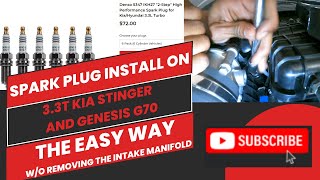
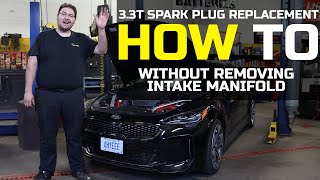
- (DIY Alternative) Consider the 'no manifold removal' method for rear plug/coil access using swivels and extensions, as documented on forums and YouTube. 🎬 Watch: How to replace rear plugs without removing the intake.
- If ignition components are replaced and the misfire persists, investigate the fuel injector for that cylinder.
- Check for vacuum leaks, especially around the intake manifold gaskets if it was recently removed.
- If multiple random misfires are present and/or code P0088 is stored, investigate the High-Pressure Fuel Pump (HPFP) and check if your VIN is covered by Recall 023G or warranty extension Z05G.
- If all else fails, a mechanical compression test should be performed to rule out internal engine issues.
Parts You'll Likely Need
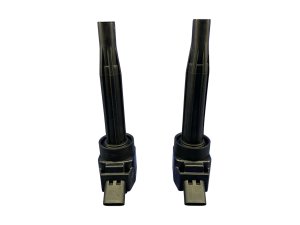
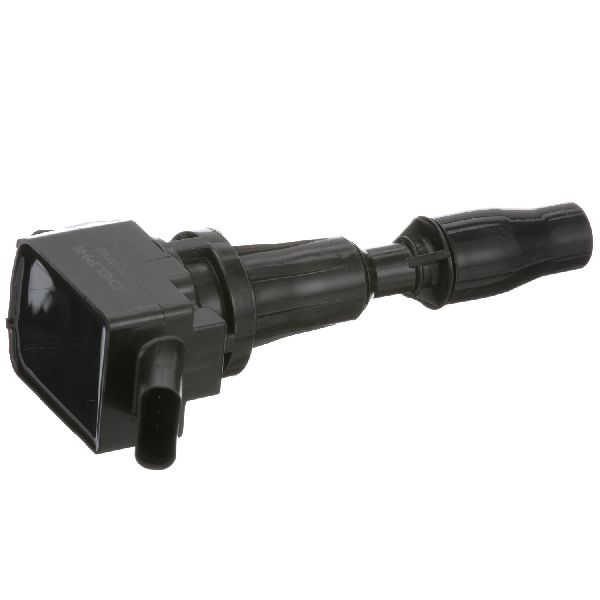
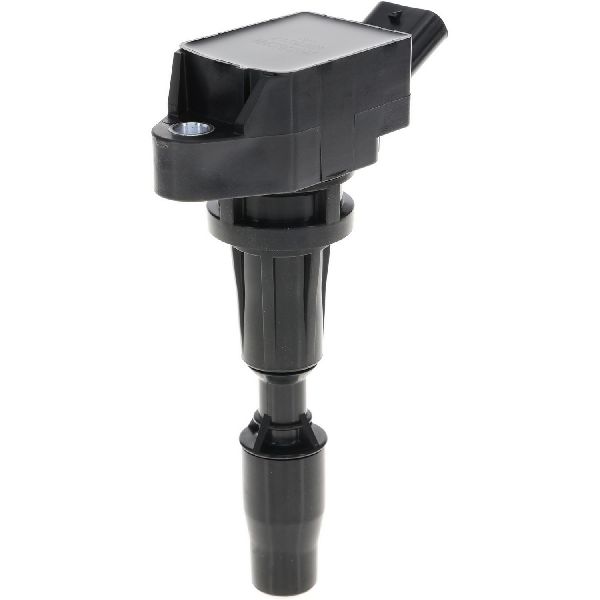
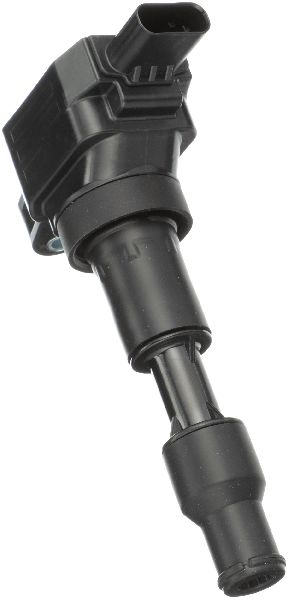
- Ignition Coil (Rear Bank)
(OEM #27310-3L000)— This is the most common cause of misfires on the rear cylinders (1, 3, 5). These are physically different from the front coils and not interchangeable.
Trusted brands: Hyundai/Genesis OE, Delphi, NGK
OEM price range: $70-$100
Aftermarket price range: $50-$80 - Ignition Coil (Front Bank)
(OEM #27310-3L030)— The most common cause of misfires on the front cylinders (2, 4, 6). These are easier to access and replace. Not interchangeable with rear coils.
Trusted brands: Hyundai/Genesis OE, Delphi, NGK
OEM price range: $70-$100
Aftermarket price range: $50-$80 - Spark Plugs
(OEM #18852-09070)— A routine maintenance item with a 42,000-mile replacement interval. Worn plugs are a primary cause of misfires.
Trusted brands: NGK (OEM), Denso Iridium, NGK Ruthenium (for tuned applications)
OEM price range: $25-$35 per plug
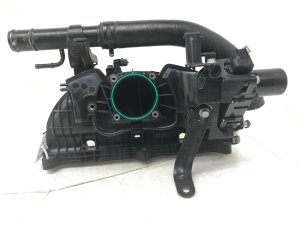
Aftermarket price range: $15-$25 per plug - Upper Intake Manifold Gasket
(OEM #29215-3L100)— This gasket is a mandatory replacement item anytime the upper intake manifold is removed for service on the rear bank to prevent vacuum leaks.
Related Codes That Often Appear With This One
- P0300 — Random Misfire. This code may appear if the misfire is not isolated to a single cylinder, often pointing towards a systemic issue like a vacuum leak or a failing High-Pressure Fuel Pump (HPFP).
- P0301, P0302, P0303, P0304, P0305, P0306 — These codes specify which cylinder is misfiring (e.g., P0301 is Cylinder 1). P0363 is triggered when one of these specific misfires becomes severe enough for the ECU to cut fuel.
- P0088 — 'Fuel Rail/System Pressure - Too High'. This code often points to a failing High-Pressure Fuel Pump (HPFP), which is a known cause of misfires and power loss on this platform. This code is specifically mentioned in Genesis Recall 023G.
Technical Service Bulletins (TSBs) & Recalls
- TSB 24-01-076G / Recall 023G: Addresses failing High-Pressure Fuel Pumps (HPFP) that can cause a rich condition, loss of power, and trigger code P0088.
- Warranty Extension Z05G: Extends the warranty for the HPFP to 15 years or 150,000 miles for the issue described in Recall 023G.
Platform-Specific Known Issues
- Low-Mileage Coil Failure: A user on a Genesis G70 forum reported their 8-month-old G70 3.3T with only 19,000 miles threw a P0303 (Cylinder 3 Misfire) code. The dealership diagnosed a bad ignition coil pack, ordered the part, and replaced it under warranty, resolving the issue. This highlights that coil failure is not just a high-mileage problem.
- DIY Spark Plug Replacement Shortcut: → Shop Spark Plug Multiple owners and videos have documented a method to replace all six spark plugs without performing the 3-4 hour job of removing the upper intake manifold. The process involves using a combination of wobble extensions and swivel sockets to access the rear cylinders, particularly the most difficult middle cylinder (Cylinder 5). One popular method involves removing the rearmost coil (Cylinder 6) to create space to slide the middle coil (Cylinder 5) out towards the back. This can reduce a $1000+ dealer job to a 1-2 hour DIY.
- Intermittent Misfire Leading to HPFP Diagnosis: An owner on Reddit described a recurring issue where the car would enter limp mode with a rough idle and flashing CEL shortly after a cold start. The issue would resolve upon restarting the engine. After multiple dealer visits failed to find a stored code, the owner used their own OBD-II scanner and found a history of codes for all six cylinders misfiring (P0301-P0306) and a camshaft position code, leading to the conclusion that the High-Pressure Fuel Pump (HPFP) was the likely culprit, a known issue on this platform.
Mechanic-Grade Diagnostic Values
- Fuel Injector Resistance — expected: 12.5–13.5 Ohms. Failure: A reading outside this range, or an open/infinite reading, indicates a failed injector coil.
- Low-Side Fuel Pressure (In-tank pump) — expected: 40 to 60 psi. Failure: Pressure outside this range indicates a problem with the in-tank fuel pump.
- High-Side Fuel Pressure (HPFP, under load) — expected: Up to 150 Bar (~2,175 psi). Failure: Significantly low or fluctuating pressure can indicate a failing High-Pressure Fuel Pump (HPFP).
Hidden / Shadow Codes Worth Checking
- Mode $06, Test ID $A2-$AF: This is not a traditional code but a diagnostic mode that stores raw, non-CEL-triggering misfire counts for each cylinder. It allows a technician to see intermittent misfires that haven't yet met the threshold to set a P030x code. (see via An advanced OBD-II scanner or a professional tool like the Genesis GDS that can display Mode 6 data.)
Scan Tool Commands That Help
- Genesis GDS (or equivalent professional scanner): Data Analysis / Misfire Counter — To monitor live misfire counts per cylinder, which is crucial for confirming an active misfire and verifying a repair's effectiveness without waiting for a DTC to set.
- Genesis GDS (or equivalent professional scanner): Cylinder Power Balance Test — This test electronically disables one cylinder at a time and measures the RPM drop. It helps confirm which cylinder is not contributing power, isolating the source of the misfire.
- Genesis GDS (or equivalent professional scanner): Injector Activation Test / Fuel Injector Kill — After ruling out ignition components (plugs, coils), this bidirectional test can command a specific injector to stop firing. If there is no change in engine RPM when a cylinder's injector is 'killed', it confirms that cylinder was not contributing in the first place.
Real Owner Repair Stories
- Reddit user, r/GenesisG70 (2023 Genesis G70 3.3T, 46,000 miles) — Intermittent limp mode on cold starts, sudden loss of 99% power, rough rumbling engine. Turning the car off and on would temporarily fix it. A small 'pop' was heard once before power loss.
❌ Tried (didn't work) Initial dealership visit found no codes and could not reproduce the issue.
✅ What actually fixed it Owner purchased an OBD scanner and found codes P0301-P0306 (misfire on all cylinders). The final suspected diagnosis was a failing High-Pressure Fuel Pump (HPFP). - Reddit user, r/GenesisG70 (2023 Genesis G70 3.3T, 19,000 miles) — Check Engine Light with code P0303 (Cylinder 3 Misfire).
✅ What actually fixed it The dealer diagnosed and replaced a faulty ignition coil pack for cylinder 3. - Reddit user, r/GenesisG70 (2021 CPO Genesis G70) — Popping noise like an exhaust backfire, multiple misfire codes detected by the dealer, with cylinder 2 being the primary fault.
❌ Tried (didn't work) The owner purchased the car as Certified Pre-Owned, assuming it was in perfect condition.
✅ What actually fixed it The dealer discovered the vehicle had been previously modified with incorrect aftermarket spark plugs, which were causing the misfire. Replacing them with OEM plugs resolved the issue.
Model Year Variations Within This Range
- 2022-2023: The 2022 model year introduced a facelift with revised styling, a larger infotainment screen, and an optional active exhaust. However, the core Lambda II 3.3T engine, ignition system (coils, plugs), and fuel system architecture related to misfire codes remained unchanged from the 2019-2021 models.
Diagnostic Flowchart
Other Known Issues on This Vehicle
Issues unrelated to this code that are worth knowing about as an owner of this generation:
- Warping of OEM Brembo Brake Rotors 🟠 Medium — Very common, especially on early model years (2019-2021). Owners report steering wheel vibration under braking, often starting before 20,000 miles. Many owners upgrade to aftermarket rotors and pads to solve the issue permanently.
- Rear Differential Whine/Noise (LSD-equipped models) 🟠 Medium — A notable number of owners with RWD Sport Prestige models (which have a Limited-Slip Differential) report a whining or groaning noise from the rear end, particularly during low-speed turns. The cause is debated, with some attributing it to incorrect factory fluid and others to normal LSD operation.
- Harsh Downshifts in Transmission 🟡 Low — Frequently mentioned complaint, especially in stop-and-go traffic where the 3-2 and 2-1 downshifts can feel jerky or abrupt. It's more of a comfort and refinement issue than a reliability concern.
- Oxidation of Dark Chrome Trim 🟡 Low — The dark chrome window trim and grille surround on Sport models can develop a milky or oxidized appearance. This is a cosmetic issue, often covered under warranty.
- Sunroof Rattle 🟡 Low — Some owners report a rattling noise from the sunroof assembly when closed. It is often fixed under warranty by applying lubricant or adjusting the mechanism.
Used vs. New Parts: Buying Guide for This Vehicle
When a used part is the smart pick: For this repair, used parts are generally not recommended. The primary failure components (ignition coils, spark plugs) are wear items. The labor cost, especially for the rear bank, is too high to risk installing a used part with an unknown service life. A used intake manifold is a viable option if the original is damaged during service, but this is rare.
Donor-vehicle mileage cap: roughly under 15000 miles for the part to have meaningful remaining life.
What to inspect on the donor part:
- For ignition coils, avoid any with cracks in the plastic housing or corrosion on the electrical connector.
- If the coil boot is swollen or stained with oil, the donor engine had a valve cover leak, and the coil's life may be compromised.
- Verify the part number on the coil matches the bank you are servicing (front and rear are different and not interchangeable).
OEM-only on this vehicle (don't cheap out):
- Upper Intake Manifold Gasket
Aftermarket brands forum-validated for this vehicle:
- Ignition Coils: Delphi, NGK
- Spark Plugs: NGK (OEM), Denso Iridium, HKS M45IL (for tuned applications)
Brands owners have reported issues with on this vehicle:
- Unbranded, 'no-name' ignition coil packs from online marketplaces. While cheaper, they have a high failure rate and are not worth the risk given the labor involved in replacement.
Real Owner Stories
Aggregated from forums and TSBs cited above. Mileages and costs reflect what owners reported in those sources.
2019-2023 Genesis G70 3.3T — 19000 miles
Symptoms: The car threw a P0303 (Cylinder 3 Misfire) code. The vehicle was only 8 months old at the time of the failure.
What fixed it: The dealership diagnosed a bad ignition coil pack and replaced it under warranty.
Source hint: Genesis G70 forum thread 'check-engine-light-cylinders-not-firing-correctly.3587'
2019-2023 Genesis G70 3.3T — 47000 miles
Symptoms: Misfire issues where the coil boot tore and became stuck to the spark plug due to heat and wear.
What fixed it: Replacement of spark plugs and coils; the owner noted the difficulty of the 42k-mile service interval.
Source hint: Reddit r/GenesisG70 'just_did_spark_plug_service'
2019-2023 Genesis G70 3.3T
Symptoms: Intermittent limp mode with a rough idle and flashing CEL shortly after a cold start. The issue would resolve after restarting the engine. No codes were initially stored at the dealer.
What fixed it: After the owner found history codes for all six cylinders misfiring (P0301-P0306) and a camshaft position code, the High-Pressure Fuel Pump (HPFP) was identified as the culprit.
Source hint: Reddit r/GenesisG70 'engine_troubles_help_from_the_boys'
Related OBD-II Codes
Frequently Asked Questions
Is there a recall for the 3.3T engine that could cause multiple misfire codes?
Do I really have to remove the intake manifold to change the spark plugs on my G70?
What is the recommended spark plug service interval for the 3.3L Twin-Turbo engine?
Why did my G70 start misfiring at only 19,000 miles?
If I have a misfire on Cylinder 5, should I replace all the coils?
Can a bad fuel injector cause a gasoline smell in my oil?
Helpful Videos

Used OEM Parts in Stock
New Aftermarket Parts Available


The information in this article is provided for general reference and educational purposes only. Vehicle specifications, procedures, and part compatibility can vary by production date, trim level, and region. Always consult your vehicle's factory service manual and verify part numbers before purchasing or performing repairs. Safety-critical components such as airbags, seat belts, and braking systems should be installed by a qualified professional.
- Genesis G70:
- 🧭 Diagnostic Flowchart
- 🎬 Helpful Videos
- 🛍️ Shop This Part
- What's Unique About the 2019-2023 Genesis G70
- Symptoms You May Notice
- Most Likely Causes
- Rare But Worth Checking
- Diagnosis Steps
- Parts You'll Likely Need
- Related Codes That Often Appear With This One
- Technical Service Bulletins (TSBs) & Recalls
- Platform-Specific Known Issues
- Mechanic-Grade Diagnostic Values
- Hidden / Shadow Codes Worth Checking
- Scan Tool Commands That Help
- Real Owner Repair Stories
- Model Year Variations Within This Range
- Other Known Issues on This Vehicle
- Used vs. New Parts: Buying Guide for This Vehicle
- Real Owner Stories
- 2019-2023 Genesis G70 3.3T — 19000 miles
- 2019-2023 Genesis G70 3.3T — 47000 miles
- 2019-2023 Genesis G70 3.3T
- Related OBD-II Codes
- Frequently Asked Questions
- 🎟️ Get 5% Off