

P0363 on 2022 Kia Carnival 3.5L V6: Misfire Detected & Fuel Cutoff Fixes
Code P0363 on a 2022 Kia Carnival means a severe misfire has occurred, and the engine's computer has cut fuel to that cylinder to protect the catalytic converter. The most common causes are a faulty ignition coil or a worn spark plug. A failing fuel injector is also a strong possibility, as noted in a Kia Technical Service Bulletin for this specific engine.
- P0363 is a serious code indicating a severe misfire; stop driving immediately to prevent expensive catalytic converter damage.
- Always check for the accompanying P030x code (e.g., P0304) to know which cylinder to focus your diagnosis on.
- The easiest and most common fix is a bad ignition coil or spark plug. Diagnose this first by swapping parts between cylinders.
- If ignition parts are good, a faulty fuel injector is a strong possibility for this specific vehicle, as noted in a Kia TSB.
- Check if your Carnival is affected by safety recalls SC211 or SC368, as they involve fuel system issues that could cause this code.
What's Unique About the 2022-2022 Kia Carnival
The 2022 Kia Carnival uses a modern 3.5L Lambda III 'Smartstream' V6 with a dual injection system (Gasoline Direct Injection - GDI and Multi-Port Injection - MPI). While ignition components are a common cause of misfires on most engines, this specific platform has a Technical Service Bulletin (TSB FUE060) pointing to faulty high-pressure fuel injectors as a potential cause for related air-fuel imbalance codes. Additionally, early production 2022 models were subject to recalls related to the fuel delivery system (SC211 for a damaged MPI fuel rail and SC368 for a loose high-pressure fuel pipe), which could potentially lead to misfire conditions.
Symptoms You May Notice
- Flashing Check Engine Light
- Solid Check Engine Light
- Engine shaking, stumbling, or vibrating, especially at idle
- Significant loss of engine power
- Engine stalling or difficulty starting
- Rough or uneven acceleration
- Noticeable fuel smell from the exhaust
- Replacing oxygen sensors. While an O2 sensor can report a fuel mixture problem, it rarely causes a single-cylinder misfire severe enough to trigger P0363.
- Replacing the catalytic converter. The catalytic converter can be damaged by a misfire, but it is not the cause of the misfire itself. P0363 is a code meant to protect the converter, not indicate its failure.
Most Likely Causes
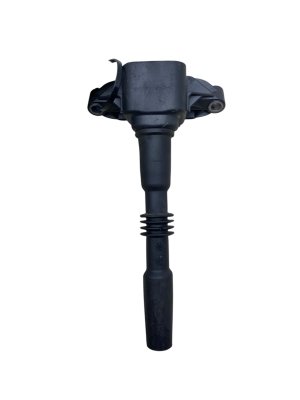
- Failed Ignition Coil 🔴 High Probability → Shop Ignition Coil Ignition coils are a common wear item on modern engines, failing from constant heat cycles and electrical stress. This is a primary cause of single-cylinder misfires on Kia's V6 engines.
How to confirm: Use a scan tool to identify the specific misfiring cylinder (e.g., P0301 for cylinder 1). Swap the ignition coil from the misfiring cylinder with one from a known good cylinder. Clear the codes and run the engine. If the misfire code follows the coil (e.g., changes to P030x for the new cylinder), the coil is bad.
Typical fix: Replace the faulty ignition coil. It is best practice to also replace the spark plug for that cylinder at the same time.
Est. part cost: $40-$80 - Worn or Fouled Spark Plug 🔴 High Probability → Shop Spark Plug Spark plugs are a routine maintenance item with a finite lifespan. An old plug with a wide gap can strain the ignition coil, leading to a weak or inconsistent spark and causing a misfire. The recommended service interval is typically between 75,000 and 100,000 miles.
How to confirm: After confirming the ignition coil is good, inspect the spark plug in the misfiring cylinder. Look for signs of wear, carbon fouling, oil, or damage to the electrode or ceramic insulator. Compare it to a new plug.
Typical fix: Replace the faulty spark plug. It is highly recommended to replace all six spark plugs as a set if they are near the end of their service interval.
Est. part cost: $15-$30 per plug - Faulty High-Pressure Fuel Injector 🟡 Medium Probability → Shop Fuel Injector Kia issued a TSB (FUE060) for 2022 Carnivals with the 3.5L GDI engine for issues with cylinder air-fuel ratio imbalance, which requires the replacement of the high-pressure fuel injector(s). GDI injectors operate under extreme pressure and can be susceptible to clogging or failure.
How to confirm: This is more difficult to diagnose. After ruling out spark plugs and coils, a professional technician may need to perform a fuel injector balance test with a capable scan tool or check injector data streams. The presence of codes like P219C-P21A1 is a strong indicator. 🎬 See this step-by-step GDI injector diagnosis and replacement guide
Typical fix: Replace the faulty fuel injector and its associated seals and clips. Per TSB FUE060, the high-pressure fuel pipe and cross-over pipe must also be replaced anytime an injector is serviced.
Est. part cost: $100-$200 per injector, plus required pipes - Low Fuel Pressure ⚪ Low Probability Kia issued recall SC368 for 2022-2026 Carnivals because fuel pipe nuts on the high-pressure cross-over pipe could loosen, causing a fuel leak and a drop in fuel pressure. Recall SC211 also affected early 2022 models (Jan-Mar 2021 build dates) for a potentially damaged Multi-Port Injection (MPI) fuel rail tube. A significant pressure drop could cause a misfire.
How to confirm: Check if the vehicle is part of recall SC368 or SC211 by entering the VIN on the NHTSA website. A visual inspection for fuel leaks around the fuel rails or a fuel smell in the engine bay are key indicators. A technician can measure fuel rail pressure to confirm it is within specification.
Typical fix: Have the recall service performed by a Kia dealer, which involves inspecting, tightening, or replacing the fuel pipes as necessary, free of charge.
Est. part cost: $0 if covered by recall
Rare But Worth Checking
- Intake Valve Carbon Buildup: While the Lambda III engine has a dual injection system (GDI and MPI) specifically to help keep valves clean by washing them with fuel at lower loads, heavy carbon deposits can still form over time and restrict airflow, leading to misfires. This is less likely on a newer vehicle but still possible depending on driving habits and fuel quality.
- Mechanical Engine Failure: In rare cases, a misfire can be caused by a loss of compression due to internal engine problems like a bad valve, worn piston rings, or a timing chain issue. This is unlikely on a 2022 model but should be considered if all other causes are ruled out via a compression test.
- PCM or Wiring Issue: Extremely rare, but a fault within the Powertrain Control Module (PCM) itself or damage to the wiring harness for the ignition coil or fuel injector could cause a misfire on a single cylinder. This is typically a last resort after all other components have been verified as functional.
Diagnosis Steps
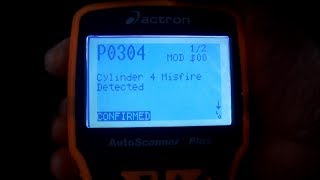
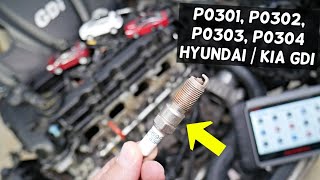
- Use an OBD-II scanner to confirm code P0363 and look for the accompanying P030x code (e.g., P0301-P0306) to identify the exact misfiring cylinder. 🎬 Watch this video to understand specific cylinder misfire codes
- Visually inspect the engine bay for any obvious issues like disconnected vacuum hoses, damaged wiring, or signs of a fuel leak around the fuel rails. Check for a strong fuel smell.
- Swap the ignition coil from the misfiring cylinder with a coil from an adjacent, working cylinder. Clear the codes and run the engine. If the misfire code moves to the new cylinder, the ignition coil is faulty.
- If the misfire remains on the original cylinder, perform the same swap test with the spark plug. If the code moves, the spark plug is the culprit.
- If the coil and plug are good, the problem is likely fuel-related or mechanical. Check the vehicle's VIN for open recalls on the NHTSA website, specifically SC211 (early 2022 models) and SC368.
- If no recalls apply or the issue persists, the fuel injector is the next likely suspect, especially if air-fuel imbalance codes (P219C-P21A1) are also present. Diagnosis and replacement are best left to a professional due to the high-pressure GDI system.
- If all else fails, a mechanical compression test should be performed to check for internal engine problems like poor valve seating or worn piston rings.
Parts You'll Likely Need
- Ignition Coil
(OEM #27301-3L100)— This is one of the most common causes of a single-cylinder misfire on modern Kia V6 engines.
Trusted brands: Denso, NGK, Delphi
OEM price range: $60-$100
Aftermarket price range: $40-$80 - Iridium Spark Plug
(OEM #18877-11075)— As a primary ignition component and routine maintenance item, a worn or fouled spark plug is a high-probability cause of a misfire.
Trusted brands: NGK, Denso, Bosch
OEM price range: $20-$30
Aftermarket price range: $15-$25 - High-Pressure Fuel Injector — A known issue for this platform, cited in TSB FUE060, especially if codes P219C-P21A1 are present.
Trusted brands: OEM (Kia/Hyundai)
OEM price range: $120-$220
Related Codes That Often Appear With This One
- P0300 — This code for 'Random/Multiple Cylinder Misfire' may appear before the PCM isolates the consistent misfire to a single cylinder and sets P0363.
- P0301, P0302, P0303, P0304, P0305, P0306 — P0363 will almost always be accompanied by one of these codes, which identifies the specific cylinder that is misfiring (e.g., P0301 for Cylinder 1). This is crucial for diagnosis.
- P219C - P21A1 — These codes indicate a cylinder air-fuel ratio imbalance. TSB FUE060 specifically links these codes to faulty fuel injectors on the 2022 Carnival 3.5L, which is a root cause of misfires.
Technical Service Bulletins (TSBs) & Recalls
- TSB FUE060: Cylinder Air-Fuel Ratio Imbalance
- TSB SC211: Safety Recall Campaign for MPI Fuel Rail Inspection and Replacement
- TSB SC368: Safety Recall Campaign for High-Pressure Fuel Pipe Inspection
Platform-Specific Known Issues
- TSB FUE060: For some 2022 Carnivals produced between Jan 26, 2021, and Nov 10, 2021, the PCM may store air-fuel ratio imbalance codes (P219C-P21A1) caused by a faulty high-pressure fuel injector, which can lead to misfires. The fix involves replacing the injector, clips, and fuel pipes.
- Recall SC368 / NHTSA 26V232000: Affects 2022-2026 Carnivals for a high-pressure fuel pipe nut that could loosen, causing a fuel leak and pressure drop. The fix involves inspection and tightening or replacement by a dealer.
Mechanic-Grade Diagnostic Values
- High-Pressure (GDI) Fuel Injector Resistance — expected: ~2.2 Ohms. Failure: An open circuit (infinite resistance) or a reading significantly different from other injectors indicates a failure.
- Low-Pressure Fuel System Pressure (at idle) — expected: ~55-65 PSI. Failure: Pressure significantly below this range points to a weak in-tank fuel pump or a clogged filter.
- High-Pressure Fuel System Pressure (under load) — expected: ~2,000 - 2,900 PSI. Failure: Pressure that fails to reach or maintain these levels under load indicates a failing High-Pressure Fuel Pump (HPFP).
- Ignition Coil Primary Winding Resistance — expected: ~0.8 - 1.2 Ohms. Failure: A reading outside this range or an open circuit (OL) suggests a faulty primary winding.
- Ignition Coil Secondary Winding Resistance — expected: ~6 - 10 kOhms (kilo-ohms). Failure: A reading significantly outside this range or an open circuit (OL) points to a failure in the secondary winding.
- Ignition Coil Connector Voltage (Key On, Engine Off) — expected: ~12 Volts (Battery Voltage). Failure: If no voltage is present, it indicates a problem with the fuse, relay, or wiring harness leading to the coil.
Hidden / Shadow Codes Worth Checking
- Mode $06 Misfire Counts: Even if a specific P030x code isn't set, the PCM tracks misfire events for each cylinder. A technician can view this raw data using a capable scan tool to see which cylinder is accumulating misfires before it's severe enough to trigger a code. (see via A scan tool with Mode $06 data viewing capability. Look for Test ID $A2 through $AD (for an 8-cylinder, V6 will be fewer) which correspond to misfire counts for each cylinder.)
Scan Tool Commands That Help
- Kia GDS (Global Diagnostic System): Power Balance Test — This function allows a technician to sequentially disable the fuel injector to each cylinder while monitoring the RPM drop. If disabling a cylinder causes little or no change in RPM, that cylinder is the one misfiring. This is a definitive way to confirm the misfiring cylinder after P0363 has been set.
- Kia GDS (Global Diagnostic System): Fuel Injector Actuation Test — This bidirectional command forces a specific fuel injector to operate (click). It's used to verify that the injector's coil is functional and that the wiring from the PCM to the injector is intact. It is a key step before condemning a fuel injector that is suspected of being electrically faulty.
- Professional Scan Tool: Fuel Pressure Control — Allows the technician to command the low-pressure fuel pump to run and observe pressure readings on a gauge. This helps diagnose a weak in-tank pump without having to start the engine.
OEM Part Supersession History
27301-3L100→27310-3N200 (Front Bank), 27310-3N290 (Rear Bank)— Updated design for reliability or manufacturing change. The front and rear bank coils now have different part numbers.
Heads up: While the original 27301-3L100 may have been universal, the newer parts are bank-specific. Ensure the correct part is ordered for the front (cylinders 2, 4, 6) or rear (cylinders 1, 3, 5) bank.
Diagnostic Flowchart
Other Known Issues on This Vehicle
Issues unrelated to this code that are worth knowing about as an owner of this generation:
- Power Sliding Door Malfunction 🔴 High — Widespread issue affecting 2022-2023 models, leading to multiple recalls and a class-action lawsuit. Doors may not auto-reverse when obstructed, posing an injury risk. (Ref: Recall SC266 (software update), NHTSA Investigation PE22004)
- Spontaneously Cracking Windshields 🟠 Medium — Frequently reported by owners on forums and to the NHTSA. Owners report windshields are prone to cracking from minor impacts or even spontaneously overnight, suggesting a potential glass quality issue.
- Power Sliding Door May Not Latch 🔴 High — An early production issue affecting ~3,000 2022 models. A faulty remote controller assembly could cause the passenger-side sliding door latch to stick open, allowing the door to slide open while driving. (Ref: Recall for part number 814C2-R0100)
- Potential for Oil Consumption 🟡 Low — While the 3.5L Lambda III engine is not part of the major Hyundai/Kia engine problem recalls, some owners of related engines have noted oil consumption. The recommended oil is full synthetic 0W-20, with a capacity of 6.4-6.5 quarts. Regular oil level checks are advised.
Used vs. New Parts: Buying Guide for This Vehicle
When a used part is the smart pick: Used parts are generally not recommended for fixing a P0363 code on this vehicle. The primary causes are wear items (plugs, coils) or precision components (injectors) where remaining life is uncertain. A used ignition coil could be considered in an emergency or for temporary diagnosis, but not as a permanent fix.
Donor-vehicle mileage cap: roughly under 40000 miles for the part to have meaningful remaining life.
What to inspect on the donor part:
- For an ignition coil, check for cracks in the plastic housing.
- Ensure the connector pins are clean and free of corrosion.
- Avoid any parts from a vehicle that shows signs of a major engine fire, flood, or severe front-end collision.
OEM-only on this vehicle (don't cheap out):
- High-Pressure Fuel Injector: Due to the precision required, the specific flow rates, and the TSB associated with this part, only new OEM injectors should be used.
- High-Pressure Fuel Pipe: This is a one-time-use part per Kia's service information. It must be replaced with a new OEM part anytime it is loosened or removed to prevent dangerous high-pressure fuel leaks.
Aftermarket brands forum-validated for this vehicle:
- Ignition Coils: Denso, NGK, Delphi
- Spark Plugs: NGK, Denso
Brands owners have reported issues with on this vehicle:
- Unbranded, 'white box' ignition coils and fuel injectors from online marketplaces. These often have high failure rates and do not meet OEM specifications, leading to repeat misfires.
Real Owner Stories
Aggregated from forums and TSBs cited above. Mileages and costs reflect what owners reported in those sources.
2022 Kia Carnival 3.5L GDI
Symptoms: The vehicle experienced a cylinder air-fuel ratio imbalance, leading to engine misfire symptoms and the storage of diagnostic codes.
What fixed it: Replacement of the high-pressure fuel injector, clips, and fuel pipes as specified in the technical service bulletin.
Source hint: TSB FUE060: Cylinder Air-Fuel Ratio Imbalance
2022 Kia Carnival 3.5L V6
Symptoms: Potential fuel leak and a drop in fuel pressure due to a high-pressure fuel pipe nut that could loosen.
What fixed it: Inspection and tightening or replacement of the high-pressure fuel pipe by a dealer.
Cost: $0-$0
Source hint: Recall SC368 / NHTSA 26V232000
2022 Kia Carnival (Jan-Mar 2021 build)
Symptoms: Issues stemming from a potentially damaged Multi-Port Injection (MPI) fuel rail tube.
What fixed it: MPI fuel rail inspection and replacement.
Cost: $0-$0
Source hint: TSB SC211: Safety Recall Campaign for MPI Fuel Rail Inspection and Replacement
Related OBD-II Codes
Frequently Asked Questions
My 2022 Carnival is shaking at idle and has a flashing check engine light; could this be related to the fuel pipe recall?
Does TSB FUE060 apply to my 2022 Kia Carnival 3.5L GDI?
If I need to replace a fuel injector under TSB FUE060, what other parts are required?
I have an early 2022 Carnival built in February 2021; is there a specific fuel rail issue I should know about?
How often should I replace the spark plugs on my 3.5L Lambda III V6 to prevent misfire codes like P0363?
Can a faulty ignition coil cause the P0363 code on my Carnival?
Helpful Videos

Used OEM Parts in Stock
New Aftermarket Parts Available

The information in this article is provided for general reference and educational purposes only. Vehicle specifications, procedures, and part compatibility can vary by production date, trim level, and region. Always consult your vehicle's factory service manual and verify part numbers before purchasing or performing repairs. Safety-critical components such as airbags, seat belts, and braking systems should be installed by a qualified professional.
- Kia Carnival:
- 🧭 Diagnostic Flowchart
- 🎬 Helpful Videos
- 🛍️ Shop This Part
- What's Unique About the 2022-2022 Kia Carnival
- Symptoms You May Notice
- Most Likely Causes
- Rare But Worth Checking
- Diagnosis Steps
- Parts You'll Likely Need
- Related Codes That Often Appear With This One
- Technical Service Bulletins (TSBs) & Recalls
- Platform-Specific Known Issues
- Mechanic-Grade Diagnostic Values
- Hidden / Shadow Codes Worth Checking
- Scan Tool Commands That Help
- OEM Part Supersession History
- Other Known Issues on This Vehicle
- Used vs. New Parts: Buying Guide for This Vehicle
- Real Owner Stories
- 2022 Kia Carnival 3.5L GDI
- 2022 Kia Carnival 3.5L V6
- 2022 Kia Carnival (Jan-Mar 2021 build)
- Related OBD-II Codes
- Frequently Asked Questions
- 🎟️ Get 5% Off