

P0363 on 2018-2023 Kia Stinger 3.3T: Misfire Detected & Fuel Cutoff Causes and Fixes
On a 2018-2023 Kia Stinger 3.3T, code P0363 is almost always caused by a bad ignition coil or worn-out spark plugs. Expect to pay $150-$300 for a DIY fix involving one new coil and a full set of six spark plugs. This code indicates a severe misfire, and you should not drive the vehicle.
- P0363 means the engine is misfiring so badly that the computer has shut off fuel to a cylinder to protect the catalytic converter. Do not drive the vehicle.
- Check for an accompanying code (P0301-P0306) to know which cylinder is at fault.
- The most likely cause on a Stinger 3.3T is a bad ignition coil or a worn spark plug.
- Diagnose by swapping the ignition coil from the bad cylinder to a good one. If the misfire code follows the coil, you've found the problem.
- Spark plugs should be replaced every 42,000 miles as preventative maintenance to avoid this issue.
What's Unique About the 2018-2023 Kia Stinger
The Kia Stinger's Lambda II 3.3L is a twin-turbocharged, gasoline direct injection (GDI) engine. This high-performance design puts significant stress on ignition components, leading to a shorter lifespan for spark plugs, which have a recommended replacement interval of around 42,000 miles. Ignition coil failures are also a well-documented common issue on this platform, making these two items the primary suspects for any misfire-related code. The passenger side cylinders (1, 3, 5) are notoriously difficult to access for spark plug and coil replacement due to the intake manifold's position, leading to higher labor costs if not doing a DIY repair.
Symptoms You May Notice
- Flashing or solid Check Engine Light
- Sudden loss of power
- Engine shaking, vibrating, or running rough, especially at idle
- Hesitation during acceleration
- Possible engine stalling
- Smell of gasoline from the exhaust (less common due to fuel cutoff)
- Replacing the crankshaft or camshaft position sensors. While these sensors are critical for timing, they are not a common cause for a single-cylinder misfire on this platform; the issue is almost always spark, coil, or fuel related to a specific cylinder.
Most Likely Causes
- Worn or Faulty Spark Plugs 🔴 High Probability → Shop Spark Plug The twin-turbo GDI engine is hard on spark plugs, with a recommended service interval of only 42,000 miles. They are a very common failure point leading to misfires. Many owners who tune their vehicles opt for one-step-colder plugs like the HKS M45iL to prevent pre-ignition.
How to confirm: Inspect the spark plug from the misfiring cylinder (identified by the accompanying P030x code). Look for wear, fouling, or an incorrect gap. Given the service interval, if the vehicle is over 40,000 miles and they are original, they should be replaced regardless of appearance.
Typical fix: Replace all six spark plugs as a set. Ensure they are gapped correctly. The stock gap is typically 0.028-0.032 inches. For popular aftermarket HKS M45iL plugs, the pre-gap is 0.028", but many tuners recommend a tighter gap of 0.022"-0.025" for modified cars.
Est. part cost: $90-$180 - Faulty Ignition Coil 🔴 High Probability → Shop Ignition Coil Ignition coil failure is a widely documented issue on the Stinger and its platform mates (Genesis G70), with many owners reporting failures even at relatively low mileage.
How to confirm: Swap the ignition coil from the misfiring cylinder with a coil from a known good cylinder. Clear the codes and drive the car. If the misfire code moves to the new cylinder (e.g., P0302 becomes P0304 after swapping coils from cylinder 2 to 4), the coil is bad. This is the definitive DIY diagnostic step.
Typical fix: Replace the single faulty ignition coil. It is also wise to replace the spark plug in that cylinder at the same time. Some owners choose to replace all six coils as a preventative measure if one fails.
Est. part cost: $40-$90 - Intake Valve Carbon Buildup 🟡 Medium Probability As a GDI engine, fuel is injected directly into the cylinder, so it does not wash over and clean the intake valves. Over time, oil vapor from the PCV system can bake onto the valves, restricting airflow and causing misfires, typically becoming an issue between 40,000 and 80,000 miles.
How to confirm: This requires a borescope inspection of the intake ports and valves, which is typically done by a professional mechanic. Symptoms like a gradual loss of performance or rough idle that isn't fixed by plugs/coils can point to this.
Typical fix: The intake manifold must be removed and the valves cleaned, usually through walnut blasting. This service costs between $400 and $800 at an independent shop or dealer.
Est. part cost: $0 (service cost is labor) - Clogged or Faulty Fuel Injector ⚪ Low Probability → Shop Fuel Injector
How to confirm: If spark and coil are confirmed good, the injector is the next suspect. A professional can perform a flow test, or you can swap injectors between cylinders, though this is much more labor-intensive than swapping coils. A user on a Genesis G70 forum reported smelling gas on acceleration with a P0305 code, which pointed to an injector issue after plugs and coils were ruled out.
Typical fix: Replace the faulty fuel injector. This is a high-pressure system and may require specialized tools and procedures.
Est. part cost: $100-$200
Rare But Worth Checking
- High-Pressure Fuel Pump (HPFP) Failure: Recall SC281 was issued for 2018-2021 models where the fuel control valve plunger could stick, causing over-pressurization, loss of power, and potential stalling. This could manifest as a misfire.
- Low-Pressure Fuel Pump Issue: Recall SC198 was issued for 2020-2021 models for a potential blockage in the fuel pump's jet nozzle due to plastic burrs from manufacturing, leading to insufficient fuel supply and loss of power.
Diagnosis Steps
- Use an OBD-II scanner to confirm the P0363 code and identify the accompanying P030x code (e.g., P0302). This tells you which cylinder to focus on. The driver's side cylinders are 2, 4, 6 (front to back) and the passenger's side are 1, 3, 5 (front to back).
- Start with the easiest and most likely cause: the ignition coil. Swap the coil from the misfiring cylinder with one from another cylinder (e.g., swap cylinder 2 and 4).
- Clear the codes and drive the vehicle until the check engine light returns.
- Re-scan the codes. If the P030x code has moved to the cylinder where you placed the suspect coil, the coil is faulty and must be replaced.
- If the code remains on the original cylinder, the coil is likely good. Proceed to inspect the spark plug. The passenger side cylinders (1, 3, 5) are difficult to access, but replacement is possible without removing the intake manifold using a combination of wobble sockets, extensions, and swivels.
- Remove the spark plug from the misfiring cylinder. Check for signs of wear, oil fouling, or damage. Check the service history; if plugs have over 42,000 miles, replace all six as a set.
- If the coil and plug are confirmed good, the issue is likely deeper, such as a faulty fuel injector or carbon buildup. At this stage, professional diagnosis with tools like a borescope or fuel injector tester is recommended.
Parts You'll Likely Need
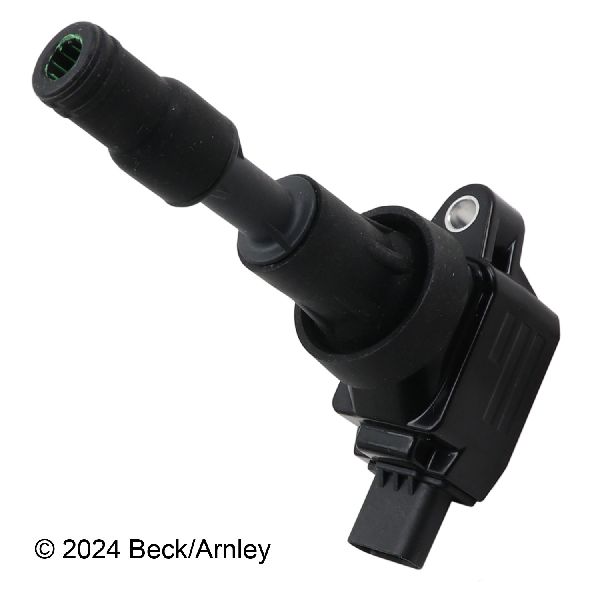
- Ignition Coil
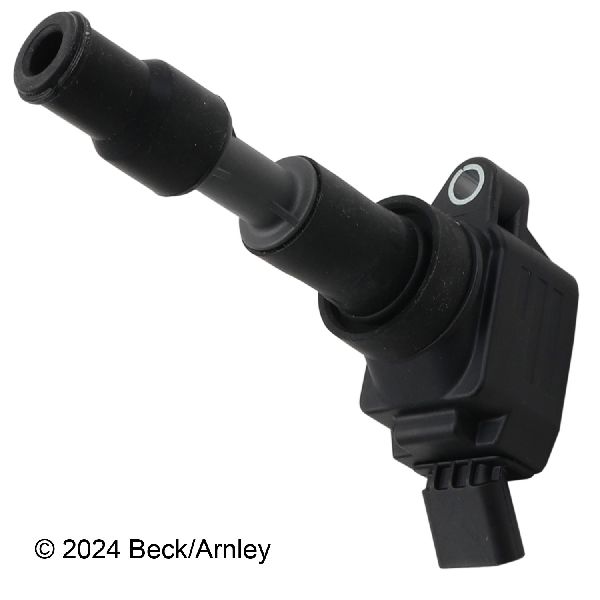
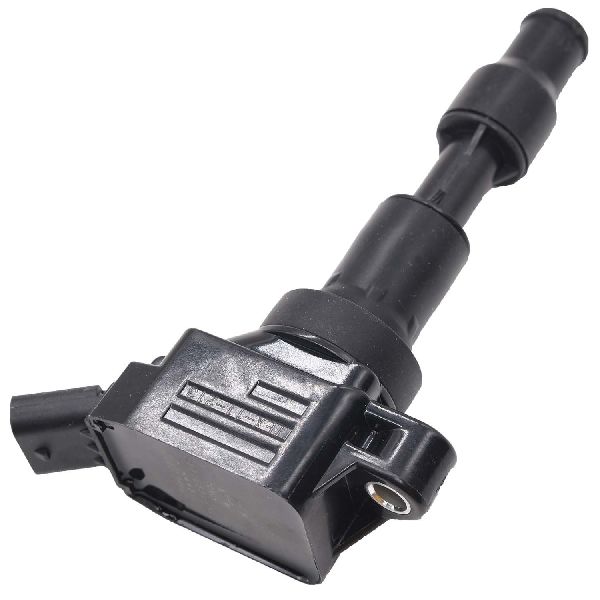
(OEM #27310-3L030)— This is one of the most common failure items on the Stinger 3.3T that directly causes a misfire. The part number 27310-3L030 appears to be the current version, superseding 27310-3L000.
Trusted brands: Kia (OEM), Delphi, NGK, Beck/Arnley, Duralast
OEM price range: $60-$90
Aftermarket price range: $40-$70 - Spark Plug
(OEM #18852-09070)— This is a routine maintenance item with a short life on this engine. Worn plugs are a primary cause of misfires. Tuned vehicles often require one-step-colder plugs.
Trusted brands: NGK (OEM), HKS (M45iL - Colder), Denso
OEM price range: $20-$25 per plug
Aftermarket price range: $15-$30 per plug
Related Codes That Often Appear With This One
- P0300-P0306 — P0363 is a response to a severe misfire. A code between P0301 and P0306 will almost always be present to indicate which specific cylinder is misfiring (e.g., P0302 for Cylinder 2). P0300 indicates a random misfire across multiple cylinders.
Technical Service Bulletins (TSBs) & Recalls
- SC300 / NHTSA 24V-169 - Safety Recall for Left-Hand Turbocharger Oil Feed Pipe and Hose Assembly Replacement due to heat deterioration and fire risk.
- SC198 / NHTSA 20V-560 - Safety Recall for Fuel Pump Jet Nozzle Housing Assembly on 2020-2021 models, which could be blocked by plastic burrs, causing fuel starvation.
- SC281 / NHTSA 23V-634 - Safety Recall for High Pressure Fuel Pump (HPFP) internal plunger sticking on 2018-2021 models, potentially causing loss of power.
- SA468 / TSB FUE051 - Service Action for 2022 models to update ECM logic for improved variable muffler sound in Sport Mode, not directly related to P0363 but relevant engine management software update.
Platform-Specific Known Issues
- Recall SC300: Affects 2018-2023 models. The left-hand turbocharger oil feed pipe can deteriorate from exhaust manifold heat and leak oil, creating a fire risk. Symptoms include a burning smell or visible smoke. Dealers will replace the assembly with an improved part.
- Early generation ignition coils were prone to failure; some owners report upgrading to newer versions to resolve recurring problems.
- Passenger-side spark plug/coil replacement is notoriously difficult due to the intake manifold placement. While many DIY videos and forum posts show it's possible with specific tools (swivel sockets, extensions), some shops will only perform the job by removing the manifold, increasing labor costs significantly.
Mechanic-Grade Diagnostic Values
- Ignition Coil Primary Resistance — expected: 0.3 to 1.5 Ohms. Failure: A reading outside this range, especially an open circuit (infinite resistance), indicates a faulty coil winding.
- Ignition Coil Secondary Resistance — expected: 5,000 to 15,000 Ohms (5kΩ - 15kΩ). Failure: A reading significantly outside this range points to a failure in the secondary windings.
- Fuel Injector Resistance — expected: 11 to 16 Ohms. Failure: Resistance outside this range suggests a failed injector coil.
- Low-Pressure Fuel Pump (In-Tank) Pressure — expected: 40 to 75 PSI. Failure: Pressure below this range would typically cause random misfires (P0300) or a low fuel pressure code (P0087) rather than a single cylinder misfire.
- High-Pressure Fuel Pump (HPFP) Outlet Pressure — expected: Up to 2,900 PSI (200 bar) under load.. Failure: A significant drop in pressure under load, especially on tuned vehicles or those running ethanol blends, can cause misfires. A failing HPFP was the confirmed fix for P0301-P0306 codes in one owner's G70 3.3T.
Scan Tool Commands That Help
- Kia GDS (Global Diagnostic System): Live Data & Graphing — To monitor critical parameters in real-time, such as fuel rail pressure, injector pulse width, and individual cylinder misfire counts (via Mode 6 data) to pinpoint inconsistencies.
- Kia GDS (Global Diagnostic System): Actuator Tests / Component Simulations — To command specific components like a fuel injector to operate, helping to isolate a fault without having to physically swap parts. This is useful for verifying injector function after spark and coil have been ruled out.
- Kia GDS (Global Diagnostic System): ECU Reprogramming / Initialization — Required after replacing certain components like the ECU itself to ensure VIN matching and proper communication. Also used to apply factory software updates that may address underlying logic issues.
Wiring & Ground Locations
- Engine Ground Wiring Assembly — This is a harness (Part #91860-J5010 for the 3.3L) that provides multiple ground points for the engine electrical system.. A corroded or loose ground connection can cause erratic behavior in the ignition system, leading to weak spark and misfires that are difficult to diagnose. Ensuring the main engine grounds are clean and tight is a crucial step if electrical issues are suspected.
- Upper Intake Manifold Gasket — Located between the upper and lower intake manifolds.. This is not a wire, but a critical sealing component. When removing the intake manifold to access the passenger-side cylinders (1, 3, 5), this gasket (OEM #28411-3L100) must be replaced. Reusing the old gasket will almost certainly cause a vacuum leak, leading to new misfire or lean condition codes.
Real Owner Repair Stories
- Reddit user on r/GenesisG70 (2023 Genesis G70 3.3T, 46,000 miles) — Intermittent limp mode on cold starts, OBD scan showed misfires on all cylinders (P0301-P0306).
❌ Tried (didn't work) Initial troubleshooting focused on common ignition components.
✅ What actually fixed it The issue was traced to and resolved by replacing a failing high-pressure fuel pump (HPFP). - Carly forum user (2019 Kia Stinger, 70,698 km) — Check engine light, significant drop in power, hesitation under heavy acceleration, and increased fuel consumption.
❌ Tried (didn't work) Visual inspection of vacuum hoses did not reveal any obvious leaks.
✅ What actually fixed it A smoke test revealed a large vacuum leak. The leak had caused the manifold pressure sensor to become faulty. Replacing the sensor and fixing the leak resolved all symptoms for a repair cost of 235€. - Reddit user on r/GenesisG70 (Genesis G70 3.3T (year not specified)) — Misfire on cylinder 5 (P0305) with no compression.
❌ Tried (didn't work) Not specified, but implies standard ignition/fuel checks were performed before compression test.
✅ What actually fixed it Diagnosis revealed a burnt exhaust valve, requiring engine-out service to repair. This is a known, though rare, mechanical failure mode on this engine platform.
OEM Part Supersession History
27310-3L000→27310-3L030 (or 27301-3L100)— Reports suggest the newer part numbers are revised designs to improve reliability and address premature failures seen in early models. Some sources indicate a change from a two-piece to a one-piece design.
Heads up: One source claims the rear bank (1, 3, 5) and front bank (2, 4, 6) use different part numbers (27310-3L000 for rear, 27310-3L030 for front) and are not interchangeable. This should be verified with a dealer using the vehicle's VIN before ordering.
Model Year Variations Within This Range
- 2022-2023: The 2022 model year introduced a facelift with revised styling, a larger 10.25-inch infotainment screen, and a new variable exhaust system. The 3.3L V6 engine received a minor power bump of 3 horsepower (to 368 hp) due to the new exhaust logic. These changes do not fundamentally alter the diagnosis for P0363, but the variable exhaust adds a component that could theoretically fail, though it is not a known cause of misfires.
Diagnostic Flowchart
Other Known Issues on This Vehicle
Issues unrelated to this code that are worth knowing about as an owner of this generation:
- Left Turbo Oil Feed Line Leak 🔴 High — Common enough to trigger a safety recall across all model years. (Ref: SC300 / NHTSA 24V-169)
- Intake Valve Carbon Buildup 🟠 Medium — Considered an inevitable maintenance item for all GDI engines. Typically requires cleaning every 40,000-80,000 miles.
- High-Pressure Fuel Pump (HPFP) Failure 🔴 High — Affects 2018-2021 models, addressed by a safety recall. (Ref: SC281 / NHTSA 23V-634)
- Premature Ignition Coil Failure 🟠 Medium → Shop Ignition Coil — A widely reported failure item on forums, often occurring outside of normal service intervals.
- HECU (ABS Module) Fire Risk 🔴 High — Affects certain 2018-2021 models, can cause an engine compartment fire even when the car is off. (Ref: SC196 / NHTSA 20V-518)
Used vs. New Parts: Buying Guide for This Vehicle
When a used part is the smart pick: For this repair, buying used parts is generally not recommended. The primary failure items, ignition coils and spark plugs, are wear-and-tear components. Given the high failure rate of even new ignition coils on this platform, a used coil from a junkyard is a significant gamble and offers poor value, especially considering the high labor cost to access the passenger-side cylinders.
Donor-vehicle mileage cap: roughly under 20000 miles for the part to have meaningful remaining life.
What to inspect on the donor part:
- If considering a used ignition coil, only source it from a very low-mileage vehicle (under 20k miles).
- Inspect the plastic housing for any cracks or signs of heat stress.
- Ensure the electrical connector pins are clean and free of corrosion.
- Avoid any parts that show signs of oil contamination on the boot.
OEM-only on this vehicle (don't cheap out):
- Spark Plugs: Always buy new. They are a critical maintenance item with a short service life on this engine.
- Intake Manifold Gaskets: Always buy new. These are one-time-use seals and reusing them will cause vacuum leaks.
Aftermarket brands forum-validated for this vehicle:
- Ignition Coils: NGK, Delphi, Beck/Arnley are reputable OEM-equivalent brands. Worms Racing offers a high-performance option for tuned vehicles.
- Spark Plugs: NGK (is the OEM supplier), HKS (M45iL for one-step-colder on tuned cars), Denso.
Brands owners have reported issues with on this vehicle:
- Unbranded, no-name ignition coils from online marketplaces. While cheap, they have a very high failure rate and are not worth the risk given the labor involved in replacement.
Real Owner Stories
Aggregated from forums and TSBs cited above. Mileages and costs reflect what owners reported in those sources.
2018-2023 Kia Stinger 3.3L V6
Symptoms: Misfires and rough running; the owner noted that early generation ignition coils were prone to failure.
What fixed it: Replacement of all six ignition coils; in some cases, dealers performed this under warranty.
Source hint: kiastinger.com forum threads
2018-2023 Kia Stinger 3.3L V6 (Tuned)
Symptoms: Stumbling and misfire issues during acceleration.
What fixed it: Replacing spark plugs with HKS M45iL (colder) plugs and/or replacing ignition coils.
Source hint: Reddit r/StingerGT & r/GenesisG70
Genesis G70 3.3T
Symptoms: Smelling gas on acceleration accompanied by a P0305 code.
What fixed it: Fuel injector replacement after spark plugs and coils were ruled out.
Source hint: Genesis G70 forum
2018-2023 Kia Stinger 3.3L V6 — ~42000 miles
Symptoms: Engine shaking, vibrating, and running rough at idle due to worn spark plugs.
What fixed it: Replacing all six spark plugs as a set, ensuring a gap of 0.028-0.032 inches.
Source hint: Article context regarding common causes and service intervals
Related OBD-II Codes
Frequently Asked Questions
Is there a recall for the 2018-2023 Kia Stinger 3.3L that could cause engine fire or performance issues related to this code?
I have a 2020 Stinger and it's losing power; could it be the fuel pump?
Can I change the spark plugs on the passenger side of my 3.3L V6 without removing the intake manifold?
What spark plugs are recommended for a tuned Kia Stinger to prevent misfires?
How often should I replace the spark plugs on my Stinger 3.3L to avoid P0363 codes?
My 2022 Stinger has a weird muffler sound in Sport Mode; is this related to my misfire code?
Helpful Videos


Used OEM Parts in Stock
New Aftermarket Parts Available


The information in this article is provided for general reference and educational purposes only. Vehicle specifications, procedures, and part compatibility can vary by production date, trim level, and region. Always consult your vehicle's factory service manual and verify part numbers before purchasing or performing repairs. Safety-critical components such as airbags, seat belts, and braking systems should be installed by a qualified professional.
- Kia Stinger:
- 🧭 Diagnostic Flowchart
- 🎬 Helpful Videos
- 🛍️ Shop This Part
- What's Unique About the 2018-2023 Kia Stinger
- Symptoms You May Notice
- Most Likely Causes
- Rare But Worth Checking
- Diagnosis Steps
- Parts You'll Likely Need
- Related Codes That Often Appear With This One
- Technical Service Bulletins (TSBs) & Recalls
- Platform-Specific Known Issues
- Mechanic-Grade Diagnostic Values
- Scan Tool Commands That Help
- Wiring & Ground Locations
- Real Owner Repair Stories
- OEM Part Supersession History
- Model Year Variations Within This Range
- Other Known Issues on This Vehicle
- Used vs. New Parts: Buying Guide for This Vehicle
- Real Owner Stories
- 2018-2023 Kia Stinger 3.3L V6
- 2018-2023 Kia Stinger 3.3L V6 (Tuned)
- Genesis G70 3.3T
- 2018-2023 Kia Stinger 3.3L V6 — ~42000 miles
- Related OBD-II Codes
- Frequently Asked Questions
- 🎟️ Get 5% Off