

P0363 on 2020-2024 Kia Telluride 3.8L V6: Misfire Fuel Cutoff Causes and Fixes
P0363 on a Kia Telluride means a severe misfire has forced the engine computer to cut fuel to a cylinder. The most likely cause is a bad ignition coil or spark plug. Do not drive the vehicle, as this can quickly destroy the expensive catalytic converters. Check for TSB ENG228 on 2020 models and Recall SC296 on 2024 models before replacing parts.
- P0363 is a critical code. Do not drive the vehicle to avoid expensive catalytic converter damage.
- Always find the accompanying P030x code to know which cylinder to diagnose.
- The most likely fix is a bad ignition coil or spark plug. Diagnose by swapping components with a known good cylinder.
- If you have a 2020 Telluride, investigate TSB ENG228 for false cold-start misfires before buying parts.
- If you have a 2024 Telluride, immediately check if your VIN is part of Recall SC296 for breaking valve springs.
What's Unique About the 2020-2024 Kia Telluride
The Kia Telluride's 3.8L V6 is a modern Gasoline Direct Injection (GDI) engine. While the primary causes for P0363 are common (coils, plugs), this platform has specific issues to be aware of. Early 2020 models can set this code falsely on cold starts due to overly sensitive software, a problem addressed by a dealer-installed update (TSB ENG228). Conversely, certain 2024 models face a serious recall (SC296) for defective valve springs that can break and cause a genuine, severe misfire. These platform-specific issues make it critical to check for TSBs and recalls before replacing parts. The identical powertrain is used in the Hyundai Palisade, which shares these same vulnerabilities.
Symptoms You May Notice
- Flashing or solid Check Engine Light
- Severe engine shaking and vibration, especially at idle and under load
- Significant loss of power and poor acceleration
- Rough and unstable idle
- Possible engine stalling
- Abnormal engine noise, such as ticking or knocking, which could indicate a mechanical issue like a broken valve spring
- Replacing only the spark plug when the ignition coil was the actual failure.
- Replacing ignition parts on an early 2020 model when the root cause is the ECM software needing the TSB ENG228 update.
- Replacing a fuel injector when the issue is a simple ignition coil or spark plug.
- Assuming a misfire is a simple tune-up issue on a 2024 model without first checking if it falls under the SC296 valve spring recall.
Most Likely Causes
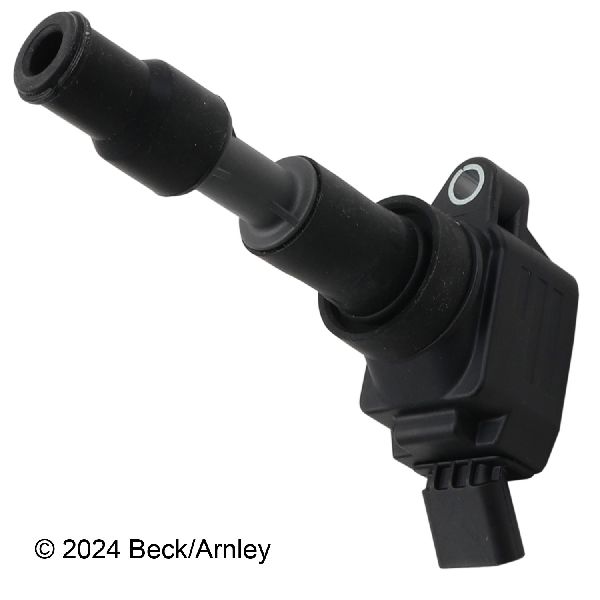
- Faulty Ignition Coil 🔴 High Probability → Shop Ignition Coil Ignition coils are a common failure item on most modern engines due to constant high voltage and heat cycles. Some Telluride owners have reported coil failures at relatively low mileage (under 50,000 miles).
How to confirm: Use a scan tool to identify the misfiring cylinder (e.g., P0304 for cylinder 4). Swap the ignition coil from the misfiring cylinder with one from a known good cylinder. Clear the codes and run the engine. If the misfire code follows the coil to the new cylinder (e.g., P0304 becomes P0302 after swapping coils from cyl 4 and 2), the coil is bad.
Typical fix: Replace the faulty ignition coil. It is strongly recommended by owners and technicians to use OEM-branded (Kia/Hyundai) coils, as some aftermarket brands have been reported to fail prematurely on this engine.
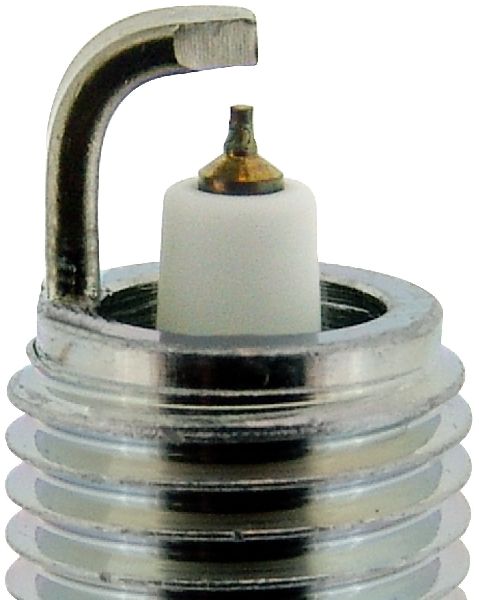
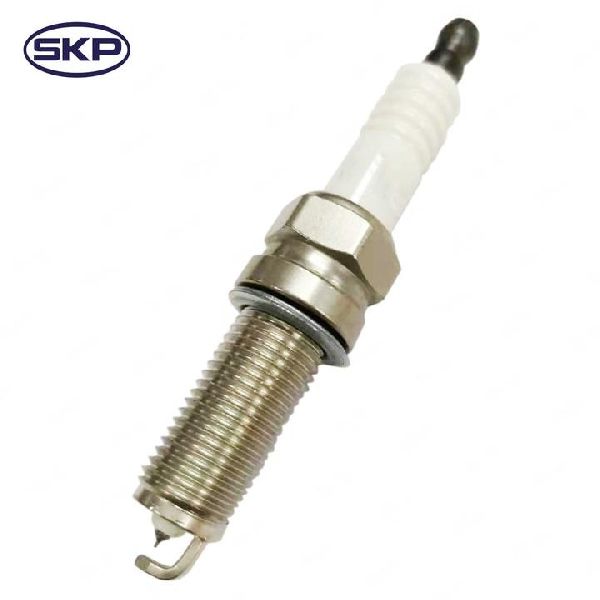
Est. part cost: $40-$80 - Worn or Fouled Spark Plug 🔴 High Probability → Shop Spark Plug
How to confirm: After confirming the ignition coil is good, remove the spark plug from the misfiring cylinder. Inspect it for wear (worn electrode), damage (cracked ceramic), heavy carbon deposits, or signs of oil or fuel fouling. A plug wet with fuel can indicate a lack of spark.
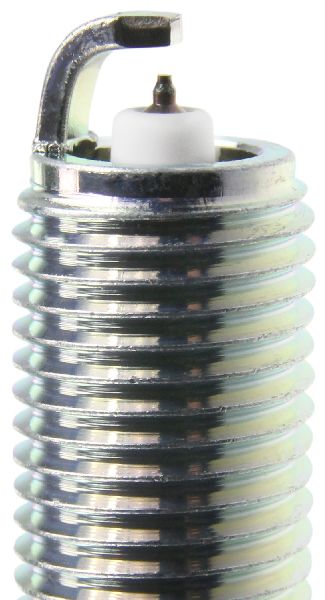
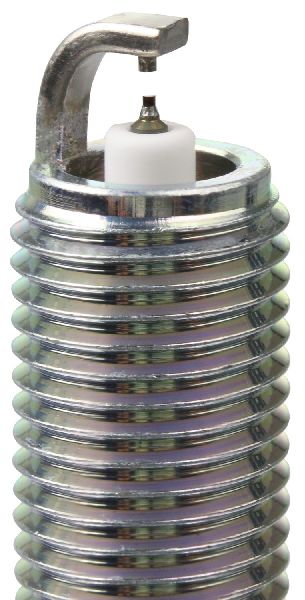
Typical fix: Replace the faulty spark plug. It is best practice to replace all six spark plugs at once, especially if they are near their 100,000-mile service interval. Note that accessing the rear bank of plugs (cylinders 1, 3, 5, near the firewall) requires removing the upper intake manifold.
Est. part cost: $15-$30 per plug - ECM Software Logic (Early 2020 Models) 🟡 Medium Probability Kia issued Technical Service Bulletin (TSB) ENG228, titled '3.8L GDI Misfire DTC Judgment Logic Improvement,' for 2020 Tellurides built between Jan 9, 2019, and May 19, 2020. The original software was overly sensitive and could trigger false misfire codes, especially during a cold start.
How to confirm: Check the vehicle's production date. If the code appears primarily on cold starts and ignition components test good on an early 2020 model, this TSB is the likely cause.
Typical fix: A Kia dealer must perform a software update (reflash) to the Engine Control Module (ECM) as outlined in TSB ENG228.
Est. part cost: $0 (if covered), otherwise ~$150-$250 for labor - Leaking Valve Cover Gasket ⚪ Low Probability → Shop Engine Valve Cover On higher mileage engines (typically 100k+ miles), the valve cover gaskets can harden and leak, allowing engine oil to seep into the spark plug tubes.
How to confirm: When removing the ignition coil and spark plug from the misfiring cylinder, look for engine oil pooled in the spark plug tube or coating the spark plug's ceramic insulator and the coil boot.
Typical fix: Replace the valve cover gasket and the spark plug tube seals. Thoroughly clean the oil out of the tube and replace the oil-fouled spark plug and ignition coil boot.
Est. part cost: $50-$100 for gaskets
Rare But Worth Checking
- Broken Engine Valve Spring (Certain 2024 Models): Kia issued recall SC296 (NHTSA Campaign 24V-077) for 2,872 Tellurides manufactured between Oct 1, 2023, and Dec 6, 2023. Improperly manufactured valve springs can fatigue and break, causing a loss of power, abnormal engine noise, and a severe misfire. In rare cases, this can lead to a hole in the engine block and risk of fire. The fix is a complete engine sub-assembly replacement by a Kia dealer.
- Faulty Fuel Injector: → Shop Fuel Injector While less common than ignition issues, a clogged or failed GDI fuel injector can cause a misfire on a single cylinder. Diagnosis is more complex and usually involves checking injector resistance (should be 12.5-13.5 ohms) or performing a flow test, which requires professional tools.
- Intake Valve Carbon Buildup: This is a common long-term issue for all GDI engines. Over time (typically 60,000+ miles), carbon can build up on the intake valves, restricting airflow and causing misfires, especially at idle or during cold starts. The fix is a manual or chemical cleaning process like walnut blasting.
Diagnosis Steps
- Connect an OBD-II scanner and verify P0363 is present. Note the accompanying P030x code (e.g., P0304) to identify the exact misfiring cylinder.
- Check VIN for recalls. For 2024 models, immediately check for Recall SC296 (broken valve spring). For 2020-2022 models, check for tow harness recall SC247.
- For 2020 models, if the misfire happens mainly on cold starts, contact a dealer about TSB ENG228 before proceeding.
- Identify the cylinder bank. Bank 1 (rear, by firewall) contains cylinders 1, 3, 5. Bank 2 (front, by radiator) contains cylinders 2, 4, 6.
- If the misfire is on Bank 2 (front), access is easy. Swap the ignition coil from the misfiring cylinder with a coil from a neighboring cylinder.
- Clear the codes and start the engine. Rescan for codes. If the P030x code moved to the new cylinder, the ignition coil is faulty and must be replaced.
- If the code remains on the original cylinder, the coil is likely good. Now, swap the spark plug from the misfiring cylinder with one from a different cylinder.
- Clear codes and re-run the engine. If the code moves, the spark plug is faulty.
- If the coil and plug are good, inspect the spark plug tube for oil, which would indicate a leaking valve cover gasket.
- If the misfire is on Bank 1 (rear), diagnosis is the same but requires removing the upper intake manifold to access the coils and plugs. Due to the labor, it's wise to replace all three rear coils and all six spark plugs if a component is found to be faulty.
- If ignition components are confirmed good, the issue may be more complex, such as a faulty fuel injector, wiring issue, or internal mechanical problem, and may require professional diagnosis.
Parts You'll Likely Need
- Ignition Coil
(OEM #27301-3L000 (may be superseded by 27301-3C000))— This is the most common failure part causing a single-cylinder misfire. Owner forums strongly advise using OEM parts to prevent premature failure.
Trusted brands: Kia (OEM), Hyundai (OEM), Denso, Delphi
OEM price range: $60-$90
Aftermarket price range: $30-$60 - Spark Plug
(OEM #18869-01110)— Spark plugs are a routine maintenance item that can cause misfires when worn or fouled.
Trusted brands: Kia (OEM), NGK
OEM price range: $20-$30
Aftermarket price range: $15-$25 - Upper Intake Manifold Gasket
(OEM #29215-3L000)— Required when replacing spark plugs or ignition coils on the rear bank (cylinders 1, 3, 5).
Related Codes That Often Appear With This One
- P0301, P0302, P0303, P0304, P0305, or P0306 — P0363 is a reaction to a severe misfire. One of these codes will always be present to indicate which specific cylinder is misfiring (e.g., P0301 for cylinder 1, P0306 for cylinder 6).
- P0300 — If the cause of the misfire affects multiple cylinders (like a large vacuum leak or low fuel pressure), a P0300 (Random Misfire) may be stored alongside P0363.
Technical Service Bulletins (TSBs) & Recalls
- ENG228 - Misfire DTC (P0300, P0301-P0306, P0363) Improvement (for 2020 MY Telluride)
- SC296 - Engine Sub-Assembly Replacement (for 2024 MY Telluride)
Platform-Specific Known Issues
- TSB ENG228: Early 2020 models (Jan 2019 - May 2020) can set false cold-start misfire codes. The fix is a dealer software update.
- Recall SC296: A batch of 2024 models (Oct 2023 - Dec 2023) were recalled for defective engine valve springs that can break, causing a severe misfire.
- Accessing the rear bank of cylinders (1, 3, 5) requires removing the upper intake manifold, adding labor time and cost to spark plug or coil replacement.
Mechanic-Grade Diagnostic Values
- Low-Pressure Fuel Line Pressure — expected: 50-70 PSI. Failure: Pressure below 50 PSI indicates a potential issue with the in-tank low-pressure fuel pump or its filter.
- High-Pressure Fuel Rail Pressure (GDI) — expected: Can exceed 2,000 PSI. Failure: Significantly lower pressure under load, often triggering code P0087, points to a failing High-Pressure Fuel Pump (HPFP).
Scan Tool Commands That Help
- Kia GDS (Global Diagnostic System): Trigger Module / Flight Record — This function is invaluable for diagnosing intermittent misfires that don't occur consistently at idle. It allows a technician to record live sensor data during a drive cycle to capture the exact conditions under which the misfire occurs.
- Kia GDS (Global Diagnostic System): Resetting Adaptive Values — After replacing a component that affects the air-fuel mixture or engine timing, such as a fuel injector or sensor, resetting the engine's learned adaptive values can help the ECM adjust to the new part more quickly and resolve lingering performance issues.
- Kia GDS (Global Diagnostic System): Actuation Test — Allows a technician to command individual components, like a specific fuel injector, to operate. This can be used to listen for the 'click' of a working injector or to perform a cylinder balance test by deactivating one cylinder at a time to see the effect on engine RPM.
Wiring & Ground Locations
- Instrument Panel Fuse Box — Located behind a cover on the driver's side of the instrument panel, near the kick panel.. Contains fuses for various control modules and interior electrical systems that could potentially influence the ECM or ignition system.
- Engine Compartment Fuse Box — Located in the engine bay, this box contains main fuses and relays for critical engine components.. This panel houses the primary relays and fuses for the ignition system, fuel pump, and the Engine Control Module (ECM). A faulty relay or poor connection here can cause a no-spark or no-fuel condition leading to a misfire.
- Ground Cable 91862-S9010 — This specific ground cable is listed for the left side of the vehicle for 2020-2022 models.. A poor engine or chassis ground can cause a weak spark, erratic sensor readings, or intermittent electrical issues that are notoriously difficult to diagnose and can lead to misfire codes. Ensuring all ground connections are clean and tight is a critical diagnostic step.
- ECM Connector Pins — The ECM is located in the engine bay and has several large multi-pin connectors.. If a coil and plug are known-good but a misfire persists on one cylinder, a technician must test for continuity and correct voltage at the specific pins on the ECM connector that correspond to that cylinder's ignition coil and fuel injector. This requires a specific pinout diagram from the Kia Global Information System (KGIS).
Real Owner Repair Stories
- Reddit user in r/HyundaiPalisade (2023 Hyundai Palisade (mechanically identical to Telluride), 11,700 km) — Check Engine Light came on immediately after a failed remote start attempt. The code was P0301 (Cylinder 1 Misfire).
❌ Tried (didn't work) The owner took it directly to the dealer without attempting repairs.
✅ What actually fixed it The dealership inspected the vehicle and found no faulty components. Their report concluded that the ECM likely did not account for extra fuel during the cold start/failed remote start, triggering a false misfire code. The issue did not reoccur. This mirrors the logic behind the TSB for 2020 Telluride models.
OEM Part Supersession History
27301-3L000→27301-3C000— Part consolidation and potential design update. The 27301-3C000 is a widely used ignition coil across many Hyundai and Kia V6 applications.
Heads up: The parts are generally considered interchangeable, but it is always best to use the latest revision (27301-3C000) when replacing a coil to ensure you have the most updated design.
Model Year Variations Within This Range
- 2023-2024: The 2023 model year introduced a significant cosmetic facelift with new front/rear fascias, updated lighting, and a redesigned dashboard with new screens. However, the core powertrain, the 3.8L Lambda II G6DN V6 and 8-speed automatic transmission, remained unchanged. Therefore, the mechanical and electrical causes for P0363 are identical to the 2020-2022 models.
Diagnostic Flowchart
Other Known Issues on This Vehicle
Issues unrelated to this code that are worth knowing about as an owner of this generation:
- Spontaneous Windshield Cracking 🟠 Medium — Widespread reports across all model years, particularly 2020-2022. Can occur without obvious impact. Subject of a class-action lawsuit and a 'Customer Satisfaction Initiative' from Kia for 2020 models. (Ref: Kia Customer Satisfaction Initiative (not a formal recall))
- Tow Hitch Harness Fire Risk 🔴 High — Affects 2020-2022 models equipped with the genuine Kia 4-pin tow hitch harness. Debris and moisture can cause a short circuit, leading to a fire risk even when the vehicle is parked and off. (Ref: Recall SC247 / NHTSA 22V-626)
- Rollaway Risk When Parked 🔴 High — Affects over 427,000 Tellurides from 2020-2024 model years due to potentially improperly assembled driveshafts that may not fully engage Park. (Ref: Recall / NHTSA 24V-149)
- Front Power Seat Motor Overheating 🔴 High — Affects over 462,000 Tellurides from 2020-2024. A stuck seat adjustment knob can cause the motor to run continuously, creating a fire hazard under the seat. Owners are advised to park outside until repaired. (Ref: Recall SC316 / NHTSA 24V-407)
- High Beam Headlight Failure (2020 models) 🟠 Medium — Heat from halogen bulbs can damage the mechanical shield used for the high beams, causing them to fail. Affects over 35,000 2020 models. (Ref: Recall issued in 2024)
Used vs. New Parts: Buying Guide for This Vehicle
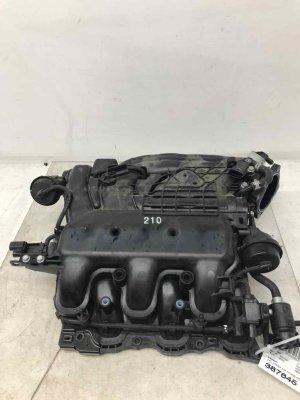
When a used part is the smart pick: For this repair, using used parts is generally not recommended for the primary failure items. A used Upper Intake Manifold could be a cost-effective choice if it needs to be removed for rear bank service and the original is damaged during removal, provided it is inspected for cracks.
Donor-vehicle mileage cap: roughly under 50000 miles for the part to have meaningful remaining life.
What to inspect on the donor part:
- For a used intake manifold, check for any cracks, especially around bolt holes.
- Ensure all threaded inserts are intact and not stripped.
- Verify the mating surfaces are flat and not warped.
OEM-only on this vehicle (don't cheap out):
- Ignition Coil: Owner forums and technicians strongly advise using OEM (Kia/Hyundai branded) coils. Aftermarket coils for this platform have a reputation for premature failure, leading to repeat repairs.
- Fuel Injectors: GDI injectors operate under extreme pressure. OEM parts are essential for reliability and correct spray patterns. A faulty aftermarket injector can cause significant engine performance issues or even damage.
- High-Pressure Fuel Pump (HPFP): This is a critical, high-precision component. Only an OEM part should be considered for replacement to ensure safety and proper function.
Aftermarket brands forum-validated for this vehicle:
- NGK: A trusted OEM supplier for spark plugs. An NGK plug is a reliable alternative to the Kia-branded box.
- Denso: Another highly-regarded OEM supplier for ignition and fuel system components. If a Denso-branded part is available, it is typically a safe choice.
Brands owners have reported issues with on this vehicle:
- Unbranded or 'white-box' ignition coils and sensors from online marketplaces should be avoided. While inexpensive, they have a very high failure rate on this engine and often do not perform to OEM specifications, causing persistent issues.
Real Owner Stories
Aggregated from forums and TSBs cited above. Mileages and costs reflect what owners reported in those sources.
2021 Kia Telluride 3.8L V6
Symptoms: The owner experienced a P0304 misfire code alongside the P0363.
What fixed it: Inspection revealed the ignition coil boot was physically broken at the terminal; replacing the faulty ignition coil resolved the issue.
Source hint: r/KiaTelluride - 'Help' (2021 Telluride P0304 Misfire)
2021 Kia Telluride 3.8L V6
Symptoms: Tricky misfire case where initial repairs with aftermarket parts did not last.
What fixed it: Replacing aftermarket 'TRQ' coils with OEM parts, as the aftermarket versions failed within a week.
Source hint: ScannerDanner Forum - '2021 Kia telluride'
2020 Kia Telluride 3.8L V6
Symptoms: Misfire codes appearing primarily during cold start conditions.
What fixed it: A dealer software update (reflash) to the Engine Control Module (ECM) as outlined in TSB ENG228.
Source hint: TSB ENG228 - Misfire DTC (P0300, P0301-P0306, P0363) Improvement
2024 Kia Telluride 3.8L V6
Symptoms: Severe engine misfire and potential abnormal engine noise such as ticking or knocking.
What fixed it: Engine sub-assembly replacement due to broken valve springs as part of the recall.
Source hint: Recall SC296 - Engine Sub-Assembly Replacement (for 2024 MY Telluride)
Related OBD-II Codes
Frequently Asked Questions
My 2020 Telluride is throwing P0363 on cold starts; is there a specific fix for this?
I have a 2024 Telluride with a severe misfire and P0363. Should I be worried about mechanical failure?
Can I use aftermarket ignition coils to fix the misfire on my 3.8L V6?
Why is the labor cost higher to fix a misfire on cylinders 1, 3, or 5?
Could a leak be causing my P0363 code on a high-mileage Telluride?
Helpful Videos
Used OEM Parts in Stock
New Aftermarket Parts Available


The information in this article is provided for general reference and educational purposes only. Vehicle specifications, procedures, and part compatibility can vary by production date, trim level, and region. Always consult your vehicle's factory service manual and verify part numbers before purchasing or performing repairs. Safety-critical components such as airbags, seat belts, and braking systems should be installed by a qualified professional.
- Kia Telluride:
- 🧭 Diagnostic Flowchart
- 🎬 Helpful Videos
- 🛍️ Shop This Part
- What's Unique About the 2020-2024 Kia Telluride
- Symptoms You May Notice
- Most Likely Causes
- Rare But Worth Checking
- Diagnosis Steps
- Parts You'll Likely Need
- Related Codes That Often Appear With This One
- Technical Service Bulletins (TSBs) & Recalls
- Platform-Specific Known Issues
- Mechanic-Grade Diagnostic Values
- Scan Tool Commands That Help
- Wiring & Ground Locations
- Real Owner Repair Stories
- OEM Part Supersession History
- Model Year Variations Within This Range
- Other Known Issues on This Vehicle
- Used vs. New Parts: Buying Guide for This Vehicle
- Real Owner Stories
- 2021 Kia Telluride 3.8L V6
- 2021 Kia Telluride 3.8L V6
- 2020 Kia Telluride 3.8L V6
- 2024 Kia Telluride 3.8L V6
- Related OBD-II Codes
- Frequently Asked Questions
- 🎟️ Get 5% Off