

P0363 on 2012-2016 Mercedes-Benz E-Class: Misfire Detected & Fuel Cut-Off Guide
P0363 means your E-Class has a severe misfire and the computer has cut fuel to that cylinder to protect the catalytic converter. The problem is almost always a failed ignition coil or a worn-out spark plug. A single coil replacement is a common DIY fix, though accessing them requires removing the intake manifold.
- P0363 is a serious code indicating your car's computer has shut off fuel to a misfiring cylinder to prevent expensive catalytic converter damage.
- The most likely cause on your E350 is a failed ignition coil, followed by worn-out spark plugs.
- Always diagnose first by swapping the ignition coil from the bad cylinder to a good one to confirm the coil is the problem before buying parts.
- Since accessing the coils and plugs on the M276 V6 requires removing the air intake, it is highly recommended to replace all six coils and spark plugs at the same time.
What's Unique About the 2012-2016 Mercedes-Benz E-Class
While P0363 is a universal code, its appearance on the M276 V6 engine in this E-Class generation points strongly toward a few common issues. These engines are well-known for ignition coil failures, which can be intermittent at first but eventually lead to a persistent misfire. Because this is a direct-injection engine, fuel does not wash over the intake valves, making it susceptible to carbon buildup on intake valves over time, which can be a less common cause of misfires if ignition components are healthy.
Symptoms You May Notice
- Flashing Check Engine Light.
- Rough or vibrating engine idle.
- Noticeable hesitation or jerking during acceleration.
- Sudden loss of engine power.
- Engine may stall, especially when stopped.
- Decrease in fuel economy.
- Replacing the fuel injector first. Because the code definition mentions 'Fueling Disabled', some may incorrectly assume the injector is the cause. However, the ECM is intentionally disabling a likely functional injector as a reaction to the misfire, which is usually caused by the ignition system.
Most Likely Causes
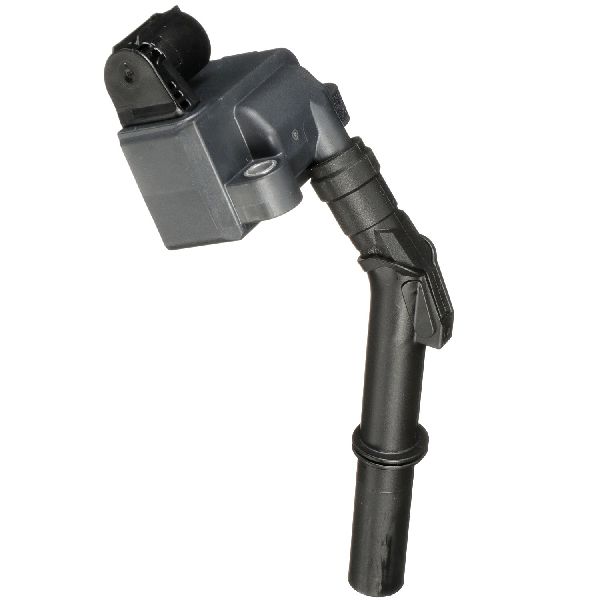
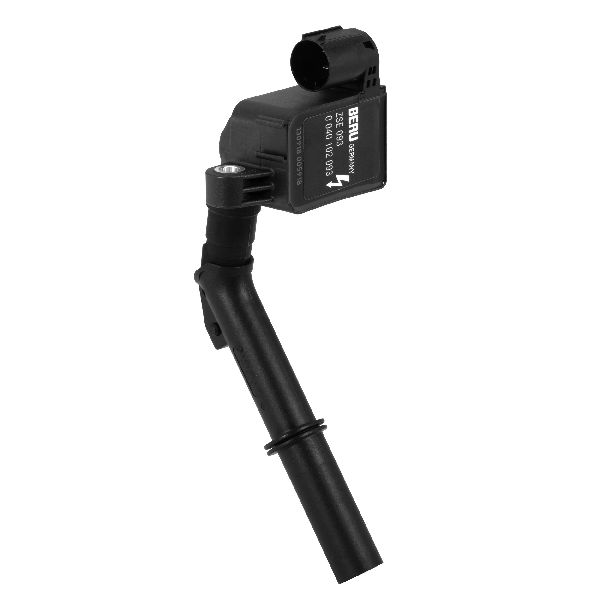
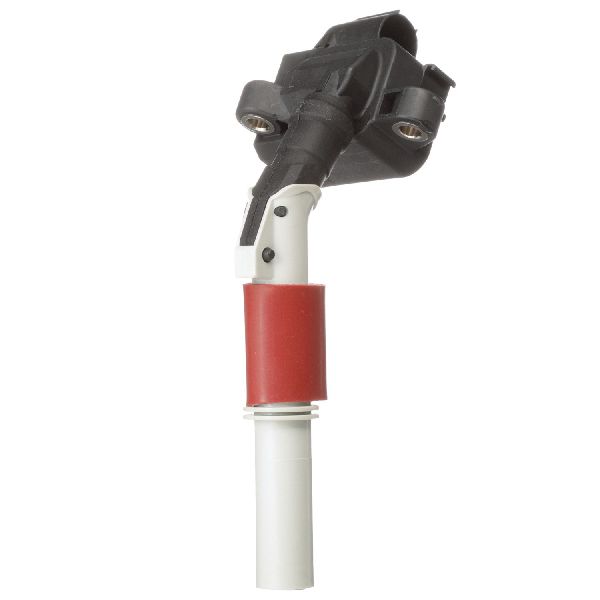
- Failed Ignition Coil 🔴 High Probability → Shop Ignition Coil Ignition coils are a widely documented failure point on the M276 engine. They can fail intermittently, causing a misfire that disappears after restarting the car, only to return later.
How to confirm: Scan for codes to identify the specific misfiring cylinder (e.g., P0304 for cylinder 4). Swap the ignition coil from the misfiring cylinder with one from a working cylinder. Clear the codes and run the engine. If the misfire code moves to the new cylinder (e.g., P0304 becomes P0305 after swapping with cylinder 5), the coil is faulty.
Typical fix: Replace the failed ignition coil. On the M276 engine, this requires removing the upper intake manifold for access, making it a moderately involved DIY job. Many owners and technicians recommend replacing all six coils and spark plugs at the same time as preventative maintenance, since the labor overlaps.
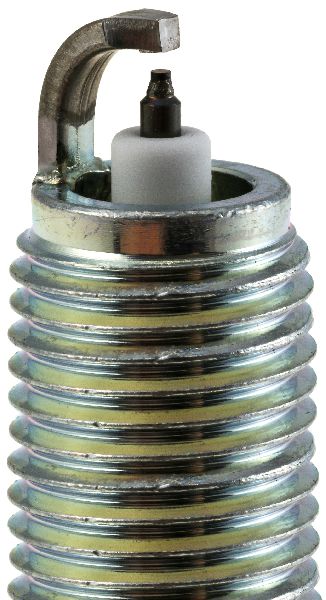
Est. part cost: $65-$150 per coil - Worn or Fouled Spark Plugs 🟡 Medium Probability → Shop Spark Plug Spark plugs are a regular maintenance item with a typical service life of around 60,000 miles on the M276. If they are past their service life, the spark can weaken, leading to incomplete combustion and misfires.
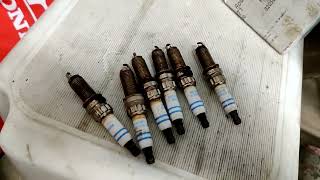
How to confirm: After removing the ignition coil, remove the spark plug from the misfiring cylinder. Inspect it for signs of wear (rounded electrode), oil fouling, or damage. A faulty spark plug can even be brand new, as manufacturing defects can occur.
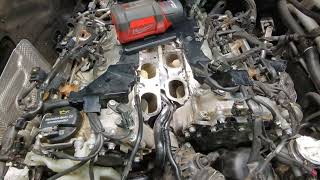
Typical fix: Replace the spark plugs. It is standard practice to replace all six spark plugs as a set. This is typically done at the same time as ignition coil replacement since the labor overlaps significantly. 🎬 Watch: Step-by-step guide to replacing M276 coils and plugs.
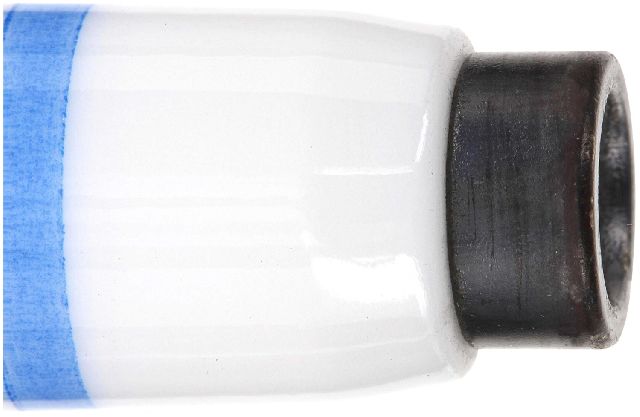
Est. part cost: $12-$25 per plug - Leaking Fuel Injector or Seal ⚪ Low Probability → Shop Fuel Injector The M276 is a direct-injection engine. While the injectors themselves are fairly reliable, the Teflon seals at their tips can degrade from heat cycling, causing combustion leaks that can lead to misfires. In rare cases, a fragment of a seal can break off during installation and contaminate the fuel rail.
How to confirm: This is more difficult to diagnose. It may be accompanied by lean codes (P0171/P0174), a fuel smell in the engine bay, or visible carbon buildup around the injector bore in the cylinder head. Professional diagnosis is often required. Replacing the Teflon seals requires special stretching and compressing tools.
Typical fix: Replace the faulty fuel injector and all associated seals. This is a more labor-intensive job than replacing coils or plugs.
Est. part cost: $100-$200 per injector kit
Rare But Worth Checking
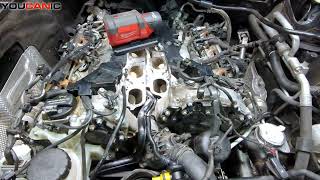
- Intake Valve Carbon Buildup: As a direct-injection engine, the M276 is prone to carbon deposits on the intake valves. Over many miles, this can restrict airflow or prevent the valves from closing properly, causing a loss of compression and misfires. The fix is a professional cleaning service, often using walnut shell media blasting, 🎬 See how carbon buildup causes misfires and how to fix it. which can cost between $600 and $1,200.
- Faulty Engine Control Module (ECM): → Shop Engine Control Module (ECM) In very rare cases, a software glitch or internal failure in the ECM can incorrectly command the fuel cut-off or misinterpret sensor data, triggering a P0363 code. This should only be considered after all other possibilities are exhausted.
- Oil in Wiring Harness: A known M276 issue is oil leaking from the camshaft position sensors and wicking through the engine wiring harness. If this oil reaches the ECU connectors or oxygen sensor connectors, it can cause a wide range of electrical faults, including misfires.
Diagnosis Steps
- Connect an OBD-II scanner to the vehicle's diagnostic port.
- Read the fault codes. Note the specific cylinder misfire code (e.g., P0301-P0306) that accompanies P0363.
- Clear the codes and start the engine to see if the codes immediately return. A flashing check engine light indicates an active misfire.
- If the code returns for a specific cylinder, label and swap the ignition coil from that cylinder 🎬 Watch this video to see how to test for a misfiring cylinder. with one from a cylinder that is not misfiring.
- Clear the codes again and run the engine. Re-scan for codes.
- If the misfire code has moved to the cylinder where you placed the suspect coil, the ignition coil is faulty and needs replacement.
- If the misfire code stays on the original cylinder, remove the coil and spark plug from that cylinder. Inspect the spark plug for wear, damage, or fouling. If it is worn or overdue for replacement, replace all six plugs.
- While components are accessible, inspect the wiring harness connectors for the ignition coils and camshaft position sensors for any signs of oil contamination.
- If both the coil and plug appear to be in good condition, the issue may be more complex, such as a faulty fuel injector, carbon buildup, or a mechanical engine problem (compression loss), which may require professional diagnosis.
Parts You'll Likely Need
- Ignition Coil
(OEM #A2769060501, superseded by A2769063700)— This is the most common cause of misfires on the M276 engine. The original part number A2769060501 has been updated by Mercedes to A2769063700.
Trusted brands: Bosch, Genuine Mercedes-Benz, Delphi
OEM price range: $90-$150
Aftermarket price range: $65-$110 - Spark Plug
(OEM #A0041598103)— Worn spark plugs are a primary cause of weak spark and misfires. They are a critical maintenance item (60k mile interval) and are typically replaced with the ignition coils.
Trusted brands: Bosch, NGK
OEM price range: $15-$25
Aftermarket price range: $12-$20
Related Codes That Often Appear With This One
- P0300 — This code for 'Random/Multiple Cylinder Misfire' may appear if the misfire is intermittent or affecting more than one cylinder.
- P0301, P0302, P0303, P0304, P0305, P0306 — P0363 will almost always be accompanied by one of these cylinder-specific misfire codes, which tells you exactly which cylinder to investigate. For example, P0301 indicates a misfire in Cylinder 1.
Technical Service Bulletins (TSBs) & Recalls
- LI05.10-P-056435: Addresses a rattling noise on cold start due to secondary timing chain tensioners losing oil pressure. While not a direct cause of P0363, severe timing issues can lead to general performance problems and misfires. This TSB applies to M276 engines up to a certain serial number range.
Platform-Specific Known Issues
- source — A user with an ML350 (M276 engine) gets a P0306 code. The thread confirms that a flashing CEL is serious, the purpose of fuel cut-off is to save the catalytic converter, and the standard diagnostic procedure is to swap coils between cylinders.
- source — A long and detailed thread of an owner chasing a persistent single-cylinder misfire after replacing plugs and coils. The diagnostic journey includes compression tests, checking for vacuum leaks, and suspecting fuel delivery issues, illustrating the complexity when the problem isn't a simple coil failure.
Mechanic-Grade Diagnostic Values
- Low-Pressure Fuel System — expected: 4.5 - 6.7 bar (approx. 65 - 97 PSI). Failure: Pressure below this range indicates a failing in-tank fuel pump or clogged filter.
- High-Pressure Fuel System (at fuel rail) — expected: 120 - 200 bar (approx. 1740 - 2900 PSI) under load.. Failure: Significantly lower pressure, often triggering code P0087, points to a failing High-Pressure Fuel Pump (HPFP). If the rail pressure sensor fails, the ECU may report a static, default value like 6.02 bar.
- Fuel Injector Voltage (High) via Scan Tool — expected: ~160-165 Volts (as observed on a healthy cylinder). Failure: A forum user noted the misfiring cylinder's injector showed a consistently higher voltage (~176 Volts), suggesting the ECU was attempting to compensate or that a wiring/driver issue existed. This is an advanced observation, not a definitive test.
Hidden / Shadow Codes Worth Checking
- N/A (No specific shadow codes found): While specific 'shadow codes' are not commonly referenced for Mercedes as they are for other brands, a dealer-level diagnostic tool like XENTRY is essential for deep diagnosis. It can access manufacturer-specific data, such as misfire counters for each cylinder, smooth running data, and perform guided tests that are unavailable to generic OBD-II scanners. (see via Mercedes-Benz XENTRY/DAS diagnostic system.)
Scan Tool Commands That Help
- XENTRY / DAS: Misfire Counter / Smooth Running Test — To view the number of misfire events per cylinder in real-time. This is invaluable for identifying intermittent misfires or confirming which cylinder is the primary offender when multiple codes are present.
- XENTRY / DAS: Injector Quantity Comparison — After ruling out ignition issues, this test can help identify a fuel injector that is delivering significantly more or less fuel than the others, which could cause a misfire.
- Advanced Scan Tools (e.g., Autel): Idle RPM Adjustment — This is not a fix, but a diagnostic aid. Some users have reported temporarily increasing the base idle RPM to smooth out a rough idle, which can help confirm the issue is most prominent at the stock low idle speed.
Wiring & Ground Locations
- W16/5 — Poorly documented, even in Mercedes' official Workshop Information System (WIS). It is believed to be on the chassis frame near the driver's side (LHD) wheelhouse, in the vicinity of other grounds.. This is a critical ground point for the Engine Control Module (ECM). A poor connection here can cause a vast array of erratic engine behaviors, including misfires that are difficult to diagnose.
- W11 — Combustion engine ground point.. This is the main engine ground strap. Corrosion or a loose connection here can affect the entire engine's electrical system, including the ignition coils' ability to get a clean ground path, potentially leading to weak spark and misfires.
- Ignition Coil Connector — On top of each ignition coil.. The plastic locking tabs on these connectors can become brittle with age and heat cycles, breaking off. This can cause a loose connection at the coil, leading to an intermittent misfire even if the coil itself is good.
Real Owner Repair Stories
- MBWorld.org Forums user 'marko69' (2013 E350 M276) — Persistent misfire on cylinder #1 that would put the car in limp mode, especially under high RPM.
❌ Tried (didn't work) Replaced spark plugs., Swapped ignition coils (misfire stayed on cylinder #1)., Replaced fuel injector on cylinder #1., Performed a leak-down test (all cylinders showed <2% leak)., Checked intake gaskets for leaks.
✅ What actually fixed it The user's diagnostic journey pointed towards a complex electrical issue. They noted abnormal voltage readings on the #1 injector via a scan tool and began tracing wiring back to the ECU, suspecting a short or ECU driver fault. The thread highlights that after all common parts are replaced, the fault is likely in the wiring harness or the ECU itself. - YOUCANIC YouTube Channel (Mercedes with M276 engine) — Intermittent cylinder 5 misfire (P0305), more noticeable at idle.
❌ Tried (didn't work) Replacing spark plugs and 'everything else you could think of'.
✅ What actually fixed it The suspected cause was severe carbon buildup on the intake valves preventing them from closing properly. A temporary fix was achieved by spraying an intake valve cleaner into the intake manifold with the engine running. This significantly reduced the misfire, confirming the issue was related to carbon deposits. The permanent fix is professional media blasting of the valves.
"I Checked Everything" — The Actual Cause
- In cases where a persistent misfire remains on a single cylinder after swapping known-good plugs and coils, and a vacuum leak test (smoke test) shows no issues, the cause can be mechanical. Severe carbon buildup on the back of the intake valves can prevent the valve from seating correctly, causing a loss of compression and a misfire that ignition or fuel parts won't fix.
OEM Part Supersession History
A2769060501→A2769063700, A2769065100— Improved design/reliability. The ignition coils are a known high-failure item, and Mercedes has released updated versions over time.
Heads up: While physically compatible, some owners strongly advise against using aftermarket ignition coils, citing premature failure or, in extreme anecdotal cases, damage to the intake manifold. Sticking to Genuine Mercedes or OEM supplier (e.g., Bosch) is recommended.
Model Year Variations Within This Range
- 2012-2014 (Early M276): Early M276 engines were more susceptible to an issue with the secondary timing chain tensioners losing oil pressure on startup, causing a brief but loud rattle. Mercedes issued a TSB and updated parts (including check valves) to resolve this. While not a direct cause of P0363, a severely stretched timing chain could eventually lead to camshaft/crankshaft correlation errors and misfires.
Diagnostic Flowchart
Other Known Issues on This Vehicle
Issues unrelated to this code that are worth knowing about as an owner of this generation:
- Timing Chain Tensioner Rattle at Cold Start 🔴 High — Common on early production M276 engines (approx. before 2014). A rattling noise for 2-5 seconds after a cold start is the primary symptom. (Ref: TSB LI05.10-P-056435 addresses this by retrofitting updated secondary chain tensioners and check valves to maintain oil pressure.)
- Oil Leaks from Upper Timing Covers & Camshaft Sensors 🟠 Medium — A very common issue where the sealant on the front upper timing covers degrades, causing oil to leak down onto the alternator. Separately, camshaft position sensor O-rings can leak, and oil can wick through the wiring harness, potentially damaging the ECU.
- High-Pressure Fuel Pump (HPFP) Failure 🟠 Medium — Not as common as coil failure, but a known issue. Symptoms include long crank times, hesitation under acceleration, and loss of power.
- Cracked Plastic Cooling System Components 🟡 Low — Typically occurs at higher mileage (80k+ miles). The plastic thermostat housing and various coolant pipes can become brittle and crack, leading to coolant leaks.
Used vs. New Parts: Buying Guide for This Vehicle
When a used part is the smart pick: Used OEM parts can be a cost-effective choice for components that are not high-wear items, such as sensors or modules. However, for P0363, the primary culprits are often wear items.
Donor-vehicle mileage cap: roughly under 90000 miles for the part to have meaningful remaining life.
What to inspect on the donor part:
- For ignition coils, check for cracks in the plastic housing or melting/discoloration on the boot.
- For an ECM, ensure the connectors are perfectly clean with no signs of oil contamination or corrosion on the pins.
- Verify the part number exactly, as there can be variations.
- Prefer sellers who provide the VIN of the donor vehicle to aid in compatibility checks.
OEM-only on this vehicle (don't cheap out):
- Ignition Coils: While OEM suppliers like Bosch are acceptable, many forum veterans strongly recommend using only Genuine Mercedes-Benz coils to avoid intermittent issues or premature failure.
- Engine Control Module (ECM): A used ECM can be purchased, but it is 'locked' to the original vehicle's anti-theft system. It cannot be simply swapped. It requires a specialist service to 'clone' your original ECM's data or 'virginize' the used unit before it can be programmed to your car. A Mercedes dealer will not program a used ECM.
Aftermarket brands forum-validated for this vehicle:
- Bosch (Often the OEM supplier for ignition coils and spark plugs)
- NGK (Spark Plugs)
Brands owners have reported issues with on this vehicle:
- Unbranded or 'white-box' ignition coils from online marketplaces. These are frequently cited as having a very high failure rate.
Real Owner Stories
Aggregated from forums and TSBs cited above. Mileages and costs reflect what owners reported in those sources.
2012-2015 Mercedes-Benz ML350 M276
Symptoms: The owner reported a P0306 code (cylinder 6 misfire) and a flashing check engine light.
What fixed it: The diagnostic procedure involved swapping ignition coils between cylinders to confirm the failure. The fix was replacing the faulty ignition coil.
Source hint: MBWorld Forums: 'Is this a misfire?'
2013 Mercedes-Benz E350 M276
Symptoms: A persistent single-cylinder misfire that continued even after the owner replaced the spark plugs and ignition coils.
What fixed it: The owner had to perform advanced diagnostics including compression tests, checking for vacuum leaks, and investigating fuel delivery issues.
Source hint: MBWorld Forums: '2013 E350 M276 Misfire nightmare'
Related OBD-II Codes
Frequently Asked Questions
Does TSB LI05.10-P-056435 apply to my 2012 E350 with the M276 engine?
Why is my Check Engine Light flashing on my E350?
I have a P0363 code; do I need to replace all my ignition coils at once?
Can oil leaks cause misfire codes like P0363 on the M276 engine?
How often should I change the spark plugs on my 2012-2016 E-Class to avoid misfires?
Is a P0363 code always caused by a bad ignition coil on this Mercedes?
Helpful Videos
We Have This Part in Stock

The information in this article is provided for general reference and educational purposes only. Vehicle specifications, procedures, and part compatibility can vary by production date, trim level, and region. Always consult your vehicle's factory service manual and verify part numbers before purchasing or performing repairs. Safety-critical components such as airbags, seat belts, and braking systems should be installed by a qualified professional.
- Mercedes-Benz E-Class:
- 🧭 Diagnostic Flowchart
- 🎬 Helpful Videos
- 🛍️ Shop This Part
- What's Unique About the 2012-2016 Mercedes-Benz E-Class
- Symptoms You May Notice
- Most Likely Causes
- Rare But Worth Checking
- Diagnosis Steps
- Parts You'll Likely Need
- Related Codes That Often Appear With This One
- Technical Service Bulletins (TSBs) & Recalls
- Platform-Specific Known Issues
- Mechanic-Grade Diagnostic Values
- Hidden / Shadow Codes Worth Checking
- Scan Tool Commands That Help
- Wiring & Ground Locations
- Real Owner Repair Stories
- "I Checked Everything" — The Actual Cause
- OEM Part Supersession History
- Model Year Variations Within This Range
- Other Known Issues on This Vehicle
- Used vs. New Parts: Buying Guide for This Vehicle
- Real Owner Stories
- 2012-2015 Mercedes-Benz ML350 M276
- 2013 Mercedes-Benz E350 M276
- Related OBD-II Codes
- Frequently Asked Questions
- 🎟️ Get 5% Off