

P0363 on 2007-2009 Saturn Aura 3.6L: Misfire & Fuel Cut-Off Causes and Fixes
P0363 means your Aura's engine has a severe misfire and has cut fuel to a cylinder to prevent damage. It could be a simple fix like a bad ignition coil or spark plug (~$50-$100), but on this specific 3.6L V6, it can also be a symptom of a stretched timing chain, a major repair costing $2,000+.
- P0363 is a critical code meaning a severe misfire has forced the engine to shut off fuel to a cylinder. Do not drive the vehicle.
- The most likely causes are a simple bad ignition coil or spark plug, which can be diagnosed by swapping parts between cylinders.
- Be aware that the 3.6L V6 in your Aura is highly prone to stretched timing chains. If you also have codes like P0008, P0016, or P0017, this is almost certainly the cause.
- Due to the labor of removing the intake manifold, if a rear ignition coil fails (Cylinder 1, 3, or 5), it is wise to replace all three rear coils and all six spark plugs at the same time.
- Do not replace camshaft or crankshaft sensors as a first step if you have timing-related codes; the problem is likely mechanical (timing chains).
What's Unique About the 2007-2009 Saturn Aura
The Saturn Aura with the 3.6L LY7 V6 engine has a well-documented, widespread history of premature timing chain stretching. While P0363 indicates a misfire that could be from a simple ignition coil failure, it can also be a direct symptom of this much more serious mechanical issue. The root cause is often attributed to a combination of the original chain design and an overly optimistic Oil Life Monitor (OLM) calibration that led to oil degradation. GM released multiple Technical Service Bulletins (TSBs), such as #12-06-01-009G, and updated parts to address this problem. Therefore, any misfire code on this engine requires careful diagnosis to rule out the costly timing chain failure, which often presents with codes like P0008 or P0017.
Symptoms You May Notice
- Flashing Check Engine Light (CEL)
- Solid Check Engine Light
- Engine running very rough or shaking violently, especially at idle
- Significant loss of engine power and acceleration
- Engine stalling or struggling to stay running
- Difficulty starting the engine
- Engine rattling noise on startup (indicative of timing chain issues)
- Replacing camshaft or crankshaft position sensors when timing-related codes (P0008, P0016, P0017, etc.) are present. On this engine, these codes almost always indicate a mechanical timing chain issue, not a sensor failure.
Most Likely Causes
- Failed Ignition Coil 🔴 High Probability → Shop Ignition Coil The coil-on-plug ignition system is subjected to high heat and vibration, leading to eventual failure. The rear bank of coils (cylinders 1, 3, 5, against the firewall) is under the intake manifold, exposed to more heat and is labor-intensive to replace.
How to confirm: Scan for a specific cylinder misfire code (e.g., P0301-P0306). Swap the ignition coil from the misfiring cylinder with a coil from a known good cylinder. Clear codes and run the engine. If the misfire code moves to the new cylinder (e.g., P0301 becomes P0302 after swapping coils from cylinder 1 to 2), the coil is bad.
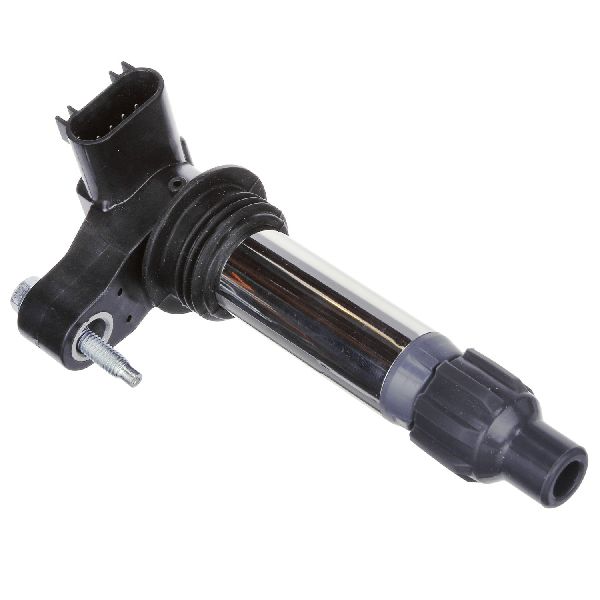
Typical fix: Replace the faulty ignition coil. It is often recommended to replace all three rear coils if accessing them, due to the labor involved in removing the upper intake manifold. It's also wise to replace the spark plugs at the same time. 🎬 Watch: Step-by-step ignition coil and spark plug replacement guide.
Est. part cost: $30-$80 per coil - Worn or Fouled Spark Plugs 🔴 High Probability → Shop Spark Plug Spark plugs are a standard wear item with a service interval. Additionally, this engine is prone to valve cover gasket leaks, which allow oil to seep into the spark plug tubes, fouling the plug and causing a misfire. This is a very common failure pattern.
How to confirm: Remove the spark plug from the misfiring cylinder and inspect it. Look for heavy carbon buildup, oil contamination (a wet, black appearance), or a worn-out/eroded electrode. Oil in the spark plug well is definitive proof of a leaking valve cover gasket or tube seals.
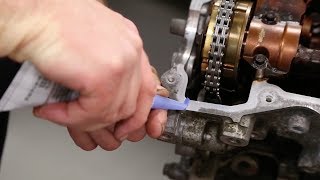
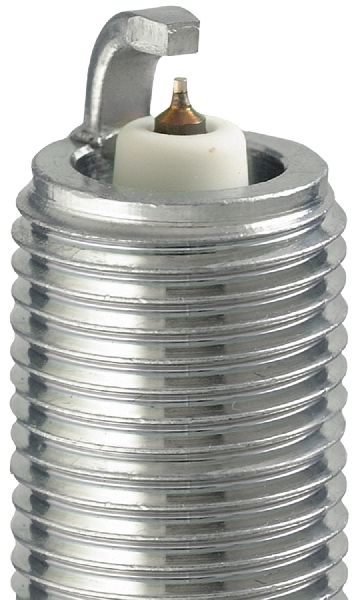
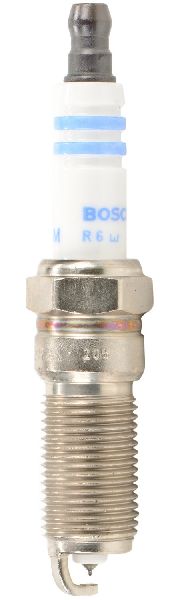
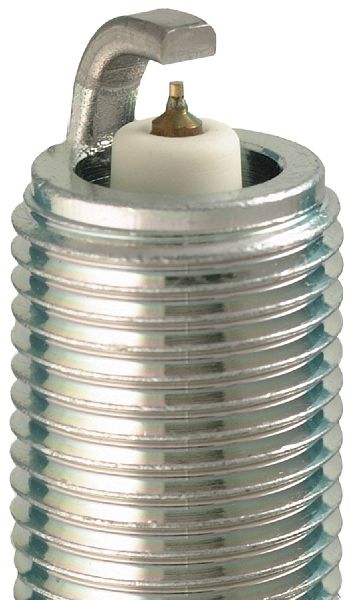
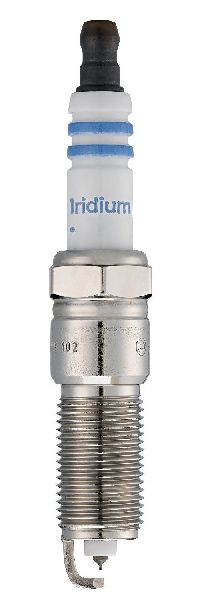
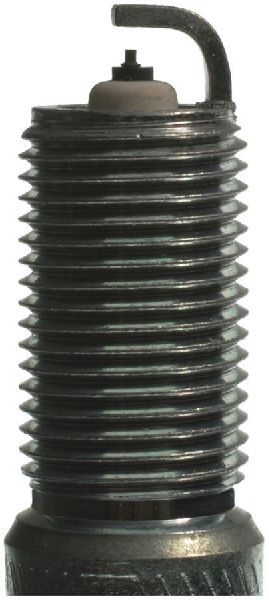
Typical fix: Replace all six spark plugs. Iridium plugs (ACDelco 41-107) are the recommended OEM type. If oil is found in the spark plug well, the valve cover gasket and spark plug tube seals must also be replaced to prevent a repeat failure. 🎬 Watch: How to install new valve cover gaskets and seals.
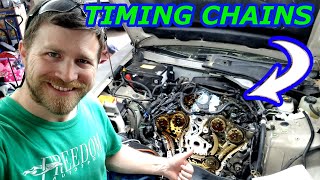
Est. part cost: $60-$120 for a set of six plugs - Stretched Timing Chains 🟡 Medium Probability This is a notorious, well-documented factory defect on the 3.6L LY7 engine. The original chains were prone to premature stretching, causing camshafts to go out of sync with the crankshaft. This leads to misfires and eventually catastrophic engine failure if ignored. GM issued TSB #12-06-01-009G and a special coverage program (#11340C) for this issue, though most vehicles are now past the coverage period.
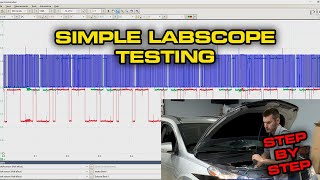
How to confirm: Check for other stored codes, especially P0008, P0016, P0017, P0018, or P0019. A mechanic can use a scan tool to view camshaft deviation data in the ECM. 🎬 See how to professionally test for timing chain stretch. A deviation of more than 4-5 degrees at idle indicates a stretched chain. A rattling noise from the right side of the engine for 2-3 seconds on a cold startup is also a classic symptom.
Typical fix: This is a major and expensive repair that involves replacing all three timing chains, the tensioners, and the guides with updated parts. This is not a typical DIY job and can cost $2000-$3500. Aftermarket kits from brands like Cloyes are commonly used.
Est. part cost: $400-$800 for a complete kit - Faulty Fuel Injector or Wiring ⚪ Low Probability → Shop Fuel Injector GM issued TSB #PIP4924D regarding the injector wiring harness chafing against the intake manifold or valve cover bolts, causing a short or open circuit. Injectors can also become clogged or fail internally, though it's less common than ignition or timing issues.
How to confirm: Listen to the injector with a mechanic's stethoscope; it should have a consistent clicking sound. Check the wiring harness for any signs of rubbing or damage, particularly around mounting bolts. An injector can be tested for resistance or flow, or swapped with another cylinder to see if the misfire follows.
Typical fix: Replace the faulty fuel injector or repair the damaged section of the wiring harness. Ensure the harness is properly routed and secured away from any sharp edges.
Est. part cost: $40-$90 per injector
Rare But Worth Checking
- Low Engine Compression: If all ignition and fuel system checks pass, a mechanical issue could be the cause. A compression test is needed to check for problems like a burnt valve, failed piston rings, or a damaged head gasket. These are less common on the LY7 without a severe overheating event.
- Clogged Catalytic Converter: A clogged converter can create excessive backpressure, leading to misfires. This is usually a *result* of a long-term misfire dumping fuel into the exhaust, not the initial cause of P0363. Symptoms include a loss of power that gets worse at higher RPMs and a rotten egg smell from the exhaust.
- Intake Manifold Gasket Leak: A vacuum leak from a failed lower or upper intake manifold gasket can lean out the air/fuel mixture on one or more cylinders, causing a misfire. This can be diagnosed with a smoke test.
Diagnosis Steps
- Read all stored fault codes with an OBD-II scanner. Pay close attention to any codes beyond P0363, especially P0301-P0306 and any P00xx timing codes.
- Identify the misfiring cylinder using the P030x code. If no P030x code is present, use a scanner with Mode $06 data to check for misfire counts per cylinder.
- Check for Timing Codes First: If any P00xx codes are present (P0008, P0017, etc.), STOP. The primary diagnosis is now a stretched timing chain. Professional confirmation is required.
- Ignition System Check: If no timing codes are present, start with the ignition system. Swap the ignition coil from the misfiring cylinder with a known good one. Clear codes and drive. If the code follows the coil (e.g., P0304 becomes P0302), the coil is bad.
- Spark Plug & Gasket Check: If the misfire does not move, pull the spark plug from the misfiring cylinder. Inspect for wear, damage, or oil fouling. If oil is present in the spark plug well, the valve cover gasket is leaking and must be replaced along with the plugs.
- Fuel System Check: If ignition components are good, inspect the fuel injector wiring harness for chafing, especially near the intake manifold and valve covers, per TSB #PIP4924D. Listen to the injector with a stethoscope for a steady clicking sound.
- Mechanical Check: If all else fails, perform an engine compression test to rule out internal mechanical problems like a bad valve or piston rings. A vacuum leak test (smoke test) can also be performed to check for intake gasket leaks.
Parts You'll Likely Need
- Ignition Coil
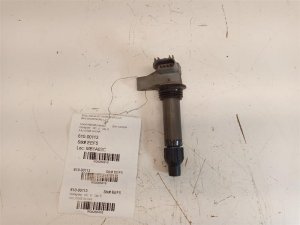
(OEM #12632479)— This is the most common cause of a single-cylinder misfire. They fail from heat and vibration over time. The OEM part number 12632479 (also ACDelco D515C) supersedes older numbers like 12590990 and 12618542.
Trusted brands: ACDelco, Delphi, Denso, NGK
OEM price range: $60-$90
Aftermarket price range: $30-$60 - Spark Plugs
(OEM #41-107)— These are a regular maintenance item and are often replaced along with ignition coils or during a timing chain service. Oil fouling from leaking valve cover gaskets is also a very common reason for replacement.
Related Codes That Often Appear With This One
- P0300 — P0300 is a random misfire code. P0363 is a more severe version, indicating the computer has taken action (fuel cut) in response to the misfire. P0300 may appear first before the misfire becomes severe enough to trigger P0363.
- P0301-P0306 — These codes specify which cylinder is misfiring (e.g., P0306 is cylinder 6). A persistent misfire on one of these cylinders will lead to the PCM setting P0363 for that cylinder. For the transverse LY7, cylinders 1-3-5 are on the rear bank (firewall side) and 2-4-6 are on the front bank (radiator side).
- P0008, P0016, P0017, P0018, P0019 — These are all cam/crank correlation codes. If you see any of these along with a misfire code on this engine, it is an extremely strong indicator of stretched timing chains. This is the most critical code combination to watch for.
Technical Service Bulletins (TSBs) & Recalls
- TSB #12-06-01-009G: Information on High Feature V6 Timing Chain Kits and guide replacement for DTCs P0008, P0017, etc. This is the primary TSB for the timing chain issue.
- TSB #PIP4924D: Addresses injector wiring harness chafing against engine components, causing shorts/opens and misfires.
- Special Coverage Adjustment #11340C: Extended warranty coverage for timing chain failure to 10 years/120,000 miles. Now expired for most vehicles by time.
- TSB #14404A: Special coverage for the 6T70 transmission 3-5-R wave plate failure, a separate common issue on this vehicle.
Platform-Specific Known Issues
- Cylinder Bank Identification: On the transverse-mounted 3.6L LY7 in the Aura, 'Bank 1' (cylinders 1, 3, 5) is the bank closer to the firewall. 'Bank 2' (cylinders 2, 4, 6) is the bank closer to the radiator. This is important for diagnosing bank-specific codes and accessing components, as the rear bank is much harder to work on.
Mechanic-Grade Diagnostic Values
- Fuel Pressure (Key On, Engine Off) — expected: 380-410 kPa (55-60 psi). Failure: Pressure below this range indicates a weak fuel pump or a leak in the system.
- Fuel Injector Resistance (Port Injection) — expected: ~11-14 Ohms. Failure: A reading significantly outside this range (e.g., open circuit or very low resistance) indicates a failed injector coil.
- Camshaft Position Actuator Solenoid (VVT Solenoid) Resistance — expected: 8-13 Ohms. Failure: A reading far outside this range, especially an open circuit (infinite resistance) or a short, points to a failed solenoid.
Hidden / Shadow Codes Worth Checking
- Mode $06 Misfire Counters: This is not a DTC, but a diagnostic function. The ECU tracks misfires on each cylinder even before they are frequent enough to set a P030x code. A technician can view these raw counts to identify an intermittently misfiring cylinder that hasn't yet triggered a Check Engine Light. (see via A professional scan tool (like BlueDriver, Autel, or a GM Tech 2) that can access Mode $06 test data.)
Scan Tool Commands That Help
- GM Tech 2 / GDS2 (or equivalent professional scanner): Cylinder Power Balance Test — This is a definitive test to confirm which cylinder is not contributing power. The tool sequentially disables the fuel injector for each cylinder and measures the drop in engine RPM. A healthy cylinder will cause a noticeable RPM drop when disabled. If disabling a cylinder causes little or no change in RPM, that cylinder is the source of the misfire. The path is typically: Powertrain > Special Functions > Fuel System > Cylinder Power Balance.
- GM Tech 2 / GDS2: Fuel Injector Balance Test — This test is used to check if an injector is clogged or flowing poorly. The tool primes the fuel system to a specific pressure, then pulses a single injector for a precise duration. The resulting pressure drop is measured. By comparing the pressure drop across all injectors, a weak or clogged one can be identified if its pressure drop is significantly different from the average.
Wiring & Ground Locations
- G105 — Center rear of the engine.. This is a primary engine ground. A poor connection here can cause erratic behavior in various engine sensors and actuators, potentially leading to misfire detection.
- G111 — Top rear right side of the engine.. Another critical engine ground point. Verifying it is clean and tight is a key step in diagnosing electrical faults that could mimic component failure.
- G113 — On the center left side cylinder head.. This ground is directly on the cylinder head, making it important for components mounted there. A bad ground can cause issues with ignition coils or injectors on that bank.
- Ignition Coil Harness — Runs across the top of the engine and valve covers, connecting to each ignition coil.. The wiring harness, particularly for the rear bank of coils under the intake manifold, is susceptible to heat damage, becoming brittle and cracked over time, leading to intermittent connections or shorts.
Real Owner Repair Stories
- Just Commodores forum user 'Dozer31' (Holden Commodore with LY7 3.6L V6 (same engine)) — Persistent misfire on cylinder 6 (P0306) after a timing chain replacement.
❌ Tried (didn't work) Swapping ignition coils, Checking new spark plugs (initially missed the fault), Performing a compression test (passed), Performing an oil pressure test (passed)
✅ What actually fixed it After re-inspecting the spark plug for cylinder 6, a hairline crack was found in the ceramic insulator. Replacing the single faulty spark plug resolved the misfire completely. - Reddit user r/MechanicAdvice (2008 Saturn Aura XR 3.6L V6 with ~93,000 miles) — Persistent misfire code for cylinder 2.
❌ Tried (didn't work) Replacing all spark plugs, Replacing spark plug tube seals, Replacing the valve cover gasket
✅ What actually fixed it The story was unresolved, but serves as a real-world example of a P030x misfire persisting after the most common ignition tune-up parts were replaced, pointing towards a deeper issue like a fuel injector, wiring, or mechanical problem.
OEM Part Supersession History
Various older timing chain kits→GM P/N 12650230 (Specifically for 2007 models)— The original timing chains were made of a softer metal that was prone to premature stretching. The updated kits use a more durable chain design to resolve the issue.
Heads up: Per TSB #12-06-01-009, when replacing stretched chains that set codes like P0008/P0017, technicians should NOT replace the idler sprockets, camshaft actuators, or crankshaft gear, as these parts are not considered wear items in this specific failure and are often replaced unnecessarily.
Model Year Variations Within This Range
- 2007: GM TSB #12-06-01-009 lists a specific timing chain service kit (P/N 12650230) for 2007 models, implying potential differences from kits intended for 2008-2009 models.
Diagnostic Flowchart
Other Known Issues on This Vehicle
Issues unrelated to this code that are worth knowing about as an owner of this generation:
- 3-5-R Wave Plate Failure (6T70 Transmission) 🔴 High — Very common, typically occurs between 70,000 and 120,000 miles. Leads to loss of Reverse, 3rd, and 5th gears. (Ref: TSB #14404A (Special Coverage))
- Loss of Electric Power Steering (EPS) 🔴 High — Widespread enough to trigger a major safety recall. Can cause a sudden increase in steering effort at low speeds. (Ref: NHTSA Recall #14V153000)
- Transmission Shift Cable Failure 🟠 Medium — Common on models with the 4-speed auto, but also reported on 6-speeds. The cable end clip can break, causing a mismatch between the shifter position and the actual gear. (Ref: NHTSA Recall #12V460000)
- Excessive Oil Consumption 🟠 Medium — Some LY7 engines can consume oil due to PCV system issues or piston ring deposits, which accelerates timing chain wear. GM issued TSB #10-06-01-008L for a similar issue on other V8 engines, but the principles apply. (Ref: TSB #10-06-01-008L (related))
- Leaking Valve Cover Gaskets 🟡 Low → Shop Engine Valve Cover — Extremely common. The gaskets and spark plug tube seals degrade, allowing oil to leak into the spark plug wells, causing misfires.
Used vs. New Parts: Buying Guide for This Vehicle
When a used part is the smart pick: For this repair, used parts are generally not recommended for wear items. A used ignition coil from a low-mileage donor vehicle is a reasonable choice for diagnosis (to confirm a failure by swapping) or as a budget-friendly temporary fix. Avoid used spark plugs, gaskets, and especially timing chain components.
Donor-vehicle mileage cap: roughly under 60000 miles for the part to have meaningful remaining life.
What to inspect on the donor part:
- For an ignition coil, check the plastic housing for cracks or heat damage.
- Ensure the electrical connector pins are clean and free of corrosion.
- Ask for the donor vehicle's mileage; lower is always better.
OEM-only on this vehicle (don't cheap out):
- Timing Chains
- Timing Chain Tensioners
- Timing Chain Guides
Aftermarket brands forum-validated for this vehicle:
- ACDelco (OEM for most parts)
- Delphi (Often an OEM supplier to GM)
- NGK (For spark plugs and ignition coils)
- Melling (Widely trusted for oil pumps, often considered a good alternative for timing components if OEM is unavailable)
Brands owners have reported issues with on this vehicle:
- Cloyes (While a major brand, multiple forums contain user reports of poor quality control, excessive chain slack out of the box, and premature failures on similar engines. Use with caution.)
- No-name / white-box eBay or Amazon kits (These have a very high failure rate and should be avoided for a critical job like timing chains.)
Real Owner Stories
Aggregated from forums and TSBs cited above. Mileages and costs reflect what owners reported in those sources.
2008 Saturn Aura XR 3.6L
Symptoms: Misfire symptoms accompanied by Service ESC and Traction light illumination.
What fixed it: The issue was related to a transmission wave plate failure (a separate common problem for this model).
Source hint: Reddit thread titled 'Troubleshooting 2008 Saturn Aura XR misfire'
2009 Pontiac G8 3.6L LY7 — ~100000 miles
Symptoms: Stored P0008 code on the 3.6L GM engine platform.
What fixed it: Replacement of the timing chains due to stretching, a known engine-specific defect.
Source hint: Reddit discussion '2009 Pontiac G8 w 3.6gm timing chain p0008'
Related OBD-II Codes
Frequently Asked Questions
Is the timing chain issue on my 2007-2009 Saturn Aura 3.6L covered under a special warranty?
Which TSB should my mechanic look at for timing chain issues on the LY7 engine?
I have a misfire on my Aura; could it be related to the wiring harness instead of a part failure?
Why is it more expensive to change the ignition coils on Bank 1 of my Saturn Aura?
What specific spark plugs are recommended for the 3.6L LY7 engine to prevent P0363 codes?
Could my P0363 misfire code be related to the transmission issues common in the 2008 Aura?
Helpful Videos

Used OEM Parts in Stock
New Aftermarket Parts Available

The information in this article is provided for general reference and educational purposes only. Vehicle specifications, procedures, and part compatibility can vary by production date, trim level, and region. Always consult your vehicle's factory service manual and verify part numbers before purchasing or performing repairs. Safety-critical components such as airbags, seat belts, and braking systems should be installed by a qualified professional.
- Saturn Aura:
- 🧭 Diagnostic Flowchart
- 🎬 Helpful Videos
- 🛍️ Shop This Part
- What's Unique About the 2007-2009 Saturn Aura
- Symptoms You May Notice
- Most Likely Causes
- Rare But Worth Checking
- Diagnosis Steps
- Parts You'll Likely Need
- Related Codes That Often Appear With This One
- Technical Service Bulletins (TSBs) & Recalls
- Platform-Specific Known Issues
- Mechanic-Grade Diagnostic Values
- Hidden / Shadow Codes Worth Checking
- Scan Tool Commands That Help
- Wiring & Ground Locations
- Real Owner Repair Stories
- OEM Part Supersession History
- Model Year Variations Within This Range
- Other Known Issues on This Vehicle
- Used vs. New Parts: Buying Guide for This Vehicle
- Real Owner Stories
- 2008 Saturn Aura XR 3.6L
- 2009 Pontiac G8 3.6L LY7 — ~100000 miles
- Related OBD-II Codes
- Frequently Asked Questions
- 🎟️ Get 5% Off