

P0363 on 2022-2024 Toyota Tundra 3.4L: Misfire Detected & Fuel Disabled Causes
P0363 means your Tundra's computer has shut off fuel to a misfiring cylinder. The most common causes are a failed ignition coil or worn spark plugs—especially since this engine requires new plugs every 40,000 miles. However, any persistent misfire should be checked against a major engine recall for internal debris before attempting expensive repairs.
- P0363 is a serious code indicating your truck's engine is protecting itself from a severe misfire by cutting fuel to a cylinder.
- Before buying any parts, check your truck's VIN for the major engine recall (24TA07) and the misfire TSB (T-SB-0085-24). A dealer visit might be your actual first step.
- The most common DIY fixes are replacing the ignition coils and spark plugs.
- Remember the 40,000-mile spark plug service interval. If you're near or over this mileage, the plugs are the number one suspect.
- If the Check Engine Light is flashing, pull over safely and shut off the engine to prevent catastrophic damage to your catalytic converters.
What's Unique About the 2022-2024 Toyota Tundra
The 2022-2024 Tundra's V35A-FTS engine is a high-performance, twin-turbo V6, a major departure from the older, naturally aspirated V8s. This new design has two unique characteristics relevant to P0363. First, it has a surprisingly short spark plug replacement interval of only 40,000 miles, which many owners may overlook, leading to misfires. Second, and more critically, a large number of these engines are under a major recall for internal machining debris that can cause catastrophic bearing failure, with symptoms that can present as a severe misfire or rough running. This recall context is essential when diagnosing any misfire on this specific truck.
Symptoms You May Notice
- Flashing Check Engine Light
- Solid Check Engine Light
- Sudden loss of engine power
- Engine shaking or vibrating heavily, especially at idle
- Rough or unstable idle
- Engine stumbling during acceleration
- Reduced fuel economy
- Engine may stall or refuse to restart.
- Replacing only spark plugs and ignition coils without checking for the critical engine recall. If the misfire persists after replacing ignition components, the underlying cause could be the major engine defect covered by Toyota's recall campaign.
- Assuming a rough idle is a simple tune-up issue when it could be an early symptom of the main bearing failure recall.
Most Likely Causes
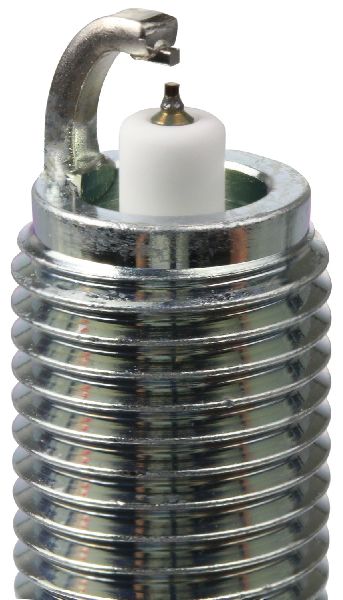
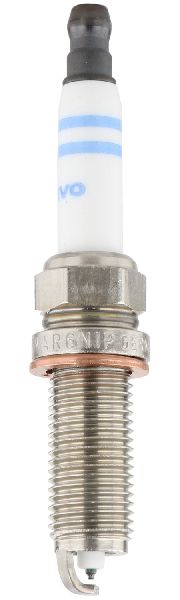
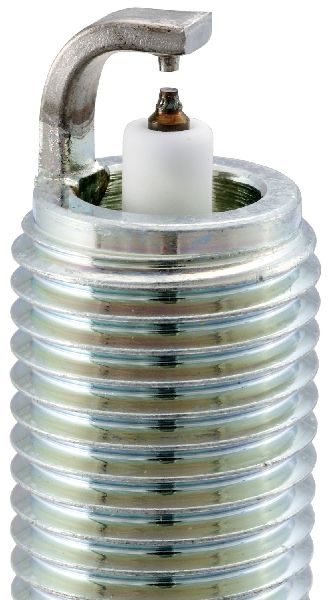
- Worn Spark Plugs 🔴 High Probability → Shop Spark Plug The V35A-FTS engine has a mandatory 40,000-mile spark plug replacement interval, which is much shorter than many owners expect. The high-pressure, high-heat environment of the twin-turbo engine wears out plugs faster.
How to confirm: Check service records or inspect the spark plugs for wear, fouling, or an incorrect gap. If the vehicle has over 40,000 miles on the original plugs, they are the primary suspect.
Typical fix: Replace all six spark plugs with OEM-spec units. Given the short interval, it's crucial to replace them as a set.
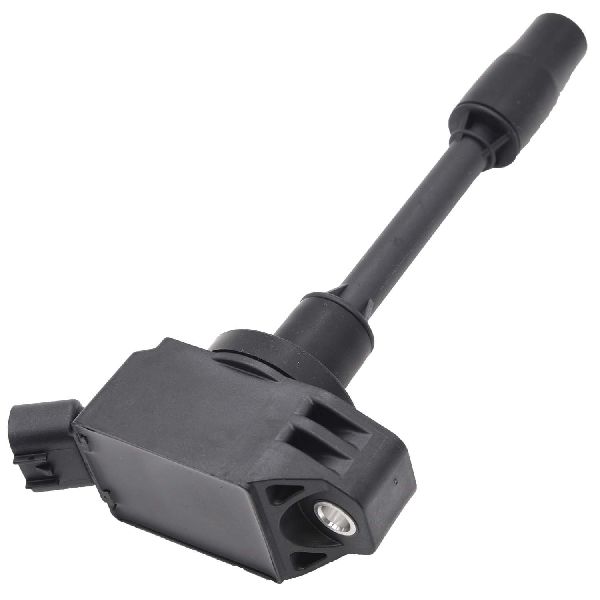
Est. part cost: $150-$240 - Failed Ignition Coil 🔴 High Probability → Shop Ignition Coil Ignition coils are common wear items on modern engines. The 'hot-V' design of the V35A-FTS, where the turbochargers are located in the valley between the cylinder heads, can contribute to a high-heat environment that shortens the life of ignition components. Coil failure is a very common cause for misfires on Tundras.
How to confirm: Use a scan tool to identify the misfiring cylinder (e.g., P0301 for cylinder 1). Swap the ignition coil from the misfiring cylinder with a coil from a known good cylinder. Clear the codes and run the engine. If the misfire code moves to the new cylinder (e.g., P0303), the coil is faulty.
Typical fix: Replace the single failed ignition coil. Many mechanics recommend using OEM or a reputable brand like Denso or NGK. Some owners recommend replacing all coils at once as a preventative measure if one fails.
Est. part cost: $120-$160 - Faulty Fuel Injector 🟡 Medium Probability → Shop Fuel Injector The V35A-FTS uses a complex D-4ST dual-injection system with both port and direct injectors for each cylinder. While reliable, a failure in either injector can cause a misfire. Diagnosis is more complex than for a simple ignition issue.
How to confirm: After ruling out the spark plug and ignition coil, a professional technician would need to perform advanced diagnostics, such as an injector balance test, resistance check, or flow test, to pinpoint a faulty injector.
Typical fix: Replace the failed fuel injector. This is typically a more labor-intensive and expensive repair than a coil or plug.
Est. part cost: $100-$300+
Rare But Worth Checking
- Internal Engine Failure due to Machining Debris (Recall): This is the most critical possibility. A significant number of 2022-2023 Tundras were recalled (NHTSA 24V-381 / Toyota 24TA07) for debris left in the engine that can cause main bearing failure. Symptoms include rough running, knocking, and engine failure, which can trigger misfire codes. If basic ignition fixes don't work, stop diagnostics and have a Toyota dealer check your VIN for this recall immediately. The remedy is a complete engine replacement, covered by Toyota. This recall was later expanded to include more vehicles.
- ECM Software Glitch (TSB): Toyota issued Technical Service Bulletin T-SB-0085-24 for some 2022-2024 Tundras that can experience random/multiple cylinder misfires with shuddering and reduced power. The fix is a simple ECM software update (reflash) performed by a dealer. This should be considered before replacing expensive hardware, especially if codes like P0300 are also present.
Diagnosis Steps
- Connect an OBD-II scanner to read the codes. Note the specific misfire code (e.g., P0304) that is likely present alongside P0363. This tells you which cylinder is the problem.
- CRITICAL FIRST STEP: Use the Toyota Recall Lookup tool or call a dealership with your VIN to check for open recalls, specifically the engine machining debris recall (24TA07 / NHTSA 24V-381) and the misfire TSB (T-SB-0085-24). If your vehicle is affected, stop and consult the dealer.
- If no critical recalls are open, proceed with standard misfire diagnosis. Access the ignition coil on the identified misfiring cylinder.
- Swap the ignition coil from the misfiring cylinder with one from an adjacent, easy-to-access cylinder.
- Clear the codes with the scanner, start the engine, and let it run. Re-scan for codes.
- If the misfire code has moved to the cylinder where you placed the suspect coil, the ignition coil is bad and must be replaced.
- If the misfire code remains on the original cylinder, the coil is likely good. Move the spark plug from the misfiring cylinder to another cylinder, clear codes, and test again. If the code moves, the spark plug is faulty.
- If the misfire still does not move, the issue is likely more complex (fuel injector, wiring, or a mechanical problem). At this point, especially given the known engine issues, professional diagnosis is strongly recommended.
Parts You'll Likely Need
- Spark Plug
(OEM #90919-01295)— This engine requires a 40,000-mile replacement interval. A worn plug is a highly probable cause of misfire on a vehicle approaching or exceeding this mileage.
Trusted brands: Denso, NGK
OEM price range: $25-$40
Aftermarket price range: $15-$30 - Ignition Coil
(OEM #90919-A2005)— A failed ignition coil is the most common cause of a single-cylinder misfire on most modern engines. Owners on forums often recommend sticking with OEM Denso coils to avoid issues with aftermarket parts.
Trusted brands: Denso, Bosch, NGK
OEM price range: $120-$160
Aftermarket price range: $70-$120
Related Codes That Often Appear With This One
- P0300 — P0300 is 'Random/Multiple Cylinder Misfire'. P0363 is often the result of the computer identifying that the P0300 condition is severe enough to warrant shutting down fuel to a cylinder. TSB T-SB-0085-24 specifically addresses P0300 on these trucks.
- P0301-P0306 — These codes correspond to a misfire on a specific cylinder (P0301 for cylinder 1, etc.). The ECM will log one of these codes first to identify the location of the misfire before setting P0363 and disabling the fuel.
Technical Service Bulletins (TSBs) & Recalls
- T-SB-0085-24: Addresses random/multiple cylinder misfires with an ECM reflash.
- NHTSA 24V-381 / Toyota 24TA07: Recall for engine failure due to machining debris.
- NHTSA 23V566000: Recall for fuel line rubbing issue causing a fire risk.
Platform-Specific Known Issues
- Engine Machining Debris Recall (NHTSA 24V-381 / Toyota 24TA07): A large number of 2022-2024 Tundras may have internal engine debris that can lead to main bearing failure and engine seizure. Symptoms can mimic a severe misfire, including rough running and engine knocking. This is a critical safety recall requiring dealer attention for a potential engine replacement.
- Misfire ECM Reflash TSB (T-SB-0085-24): A known software issue can cause misfires and rough running, which can be fixed with a dealer-performed ECM software update.
- Early Turbo Wastegate Failures (2022 models): Early production 2022 Tundras had a notable issue with turbocharger wastegate actuators failing, causing the truck to go into limp mode. While less common now, it's a known issue for this engine's early production run.
Mechanic-Grade Diagnostic Values
- Low-Pressure Fuel System — expected: 196 to 833 kPa (28 to 121 psi) at idle.. Failure: Pressure below this range can indicate a failing in-tank fuel pump.
- High-Pressure Fuel System (Direct Injection) — expected: 2.4 to 20 MPa (348 to 2900 psi), varies with engine load.. Failure: Inability to reach high pressure under load can cause misfires and is a symptom of a failing high-pressure fuel pump.
- Ignition Coil Primary Resistance — expected: Approximately 0.49 - 0.57 ohms (cold).. Failure: A reading outside this range indicates a faulty primary winding in the coil.
- Ignition Coil Secondary Resistance — expected: Approximately 9.5 - 11.1 kOhms (cold).. Failure: A reading outside this range indicates a faulty secondary winding in the coil.
Scan Tool Commands That Help
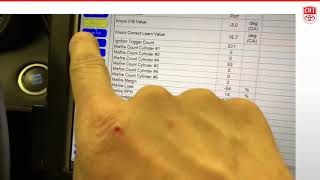
- Toyota Techstream: Misfire Monitor (EWMA & Rate) — To view both current misfire counts ('Rate') and historical misfire data ('EWMA' - Exponentially Weighted Moving Average). This helps distinguish between a current, active problem and a past, intermittent one.
- Toyota Techstream: Active Test: Check the Cylinder Compression — To perform a relative compression test by cranking the engine with fuel and spark disabled. The tool measures cranking speed for each cylinder to identify a cylinder with low compression, which would cause a persistent misfire.
- Toyota Techstream: Active Test: Control the Injection Mode — This allows a technician to manually switch between port and direct injection to help isolate a fueling issue. A known bug may prevent switching to 'Direct' mode, but it can still be used to test the port injection system.
Wiring & Ground Locations
- Main Engine Grounds — The main engine grounds are located on the rear of each cylinder head, near where the engine mates to the transmission.. A poor engine ground can cause weak spark or erratic behavior from ignition components, leading to misfires that are difficult to diagnose.
- Ignition Coil Ground — The bolt that holds the ignition coil to the valve cover also serves as a ground point for the coil.. If this bolt is loose, corroded, or has oil contamination, it can create a poor ground path for the ignition coil, causing a misfire on that specific cylinder.
- Battery to Fender/Body Ground — The main negative battery cable grounds to the vehicle's body/fender in the engine compartment, often near the battery tray.. While less direct, a compromised main body ground can cause a host of electrical issues, including intermittent misfires, by affecting the stability of the entire electrical system.
Real Owner Repair Stories
- Tundra Forum User (2020 Tundra (previous gen, but diagnostic logic is relevant)) — Random misfire codes (P0302, P0303, P0305) appearing after sitting overnight. Engine runs rough on startup, but is fine after clearing the code and restarting.
❌ Tried (didn't work) Using Techstream to perform a relative compression test, which showed all cylinders were even.
✅ What actually fixed it The user suspected a loose gas cap, as the issue did not return after ensuring it was tightened correctly. While not a direct cause of P0363, it highlights how EVAP system issues can sometimes present as intermittent rough running. - Tundra Forum User (2011 Tundra 4.7L V8) — Persistent cylinder 5 misfire code, rough idle, flashing lights (VSC, check engine).
❌ Tried (didn't work) Replacing all spark plugs and all ignition coils. The misfire code for cylinder 5 returned.
✅ What actually fixed it Another user suggested checking the battery ground connection to the fender wall, as a poor ground can cause persistent, hard-to-diagnose electrical issues like a misfire that doesn't follow parts swaps.
OEM Part Supersession History
90919-02255, 90919-02256, 90919-A2003→90919-A2005— Standard part evolution for improved reliability or manufacturing efficiency.
Model Year Variations Within This Range
- 2022-2024: The base SR trim has a detuned version of the V35A-FTS engine producing 348-358 hp and 405-406 lb-ft of torque, while higher trims (SR5, Limited, etc.) have an uprated version making 389 hp and 479 lb-ft of torque. The core causes of P0363 are the same, but be aware of the specific output when sourcing parts or information.
- 2024: For the 2024 model year, a factory-installed 3" TRD suspension lift kit and an enhanced TRD Off-Road package became available, which were not offered in 2023. These changes do not directly affect the P0363 code but denote model year differences.
Diagnostic Flowchart
Other Known Issues on This Vehicle
Issues unrelated to this code that are worth knowing about as an owner of this generation:
- Engine Main Bearing Failure (Machining Debris) 🔴 High — Affects a large but unknown percentage of 2022-2024 models. Failures can occur at low mileage. (Ref: NHTSA 24V-381 / Toyota 24TA07)
- Turbocharger Wastegate Actuator Failure 🟠 Medium — Primarily affected early 2022 models. Failures often occurred within the first few thousand miles. Seems to be resolved in later production.
- ECM Software Misfire Glitch 🟡 Low — Affects some 2022-2024 models, causing shuddering and misfire codes that can mimic more severe issues. (Ref: T-SB-0085-24)
- Post-Recall Engine Replacement Failures 🔴 High — A small but notable number of owners have reported issues, like overheating, shortly after having the recall engine replacement performed, possibly due to technician error during the complex installation.
Used vs. New Parts: Buying Guide for This Vehicle
When a used part is the smart pick: For this specific vehicle and code, using used parts is generally not recommended due to the newness of the platform and the critical nature of the known engine recall. A used ignition coil could be a temporary diagnostic tool but not a permanent repair.
Donor-vehicle mileage cap: roughly under 40000 miles for the part to have meaningful remaining life.
What to inspect on the donor part:
- For an ignition coil, check for any cracks in the plastic housing or corrosion on the electrical connector.
- Ensure the rubber boot is pliable and not brittle or torn.
- Ask for the VIN of the donor vehicle to check its service history and ensure it was not part of the major engine recall.
OEM-only on this vehicle (don't cheap out):
- Ignition Coils
- Spark Plugs
- Fuel Injectors (Port and Direct)
Aftermarket brands forum-validated for this vehicle:
- Denso (often the OEM supplier for Toyota)
- NGK
Brands owners have reported issues with on this vehicle:
- Unbranded or generic 'white-box' ignition coils and sensors from online marketplaces are frequently cited as unreliable and a common cause of persistent issues.
Real Owner Stories
Aggregated from forums and TSBs cited above. Mileages and costs reflect what owners reported in those sources.
2022-2024 Toyota Tundra V35A-FTS
Symptoms: Owners reported shuddering and reduced power, which felt like a major mechanical failure but was actually a software issue.
What fixed it: A dealer-performed ECM software update as per T-SB-0085-24.
Source hint: Tundras.com: T-SB-0085-24 Related to Random/Multiple Cylinder Misfire Detected
2022 Lexus LX 600 (J310)
Symptoms: Engine failure symptoms including rough running and potential seizure due to internal debris.
What fixed it: Dealer attention for potential engine replacement under the machining debris recall.
Source hint: NHTSA 24V-381 / Toyota 24TA07
Related OBD-II Codes
Frequently Asked Questions
My 2022 Tundra is shaking and showing a flashing check engine light; could this be related to the major engine recall?
Is there a software fix for the random cylinder misfires on the V35A-FTS engine?
How often should I change the spark plugs on my 2023 Tundra to avoid P0363 codes?
Can a faulty turbocharger cause my Tundra to go into limp mode with misfire-like symptoms?
If one ignition coil fails on my V35A-FTS, should I replace all of them?
Does the misfire TSB T-SB-0085-24 apply to the Sequoia Hybrid as well?
Helpful Videos
Used OEM Parts in Stock
New Aftermarket Parts Available


The information in this article is provided for general reference and educational purposes only. Vehicle specifications, procedures, and part compatibility can vary by production date, trim level, and region. Always consult your vehicle's factory service manual and verify part numbers before purchasing or performing repairs. Safety-critical components such as airbags, seat belts, and braking systems should be installed by a qualified professional.
- Toyota Tundra:
- 🧭 Diagnostic Flowchart
- 🎬 Helpful Videos
- 🛍️ Shop This Part
- What's Unique About the 2022-2024 Toyota Tundra
- Symptoms You May Notice
- Most Likely Causes
- Rare But Worth Checking
- Diagnosis Steps
- Parts You'll Likely Need
- Related Codes That Often Appear With This One
- Technical Service Bulletins (TSBs) & Recalls
- Platform-Specific Known Issues
- Mechanic-Grade Diagnostic Values
- Scan Tool Commands That Help
- Wiring & Ground Locations
- Real Owner Repair Stories
- OEM Part Supersession History
- Model Year Variations Within This Range
- Other Known Issues on This Vehicle
- Used vs. New Parts: Buying Guide for This Vehicle
- Real Owner Stories
- 2022-2024 Toyota Tundra V35A-FTS
- 2022 Lexus LX 600 (J310)
- Related OBD-II Codes
- Frequently Asked Questions
- 🎟️ Get 5% Off