

P0365 on 2016-2017 Dodge Durango: Camshaft Sensor Circuit Causes and Fixes
This code indicates a problem with the passenger-side exhaust camshaft position sensor. While the sensor itself can fail, a common fix for the 2016-2017 Durango is a powertrain software update from Dodge, as specified in TSB #18-049-20. This TSB changes the code from a one-trip to a two-trip fault, making it less sensitive. Always check for this update before replacing parts.
- P0365 on a 2016-2017 Durango points to the passenger-side exhaust camshaft position sensor.
- Before replacing any parts, check if your vehicle's computer has been updated per Dodge TSB #18-049-20, as this is a very common fix.
- If the software is up to date, the most likely cause is a failed sensor, which is a relatively inexpensive and accessible part to replace for a DIYer.
- Always inspect the sensor's wiring and connector for oil leaks or damage before buying a new sensor.
- Do not ignore this code, as it can lead to stalling, poor performance, and potentially leave you stranded.
What's Unique About the 2016-2017 Dodge DURANGO
On this specific generation of Dodge Durango and its platform mates like the Jeep Grand Cherokee, the P0365 code is frequently triggered due to software sensitivity. Dodge released technical service bulletins (TSBs) to update the PCM software, making it less likely to set this code from a brief or intermittent signal loss. Specifically, TSB 18-049-20 changes the logic for P0365 from a one-trip fault to a two-trip fault, meaning the error must be detected on two consecutive drive cycles before illuminating the Check Engine Light. This means that unlike many other vehicles where this code almost always points to a bad sensor, on the Durango, the root cause could be outdated software that needs a dealer-installed update.
Diagnostic Flowchart
Tap your situation to follow the diagnostic path that matches what you're seeing on this vehicle.
Symptoms You May Notice
- Check Engine Light is on
- Engine is hard to start or takes longer to crank
- Rough idling or stalling
- Noticeable loss of engine power and acceleration
- Engine misfiring
- Traction control light may illuminate simultaneously
- Replacing the camshaft position sensor without first checking if the PCM software update from TSB #18-049-20 has been performed. The code may return if the software is the true root cause.
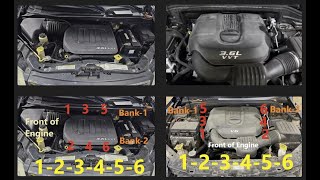
- Replacing the wrong sensor. On the 3.6L V6, there are four camshaft sensors. P0365 specifically refers to the exhaust sensor on Bank 1 (passenger side).
Most Likely Causes
- Outdated Powertrain Control Module (PCM) Software 🔴 High Probability Manufacturer TSBs #18-049-20 and #18-024-17 REV. C were issued to address this exact code by making the system less sensitive to intermittent faults. The update changes P0365 to a two-trip fault, preventing the check engine light from appearing for transient glitches.
How to confirm: A Dodge dealership or a properly equipped independent shop with a tool like wiTECH can check your vehicle's software calibration ID against the latest version mentioned in the TSBs.
Typical fix: Reprogramming (flashing) the PCM with the updated software. This is not a DIY repair and requires dealer-level tools.
Est. part cost: $0 - Failed Camshaft Position Sensor 🔴 High Probability → Shop Engine Camshaft Position Sensor The sensor is an electronic component that operates in a high-heat environment and can fail over time. Aftermarket sensors are reported to have a higher failure rate, so using an OEM Mopar part is often recommended.
How to confirm: After confirming the wiring is intact, the easiest test is to swap the Bank 1 exhaust cam sensor with the Bank 2 exhaust cam sensor (if identical and accessible). Clear codes and drive. If the code changes to P0390 (Camshaft Position Sensor 'B' Circuit - Bank 2), the sensor is bad. On the 3.6L V6, the sensors are identical.
Typical fix: Replace the faulty camshaft position sensor. On the 3.6L Pentastar, there are four sensors in total (intake and exhaust for each bank), and they are physically identical.
Est. part cost: $25-$70 - Wiring or Connector Issue 🟡 Medium Probability Engine oil can leak from valve cover gaskets or the sensor's own seal, contaminating the connector and causing corrosion or signal interference. Wires can also become brittle from heat cycles and break or short out. The connector pins themselves can get bent during other service.
How to confirm: Visually inspect the wiring harness and the 4-pin connector for the Bank 1 camshaft sensor. Look for oil contamination, corrosion on the pins, or any signs of physical damage to the wires. Ensure the red locking tab on the connector is fully engaged.
Typical fix: Clean the connector and sensor with electrical contact cleaner. If wiring is damaged, repair the specific wire or replace the connector pigtail. If the sensor seal is leaking, it should be replaced.
Est. part cost: $10-$30 - Low or Dirty Engine Oil ⚪ Low Probability The VVT (Variable Valve Timing) system uses oil pressure to adjust cam timing. If pressure is low due to low or dirty oil, it can cause the camshafts to not be where the PCM expects them, triggering a sensor code as a secondary fault.
How to confirm: Check the engine oil level and condition using the dipstick. If it's low or very dirty, this could be a contributing factor.
Typical fix: Perform an oil and filter change using the correct viscosity oil (e.g., 5W-20 for the 3.6L). Clear codes and see if the issue returns.
Est. part cost: $50-$100
Rare But Worth Checking
- Failing Camshaft Phaser or Timing Chain: → Shop Engine Timing Chain On the 3.6L Pentastar engine, worn timing components or a failing cam phaser can cause the camshaft to be out of sync with the crankshaft, which can trigger cam sensor codes. This is a more serious mechanical issue that usually comes with other codes like P0016 or a distinct startup rattle.
- Faulty Powertrain Control Module (PCM): This is extremely rare. Before condemning the PCM, all other possibilities (sensor, wiring, software, mechanical) must be exhaustively ruled out. A dealership would be required for this diagnosis and replacement.
Diagnosis Steps
- Scan for all stored DTCs. Note any other codes that appear alongside P0365, especially P0369, P0340, or U1424.
- Check engine oil level and condition. Top up or change if necessary, as low/dirty oil can affect VVT operation.
- Visually inspect the Bank 1 (passenger side) exhaust camshaft position sensor and its electrical connector. On the 3.6L, this sensor is on the rear of the cylinder head. Look for loose connections, oil contamination, corrosion, or damaged wires.
- If accessible, swap the Bank 1 exhaust sensor with the Bank 2 (driver's side) exhaust sensor. The sensors are identical on the 3.6L V6. Clear the codes and drive the vehicle. If the code returns as P0390, the sensor is confirmed to be faulty.
- If the code remains P0365 after the swap, use a multimeter to test the circuit. Check for the correct voltage (typically 5V reference) and a good ground at the connector.
- If the sensor and wiring test good, contact a Dodge dealer or qualified shop to determine if TSB #18-049-20 (or #18-024-17 REV. C) applies and if the PCM software update has been performed. This is a very common fix for this specific vehicle and code.
- If all of the above steps fail to resolve the issue, a deeper mechanical diagnosis of the timing chain and phasers may be required, especially if you hear a startup rattle.
Parts You'll Likely Need
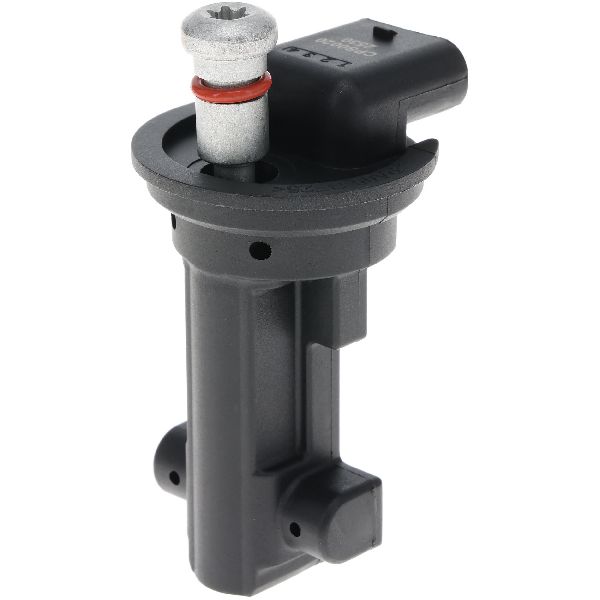
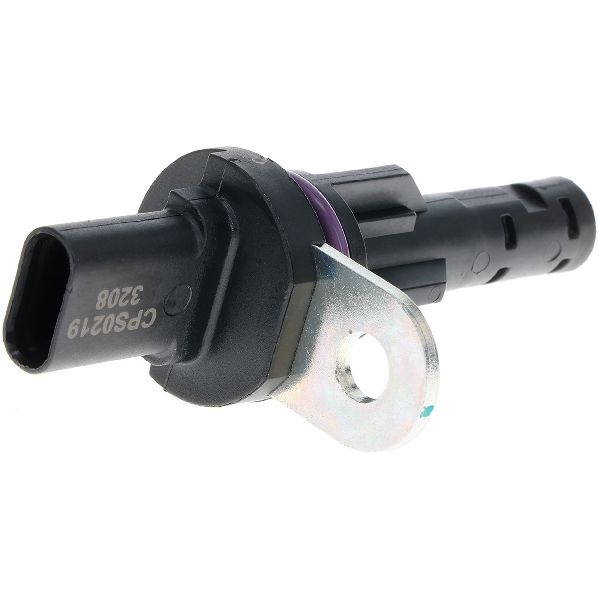
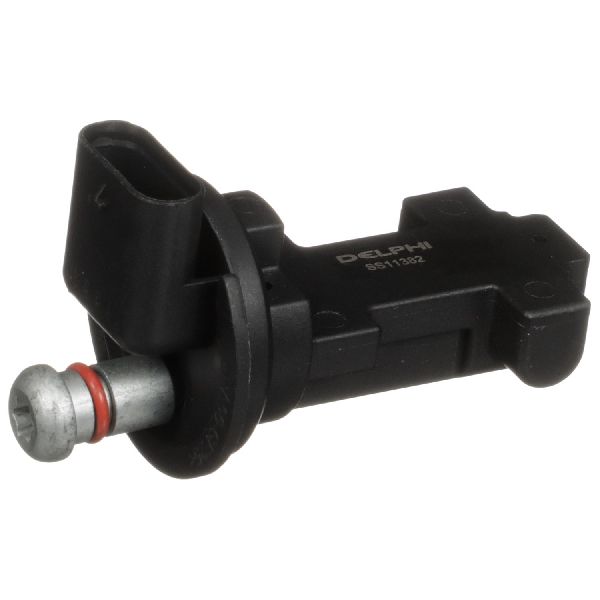
- Camshaft Position Sensor
(OEM #05149141AF)— This sensor is the most common hardware component to fail, causing the P0365 code when it no longer sends a readable signal to the PCM. The part number 05149141AF is the widely cited OEM Mopar part for the 3.6L engine.
Trusted brands: Mopar, NTK, Bosch, Delphi
OEM price range: $45-$105
Aftermarket price range: $25-$50
Related Codes That Often Appear With This One
- P0369 — This is the 'intermittent' version of P0365. Seeing it confirms the fault is not constant, which aligns with the software sensitivity issue described in the TSBs that were released to address these specific intermittent codes.
- P0340 — This is the code for the intake camshaft sensor on the same bank (Bank 1). Seeing both P0340 and P0365 could point to a broader issue with that cylinder head's timing components, a shared wiring problem, or a bad connection at the single sensor housing on some engines.
- U1424 — Stands for 'Implausible Engine Torque Signal Received'. A bad cam sensor signal can cause the PCM to miscalculate engine torque, triggering this communication code as a symptom of the P0365 fault. TSB 18-049-20 specifically lists this code as one of the issues addressed by the PCM update.
- P0390 — This is the equivalent code (Camshaft Position Sensor 'B' Circuit) but for Bank 2 (driver's side). If you swap the Bank 1 and Bank 2 sensors for diagnosis and the code changes from P0365 to P0390, you have confirmed the sensor itself is faulty.
Technical Service Bulletins (TSBs) & Recalls
- 18-049-20: Flash: Powertrain Control Module (PCM) Updates. This TSB supersedes the earlier version and involves reprogramming the PCM to address multiple DTCs, including P0365. Its main effect is changing P0365 from a one-trip to a two-trip fault.
- 18-024-17 REV. C: Flash: Powertrain Diagnostic and System Enhancements. An earlier version of the software update bulletin that also addresses the P0365 code among others.
Platform-Specific Known Issues
- A known software issue can cause this code to be set intermittently. TSB #18-049-20 was released to update the PCM software to be less sensitive and change the code to a two-trip fault.
- On the 3.6L Pentastar engine, the four camshaft position sensors (intake/exhaust for each bank) are identical and interchangeable, which is useful for diagnostics.
Mechanic-Grade Diagnostic Values
- 5-Volt Supply Circuit (K856) Voltage — expected: 4.5 to 5.2 Volts with Key On, Engine Off.. Failure: Voltage below 4.5V or above 5.2V points to a wiring issue or a problem with the PCM's 5V reference circuit.
- Sensor Ground Circuit (K900) Resistance — expected: Less than 5.0 Ohms to a known good chassis ground.. Failure: Resistance higher than 5.0 Ohms indicates an open or high-resistance ground circuit, which can cause erratic sensor signals.
- CMP Signal Circuit (K441) Voltage — expected: A digital signal that switches between approximately 0V and 5V as the engine is cranked or a magnet is passed over the sensor tip.. Failure: A static voltage (stuck at 0V or 5V) or no voltage indicates a failed sensor or a short/open in the signal wire.
Scan Tool Commands That Help
- High-End OBD2 Scanner or OEM Tool (wiTECH): Cam Sensor Relearn Procedure — After replacing the camshaft position sensor, some vehicles require a relearn procedure for the PCM to recognize the new sensor's specific characteristics. This may be an automated function in the scan tool or require a specific drive cycle to complete.
Wiring & Ground Locations
- (K856) 5-Volt Supply — This is the circuit providing 5V power from the PCM to the camshaft position sensor connector.. A loss of this voltage will cause the sensor to stop sending a signal, directly triggering P0365.
- (K900) Sensor Ground — This is the ground circuit running from the sensor connector back to the PCM.. A poor or open ground will cause erratic or no signal from the sensor, leading to a P0365 code.
- (K441) CMP Signal — This is the signal return circuit from the sensor connector to the PCM, carrying the camshaft position information.. An open or short in this specific wire will cause a loss of signal and set the P0365 code.
- 4-Wire Sensor Connector (3.6L V6) — Located at the rear of the passenger side (Bank 1) cylinder head. It contains the wiring for both the intake and exhaust cam sensors for that bank.. P0365 relates to the exhaust sensor ('B' sensor). On a similar 3.6L engine, the wires for the exhaust sensor are reportedly yellow and blue, which is critical for testing the correct pins.
Real Owner Repair Stories
- Dodge Journey Forum (2017 Dodge Journey 2.4L (Platform relative)) — Intermittent Check Engine Light and Traction Control light, car enters limp mode, P0365 code stored.
❌ Tried (didn't work) Replaced the wrong sensor first (intake)., Replaced the correct exhaust camshaft position sensor., Performed a relearn procedure.
✅ What actually fixed it The issue persisted after replacing the sensor. The owner noted the cam/crank difference for the exhaust side was erratic on live data, while the intake side was steady. The suspected final cause was failing cam phasers, prompting the owner to take the vehicle to a shop for warranty repair. This highlights that a persistent P0365 can indicate a deeper mechanical problem.
"I Checked Everything" — The Actual Cause
- In cases where electrical testing of the sensor and wiring shows no faults, and even a new sensor does not resolve the P0365 code, the underlying cause can be mechanical. On the 3.6L Pentastar engine, issues like failing cam phasers or excessive timing chain slack can cause the camshaft's actual position to be out of sync with what the PCM expects, triggering the sensor code even though the sensor itself is functioning correctly.
When the Usual Fixes Don't Work
- While replacing the camshaft position sensor or updating the PCM software are the most common fixes, they are not guaranteed solutions. There are documented cases where owners have performed these repairs only for the P0365 code to return. In these instances, the root cause was often found to be a more serious underlying mechanical issue with the variable valve timing (VVT) system, such as a failing camshaft phaser, which is a known issue on the 3.6L Pentastar engine. This underscores the importance of a full diagnostic procedure, including checking live data for cam/crank correlation, before assuming the easiest fix is the correct one.
OEM Part Supersession History
Varies→05149141AF— This is the most commonly cited Mopar OEM part number for the camshaft position sensor on the 3.6L Pentastar engine used in the 2016-2017 Durango.
Heads up: While 05149141AF is the primary part, other numbers like 05149140AB and 68080819AC have been mentioned for similar applications. Always verify the correct part number with the vehicle's VIN at a dealership to avoid incompatibility.
Model Year Variations Within This Range
- 2016-2017: The core powertrain options (3.6L V6, 5.7L V8) and engine architecture remained consistent across these two model years. The 3.6L V6 received a standard auto start-stop system beginning in 2016. The GT trim was introduced in 2017, replacing the Limited trim, but it used the same 3.6L V6 engine. These minor changes do not significantly alter the diagnostic approach for a P0365 code.
Helpful Videos


We Have This Part in Stock


The information in this article is provided for general reference and educational purposes only. Vehicle specifications, procedures, and part compatibility can vary by production date, trim level, and region. Always consult your vehicle's factory service manual and verify part numbers before purchasing or performing repairs. Safety-critical components such as airbags, seat belts, and braking systems should be installed by a qualified professional.
- Dodge DURANGO:
- 🧭 Diagnostic Flowchart
- 🎬 Helpful Videos
- 🛍️ Shop This Part
- What's Unique About the 2016-2017 Dodge DURANGO
- Symptoms You May Notice
- Most Likely Causes
- Rare But Worth Checking
- Diagnosis Steps
- Parts You'll Likely Need
- Related Codes That Often Appear With This One
- Technical Service Bulletins (TSBs) & Recalls
- Platform-Specific Known Issues
- Mechanic-Grade Diagnostic Values
- Scan Tool Commands That Help
- Wiring & Ground Locations
- Real Owner Repair Stories
- "I Checked Everything" — The Actual Cause
- When the Usual Fixes Don't Work
- OEM Part Supersession History
- Model Year Variations Within This Range
- 🎟️ Get 5% Off