

P0365 on 2018-2019 Ford Expedition 3.5L: Cam Sensor, Oil Consumption, and Valve Cover Fixes
On a 2018-2019 Expedition with the 3.5L EcoBoost, code P0365 is rarely just a bad sensor. It's a strong indicator of excessive oil consumption due to a faulty PCV system in the valve covers. The fix often requires replacing both valve covers, a significantly more involved job than a simple sensor swap.
- P0365 on a 2018-2019 Expedition 3.5L is a strong indicator of a known oil consumption problem.
- Before buying any parts, check your engine oil level and monitor for consumption.
- The most likely permanent fix is not replacing the sensor, but replacing both engine valve covers per Ford's TSBs.
- This code is almost always accompanied by P0369.
- Due to the complexity of the valve cover replacement, professional service is recommended for the most common repair.
What's Unique About the 2018-2019 Ford EXPEDITION
For this specific generation of Expedition with the 3.5L EcoBoost engine, P0365 is a well-documented symptom of a larger issue. Ford has issued multiple Technical Service Bulletins (TSBs) acknowledging that this code, often paired with P0369, is directly linked to excessive oil consumption caused by a flawed Positive Crankcase Ventilation (PCV) system design. The PCV system is integrated into the valve covers, and the official fix involves replacing both covers with updated parts, not just the sensor mentioned in the code's definition. Some TSBs for high-output versions also recommend a PCM reprogram as a first step.
Diagnostic Flowchart
Tap your situation to follow the diagnostic path that matches what you're seeing on this vehicle.
Symptoms You May Notice
- Check Engine Light is on
- Excessive oil consumption, requiring frequent top-offs
- Rough idle
- Engine stalling or difficulty starting
- Reduced engine power and poor acceleration
- Decreased fuel economy
- Engine may enter a reduced power or 'limp' mode
- Burning oil smell if the valve covers are leaking externally onto the exhaust.
- Replacing only the camshaft position sensor without checking for excessive oil consumption or TSBs. The new sensor may work temporarily, but the code will likely return as it is a symptom, not the root cause.
- Mistaking an external valve cover gasket leak for the internal PCV-related oil consumption issue. While both can occur, P0365 is more directly tied to the internal consumption problem affecting VCT operation.
Most Likely Causes
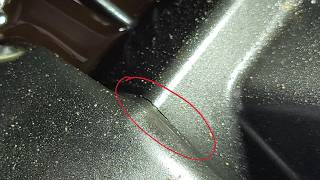
- Faulty PCV System / Valve Covers 🔴 High Probability → Shop Engine Valve Cover As documented in Ford TSBs (like TSB 20-2132 and SSM 47983), the PCV system integrated into the valve covers is prone to failure on vehicles built before April 2019, causing excessive oil consumption that can foul sensors or disrupt timing systems. The driver-side cover is also known to develop hairline cracks. 🎬 See how to identify and repair a cracked driver-side cover.
How to confirm: Monitor engine oil level closely. If the engine consumes more than one quart of oil in 3,000 miles with no external leaks, this is the likely cause, as specified in Ford's TSB diagnostic criteria. A technician can verify this against the relevant TSBs.
Typical fix: Replace both left and right engine valve covers with updated parts. This is an extensive repair that also requires replacing intake gaskets and other single-use components like the high-pressure fuel pump tube.
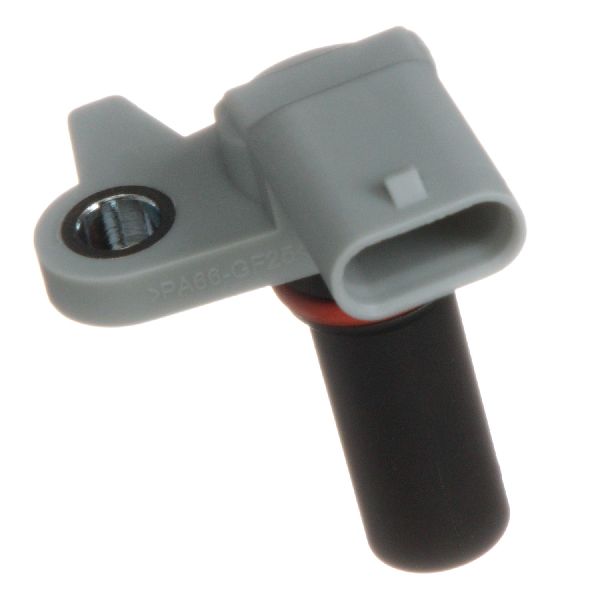
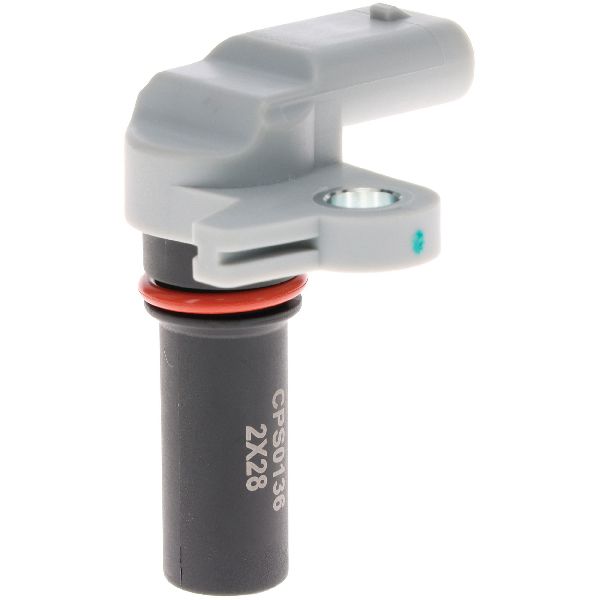
Est. part cost: $250-$500 - Failed Camshaft Position Sensor 🟡 Medium Probability → Shop Engine Camshaft Position Sensor The sensor can become contaminated with oil due to the underlying PCV/valve cover issue, leading to premature failure. In some cases, metallic debris from engine wear can accumulate on the magnetic tip, disrupting the reading.
How to confirm: After checking for TSB applicability and correct oil level, inspect the sensor and connector for oil contamination. Swap the exhaust sensor (Sensor 'B') with the intake sensor (Sensor 'A') on the same bank. If the code changes to P0340, the sensor is faulty. The sensor is located on the rear of the passenger-side valve cover and is held by a single 8mm bolt.
Typical fix: Replace the Bank 1 exhaust camshaft position sensor.
Est. part cost: $25-$80 - Low Engine Oil Level 🟡 Medium Probability This is a direct consequence of the known oil consumption issue. Low oil levels can cause a drop in hydraulic pressure, preventing the Variable Camshaft Timing (VCT) system from operating correctly and triggering timing-related codes. Ford TSBs specifically instruct technicians to allow a 15-minute oil drain-back period for an accurate reading.
How to confirm: Check the engine oil dipstick after letting the vehicle sit on a level surface for at least 15 minutes to allow for oil drain-back.
Typical fix: Top off the engine oil to the correct level and monitor for consumption. If consumption is excessive (more than 1 quart per 3,000 miles), refer to the 'Faulty PCV System' cause.
Est. part cost: $10-$20 - Damaged Wiring or Connector ⚪ Low Probability The wiring harness can become brittle from heat cycles or chafe against components like the turbo inlet pipe. Connectors can also become loose or have broken locking tabs from previous repairs.
How to confirm: Visually inspect the wiring harness and connector for the Bank 1 exhaust camshaft position sensor for any signs of damage, corrosion, or oil saturation. Use a multimeter to test for continuity and proper voltage (typically a 5V reference) at the connector.
Typical fix: Repair the damaged section of the wiring harness or replace the connector pigtail.
Est. part cost: $15-$50
Rare But Worth Checking
- Worn Timing Components (Chain, Phasers): The 3.5L EcoBoost can be prone to timing chain stretch and VCT phaser failure ('cold start rattle'). While less common than the PCV issue for this specific code, a significant timing deviation can trigger P0365. This is a major engine repair.
- Powertrain Control Module (PCM) Failure: In very rare cases, the PCM itself can be the source of the problem, either through a software glitch or hardware failure. This should only be considered after all other possibilities have been exhaustively ruled out. Some TSBs for related models do call for a PCM reprogram as a first step to address oil consumption.
Diagnosis Steps
- Scan for any other DTCs, paying close attention to P0369, which is almost always present with P0365.
- Check the engine oil level on a level surface after waiting at least 15 minutes for oil drain-back. If it is low, top it off, clear the codes, and drive the vehicle to see if the code returns. Begin monitoring for excessive oil consumption.
- Check the vehicle's build date (on the driver's door jamb sticker) and check for the applicability of TSBs 20-2132, 19-2232, and SSM 47983. The primary fix is for vehicles built on or before April 1, 2019.
- If oil level is correct and TSBs do not seem to apply, visually inspect the Bank 1 exhaust camshaft position sensor and its electrical connector for damage or oil contamination. The sensor is on the passenger-side valve cover, towards the rear.
- If the inspection reveals no issues, swap the exhaust sensor with the intake sensor on the same bank to see if the code follows the sensor (e.g., changes to P0340). If it does, the sensor is bad.
- If the code does not follow the sensor, use a multimeter to check for correct voltage and ground at the sensor connector. Expect ~5V on the power wire and 4-5V on the signal wire with the key on, engine off.
- If wiring is confirmed to be good, and the oil consumption issue is present (over 1 quart in 3,000 miles), proceed with the TSB recommendation of replacing both valve covers.
Parts You'll Likely Need
- Engine Valve Cover (Left and Right)
(OEM #HL3Z-6582-G (Left, supersedes HL3Z-6582-E), HL3Z-6582-C (Right))— This is the primary fix recommended by Ford TSBs to correct the faulty PCV system design causing oil consumption and triggering codes P0365/P0369. Part number HL3Z-6582-E for the left cover has been superseded by HL3Z-6582-G.
Trusted brands: Motorcraft
OEM price range: $250-$400 (for the pair)
Aftermarket price range: $200-$350 (for the pair) - Camshaft Position Sensor
(OEM #BL3Z-6B288-C (Motorcraft DU-99))— This is the component directly identified by the code. While often not the root cause on this vehicle, it can fail and is a necessary diagnostic step to test or replace.
Trusted brands: Motorcraft, Bosch, Delphi
OEM price range: $40-$60
Aftermarket price range: $25-$45 - Intake Manifold Gasket Set
(OEM #HL3Z-9H486-A)— These are single-use gaskets that must be replaced when removing the intake manifold to access and replace the valve covers, as specified in the TSBs.
Trusted brands: Motorcraft, Mahle, Fel-Pro
OEM price range: $20-$40
Aftermarket price range: $15-$30 - High Pressure Fuel Pump To Fuel Rail Tube
(OEM #HL3Z-9J323-C)— This is a one-time use part that must be replaced if removed to access the valve covers, per Ford service procedures. Some TSBs note it may be reused once if not previously reused.
Trusted brands: Motorcraft
OEM price range: $30-$50
Related Codes That Often Appear With This One
- P0369 — This code for 'Camshaft Position Sensor 'B' Circuit Intermittent (Bank 1)' is for the same sensor and is explicitly mentioned alongside P0365 in all related Ford TSBs for this engine. They almost always appear together.
- P0016, P0017, P0018, P0019 — These are crankshaft/camshaft position correlation codes. If the underlying issue is more severe, such as a stretched timing chain or failed VCT phasers, these codes may appear with P0365, indicating a serious mechanical timing problem.
Technical Service Bulletins (TSBs) & Recalls
- TSB 20-2132: Supersedes 19-2232. Links P0365/P0369 and excessive oil consumption to a PCV system concern on vehicles built on or before 01-Apr-2019, mandating valve cover replacement.
- TSB 20-2423: For 3.5L High-Output engines (found in some F-150s and Navigators), this TSB addresses the same oil consumption issue with P0365/P0369, but the procedure starts with a PCM reprogram before valve cover replacement.
- SSM 47983: An earlier communication advising replacement of both valve covers for this issue on vehicles built on or before 01-Apr-2019.
- SSM 47623: An even earlier bulletin for vehicles built on or before 13-Jul-2018, also pointing to valve cover replacement for P0365/P0369 and oil consumption.
Platform-Specific Known Issues
- On 2018-2019 models with the 3.5L EcoBoost engine, DTCs P0365 and P0369 are frequently linked to excessive oil consumption caused by a faulty Positive Crankcase Ventilation (PCV) system design. Ford issued multiple Technical Service Bulletins (TSB 20-2132, SSM 47983, SSM 47623) advising technicians to replace both valve covers to correct the issue on vehicles built before April 2019.
- The driver-side (left) valve cover is also known to develop hairline cracks near the front, causing an external oil leak that can be mistaken for a simple gasket failure but requires full cover replacement.
Mechanic-Grade Diagnostic Values
- Camshaft Position Sensor Power Supply Voltage — expected: ~5V DC. Failure: No voltage indicates a wiring or PCM issue.
- Camshaft Position Sensor Signal Wire Voltage (KOEO) — expected: ~4V to 5V DC. Failure: 0V or significantly low voltage could indicate a short in the harness or a faulty sensor.
- VCT Advanced Error PID (Ford IDS) — expected: Should hover near 0° with no more than a +/- 5° deviation for an extended time.. Failure: A large, persistent error angle on Bank 1 points to a mechanical timing problem (phaser, chain) or a sensor reading issue on that bank.
Hidden / Shadow Codes Worth Checking
- Mode $06, TID $51-$54: Represents test results for the Variable Camshaft Timing (VCT) system. This data can reveal if the system is marginally failing its self-test, showing a deviation in camshaft timing before it's severe enough to set a hard fault code like P0365. (see via Access 'Mode $06' or 'On-Board Monitoring' on a compatible professional scan tool.)
Scan Tool Commands That Help
- Ford IDS (or equivalent): PCM Reprogram / Calibration Update — This is a required step in several TSBs (e.g., TSB 20-2423) related to the oil consumption issue that causes P0365/P0369. The software update changes engine parameters to help mitigate the problem.
- Ford IDS (or equivalent): VVT Actuator Functional Test — Used to command the VCT solenoids to check for mechanical response from the cam phasers. A failure to respond, or if the command is unavailable, can point towards a deeper mechanical or control issue.
- High-end scan tool: Camshaft Position Relearn — After replacing a camshaft position sensor, some vehicles may require a relearn procedure for the PCM to recognize the new sensor's specific electronic signature. Often the PCM relearns automatically, but a scan tool function can force it if issues persist.
Wiring & Ground Locations
- CMP Sensor Connector (Bank 1, Sensor B) — On the rear of the passenger-side (Bank 1) valve cover. It is a 3-wire connector.. This is the direct connection point for the sensor in question. It should be checked for being loose, damaged, or contaminated with oil. Pin 1 is 5V power, Pin 2 is ground.
- Engine Wiring Harness Chafe Point — Check the harness routing near the passenger-side turbocharger inlet pipe and associated heat shields.. Vibration and extreme heat in this area can cause the wiring for the camshaft sensor to chafe, leading to an intermittent short or open circuit that triggers P0365/P0369.
Real Owner Repair Stories
- Snap-on Diagnostics Product Forums user 'BRIAN617' (2013 Ford F-150 3.5L EcoBoost (same engine family and known issue)) — Check engine light with codes P0365 and P0369. VVT data PIDs were frozen on the scan tool.
❌ Tried (didn't work) Swapping the intake and exhaust cam sensors on Bank 1 (code did not follow the sensor)., Testing the wiring from the sensor to the PCM (all circuits tested good)., Replacing the entire timing chain, guides, and tensioners.
✅ What actually fixed it The reluctor wheel (tone ring) on the Bank 1 exhaust camshaft had slipped nearly 90 degrees from its original position. This part also serves as the drive for the high-pressure fuel pump and vacuum pump. The final fix was replacing the Bank 1 exhaust camshaft. - YouTube channel 'Cobra Strikes Back' (2013 Ford F-150 3.5L EcoBoost with 218,000 miles) — Codes P0365, P0369, and P0299 (turbo underboost). Vehicle had no power and would accelerate very slowly.
❌ Tried (didn't work) Initially plugging the connector back in did not clear the codes or restore power.
✅ What actually fixed it The connector for the Bank 1 exhaust cam sensor had fallen off. The final fix involved not only reconnecting it securely but also cleaning a significant amount of metallic, magnetic debris off the sensor tip with electronic cleaner. After cleaning and reconnecting, all codes were resolved and power was restored.
"I Checked Everything" — The Actual Cause
- A common scenario for this code is that all electrical tests (voltage, ground, continuity) for the sensor and wiring will pass, and swapping the sensor with a known-good one has no effect. Even a scope may show a waveform. The true, hidden cause in these cases is often a mechanical failure: the reluctor wheel on the exhaust camshaft has spun independently from the cam itself. A technician on a Snap-on forum only found this by using a dual-channel scope to compare the waveform of the faulty Bank 1 exhaust sensor against the known-good Bank 2 exhaust sensor, revealing the timing of the signal was off by nearly 90 degrees despite the signal's integrity.
OEM Part Supersession History
HL3Z-6582-B, HL3Z-6582-D, HL3Z-6582-E→HL3Z-6582-G— This updated left (driver's side) valve cover contains a redesigned Positive Crankcase Ventilation (PCV) system to correct the oil consumption issue outlined in Ford TSB 20-2132.
Heads up: The new part (G) is a direct replacement for the older versions (B, D, E) and should be used for all repairs related to the TSB. The new part includes the gasket but not the mounting bolts.
Model Year Variations Within This Range
- 2018-2019 (built on or before 01-Apr-2019): Vehicles built on or before April 1, 2019, are subject to TSB 20-2132, which identifies a faulty PCV system within the valve covers as the cause of oil consumption and codes P0365/P0369. Vehicles built after this date should have the updated parts from the factory.
Helpful Videos
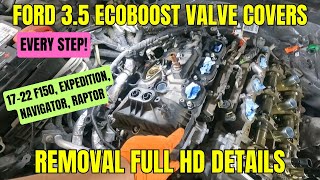
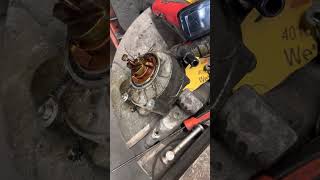

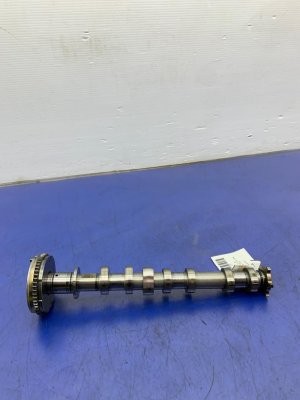
Used OEM Parts in Stock
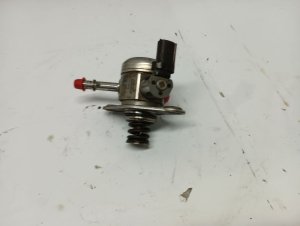
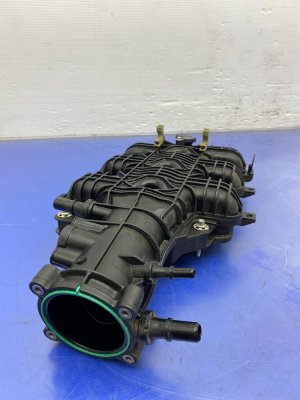
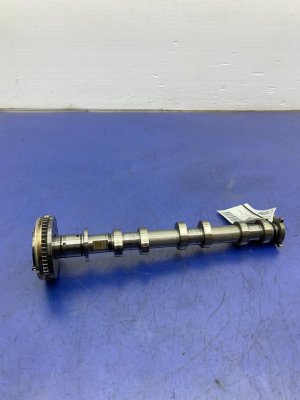
New Aftermarket Parts Available


The information in this article is provided for general reference and educational purposes only. Vehicle specifications, procedures, and part compatibility can vary by production date, trim level, and region. Always consult your vehicle's factory service manual and verify part numbers before purchasing or performing repairs. Safety-critical components such as airbags, seat belts, and braking systems should be installed by a qualified professional.
- Ford EXPEDITION:
- 🧭 Diagnostic Flowchart
- 🎬 Helpful Videos
- 🛍️ Shop This Part
- What's Unique About the 2018-2019 Ford EXPEDITION
- Symptoms You May Notice
- Most Likely Causes
- Rare But Worth Checking
- Diagnosis Steps
- Parts You'll Likely Need
- Related Codes That Often Appear With This One
- Technical Service Bulletins (TSBs) & Recalls
- Platform-Specific Known Issues
- Mechanic-Grade Diagnostic Values
- Hidden / Shadow Codes Worth Checking
- Scan Tool Commands That Help
- Wiring & Ground Locations
- Real Owner Repair Stories
- "I Checked Everything" — The Actual Cause
- OEM Part Supersession History
- Model Year Variations Within This Range
- 🎟️ Get 5% Off