

P0365 on 2017-2020 Ford F-150: Camshaft Position Sensor 'B' Circuit (Bank 1) Causes and Fixes
On a 2017-2020 F-150 with the 3.5L EcoBoost, code P0365 is most often caused by either a failed exhaust camshaft position sensor on Bank 1 or low engine oil. Always check your oil level before buying parts, as this engine is known for oil consumption issues that trigger this code. A sensor replacement is around $25-$60 for the part and is a straightforward DIY fix.
- For a 2017-2020 F-150 with the 3.5L EcoBoost, **always check the engine oil level first** when you see code P0365.
- The code refers to the **exhaust camshaft position sensor on the passenger side (Bank 1)**.
- If the oil level is correct, the sensor itself is the next most likely culprit and is a relatively inexpensive and accessible part to replace for a DIYer.
- Ford has acknowledged a link between this code and oil consumption issues, and a dealer may need to perform a PCM software update as part of the complete fix.
What's Unique About the 2017-2020 Ford F-150

On the 2017-2020 F-150, particularly those with the 3.5L EcoBoost engine, code P0365 is uniquely and frequently linked to excessive oil consumption. Multiple Ford Technical Service Bulletins (TSBs) confirm that low oil levels, sometimes with no visible leaks, can trigger this timing-related code. This happens because low oil pressure affects the performance of the variable camshaft timing (VCT) system, leading the PCM to flag a sensor circuit fault even if the sensor itself is functional. Therefore, checking the engine oil is the most critical first step on this specific truck, a detail often missed in generic guides. The issue is so prevalent that Ford has issued multiple TSBs (like TSB 20-2423 and TSB 19-2232) outlining procedures that include PCM reprogramming and even valve cover replacement to address the root cause of the oil consumption.
Diagnostic Flowchart

Tap your situation to follow the diagnostic path that matches what you're seeing on this vehicle.
Symptoms You May Notice
- Check Engine Light is on
- Engine stalls or has difficulty starting
- Rough idle
- Reduced engine power and poor acceleration
- Engine enters 'limp mode' with very little power
- Decreased fuel economy
- Excessive oil consumption (may need to top off oil between changes)
- Rattling noise from engine, especially on cold starts (if related to cam phasers)
- Replacing the camshaft position sensor without first checking the engine oil level. Given the known oil consumption issues with the 3.5L EcoBoost, low oil is a very common cause that can be mistaken for a bad sensor.
- Confusing the cam phaser 'cold start rattle' with a different engine noise. Many owners and even shops misdiagnose a rattling wastegate linkage on the turbocharger as a cam phaser issue.
Most Likely Causes

- Low engine oil level 🔴 High Probability The 3.5L EcoBoost engine in this year range is known for excessive oil consumption issues, as documented in multiple Ford TSBs (e.g., TSB 20-2423, TSB 19-2232, SSM 47961). Low oil pressure starves the VCT phasers, causing timing errors that the PCM interprets as a sensor fault.
How to confirm: Check the engine oil level using the dipstick after the engine has been off for at least 15 minutes to allow for proper oil drain-back. If the level is below the minimum mark, this is the most likely cause.
Typical fix: Top up the engine oil to the correct level using the manufacturer-specified oil type (e.g., Motorcraft SAE 5W-30 Full Synthetic). Clear the code and monitor for its return and for continued oil consumption. If consumption is high, investigate TSBs related to PCV/valve cover replacement. 🎬 Watch: How TSB 20-2423 fixes excessive oil consumption issues.
Est. part cost: $20-$50 for oil - Failed Camshaft Position Sensor (Bank 1, Exhaust) 🔴 High Probability → Shop Engine Camshaft Position Sensor These sensors operate in a high-heat environment and can fail over time. Oil leaks from valve covers can also contaminate the sensor and its connector, causing failure.
How to confirm: After confirming the oil level is correct, inspect the sensor and its connector for damage or oil contamination. The sensor can be tested with a multimeter or by swapping it with the intake sensor (Sensor 'A') on the same bank to see if the code changes to P0340. The Bank 1 exhaust sensor is on the passenger side, toward the rear of the cylinder head.
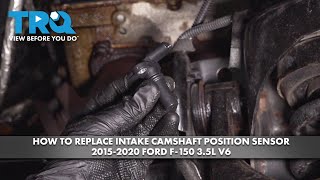
Typical fix: Replace the Bank 1 exhaust camshaft position sensor. On the 3.5L EcoBoost, this is located on the passenger side valve cover. Access may require removing the air intake tubing. The sensor is held in by a single 8mm bolt. 🎬 See this quick walkthrough for replacing the exhaust cam sensor.
Est. part cost: $25-$60 - Damaged wiring or connector 🟡 Medium Probability Wires can become brittle from heat cycles or damaged by mechanics during other repairs, leading to a poor connection. In some documented cases, the connector clip breaks, allowing the plug to wiggle loose over time.
How to confirm: Visually inspect the wiring harness leading to the sensor for any signs of cracking, fraying, or oil saturation. Wiggle the connector to see if it is loose or if the locking tab is broken. Check the connector pins for corrosion.
Typical fix: Repair the damaged section of the wire or replace the connector pigtail. If the connector is simply loose, securing it may resolve the issue.
Est. part cost: $10-$30 - Needs Powertrain Control Module (PCM) update ⚪ Low Probability Ford has issued TSBs (TSB 20-2423, TSB 20-2294) that specifically call for a PCM reprogram as the first step to address issues of oil consumption that are linked to codes P0365 and P0369. The update changes engine operating parameters to help reduce oil consumption.
How to confirm: A Ford dealership or a qualified shop with access to Ford's diagnostic software (IDS) can check the current PCM calibration level against the latest available updates mentioned in the relevant TSBs.
Typical fix: Reprogram the PCM to the latest software version. This is a dealer-level or specialist repair.
Est. part cost: $0 if under warranty, $100-$200 otherwise
Rare But Worth Checking
- Worn timing components (VCT Phasers, Timing Chain): While less common than a sensor or oil issue, the 3.5L EcoBoost is also known for cam phaser issues ('cold start rattle'). If the timing chain is stretched or a phaser is failing, it can cause the camshaft to be out of position, triggering this code. This is usually accompanied by rattling noises, especially on startup. In a severe case, the reluctor wheel on the camshaft itself can become loose, causing a persistent P0365/P0369.
- Faulty PCV System / Valve Covers: → Shop Engine Valve Cover TSB 19-2232, SSM 47983, and others explicitly state that a faulty PCV system, which is integrated into the valve covers on this engine, is a root cause of the oil consumption that leads to code P0365. If oil consumption is severe and a PCM update doesn't help, the fix is to replace both valve covers with an updated part.
Diagnosis Steps
- Check the engine oil level and condition. Ensure the vehicle is on a level surface and has sat for at least 15 minutes for full drain-back. If low, top it off, clear the code, and drive to see if it returns. This is the most critical first step.
- Scan for other DTCs. Note if P0369 or any timing correlation codes (P0016-P0019) are present, as this can point towards a more severe mechanical issue.
- Inspect the Bank 1 (passenger side) exhaust camshaft position sensor and its electrical connector. The sensor is on the rear of the passenger side valve cover. Check for visible damage, corrosion, oil contamination, or a loose/broken connector clip.
- If the oil level was correct and the code returns, test the sensor. A common DIY method is to swap the exhaust sensor (Sensor 'B') with the intake sensor (Sensor 'A') on the same bank and see if the code changes to P0340 (Intake Sensor 'A' fault). If it does, the sensor is bad.
- If the sensor swap doesn't change the code, test the wiring for continuity and voltage from the PCM. You should check for a reference voltage, ground, and signal wire integrity.
- Check for applicable TSBs. A Ford dealer or equipped independent shop can check if your vehicle's PCM has the latest calibration per TSBs 20-2423 or 20-2132, which address this specific code.
- If the sensor, wiring, and PCM software are all good, the issue may be mechanical (timing chain, VCT phasers). Listen for a cold start rattle. At this point, consulting a professional is recommended.
Parts You'll Likely Need
- Camshaft Position Sensor (Bank 1, Exhaust)
(OEM #Motorcraft DU-88 (or superseded part number))— This sensor is the most direct cause of the code if the oil level is correct. It either fails electronically or gets fouled by oil.
Trusted brands: Motorcraft, Bosch, Delphi, NTK
OEM price range: $40-$60
Aftermarket price range: $25-$45 - Engine Oil
(OEM #XO-5W30-Q1SP (Motorcraft SAE 5W-30 Synthetic Blend))— Low engine oil is a primary trigger for this code on the 3.5L EcoBoost due to its effect on the VCT system.
Related Codes That Often Appear With This One
- P0369 — P0369 indicates an intermittent signal from the same sensor (Camshaft Position Sensor 'B', Bank 1). They frequently appear together as they both point to a problem with the same component or circuit. Nearly all related TSBs list both codes.
- P0016, P0017, P0018, P0019 — These are camshaft/crankshaft correlation codes. If the underlying issue is a stretched timing chain or failing VCT phasers, these codes may appear alongside P0365, indicating a more serious mechanical timing problem that a sensor replacement will not fix.
- P0299 — This code indicates a turbo/supercharger underboost condition. It can sometimes appear with P0365/P0369 if a loose sensor connector or wiring issue is causing multiple system faults, as documented by some owners.
Technical Service Bulletins (TSBs) & Recalls
- TSB 20-2423: Addresses excessive oil consumption with or without P0365/P0369 for 3.5L HO engines. Fix involves PCM reprogram and possible valve cover replacement.
- TSB 20-2132: Supersedes TSB 19-2232. Links oil consumption and P0365/P0369 to the PCV system, requiring valve cover replacement.
- TSB 19-2232: Original TSB for oil consumption due to PCV system, leading to P0365/P0369.
- SSM 47961: States that P0365/P0369 can be due to low oil level, low oil pressure, or worn VCT units.
- SSM 47983: For vehicles built on or before 1-Apr-2019, instructs to replace both valve covers if oil consumption is present with P0365/P0369 and no external leaks are found.
- TSB 20-2294: Predecessor to TSB 20-2423, also dealing with oil consumption and associated codes on 3.5L HO engines.
Platform-Specific Known Issues
- Excessive Oil Consumption: Multiple TSBs (TSB 20-2423, TSB 19-2232, SSM 47983) have been issued for 2017-2020 F-150s with the 3.5L EcoBoost engine regarding excessive oil consumption, which directly leads to codes P0365 and P0369. The prescribed fixes range from a PCM reprogram to replacing the valve covers, which house the PCV system.
- Cam Phaser Rattle: The Gen 2 3.5L EcoBoost in this generation is also known for a rattling noise on cold starts, caused by failing VCT phasers. While this often presents with other codes (like P0012), a failing phaser can contribute to the timing error that triggers P0365. Owners on forums like F150forum.com and Ford Truck Enthusiasts frequently discuss this repair.
Mechanic-Grade Diagnostic Values
- CMP Sensor Power Supply Voltage — expected: 4.8 to 5.2 Volts DC with key on, engine off.. Failure: Voltage below 4.8V or above 5.2V indicates a wiring or PCM issue.
- CMP Sensor Signal Wire Voltage (Hall-Effect Sensor) — expected: Should toggle between approximately 0V and 5V as a metal object is passed in front of the sensor tip (or as the engine is cranked).. Failure: Voltage that is stuck high (5V) or low (0V) and does not change indicates a faulty sensor or a short/open in the signal wire.
- CMP Sensor Ground Circuit to Chassis Ground — expected: Less than 1.0 Ω resistance.. Failure: High resistance (OL) indicates an open or corroded ground wire, which can cause erratic sensor readings.
Scan Tool Commands That Help
- Ford IDS (or equivalent high-end scanner): VVT Solenoid Command/Test — If low oil pressure is suspected or after replacing a sensor, a technician can command the VCT solenoids to verify they are mechanically responding. This helps differentiate between an electrical fault (P0365) and a mechanical VCT system problem that might be causing the timing deviation.
- Ford IDS (or equivalent high-end scanner): PCM Reprogram / Calibration Update — As specified in TSBs like 20-2423, this is a required first step when P0365/P0369 is accompanied by excessive oil consumption. The software update changes engine parameters to mitigate the issue.
Wiring & Ground Locations
- Main Body/Frame Ground — Under the truck, just below the passenger front door area, there is a primary body-to-chassis ground strap. Another is located on the frame near the radiator fan assembly.. Corrosion or looseness at these main grounding points can cause a host of phantom electrical issues, including erratic sensor readings. A poor ground can affect the sensor's reference voltage or signal integrity, leading to a P0365 code even if the sensor and its direct wiring are fine.
- Engine Block to Chassis Ground — A ground strap often runs from the engine block to the firewall or frame. One user-added ground location is from a bolt on the front of the engine block to the chassis in front of the passenger tire.. The PCM and its sensors rely on a stable ground reference through the engine block. A compromised engine ground can create a floating ground, causing incorrect voltage readings from the camshaft position sensor.
- CMP Sensor Connector — On the rear of the passenger side (Bank 1) valve cover for the exhaust camshaft ('B' sensor).. This is the direct connection point for the sensor. It is prone to oil contamination from valve cover leaks and the locking clip can become brittle and break, leading to a loose connection that triggers intermittent P0365/P0369 codes.
Real Owner Repair Stories
- YouTube channel 'Cobra Strikes Back' (2013 Ford F-150 3.5L EcoBoost (Gen 1, but same sensor location and failure mode)) — Check Engine Light with codes P0365, P0369, and P0299 (turbo underboost).
❌ Tried (didn't work) Initially clearing codes; they returned immediately.
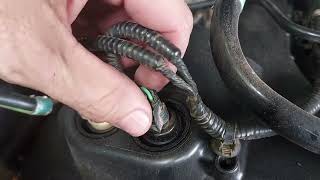
✅ What actually fixed it The electrical connector for the Bank 1 exhaust camshaft position sensor had a broken clip and had wiggled loose. After finding the loose connector, the user cleaned the contacts on both the plug and the sensor with electronic cleaner and securely reconnected it. This resolved all codes. - YouTube channel 'djrand65' (Ford F-150 3.5L EcoBoost (year not specified, but relevant Gen 2 issue)) — Persistent P0365 and P0369 codes.
❌ Tried (didn't work) Replacing camshaft position sensors., Replacing timing chains and phasers.
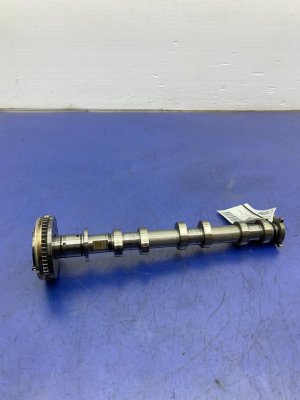
✅ What actually fixed it The reluctor wheel on the Bank 1 exhaust camshaft had become loose and was able to rotate independently of the camshaft. This caused the sensor to read an incorrect position, triggering the codes. The final fix was replacing the entire exhaust camshaft. The failure was attributed to stress from the high-pressure fuel pump's vacuum pump drive, which runs off the back of that specific camshaft.
OEM Part Supersession History
BL3Z-6B288-A (also seen as DU-95)→BL3Z-6B288-C— Standard part revision by the manufacturer, likely for improved durability or material changes.
Heads up: The part listed in Pass 2, DU-88, is incorrect for the 3.5L EcoBoost and is specified for 6.0L/6.4L Powerstroke diesel engines. BL3Z-6B288-C is the correct part number for this F-150 application.
Model Year Variations Within This Range
- 2017-2020: The 2017 model year marked the introduction of the second-generation 3.5L EcoBoost for the F-150. Compared to the 2011-2016 Gen 1 engine, it features a completely new design with a dual-injection system (port and direct), redesigned turbos, and different timing components. While the P0365 code can occur on both generations, the specific TSBs related to oil consumption and PCM flashes are primarily focused on this Gen 2 engine range.
- 2017-2020 (High Output vs. Standard): Within this range, Ford offered a High Output (HO) version of the 3.5L EcoBoost in the Raptor and F-150 Limited models. While mechanically similar, the HO engine has different engine tuning, oil-cooled pistons, and a different turbo system. However, the camshaft position sensors and the underlying causes for P0365 (low oil, sensor failure, wiring) remain the same across both standard and HO versions.
Helpful Videos

Used OEM Parts in Stock
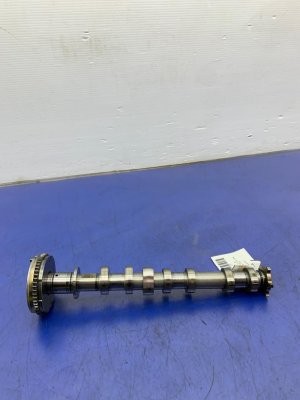
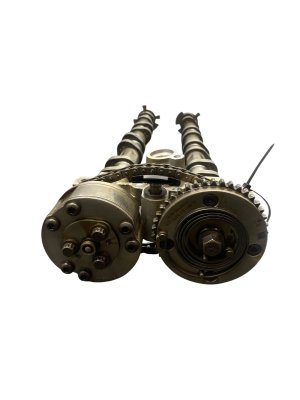
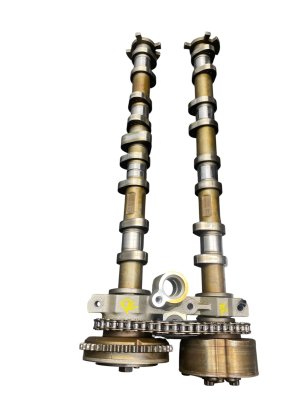
New Aftermarket Parts Available


The information in this article is provided for general reference and educational purposes only. Vehicle specifications, procedures, and part compatibility can vary by production date, trim level, and region. Always consult your vehicle's factory service manual and verify part numbers before purchasing or performing repairs. Safety-critical components such as airbags, seat belts, and braking systems should be installed by a qualified professional.
- Ford F-150:
- 🧭 Diagnostic Flowchart
- 🎬 Helpful Videos
- 🛍️ Shop This Part
- What's Unique About the 2017-2020 Ford F-150
- Symptoms You May Notice
- Most Likely Causes
- Rare But Worth Checking
- Diagnosis Steps
- Parts You'll Likely Need
- Related Codes That Often Appear With This One
- Technical Service Bulletins (TSBs) & Recalls
- Platform-Specific Known Issues
- Mechanic-Grade Diagnostic Values
- Scan Tool Commands That Help
- Wiring & Ground Locations
- Real Owner Repair Stories
- OEM Part Supersession History
- Model Year Variations Within This Range
- 🎟️ Get 5% Off