

P0365 on 2010-2016 Hyundai Genesis Coupe 3.8L: Exhaust Cam Sensor Causes and Fixes
On a 3.8L Genesis Coupe, code P0365 is most often a failed exhaust camshaft position sensor on the passenger side (Bank 1). Before replacing, check the wiring connector for oil leaks or damage, as the plastic can become brittle and fail. An OEM sensor costs around $60-$110 and is a 1/5 difficulty DIY fix. Swapping the sensor with the driver's side exhaust sensor is a common and effective diagnostic test.
- P0365 points to the exhaust camshaft sensor on the passenger side of the 3.8L V6 engine.
- Before buying any parts, inspect the sensor's electrical connector for oil leaks, damage, or a loose fit. Cleaning an oily connector can sometimes fix the problem for free.
- The most likely failed part is the sensor itself. It's a simple DIY replacement with a single 10mm bolt.
- Using a genuine Hyundai/Kia (OEM) sensor is highly recommended, as aftermarket sensors are known to be less reliable for this application.
- If you also have a rattling noise on startup, the problem could be more serious, like a stretched timing chain, which requires professional diagnosis.
What's Unique About the 2010-2016 Hyundai Genesis Coupe
The 3.8L Lambda V6 engine in the Genesis Coupe has four camshaft position sensors (intake and exhaust for each bank). P0365 specifically points to the exhaust sensor on the passenger side, which can be confused with the other three if you're not careful. A common issue on this platform is oil from a leaky valve cover gasket seeping into the sensor's electrical connector, disrupting the signal and mimicking a sensor failure. Furthermore, the plastic connectors themselves become brittle from constant heat cycles and can crack or fail to make a secure connection, a problem frequently cited by owners as the true root cause even after replacing the sensor.
Generation note: The 2010-2016 range covers two generations: the BK1 (2010-2012) with a 3.8L MPI engine and the BK2 (2013-2016) with a 3.8L GDI engine. While the causes for P0365 are the same, the exact part numbers for the camshaft position sensors differ. Always verify the correct part number with your vehicle's VIN before ordering. Owners strongly recommend using Genuine OEM sensors, as aftermarket versions are frequently reported to be dead-on-arrival or fail quickly.
Symptoms You May Notice
- Check Engine Light is on
- Engine is difficult to start (long crank time)
- Rough idle
- Engine stalling, especially at low speeds
- Reduced engine power and acceleration
- Decreased fuel economy
- Engine hesitation or stumbling
- Replacing the wrong sensor. The 3.8L V6 has four camshaft sensors. P0365 is for the 'B' (exhaust) sensor on 'Bank 1' (passenger side). People often mistakenly replace the more accessible intake sensor.
- Replacing the sensor when the true fault is a simple oil-fouled or loose electrical connector.
- Repeatedly replacing sensors with cheap aftermarket parts that fail quickly, leading the owner to believe the problem is elsewhere.
Most Likely Causes
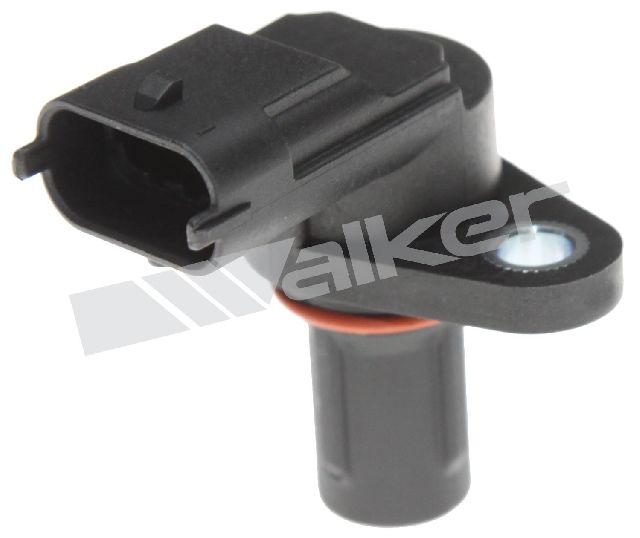
- Failed Exhaust Camshaft Position Sensor (Bank 1) 🔴 High Probability → Shop Engine Camshaft Position Sensor These Hall effect sensors are exposed to significant heat and vibration at the back of the cylinder head, leading to eventual electronic failure. It is one of the most common failure points on the Lambda V6.
How to confirm: After checking wiring, the easiest test is to swap the Bank 1 exhaust sensor (passenger side, rear) with the Bank 2 exhaust sensor (driver's side, rear). They are the same part. Clear the codes and run the engine. If the code changes to P0390 (Camshaft Position Sensor 'B' Circuit Bank 2), the sensor is confirmed bad.
Typical fix: Replace the Bank 1 exhaust camshaft position sensor. It is held by a single 10mm bolt and is easily accessible.
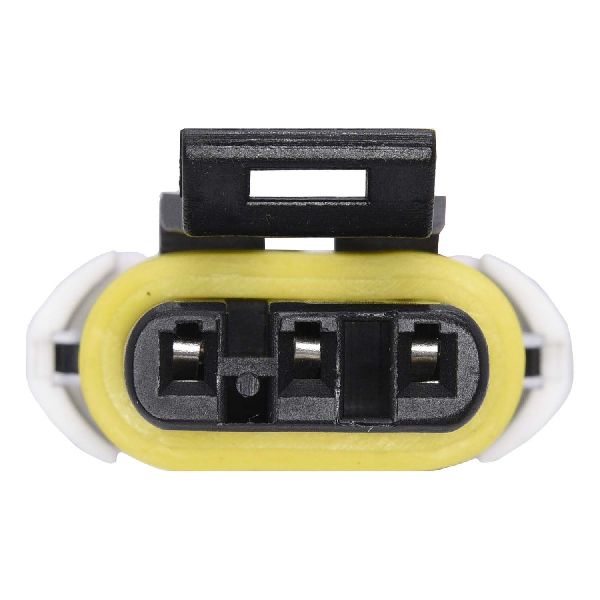
Est. part cost: $60-$110 for OEM - Damaged Wiring or Fouled Connector 🟡 Medium Probability The valve cover gaskets on the Lambda V6 can leak oil over time. This oil can seep into the camshaft position sensor's connector, fouling the connection. More commonly, the plastic connector becomes brittle from heat cycles and either cracks or the internal pins lose tension, causing a poor connection.
How to confirm: Visually inspect the sensor's electrical connector on the passenger side valve cover. Look for oil inside the connector, cracked plastic, or wires that are frayed or pulled out. Wiggle the connector with the engine running to see if it affects idle. If the code returns immediately after replacing the sensor, the connector is highly suspect.
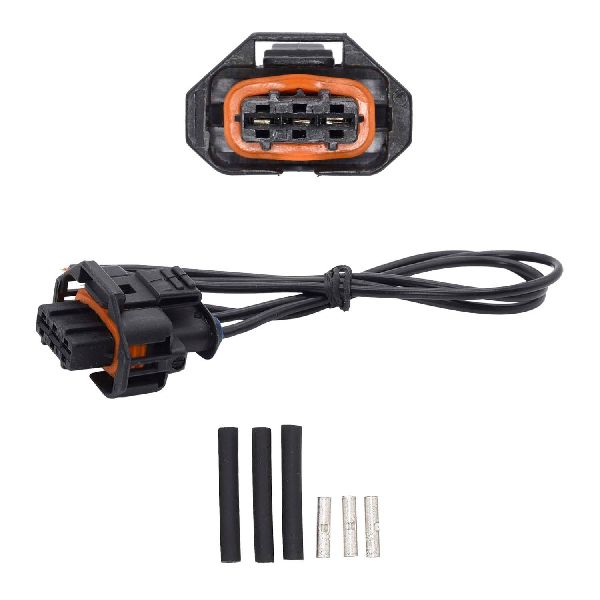
Typical fix: Clean the oil out of the connector with electrical contact cleaner and ensure it clicks securely. If the connector or pigtail is damaged, it will need to be repaired or replaced. New connectors are available for under $15.
Est. part cost: $10-$30 - Stretched Timing Chain or Failed Tensioner ⚪ Low Probability → Shop Engine Timing Chain This is a known issue on higher-mileage (over 100,000 miles) Lambda engines, particularly if oil change intervals have been extended. Slack in the chain can cause camshaft timing to be out of sync with the crankshaft, which can sometimes manifest as a sensor circuit code before a more severe correlation code (like P0017) appears.
How to confirm: This is a more complex diagnosis. A key symptom is a rattling noise from the front of the engine on a cold start that lasts for a few seconds. 🎬 Watch: Hear what a failing timing chain rattle sounds like A mechanic would need to check timing correlation data with a professional scan tool or physically inspect the timing components. Hyundai issued TSB 19-EM-001H with updated parts for BK2 models.
Typical fix: Requires a full timing chain service, including replacing the chain, guides, and tensioners. This is a labor-intensive job.
Est. part cost: $400-$800
Rare But Worth Checking
- Low or Dirty Engine Oil: While this more commonly triggers CVVT-related codes like P0017 or P0025, extremely low or sludgy oil can affect the operation of the entire valvetrain and contribute to timing deviation codes. Always check the oil level and condition first as a basic step.
- Faulty Powertrain Control Module (PCM): This is extremely rare. The PCM should only be considered after all other possibilities (sensor, wiring, timing) have been exhaustively ruled out with a multimeter and oscilloscope.
Diagnosis Steps
- Read the trouble code with an OBD-II scanner to confirm P0365 is present.
- Check the engine oil level and condition. Top off or change if necessary.
- Locate the Bank 1 exhaust camshaft position sensor. It is on the passenger side valve cover, the sensor closer to the firewall.
- Carefully inspect the electrical connector and wiring harness leading to the sensor. Look for any signs of damage, corrosion, or oil contamination. Ensure the connector clicks firmly into place.
- If the connector is oily, disconnect it and clean both the sensor plug and the harness connector with electrical contact cleaner. Let it dry completely, apply dielectric grease, reconnect, clear the code, and test drive.
- If the code returns, perform a sensor swap. Move the suspected bad sensor from Bank 1 Exhaust (P0365 location) to Bank 2 Exhaust (P0390 location). Clear codes and drive. If the code changes to P0390, the sensor is confirmed bad. Purchase a new OEM sensor.
- If the sensor swap doesn't change the code (P0365 returns), the problem is likely in the wiring circuit. Use a multimeter on the connector harness (key on, engine off). You should find ~5V on one pin (power), a good ground on another (less than 0.1V), and a signal wire.
- If you hear a rattling noise on startup, especially on a high-mileage engine, suspect a timing chain issue and consider professional diagnosis.
Parts You'll Likely Need
- Bank 1 Exhaust Camshaft Position Sensor
(OEM #39318-3C100 (for BK1, 2010-2012) or 39318-3C500 (for BK2, 2013-2016) - verify with VIN)— This is the most common component to fail and cause a P0365 code. It is strongly recommended to use a Genuine Hyundai/Kia part for reliability.
Trusted brands: Hyundai (Genuine OE), Kia (Genuine OE)
OEM price range: $60-$110
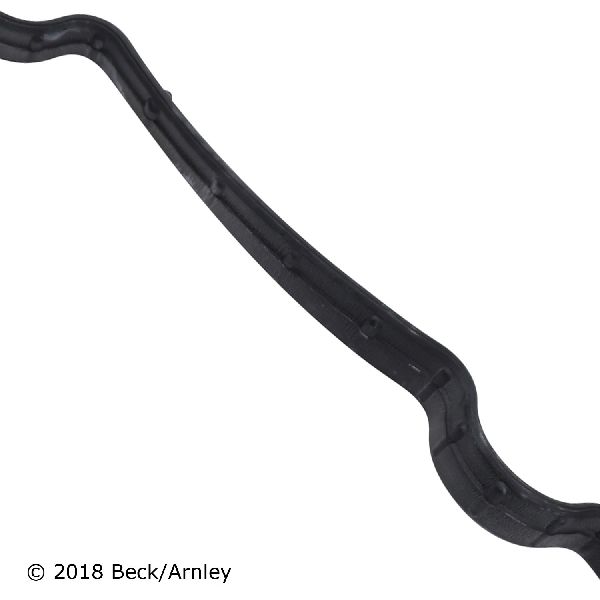
Aftermarket price range: $30-$60 - Valve Cover Gasket — If the cause of the problem is oil fouling the sensor connector, the valve cover gasket is likely leaking and should be replaced to prevent the issue from recurring.
Trusted brands: Hyundai (Genuine OE), Fel-Pro, Mahle
OEM price range: $30-$50
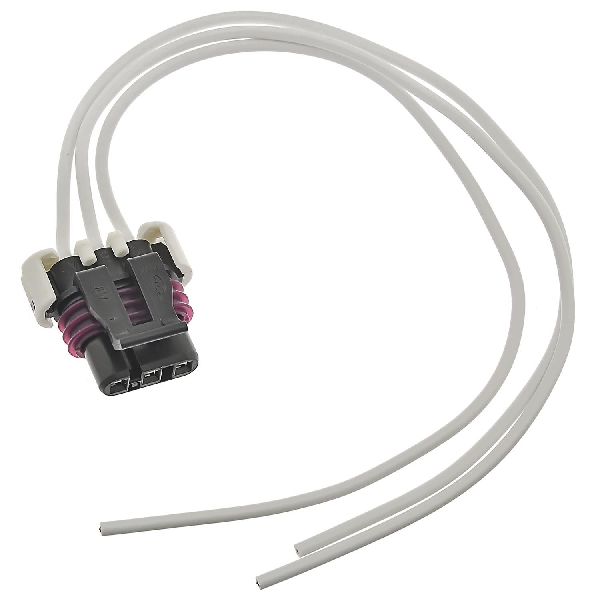
Aftermarket price range: $15-$30 - Camshaft Position Sensor Connector Pigtail
(OEM #e.g., 39310-38050 (verify style))— If the plastic connector is cracked or will no longer clip on securely, it must be replaced to ensure a solid electrical connection.
Trusted brands: Hyundai (Genuine OE), Standard Motor Products, Dorman
OEM price range: $20-$35
Aftermarket price range: $10-$20
Related Codes That Often Appear With This One
- P0340 — Camshaft Position Sensor 'A' Circuit (Bank 1). If both P0340 (intake) and P0365 (exhaust) appear together, it could indicate a problem common to Bank 1, like a wiring harness issue, a ground problem, or a problem with the CVVT phaser on that bank.
- P0017 — Crankshaft Position - Camshaft Position Correlation (Bank 1 Exhaust). This code indicates a mechanical timing issue. If you see P0017 with P0365, it points more strongly towards a stretched timing chain or a problem with the CVVT system rather than just a sensor failure.
- P0390 — Camshaft Position Sensor 'B' Circuit (Bank 2). If this code appears after swapping the Bank 1 exhaust sensor with the Bank 2 exhaust sensor, it confirms the original sensor was faulty.
Technical Service Bulletins (TSBs) & Recalls
- TSB #19-EM-001H: This bulletin from Hyundai provides information on updated part numbers for the timing chain and crankshaft sprockets for the 3.8L GDI engine (BK2). It notes that old and new parts are not interchangeable, relevant for diagnosing deeper mechanical causes of cam/crank codes.
Platform-Specific Known Issues
- Real Owner Story: Intermittent Stalling and Long Cranks: A user on gencoupe.com with a 2013 3.8 R-Spec reported experiencing intermittent stalling when coming to a stop and long crank times. The car threw a P0365 code. After replacing the Bank 1 exhaust cam sensor with an OEM part, the
Mechanic-Grade Diagnostic Values
- Camshaft Position Sensor Connector - Power Pin Voltage — expected: 4.5V to 5.0V DC. Failure: Voltage below 4.5V or no voltage indicates a wiring or ECM power supply issue.
- Camshaft Position Sensor Connector - Ground Pin Voltage — expected: Less than 0.1V DC. Failure: Higher voltage indicates a poor ground connection.
- Camshaft Position Sensor - Signal Output (while cranking) — expected: A square wave signal switching between 0V and 5V.. Failure: No signal, a flat line at 0V or 5V, or a noisy/erratic waveform indicates a failed sensor or reluctor wheel issue.
Scan Tool Commands That Help
- Hyundai GDS (Global Diagnostic System): DTC Diagnostic Procedure Guide — After retrieving code P0365, the GDS software provides a step-by-step diagnostic tree specific to that code and vehicle. It lists possible causes, component locations, wiring diagrams, and expected values, guiding the technician through the entire troubleshooting process.
- Hyundai GDS (Global Diagnostic System): Data Analysis / Live Data — To monitor the camshaft and crankshaft position sensor signals in real-time. A technician can view the waveforms to check for signal dropouts, noise, or incorrect correlation between the cams and crank, which is crucial for diagnosing intermittent issues or mechanical timing problems.
Wiring & Ground Locations
- ECM Ground — The ECM is located in the engine compartment at the left rear. Key ground points for the engine harness are typically on the cylinder heads, engine block, and chassis.. A poor ECM ground can cause a host of sensor issues, including incorrect readings or circuit codes for the camshaft position sensors. The sensor's ground reference is tied to the main engine grounds.
- Ghg03 — A primary ground point located on the left rear of the engine for a 2012 model.. This is a key engine ground. Verifying it is clean and tight is a crucial step when diagnosing any engine sensor circuit code, as a poor ground here can introduce electrical noise or voltage offsets.
- Sensor Connector Pins — At the 3-pin connector for the Bank 1 exhaust camshaft position sensor.. Testing for Power (~5V), Ground (<0.1V), and Signal (square wave) at these specific pins is the definitive way to determine if the fault lies with the sensor, the wiring harness, or the ECM.
Real Owner Repair Stories
- JK-Forum.com user 'Tricky_Dick' (on a vehicle with a similar engine sensor setup) (Jeep Wrangler JKU with 3.6L Pentastar engine) — Crank-no-start condition after an engine rebuild, with codes for all four camshaft position sensors (P0340, P0345, P0365, P0390).
❌ Tried (didn't work) Swapping sensors, Wiggle-testing the harness, Cleaning and reconnecting all connectors
✅ What actually fixed it The user found a short within the main wiring harness itself by measuring resistance between the 5V supply and ground lines with everything disconnected. Repairing the shorted wire resolved all four sensor codes simultaneously.
OEM Part Supersession History
39318-3C300→39318-3C100— Part number consolidation and potential minor revision by the manufacturer.
Model Year Variations Within This Range
- 2010-2012 (BK1) vs 2013-2016 (BK2): The BK1 uses a Multi-Port Injection (MPI) Lambda RS3800 engine, while the BK2 uses a Gasoline Direct Injection (GDI) Lambda G4XJ engine with a higher 11.5:1 compression ratio. While the P0365 code's meaning is the same, the sensors are not interchangeable due to these engine differences, confirmed by their different OEM part numbers (BK1: 39318-3C100, BK2: 39318-3C500).
- 2010-2012 (BK1) vs 2013-2016 (BK2): The intake manifolds and some wiring harness connectors and routing differ between the BK1 and BK2 generations. This can affect access to components and require different procedures for harness inspection or repair.
Diagnostic Flowchart
Other Known Issues on This Vehicle
Issues unrelated to this code that are worth knowing about as an owner of this generation:
- Manual Transmission Grind / 2nd Gear Lockout 🟠 Medium — Very common, especially on earlier BK1 (2010-2012) models. Can occur at any mileage.
- Timing Chain Tensioner Wear / Startup Rattle 🔴 High → Shop Engine Timing Chain — More common on higher-mileage engines (over 80,000-100,000 miles), particularly if oil changes were neglected. (Ref: TSB 10-EM-006 (streamlined repair), TSB 19-EM-001H (updated parts))
- GDI Engine Carbon Buildup (BK2) 🟠 Medium — A known issue for all GDI engines, typically becoming problematic after 80,000-100,000 miles, causing rough idle and power loss.
- Water Leak into Trunk / Cabin 🟡 Low — Commonly reported issue where water enters through taillight seals or sunroof drains, pooling in the spare tire well and potentially overflowing into the cabin.
- Interior Chrome Finish Peeling 🟡 Low — Widespread cosmetic issue where the matte clear coat on interior chrome-look plastic (steering wheel, door handles) flakes off over time.
- Premature Manual Transmission Slave Cylinder Failure 🟠 Medium — A known weak point across all years; the concentric slave cylinder is located inside the bellhousing, requiring transmission removal to replace.
Used vs. New Parts: Buying Guide for This Vehicle
When a used part is the smart pick: For this specific repair, buying a used camshaft position sensor is not recommended. However, obtaining a used wiring harness connector pigtail from a junkyard vehicle with a clean, uncracked connector can be a viable and cost-effective option if a new pigtail is unavailable.
Donor-vehicle mileage cap: roughly under 80000 miles for the part to have meaningful remaining life.
What to inspect on the donor part:
- For a connector pigtail: The plastic should not be brittle or show signs of cracking.
- The locking tab must be intact and functional.
- There should be no signs of oil contamination inside the connector.
- Ensure at least 6 inches of wire is left on the pigtail for splicing.
OEM-only on this vehicle (don't cheap out):
- Camshaft Position Sensor
Brands owners have reported issues with on this vehicle:
- Unbranded or 'white-box' sensors from online marketplaces are frequently reported by owners to be dead-on-arrival or fail within a short period.
Real Owner Stories
Aggregated from forums and TSBs cited above. Mileages and costs reflect what owners reported in those sources.
2013 Hyundai Genesis Coupe 3.8L R-Spec
Symptoms: Intermittent stalling when coming to a stop and long crank times; Check Engine Light on with code P0365.
What fixed it: Replacing the Bank 1 exhaust cam sensor with an OEM part.
Source hint: Real Owner Story: Intermittent Stalling and Long Cranks
2010-2016 Hyundai Genesis Coupe 3.8L — ~100000 miles
Symptoms: Rattling noise from the front of the engine on a cold start lasting for a few seconds; timing out of sync.
What fixed it: Full timing chain service, including replacing the chain, guides, and tensioners using updated parts from TSB 19-EM-001H.
Source hint: TSB #19-EM-001H
2010-2016 Hyundai Genesis Coupe 3.8L
Symptoms: All four cam sensor codes (P0340, P0345, P0365, P0390) appearing at once.
What fixed it: Investigation into a common electrical fault, grounding issue, or failing alternator causing electrical noise.
Source hint: gencoupe.com thread 'P0340, P0345, P0365, P0390 help'
Related OBD-II Codes
Frequently Asked Questions
Where is the Bank 1 exhaust camshaft position sensor located on my 3.8L Lambda V6?
My 2013 3.8 R-Spec is stalling at stops and has long crank times; is this a known issue?
Does Hyundai have a TSB for timing issues that might cause cam sensor codes on my BK2 model?
Can I use an aftermarket sensor to fix the P0365 code on my Genesis Coupe?
Why would all four of my camshaft sensor codes (P0340, P0345, P0365, P0390) appear at the same time?
Could an oil leak cause my P0365 code?
Helpful Videos
We Have This Part in Stock


The information in this article is provided for general reference and educational purposes only. Vehicle specifications, procedures, and part compatibility can vary by production date, trim level, and region. Always consult your vehicle's factory service manual and verify part numbers before purchasing or performing repairs. Safety-critical components such as airbags, seat belts, and braking systems should be installed by a qualified professional.
- Hyundai Genesis Coupe:
- 🧭 Diagnostic Flowchart
- 🎬 Helpful Videos
- 🛍️ Shop This Part
- What's Unique About the 2010-2016 Hyundai Genesis Coupe
- Symptoms You May Notice
- Most Likely Causes
- Rare But Worth Checking
- Diagnosis Steps
- Parts You'll Likely Need
- Related Codes That Often Appear With This One
- Technical Service Bulletins (TSBs) & Recalls
- Platform-Specific Known Issues
- Mechanic-Grade Diagnostic Values
- Scan Tool Commands That Help
- Wiring & Ground Locations
- Real Owner Repair Stories
- OEM Part Supersession History
- Model Year Variations Within This Range
- Other Known Issues on This Vehicle
- Used vs. New Parts: Buying Guide for This Vehicle
- Real Owner Stories
- 2013 Hyundai Genesis Coupe 3.8L R-Spec
- 2010-2016 Hyundai Genesis Coupe 3.8L — ~100000 miles
- 2010-2016 Hyundai Genesis Coupe 3.8L
- Related OBD-II Codes
- Frequently Asked Questions
- 🎟️ Get 5% Off