

P0365 on 2016-2017 Jeep Grand Cherokee: Camshaft Sensor 'B' (Bank 1) Causes and Fixes
This code points to a problem with the Bank 1 exhaust camshaft position sensor. The most common fix is replacing the sensor itself, which is a relatively simple DIY job. Before replacing, check for relevant PCM software updates. Expect to pay $30-$80 for a new sensor.
- P0365 specifically refers to the exhaust camshaft position sensor on the passenger side (Bank 1) of the engine.
- The most probable cause is a failed sensor, which is an affordable part and relatively easy to replace for a DIYer.
- Before replacing the sensor, always inspect its wiring and connector for oil damage or corrosion, as this is also a common point of failure.
- This code is often seen with P0369 (intermittent signal), which further points to a failing sensor or bad connection.
- Ensure your engine oil is at the correct level and in good condition, as oil pressure issues can sometimes trigger timing-related codes.
What's Unique About the 2016-2017 Jeep GRAND CHEROKEE

For the 2016-2017 Grand Cherokee (WK2 generation), particularly with the 3.6L Pentastar V6, the camshaft position sensors are a known point of failure. The issue is common enough that Chrysler (Jeep's parent company) has issued Technical Service Bulletins (TSBs) that list P0365 along with other related camshaft sensor codes. 🎬 Watch: Understanding the P0365 circuit malfunction on your Jeep. Crucially, TSB #18-024-17 REV. C and its successor #18-049-20 involve a PCM software update. This update changes the fault logic for P0365 (and other sensor codes) from a one-trip to a two-trip fault, making it less likely to be triggered by a momentary glitch. It also improves drivability if a sensor fault does occur. This means a PCM flash should be considered before or alongside sensor replacement, especially on vehicles built before March 06, 2017.
Diagnostic Flowchart

Tap your situation to follow the diagnostic path that matches what you're seeing on this vehicle.
Symptoms You May Notice
- Check Engine Light is on
- Engine is hard to start or cranks but won't start
- Rough or fluctuating idle
- Engine stalling, especially at low speeds
- Hesitation or loss of power during acceleration
- Reduced fuel economy
- Difficulty shifting gears or getting stuck in a low gear
- Replacing the wrong sensor (e.g., the intake sensor, or the sensor on Bank 2/driver's side).
- Replacing the crankshaft position sensor instead of the camshaft position sensor.
- Replacing the sensor without checking for available PCM software updates first, which may resolve the issue without parts replacement.
- Assuming the sensor is bad when the root cause is a wiring or connector problem.
Most Likely Causes

- Faulty Camshaft Position Sensor 🔴 High Probability → Shop Engine Camshaft Position Sensor The sensors on the Pentastar 3.6L and HEMI 5.7L engines are exposed to significant heat and vibration, leading to a high failure rate. It's the most frequently cited reason for this code on Jeep forums and in repair guides.
How to confirm: After checking wiring and ensuring the PCM has the latest software updates, the most practical test is to replace the sensor. A more advanced test involves using a lab scope to check for a proper square wave signal from the sensor while the engine is running. Swapping the suspect sensor with an identical one (e.g., from the other bank) and seeing if the code follows the sensor is another effective diagnostic step.
Typical fix: Replace the Bank 1 (passenger side) exhaust camshaft position sensor. Using an OEM Mopar part is highly recommended, as aftermarket sensors have a reputation for premature failure.
Est. part cost: $30-$80 - Wiring Harness or Connector Issue 🟡 Medium Probability Engine oil can leak from the valve covers or other areas onto the sensor connector and wiring, causing corrosion or short circuits over time. Wires can also become brittle and crack from constant heat cycles in the engine bay.
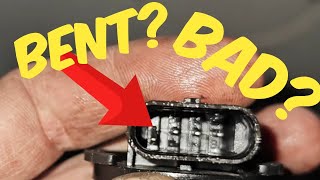
How to confirm: Visually inspect the wiring harness and connector for the Bank 1 exhaust cam sensor. Look for signs of oil contamination, corrosion on the pins, frayed/broken wires, or a loose connection. Check for a bent pin in the connector, which can cause an intermittent connection.
Typical fix: Clean the connector with electrical contact cleaner. If wiring is damaged, it must be repaired or the connector pigtail replaced. Ensure the connector is fully seated and the locking tab clicks into place.
Est. part cost: $5-$25 - Outdated Powertrain Control Module (PCM) Software 🟡 Medium Probability FCA issued TSBs #18-024-17 REV. C and #18-049-20 specifically to address MIL illumination for P0365 and other sensor codes on 2016-2017 models. The update makes the fault detection less sensitive to transient glitches.
How to confirm: A Jeep dealership or a qualified shop with a wiTECH scan tool can check the current software calibration of your PCM and determine if an update is available per the TSBs. This is especially relevant for vehicles built on or before March 6, 2017.
Typical fix: Reprogram or 'flash' the PCM with the latest available software. This is a dealer or professional-level job.
Est. part cost: $0-$200 (Cost varies if done under warranty or as a standalone service) - Low or Dirty Engine Oil ⚪ Low Probability The camshaft phasers, which adjust cam timing, are operated by oil pressure. If the oil is very low, the wrong viscosity, or dirty, it can affect phaser operation and cause the camshaft's position to be out of sync with the crankshaft, indirectly triggering a sensor code.
How to confirm: Check the engine oil level and condition. If it is low, black, or sludgy, this could be a contributing factor. Ensure the correct oil viscosity (e.g., 5W-20 for the 3.6L) is being used.
Typical fix: Perform an oil and filter change using the correct specification oil for your engine.
Est. part cost: $40-$100
Rare But Worth Checking
- Timing Chain or Phaser Issue: → Shop Engine Timing Chain While less common for just a P0365 code, a stretched timing chain or faulty/stuck cam phaser can cause the cam timing to be incorrect, leading to this code. This is a more serious mechanical issue, often accompanied by rattling noises from the front of the engine or other correlation codes like P0017.
- Faulty Powertrain Control Module (PCM): This is very rare. The PCM is the engine's computer, and an internal fault can cause it to misread the sensor signal. This should only be considered after all other possibilities (sensor, wiring, timing, software) have been exhaustively ruled out.
Diagnosis Steps
- Read the codes with an OBD-II scanner to confirm P0365 and check for any other related codes like P0369 or P0340.
- Check with a dealer or qualified shop if TSB #18-049-20 or #18-024-17 REV. C applies to your vehicle. A PCM software update may be the required fix, especially if the code is intermittent.
- Locate the Bank 1 camshaft position sensor. On the 3.6L V6 and 5.7L V8, Bank 1 is the passenger side. The sensor(s) are located on the valve cover.
- Inspect the sensor's electrical connector and wiring for any signs of damage, corrosion, bent pins, or oil contamination. Ensure the connector is seated firmly.
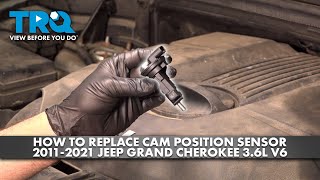
- If wiring looks good and the PCM is up-to-date, the most common next step is to replace the sensor. It is usually held in by a single Torx (T27 or T30) bolt.
- After replacing the sensor, clear the codes with the scanner and perform a drive cycle to see if the code returns. Some vehicles may require a camshaft sensor relearn procedure, though often this happens automatically.
- If the code reappears, a more in-depth diagnosis is needed. This includes testing the circuit for proper voltage (typically 5V reference) and ground at the connector, and checking the signal with an oscilloscope. At this point, mechanical timing issues should also be investigated.
Parts You'll Likely Need
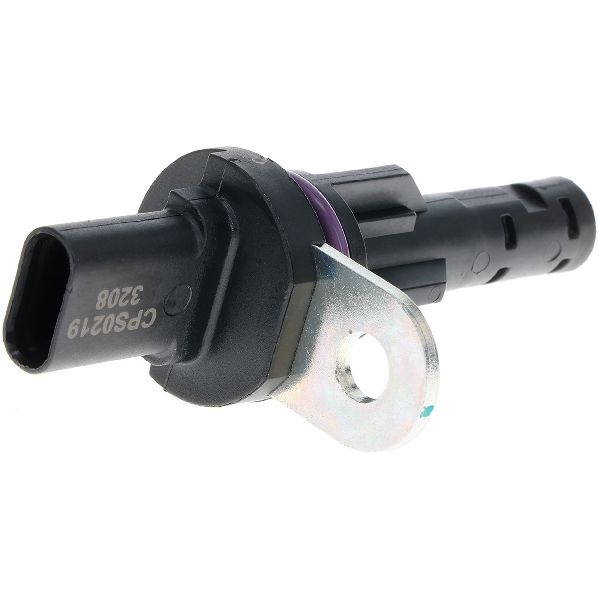
- Camshaft Position Sensor (Bank 1, Exhaust)
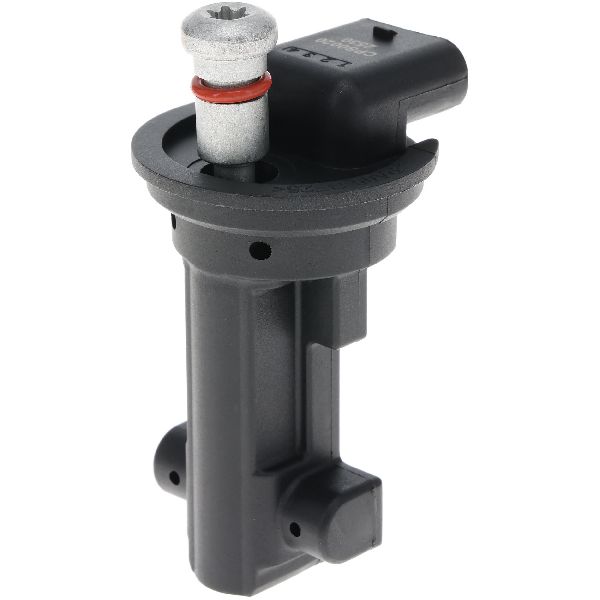
(OEM #5149141AF (For 3.6L V6, this single sensor reads both intake and exhaust cams for one bank))— This is the component that has failed or is sending an incorrect signal to the PCM, making it the most direct cause of the P0365 code.
Trusted brands: Mopar, Bosch, Delphi, NTK/NGK
OEM price range: $60-$96
Aftermarket price range: $30-$50
Related Codes That Often Appear With This One
- P0369 — This code means the signal from the same sensor (Bank 1, Sensor 'B') is intermittent. It's very common to see P0365 and P0369 together, strongly pointing to a failing sensor or a bad connection.
- P0340 — This code is for the Bank 1 intake camshaft sensor ('A'). If you see both P0340 and P0365, it could indicate a problem common to both sensors on that bank, like a wiring harness issue, a problem with the single sensor unit on the 3.6L (which reads both cams), or a more significant timing problem.
- P0017 — Crankshaft Position - Camshaft Position Correlation (Bank 1 Exhaust). This code indicates a mechanical timing issue between the crank and the exhaust cam, which could be caused by a jumped timing chain or a faulty cam phaser. This is more serious than a sensor circuit code alone.
Technical Service Bulletins (TSBs) & Recalls

- 18-049-20: Supersedes the earlier TSB. Involves flashing the PCM with updated software to change P0365 from a one-trip to a two-trip fault, making it less sensitive. Also addresses other DTCs and improves drivability during a sensor fault.
- 18-024-17 REV. C: Involves reprogramming the Powertrain Control Module (PCM) for various diagnostic and system enhancements, including changing the logic for P0365 to prevent false triggers. Applies to vehicles built on or before March 06, 2017.
Platform-Specific Known Issues
- The provided NHTSA documents confirm that P0365 is a known code on these vehicles. Bulletin #18-049-20 and #18-024-17 REV. C both list P0365 - 'Camshaft Position Sensor Circuit - Bank 1 Sensor 2' as a potential diagnostic trouble code that can be addressed with a PCM software update.
- On the 3.6L Pentastar engine, a single sensor assembly on each bank reads both the intake and exhaust camshafts. Therefore, a P0365 code points to a failure within this single unit, specifically the part that reads the exhaust cam.
- Owners on forums frequently report that using aftermarket sensors leads to the code returning quickly. It is highly recommended to use an OEM Mopar sensor (Part No. 5149141AF) for this repair.
Mechanic-Grade Diagnostic Values
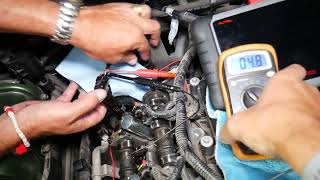
- Camshaft Position Sensor Connector Voltage (Key On, Engine Off) — expected: On the 4-pin connector for the 3.6L sensor, you should find a 5V supply, a ground, and two 5V signal wires (one for intake, one for exhaust). A common finding is ~5V on three of the four pins.. Failure: No voltage on the supply pin, or voltage significantly lower than 5V, indicates a wiring or PCM issue. No voltage on the signal wire when testing may point to a bad sensor.
- Camshaft Position Sensor Ground Circuit Resistance — expected: Less than 3 ohms between the ground pin on the sensor connector and a known good chassis ground.. Failure: High resistance (more than 3 ohms) indicates a poor ground connection, which can cause erratic sensor readings.
- Sensor Signal Test (Dynamic) — expected: Using a multimeter or oscilloscope, the 5V signal should drop to 0V as the magnetic portion of the camshaft's reluctor wheel passes the sensor.. Failure: A signal that does not change, is erratic, or does not produce a clean square wave on an oscilloscope indicates a faulty sensor or a problem with the reluctor wheel.
Scan Tool Commands That Help
- wiTECH: Cam/Crank Relearn — This function may be necessary after replacing timing components or the PCM to resynchronize the relationship between the camshaft and crankshaft position sensors. While often not required for just a sensor swap, it can resolve persistent correlation codes.
- wiTECH: View PCM Calibration ID — Used to check the current software version of the Powertrain Control Module to determine if the update mentioned in TSB #18-049-20 or #18-024-17 REV. C is needed.
Wiring & Ground Locations

- PCM Connector C2 (Tan) — On the Powertrain Control Module (PCM) in the engine bay.. For the 3.6L engine, this connector contains the circuits for VVT control. Pin 94 (VVT INTAKE CONTROL 2) and Pin 95 (VVT EXHAUST CONTROL 2) are located here, which are related to the camshaft sensor's function.
- G103 / G104 — On the passenger side of the engine block on earlier (WJ) Grand Cherokees, these are key engine grounds. While locations may differ slightly on the WK2, the principle remains: a primary ground connection from the battery/chassis to the engine block on the passenger side is critical.. A poor engine block ground can cause a host of sensor issues, including for the camshaft position sensor. The PCM and sensors rely on a stable ground reference. An unstable ground can cause voltage fluctuations that trigger fault codes.
- G108 — On the passenger side inner fender, near the back of the power distribution block on older models.. This ground point often serves the Body Control Module (BCM) and Transmission Control Module (TCM). While not a direct ground for the sensor, electrical noise from a poor ground here can sometimes interfere with sensitive engine sensor circuits.
Real Owner Repair Stories
- JK-Forum.com user (2016 Jeep Wrangler Unlimited Rubicon (JKUR) with 3.6L Pentastar) — P0369 code (intermittent version of P0365).
❌ Tried (didn't work) Replaced engine wiring harness due to a bad repair., Replaced camshaft and crankshaft position sensors., Replaced timing chains, guides, tensioners, and oil pump.
✅ What actually fixed it The root cause was loose oil galley bolts under the valve covers. Three out of four bolts were found loose. The user removed them, applied Loctite, and re-torqued them. This, along with replacing the cam phasers, finally resolved the code. - YouTube channel 'EuroweRx' (2013 Jeep with 3.6L Pentastar) — P0365 code appeared immediately after replacing a camshaft due to lifter/lobe failure.
❌ Tried (didn't work) Assuming it was a wiring issue and starting to chase wires.
✅ What actually fixed it The technician discovered the aftermarket camshaft that was installed did not have the magnetic reluctor/pole wheel needed for the sensor to read the cam's position. The surface was smooth and non-magnetic. The fix was to replace the incorrect aftermarket camshaft with a proper OEM part that had the correct magnetic properties.
OEM Part Supersession History
Unknown/Previous Revisions→5149141AF— Standard part evolution for improved reliability or manufacturing process changes.
Heads up: Part number 5149141AF is the widely recognized OEM Mopar sensor for the 3.6L Pentastar engine across many Chrysler, Dodge, and Jeep models from roughly 2011 to present. While earlier part numbers may exist, 5149141AF is the current, correct replacement.
Model Year Variations Within This Range
- Vehicles built on or before March 6, 2017: These vehicles are specifically called out in TSB #18-024-17 REV. C as potentially having overly sensitive PCM software for detecting camshaft sensor faults. Vehicles built after this date likely already have the updated software from the factory.
Helpful Videos
![How to Fix P0365 Engine Code in 3 Minutes [2 DIY Methods / Only $9.78]](https://img.youtube.com/vi/VaX_PBSaxo0/mqdefault.jpg)


We Have This Part in Stock


The information in this article is provided for general reference and educational purposes only. Vehicle specifications, procedures, and part compatibility can vary by production date, trim level, and region. Always consult your vehicle's factory service manual and verify part numbers before purchasing or performing repairs. Safety-critical components such as airbags, seat belts, and braking systems should be installed by a qualified professional.
- Jeep GRAND CHEROKEE:
- 🧭 Diagnostic Flowchart
- 🎬 Helpful Videos
- 🛍️ Shop This Part
- What's Unique About the 2016-2017 Jeep GRAND CHEROKEE
- Symptoms You May Notice
- Most Likely Causes
- Rare But Worth Checking
- Diagnosis Steps
- Parts You'll Likely Need
- Related Codes That Often Appear With This One
- Technical Service Bulletins (TSBs) & Recalls
- Platform-Specific Known Issues
- Mechanic-Grade Diagnostic Values
- Scan Tool Commands That Help
- Wiring & Ground Locations
- Real Owner Repair Stories
- OEM Part Supersession History
- Model Year Variations Within This Range
- 🎟️ Get 5% Off