

P0365 on 2014-2018 Ram 3500: Camshaft Sensor 'B' Circuit Causes and Fixes
This code indicates a fault with the camshaft position sensor circuit. On both the 6.7L Cummins and 6.4L HEMI, which are single-camshaft engines, the 'Sensor B' designation is misleading. Before replacing the sensor, it is critical to inspect the wiring harness for damage, as chafing and corrosion are very common causes of failure and misdiagnosis. A new OEM Mopar sensor costs between $45 and $90.
- P0365 on a 2014-2018 Ram 3500 points to a circuit fault for the single camshaft position sensor on both the 6.7L Cummins and 6.4L HEMI engines.
- Wiring harness damage from chafing or heat is a very high probability cause and should be thoroughly inspected before replacing any parts.
- The 'Sensor B' part of the code definition is generic and does not apply to these single-camshaft engines.
- Using an OEM Mopar/Cummins sensor is strongly recommended over aftermarket parts to ensure reliability and avoid repeat failures.
- The code may be accompanied by other electrical fault codes (like U1424), which points more strongly toward a wiring harness issue rather than a failed sensor.
What's Unique About the 2014-2018 Ram 3500
The most important thing to understand is that both the 6.7L Cummins and the 6.4L HEMI engines in this truck are single-camshaft designs (pushrod OHV); they only have ONE camshaft position sensor. The generic OBD-II definition of 'Sensor B, Bank 1' is misleading and often causes confusion. Ram uses various codes (like P0340, P0344, P0365) to classify different types of electrical faults from that single sensor. A manufacturer TSB (#05149141A) strongly suggests these codes are frequently misdiagnosed, with the root cause often being a wiring issue rather than a bad sensor. The P0365 code specifically indicates a general circuit malfunction, which could be an open, a short, or an erratic signal.
Diagnostic Flowchart
Tap your situation to follow the diagnostic path that matches what you're seeing on this vehicle.
Symptoms You May Notice
- Check Engine Light is on
- Engine is hard to start or has long crank times
- Engine cranks but will not start
- Engine stalls, sometimes intermittently
- Rough running or idling
- Hesitation or lack of power during acceleration
- Reduced fuel economy
- Traction control light may illuminate simultaneously
- Vehicle enters 'limp mode' with reduced power
- Replacing the camshaft position sensor without first inspecting the wiring harness. Many owners replace the sensor multiple times only to find the problem was a chafed wire or a corroded connector.
- Replacing the crankshaft position sensor. While the two sensors work together, the crankshaft sensor has its own specific codes (e.g., P0335) and is a separate component.
Most Likely Causes
- Wiring Harness or Connector Damage 🔴 High Probability The engine bay's heat and vibration can cause the sensor's wiring harness to chafe against the engine block or other components, leading to a short or open circuit. The plastic loom becomes brittle over time. TSB #05149141A implies this is a common point of misdiagnosis.
How to confirm: Perform a thorough visual inspection of the entire wiring harness for the camshaft position sensor. Look for melted plastic, exposed wires, or areas where the loom has rubbed through. Pay special attention to where the harness bends or is secured near hot or vibrating parts. Wiggle the connector and harness with the engine running to see if it causes a stall or the code to reappear. Check for corrosion or backed-out pins inside the connector itself.
Typical fix: Repair the damaged section of wire with a new connector pigtail or by soldering and heat-shrinking the break. Secure the harness away from sharp edges or hot surfaces using zip ties. One owner on a forum reported a dealer had to replace the pigtail wiring all the way back to the PCM to resolve a similar code.
Est. part cost: $15-$40 for a connector pigtail - Failed Camshaft Position Sensor 🟡 Medium Probability → Shop Engine Camshaft Position Sensor The sensor is a Hall effect sensor exposed to extreme heat cycles, which can lead to internal electronic failure over time. Oil leaks can also contaminate the sensor and cause it to fail.
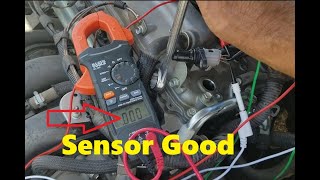
How to confirm: After confirming the wiring is intact, test the sensor. With the key on, check for a 5V reference and good ground at the connector. 🎬 Watch: How to test the sensor and circuit with a multimeter. For the 6.7L Cummins, Pin 1 (PK/YL) should be 5V supply, and Pin 2 (BK) is ground. For the 6.4L HEMI, Pin 3 (DK BLU/GRY) is 5V supply and Pin 2 (DK BLU/DK GRN) is sensor ground. The best confirmation is using an oscilloscope to check for a clean square wave signal on the signal wire while cranking the engine. A missing or erratic signal indicates a bad sensor.
Typical fix: Replace the camshaft position sensor. It is highly recommended to use an OEM Mopar part to avoid premature failure or compatibility issues. After replacement, a cam/crank relearn procedure using a capable scan tool may be required to sync the new sensor with the PCM.
Est. part cost: $45-$90
Rare But Worth Checking
- Weak Battery or Faulty Starter: → Shop Vehicle Battery Excessive voltage drop during cranking can sometimes cause the PCM to receive an erratic signal from the cam sensor, triggering a code even if the sensor and wiring are good. This can also trigger other seemingly unrelated electrical codes.
- Mechanical Timing Issue: On higher mileage engines, a stretched timing chain (HEMI) or a damaged timing gear/reluctor wheel can cause the cam/crank correlation to be off, leading to this code. This is a much more involved and expensive repair, often accompanied by codes like P0016.
- Faulty Powertrain Control Module (PCM): This is very rare, but the PCM can fail internally. This should only be considered after all other possibilities, especially wiring and the sensor itself, have been exhaustively ruled out.
Diagnosis Steps
- Scan for all stored trouble codes and review freeze frame data to see the engine conditions when the code was set.
- Perform a thorough visual inspection of the camshaft position sensor's wiring harness and connector. Trace it as far back as possible, looking for any signs of chafing, melting, or corrosion.
- Disconnect the connector. Check for bent, loose, or corroded pins. Clean with electrical contact cleaner if necessary.
- With the key on, engine off, use a multimeter to check for the correct reference voltage (approximately 5 volts) and a good ground at the sensor connector.
- If wiring, power, and ground are good, replace the camshaft position sensor. Using an OEM Mopar part is strongly recommended to prevent repeat failures.
- Clear the codes and perform a test drive. If the code returns, a cam/crank relearn procedure may be necessary with a capable scan tool.
- If the code persists, the issue may be more complex. Test the battery and starting system for excessive voltage drop during cranking.
- For advanced diagnosis, use an oscilloscope to view the sensor's waveform. A clean, square wave indicates a good sensor and signal, pointing towards a mechanical timing or PCM issue.
Parts You'll Likely Need
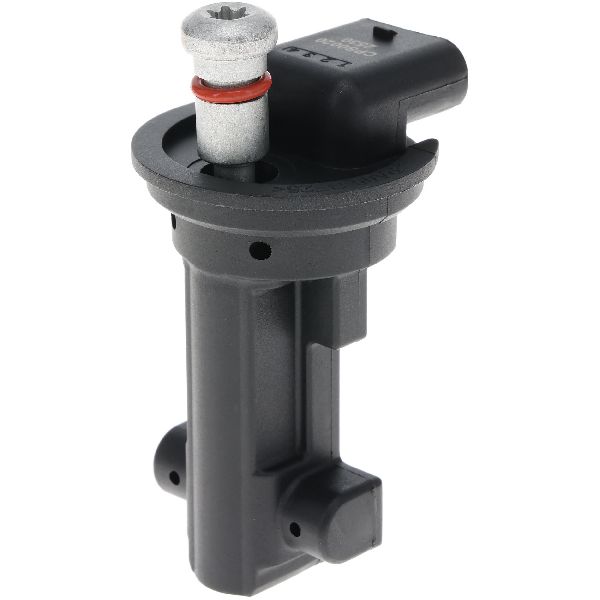
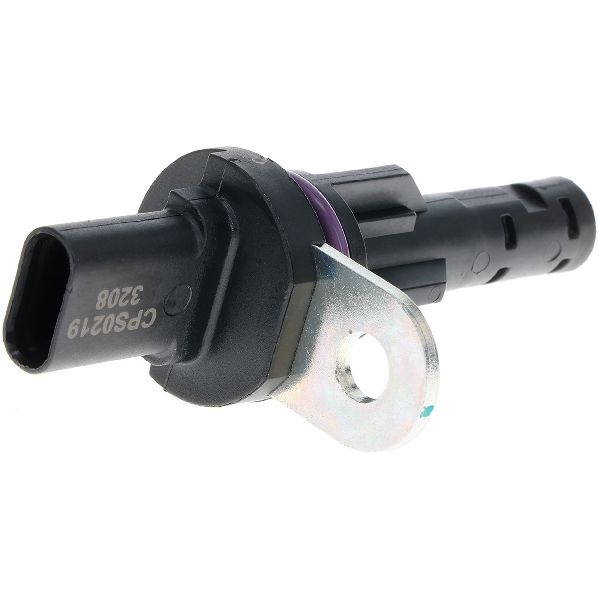
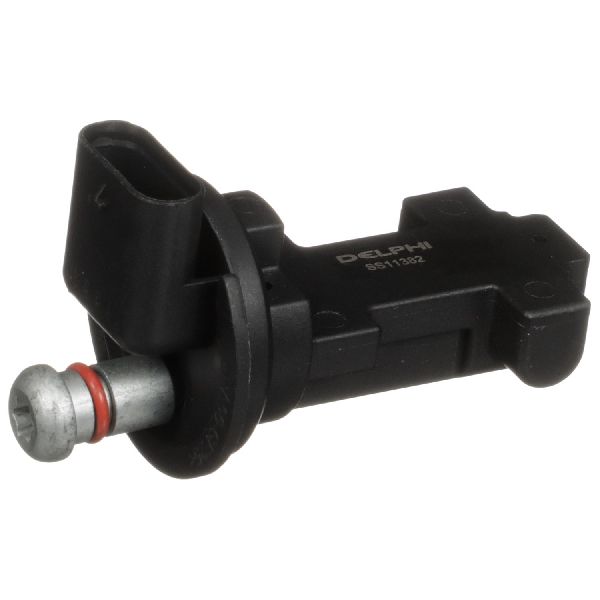
- Camshaft Position Sensor (6.4L HEMI)
(OEM #5149054AC)— This is the sensor that provides the camshaft position signal to the PCM. It is the most commonly replaced part for this code after wiring issues are ruled out. The OEM part is known to be more reliable than many aftermarket alternatives. 🎬 Watch: How to replace the camshaft position sensor on a Hemi.
Trusted brands: Mopar (OEM), NTK/NGK, Bosch
OEM price range: $45-$65
Aftermarket price range: $25-$50 - Camshaft Position Sensor (6.7L Cummins)
(OEM #2872279)— This is the sensor that provides the camshaft position signal to the PCM. The original part (4921686) was superseded by this number. 🎬 See this walkthrough for replacing the 6.7L Cummins camshaft sensor. It is the most likely part to be replaced if it has failed.
Trusted brands: Cummins (OEM), Mopar, Bosch
OEM price range: $70-$90
Aftermarket price range: $40-$70 - Camshaft Position Sensor Connector Pigtail — If the wiring inspection reveals a damaged, corroded, or loose-fitting connector at the sensor, replacing the pigtail is the proper repair instead of replacing the entire harness.
Trusted brands: Mopar, Dorman, Standard Motor Products
OEM price range: $25-$40
Aftermarket price range: $15-$30
Related Codes That Often Appear With This One
- P0340 — This is another general fault code for the same camshaft position sensor circuit. Seeing them together reinforces a problem in this area.
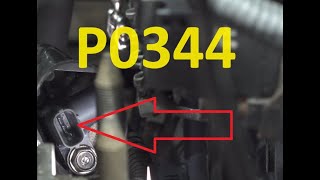
- P0344 — This code indicates an intermittent signal from the camshaft sensor. It often points directly to a wiring or connection issue, which is a primary cause for P0365 as well.
- P0335 — This is the code for the crankshaft position sensor. Since the two sensors work together for timing, a wiring issue affecting one may affect the other, or a fault in one system can sometimes confuse the PCM into flagging the other.
- U1424 — This code means 'Implausible Engine Torque Signal Received' and often appears with sensor codes like P0365 when a broader electrical fault exists in the harness or PCM, causing multiple modules to report bad data.
Technical Service Bulletins (TSBs) & Recalls
- 05149141A: 'Camshaft Position Sensor If replacing a camshaft position sensor for P0340, P0344, P0345, P0349, P0365, P0369, P0390 or P0394 fault codes, please review information below and contact Tom Nies...'
Platform-Specific Known Issues
- TSB #05149141A was issued by the manufacturer regarding a group of camshaft sensor codes, including P0365. It instructs technicians to gather specific data and contact a factory representative before replacing the sensor. This strongly indicates that the sensor itself is not always the root cause and that misdiagnosis due to wiring faults is common.
Mechanic-Grade Diagnostic Values
- Camshaft Position Sensor Resistance (6.7L Cummins) — expected: 600-1200 Ω. Failure: Resistance outside this range indicates a faulty sensor.
- Sensor Ground Circuit Resistance to PCM — expected: Below 5.0 Ω. Failure: Resistance above 5.0 Ω indicates an open or high resistance in the ground circuit wire (K900).
- Sensor Supply and Signal Voltage (KOEO, Unplugged) — expected: Approximately 5.0 Volts on both supply and signal pins.. Failure: Voltage below 4.5V indicates an open or short in the circuit from the PCM.
- Alternator AC Ripple Voltage (Engine Running) — expected: Below 0.5V AC. Failure: Voltage above 0.5V AC at the battery terminals indicates a failing alternator, which can introduce electrical noise and trigger sensor codes.
Scan Tool Commands That Help
- wiTECH (OEM), Autel, Snap-on, Appcar: Cam Crank Relearn / Cam/Crank Variation Relearn — This procedure should be performed after replacing the camshaft position sensor, crankshaft position sensor, or any major timing components. It allows the PCM to learn the new sensor's position relative to the crankshaft, ensuring accurate timing calculations.
Wiring & Ground Locations
- K900 — This is the sensor ground circuit wire running from the camshaft position sensor connector directly back to a specific pin on the Powertrain Control Module (PCM).. This is not a chassis ground. A high-resistance or open circuit on this specific wire will cause the sensor to send an incorrect signal, triggering a P0365 code even if the sensor itself is good.
- F855 — This is the 5-volt supply circuit wire running from the PCM to the camshaft position sensor connector.. A short or open on this wire will result in no power to the sensor, causing a loss of signal and triggering the code.
- 6.7L Cummins Harness Chafe Point — The section of the main engine wiring harness that routes near or against the A/C compressor and its lines on the passenger side of the engine.. This is a widely reported area where heat and vibration cause the harness to rub through, shorting out the cam sensor wires and causing intermittent or persistent P0365 and related codes.
"I Checked Everything" — The Actual Cause
- A failing alternator can cause this code even when the sensor and wiring test perfectly. The alternator's internal diodes can fail, allowing AC voltage (noise) onto the vehicle's DC electrical system. This electrical noise can interfere with the low-voltage signal from the camshaft sensor, causing the PCM to interpret it as a fault. This is diagnosed by checking for AC voltage at the battery terminals with the engine running.
OEM Part Supersession History
4921686→2872279, which was then superseded by 5594276NX— Part has been updated by Cummins for improved reliability or manufacturing changes.
Heads up: Using the latest part number (5594276NX) is recommended to ensure you receive the most current revision.5149054AB→5149054AC— Part revision for the 6.4L HEMI sensor.
Helpful Videos
We Have This Part in Stock


The information in this article is provided for general reference and educational purposes only. Vehicle specifications, procedures, and part compatibility can vary by production date, trim level, and region. Always consult your vehicle's factory service manual and verify part numbers before purchasing or performing repairs. Safety-critical components such as airbags, seat belts, and braking systems should be installed by a qualified professional.
- Ram 3500:
- 🧭 Diagnostic Flowchart
- 🎬 Helpful Videos
- 🛍️ Shop This Part
- What's Unique About the 2014-2018 Ram 3500
- Symptoms You May Notice
- Most Likely Causes
- Rare But Worth Checking
- Diagnosis Steps
- Parts You'll Likely Need
- Related Codes That Often Appear With This One
- Technical Service Bulletins (TSBs) & Recalls
- Platform-Specific Known Issues
- Mechanic-Grade Diagnostic Values
- Scan Tool Commands That Help
- Wiring & Ground Locations
- "I Checked Everything" — The Actual Cause
- OEM Part Supersession History
- 🎟️ Get 5% Off